Snowboard Boots
Ride Octave Snowboard Boot Review: A Comfortable All-Rounder for Casual Riders
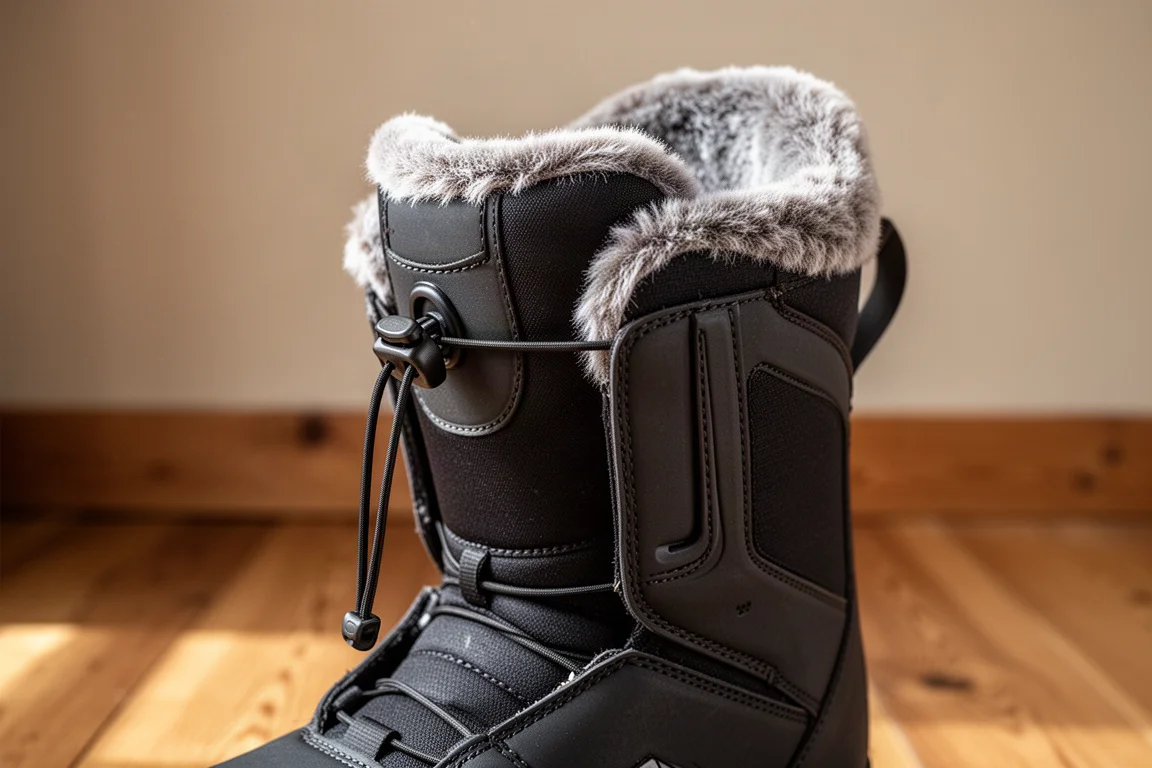
A closer look at the Ride Octave: dual BOA, a heat-moldable Intuition-style liner, and an forgiving flex aimed at riders who cruise rather than charge.
Introduction
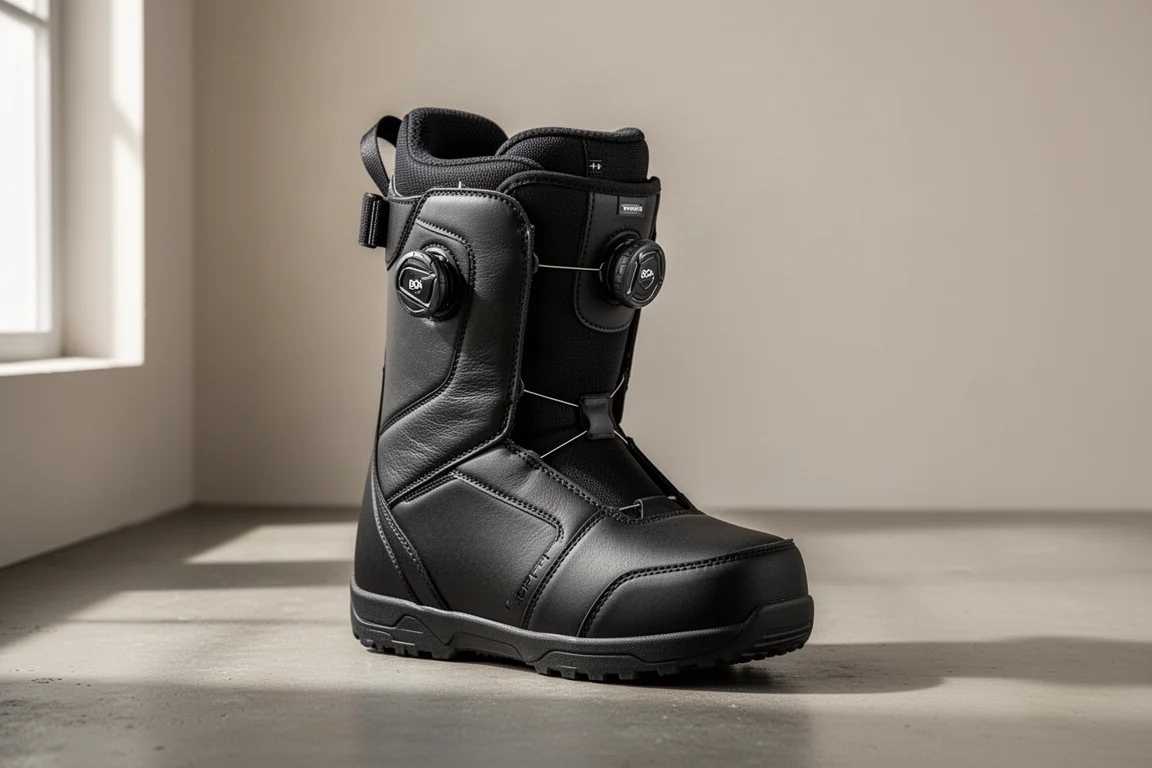
The best snowboard boot is the one that fits your foot and fits your needs, and the Ride Octave is built around a fairly specific kind of rider. It is not the stiffest boot on the shelf, and it is not trying to be. Instead, it combines a dual BOA closure, a heat-moldable foam liner, and a traditional leather-accented shell in a package aimed at riders who spend their days cruising mellower runs rather than pushing the boundaries of the resort.
This breakdown walks through how the Octave is built, where its strengths lie, and the trade-offs worth knowing before you commit to a pair.
Shell Design and Fit Points
The Octave leans on a more old-school shell material approach. You will not find a TPU toe cap here, and instead the upper uses a multi-seam design with a double stitch along the side and a larger overlap where several seams converge right around the knuckle of your foot. That overlap is a natural flex point, and it will break in the more you walk and ride in the boot.
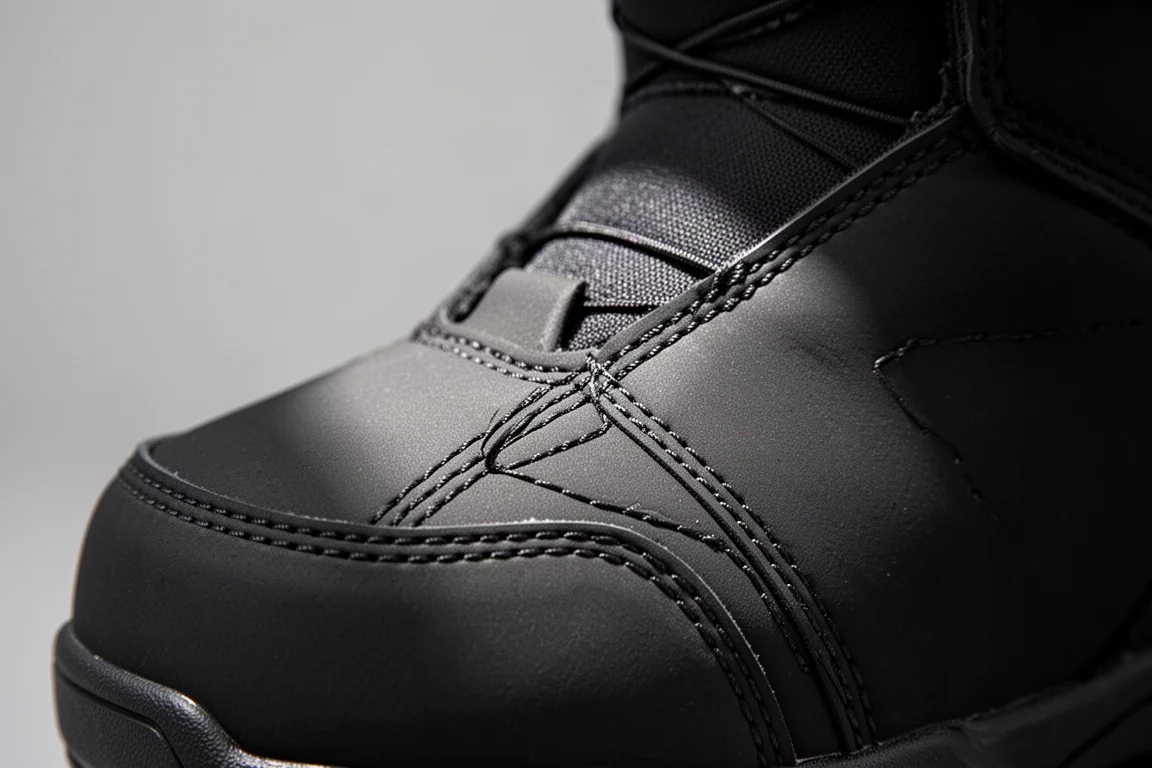
There is a practical caveat: if you crank your toe strap down hard, the strap can put pressure right in that seam zone. Some riders feel it against the knuckle of their foot or the little pinky toe, so it is worth being aware of during a proper fitting. On the tongue you get double stitching, with a single stitch down the side and a double-stitch overlap reinforcing the eyelets for the BOA cables.
The back of the boot uses a leather backspine rather than a rigid urethane construction. That means it will break down over time and give you a little more lateral give, which suits riders who do not want a boot that locks them in completely. At the top of the backspine there is a Velcro adjuster, so riders with bigger calves can move the upper closure back for a more comfortable fit.
BOA System and Adjustability
This is a dual BOA boot, and the split is straightforward: the dial on the tongue controls the upper portion of the lace, while the dial on the side controls the lower portion. That makes it easy to customize how tight or loose each zone feels, and not everyone needs to crank both dails to maximum tension.
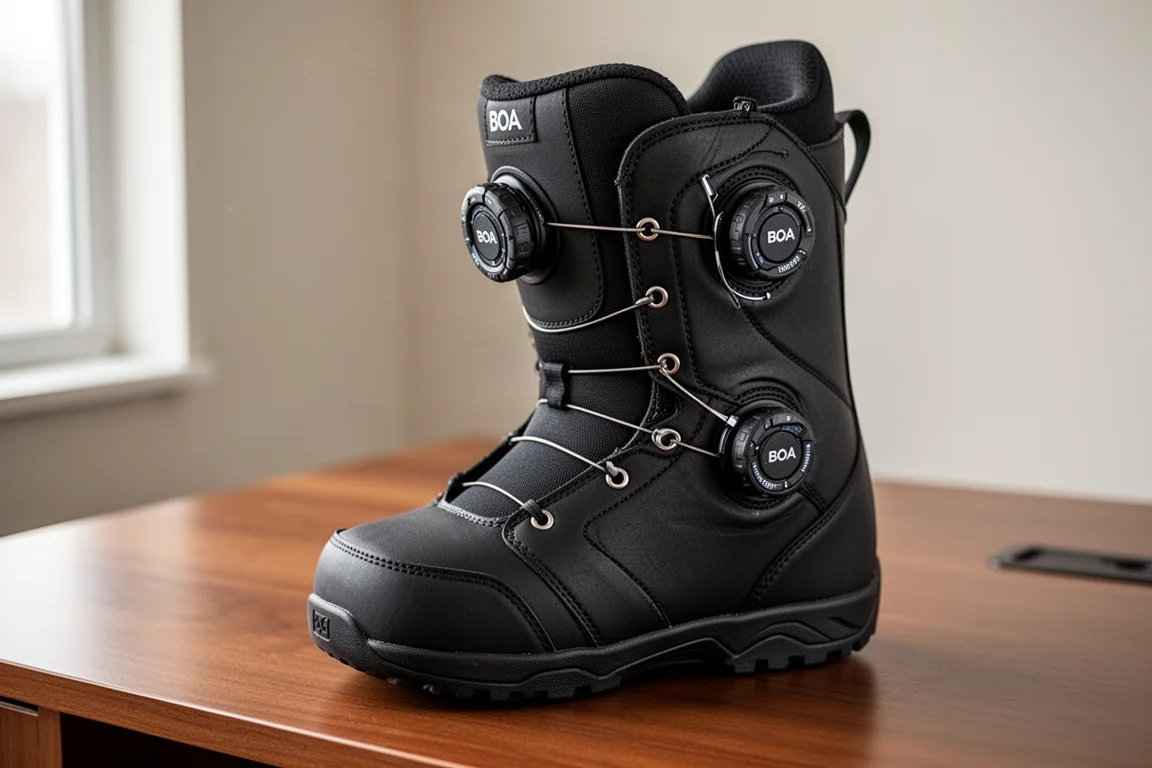
One maintenance note: the Octave uses nylon cables. If you are the kind of rider who rests your edge on your boot, keep in mind that repeated contact can wear the cables down over time.
Liner, Warmth and Heel Hold
Inside the shell, Ride has added heat reflective tape, a genuinely useful touch for riders who struggle with cold feet, since it reflects heat back in and works well in practice. The shell also includes a pull tab harness sewn into the shell itself, positioned a little higher in the boot to help pull the liner snug against the shell.
The liner itself is a free-floating Intuition foam liner, meaning it can be heat molded. If you ride fewer than 30 or 40 days a year, a heat mold is worth considering to speed up break-in. High-volume riders should skip it: the foam will pack out on its own, and heat molding can accelerate how quickly the liner breaks down.
The heel attachment at the bottom of the liner is designed differently from many boots on the market, pulling the heel down and locking it in. Riders who normally deal with heel lift should keep this on their radar. The liner adds an external J-bar that runs up the side, giving it lateral rigidity and extra ankle support, plus a Velcro tongue strap and a front locking eyelet for the drawstring that keeps the top of the liner snug.
Sole, Dampening and Grip
The outsole combines rubber and foam in the black contact zone, doing double duty for dampening and grip. Inside, there is a slime foam layer designed to dissipate kinetic energy from micro vibrations while cruising, and to absorb the impact of hard landings so you are less likely to pick up a heel bruise.
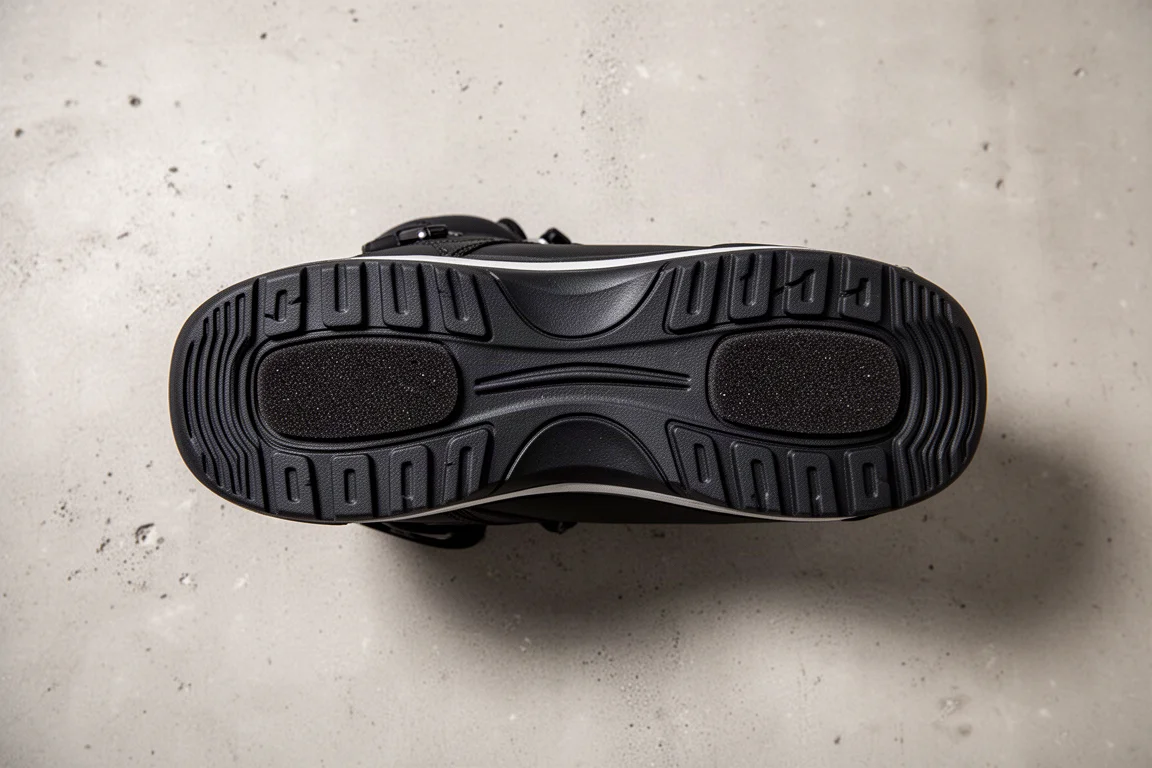
The result is a smoother ride that still leaves some feel underneath your feet. There is a bit of give in the middle of the tread, which contributes to that cushioned character.
Sizing and Measurements
For the detail-oriented, here are the measurements taken on a size 10. The sole length comes in right at 12 inches, with a forefoot width of 4.5 inches. With the liner in, the back measures 10.75 inches and the front sits just slightly below that. The shell stands 10 inches tall at the rear, with the tongue just past 10.5 inches. The liner measures just past 5 inches across the widest part of the forefoot, which works out to just under four and a quarter inches of actual usable width.
Overall, this is a tighter V-shaped boot with a wider forefoot than average, perhaps slightly above standard. The internal harness does not crank down as tightly as some competitors, so expect moderate rather than aggressive lockdown.
Who the Octave Is For
The Octave is aimed at the price-conscious rider who still wants modern features: an Intuition-style foam liner, BOA closure, and that Velcro calf adjuster for bigger calves. It suits casual riders who stick to blue runs and ride somewhere in the range of 5 to 15 days a year.
It is also a good match for riders with a slightly narrower heel who do not want their heel completely locked down when the internal harness is tightened; there is a touch more movement in there by design. One more fitting tip: the stock footbed offers essentially no support, though it does have a deep heel pocket. If you ride more than 5 days a year, plan on replacing it with something more supportive.
Buying Advice
If the Octave matches the profile above, it is a solid option for the money, though other boots in this category may suit some riders better or worse depending on fit. Do not buy online sight unseen if you can avoid it: get properly sized at your local shop, try the boot on, and confirm the flex and fit work for you. If you do end up shopping online, use the button below so you are not hunting for it yourself, and consider giving your local shop some love too.
Conclusion
The Ride Octave is a competent, comfort-oriented boot for casual riders who want BOA convenience, a heat-moldable liner, and a forgiving flex without paying a premium. It is not the stiffest option, the shell seams may bother sensitive feet under tight toe straps, and the stock footbed will need upgrading for anyone riding regularly. But for blues-and-cruises riders who value a bit of movement in the heel and a boot that will not break the bank, it is an easy recommendation to consider.
Product link
View more details for Ride Octave
This product is mentioned in the review. Check the specifications, options, and compatibility before buying.
View more details for Ride OctaveFurther reading
Related Reviews

Snowboard Boots
32 Team Two Double Boa Review: 32's Highest-End Women's Snowboard Boot
A closer look at 32's top-tier women's snowboard boot, from the 3D molded toe box and double Boa lacing to the Performance Fit liner and heat-reflective footbed.

Snowboard Boots
Bataleon Acid BOA Snowboard Boot Review: A Serious First Entry from a Board Brand
Bataleon's first snowboard boot, designed by a former Burton boot designer, brings a stiff flex, dual BOA closure, and a heel hold system worth a closer look.

Snowboard Boots
Battalion Acid Boot Review: A Stiff, Aggressive Boot Built to Last
The Battalion Acid Boot is the brand's highest-end offering, built with seamless construction, TPU reinforcement, dual BOA lacing, and a heat-moldable liner. Here is what to know before buying.