Snowboard Boots
Ride Fuse Boot Review: A Durable All-Mountain Lace Boot With a Boa Edge
The Ride Fuse pairs a tough TPU-reinforced shell with a Michelin outsole, urethane rebound, and a burrito wrap liner. Here's who it fits and what to check before buying.
Introduction
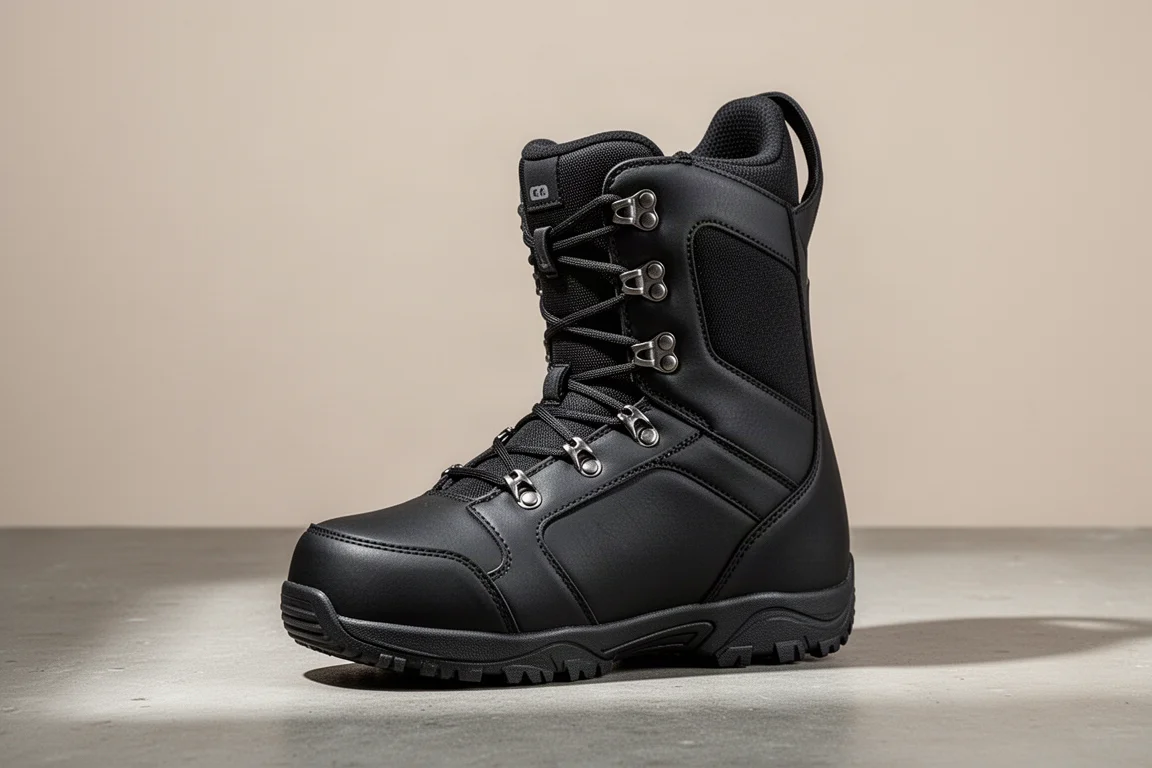
The Ride Fuse is an all-mountain lace boot with a side Boa for the internal harness, and it does a lot of small things right. A hard TPU toe cap, urethane in the back spine and tongue, a full Michelin rubber outsole, and a burrito wrap liner all add up to a boot that holds its shape and stays warm without becoming stiff or unwearable. It sits comfortably in the middle of the road: a well-rounded all-mountain flex that suits casual riders and laces fans alike. As always with boots, the best one is the one that fits your foot and your needs, so get sized properly before committing.
Shell Durability and Rebound
The Fuse shell has a hard TPU toe cap that is genuinely aggressive. It takes up a lot of space and lets you hike, rest your board against the boot, and generally abuse it with minimal issues. There is a double stitch seam where the shell meets the fabric near the laces and on the side; if you hack at it aggressively with your edge on the chairlift, it could fray, but for most riders that will not be a concern.
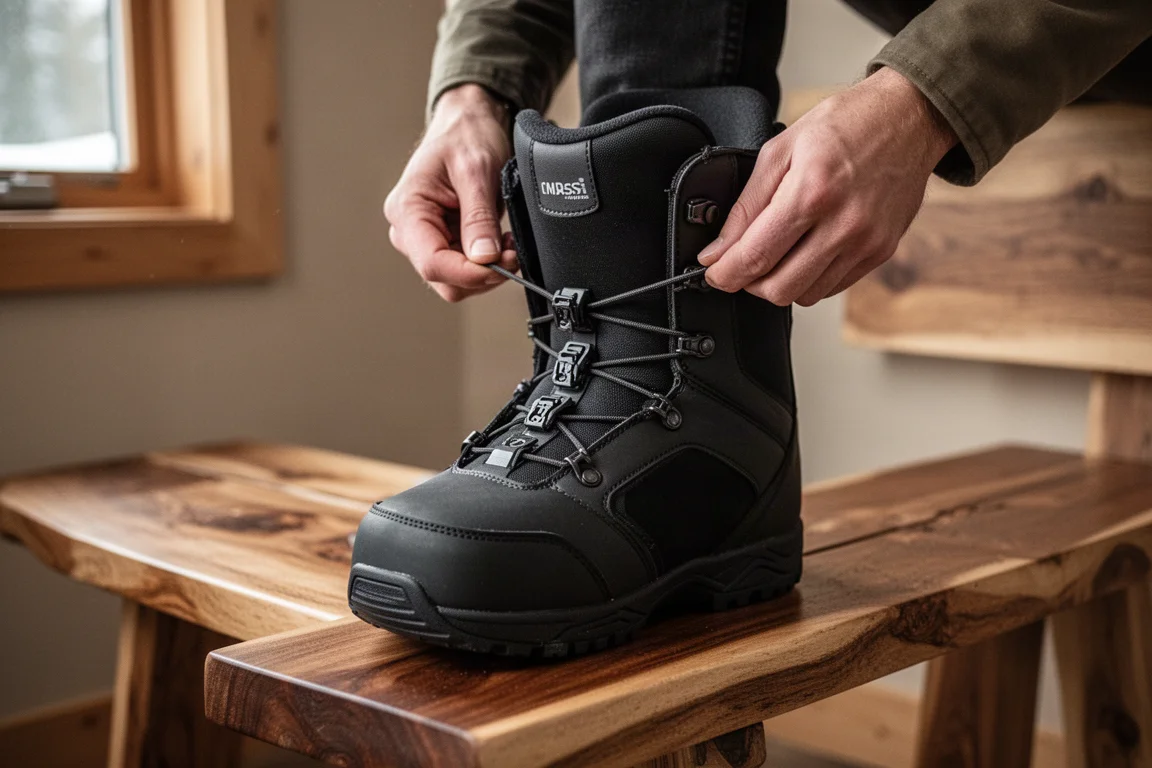
The back spine uses urethane all the way up, which adds rebound and helps the boot hold its shape instead of creasing over time. That works alongside a moderate articulation point that lets the boot flex without bulging. The tongue also gets urethane treatment in the form of a slime tongue, which again holds shape better and gives more rebound. In short, the urethane construction should make this boot last longer.
One caveat: with heavy wear, extended deep cold, or if the boot is never dried out properly, the slime tongue can crack near the articulation. This is an end-of-lifespan concern, not something to worry about out of the box, but it is worth keeping an eye on down the road.
Michelin Rubber Outsole
The Fuse uses a full Michelin tread, made with the same rubber as Michelin tires. That translates to noticeably better grip on icy and cold conditions, and the solid tread pattern means you should not slip on packed walkways.
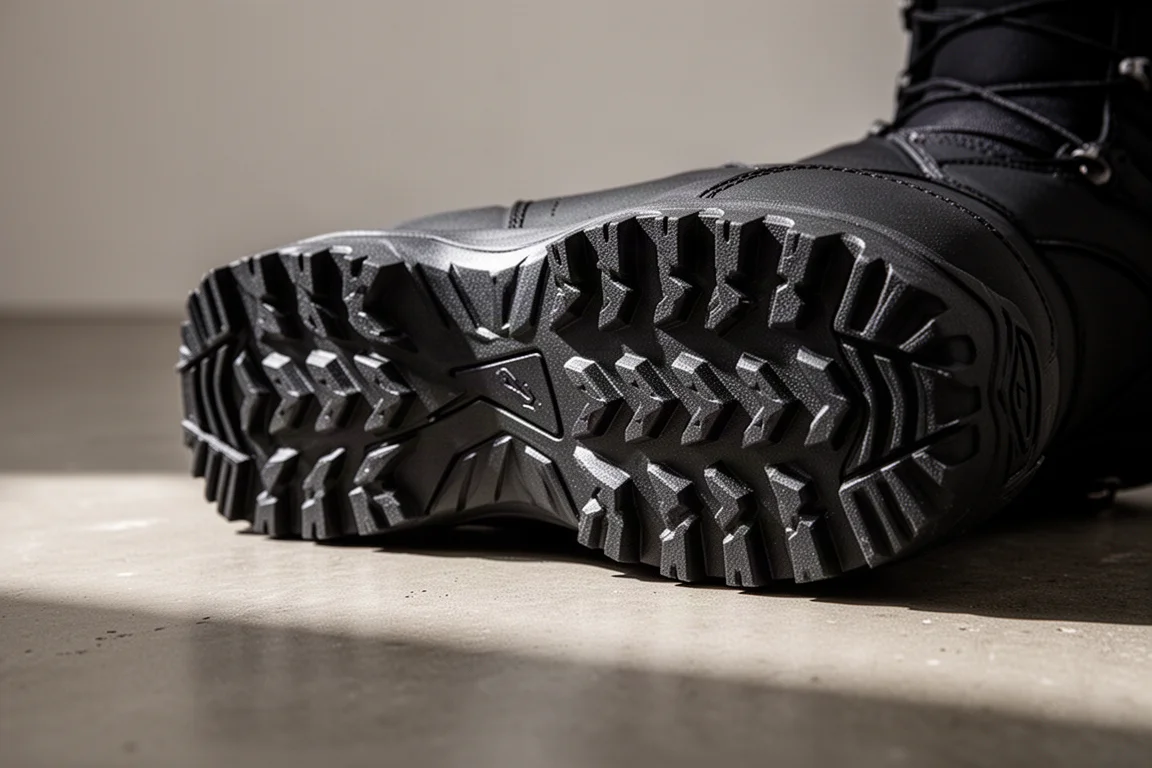
The sole is a bit beefier, so unless you are walking directly on sharp, firm rocks, you will not feel much underfoot. The trade-off is less give underfoot, but that stiffness works in your favor on snow. On lumpy, chundery terrain or over frozen ball bearings on the run, the beefier sole dampens chatter and keeps the ride calmer.
Lacing: Laces Plus a Side Boa
You get two lacing systems here. Traditional laces run up the front, with cleats that grip the lace and lock it in place so it holds snug. On the side, a Boa dial controls the internal harness, which keeps your heel locked into place. You can crank it down or leave it a bit looser depending on preference.
The internal harness works with the burrito wrap liner: tightening the Boa pulls the liner more snug against the shell, which tightens the whole fit without needing to redo your front laces.
The Dream Liner: Burrito Wrap Fit
The Fuse features Ride’s Dream liner, a burrito wrap design. The opening is on the side of the liner rather than straight down the front, which creates a more snug fit. Riders with thinner legs or smaller calves will appreciate how it sucks up volume, and it changes the power dynamic when you drive into the boot, making it feel a bit more rigid and responsive.
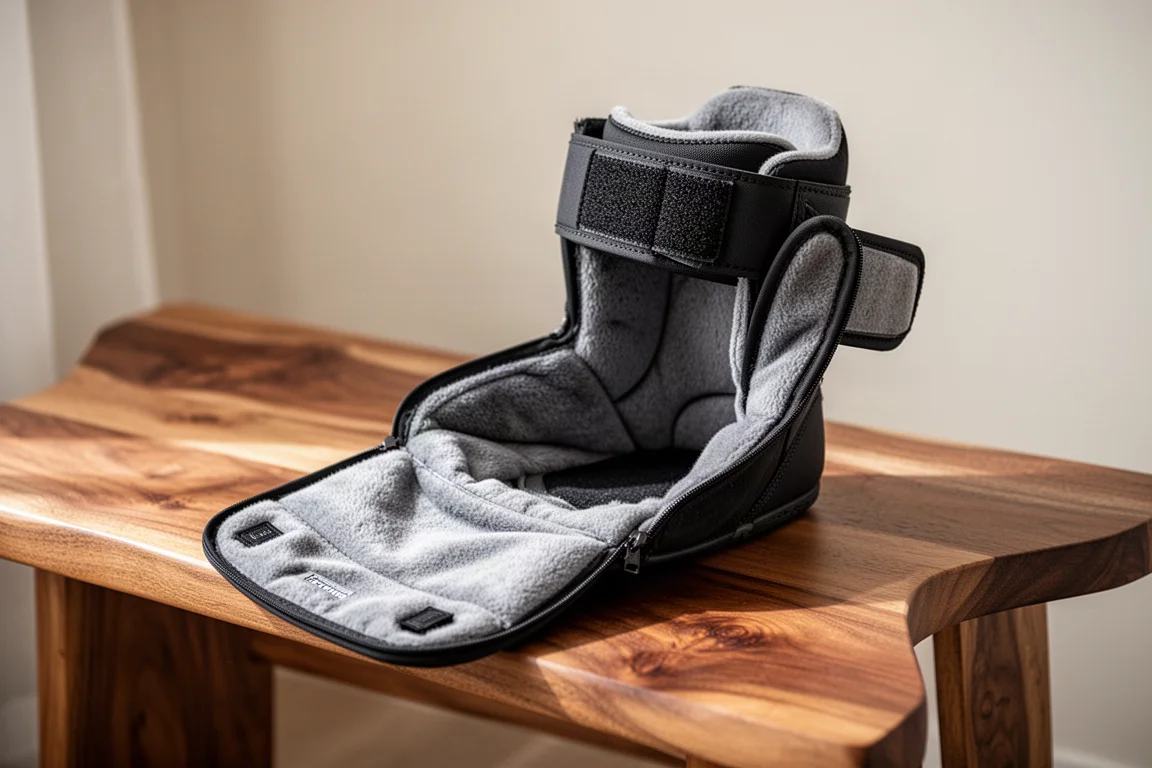
It is a fully heat-moldable Intuition liner, and heat molding is recommended. A few details to know: there is a large seam that some people with sensitive pinky toes can feel, the cord-out heel pocket can push out to accommodate a prominent ankle bone, and a deep external J-bar running up the liner adds rigidity and holds everything down. The top cuff uses a plush fur to help you slide in, plus a slip-and-grip fabric that grips the back of your sock so the liner does not ride up.
If you struggle with too much space between your shin and the tongue, or with a narrow heel, this liner addresses both. It is a genuinely strong liner.
Insole and Fit Numbers
The stock insole is the Impacto Elite, with a deep heel pocket and posting that helps it hold its shape. The top of the insole is easy to collapse, but the lower section takes more effort. For casual riders who ride up to 15 days a year, it should provide adequate foot support. For higher-volume riders or anyone with foot problems, replacing it is recommended.
Measured at the widest section, the footbed comes in at four inches wide, which is an average width. The size 10 shell without the liner measures just under 10 inches at the rear and about 10 and 3/4 inches on the tongue. With the liner in, the rear comes to 11 and 1/4 inches and the tongue to about 10 and a half inches, though the burrito wrap liner skews those numbers slightly.
Overall, the Fuse is a little narrower in the heel and a little wider in the forefoot, but not dramatically so. It is essentially an average-width, well-rounded lace boot.
Who the Fuse Is Best For
The flex is geared toward all-mountain use, and the boot is easy for almost anyone to get into. It has solid form, good rebound thanks to the urethane construction, and a comfortable middle-ground width.

This is a great match for the casual rider who rides up to 15 days a year, for anyone who prefers a lace shell, or for someone who wants the fine-tuning of a Boa-controlled internal harness and the snug fit of a burrito wrap liner. If you know your foot is outside the average heel and forefoot shape, try it on first, because the best boot is always the one that fits your foot and your needs.
Conclusion
The Ride Fuse delivers durable shell materials, a grippy Michelin outsole, urethane-driven rebound, and one of the more thoughtful liners in its class. It is not a flashy freeride weapon or a park-dedicated soft boot; it is a dependable, well-rounded all-mountain lace boot. If that description sounds like your riding, it deserves a spot on your try-on list.
Product link
View more details for Ride Fuse Boot
This product is mentioned in the review. Check the specifications, options, and compatibility before buying.
View more details for Ride Fuse BootFurther reading
Related Reviews

Snowboard Boots
32 Team Two Double Boa Review: 32's Highest-End Women's Snowboard Boot
A closer look at 32's top-tier women's snowboard boot, from the 3D molded toe box and double Boa lacing to the Performance Fit liner and heat-reflective footbed.

Snowboard Boots
Bataleon Acid BOA Snowboard Boot Review: A Serious First Entry from a Board Brand
Bataleon's first snowboard boot, designed by a former Burton boot designer, brings a stiff flex, dual BOA closure, and a heel hold system worth a closer look.

Snowboard Boots
Battalion Acid Boot Review: A Stiff, Aggressive Boot Built to Last
The Battalion Acid Boot is the brand's highest-end offering, built with seamless construction, TPU reinforcement, dual BOA lacing, and a heat-moldable liner. Here is what to know before buying.