Snowboards
Ride Deep Fake Review: A Damp, Aggressive All-Mountain Charger
The Ride Deep Fake pairs camber-dominant power with a rockered nose for riders who want stability, pop, and precision at speed.
Introduction
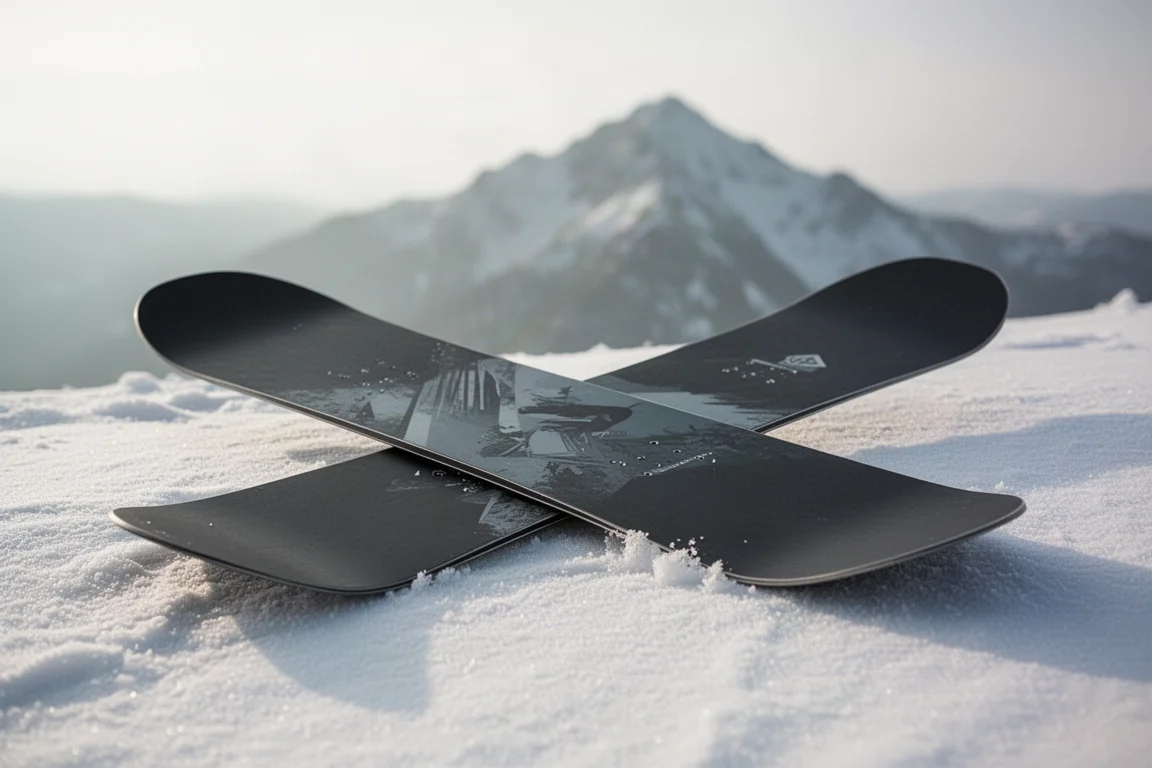
The Ride Deep Fake is built around Ride’s directional extra camber profile: camber from under the front foot through the tail, with rocker in the nose. The camber zone delivers power, pop, and drive, while the rockered nose adds float in powder and easier turn entry and exit. Ride offers it in a wide size run: 144, 148, 151, 155, 157W, 159, 161W, 162, and 165W.
It rides stiffer than the middle of the road, though not a full plank, and it leans toward technical riders who want a precise, stable deck for aggressive terrain. This review covers how it handles flex, pop, buttering, and carving, plus who should actually buy it.
Camber Profile and Overall Flex
The directional extra camber profile is the heart of this board. Camber under the front foot through the tail supplies the power and drive, and the rockered nose keeps turns from feeling locked in while adding float when you point it at powder.
Flex sits above average but stays fluid from nose to tail. Even with the rocker zone up front, the nose does not feel noticeably softer, and that consistency shows up in stability. The board is extremely damp, with urethane construction doing a good job of cutting down chatter. At super high speeds the nose visibly flutters a bit, but it never reverberates back underfoot or throws off your line, so it is nothing to worry about.
Pop and Landings
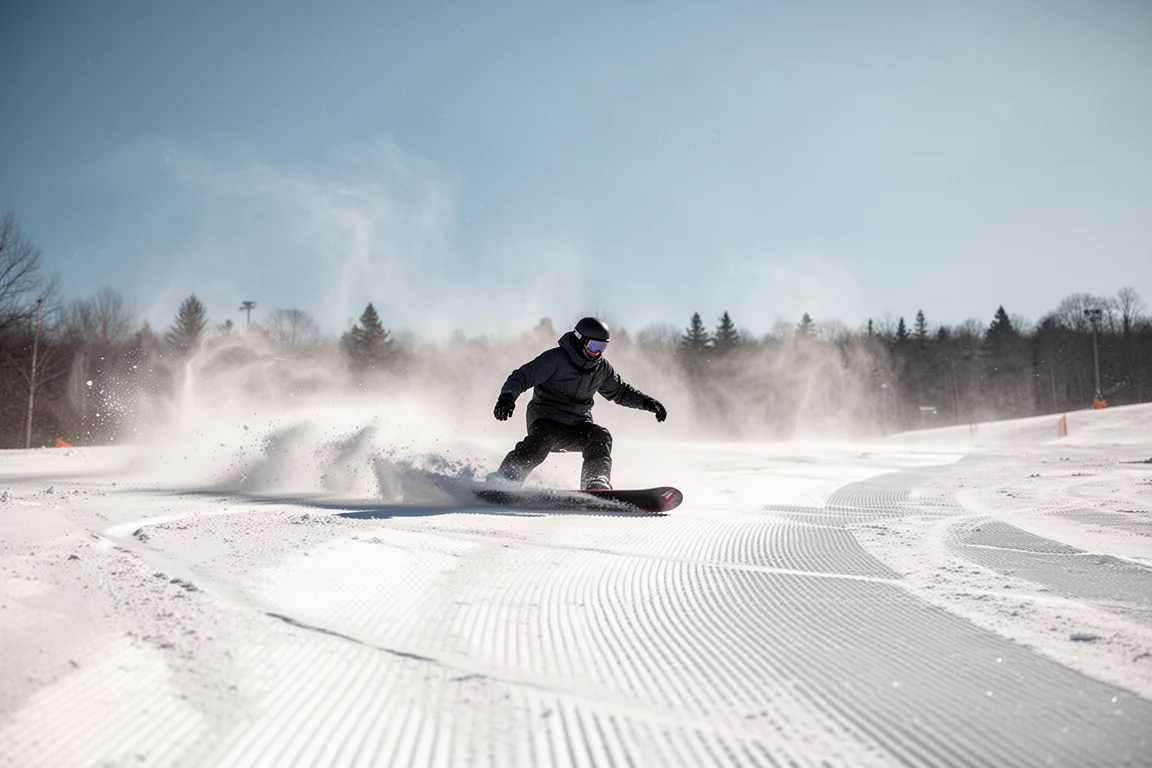
Because the board runs stiff, it takes a bit more effort to load up the pop. Shifting your weight back and using the tail as the launch point makes a real difference. Once loaded, the pop is smooth and consistent, with a nice snap that springs you forward without bucking or shooting you unpredictably.
Landings benefit too: the board absorbs them cleanly without throwing you forward, whether you are dropping off a groomer into pow or stomping a jump. Just remember the load-up takes a little extra time compared to softer decks.
Buttering and Pressing
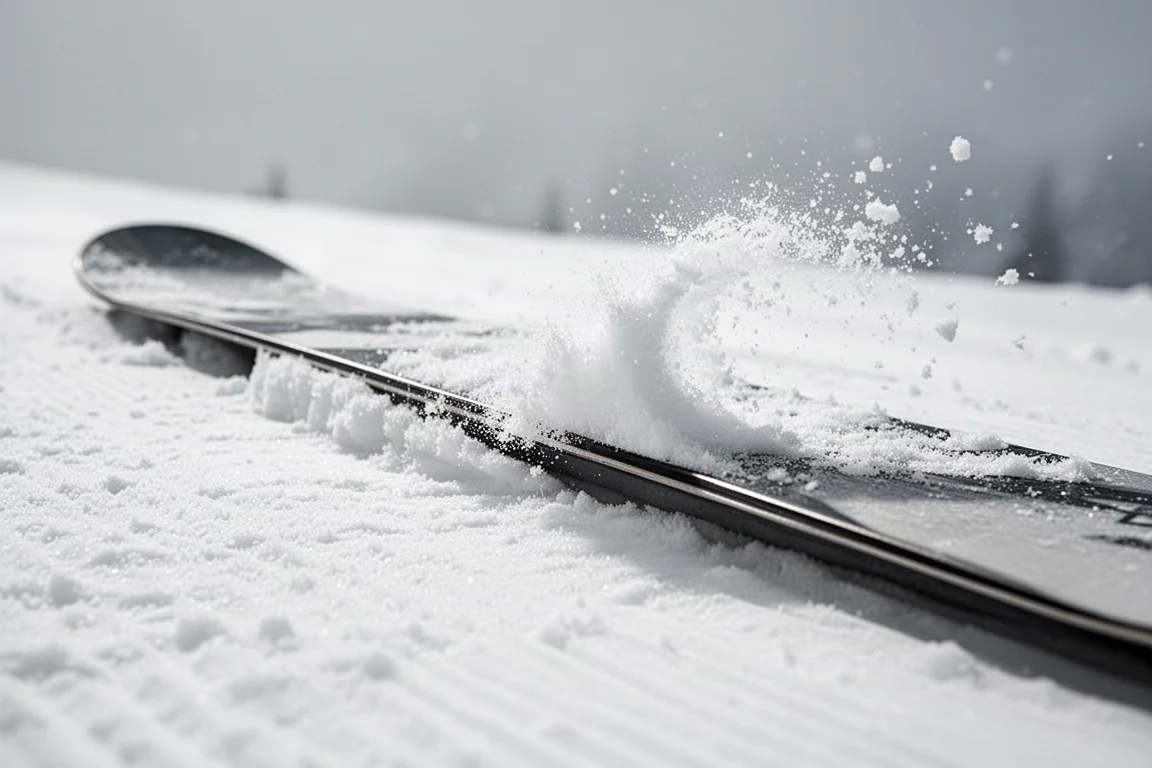
This is not a butter board. On the stiffer, more precise end of the spectrum, pressing means genuinely throwing your weight back, and it feels more like a press than a butter. The tail stores energy and wants to pop out of everything, which is great if you want to spin out of presses.
The nose has more real estate and some rocker, but buttering there is not much easier either. Expect some resistance on both ends, paired with a satisfying pop-out if you commit.
Carving Performance
Edge engagement is the standout. The nose engages heavily and holds like nothing else, and you can feel the full edge from contact point to contact point, which makes the board feel planted and stable on edge.
The taper helps it flip edge to edge quickly on short, quick carves. On medium carves at higher speeds, it springs in and out of turns, loading the camber and wanting to keep picking up speed. Large carves are extremely smooth and comfortable, so much so that you may not realize how fast you are going until you have passed half the mountain. It will also lay down Euro carves, provided you avoid boot bite. It carves through any condition.
Buying Advice
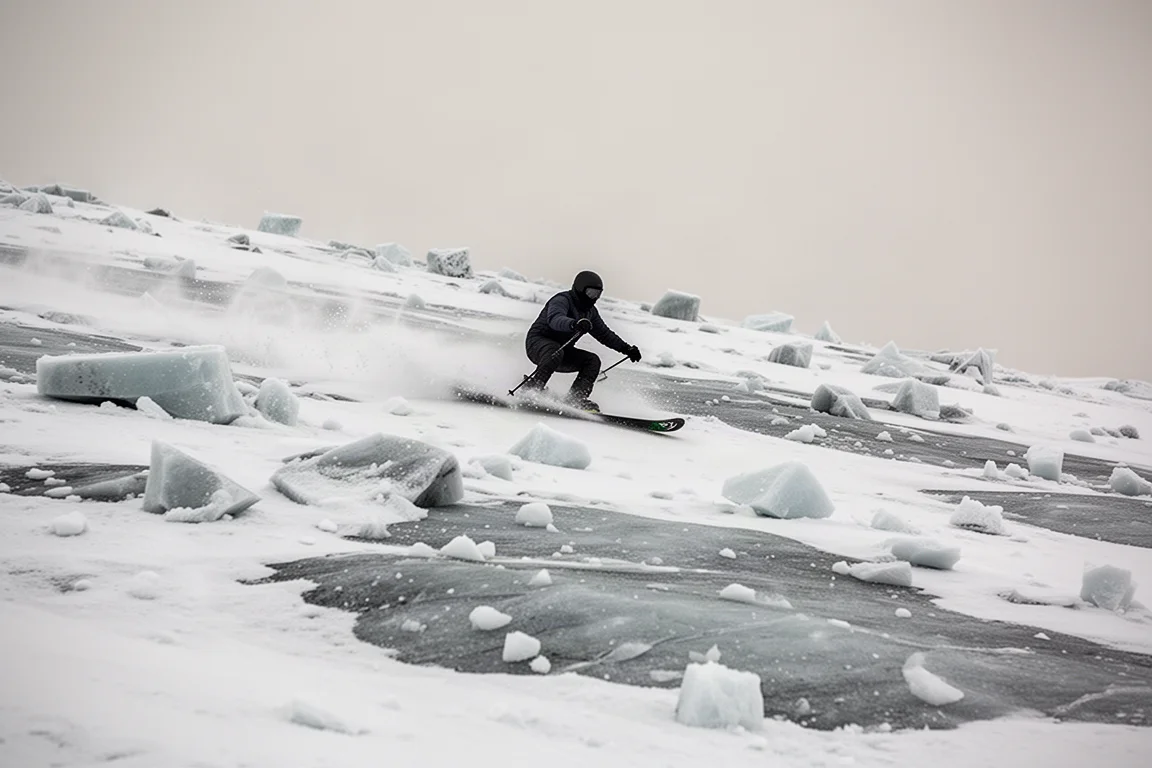
The Deep Fake is made for technical, advanced riders who want to push limits on steep terrain regardless of conditions. It is an aggressive board that wants to go fast, so stay on top of it, keep a bit more weight on the back foot in powder, and expect the wet, deep stuff to try to sink you if you get lazy.
That said, this version is far more approachable than earlier prototypes: precise, genuinely fun, easy to wiggle through the trees, and a solid everyday ride for skilled riders.

Conclusion
The Ride Deep Fake delivers stable, damp, high-speed carving with real pop and a forgiving-enough nose, as long as you accept a stiffer flex and some resistance when pressing. Comparable boards include the Jones Flagship Pro, the Rome Ravine Pro, and the K2 Alchemist. Recommended bindings are the Ride C-8, Jones Mercury, and Union Atlas.
Product link
View more details for Ride Deep Fake
This product is mentioned in the review. Check the specifications, options, and compatibility before buying.
View more details for Ride Deep FakeFurther reading
Related Reviews

Snowboards
32 Middle Earth Scott Stevens Pro Model Snowboard Review: A Park Board With a Reversed Flex
A medium traditional camber park board with carbon V reinforcement that is stiffer in the tips and more playful between the feet. Here is how it rides and who it suits.

Snowboards
32 Snafu Review: A Directional All-Mountain Freestyle Board with Serious Pop
The 32 Snafu pairs a directional camber-rocker profile with a stiffening tail for powerful carves, big ollies, and a surprisingly damp ride.

Snowboards
32 XXX Pat Fava Pro Snowboard Review: A Stiff Camber Beast for Hard-Charging Riders
A full-width traditional camber deck that rewards aggression with stability and edge power, but demands effort everywhere else.