Snowboard Bindings
Ride C8 Bindings Review: A Stiff, Damp Binding Built for Aggressive Riders
The Ride C8 blends the best parts of the older C8 and C9 into a responsive, toolless-friendly binding with a surprisingly damp ride.
Introduction
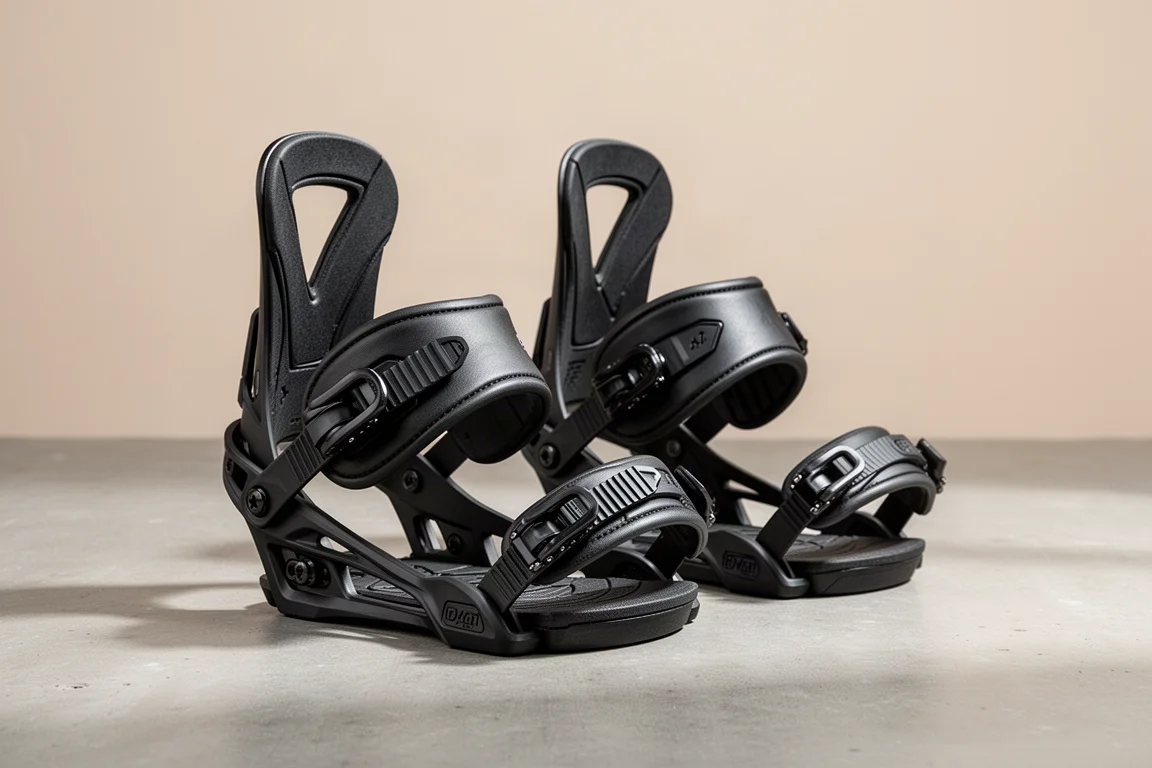
The Ride C8 occupies an interesting spot in Ride’s lineup this season: it effectively merges the previous C8 and C9 into a single binding, taking the great highback from the C9 and the redesigned strap system from the C8. The result is a stiff, responsive binding with a genuinely damp ride character, aimed squarely at riders who push harder and ride stiffer boards. After a full day on it in firm, dust-on-crust conditions and flat light, it left a strong impression.
First Impressions on the Snow
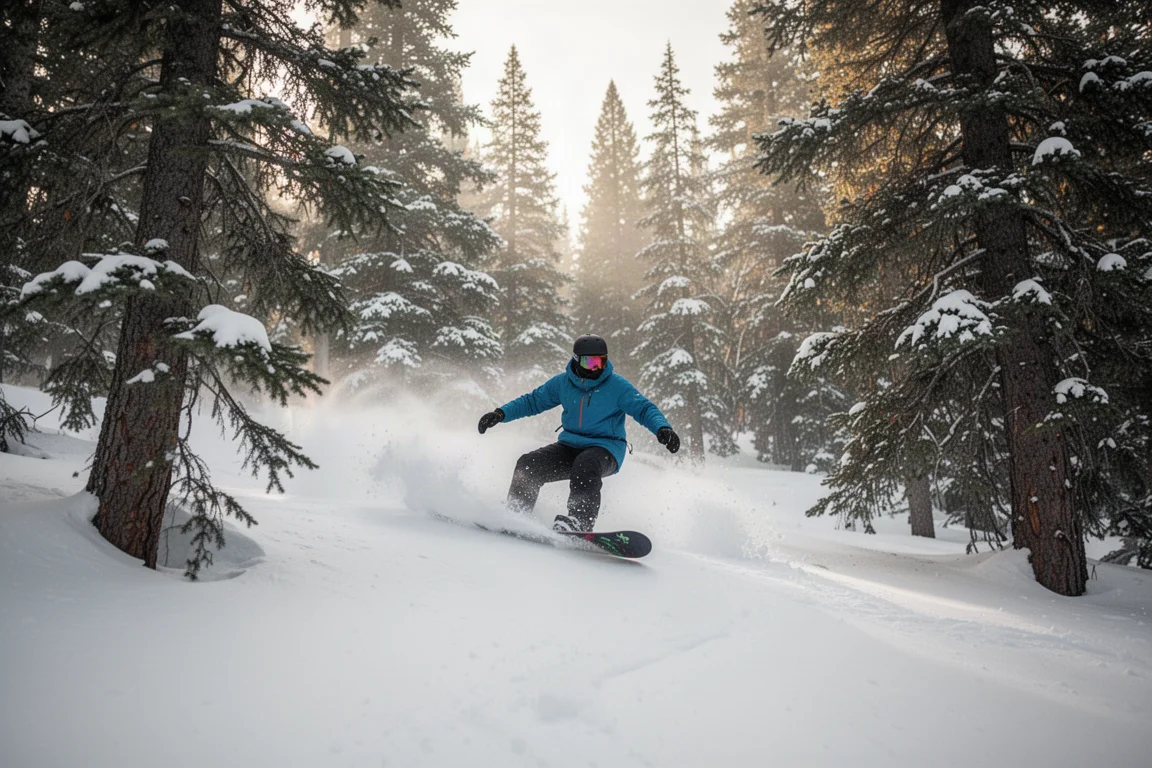
The test day was not kind: about three inches of fresh snow from the day before had turned to dust-on-crust, with firm snow underneath and better coverage up in the trees. Flat light made reading the terrain difficult, which honestly makes it a decent stress test for a binding’s damping. Paired with Ride Fuse boots and a Jones Aviator 2.0 board, the C8 felt planted and composed on the sketchy, chattery surfaces.
Setup and Adjustment: Almost Entirely Toolless
Most of the C8’s adjustments are toolless. Flip tabs on the ankle and toe straps let you slide them back and forth by hand, and the mechanism grabs one direction more easily than the other, which speeds things up. The forward lean is the same story: a quick flip tab to drop the highback forward or release it, which has become the industry standard approach.
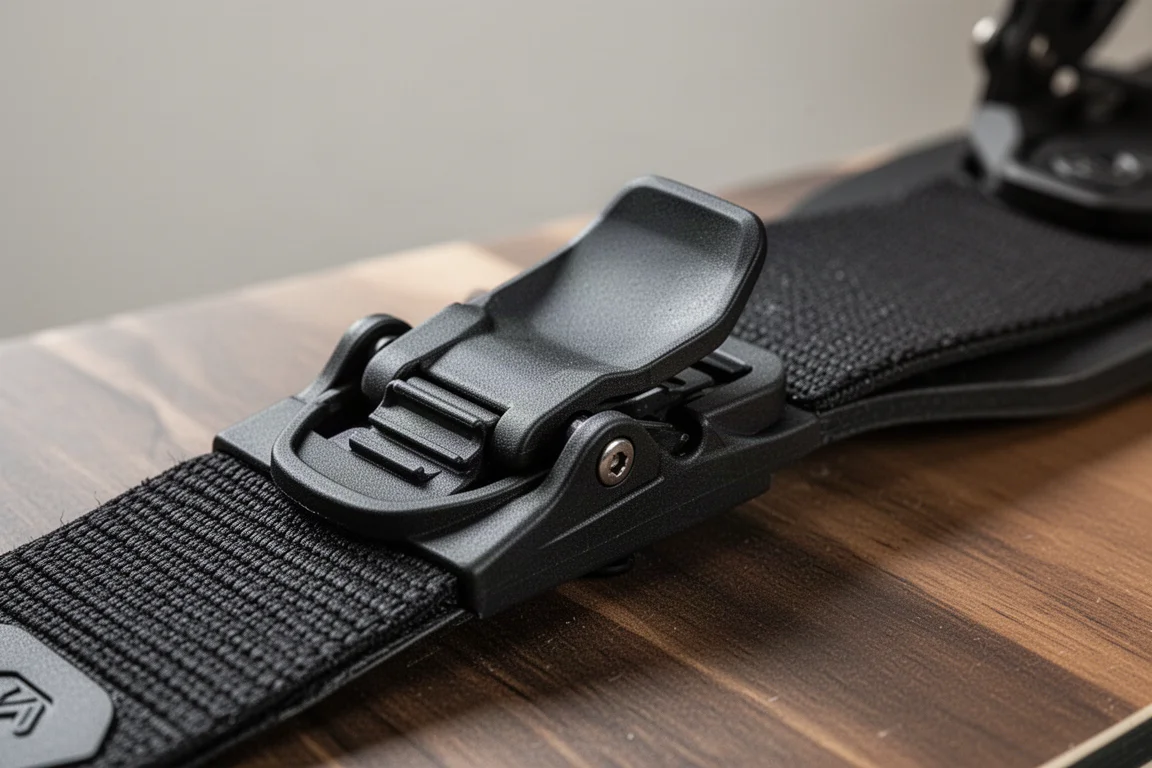
The fiddlier part is heel centering. Two screws on each side of the binding loosen so you can slide the heel cup back and forth to center it on your boot. There are numbered markings that line up exactly with Ride boots; with other brands you will need to experiment by boot size. You can also undo the heel screws to rotate the highback, and grooves in the mount let you micro-adjust it to line up with your heel edge if that matters to you.
One clever detail: the molded ankle strap is removable. You pop it off, flip it over, and reattach it on the other side, which changes the character of the ride to a surfer feel. The default setup runs more responsive, with the lower section moving while the top stays fixed. Note that the straps themselves carry no padding, so comfort relies almost entirely on your boot’s padding. Ride also redesigned the toe strap this year: less bulky, with added stretch and cut-out holes so it fits boots better. With a square toe box, over-the-toe strapping worked fine, but it is dealer’s choice between over-the-toe and over-the-top.
Ratchets: Nothing Flashy, Just Solid
The ratchets are fairly standard and feel high quality. After a full day of riding there were no teeth markups on the ladders, and they grip well. There is slight play in the ankle ratchet and essentially none on the toe ratchet. Both are easy to grip with mittens or gloves on. There is a little play in the highback release lever too, but you will not notice it while riding. They simply get the job done.
The Highback: Borrowed from the Best
Ride moved the highback from the C9 onto the C8 this year, and it is arguably the best highback the brand makes. It is nice and narrow, so there is a little lateral play when you go side to side, but it stays stiff the moment you engage heel-toe movement, so it feels right there with you. Padding on the inner face keeps it comfortable, and the narrow profile means it will not press against the side of your boot or a Boa dial.
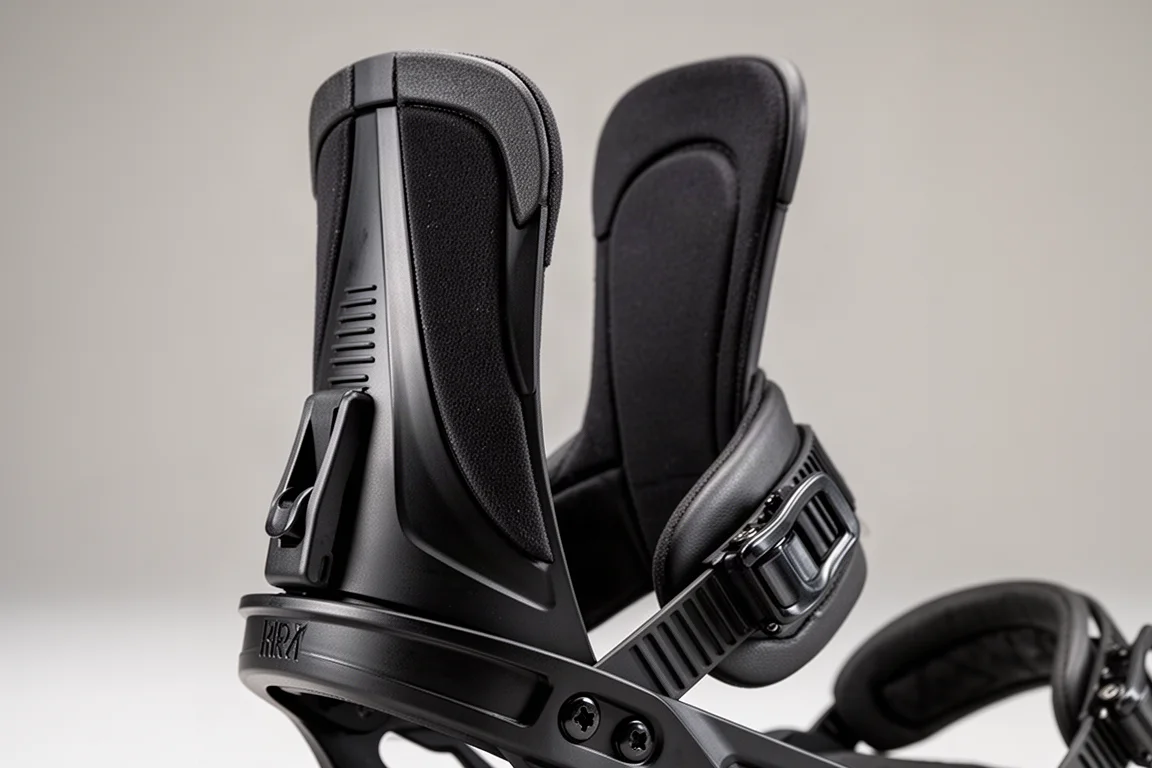
The quick toolless forward lean adjustment carries over here as well. One tip worth repeating: do not spin the forward lean lever all the way around; keep it where it is set and just flip it down or back up as needed.
Ride Feel: Stiff, Responsive, and Damp
For a responsive binding, the C8 retains some flex. You get lateral movement when pressing or loading up for airs, but almost none heel to toe, with most of the remaining flex coming from the stretch straps and the base. Underneath, a full layer of foam sits under the base alongside urethane pads that help you flex into the binding and drive power through it.
Where it genuinely shines is damping. The urethane pods under the heel and toe, combined with the foam layer and the composite chassis, cut down micro vibrations very well. On icy, crunchy snow the chatter does not transmit upward the way it does through aluminum-chassis bindings. It is not the most damp binding on the market, but it is up there with them.

This is not the binding for riders chasing a super surfy feel. If you want an aggressive, responsive ride, it fits that brief very well.
Who It Is For
The C8 is built for technical riders who need real responsiveness, especially those riding stiffer boards. It also suits bigger riders with more mass who need extra support underfoot. If your style leans playful and surfy, look elsewhere.
Comparable Bindings
If the C8 is on your shortlist, the Jones Mercury, the Rome Katana, and the K2 Program are worth cross-shopping, as they sit in a similar performance bracket.
Conclusion
By merging the old C8 and C9, Ride effectively took the best of each: the C9’s highback and the C8’s strap system, aimed at a customer base that was already shopping both. The result is a stiff, well-damped, mostly toolless binding that rewards aggressive riding. If that sounds like you, the C8 deserves a close look.
Product link
View more details for Ride C8 Bindings
This product is mentioned in the review. Check the specifications, options, and compatibility before buying.
View more details for Ride C8 BindingsFurther reading
Related Reviews

Snowboard Bindings
2024 Union Ultra Snowboard Bindings Review: A Cushy, Freestyle-Focused Favorite
Two seasons on the 2024 Union Ultra: a lightweight, tweakable freestyle binding with standout comfort, a damp molecular bushing, and thoughtful hardware fixes.

Snowboard Bindings
32 Team Phase Binding Review: A Fast Entry Binding Built for Freestyle Laps
The first binding from 32 uses the Phase chassis for quick step-in entry with a softer, freestyle-leaning flex. Here's how it performed on the snow.

Snowboard Bindings
Arbor Cypress Snowboard Binding Review: A Laid-Back Cruiser That Can Charge
A closer look at the Arbor Cypress binding's adjustability, strap feel, and that oddly tall highback before you decide to buy.