Protein Skimmers
Reef Octopus Regal vs Elite Protein Skimmers: Which Series Fits Your Sump
A practical comparison of the Reef Octopus Regal and Elite protein skimmer series, covering pump layouts, body sizing, sump water depth, and the setup habits that decide performance.
Introduction
A protein skimmer is one of the few pieces of reef equipment where results depend as much on setup as on the model you buy. Reef Octopus builds two closely related lines, the Regal series and the Elite series, and on a product page the two can look almost interchangeable. Both are built around an acrylic body, both run DC pumps with five speed settings, and many models across the two lines use the same pumps.
That overlap is exactly why the choice deserves a slower look. The Elite series adds a more elaborate mold, a higher price, and, on several space-saving models, an inverted pump layout that allows the entire body to fill with bubbles. The Regal series keeps a more familiar external pump arrangement on many models at a lower cost. Neither line is automatically the better answer. What matters is which one fits your sump, your bioload, and the way you maintain the tank.
How the Regal and Elite Series Differ
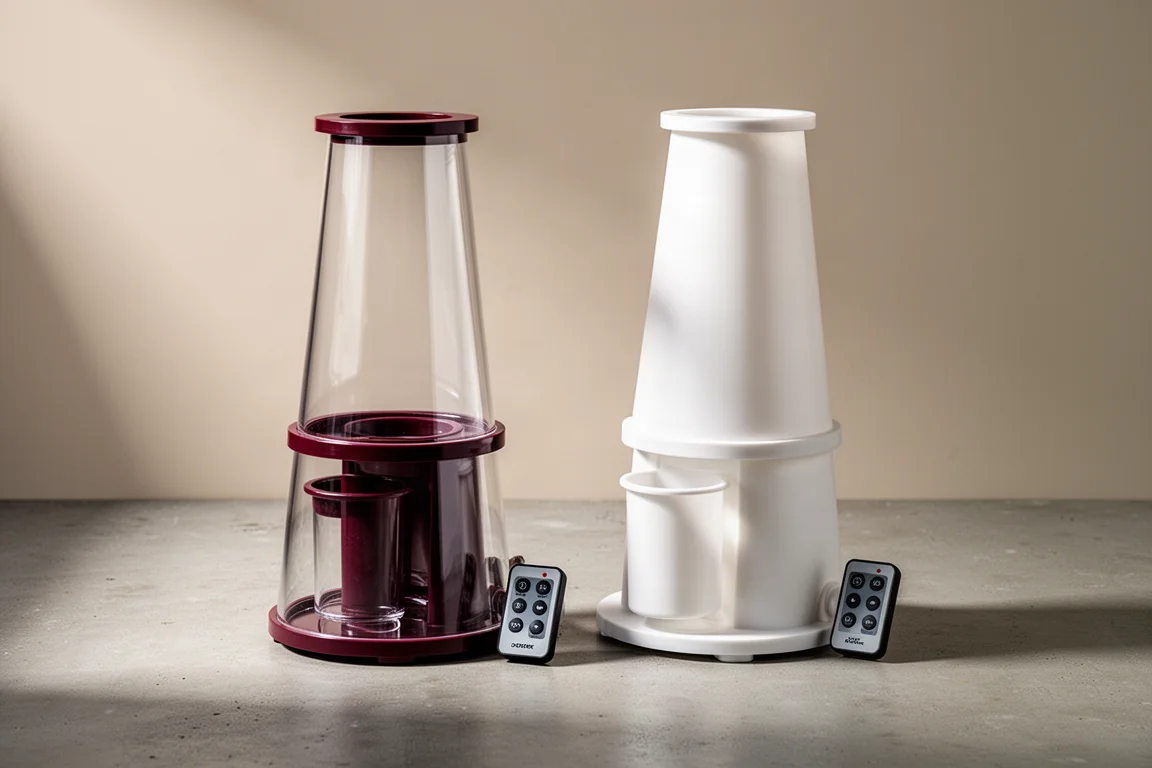
There are three differences worth understanding. The Elite series bodies use a fancier mold and are the better looking of the two. They also cost more. Beyond appearance and price, some models bring genuine performance changes, most notably the space-saving designs where the pump is inverted so the full body volume can be filled with bubbles and used for contact time between air and water.
The rest of the picture is simpler than the price gap suggests. Many skimmers in both lines share the same pumps, and in a lot of cases what sits above the pump is an acrylic tube. If a lighter colored body, a cleaner mold, and the inverted pump layout matter to your setup, the Elite series is worth the extra. If they do not, the Regal series covers the same core job.
Both series are sized around the same principle: a neck wide enough to let foam climb into the cup, and a body tall enough to give air and water time together. Choosing between them is less about raw capability and more about which footprint and layout your sump can accept.
Reef Octopus Regal Series: The Familiar Layout
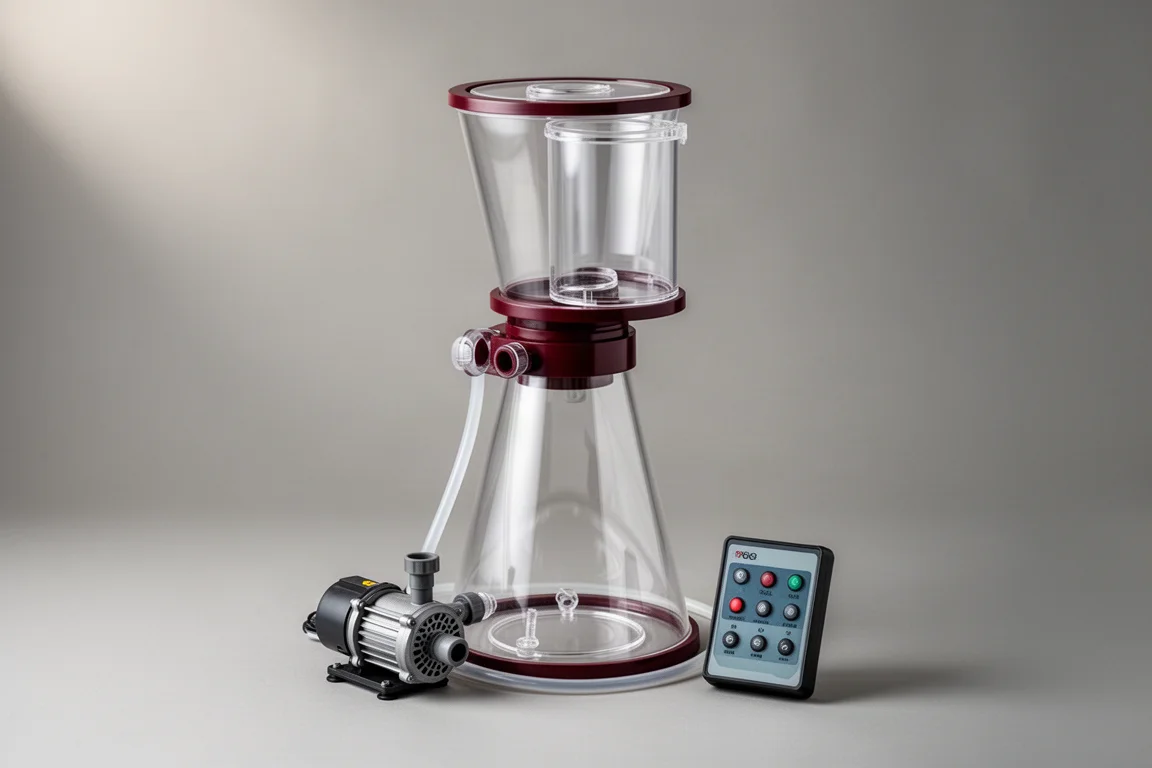
Regal series skimmers use a pump mounted on the outside of the body on the INT versions, which keeps the pump easy to reach during cleaning. The trade-off is footprint. The base dimensions listed in the product description cover the body, but the pump on the side adds a meaningful amount of width, and that is easy to overlook when measuring a sump compartment.
Water level guidance for these skimmers is narrow on purpose. Regal models are typically specified for a sump depth of 7 to 8 inches or 8 to 10 inches. At 6 inches there is too much head pressure for the body to fill properly and bubble production suffers. At 10 or 11 inches the skimmer tends to produce too many bubbles and overflow. Staying inside the stated window is the simplest performance upgrade available.
The series also includes a float switch in the collection cup. It is fitted out of the box, and it shuts the skimmer off when the cup fills rather than letting it spray back into the tank.

For a new tank with a light fish load, or for a sump with limited depth behind the stand, the Regal series is usually the easier starting point. The same DC pump and speed settings mean much of the tuning advice below applies directly.
Reef Octopus Elite Series: Space-Saving Design and a Higher Price
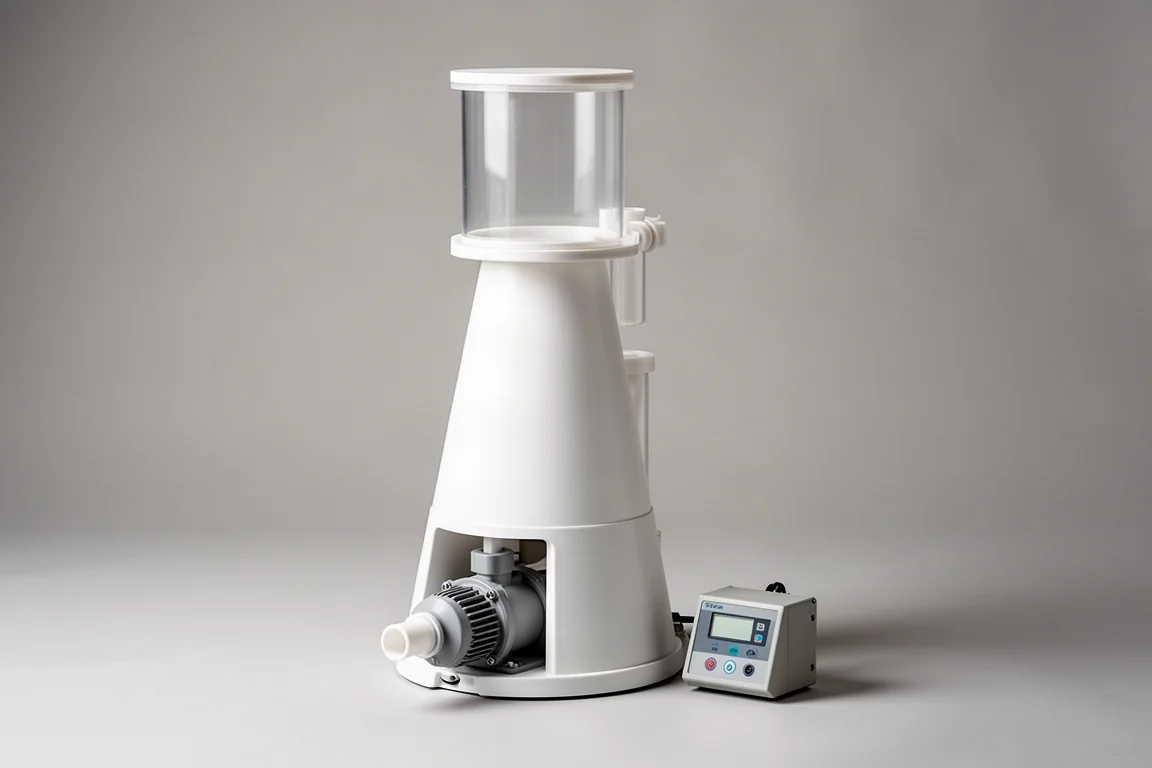
The Elite series is the white line, and the differences are visible before anything is plugged in: a more refined mold, cleaner lines, and a higher price. On many of the space-saving models the pump is inverted rather than mounted outside the body, which lets the entire skimmer body fill with bubbles instead of just part of it. More contact time between air and water generally means more efficient foam production.
That is the real argument for the Elite series. The form factor is more compact in the sump, and on those inverted pump models the whole body works. The counter-argument is the price. Since many models in both series share the same pumps and the same basic acrylic body construction, part of what you pay for is the look of the thing, which is a legitimate preference but not a performance claim.
External pump layouts, as used on many Regal models, tend to fill the entire body with bubbles at the cost of a larger footprint. Internal layouts pack more neatly into a compartment, though the pump occupies volume inside the body in some designs. The honest summary is that you are trading space against configuration, so the choice should be made against your actual sump measurements.
Setup Details That Decide Performance
The settings and habits below matter more to skimmate production than the badge on the body, and they apply to both series.
Air Output and Speed Settings
The DC pump has five speed settings. Plugging the skimmer in, setting it to maximum, and then adjusting only the gate valve to raise the water level is the most common mistake owners make, because more air is not automatically better. Too much air creates a rolling boil of bubbles that never forms a stable foam head, and nothing flows over the neck into the cup.
Reducing air output until it matches the amount of organic material in the water is what allows a stable foam head to build. On a lightly stocked tank, a lower speed setting can outperform maximum output. This is where the DC pump earns its place: it lets you scale air up or down as the tank matures, from a few fish and light feeding to a heavier bioload.
The control box itself offers only those five buttons, but a 0 to 10 volt connection to a controller opens up the full range from zero to a hundred percent, with far finer steps in between. If your controller has spare 0 to 10 volt ports, using them is a straightforward gain.
Body Size and Sump Water Level
Bigger is not better. A large body with a wide neck needs a substantial amount of organic material before enough foam forms to climb over the edge. In a lightly stocked tank, an oversized skimmer can produce almost nothing, while a smaller model with a narrow neck will foam reliably. Going too small is the better error: it may not capture every benefit available, but it will still work, and the correct size is always the best answer.
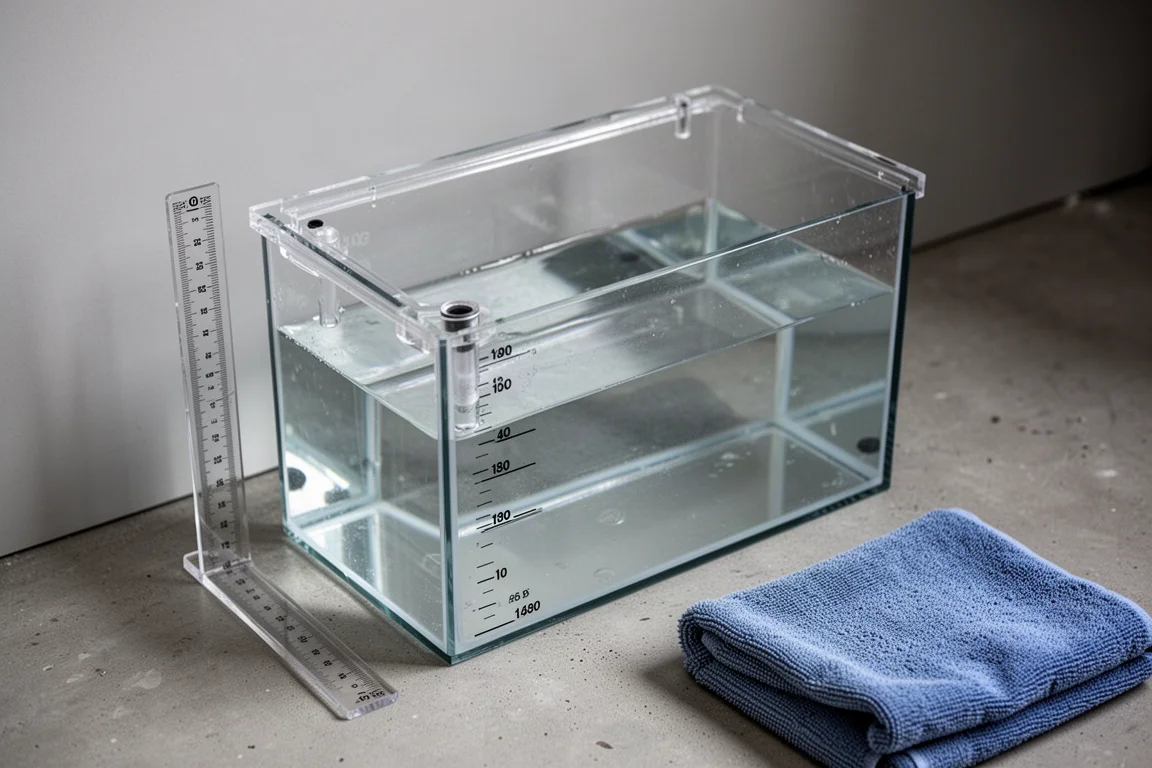
Water depth deserves the same respect. The recommended ranges are tight, and they exist because the skimmer is designed around a specific amount of back pressure from the sump. Outside the range, adjust the level rather than compensating with the pump.
Recirculating models take water height out of the equation almost entirely. They use two pumps and take up more space, which is why they are less common, but they let you control air input, the rate at which organics are fed to the body, and contact time separately. For an owner with the room to spare, that is the most tunable option in the range.
Float Switch, Feed Modes, and Drain Port
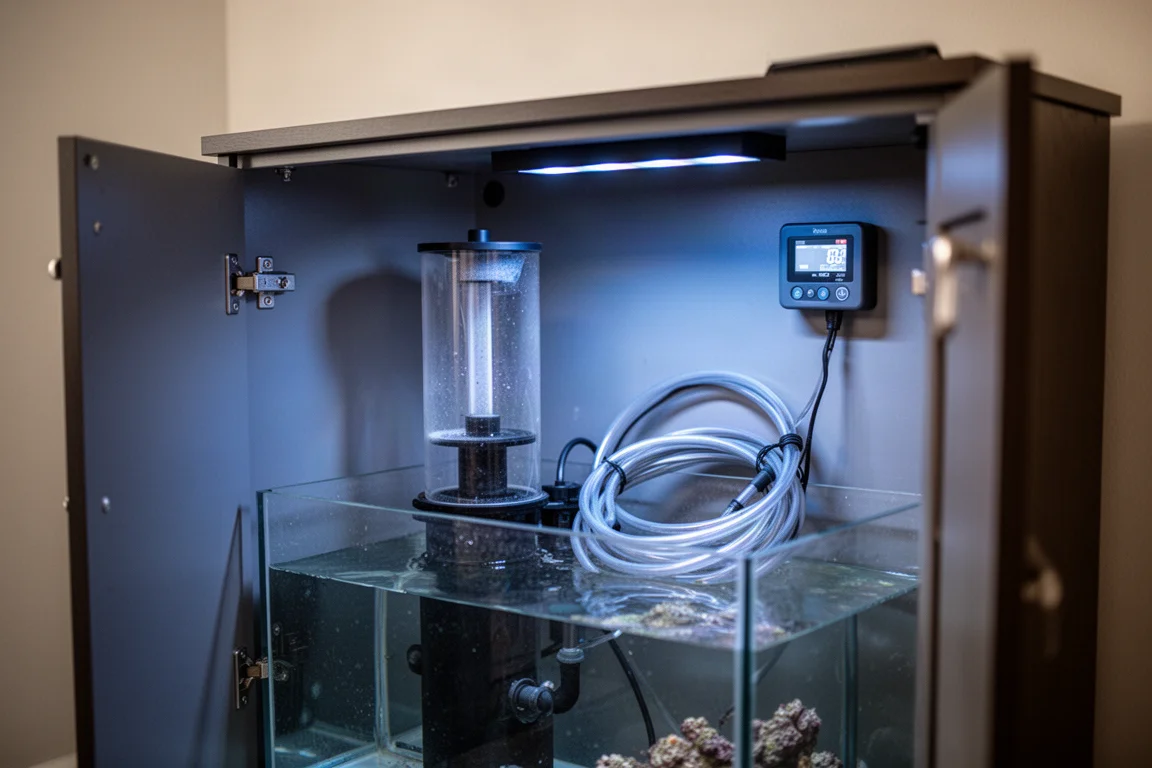
Three included features are frequently ignored. The first is the float switch in the collection cup. It shuts the skimmer down when the cup fills, which prevents an overflow from spraying back into the tank, and it protects the system when the sump level rises unexpectedly.
The second is the feed mode. The controller offers a 5 minute setting for feeding the tank and a 60 minute setting for maintenance. The long setting is the more useful one: sump levels rise during a water change and push the skimmer into a runaway overflow, and starting the 60 minute mode beforehand turns the skimmer off and brings it back an hour later without the mess.
The third is the drain port on the cup. Rather than wrestling the cup out of a tight compartment, you can run the port to a separate container and empty that instead. If you go that route, move the float switch into the collection reservoir so the skimmer shuts off when the container is full rather than overflowing it. Collection containers with carbon on top are worth considering, since they reduce odor inside the cabinet.
Buying Advice: Which Series Fits Your Sump
Measure first. Note the body footprint, then add the space the external pump takes on Regal INT models, and confirm the sump compartment can hold the skimmer at the recommended water depth. If depth is the constraint, a recirculating model or a model with an internal pump layout solves more problems than a larger body would.
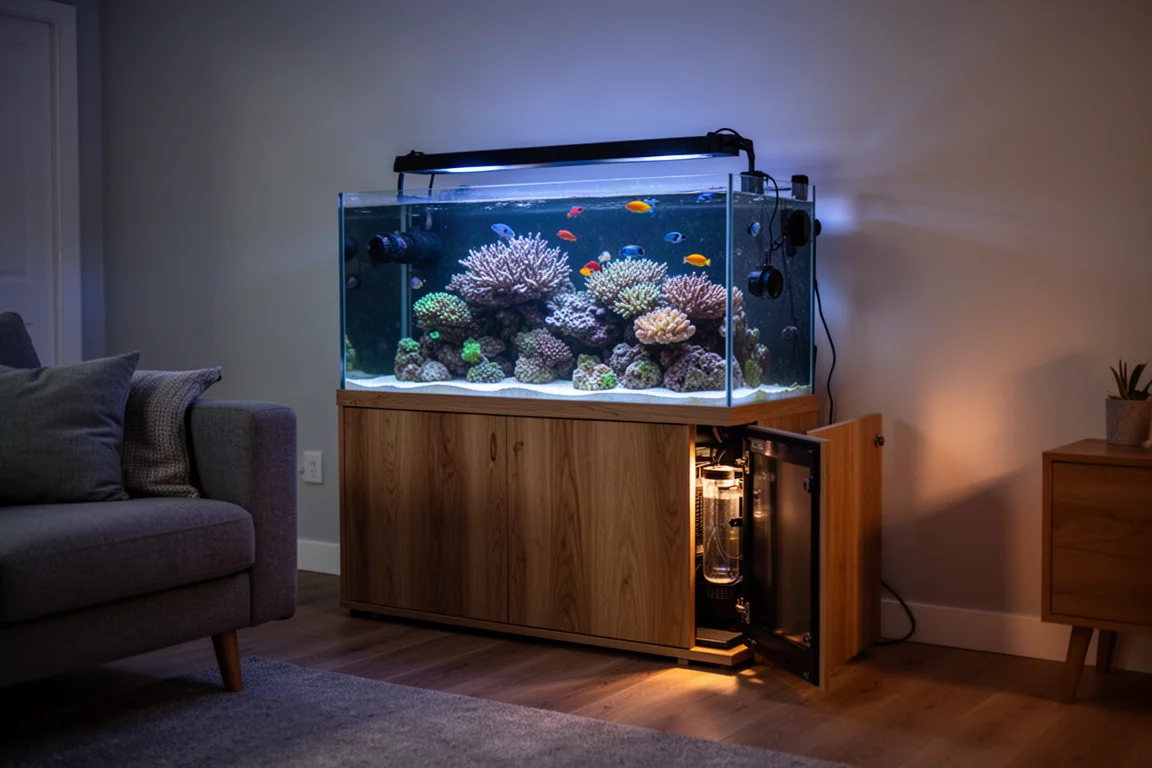
If your priority is value and easy access to the pump, the Regal series delivers the core job at a lower cost, with a float switch and a DC pump included. If you want the cleaner body design and the inverted pump layout that fills the whole body with bubbles, and your sump can take the footprint, the Elite series is the version to choose. Either way, plan to spend your first weeks tuning air output and confirming water level rather than running the pump at maximum.
Conclusion
The Regal and Elite series share more than they differ: the same pump technology in many models, the same acrylic construction, and the same setup rules. Elite adds a more refined body, a higher price, and, on space-saving models, an inverted pump that uses the full body volume. Regal keeps the external pump arrangement and the lower cost.
Whichever you pick, the results come from the same handful of habits. Match air output to your bioload, respect the recommended sump water depth, choose a body size your tank can actually feed, use the float switch and the 60 minute feed mode, and put the drain port to work. Done properly, a DC skimmer can scale with a tank from its first fish to a mature reef.
Further reading
Related Reviews
Protein Skimmers
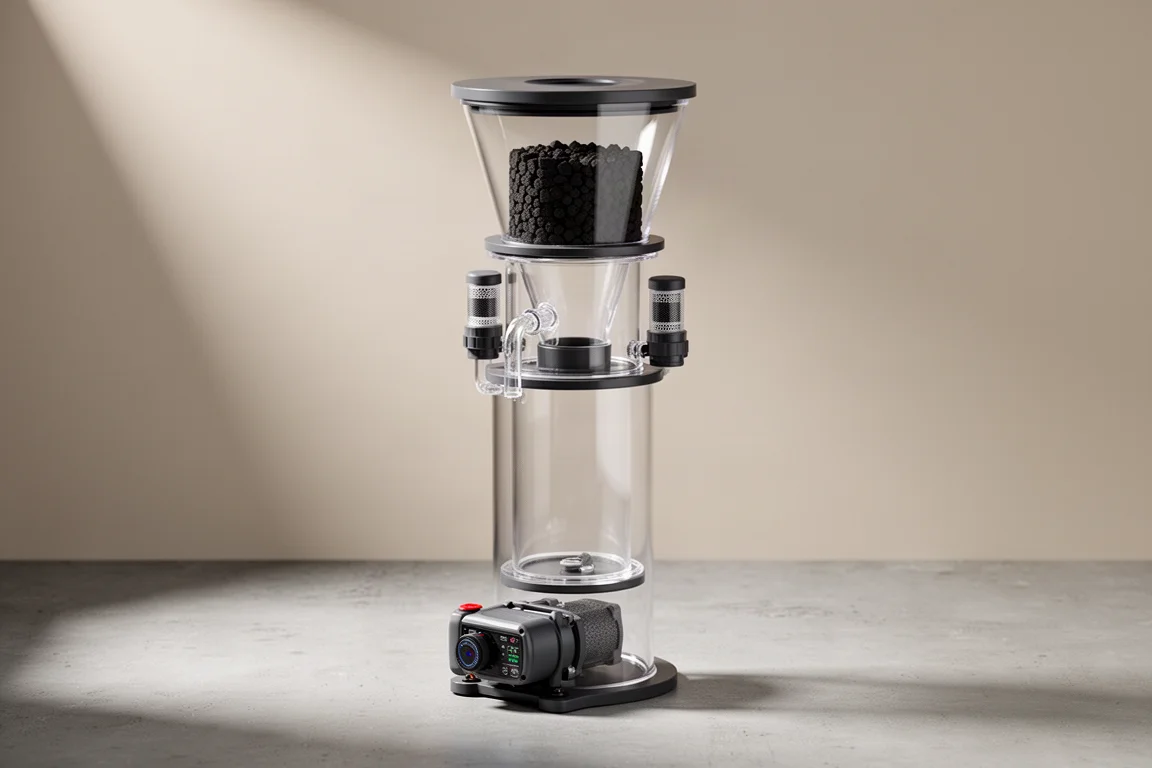
Aquaforest All-in-One Skim Review: Skimming, CO2 Scrubbing, and Odor Control in One Unit
A close look at the Aquaforest All-in-One Skim, a reef aquarium protein skimmer that adds recirculating CO2 scrubbing, carbon odor control, ozone readiness, and seeded biomedia to a compact dual venturi design.
Protein Skimmers
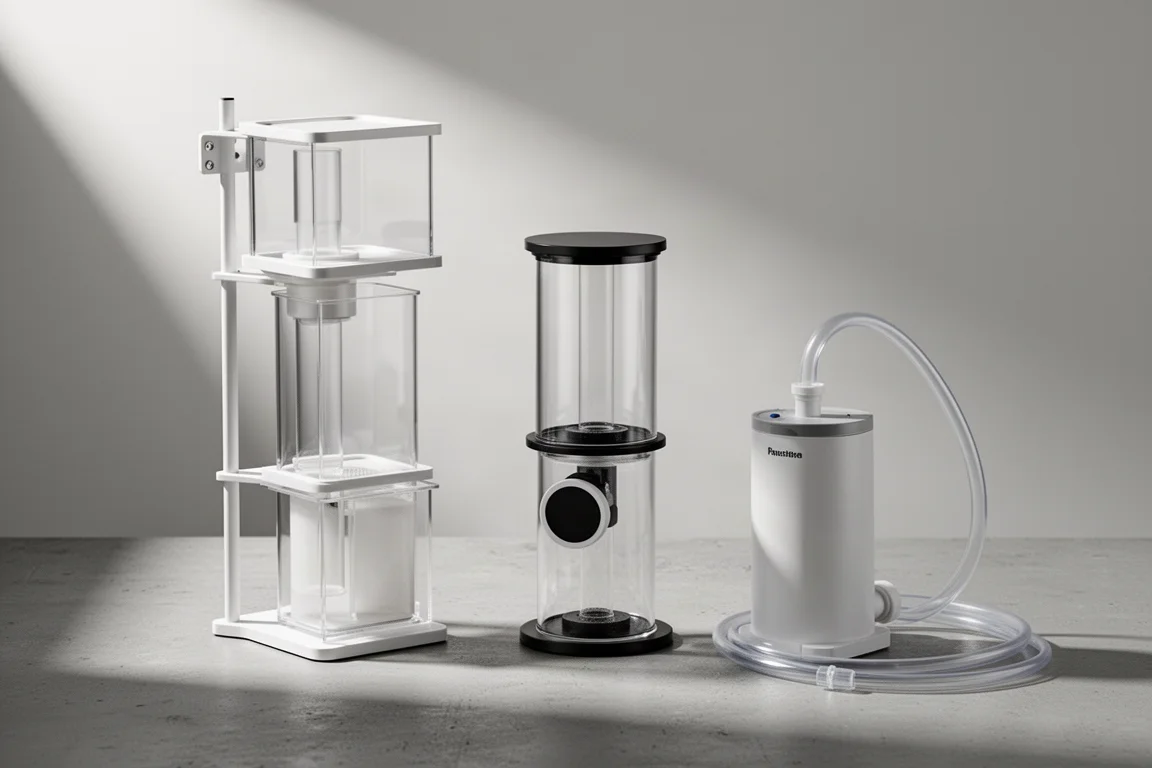
Best Protein Skimmers for Reef Tanks: Four Options Compared
A practical comparison of four reef tank protein skimmers, what each does well, and the sizing and tuning rules that decide whether one actually works in your system.
Protein Skimmers
Best Red Sea RSK Protein Skimmers: RSK 300 vs RSK 600 vs RSK 900
A practical look at the Red Sea RSK 300, RSK 600, and RSK 900 protein skimmers, covering tank ratings, shared convenience features, and the optional DC pump upgrade.