Protein Skimmers
Best Protein Skimmers for Reef Tanks: Four Options Compared
A practical comparison of four reef tank protein skimmers, what each does well, and the sizing and tuning rules that decide whether one actually works in your system.
Introduction
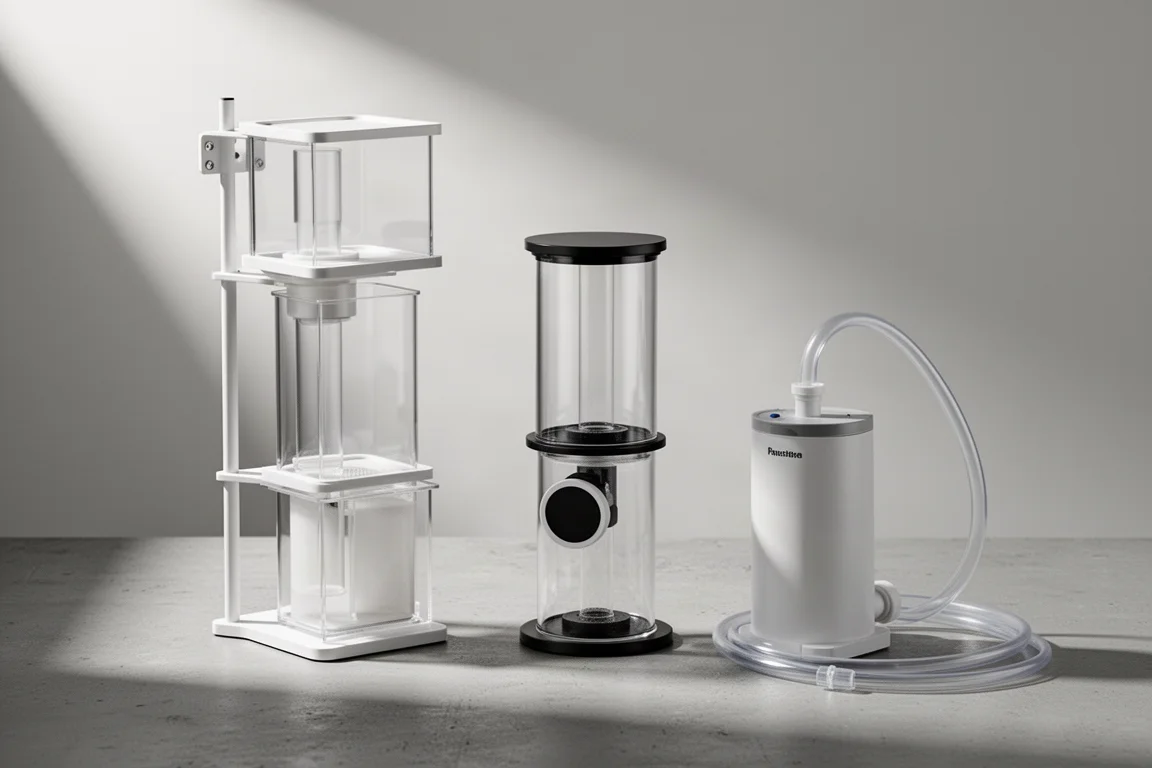
A protein skimmer is optional equipment, but it is one of the few additions that changes how much work a tank demands. With a skimmer that is set up well, many reef keepers can reduce water changes, feed more heavily, or carry a larger fish load, and the same unit can serve a lightly stocked tank as well as a busy one, provided it can be adjusted.
The reason so many skimmers disappoint is that foam is a balance of air, water, and dissolved organics. A large unit with a wide neck running at full air can look spectacular while collecting almost nothing, because the bubbles pop before they ever reach the cup. The four models below represent different answers to that problem, from hang-on designs to in-tank units with adjustable pumps.
How We Evaluated These Protein Skimmers
Four things separate a skimmer that earns its space from one that sits in the sump looking busy.
The first is adjustability. A good skimmer works as well for two fish as it does for twenty, which means the air and water mixture has to change as the tank matures. Direct current (DC) pumps handle this best, because slowing the motor also reduces the air drawn in.
The second is neck size relative to the organic load. A narrow neck takes less foam to push material into the cup, which is why smaller-necked designs often work well out of the box.
The third is how the foam is collected. Raising and lowering a cup, or using a telescoping drain, changes the collection point without disturbing the foam engine itself.
The fourth is what happens when something goes wrong. Hang-on models put any overflow on the floor, so flood risk belongs in the decision.
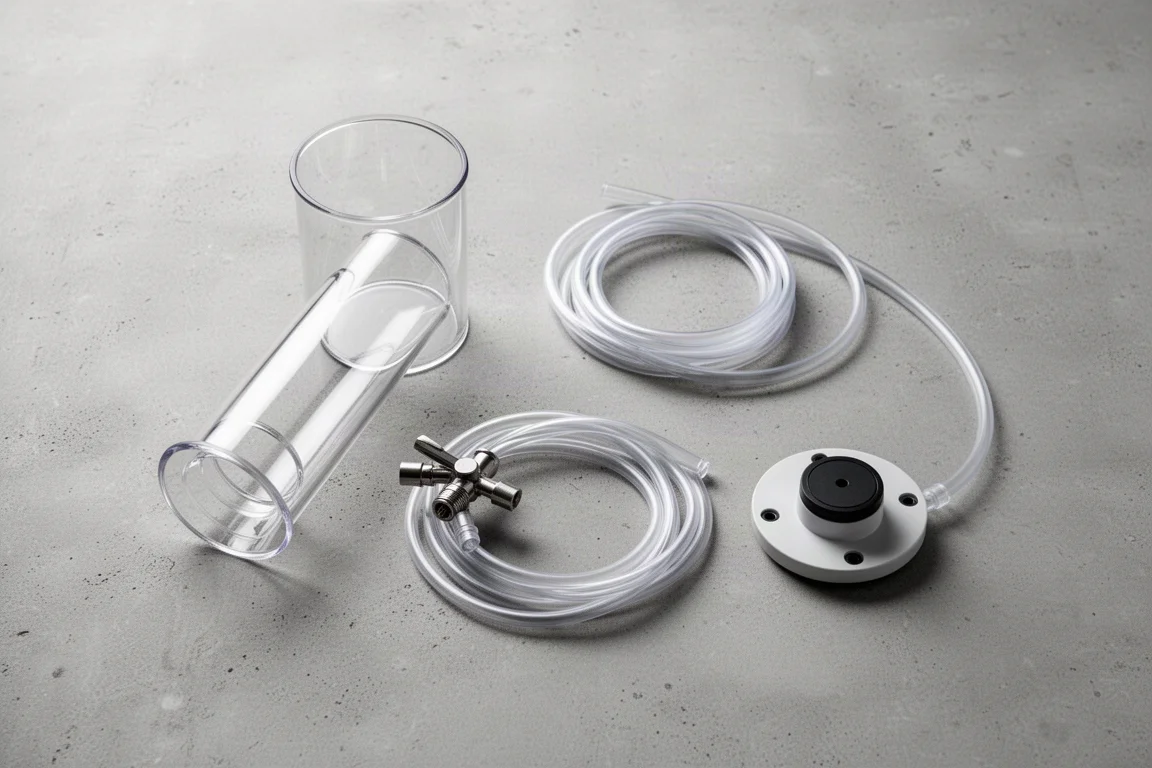
Tuning is where most of the value sits, so it is worth checking each of these points against your own setup before comparing specifications.
Reef Octopus BH-1000
The BH-1000 is a hang-on-back skimmer, a format that suits tanks without a sump and remains one of the most popular ways to add skimming to a small or mid-sized system.
Hang-on designs are also unforgiving. When the organic load in the tank spikes suddenly, the foam head can run away and the collection cup overflows. A damaged anemone caught in a powerhead is enough to trigger that, filling the cup with excess organics and sending the overflow onto the floor. Owners of hang-on skimmers should expect to check the cup often and plan for the possibility of a spill.
Vertex Omega
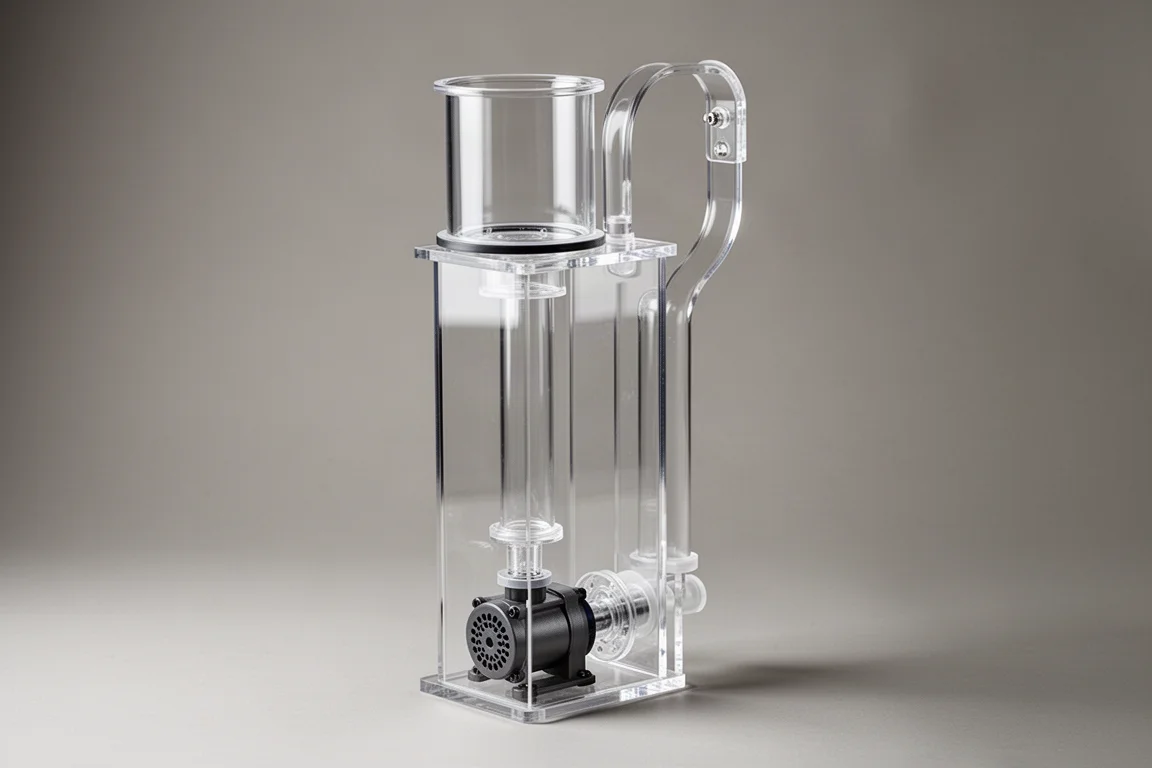
The Vertex Omega delivers a lot of air. The bubble column fills the body from top to bottom, which makes it visually impressive and genuinely effective in a heavily stocked, heavily fed system.
The same characteristic becomes a liability in a lightly loaded tank. With too much air and not enough dissolved organics, the bubbles pop at the surface of the foam column, and the skimmer looks like a pot of boiling water while collecting almost nothing. Keepers who feed generously tend to get strong results from this design; keepers who do not can struggle to tune it.
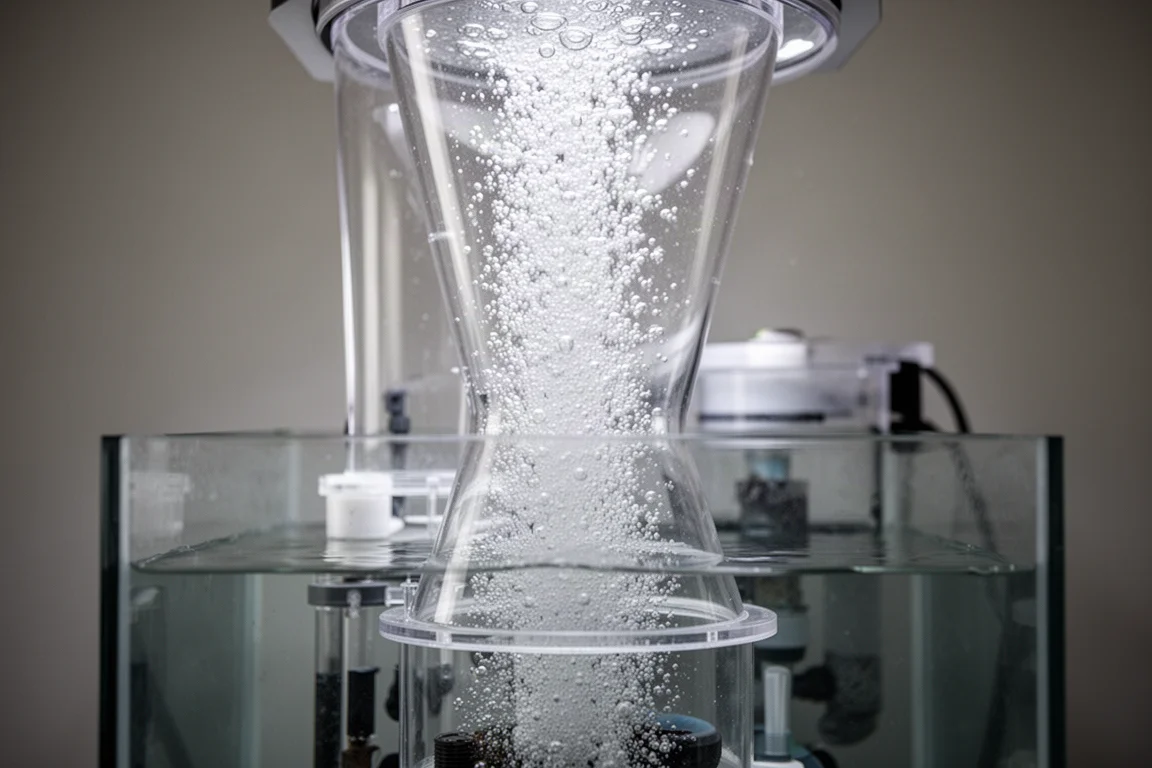
If your tank carries a steady, heavy organic load, high airflow is an advantage. If your tank is lightly stocked or runs strong mechanical filtration, the same airflow needs to be dialled back, and that requires a pump that can be adjusted.
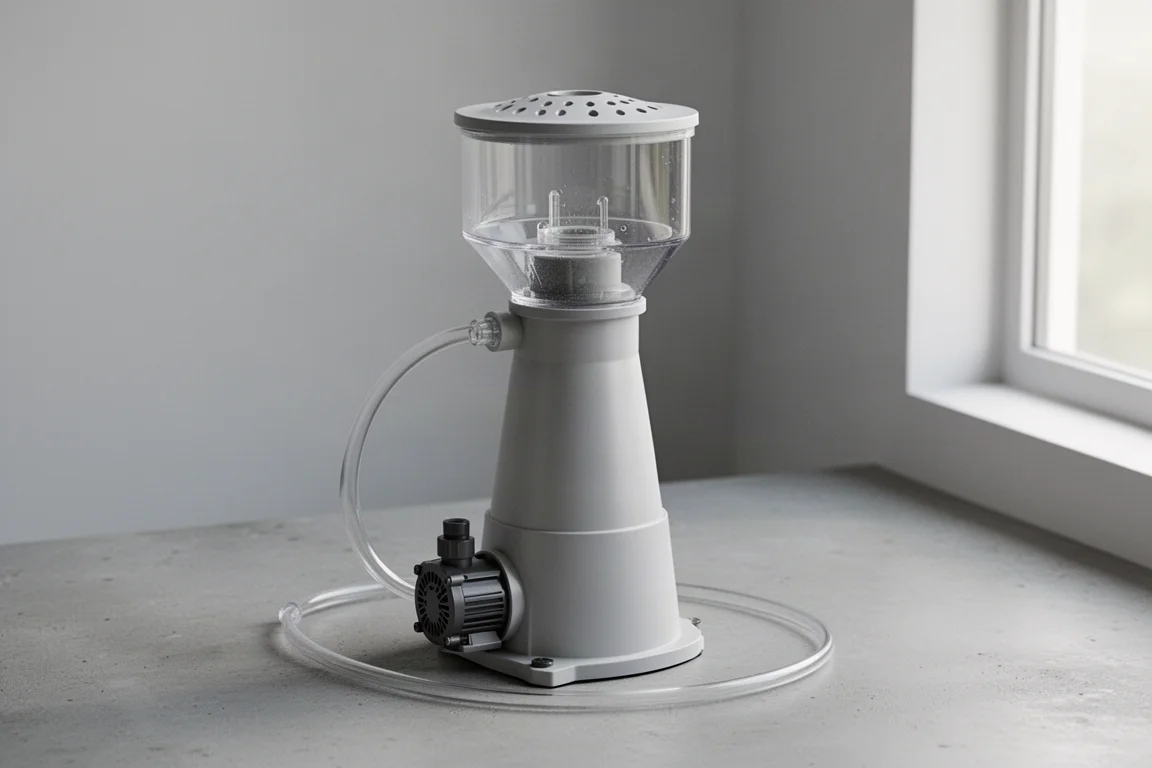
Tunze Comline
The Comline takes a different approach: it sits inside the tank rather than hanging on the back. The body mounts with magnets and reads almost like an overflow tower, which keeps the display clean and, more importantly, keeps any overflow inside the aquarium instead of on the floor.
It is also available with an adjustable DC pump, so the air and water mixture can be tuned to the tank. The trade-off is performance. In-tank skimmers in this style generally do not match the strongest hang-on units, but many reef keepers will happily give up a little skimming power for the peace of mind that comes with a unit that cannot flood the room.
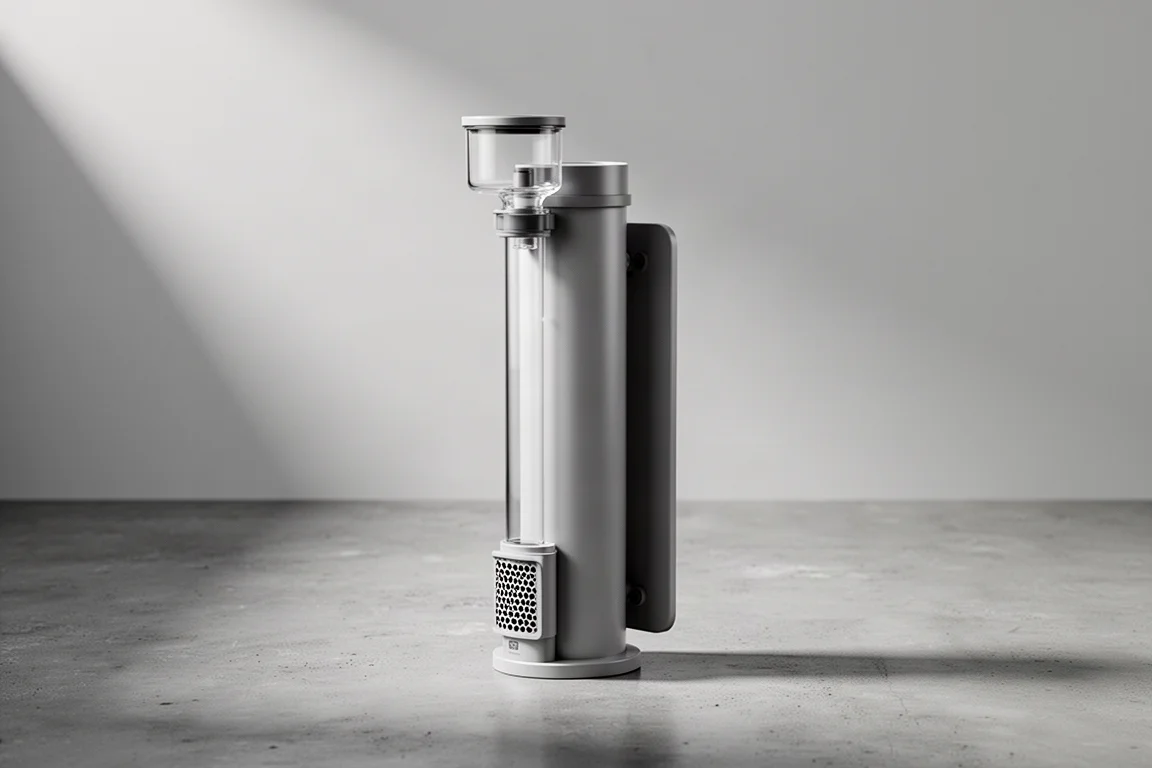
Prizm Pro
The Prizm Pro is another hang-on-back design, and it illustrates the same weakness clearly. Hang-on skimmers are only ever one overflow away from a wet floor, and this model has flooded in real use.
That does not make it useless. It makes it a skimmer that demands attention: a cup that is checked regularly, pumps and unions that are reassembled carefully after maintenance, and a realistic expectation that an organic spike can push the foam past the rim.
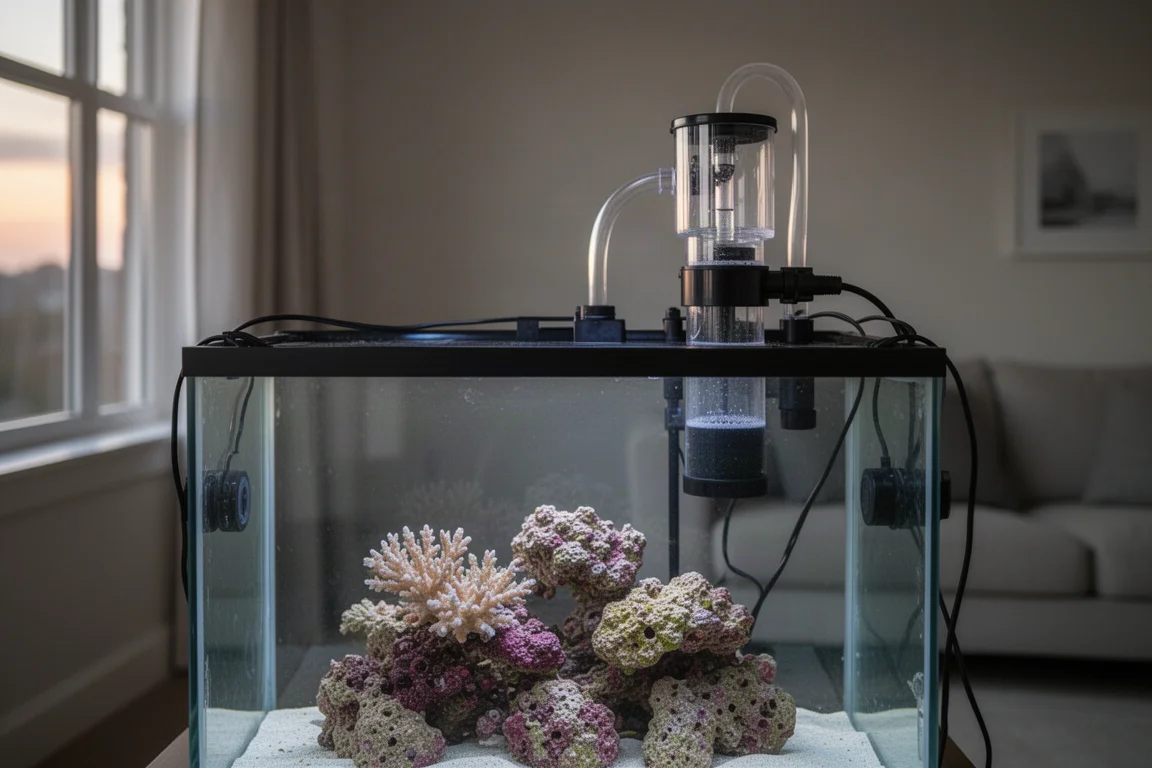
For anyone weighing a hang-on skimmer against an in-tank model, the deciding factor is usually not performance on paper but how much risk of a spill you are willing to accept. Where the skimmer sits above a sump, an overflow is an inconvenience. Where it hangs on a display tank, it is a cleanup.
Dry Versus Wet Foam and Other Tuning Lessons
Most of the confusion around skimmer tuning comes from a single misunderstanding: that the gate valve decides whether skimming is wet or dry. It does not. The valve changes the collection point, not the foam itself. Foam is created by the mixture of air, water, and organics inside the body.
Dry foam holds a higher ratio of organics to water and air, and it is created by reducing the amount of air entering the skimmer. Less air also slows the velocity of air escaping up the neck, so the foam lasts longer instead of popping early. Wet foam contains more water, and when it is tuned to match a steady organic load it can remove more total waste, but it is also far more sensitive. Change the feeding routine and a wet-tuned skimmer can either stop producing foam entirely or overflow.
Between the two, a moderately dry setting tends to work across the widest range of tanks with the least tuning, while the middle to wet range removes the most waste in a consistently stocked system.
Other lessons are worth knowing before you buy:
- More air is not better, and a skimmer that boils from top to bottom is often collecting nothing.
- Water level in the sump is one of the worst ways to tune a skimmer, and manufacturer depth recommendations are usually reliable starting points.
- Oversized skimmers with wide necks need a correspondingly heavy organic load, so going one size too big is worse than going one size too small.
- Tuning an alternating current (AC) pump with an air valve behaves differently from slowing a DC pump, because restricting air lets the pump spin faster and push more water through the body, shortening contact time.
- Carbon on the collection cup lid is worth having, since the air leaving the cup carries the smell with it.
- Ozone is difficult to dose correctly, and too much of it can change the polarity of organics so that they repel bubbles instead of attaching to them.
Buying Advice: Sizing, Filtration Balance, and Gas Exchange
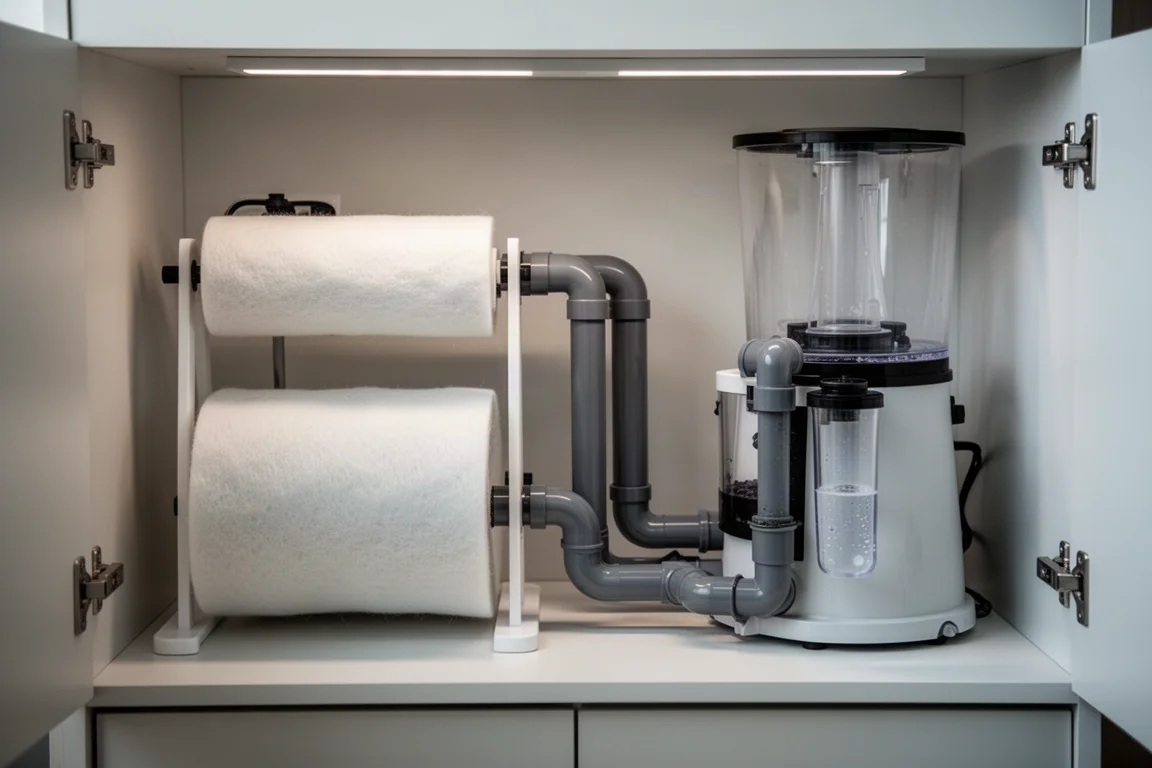
Size the skimmer to the organic load, not the tank volume printed on the box. A tank running a filter roller or frequently changed filter socks is already removing waste before it breaks down, which means less fuel for the skimmer and a smaller unit that actually performs. Leaving a filter sock in place until it rots produces the opposite result: organics break down inside the sock, feeding nitrate and phosphate while the skimmer starves.
Whatever model you choose, look for the ability to adjust air and water separately. A skimmer bought for a lightly stocked tank today should still work when the tank is fully stocked in two years, and that only happens if pump speed and airflow can be tuned. A DC pump is the cleanest way to achieve this, and a recirculating design, with one pump for water and one for air, gives the finest control if space allows.
Gas exchange deserves more attention than it usually gets. The bubble column inside a skimmer is the largest air-to-water contact surface in the system, and it works continuously. That makes the skimmer the most effective tool for holding pH near 8.3, where corals calcify faster. In a sealed, occupied house, the same mechanism can work against you by pulling carbon dioxide-rich air into the tank, which is where a carbon dioxide scrubber on the skimmer air intake comes in. Scrubbing does not add anything to the water, and with a solenoid it can hold pH steady around the clock.
Conclusion
Each of these four skimmers makes sense somewhere. The Reef Octopus BH-1000 is a familiar hang-on option for tanks without a sump, provided you accept the spill risk. The Vertex Omega rewards heavily fed systems with its high airflow but needs tuning in lighter ones. The Tunze Comline trades a little performance for in-tank mounting and a much smaller chance of a wet floor. The Prizm Pro shows how quickly a hang-on skimmer can turn an organic spike into a cleanup job.
Pick the model that matches your organic load, your filtration approach, and your tolerance for risk, then spend the time on tuning. That is where a skimmer stops being an optional box of equipment and starts being the reason you can feed more, change less water, and keep a fuller tank.
Further reading
Related Reviews
Protein Skimmers
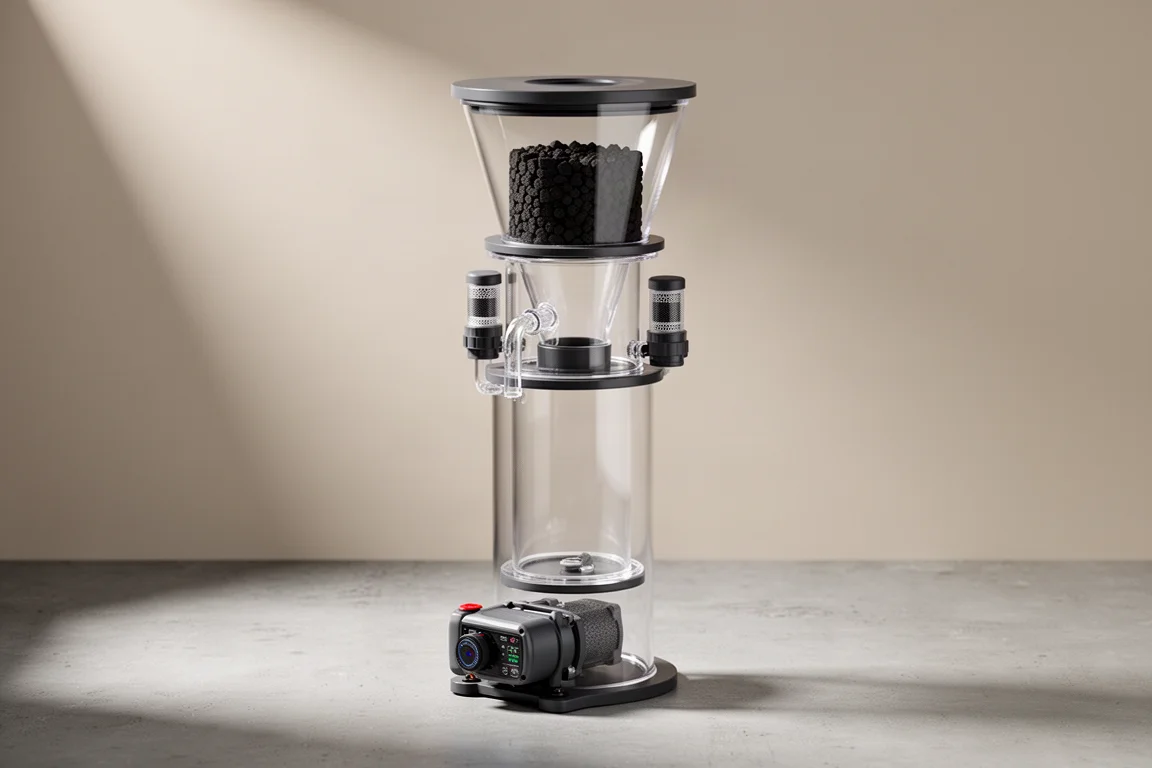
Aquaforest All-in-One Skim Review: Skimming, CO2 Scrubbing, and Odor Control in One Unit
A close look at the Aquaforest All-in-One Skim, a reef aquarium protein skimmer that adds recirculating CO2 scrubbing, carbon odor control, ozone readiness, and seeded biomedia to a compact dual venturi design.
Protein Skimmers
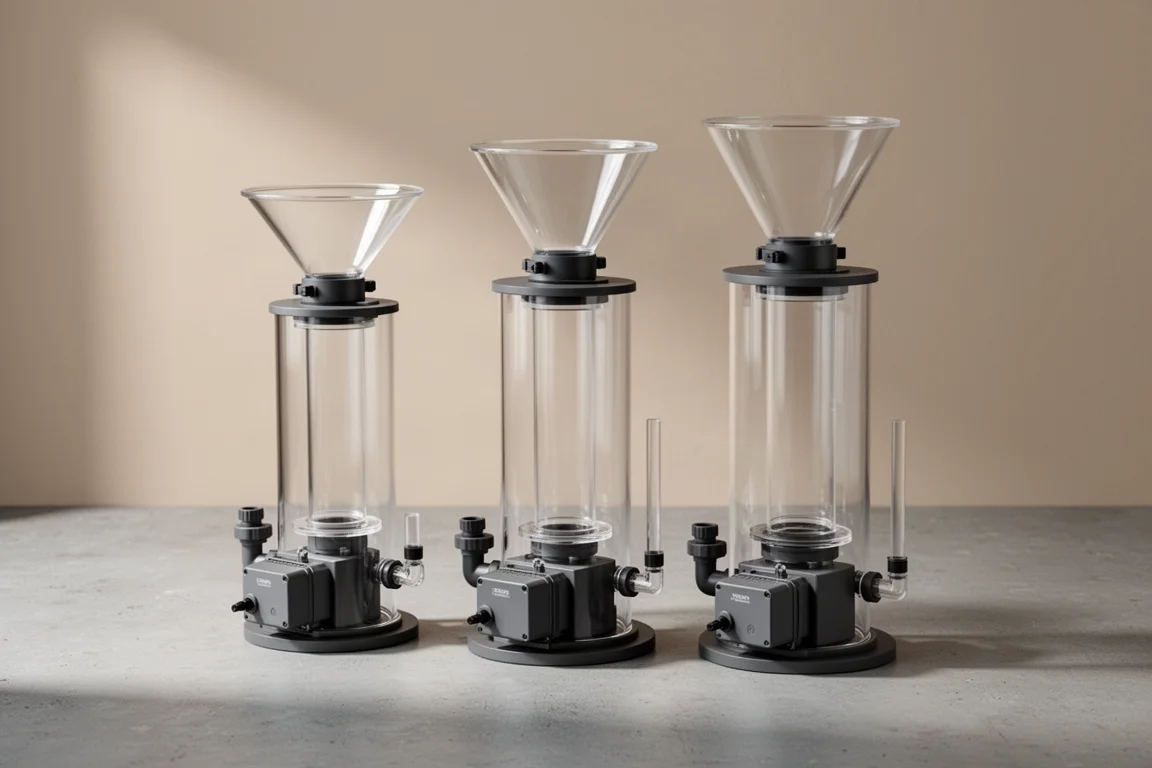
Best Red Sea RSK Protein Skimmers: RSK 300 vs RSK 600 vs RSK 900
A practical look at the Red Sea RSK 300, RSK 600, and RSK 900 protein skimmers, covering tank ratings, shared convenience features, and the optional DC pump upgrade.
Protein Skimmers
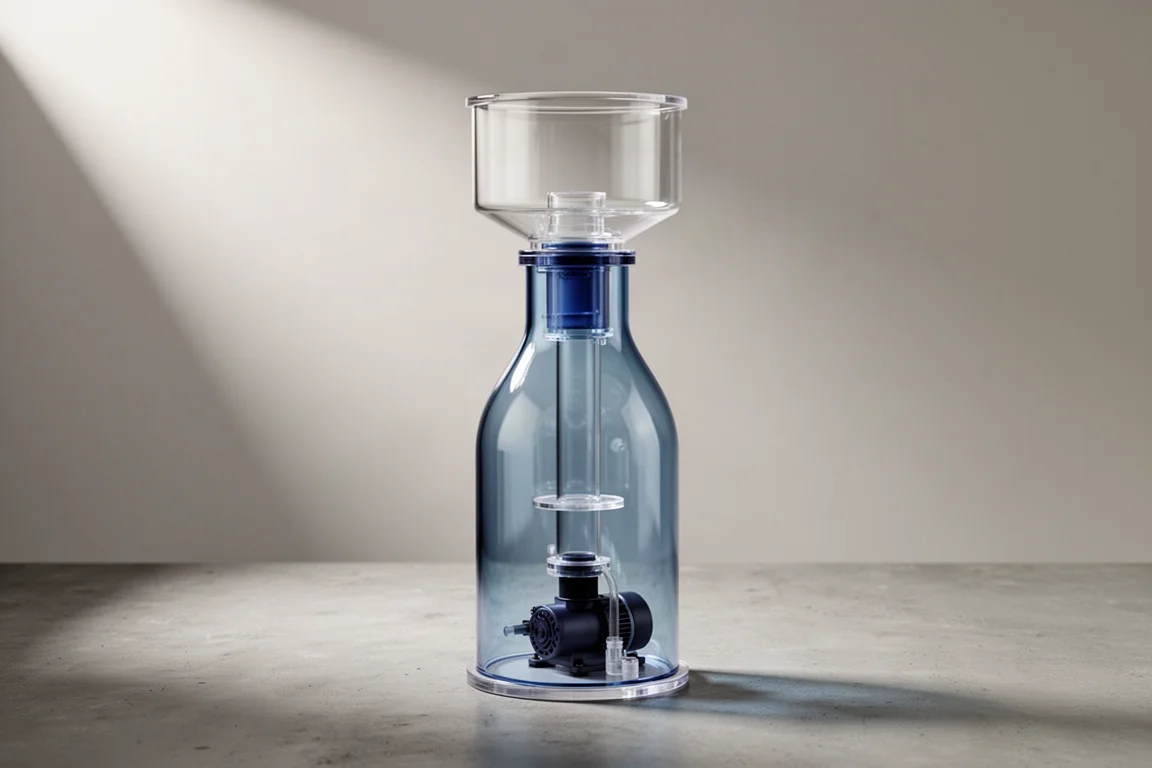
Eshopps S-Series Gen 4 Protein Skimmer Review: Premium Feel at a Mid-Tier Price
A close look at the Eshopps S-Series Gen 4 protein skimmers, from the Sicce PSK pump and titanium screws to the Eddy diffuser and twist-off base plate.