Aquarium Fish Food
Reef Nutrition TDO Chroma Boost Review: A Staged Food for Growing Marine Fish
A practical look at Reef Nutrition TDO Chroma Boost, a granule and pellet food built for larval, juvenile, and adult marine fish, and who gets the most from it.
Introduction
Reef Nutrition TDO Chroma Boost is a prepared marine fish food built around one goal: moving larval and post-metamorphic fish off live foods and onto a nutritionally dense diet as early as possible, then supporting them at every stage of growth into adulthood.
That makes it more than a general-purpose pellet. The range is deliberately staged, with different granule and pellet sizes matched to different phases of development, and it has become a familiar name among keepers who raise fish at home.
Who This Food Is For
Three groups of keepers will get the most from this food. The first is anyone attempting to rear marine fish for the first time, whether that is clownfish, dottybacks, cardinals, or another species. Raising marine fry has traditionally been viewed as close to impossible, and diet is one of the most critical factors in whether larvae and juveniles survive to adulthood.
The second group is keepers running nano and pico aquariums stocked with very small fish. These fish often have small mouths that make standard pellets awkward to eat, and getting the size right matters as much as the nutrition inside it.
The third group is anyone bringing home a very young marine fish from a local store. Young specimens tend to be more fragile and harder to feed, so a palatable food of the right size can shape how well they settle in.
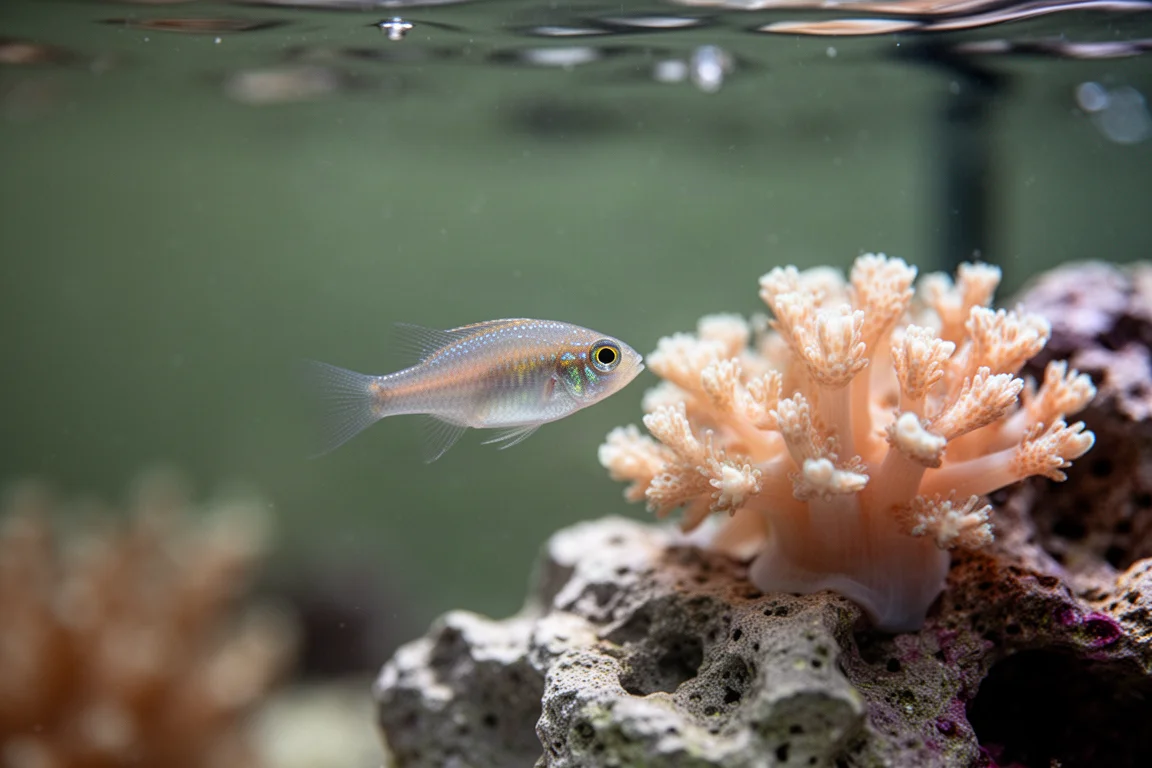
It is worth being clear about what this food does not replace. Newly hatched larvae still need live food such as rotifers or copepods for their first few days, and the switch onto a prepared food should be gradual rather than immediate.
Main Strengths
The most obvious strength is range. TDO Chroma Boost covers the full span of development within a single product line, so a breeding setup can be stocked with one feeding system instead of a patchwork of different foods.
Nutrition is the second strength. The formula places clear emphasis on protein for growth and fats for energy, alongside fiber, calcium, and phosphorus, and it carries a higher moisture content. It is finished with a top dressing of Haematococcus algae, which is rich in astaxanthin, a carotenoid used to support color development in fish.
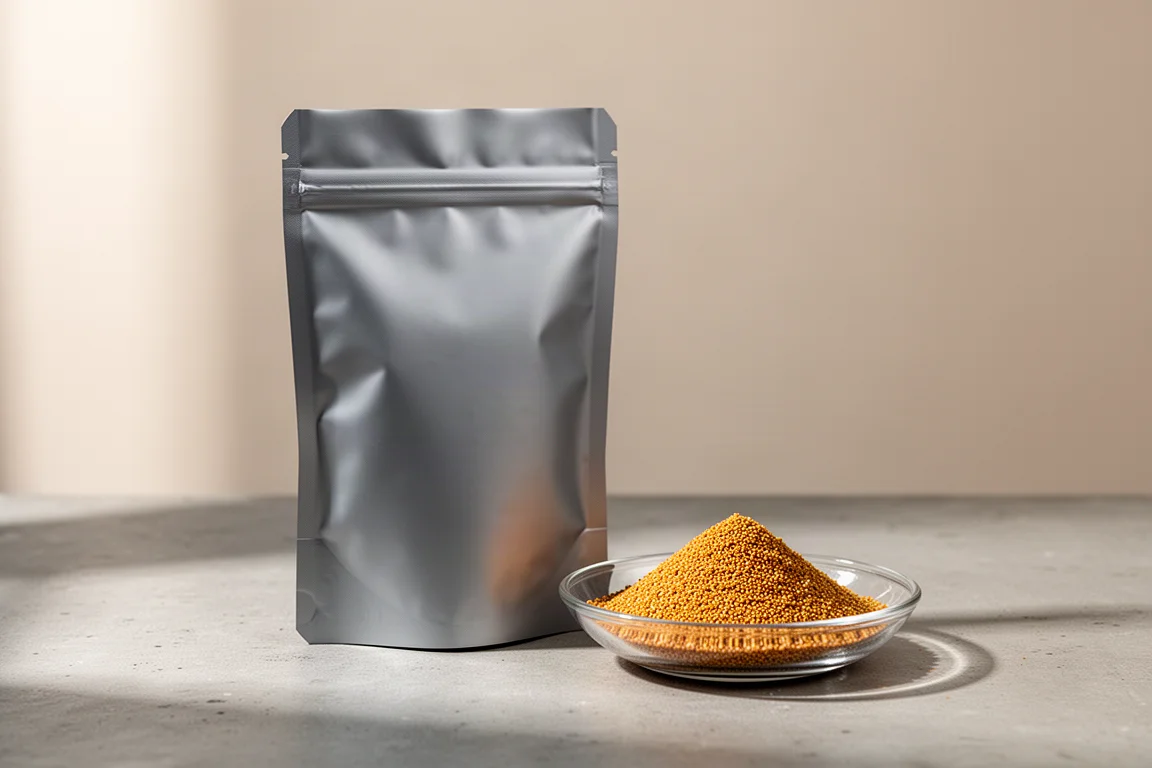
The third strength is practical packaging. The food arrives in a durable resealable foil pouch that helps keep it fresh between feedings.
Nutrition and Formula Design
The percentages are not identical across the range, and that is deliberate. Each size is formulated around the needs of marine fish at a different stage of development, so the numbers shift as the granules get larger.
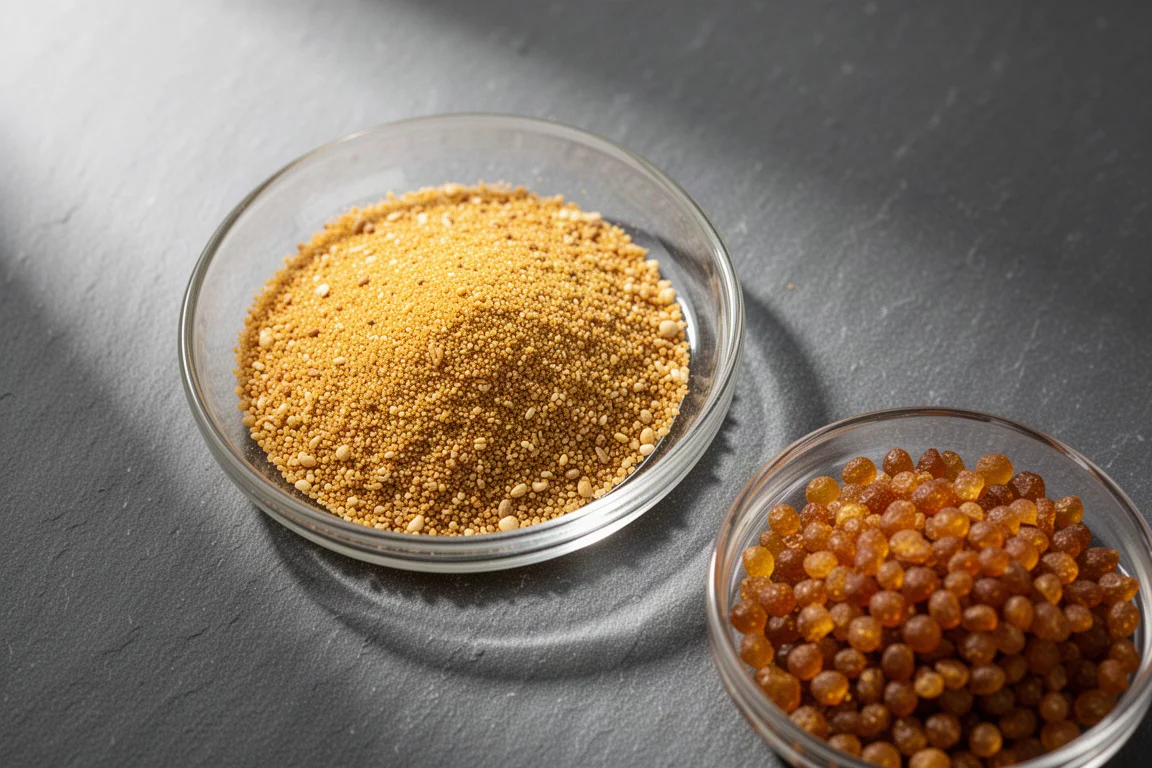
Protein content decreases slightly as food size increases, while fat content rises. Fiber starts higher at the larval stage and then falls slightly as fish grow. In practice, a larval-stage granule and an adult-size pellet are doing different jobs even though they sit under the same name.
For keepers used to a single all-purpose flake or pellet, this staged approach is the main conceptual difference. It asks you to think about the stage your fish are at, not just about what will fit in their mouths.
Granule and Pellet Sizes Across Growth Stages
The smallest size, TDO-A, comes in granules of 75 to 250 microns. From there the range climbs to TDO EP2, a 2.3 mm pellet, with five sizes in between. Together that span is intended to cover fish from larval and post-metamorphic stages up to three inches and larger.
Community tanks do not need the smallest end of the range. Most reef keepers feed 1 mm to 2 mm pellets to fish such as anthias, gobies, cardinals, clownfish, tangs, and hawkfish. For those tanks, the medium EP-1 and large EP2 pellets are the sensible choices, and they work just as well for adult fish that need a solid long-term staple as they do for juveniles.
For breeding projects, the hobbyist breeder pack bundles a one ounce pack of TDO-A with three ounce packages of TDO B1, B2, C1, C2, EP1, and EP2. That covers an appropriately sized granule or pellet for every stage of development, which is the simplest way to start without guessing which sizes you will need.
Feeding Tips for First-Time Breeders
Start larvae on live food, typically rotifers or copepods, for the first few days. Once they are feeding reliably, begin introducing TDO Chroma Boost gradually rather than switching over all at once. An example feeding schedule is published for keepers making a first attempt, and it is a reasonable starting point.
Size selection deserves more thought than it usually gets. It is not always as simple as picking a granule small enough to fit in a fish’s mouth. Some species, anthias among them, will ignore food that looks appropriately sized and instead tear chunks from much larger items. Researching the specific species you are working with will save a lot of trial and error.
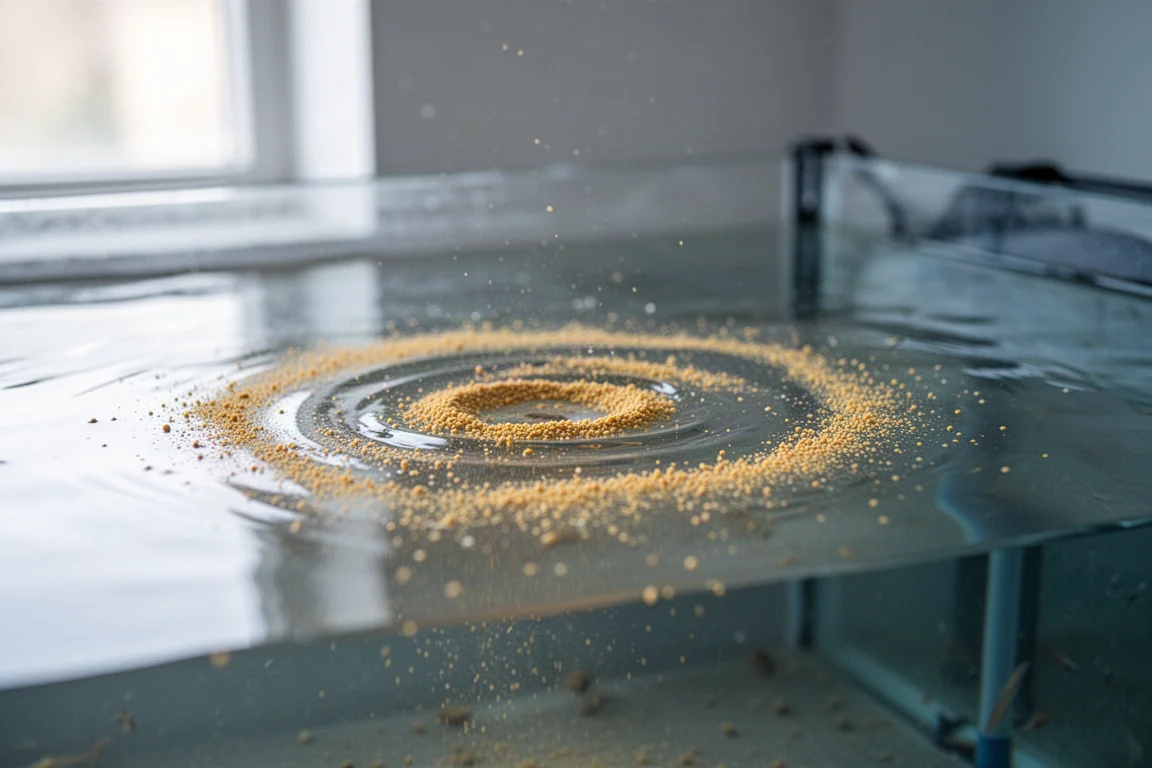
The food also suits automatic feeding. Because it needs to stay fresh, the recommended approach is to load roughly a week’s worth into the feeder at a time and refill weekly, using a feeder with a good seal.
Things to Consider Before Buying
Freshness is the main thing to plan for. Refrigeration is recommended once the pouch has been opened, so it is worth deciding where the food will live in your routine before you buy, particularly if you intend to use a feeder.
The second consideration is whether the full range makes sense for your tank. If you keep a standard community reef tank, you only need one or two of the larger pellet sizes, and the broader spread is not a benefit you will actually use. The staged range pays off when you are raising fry or keeping genuinely tiny fish.
Finally, this is a prepared food rather than a complete rearing protocol. You will still need live cultures at the start and some species-specific research along the way.
Buying Advice
Match the size to the stage, not to the tank. For a community reef tank, the medium EP-1 and large EP2 pellets cover the usual mix of anthias, gobies, cardinals, clownfish, tangs, and hawkfish. If you are breeding, the hobbyist breeder pack is the more economical way to get every size in one go and avoid buying individual packs you may not need.
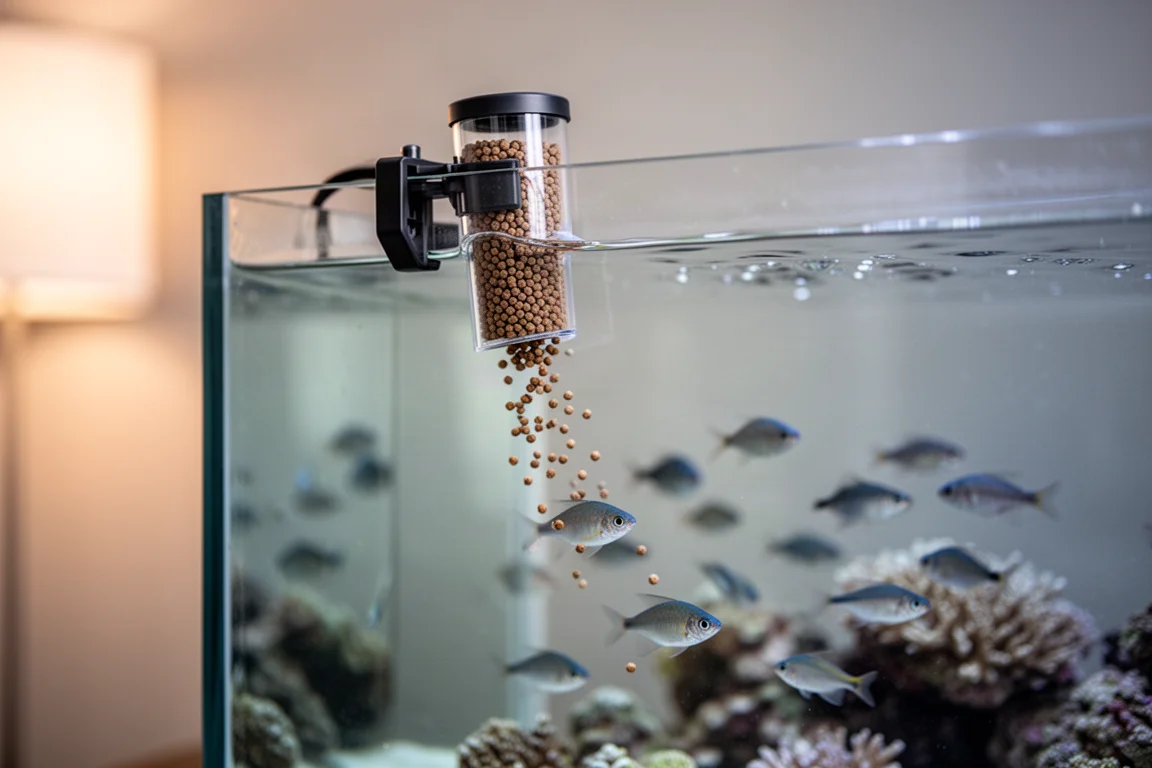
If you are unsure, start with the size that suits the fish you have now. The range is designed so that smaller granules can be added later if a breeding project takes off, and the resealable pouch makes it easy to keep a spare size on hand without wasting it.
Conclusion
Reef Nutrition TDO Chroma Boost makes the most sense for keepers at the small end of the hobby: first-time breeders, nano and pico tanks with small-mouthed fish, and anyone bringing home very young specimens. Its staged sizes, its protein and fat profile, and its astaxanthin-rich algae top dressing are the reasons it has become a familiar name in breeding setups.
For a standard community reef tank it is a capable staple rather than a transformation, and two pellet sizes will cover most needs. Used with the right size for the right stage and stored properly, it gives small and growing fish a dependable foundation.
Product link
View more details for Reef Nutrition TDO Chroma Boost
This product is mentioned in the review. Check the specifications, options, and compatibility before buying.
View more details for Reef Nutrition TDO Chroma BoostFurther reading
Related Reviews
Aquarium Fish Food
Piscine Energetics Mysis Pellets Review: Reef Nutrition in Pellet Form
A closer look at Piscine Energetics Mysis Pellets, a shelf-stable reef food built on gut-loaded mysis shrimp and offered in three pellet sizes.
Aquarium Foods
Best Reef Tank Foods: Pellets, Frozen, Algae, and Refrigerated Options
A practical guide to reef tank feeding, covering pellets, frozen foods, algae sheets, and refrigerated options, plus two pellet foods that cover very different needs.