Running Shoes
Reebok Floatride Duo First Run Review: A Big Stack Built for Stability
Five early test miles in Reebok's new Floatride Duo daily trainer: dual-density Super Float foam, a firm and stable ride, and a fit worth checking before you buy.
Introduction
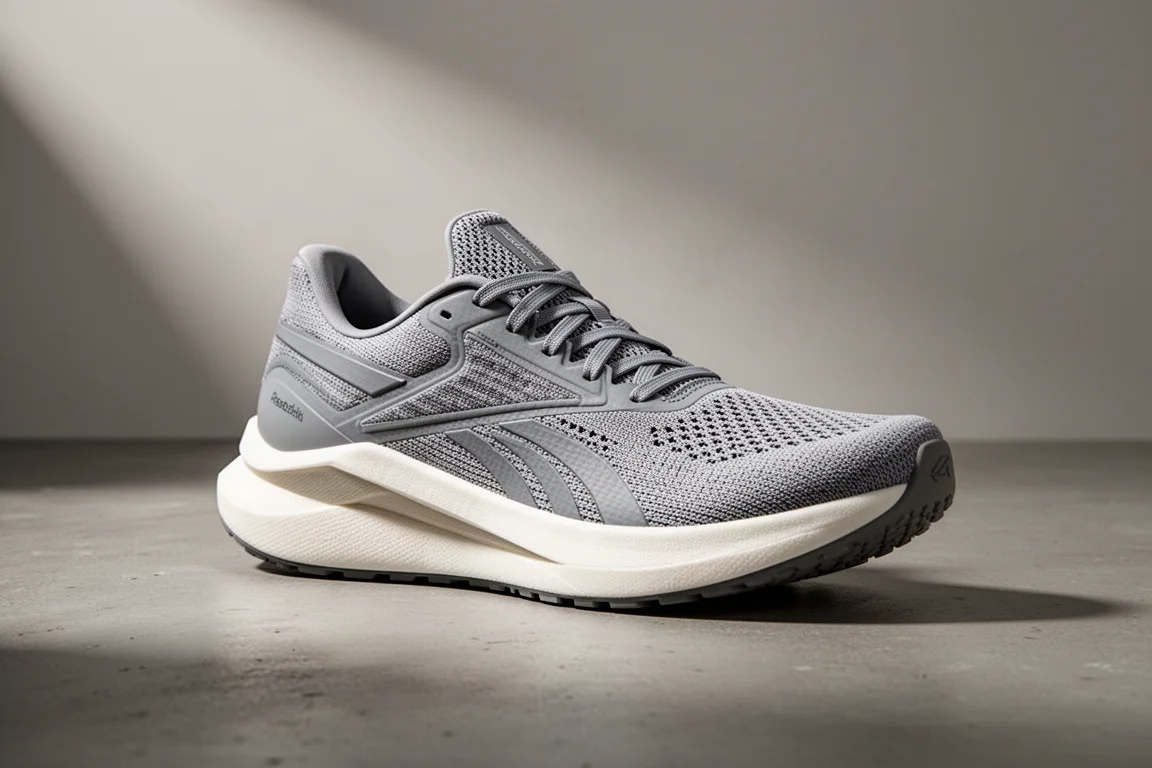
Reebok’s Floatride Duo is a new addition to the big stack daily trainer category, and it takes a different approach from many of its rivals. This is a fairly weighty, built-up shoe that shoots for plushness but lands on the firmer, more stable side of the big stack market. After the first five test miles at easy to cruising pace, the early picture is clear: a stiff, secure, reliable ride that trades pillow-soft cushioning for support and structure.
Key Specs at a Glance
The Floatride Duo packs 37 mm of foam in the heel and 31 mm in the forefoot for a 6 mm drop. It weighs 11.5 oz (327 g) in a UK 8.5 / US 9.5 test shoe, and it will land at $140 in the US and £135 in the UK.
The midsole uses a dual-density setup with Reebok’s Super Float Plus foam, a nitrogen-injected lightweight supercritical foam. There is more foam here than in the Floatride 1, though the stack still is not as tall as some competitors, and the midsole does not feel as compressive as rivals in this space, such as the Puma MagMax Nitro 2.

Upper and Fit
Up top you get an engineered knit upper that looks dual layered. It is fairly thick and closed but still offers some flex. Big plush padded heel collars and tongues feature gussets that extend down into the forefoot for extra wrap, and a heavy-duty heel counter adds structure at the back. The midsole also rises up with extra foam around the sides, forming high sidewalls that hold the foot almost bucket-like for additional support.
In terms of sizing, the test pair was run in a UK 9.5 / US 9.5, which was regular running shoe size, and the recommendation is to go true to size. The toe box offered reasonable length, with just enough clearance for the big toe. The upper is flexy but holds the toes close together, with a fairly narrow, straight-cut forefoot that grips well across the knuckles while still allowing toe wiggle.
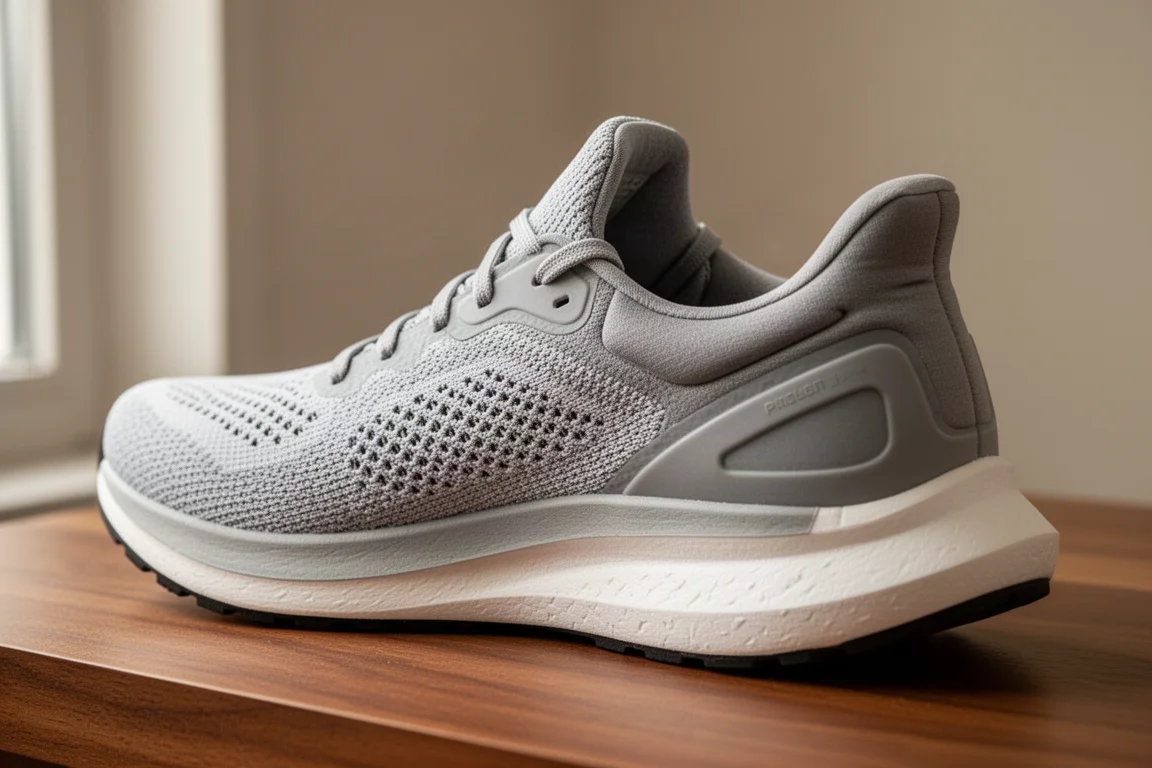
The padded tongue lets you lock the laces down tight to avoid lace pinch, and the whole midfoot feels swaddled in a soft cushioned cocoon. One early caveat: there was a little heel slip and movement on the first run, not too problematic, but something to dial in with tighter lacing on subsequent miles.
Ride and Performance
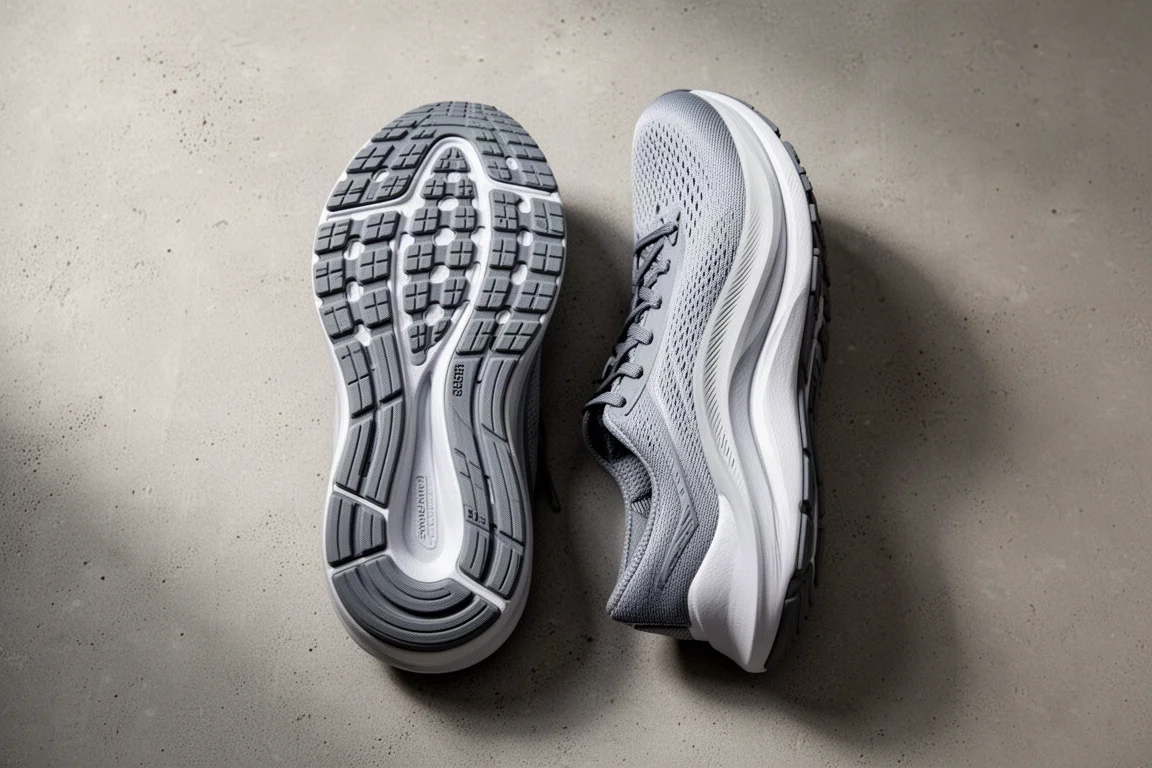
Flip the shoe over and you find an almost total foot-covering, full-length rubber outsole. It adds to the stiffness and looks set to be pretty durable.
The ride over the first five miles, at around 8:30 to 7:45 minute-mile pace, was big, wide, stable, secure, and reliable. It is pretty stiff, and that stiffness comes through. Most of the softness appears to come from the footbed or the top layer of foam, so landings are soft without being soft and squishy. This is not a pillowy, marshmallowy ride for a big stack shoe; it has a much firmer, more grounded feel than the Puma MagMax Nitro 2. If you find that shoe too soft even for easy runs, the Floatride Duo gives you cushion with more immediacy off the ground, relying on a stiff, rockered roll-through rather than bouncy energy return.
It is not the liveliest or most nimble shoe, but it did not feel too clumpy either. Heel strikers will find a bit of softness in the heel to take the edge off the road, though not loads, and stability is good from landing further back in the heel through to the forefoot. For such a high stack shoe, it is impressively stable, likely thanks to that midsole stiffness.
The main trade-off is weight. It feels too heavy to do much outside of first gear. It is built for cruising, comfort, and plushness, but there are lighter shoes that deliver similar performance at those paces.
Who This Shoe Suits
The Floatride Duo makes sense for runners who like a heavier, built-up shoe that is not pillowy soft, and who prefer a stiffer ride built around a rocker over squish and bounce. The materials feel fairly premium, and the comfort is genuinely there from the heel collars, padded tongues, and overall plushness. Feet feel well held, cocooned, and swaddled.

If you want full-tilt, super-soft cushioning for your easiest runs, this probably is not the shoe for you. But if you value stability, a firm-yet-cushioned platform, and a durable, well-constructed daily trainer, it is worth a close look.
Buying Advice
Go true to size, and expect a firm-leaning, stable big stack ride rather than a cloud-soft one. At $140 US / £135 UK, it sits in the mainstream premium daily trainer bracket, and it will make most sense for easy and cruising miles rather than anything faster. If you tend to find max-stack max-soft shoes too vague underfoot, this firmer, rockered alternative could be exactly the daily trainer you have been looking for.
Conclusion
The Reebok Floatride Duo is a stiff, stable, and well-built big stack trainer with plush comfort and premium-feeling materials, but a heft that limits it to easy and cruising paces. More test miles are coming before a full verdict, but the early read is simple: love it for structured, supported easy miles, and look elsewhere if softness is your priority.
Product link
View more details for Reebok Floatride Duo
This product is mentioned in the review. Check the specifications, options, and compatibility before buying.
View more details for Reebok Floatride DuoFurther reading
Related Reviews

Running Shoes
Best Road-to-Trail Running Shoes: Three Versatile Options for Mixed Terrain
A practical guide to three road-to-trail running shoes that handle both pavement and mild trails, with clear strengths and trade-offs for different runner types.

Running Shoes
Best Running Shoes for Achilles Tendonitis: Three Options Explained
Three running shoes with different heel drops and support features designed to help reduce Achilles tendon pain during walking and running.

Running Shoes
Best Running Shoes for Women: Five Top Choices Ranked
A ranked guide to five women's running shoes, from versatile daily trainers to high-performance racing options, with real strengths and trade-offs for each.