Camping Gear
Rain Camping Gear Roundup: Three Pieces Tested Through a Full Day of Heavy Rain
A compact butane stove, a massive shell tent, and a folding worktop table, assessed after an overnight camp that took several inches of rain.
Introduction
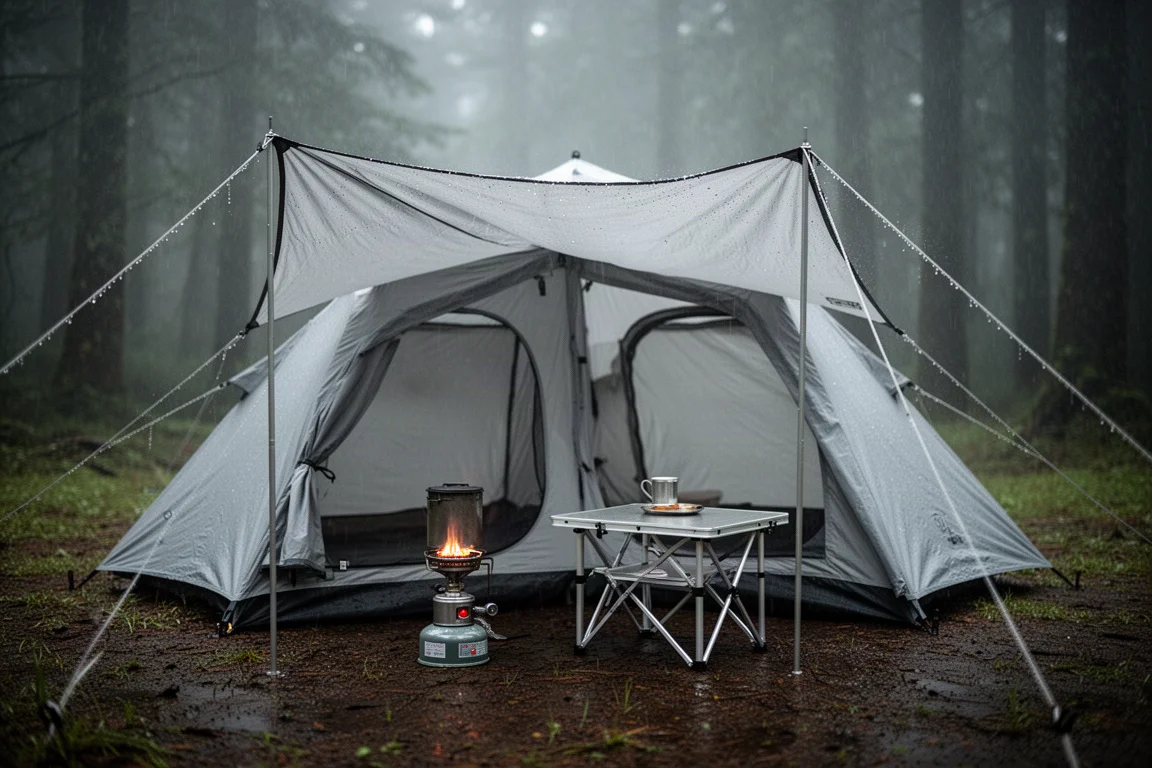
Wet weather separates gear that works from gear that only looks good in a product photo. The three items below were used through a single overnight camp that turned into a genuinely soaked trip: a flash flood watch ran until late evening, rain fell all day and heavy at times, with one to three inches expected and three to five if thunderstorms developed. By the end of the first day, roughly four inches had come down the mountain.
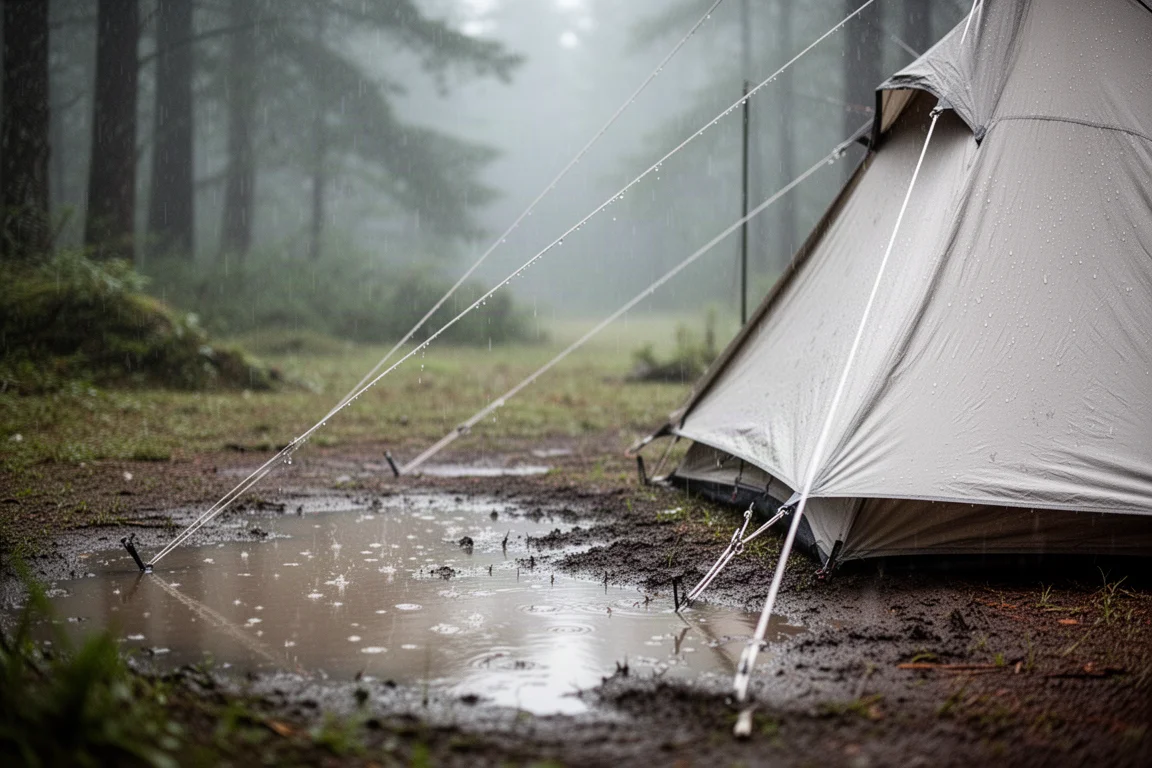
The campsite turned soupy. Water ran off the slope and pooled around the shelter, and the ground outside the sleeping area became a mud pit. What stayed dry, and what stayed usable, is the story here.
What to Look For in Rain-Camp Gear
Waterproofing is only half the equation. A shelter also has to manage stretch. Fabrics that relax when wet pull guy lines loose and create pockets where water gathers, so generous tie-off points and a willingness to add extra poles matter more than a single headline number.
Ventilation is the second factor. A sealed shelter in high humidity traps moisture, and around 68 degrees with humidity near 100 percent is uncomfortable no matter how good the sleeping setup is. Look for mesh panels, corner vents, and the option to sleep with vestibules open when insects are not a problem.
Setup order is the third. Anything with folding legs, telescoping poles, or a specific sequence of moves will punish you when you are rushing to beat a downpour. Gear that can be pitched calmly and correctly is worth more than gear that pitches fast and badly.
Drying time deserves a mention too. Whatever you bring will be wet when you pack up, and a large shelter takes real effort to dry once you are home. Factor that into how big you go.
Four Winds Butane Stove
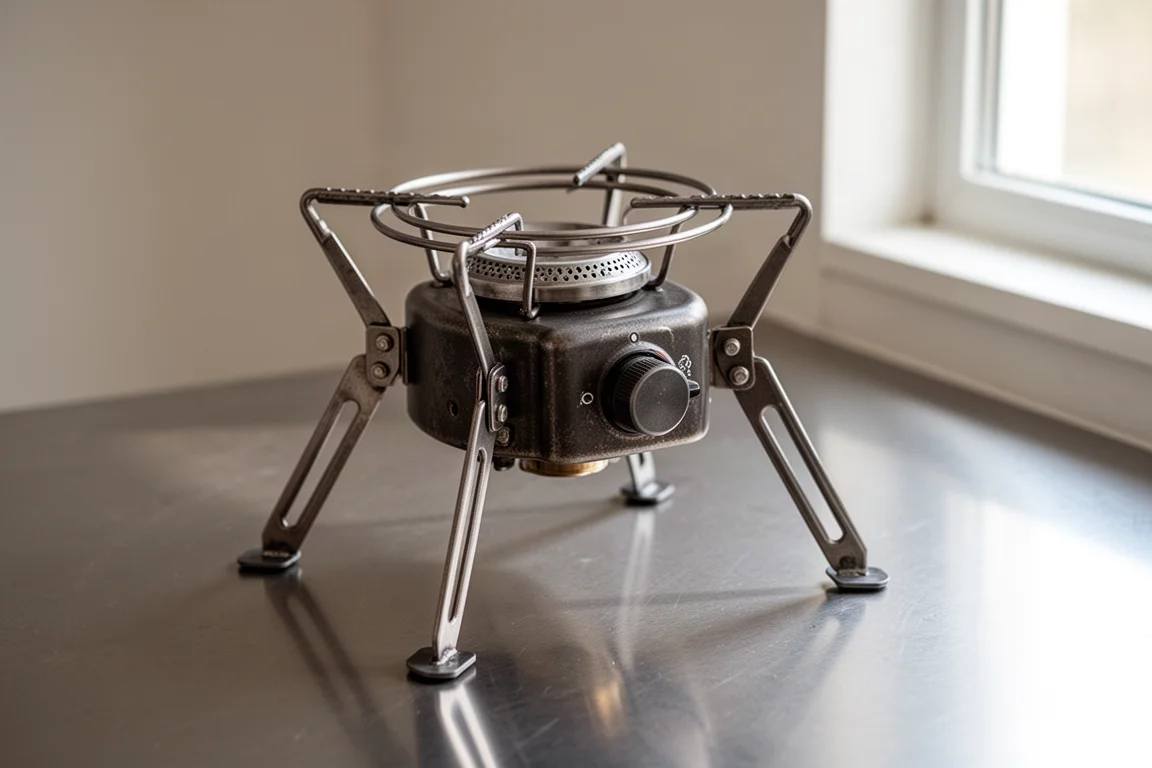
The Four Winds butane stove is a compact single-burner unit, and it performs well in the rain. Output is high, the flame adjusts smoothly, and it simmers properly, which is more than can be said for plenty of stoves in this class. Morning coffee and a one-pot dinner are both straightforward.
The catch is setup. The folding legs have to be deployed in a particular order, and there is no marking on the stove to tell you what that order is. Move one leg the wrong way and you end up folding the others back and forth to free it. The pot supports have a similar quirk. Once the stove is standing, though, that frustration fades quickly.
Compared with a larger butane stove from the same maker, this smaller model is the one worth carrying. The bigger unit cost considerably more and did not perform any better in practice.
DOD Outdoors Tent: A Massive Weatherproof Shell
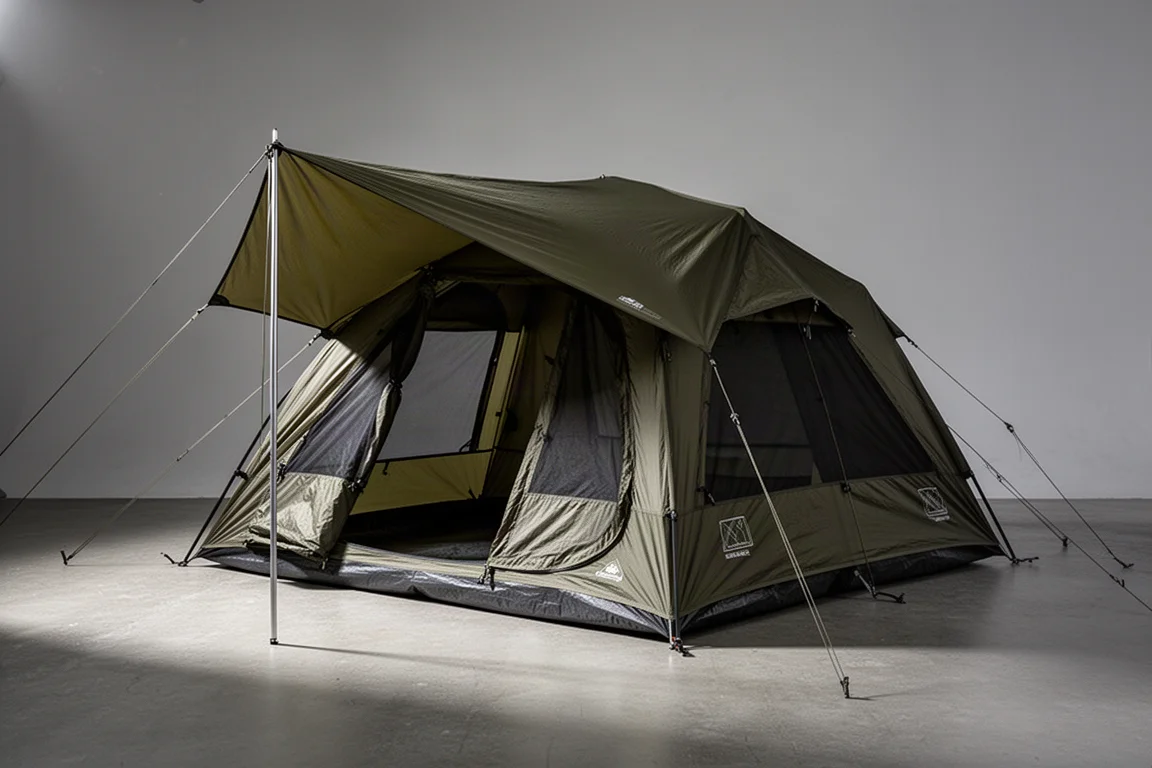
This tent comes from DOD Outdoors, a Japanese company whose gear is available in the United States. It is best understood as a large shell rather than a conventional tent. There is no floor, no inner tent, and no bug protection across the whole footprint, although the walls that form the vestibules carry mesh that can be zipped closed to keep insects out.
That design is deliberate. The idea is a big dry living area where you can place one or two smaller inner tents, plus tables, chairs, and a cooking zone. The vestibules are large enough that a truck could be backed up to either one.
Build quality is excellent. The materials are top-notch, the shell is waterproof, and there are more features than a first pitch reveals: corner vents, large mesh panels on the sides, and a hanging line across the top. Setup is straightforward for a shelter of this size.
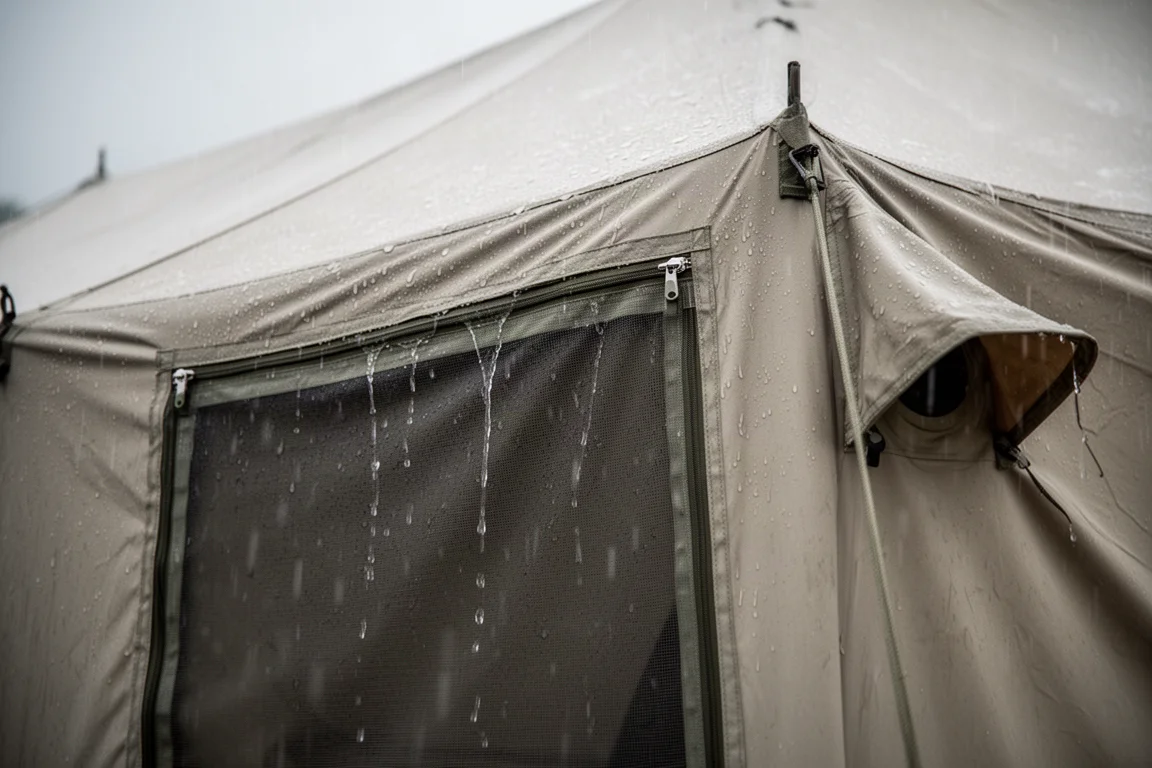
Two things to plan around. The first is price. A tent this size is expensive, and that is simply the trade-off. The second is fabric behaviour. The sil nylon shell stretches noticeably when it takes on water, which pulls the pitch out of shape and creates pockets where rain collects. The tent ships with four poles, and adding more, along with using the many tie-off points to retension the walls, keeps the shape under control. Expect a couple of outings before you get the pitch right.
Instructions are worth noting as well. The printed documentation supplied with the tent was in Japanese. English instructions are available on the manufacturer’s website, but it would be more convenient to have them in the box.
OneTigris Folding Worktop Table
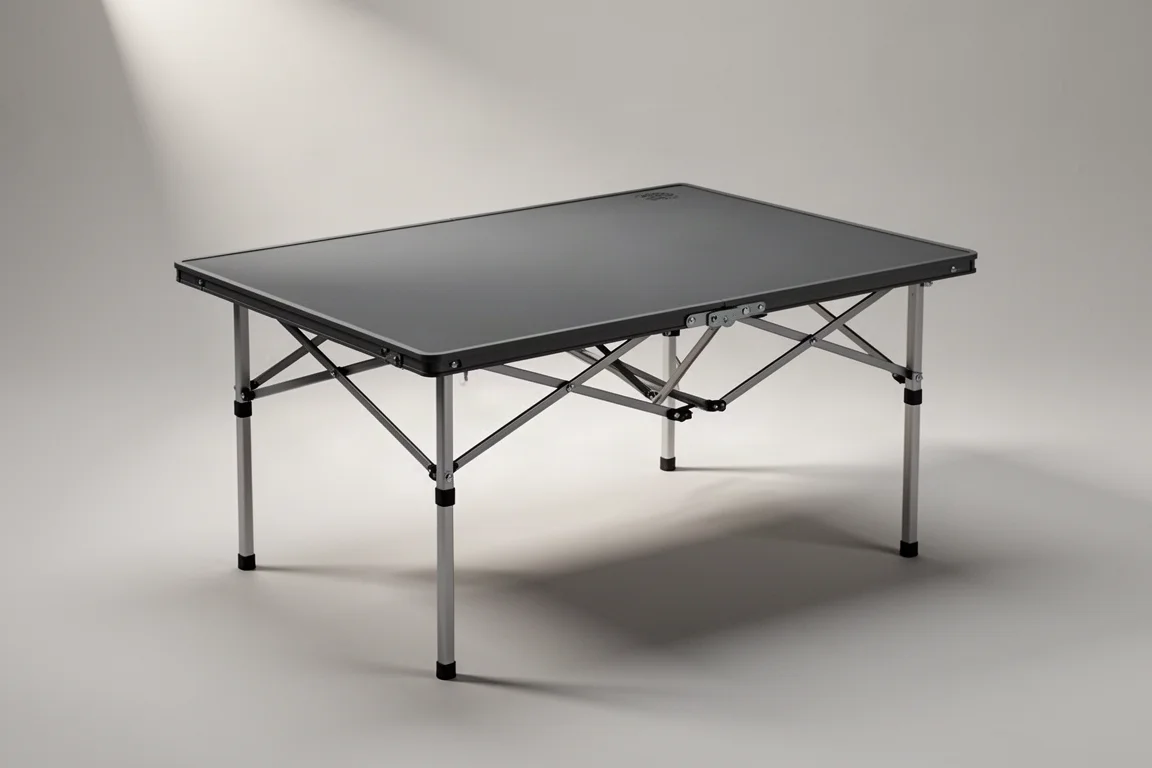
The OneTigris folding worktop table is back. It was discontinued roughly two years ago, and the company has released a new version and returned it to the market. For anyone who has been looking for one, that is the headline.
It earns its place as a preparation surface in a camp kitchen: somewhere to set a stove, a pot, and a mug within reach of the sleeping area, which matters a great deal when the ground around you has turned to mud. In a floorless shelter, a table also keeps cooking gear off wet ground.
Rain-Camp Field Notes: Tarp, Bugs, and Wet Ground
Two habits made the wet night easier, and neither is expensive.
The first is a canvas tarp laid under the cot and sprayed with permethrin. In a shelter with no floor, or under a tarp, this is a simple way to deter ticks, spiders, ants, and mosquitoes. It does not cover exposed skin, so treat the ground and keep the rest of your routine sensible, but it removes a whole category of overnight nuisance.
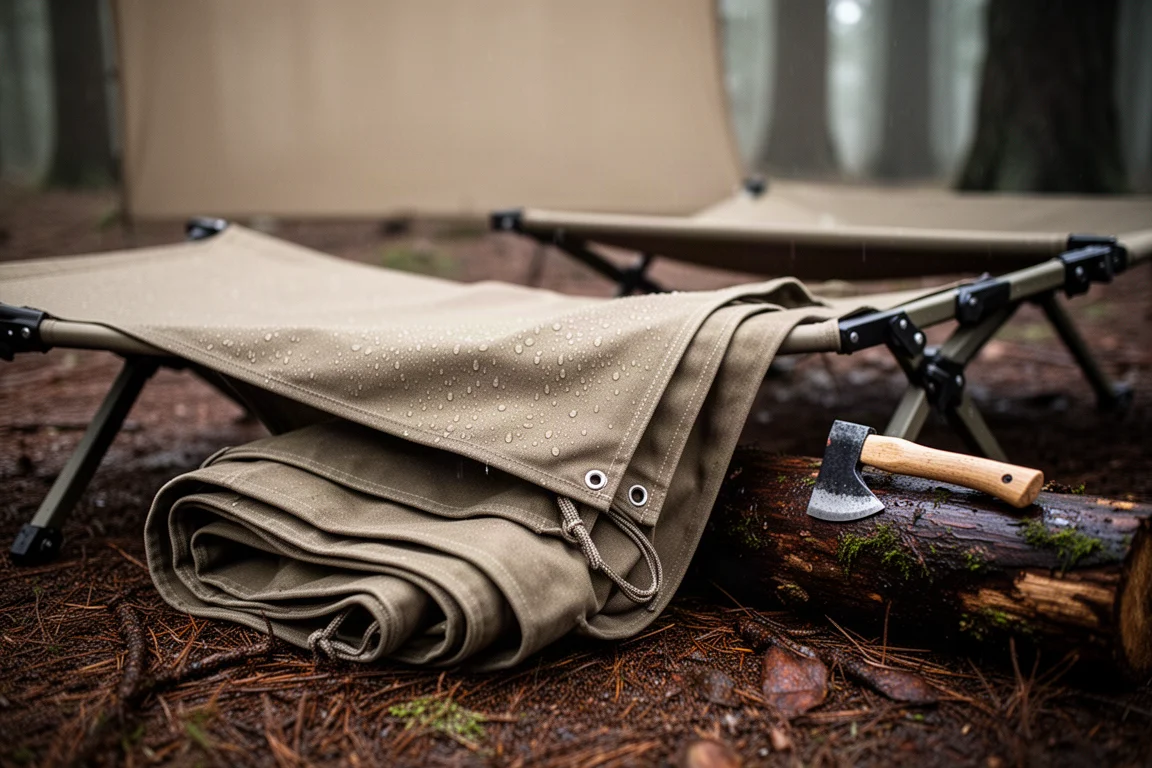
The second is hatchet technique, which matters more in wet conditions because dry firewood is scarce. With a long-handled hatchet, a tool closer to a small axe, you can stand and swing much as you would with an axe. The key is control of the blade and a swing that lets gravity and the weight of the head do the work rather than your own power. With a short-handled hatchet, kneel instead, so any deflection goes into the ground rather than toward your leg.
One more reminder from this trip: no campsite is perfect. The flattest available ground still sloped just enough to send water toward the shelter. Position the sleeping area on the highest dry patch you can find and accept that the rest of the site may become a pool.
Buying Advice for Wet-Weather Camping
Match the gear to how you actually camp. Backpackers will not carry a shelter this size, and they do not need to. The DOD Outdoors shell is aimed at car and truck camping, where a large dry room changes what a rainy weekend feels like.
The stove is the easy recommendation of the three. It is compact, powerful, easy to adjust, and it simmers, which covers almost everything a single burner needs to do. The leg sequence is annoying, and you will learn it after a few uses.
The table is a sensible addition if you cook at camp and want a work surface that stays clean and dry, particularly inside a floorless shelter. If you have been waiting for this model to return, the new version is the one to look at.
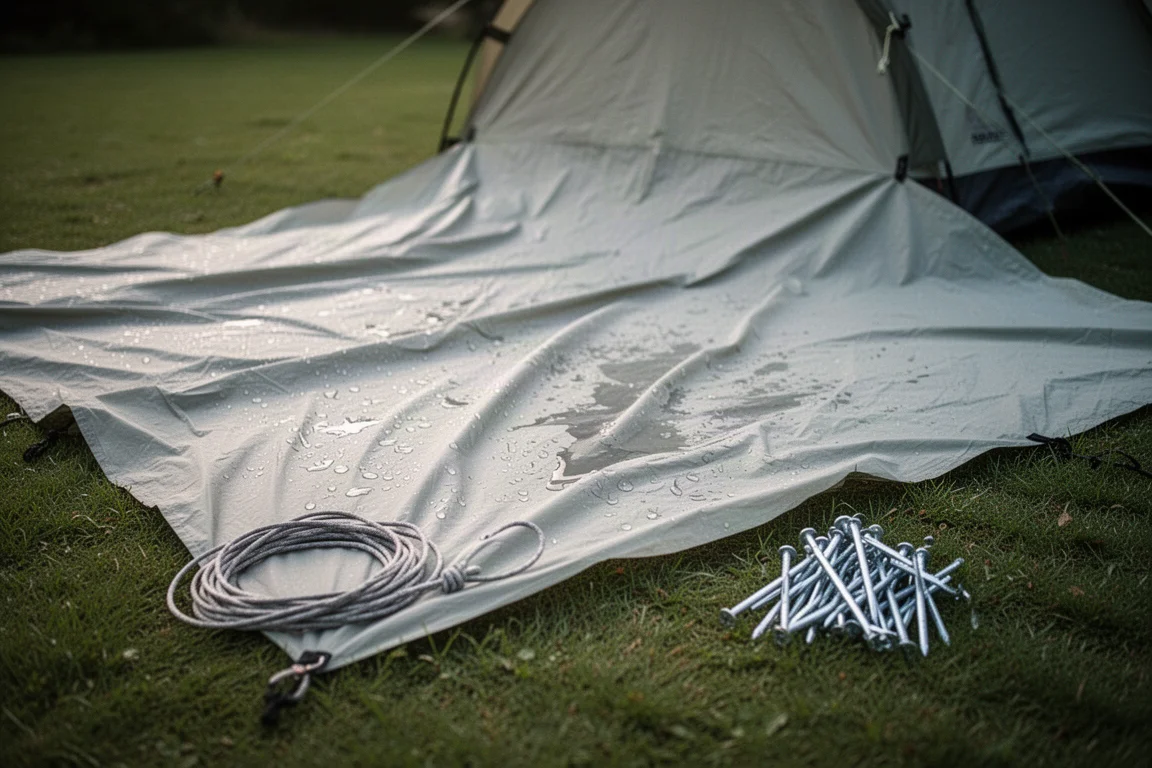
Budget for drying time as well. A large tent needs to be spread out and dried properly after a wet trip, and that effort is part of owning one.
Conclusion
Rain is the fairest test of camping gear, and these three pieces came through it: a compact butane stove that simmers and adjusts cleanly, a vast shell tent that keeps a dry living area even when the campsite floods, and a folding worktop table that has returned to the market after a long absence. Choose based on how you camp, dry everything thoroughly afterwards, and a wet weekend stops being a problem.
Further reading
Related Reviews
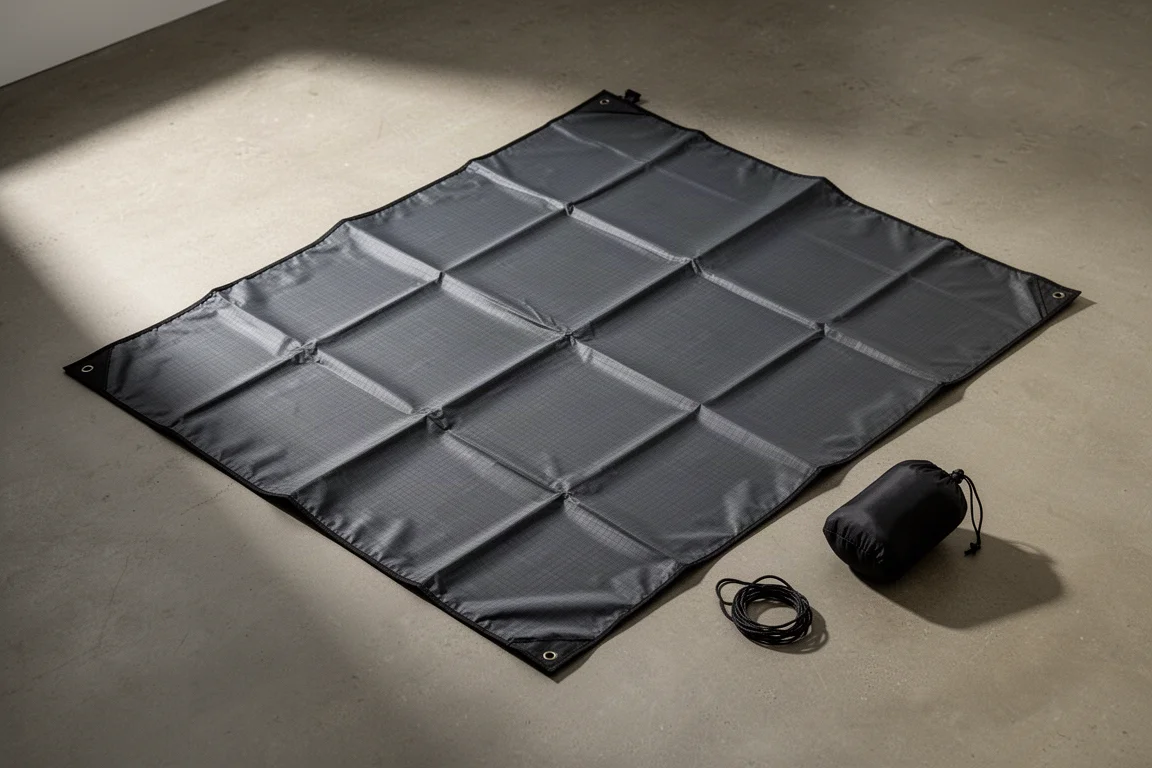
Camping Gear
3FUL Ultralight Ground Sheet Review: A Two-Person Footprint Worth Packing
A 6.7 oz two-person ground sheet in ripstop silnylon, priced around $30. Here is what it protects, what it does not do, and who should pack it.
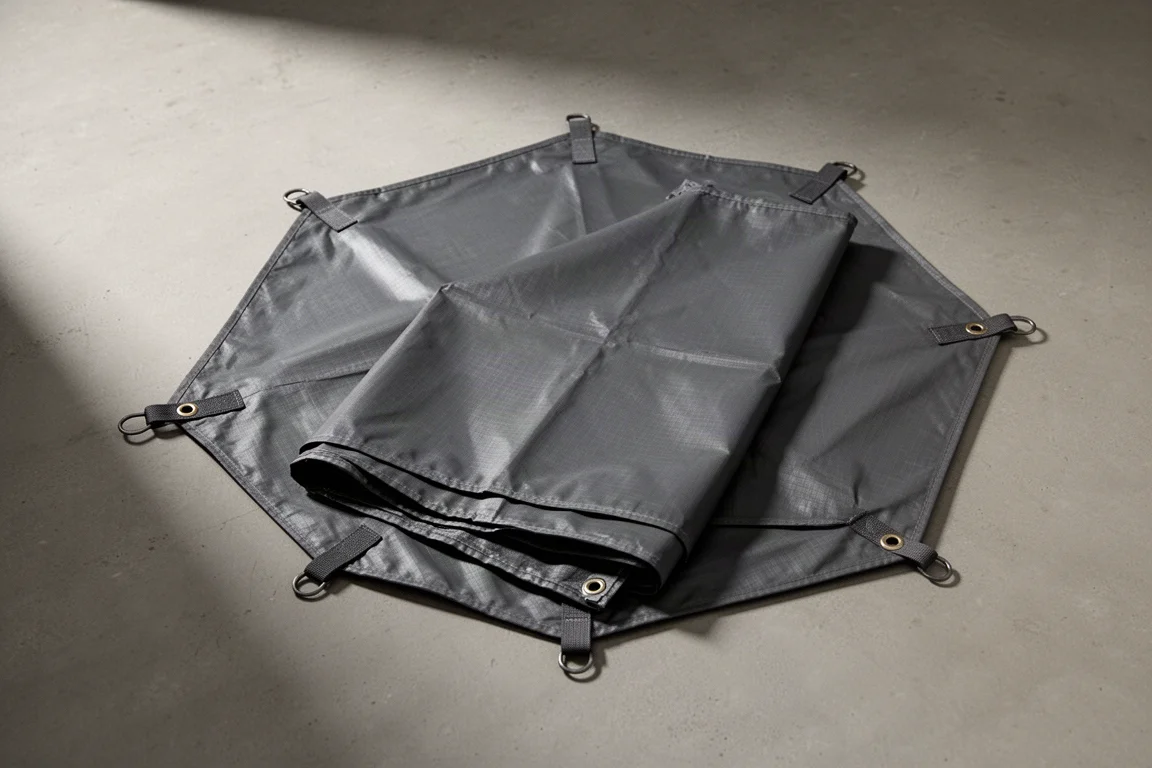
Camping Gear
Backcountry Light Dual-Function Tarp and Floor Review: A Footprint First
A dual-purpose tent floor and tarp that keeps falling rain off you, but cannot block wind. Here is where it works and where it does not.
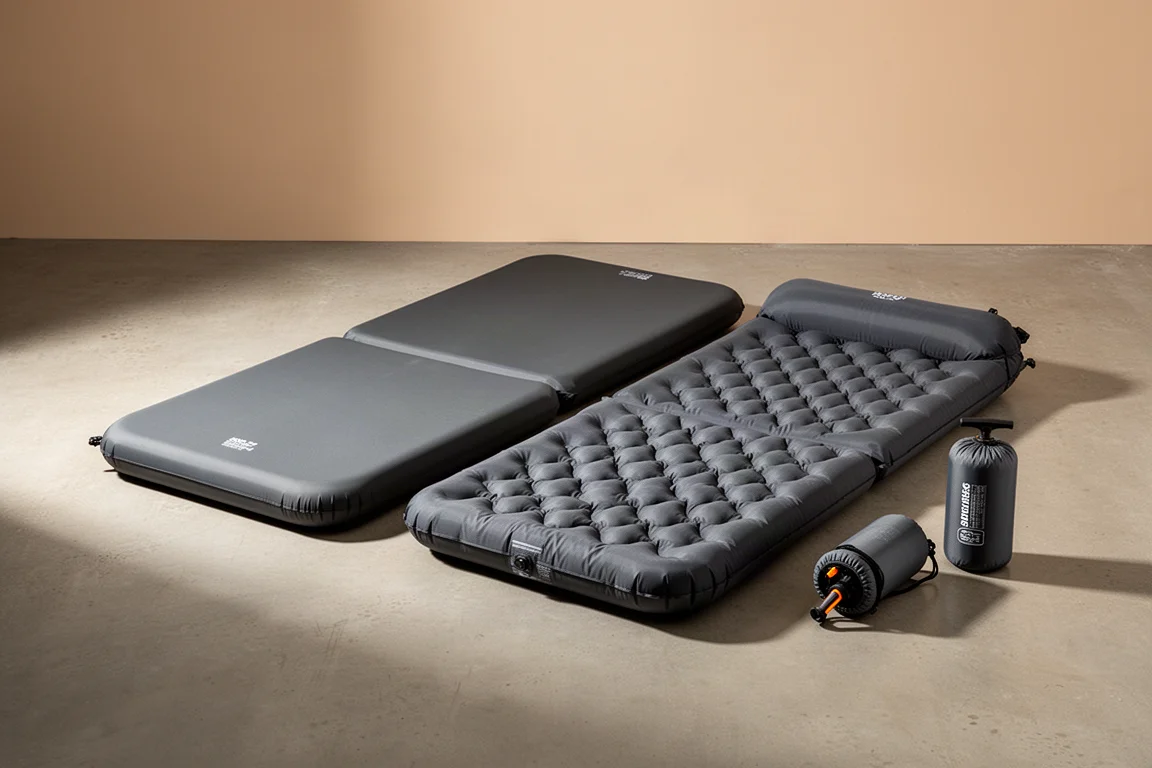
Camping Gear
Best 2-Person Camping Mattresses for Couples: 10 Options Compared
A practical comparison of ten two-person camping mattresses, covering self-inflating pads, air pads and air mattresses for couples.