Running Shoes
Puma ForeverRun Nitro Review: A Stability Shoe With Promising Ideas
Puma's new natural stability trainer blends soft Nitro foam with a firmer rim and a rare metatarsal pad insole. Here is how it performs after the first miles.
Introduction
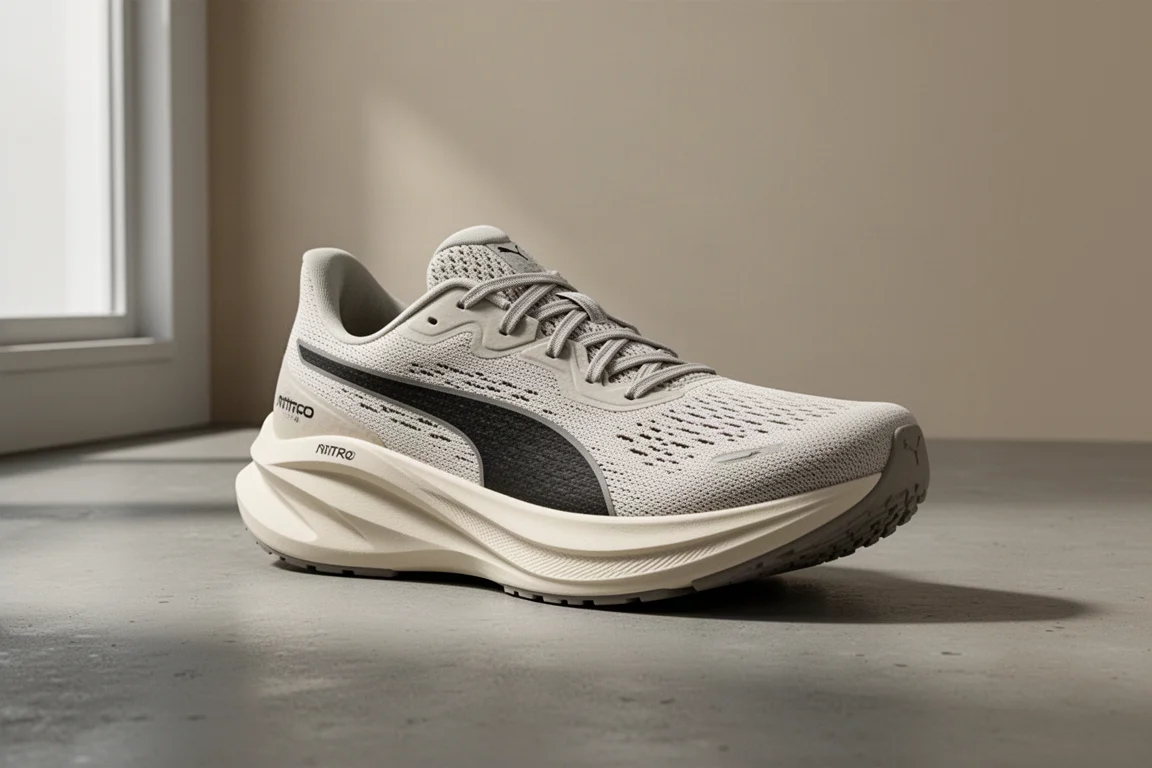
The Puma ForeverRun Nitro is Puma’s first serious attempt at a natural, non-post stability trainer, and it arrives with a lot of ideas packed into one shoe. It combines a soft foam core with a firmer external Nitro rim, a redesigned insole, and a generally max-cushioned platform aimed at riders who want gentle guidance rather than a hard corrective post.
After the first stretch of miles, the picture is mixed in an interesting way. Some elements work very well, particularly the foam design and a genuinely unusual insole feature. Others, mainly the fit and midfoot stability, leave room for improvement. Here is a full breakdown of what this shoe does well and where it falls short.
Specs and Build
The ForeverRun Nitro comes in at about 9.6 ounces for a men’s size 9 and 7.9 ounces for a women’s size 8, which places it squarely in normal daily trainer weight territory. Stack height is listed at 36 millimeters in the heel and 26 in the forefoot for a 10 millimeter drop, though underfoot it feels closer to 40 and 30 given how much foam there is. Most of the mass sits toward the heel.
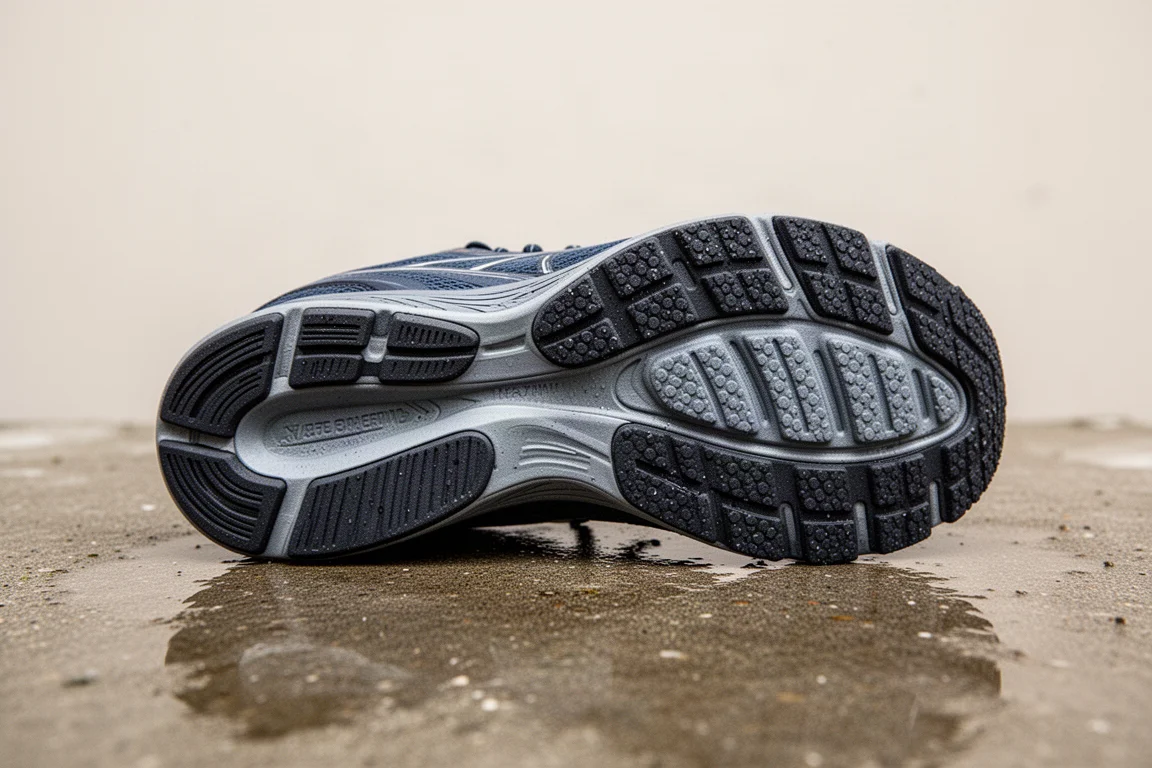
The midsole uses a softer core surrounded by a firmer external Nitro rim. That soft-inside, firm-outside approach is not entirely new, but it gives the shoe an inherently stable, centered character. The outsole is fairly durable and adds a touch of firmness underfoot, with a sole flare that suits the design.
Ride and Heel Behavior
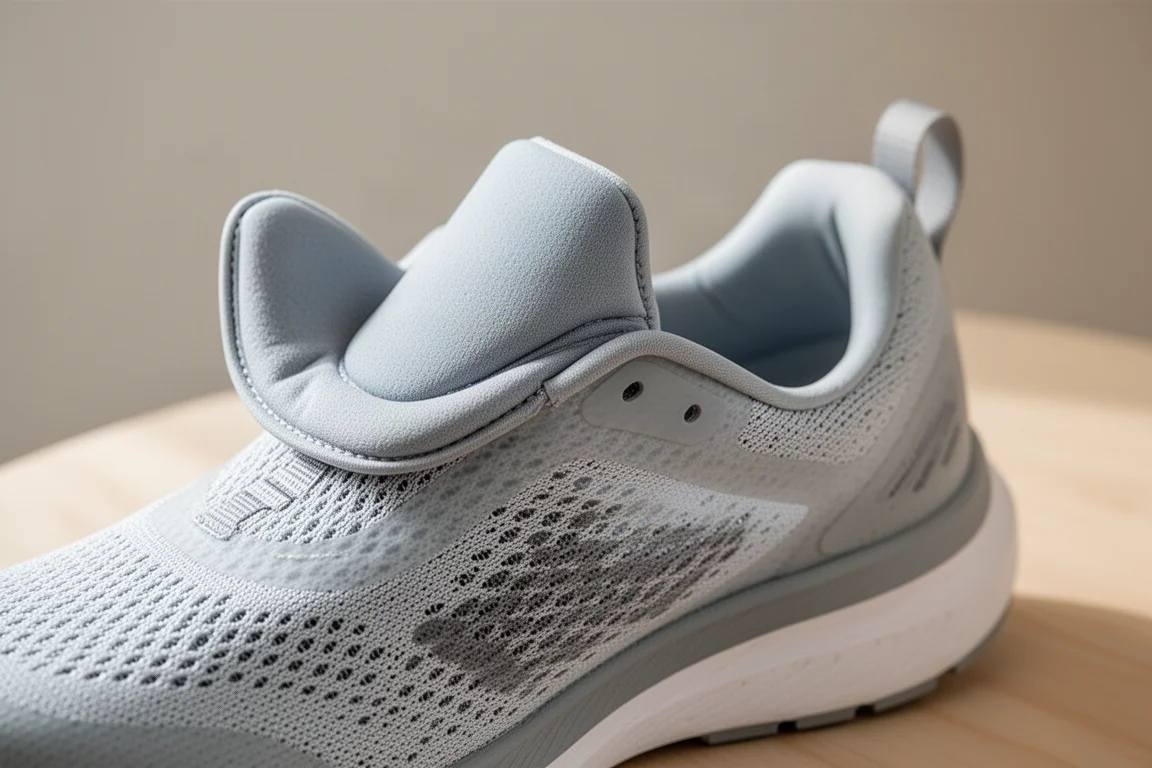
The heel is the most interesting and the most divisive part of this shoe. Large external heel counters act like sidewalls, with more structure on the lateral side, and the heel itself feels inherently stable once you are in it. However, the rearfoot bevel feels slightly off-center, with noticeable lateral flare, which can pitch you inward quickly on landing. That led to some IT band irritation early on.
The good news: the foam breaks in at around 15 miles, and after that the heel lands and transitions noticeably better. The midfoot is the weak point. It narrows there, which is generally a no-no for a stability shoe, and there is little in the way of sidewall guidance. Runners who normally need medial support may find themselves collapsing inward and compensating with their own hip and ankle mechanics. The forefoot is fairly normal, with a wider fit and a decent platform for pushing off.
The Metatarsal Pad Insole
The standout feature is the redesigned insole, which includes a built-in metatarsal pad. That is genuinely rare in a running shoe and usually something runners have to add themselves. This is not arch support, and it is not firm. It is a small bump under the metatarsal heads that acts as a proprioceptive cue, encouraging the foot to form its natural dome in the forefoot.
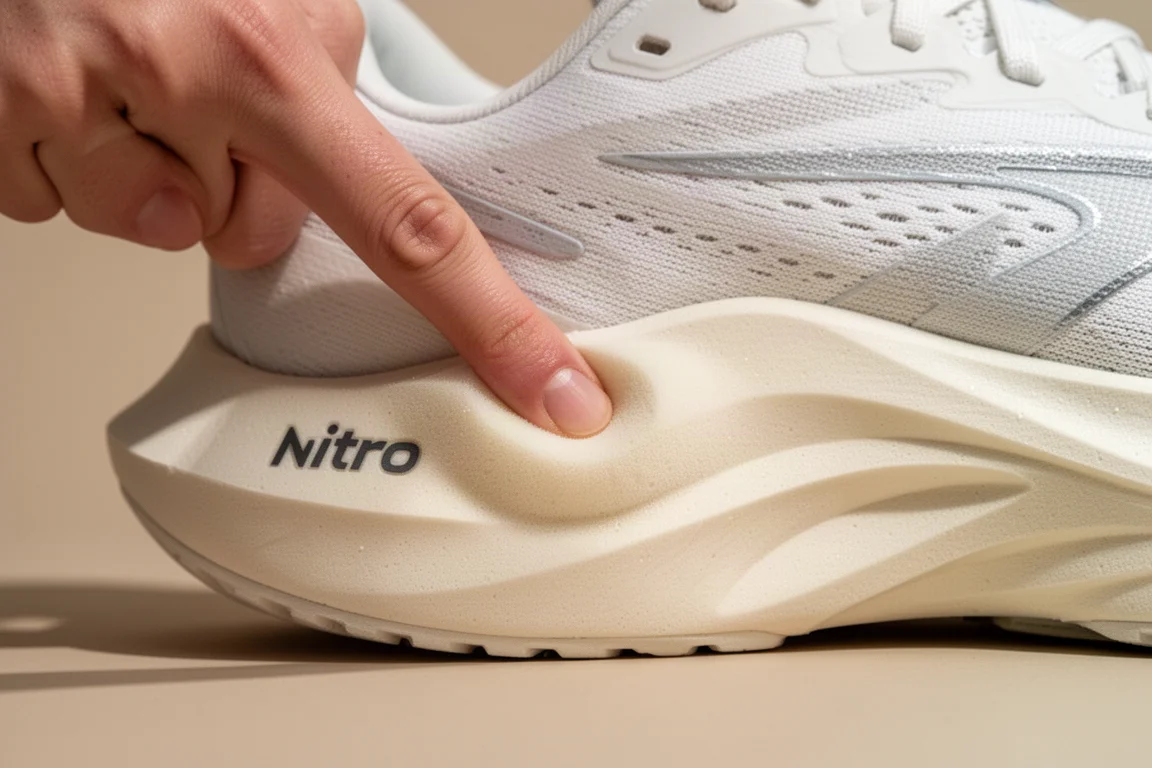
If you like the feeling of a metatarsal pad pushing up under the forefoot, this insole will be a real draw. It adds its guidance from the later midfoot through the forefoot rather than in the heel. The one caveat: runners with sensitivity in the small intrinsic muscles of the foot may find the bump uncomfortable. Also worth noting, the insole itself is fairly flimsy, so anyone expecting firm arch support from the marketing language should temper expectations.
Upper Fit and Heel Lockdown
The upper is where this shoe struggles most. Forefoot volume is quite low, and heel slippage is significant, with noticeable sliding back and forth inside the shoe. Locking down the laces harder helps the heel but creates pressure across the front of the foot. On top of that, the laces do not stay tied reliably.
The flip side is that this fit could suit a specific foot shape very well: runners with a wider heel and a lower-volume forefoot may find the ForeverRun Nitro fits them better than most trainers. For everyone else, the heel security and low volume are the main reservations to weigh before buying.
Who This Shoe Works For
As a true stability shoe, the ForeverRun Nitro falls short. There is not enough midfoot guidance for runners with significant overpronation, and the narrow midfoot can encourage a pivot rather than a guided transition. But as a centered, mild-stability or neutral-adjacent trainer with a soft, inherently stable foam design, it blends nicely for runners who sit somewhere in the middle.
The combination of a stable heel, good cushioning, quality foam, and the unique metatarsal pad makes it worth a look if you have mild stability needs or want a gentle, centered daily trainer with personality. Runners sensitive to lateral sole flare or needing firm medial support in the midfoot should look elsewhere.

Buying Advice
If you are considering this shoe, go in knowing three things. First, expect a break-in period of roughly 15 miles before the foam softens into its best ride. Second, test the fit carefully: a low-volume forefoot and heel slippage are real issues unless your foot shape matches them. Third, appreciate the metatarsal pad for what it is, a subtle forefoot cue rather than structured support.
For runners who match its fit profile and want soft cushioning with mild guidance, the ForeverRun Nitro is an interesting and worthwhile option. For those needing serious stability, a more traditional posted or strongly guided shoe remains the safer pick.
Conclusion
The Puma ForeverRun Nitro is an ambitious first swing at natural stability, with a genuinely clever insole and a well-executed soft core and firm rim design. It is let down by a narrow midfoot, questionable heel lockdown, and a bevel that pitches some runners inward. As a mild-stability daily trainer for the right foot shape, it has real appeal; as a dedicated stability shoe, it is not quite there yet.
Product link
View more details for Puma ForeverRun Nitro
This product is mentioned in the review. Check the specifications, options, and compatibility before buying.
View more details for Puma ForeverRun NitroFurther reading
Related Reviews

Running Shoes
Best Road-to-Trail Running Shoes: Three Versatile Options for Mixed Terrain
A practical guide to three road-to-trail running shoes that handle both pavement and mild trails, with clear strengths and trade-offs for different runner types.

Running Shoes
Best Running Shoes for Achilles Tendonitis: Three Options Explained
Three running shoes with different heel drops and support features designed to help reduce Achilles tendon pain during walking and running.

Running Shoes
Best Running Shoes for Women: Five Top Choices Ranked
A ranked guide to five women's running shoes, from versatile daily trainers to high-performance racing options, with real strengths and trade-offs for each.