Garden Tools
Prunibaroo PRD35 vs DeWalt and Milwaukee Handheld Pruners: Which Cordless Pruner Makes Sense
A hands-on comparison of three battery-powered handheld pruners, covering cutting power, safety features, battery compatibility, and everyday handling.
Introduction
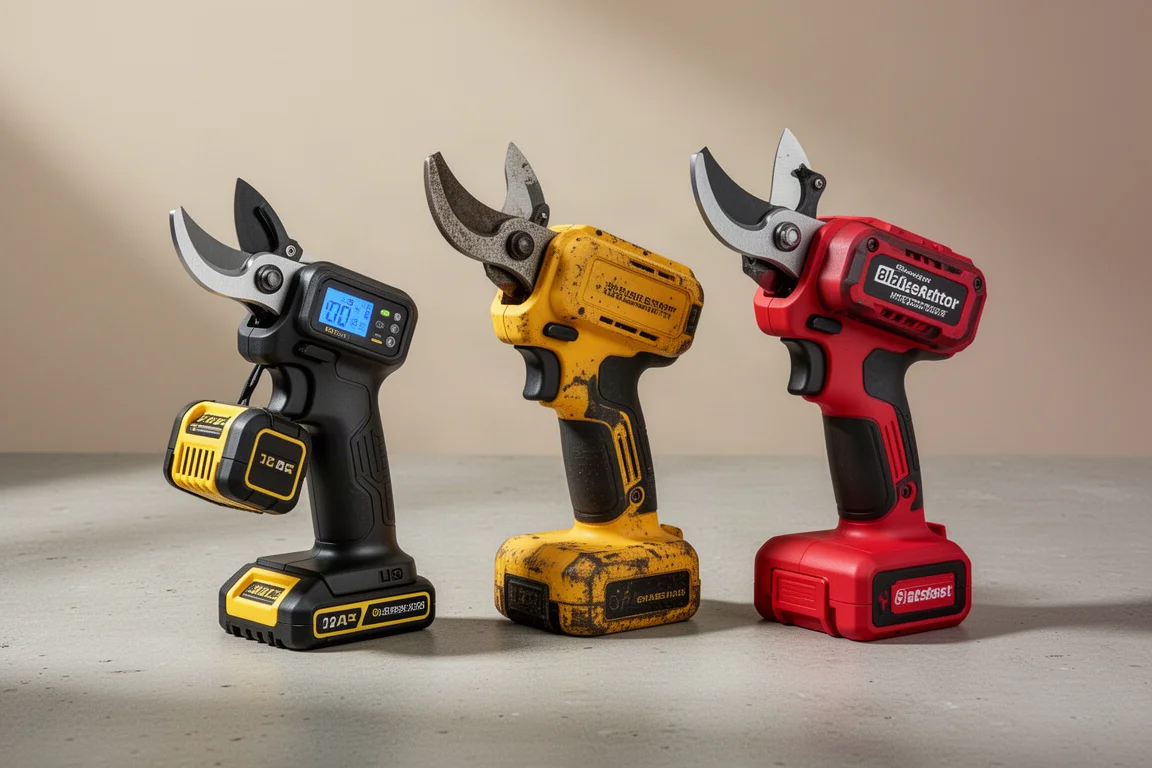
Cordless handheld pruners have quietly become one of the most useful garden tools you can own, especially once the season gets going and your hands are sore from loppers. This comparison looks at three of them: the Prunibaroo PRD35, a DeWalt handheld pruner that has been around for a while, and the Milwaukee handheld pruner. All three share the same basic idea, a small motorized shear that bites through branches in a second, but they differ noticeably in cutting strength, safety design, and how they fit into a battery system you may already own.
Quick Comparison: How the Three Pruners Stack Up
The Prunibaroo PRD35 is the newcomer here, and it makes a strong first impression. It accepts DeWalt batteries, includes an LCD display, and packs several safety features into a design that feels genuinely well thought out. The blades are Japanese SK5 steel, and it ships with a spare set, which is a nice touch at this price point.
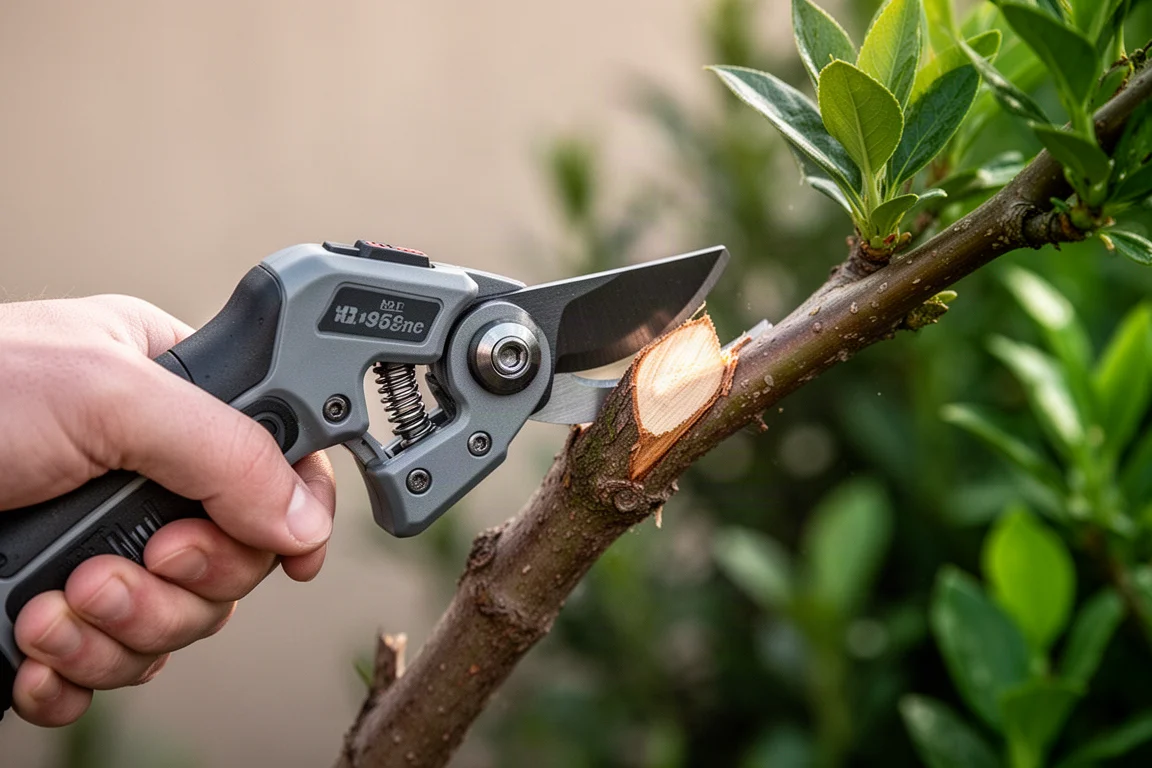
The DeWalt is the veteran of the group. It has been on the market for a while, it is heavier, and its safety design is showing its age. It still cuts well, and if you are already invested in DeWalt batteries it remains a familiar option, but newer designs have passed it in a few important ways.
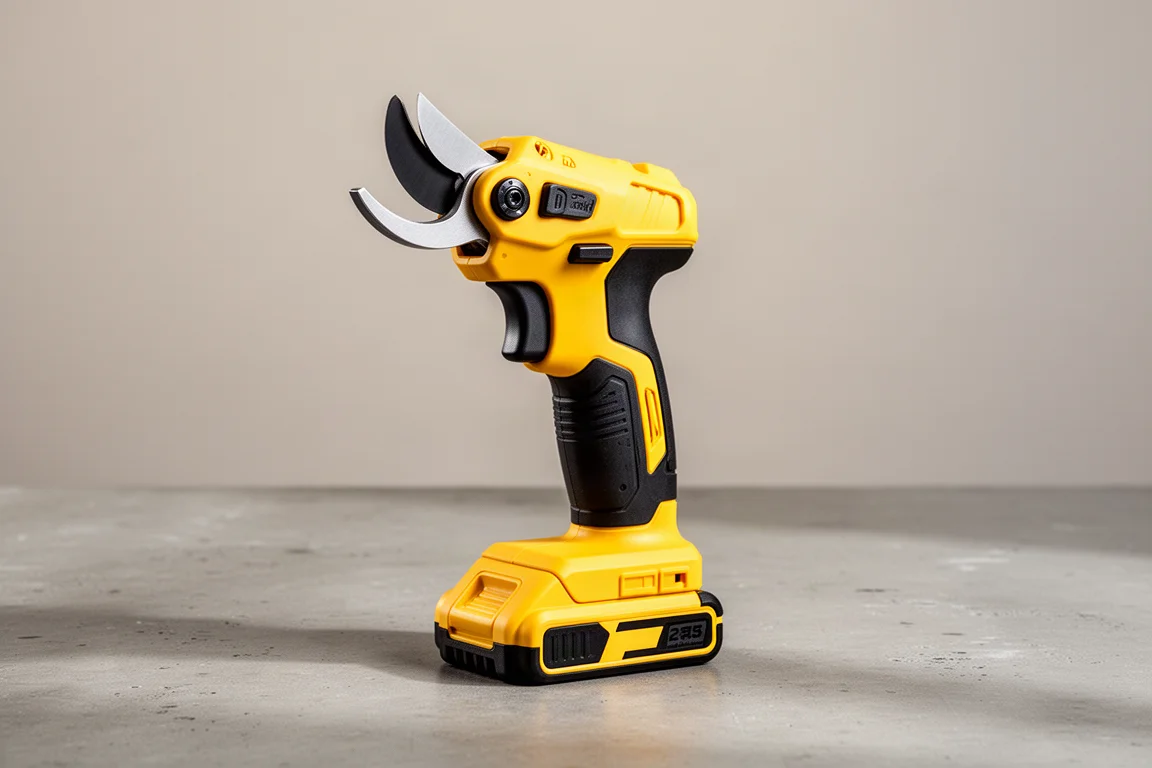
The Milwaukee sits at the top of the price range, around $200 when purchased recently, and you can feel the brushless motor difference immediately. It is stout, powerful, and refined, but that refinement comes at a cost.
Cutting Power on Real Branches
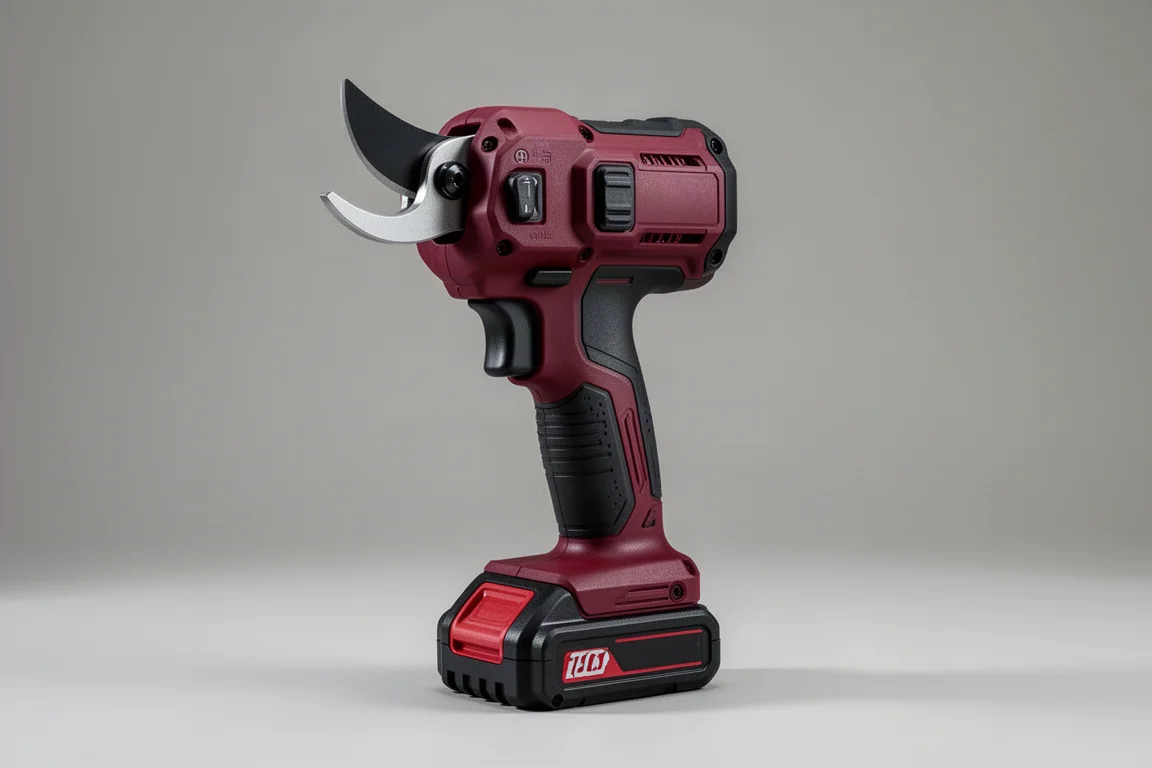
On sticks of harder wood, the differences show up fast. The Prunibaroo PRD35 is rated for 35mm cuts, roughly 3 to 12 cm of average cutting capacity, and in practice it pushed through material that made the DeWalt hesitate for a moment. The DeWalt still gets there, but on an aged unit the Prunibaroo appeared to be the stronger cutter.

The Milwaukee was similarly stout on medium material. On an oversized branch beyond the rated range, the DeWalt managed to get all the way through while the others ran out of blade length, which is more a limit of blade geometry than motor strength. All three will need multiple passes on material at the top of their range, which is normal for this category.
One genuinely useful Milwaukee feature is the blade toggle. It lets you choose between fully open and partially closed positions, so when you are doing lots of small trims you skip the delay of waiting for the blade to reopen each time. The Prunibaroo offers a similar toggle, which makes repetitive detail trimming noticeably quicker.
Safety Features Worth Paying Attention To
This is where the tools separate themselves most clearly. The Prunibaroo requires a double-click to enter active mode, so if you hand it to someone and they immediately squeeze the trigger, nothing happens until it is armed. It also has a closed-position lock, an automatic shutoff if you set it down and walk away, and the locking rings around the blades that double as physical retention.
The DeWalt’s safety is a single small switch, easy to trip by accident, and the tool stays ready to fire at all times. It also lacks a brushless motor, and under no load you can see visible sparking from the commutator that the brushless alternatives simply do not have.
The Milwaukee’s brushless motor eliminates the sparking entirely, and its two-step activation means a fresh trigger pull with the tool off does nothing until it is armed. If safety matters to you, especially if others in the household will pick these up, the newer designs have a real advantage over the DeWalt.
Battery Compatibility and Running Costs
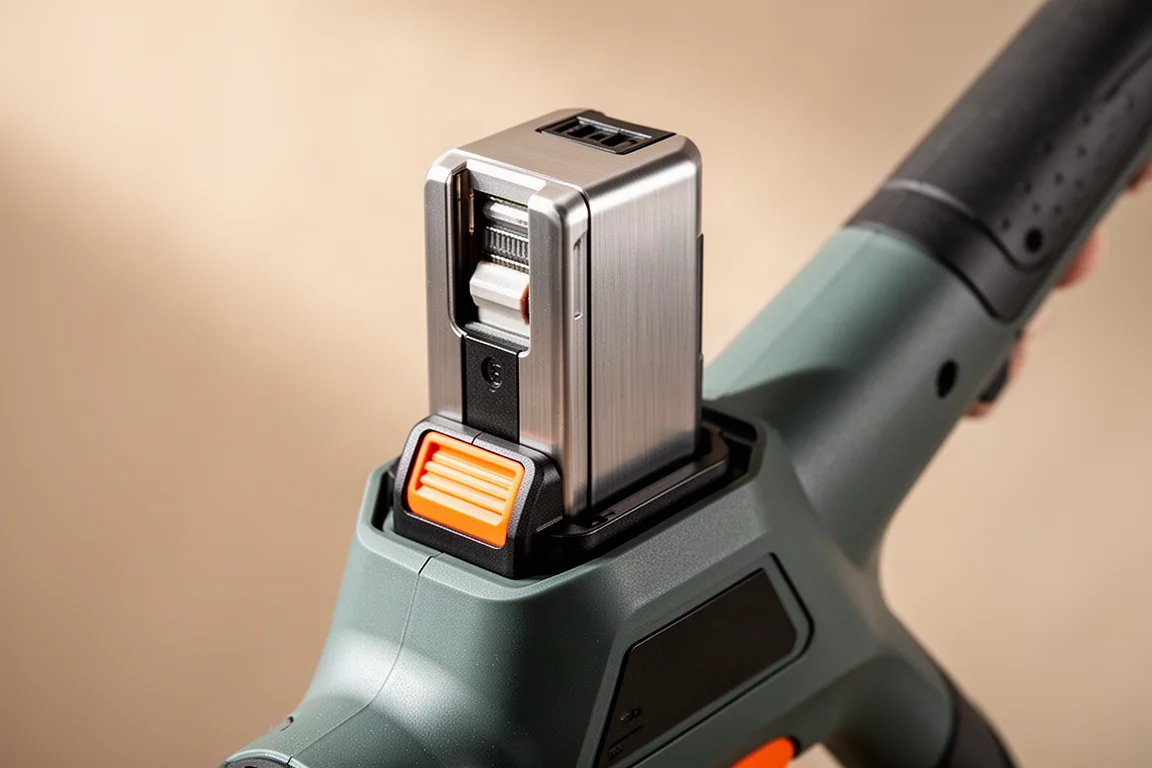
The Prunibaroo’s smartest move is the battery interface. It runs on DeWalt batteries, so you can pop the pack off and swap in almost any DeWalt battery you own. It does not ship with batteries, which keeps the price down significantly if you are already in that system, making it far more affordable than either the Milwaukee or the DeWalt for existing DeWalt users.
The LCD display shows a live cut count, open or closed status, and a battery indicator built into the back. There is also an integrated cooling fan, which helps during long sessions, though even the DeWalt will need a short breather after cutting something oversized.
Everyday Handling and Storage
The Prunibaroo is about half a pound lighter than the DeWalt, and in a tool you hold for extended periods that difference adds up. It comes in a case, though the included wrist strap tends to get in the way, and a better lanyard would be an easy upgrade.
Blade covers are the weak point across the board. The Prunibaroo ships with a small plastic piece that is easy to break and lose. The DeWalt’s cover is large and only fits one way, which makes putting it on correctly surprisingly difficult. The Milwaukee designed its cover to fit either orientation, one better than the other, though all three could benefit from a captive design that keeps the cover attached.
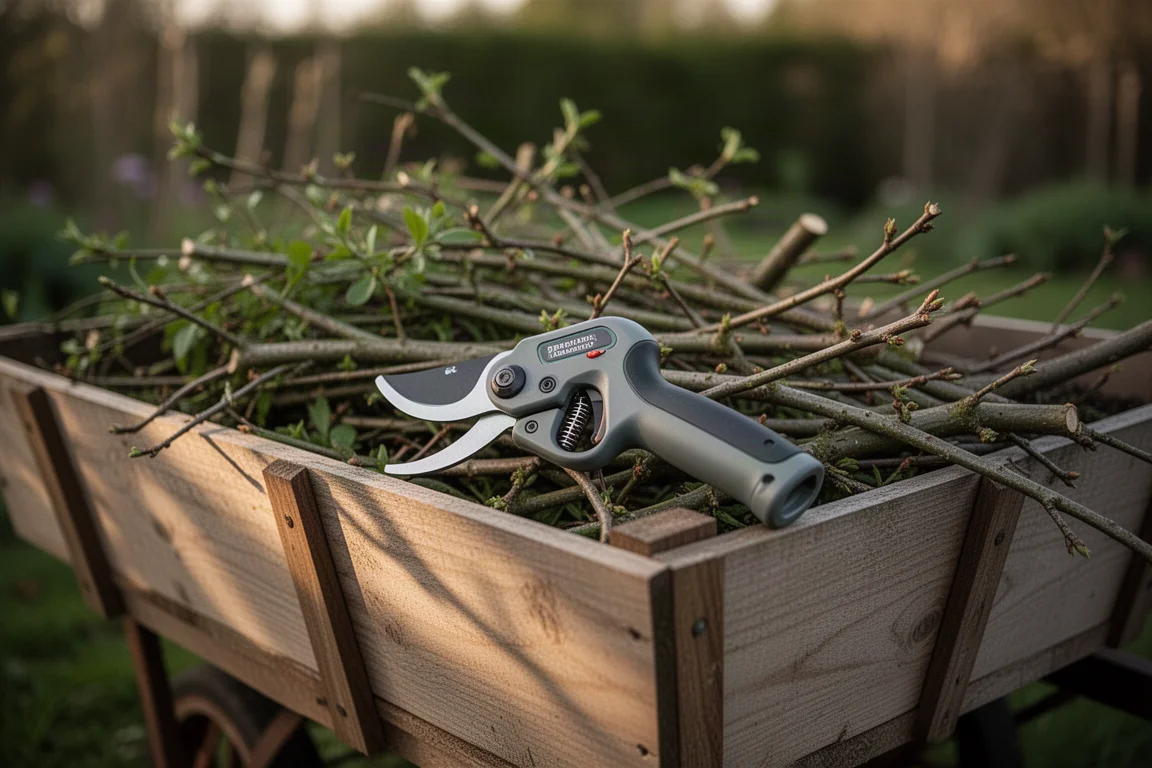
These are fast, powerful tools once running, and none of them are forgiving if you are careless. Slow, deliberate hands are part of the deal with any motorized pruner.
Buying Advice
If you already own DeWalt batteries, the Prunibaroo PRD35 is the standout: strong cutting, modern safety features, a lighter body, and no need to buy into a new battery system. If money is no object and you want the most refined motor experience, the Milwaukee is excellent, though it costs considerably more. The DeWalt remains a capable tool, but its weight, dated safety design, and visible motor sparking make it hard to recommend over the newer options unless you find it at a steep discount.
Conclusion
The Prunibaroo PRD35 earns its place as the go-to here because it combines strong 35mm cutting performance with the safety features and brushless efficiency the older DeWalt lacks, all while using batteries most DeWalt owners already have. The Milwaukee is the premium alternative for buyers who want that extra level of polish, and the DeWalt is best treated as a budget pick for anyone who already owns one.
Further reading
Related Reviews
Garden Tools
Bibury Folding Trimming Multi-Tool Review: Shears, Saw, and Blade in One
An inexpensive folding trimming multi-tool with shears, a surprisingly capable saw, and a blade we would not rely on. Here is how it held up on real overgrown branches.
Garden Tools
4 Garden Power Tools Worth a Look: Ryobi Patio Cleaners and DeWalt XR Garden Tools
Two Ryobi patio cleaners and two DeWalt XR garden tools put through real springtime work, with honest strengths and trade-offs for each.
Garden Tools
AEG ALP18 Pruning Shears Review: A Cordless Pruner With Real Muscle
The AEG ALP18 cordless pruning shears cut up to 30mm soft wood, keep operation easy on the hands, and add more torque than rival pruners, with a few quirks to know first.