Tools & Workshop
How to Protect a Chalk Line From Rain: Five Products Ranked After a Real Weather Test
We snapped lines, sealed them with five different coatings, and left the board out in a week of rain. The winner was clear.
Introduction
String is maybe the simplest construction tool. String with chalk on it is the second simplest. But a chalk line only does its job if it is still there when you come back for it, and rain, snow, and foot traffic can turn a crisp layout line into a blurry smear in days.
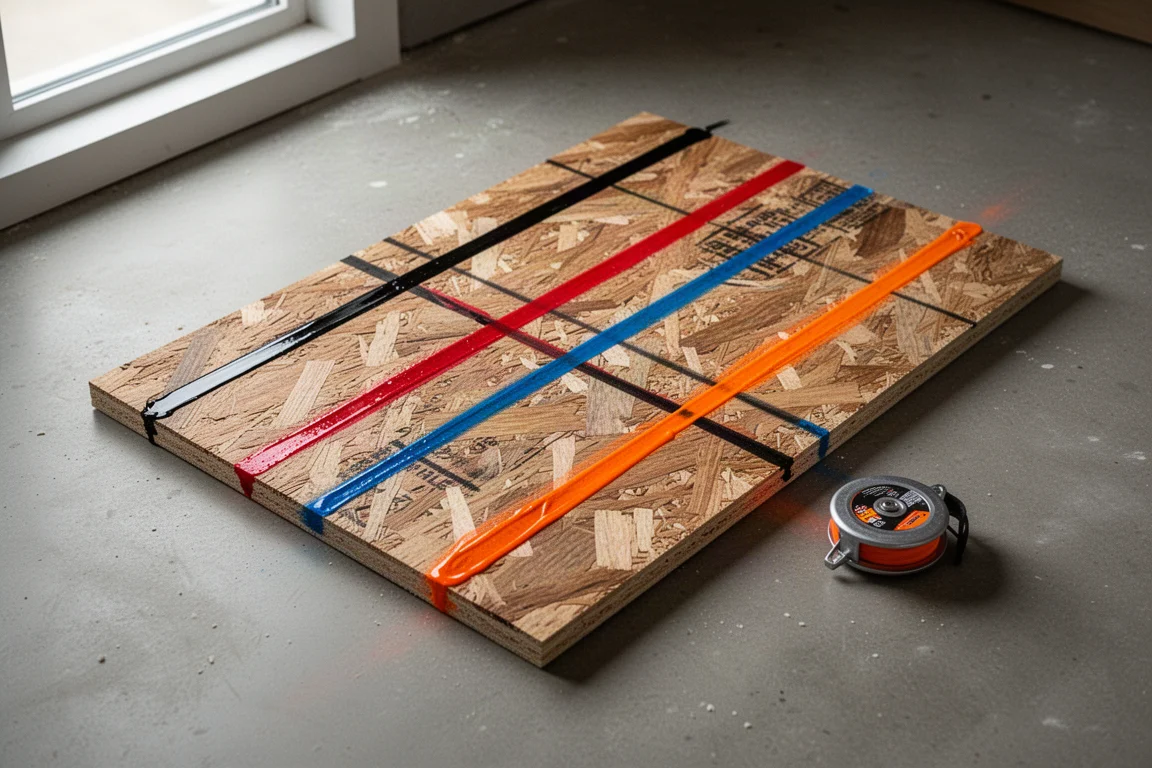
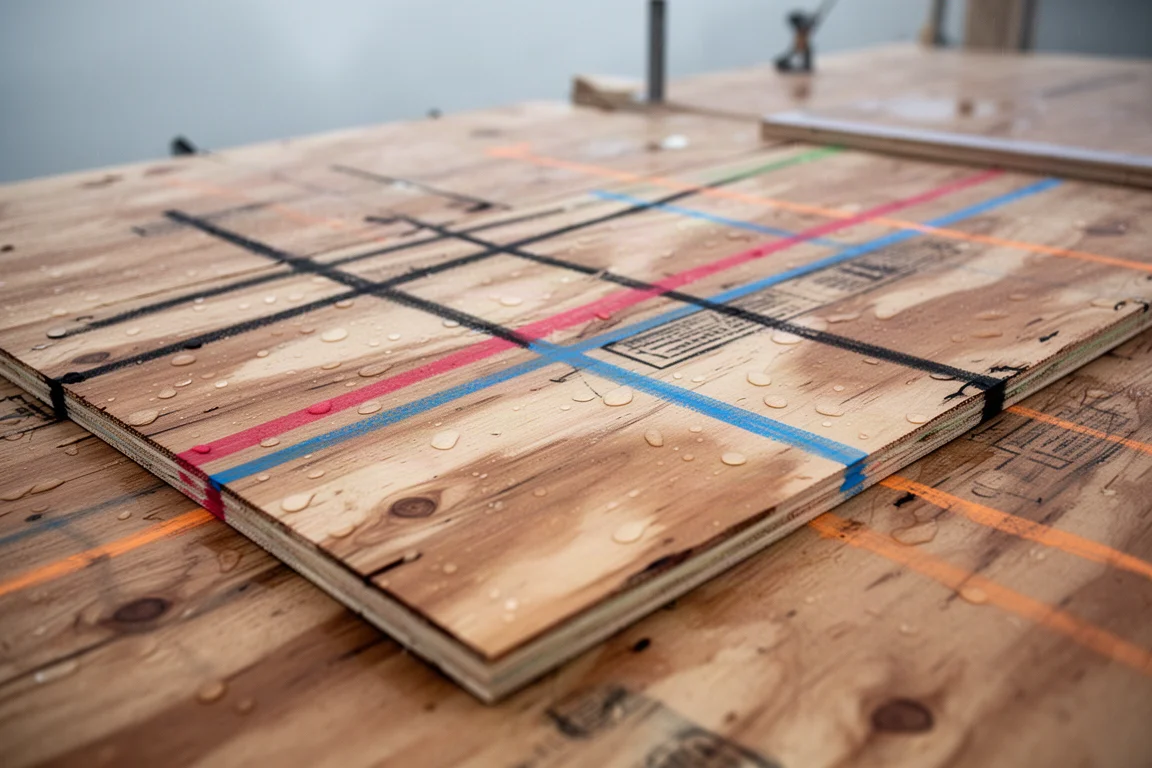
So we ran a practical experiment: snap lines in four chalk colors on CDX plywood, seal them with five different coatings, and leave the board outside through a week that included three days of pounding rain. Along the way we also covered chalk line setup, charging the string, and the snap-line protocol that keeps a two-person crew clean and accurate. Here is everything we learned.
Chalk Line Setup: Charging the String Properly
For a new box, the little DeWalt Atomic is a nice size if you are not doing big, long layout lines all the time. It fits in your bags without weighing you down.
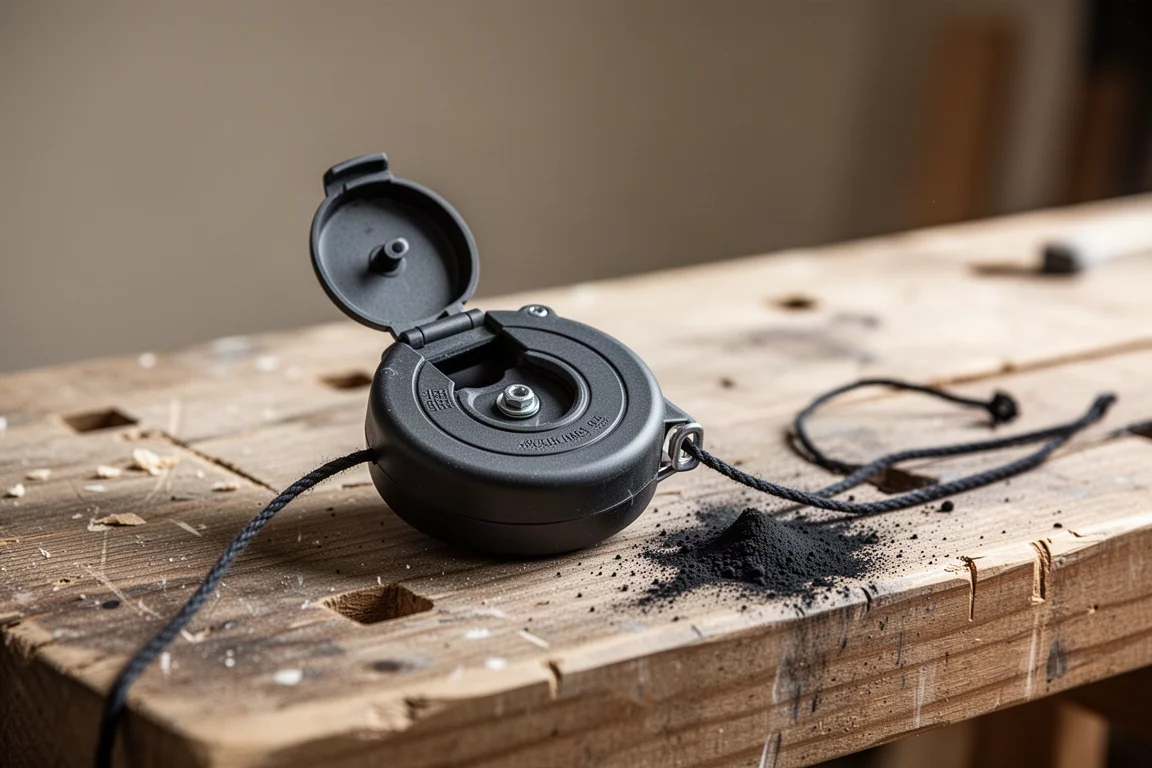
Here is the mistake people make with a fresh chalk line: they open the port and pump chalk in until it cannot hold any more. The result is a box that jams when you pull the string out and wind it back up. A chalk line cannot stand to be filled up right off the bat.
Instead, pull out roughly 30 to 50 feet of string so you can see the spool is diminished, then open the chalk hatch and add just some of the chalk, not the whole bottle. Turn the box upside down and tap it to clear the doorway, then wind the string back up. Repeat the pull-and-tap cycle a couple of times until the first third, then half, then most of the string is evenly covered with chalk. Now you have a nicely charged line instead of a jammed mess.
A few snap-line habits matter too. Knock the extra chalk off the string before laying it on the substrate, and do not pull it back like a bow string. A gentle snap gives you a crisp line. Holding the box upright when it is over-charged helps as well. And if a partner sprays chalk everywhere, well, that is exactly what practice is for.
There is also a two-person protocol worth learning. When you are receiving the chalk line, wind the string around your finger at least once, so if it hangs up, it does not pull out of your hand, hit the floor, and leave a big ugly mess. Then remember: box man walks, box man pops. The person holding the end stays put at the mark, and the box man walks to the other end, sets the box down on the mark, and pops the line. It saves confusion and sets a baseline process.
Chalk Colors and When to Use Each

Chalk choice is a decision in itself. Black and red are permanent. Once those lines are there, they are always there, and they can get you in trouble if a line needs to move. The flip side: rainwater and snow will widen, blur, and soften even permanent lines, so sealing them becomes the real challenge.
Blue is semi-permanent. It lasts a long time, maybe longer than you want. Dayglow orange is very vivid and visible in low light, but it comes off almost as easily as white. White chalk is the safe choice for indoor work: snap a line across carpet or down a white drywall wall, for example for stair railing standards, and it brushes right off. Just remember, if the line needs to be there tomorrow, white is not the right thing.
The Weather Test: Five Ways to Protect a Chalk Line
The goal was simple: find out what keeps a snapped line legible through a week of rain, cold, and sun on CDX plywood. Five coatings went head to head, plus a wild card idea submitted by readers: lay down a bright yellow or orange base coat, snap your line, then fog the paint lightly over the chalk so the chalk bleeds through. We tried it with water-based marking paint.
Weatherman said a week of wet, cloudy, cold weather was coming, which made a decent test. After the rain came some springtime sun. After the weather test, here is how each finisher stacked up, from the rankings.
Hairspray: Fifth Place
Extra hold hairspray held up the worst. Blue faded almost to white, while red and black stayed barely legible. It is not aggressive, and it did not hold up. Fine on a Friday night, not on a deck.
Thompson’s Water Seal: Fourth Place
Thompson’s Water Seal is what carpenters have used to preserve snap lines since the 1970s, 1980s, and 1990s, and it worked for them. Could do worse. In our test it did okay: blue was still there but diffusing, red clearly visible, black diffusing. Possibly there was too much chalk on the string, but the results were not as vivid as the top finishes.
Rust-Oleum Inverted Marking Paint Lemon Yellow: Third Place
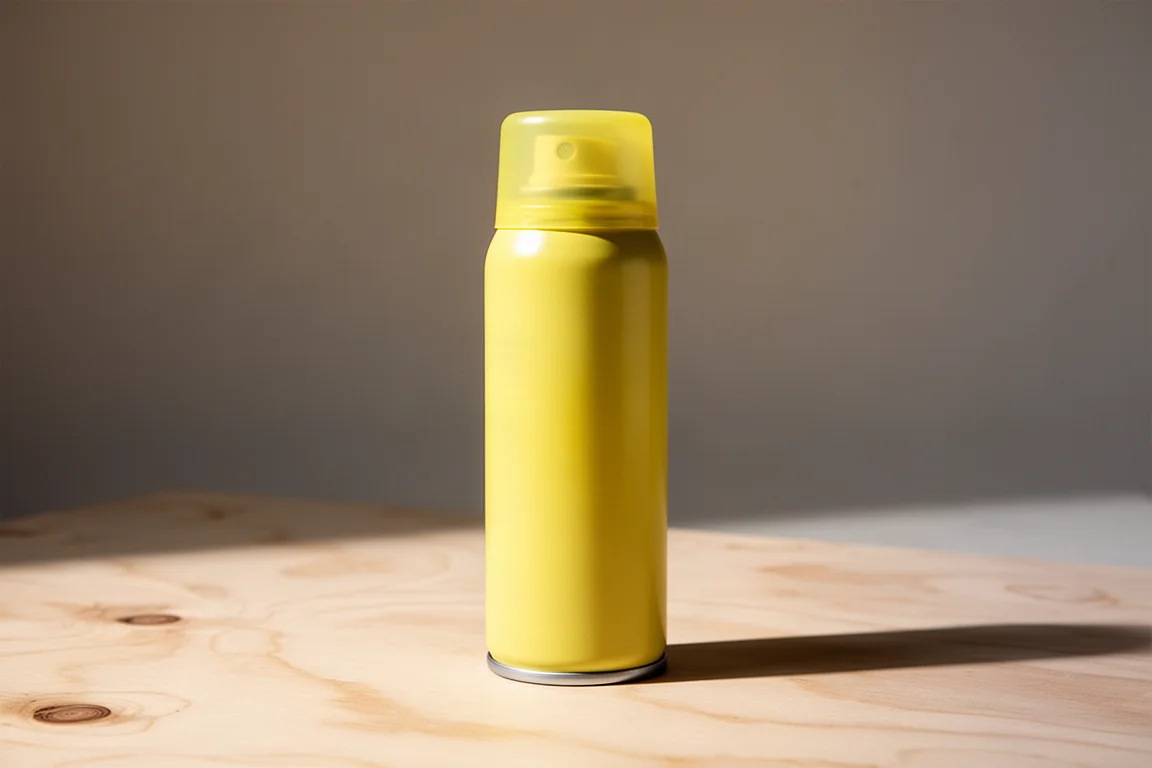
The wild card from the comments: spray a bright yellow or orange base coat on the deck, snap your lines, then fog it lightly over the chalk and let the chalk bleed through. We used water-based marking paint to do it. The fog wiped out the difference between the blue and the black, but red did its job and blue turned vivid. In some cases, this might be the way to go, and it earned third place.
Minwax Helmsman Spar Urethane: Second Place
Minwax Helmsman spar urethane captured and preserved every little dot of even the blue chalk. Red and black are indelible, with no real streaking or fading from water. The catch is application: as a regular spray can it is not the easiest to lay down. A strong second place.
Rust-Oleum Inverted Marking Paint Clear: The Winner
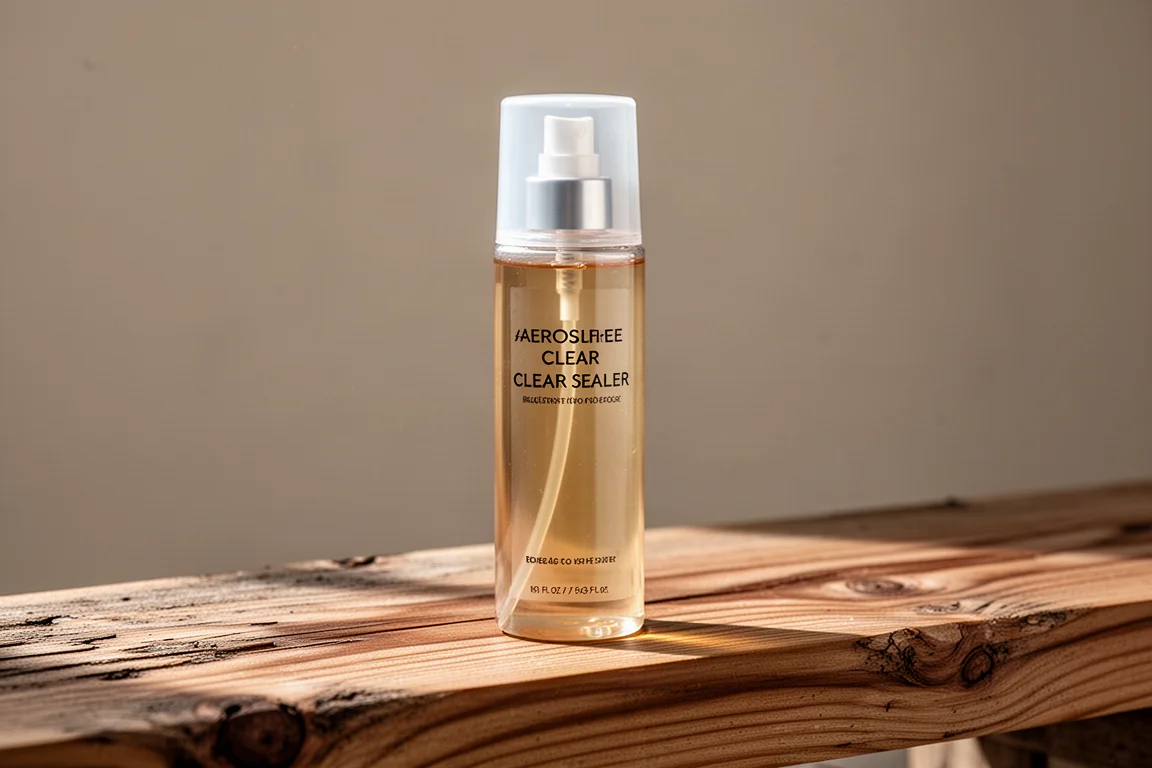
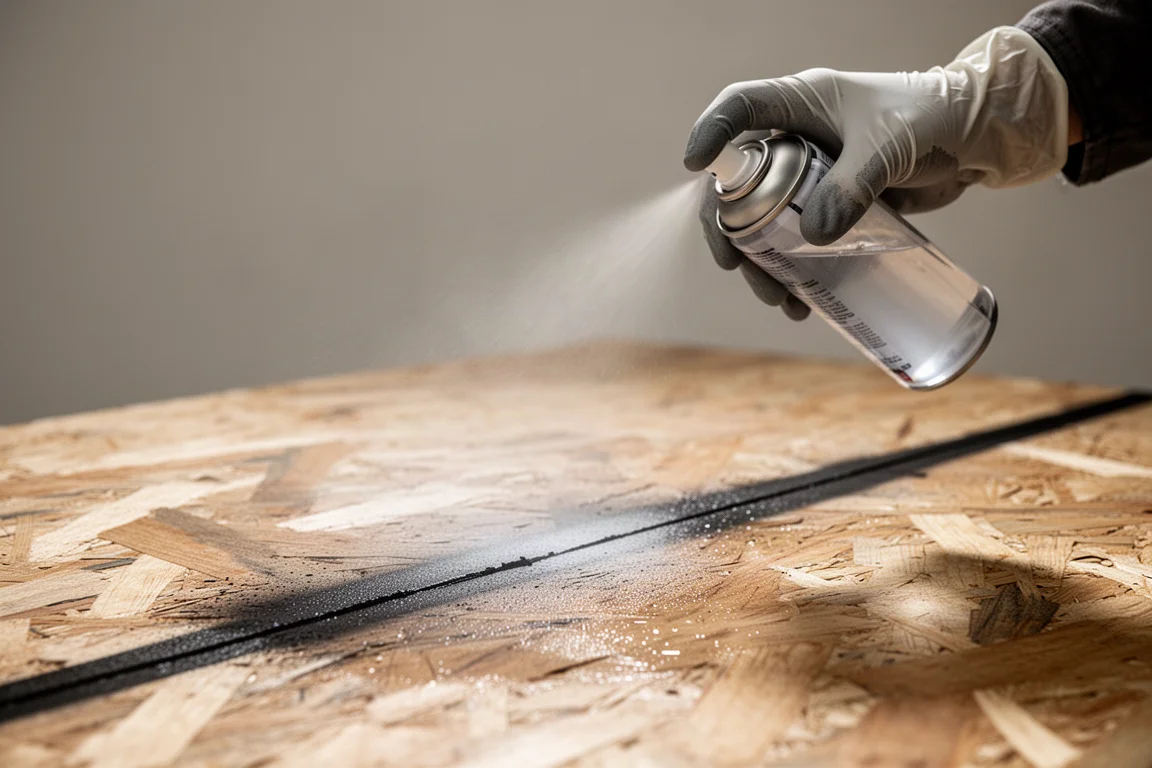
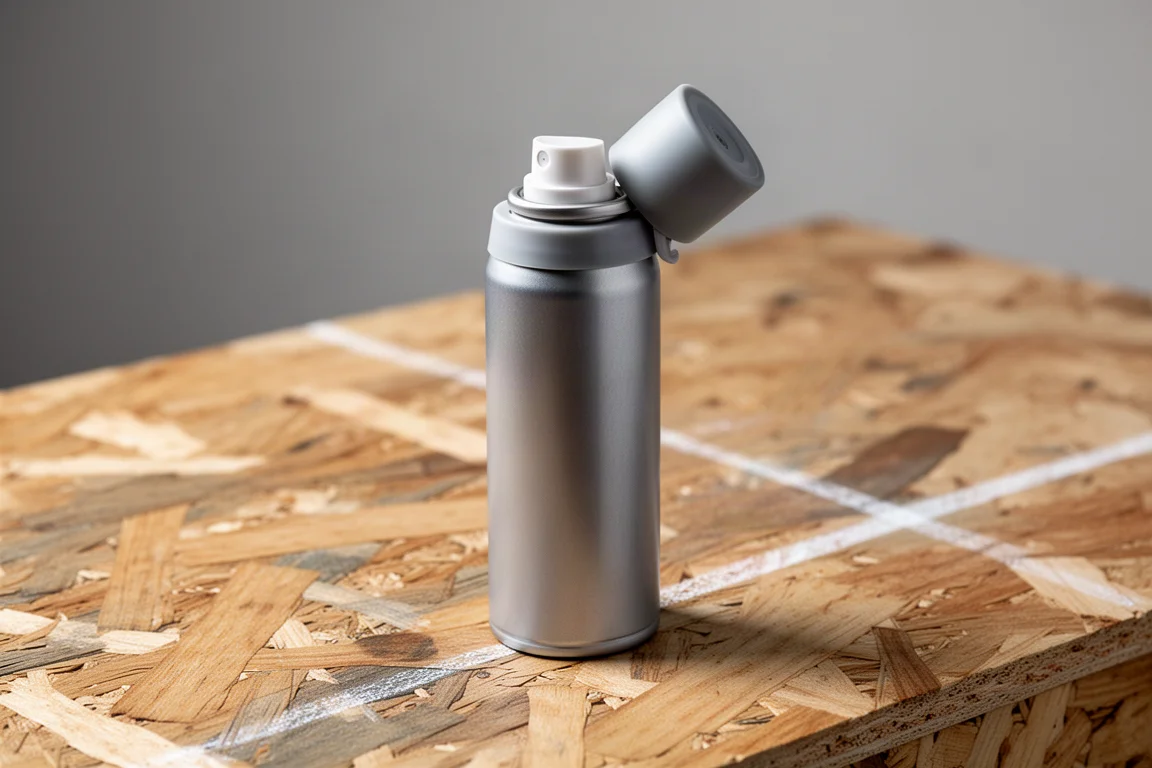
The uncontested winner of the competition is the Rust-Oleum inverted marking paint in clear. Just like the urethane, there was no discernible change after a week of rain: everything crisp, everything preserved. And it goes on so easily and controllably that it felt almost made for the job. For ease of application plus apparent utility, this is the ticket. One habit to keep though: after spraying, clear the nozzle until nothing comes out, or dried paint will clog it and waste your can.
Buying Advice
If you want to get it off the shelf anywhere marking paint is sold and have a fighting chance of knowing what you were doing when you finally get back to work, the clear inverted marking paint is the safe pick. If you prefer the traditional route, Thompson’s Water Seal remains a proven, workable option. For maximum permanence where streaking and fading matter most, the spar urethane delivered, and the yellow fog-over trick is worth keeping in your back pocket for jobs where the chalk needs to show through a paint coat.
Conclusion
This is not a comprehensive laboratory test, and we cannot tell you how these coatings would survive weeks of submersion, a foot of snow, or a slab that turns into one big duck pond. But on a plywood board through three days of pounding rain and sun, the ranking was clear: hairspray, then Thompson’s Water Seal, then the yellow marking paint fog technique, then spar urethane, with Rust-Oleum clear inverted marking paint on top. Keep your chalk box properly charged, snap gently, and seal your layout lines if the weather has any chance of turning.
Further reading
Related Reviews

Tools & Workshop
Three Tools That Saved a Tight Dishwasher Installation
A long-reach hose clamp tool, a locking ratcheting bit driver, and a flip socket that earned their spot during a cramped appliance install.

Tools & Workshop
Banggood WB0102 Pro Workbench Review: A Stable, Height-Adjustable Bench for Small Workshops
A heavy, well-priced workbench with a pine top, built-in power strip, height adjustment, and a straightforward assembly that takes under 30 minutes.

Tools & Workshop
Best 50 ft Extension Cords: 15 Cords Put Through Real-World Testing
Fifteen 50 ft extension cords compared on blade strength, abrasion resistance, voltage drop, plug retention, and cold weather flexibility.