Tools & Workshop
Best 50 ft Extension Cords: 15 Cords Put Through Real-World Testing
Fifteen 50 ft extension cords compared on blade strength, abrasion resistance, voltage drop, plug retention, and cold weather flexibility.
Introduction
Can an extension cord that costs under $20 actually be trusted? Or should you spend four times as much for the most expensive cord in this comparison? Fifteen 50 ft extension cords, ranging from about $17 to $88, went through a series of practical tests to find out: blade strength, socket grip, voltage drop, plug retention, tensile strength, abrasion resistance, puncture resistance, and cold weather flexibility. The results show that price is not always a reliable guide to quality, and that wire gauge matters a great deal.
How These Cords Were Tested
With extension cords, the larger the gauge number, the smaller the wire. A 10 gauge wire can handle far more current than 16 gauge. Most of the cords tested are 14 gauge, 50 ft long, and rated for 13 amps up to 1,625 W, though a few exceptions appear along the way. Each cord was tested for how much force it takes to separate the cord from the plug, how abrasion resistant the jacket is, how strong the blades are, how well the socket grips the blades, and how much voltage drops under load.
Project Source 16 Gauge 50 ft Extension Cord
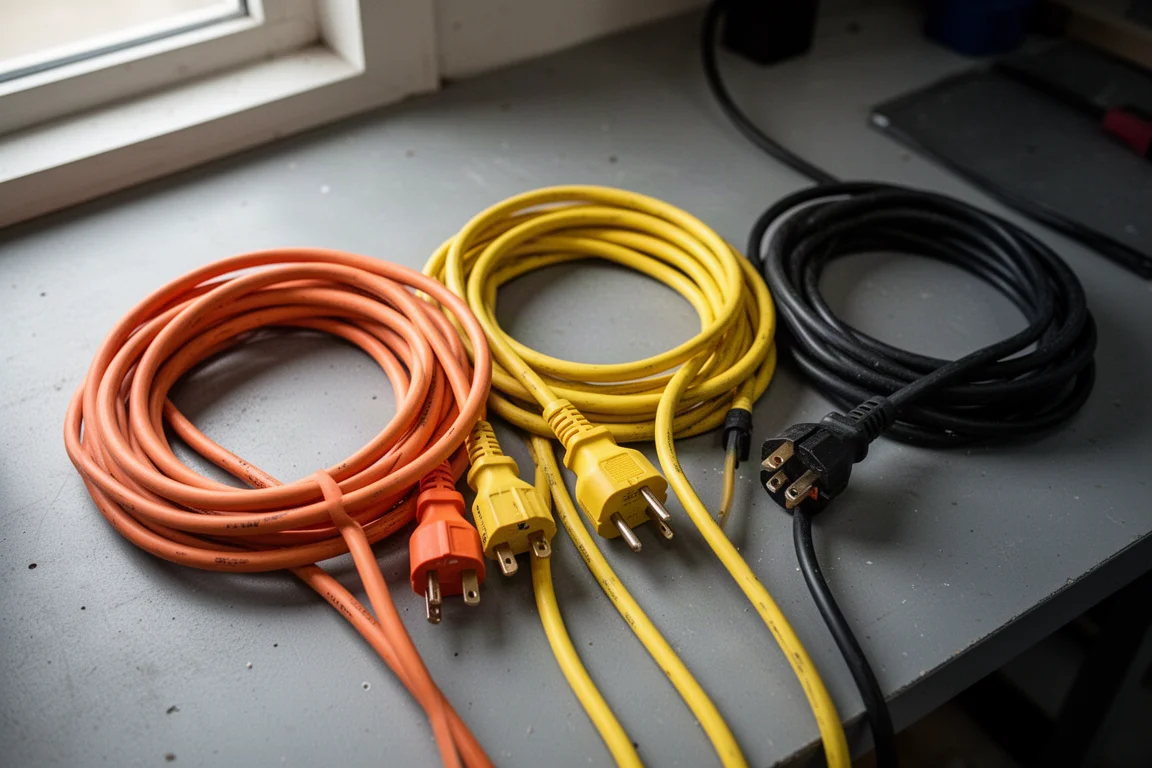
At $17, the Project Source is the least expensive cord tested, but it is also 16 gauge rather than 14 gauge. The blades appear to be made of a thin piece of metal folded over rather than a solid piece, and they folded with only about 9.5 lb of pressure. It weighed 1,490 g, is made in Thailand, and showed the largest voltage drop of the cords tested at 7 V, with the cord temperature rising about 33 degrees. On the plus side, its plug end held on very well at 190 lb, and it finished third in the socket grip test at 16.3 lb. It is a genuinely well-attached cord wrapped around the weakest wire in the group.
Vanguard 14 Gauge 50 ft Extension Cord
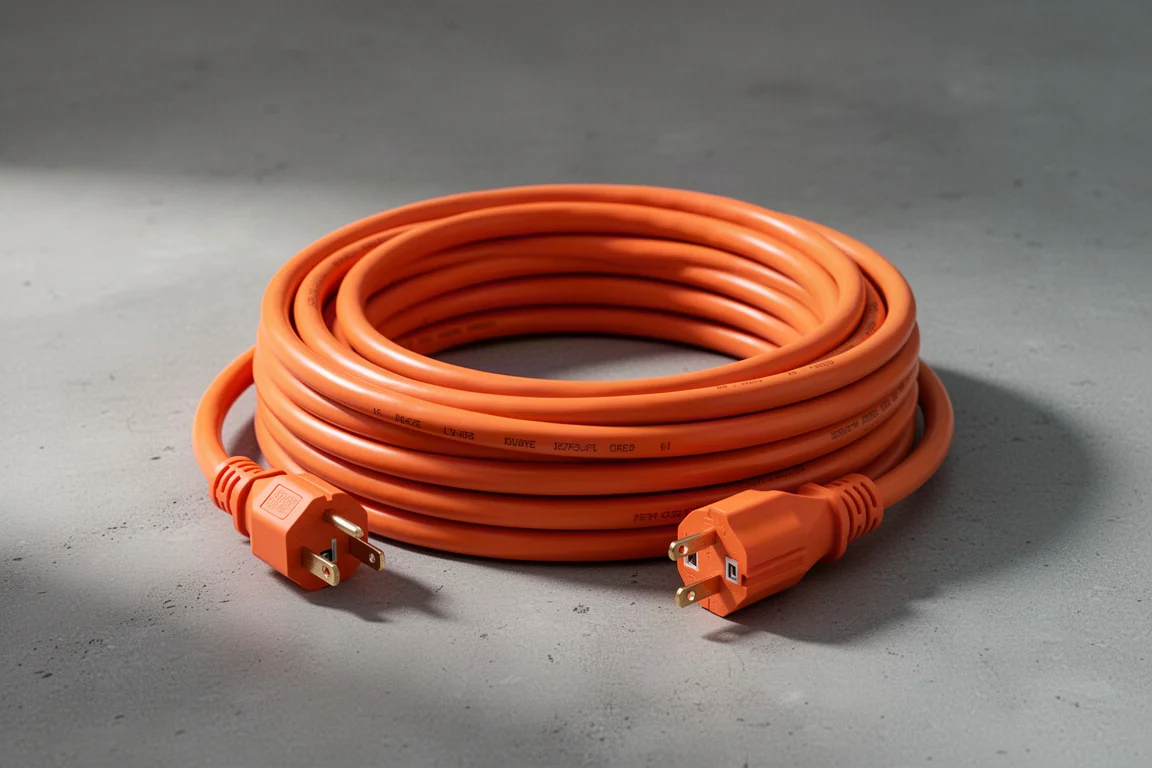
Sold at Harbor Freight for $20, the Vanguard is 14 gauge and designed for 15 amps or 1,875 W at 50 ft, with solid metal blades and a claimed hard service rating. It weighs 1,962 g and is made in China. The blades performed very well, holding up to just over 30 lb of pressure, and the plug end tore loose at 192 lb with tensile strength of 321 lb. Its 4.47 V drop and an 11.7 degree temperature rise are respectable for a 14 gauge cord. For light-duty use at around $20, this is the value pick.
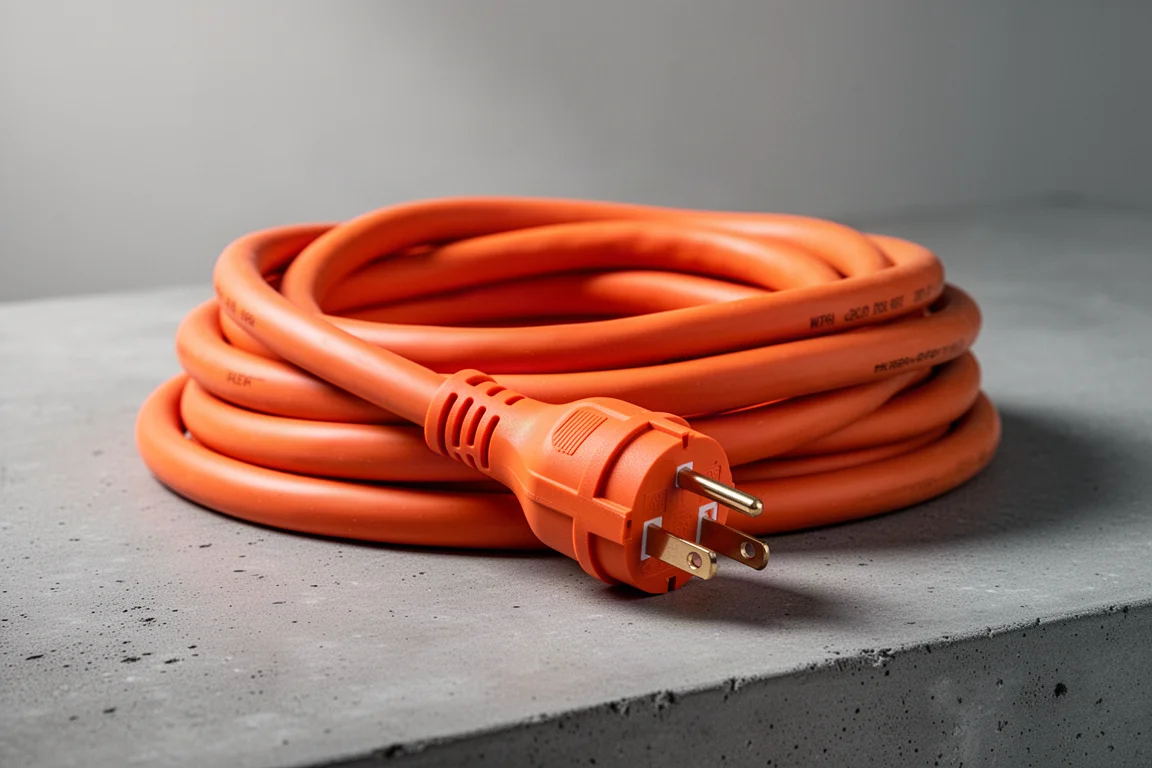
Woods Heavy Duty Outdoor Extension Cord
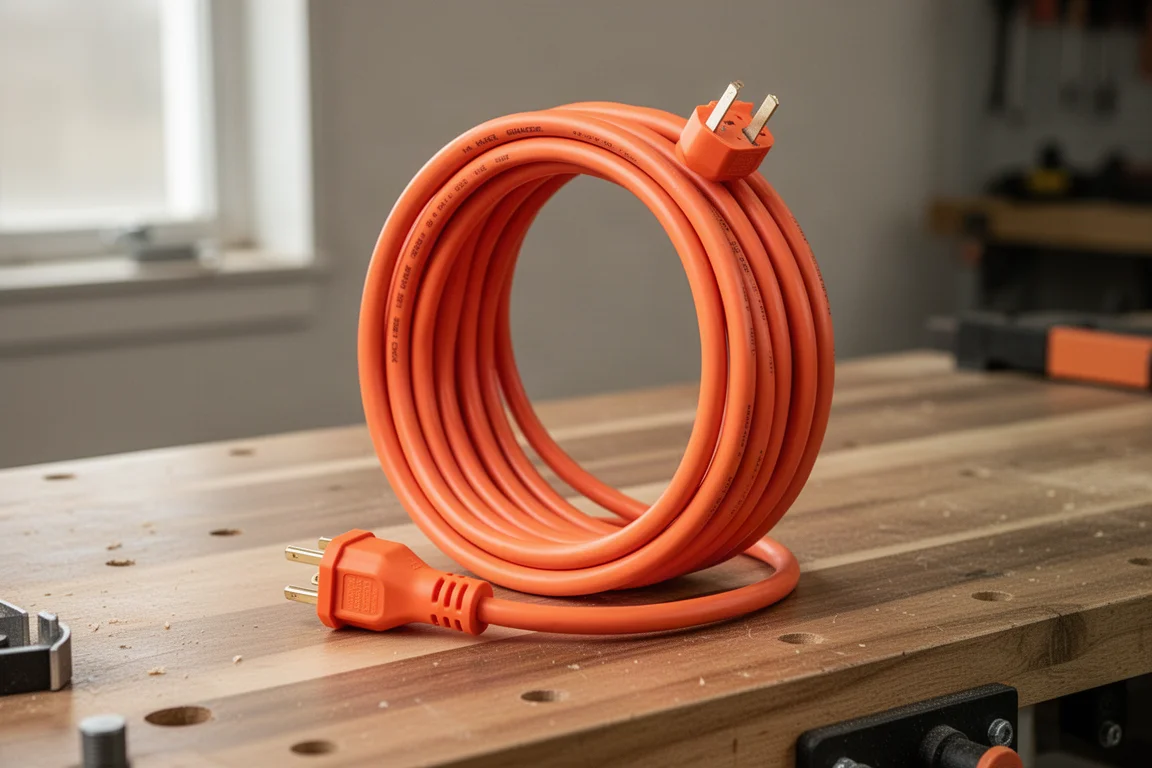
At $26, the Woods is an outdoor heavy duty cord with reinforced blades, claimed flexibility in all temperatures, and oil and chemical resistance. It is the heaviest cord tested at 2,076 g and is made in Vietnam. The blade strength was disappointing at just under 21 lb, and the socket only managed a weak 4,620 g grip on the blades, the worst of the 14 gauge cords. However, the plug end held to 236 lb and tensile strength reached 334 lb, and its hard rubber jacket lasted 14 seconds in the abrasion test. A mixed performer.
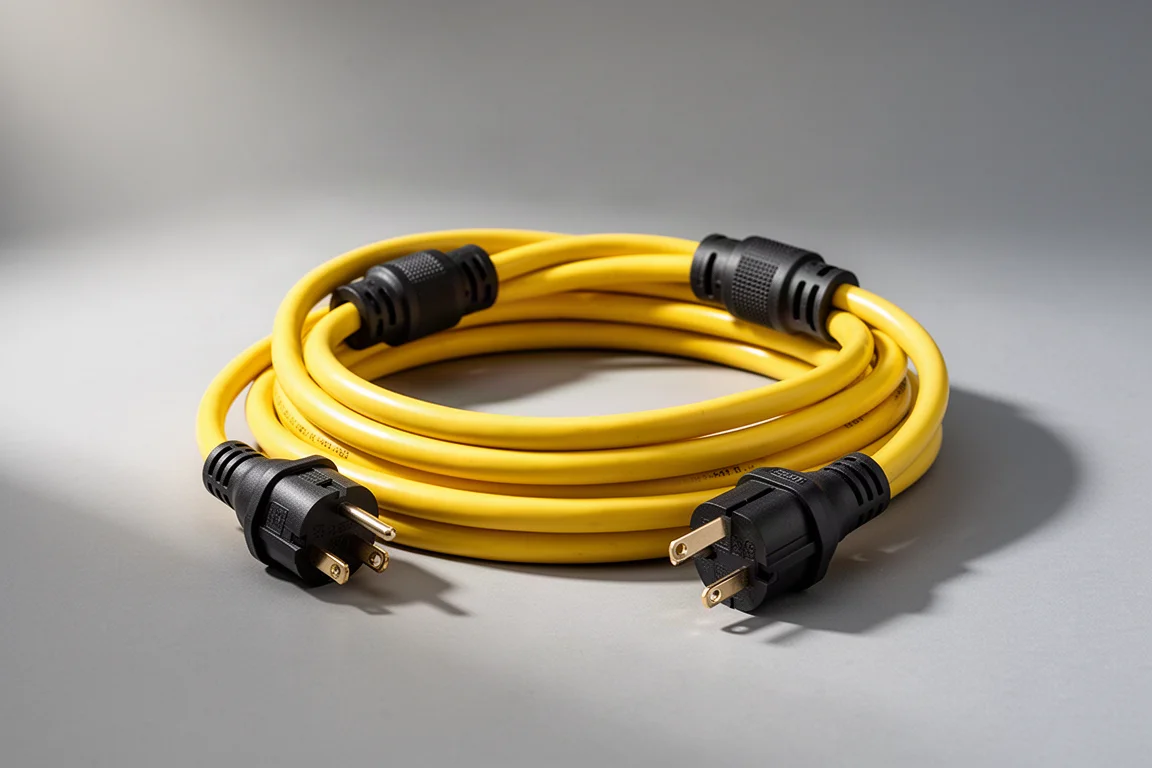
Yellow Jacket 14 Gauge 50 ft Extension Cord
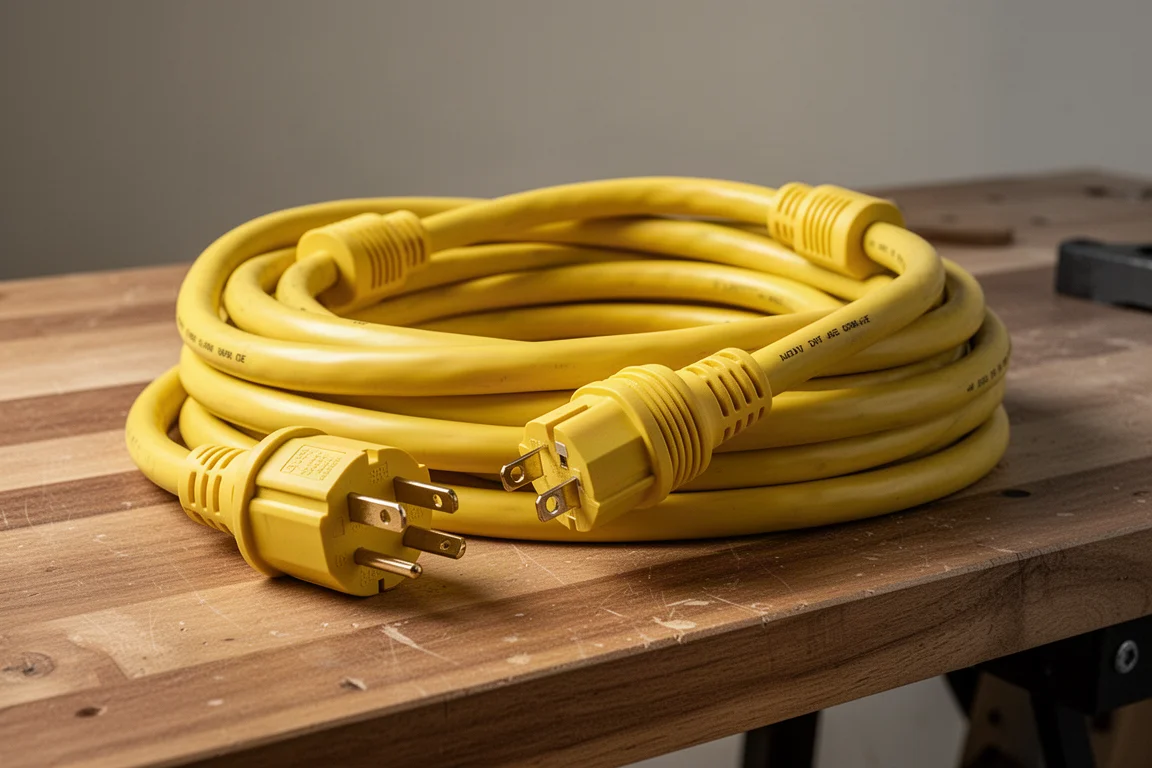
The $34 Yellow Jacket claims a power light plug designed for 15 years of daily use, polymer filling for tensile strength, heavy duty strain relief, three times greater abrasion resistance, and cold weather performance down to minus 58 F. It weighs 1,996 g and is made in Taiwan. Blade strength was around 26 lb, and the plug end performed very well at 319 lb, with the best tensile strength of the 14 gauge cords at 423 lb. The jacket lasted 15 seconds in the abrasion test. One real concern: the jacket cracked in the minus 40 F cold test, the only cord to do so.
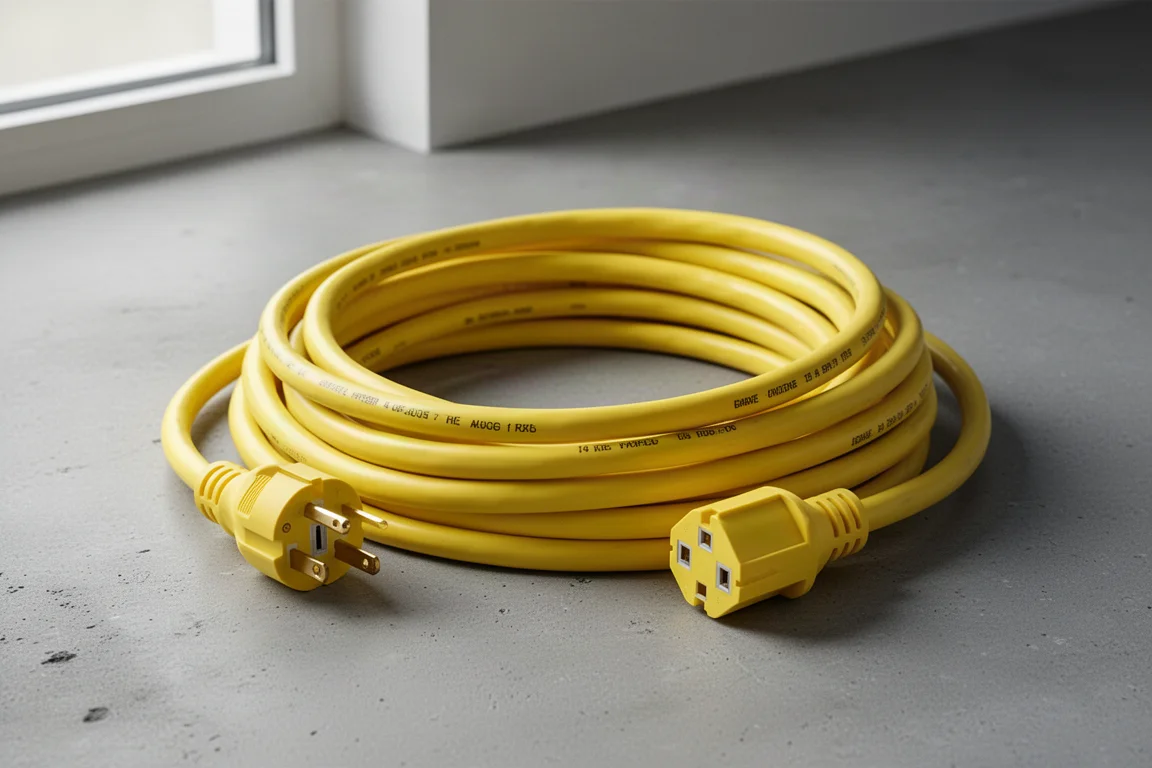
Southwire 14 Gauge 50 ft Extension Cord
This $34 Southwire offers reinforced blades, a temperature range of minus 40 to 75 C, and insulation that resists oil, grease, moisture, abrasion, and sunlight. It weighs 1,880 g and is made in Indonesia. The blades performed strongly, and the cord posted the best socket grip result of the entire test at 19.4 lb. On the other hand, the jacket is soft and thin, lasting only 8 seconds in the abrasion test, and tensile strength was the lowest of the 14 gauge group at 241 lb. The plug end separated at 202 lb.
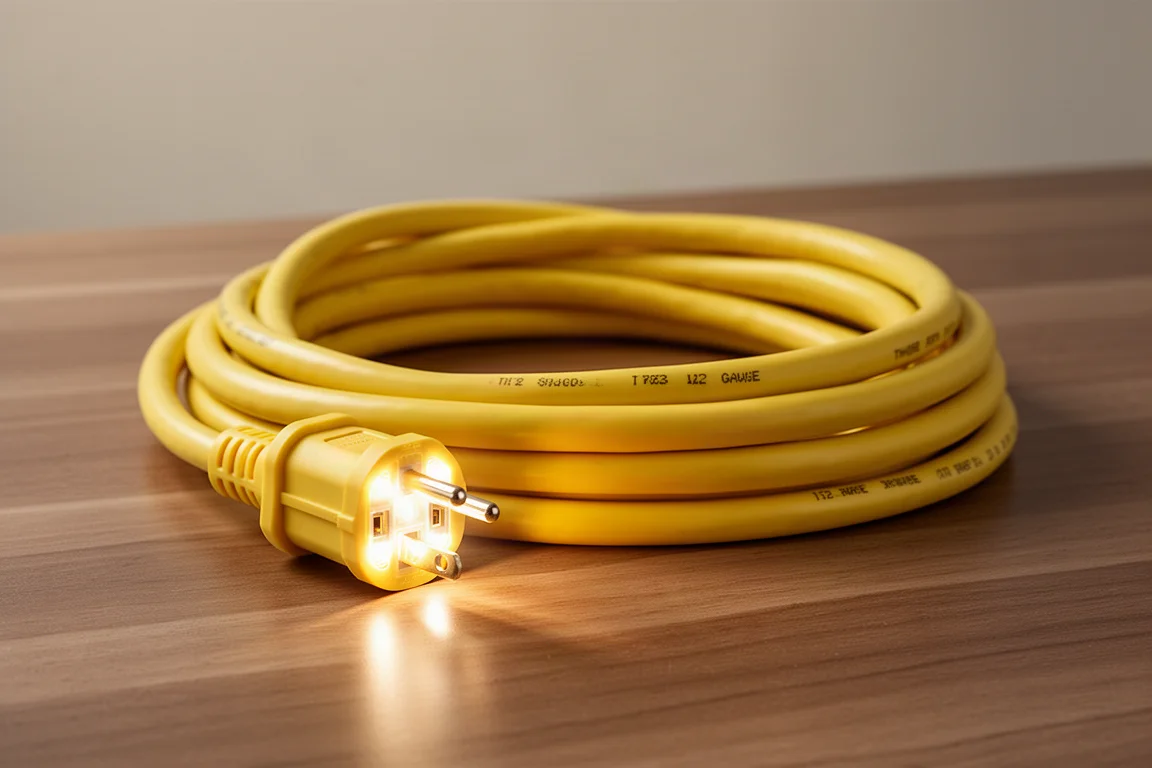
Southwire 12 Gauge 50 ft Extension Cord
For $35, one dollar more than the 14 gauge version, this Southwire steps up to 12 gauge wire rated for 15 amps or 1,875 W, with a lighted end and a weather resistant jacket good from minus 40 to 140 F. It is the second heaviest cord at 2,920 g and is made in the USA. The larger wire pays off in the electrical tests: only a 2.85 V drop and a temperature rise of just 1.9 degrees. But it uses the same folded blade design as the Project Source, and the blades gave up at around 13 lb, with a weak 2,958 g socket grip. Tensile strength was a solid 393 lb.
Husky Medium Duty Extension Cord
The $35 Husky is a medium duty kink free cord with a vinyl jacket, molded plug, and durable strain relief. It weighs 2,118 g and is made in the Philippines. This cord shines in the mechanical tests: the plug end held to an impressive 346 lb before tearing away, the best 14 gauge result at the time of testing, and its jacket lasted 28.7 seconds under the sander, roughly twice as long as the competition and the best abrasion result of any 14 gauge cord. Blade strength was strong at about 29.3 lb, though socket grip was slightly below average.
Utilitech 14 Gauge Extension Cord
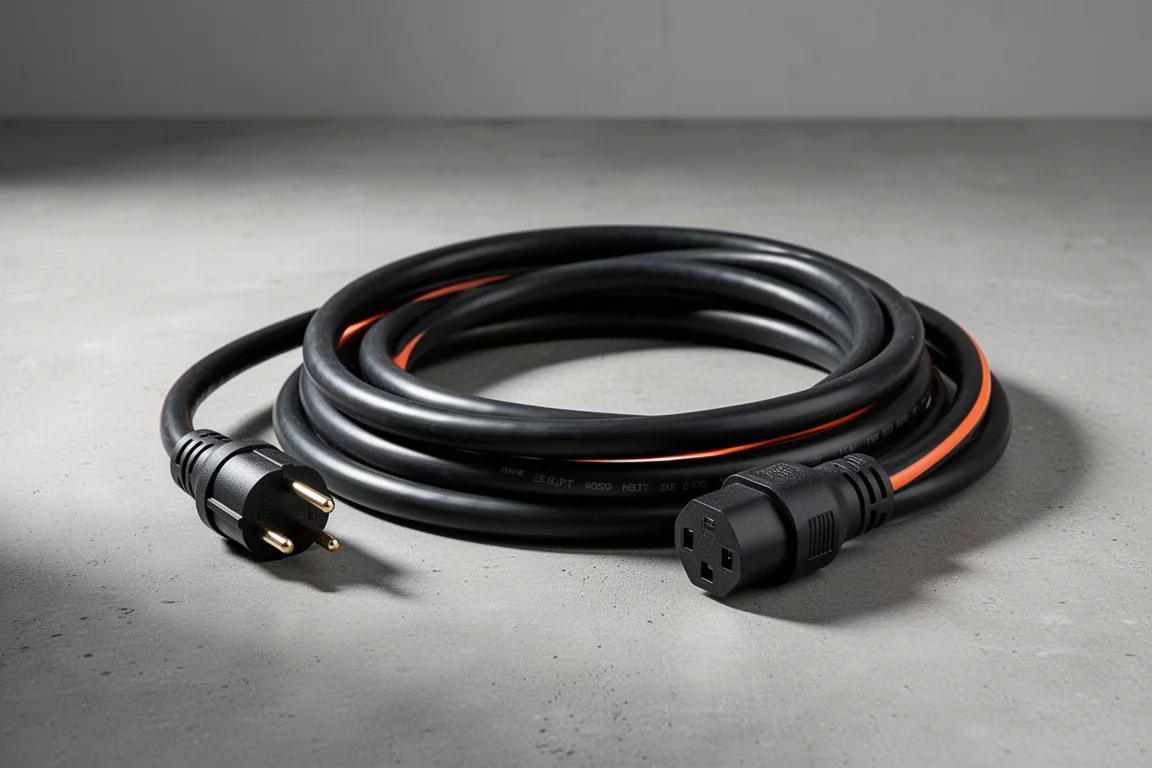
Also $35, the Utilitech is a 14 gauge medium duty general extension cord certified for use in the US and Canada and rated for 1,875 W. It weighs 2,148 g and is made in China. The blades took the lead during testing at almost 39.5 lb, and the plug end outlasted the cord at 311 lb with matching tensile strength. Voltage drop of 4.4 V was among the best of the 14 gauge cords. The jacket lasted 17 seconds in abrasion. Across the whole test, its average finish ranking of 4.7 placed it third overall.
Snow Joe Extension Cord
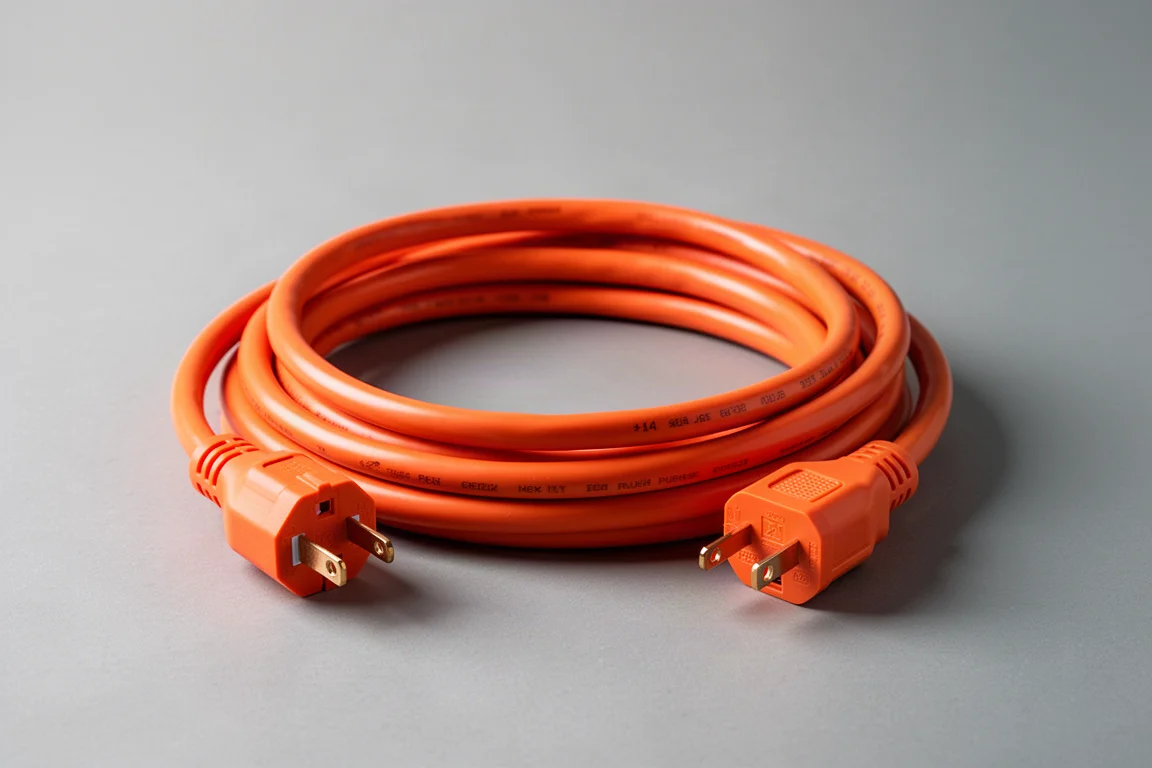
At $36, the Snow Joe features an outer jacket resistant to oil, grease, and moisture, a glowing plug end when powered, and a rating down to minus 40 F. It weighs 1,966 g and is made in China. Blade strength was a very good 32 lb, and socket grip was excellent at 17.7 lb, second only to the 14 gauge Southwire. The plug end outlasted the cord at 278 lb. Its voltage drop of 4.44 V was competitive. The soft, thin jacket only lasted 10 seconds in the abrasion test, which is the main trade-off here.
Flexzilla Extension Cord
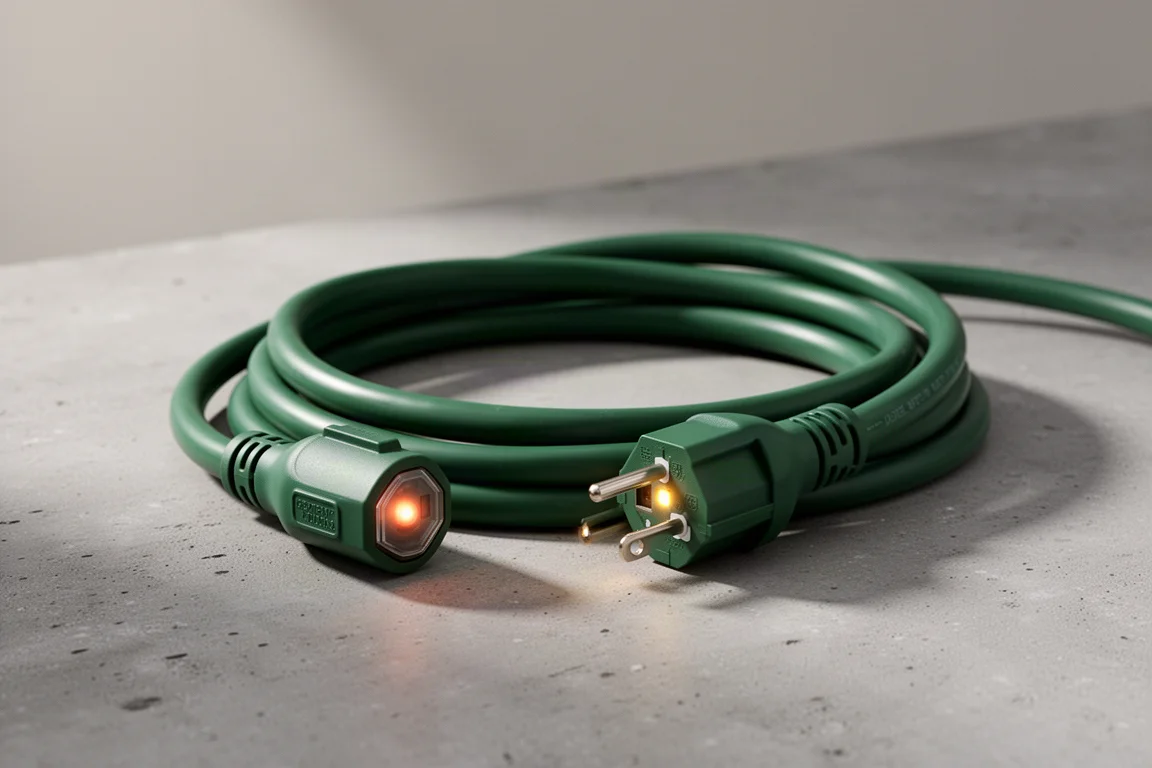
The $40 Flexzilla is marketed on extreme all weather flexibility, rated from minus 58 to 140 F, with abrasion and corrosion resistance, a glow in the dark stripe, and a power indicator light. It weighs 2,046 g and is made in Taiwan. It stays true to its billing on flexibility, earning a top flexibility rating at room temperature and finishing among the best cords at minus 40 F alongside the Southwire 14 gauge and Go Green. The jacket held up well at 14.3 seconds in abrasion, and the socket grip of 12.5 lb was above average. Blade strength came in around 27.5 lb, with the plug separating at 257 lb.
Bergen Industries Extension Cord
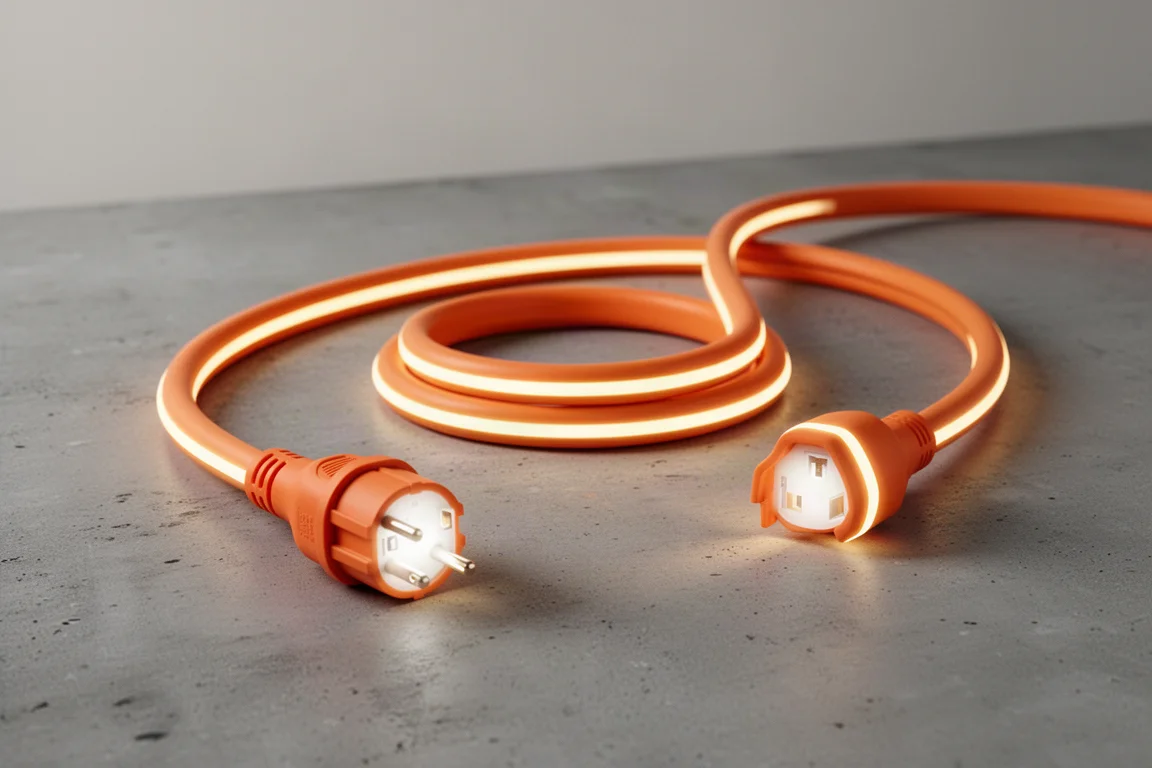
Also $40, the Bergen Industries cord claims super flexibility for everyday agricultural use, with molded plug and connector ends and a chemical resistant vinyl jacket. It weighs 2,010 g and is made in China. This is a rugged cord: blade strength of just over 41 lb took the lead during testing, and its thick, hard jacket lasted 22.7 seconds in the abrasion test, second best among the 14 gauge cords. Tensile strength was a solid 319 lb, though the plug end gave up comparatively early at 201 lb. Its average finish ranking of 4.4 was second best overall.
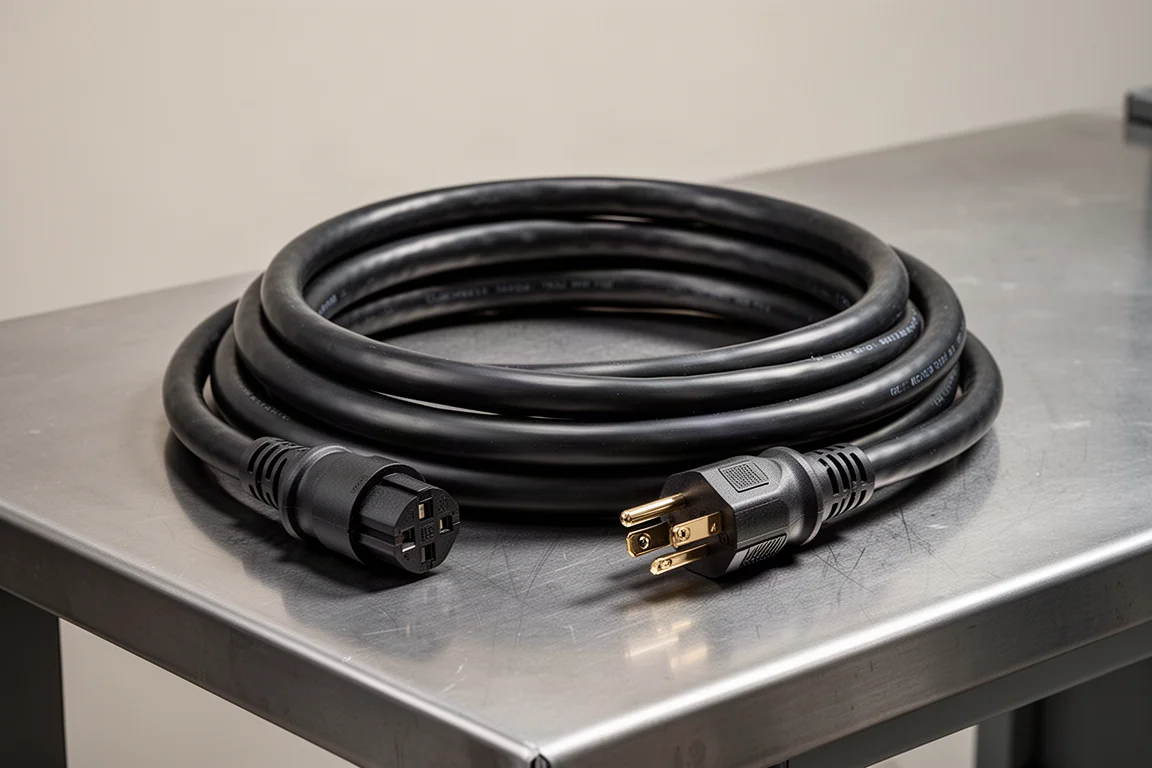
Go Green Extension Cord
The $45 Go Green features a glowing indicator plug, claimed flexibility down to minus 94 F, and abrasion and UV resistance. It weighs 1,934 g and is made in China. Blade strength was very good at 37.8 lb, and it finished third overall in that category. It also handled the cold well, ranking among the best cords at minus 40 F. The weak point is the softer plastic used elsewhere: the plug end gave up at just 169 lb and tensile strength was among the lowest at 260 lb, with a modest 2,968 g socket grip.
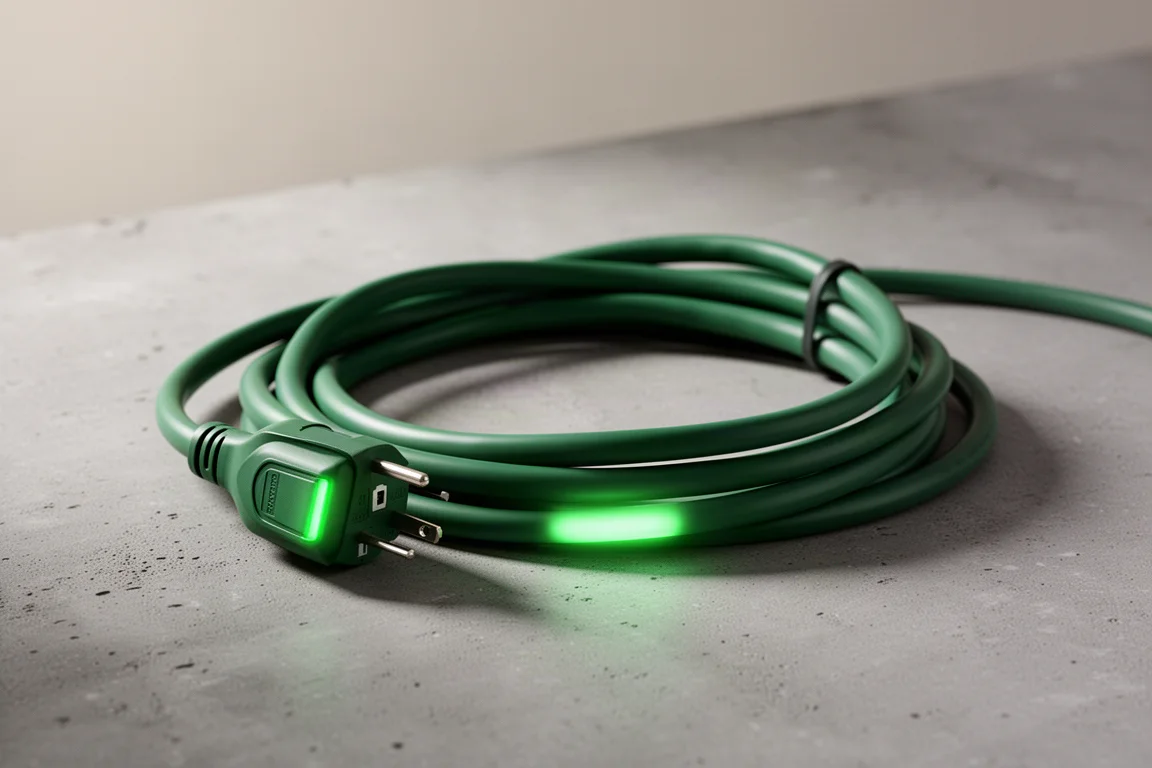
US Wire SJTW Extension Cord
At $53, this US Wire cord uses individually insulated conductors inside an SJTW vinyl jacket that resists abrasion, moisture, and sunlight. It is medium duty, weighs 2,174 g, and is made in the USA. Its thick, hard jacket performed better than average at 17.6 seconds in abrasion and was the most puncture resistant cord tested at 3,268 g. The plug end held to 367 lb, the best 14 gauge result, and it had the lowest voltage drop of any 14 gauge cord at 4.36 V. But it uses the same folded blade design, and the blades failed at just over 10 lb, with the weakest socket grip among the folded-blade cords at 4,502 g.
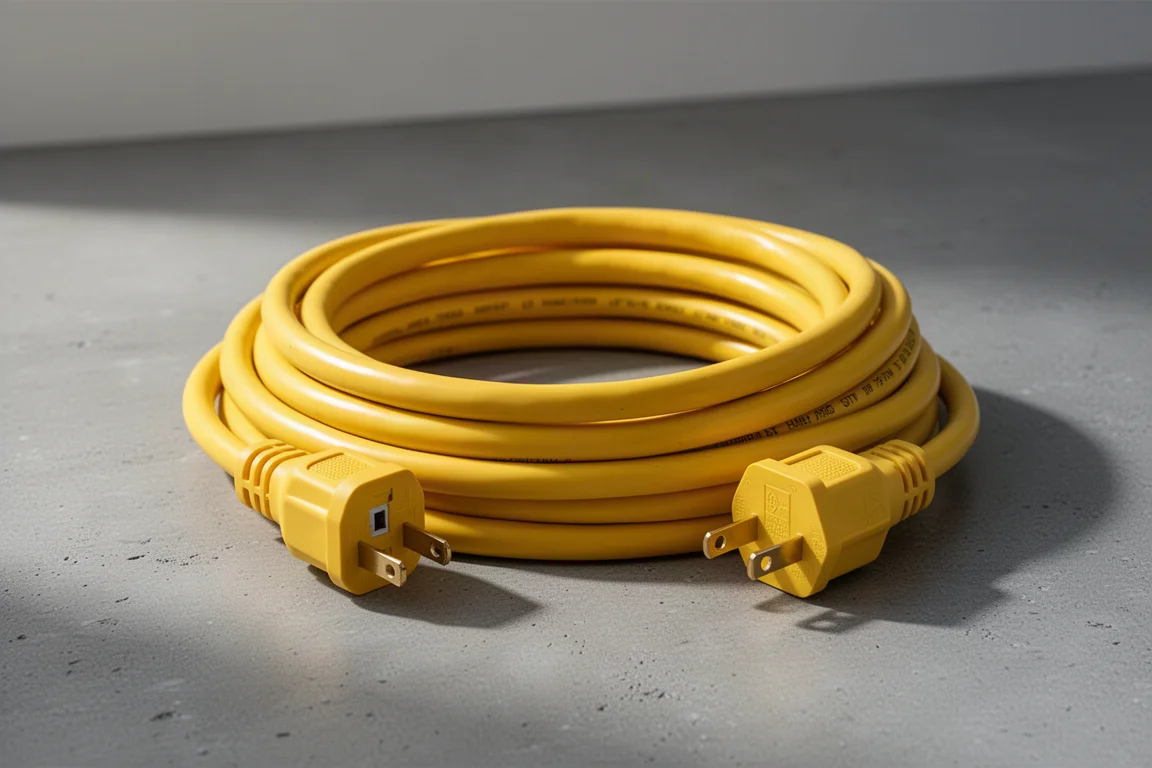
US Wire Extreme All Weather Extension Cord
At $74, the US Wire Extreme is an all weather cord built from 100% thermoplastic elastomer, rated from minus 94 F all the way up to 221 F, with a red glowing plug end visible day or night. It weighs 1,842 g and is made in the USA. This cord dominated the cold test, by far the easiest cord to work with at minus 40 F, and its flexible jacket still lasted 20.2 seconds in abrasion. Blade strength of 46.4 lb was the best of any cord tested. The trade-off is the flexible material itself: the plug end separated at just 164 lb and tensile strength was a modest 258 lb. Its average finish ranking of 4.0 was the best overall.
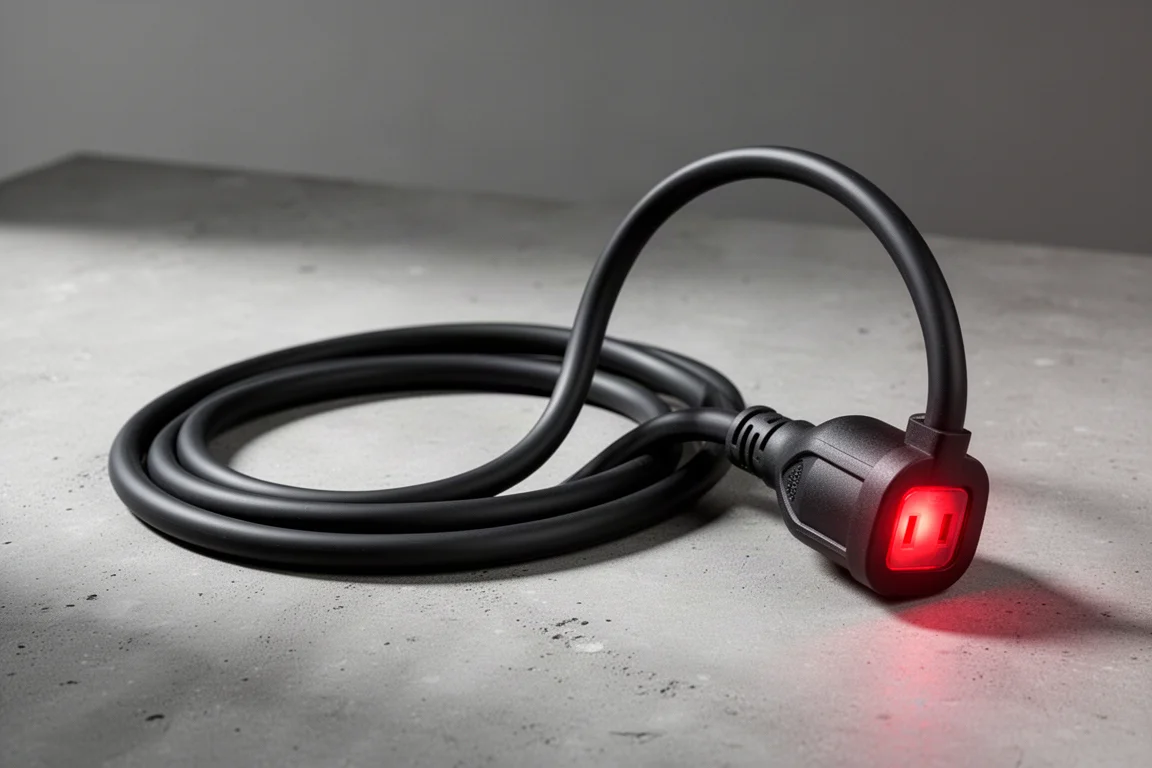
Yellow Jacket 10 Gauge 20 Amp Extension Cord
The most expensive cord tested at $88 is not an apples to apples comparison: this is a 10 gauge Yellow Jacket designed for up to 20 amps, with heavy duty strain relief, three times greater abrasion resistance, claimed flexibility 30 to 50% better than orange cords, and polymer filling for tensile strength. It is made in Taiwan. The numbers are extraordinary: only a 1.91 V drop under load, 968 lb of tensile strength, and a jacket that survived a full 71 seconds under the sander, more than double anything else. Blade strength came in at 32 lb. If you genuinely need 20 amps at 50 ft, nothing else here comes close.
Cold Weather Flexibility
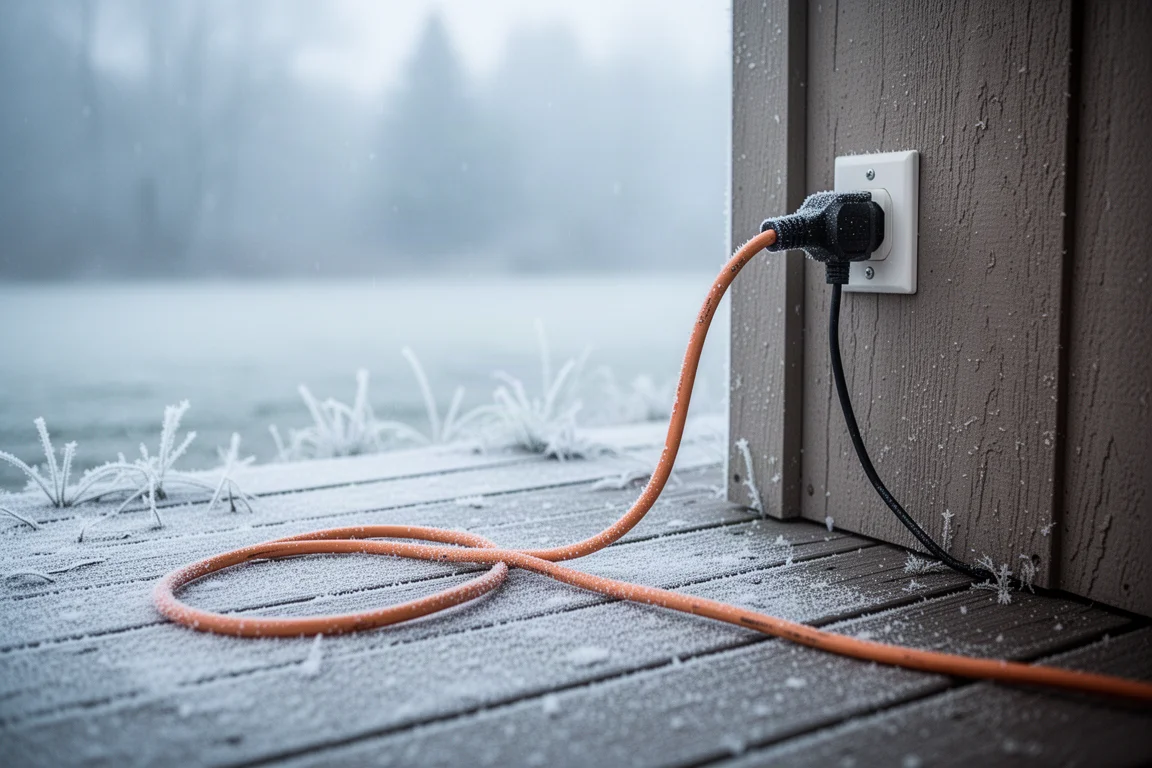
Some extension cords are stiff and difficult to work with, and cold makes that dramatically worse. Stiff cords are also harder to lay flat, which creates a tripping hazard. At 70 F, the US Wire Extreme, Flexzilla, Go Green, 14 gauge Southwire, and 16 gauge Project Source all earned the best possible flexibility rating. At minus 40 F, the picture changed sharply: the US Wire Extreme was by far the easiest to work with, while the Southwire 14 gauge, Flexzilla, and Go Green finished a distant second tier. All the jackets held up in extreme cold except the Yellow Jacket, which cracked.
Which Extension Cord Should You Buy
Since no cord performed perfectly in every category, the best choice depends on what you need. If cold weather handling matters, the US Wire Extreme is clearly the strongest choice, and it also posted the best blade strength and the best overall average finish ranking. If you want a rugged cord for tough daily use, the Bergen Industries performed extremely well, with the Utilitech and Husky close behind.
If it is all about value, the Harbor Freight Vanguard at around $20 works very well for light duty use, with strong blades and respectable electrical performance. And if your loads genuinely demand it, the 10 gauge Yellow Jacket is in a class of its own electrically, though you pay four figures of overkill for lighter jobs.
Conclusion
Price and quality do not track closely in this category. The cheapest cord tested had one of the best-attached plug ends and the worst wire; one of the most expensive folded blade designs failed early. Wire gauge drives voltage drop and heat more than anything else, jacket construction drives abrasion and cold performance, and plug attachment is a separate matter entirely. Match the cord to the job: US Wire Extreme for cold and all-around performance, Bergen Industries for rugged daily abuse, the Vanguard for budget light duty, and the 10 gauge Yellow Jacket when 20 amps is non-negotiable.
Further reading
Related Reviews
Tools & Workshop
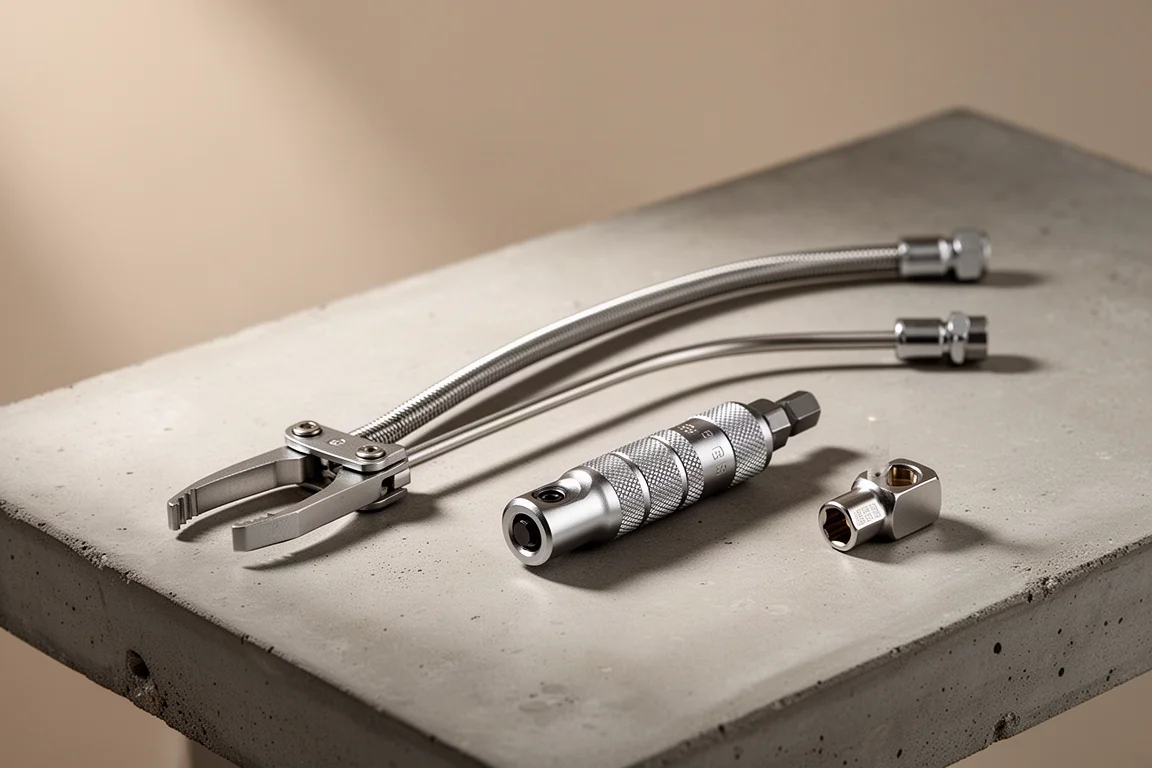
Three Tools That Saved a Tight Dishwasher Installation
A long-reach hose clamp tool, a locking ratcheting bit driver, and a flip socket that earned their spot during a cramped appliance install.
Tools & Workshop
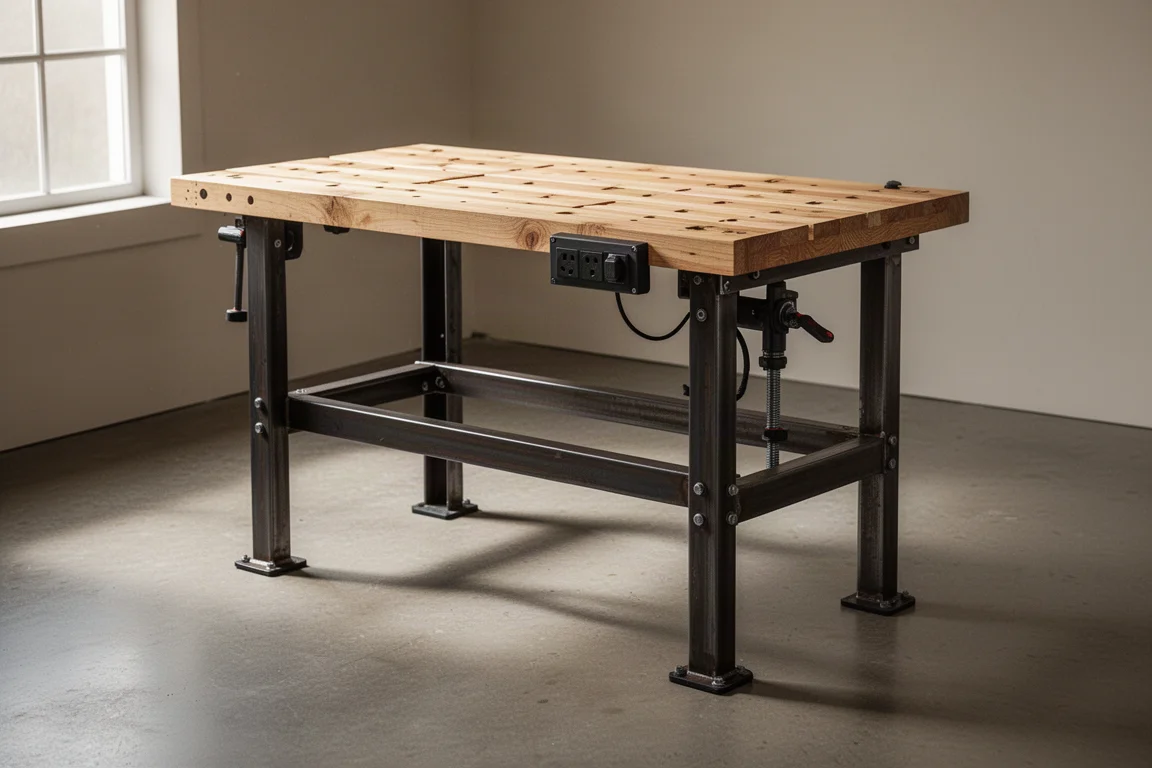
Banggood WB0102 Pro Workbench Review: A Stable, Height-Adjustable Bench for Small Workshops
A heavy, well-priced workbench with a pine top, built-in power strip, height adjustment, and a straightforward assembly that takes under 30 minutes.
Tools & Workshop
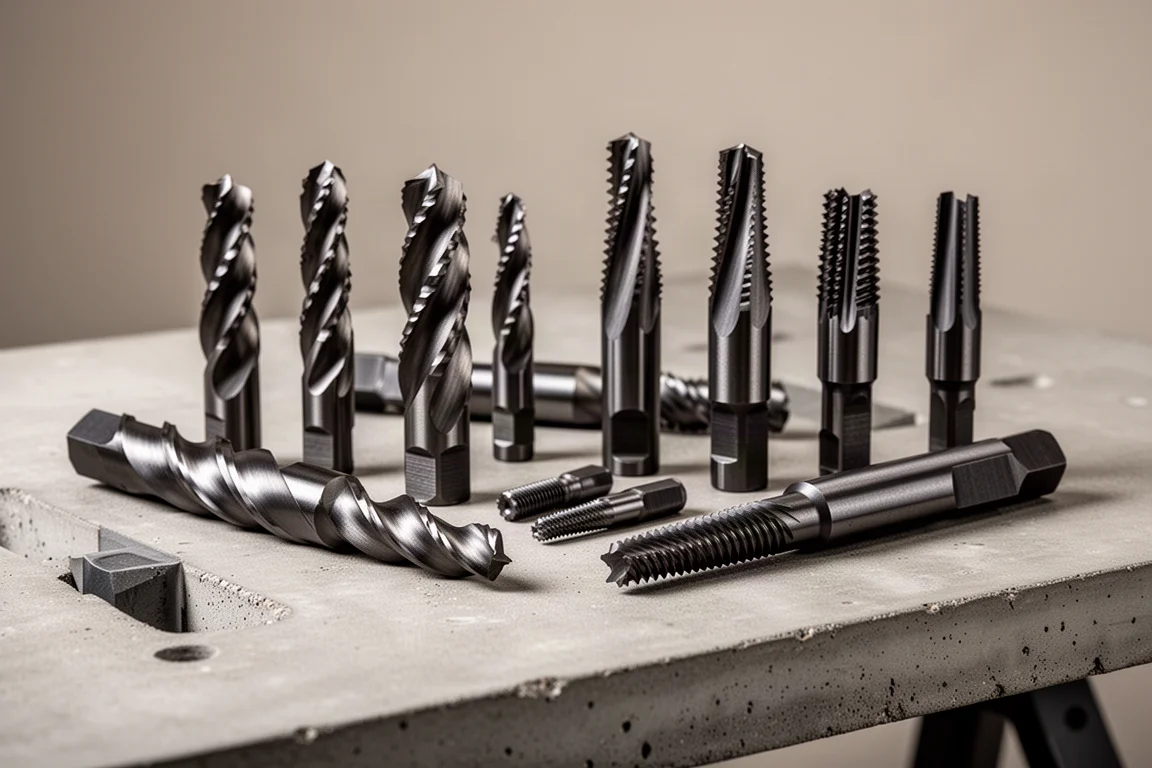
Best Bolt and Screw Extractor Sets Tested: Which Ones Actually Grip?
We compare budget and premium bolt and screw extractor sets on damaged screws, soft grade 3 bolts, and hard grade 8 bolts to find the ones worth buying.