Ski Gear
Powder Ski Roundup: Eight Wide Skis From 108 to 122 mm Compared
Eight wide powder and freeride skis from 108 mm to 122 mm underfoot, compared on rocker, flex, weight and the snow conditions they actually suit.
Introduction
Skis between 108 mm and 122 mm underfoot are the widest category most resort skiers will ever realistically consider. They float in fresh snow, they stay manageable once the powder gets tracked out, and they can still be driven back to the lift on a groomer. The trade-offs show up in weight, flex and shape, and those trade-offs are what this roundup is about.
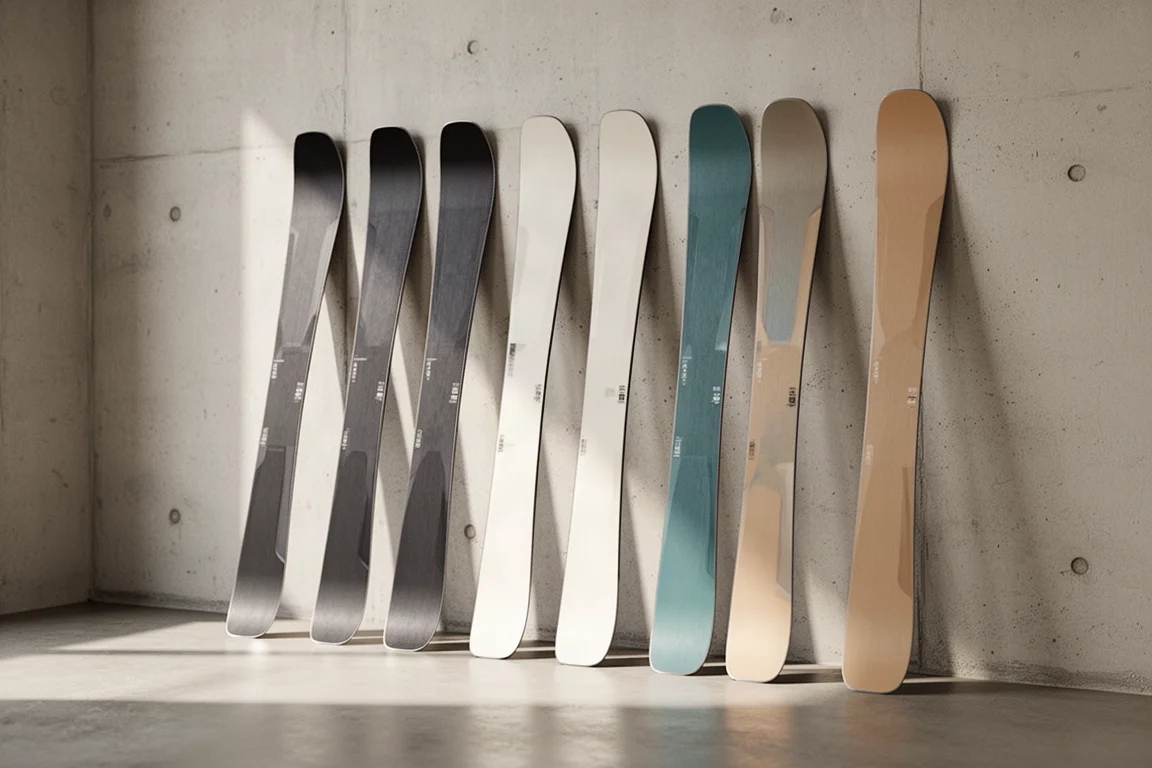
Eight skis are covered here, ordered roughly by how they behave rather than by width alone. Some are built around metal laminates and stability. Others are ultralight twins designed to be buttered and thrown sideways. None of them is a bad choice. The useful question is which one matches the snow you actually ski.
How We Evaluated These Skis
Width is the least interesting number on a wide ski. Two skis at 112 mm can feel completely different depending on four things: the length and height of the rocker, the amount of tail splay, the taper at the extremities, and where the metal sits in the layup.
Rocker is the clearest signal of intent. A long, low tip rocker keeps the front of the ski above the snow without making it feel vague, and a tail with a lot of length but little splay releases smoothly while still holding an edge. A heavily splayed, near-symmetrical tail does the opposite: it drifts and smears easily but gives up the long effective edge that makes a ski feel planted.
Metal placement matters just as much. Some skis run full-width metal through the tips and tails, which keeps the extremities from deflecting when they hit something firm. Others end the metal where the rocker begins, which keeps the front of the ski light and easy while retaining grip and damping underfoot. Neither approach is better. They simply produce different feelings on snow.
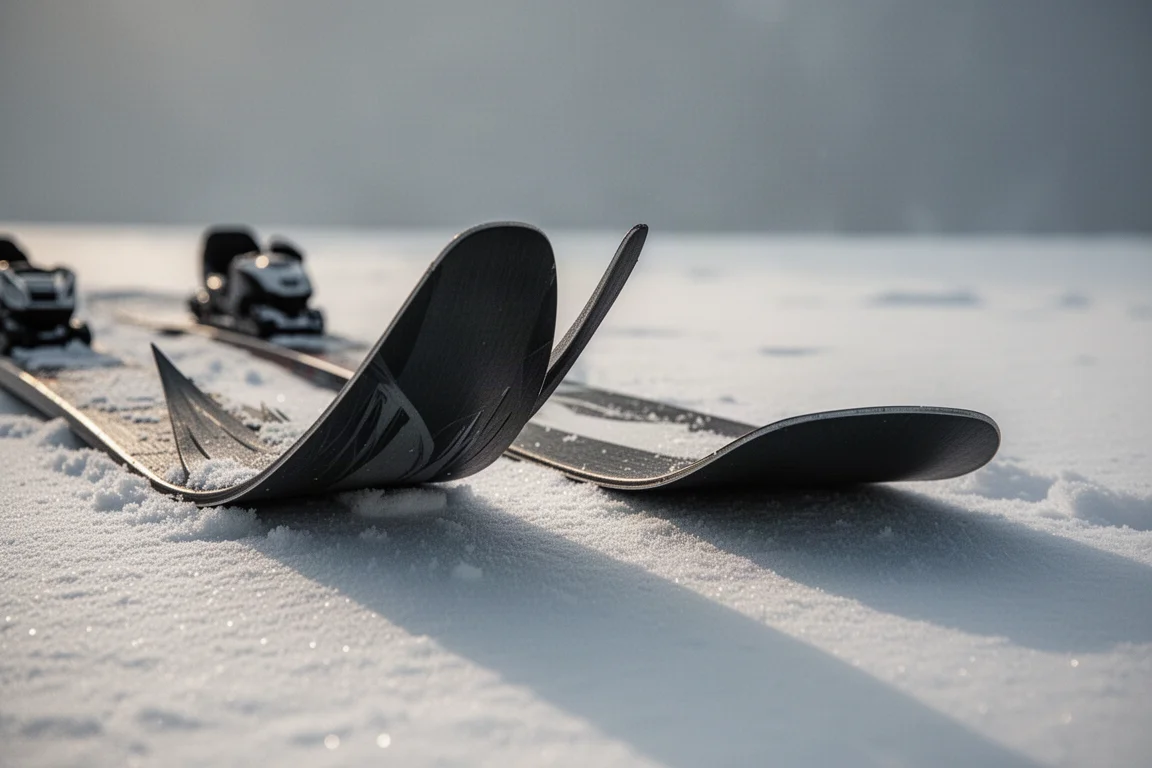
Weight and taper round out the picture. Taper brings the widest point of the ski closer to the midbody, which makes the tips and tails feel lighter and easier to throw around. Weight varies enormously in this category, from just over 1,600 g to well past 2,500 g, and it affects swing weight, uphill effort and how much input the ski demands.
It is also worth being straightforward about conditions. Getting a full quiver of powder skis into genuine deep snow is logistically difficult, and plenty of first impressions are formed on firmer days. That is still useful information. Flex, edge grip, turn shape and balance all show up clearly on groomers, and the differences between these skis are large enough to feel immediately.
K2 Mindbender 108 Ti: Precision With a Freeride Rocker
The Mindbender 108 Ti is the widest ski in the Mindbender collection to use metal, and it carries the same updates applied to the narrower models: a reshaped Y-beam, a full sidewall and a more progressive freeride rocker profile. At roughly 2,240 g it is not light, and that weight is the source of its character.
Earlier versions of this ski had a reputation for feeling twitchy and hooky. Moving the metal out of the tip and lengthening the rocker addressed that directly, and the straighter sidecut through the tips and tails makes the ski track more smoothly. The result is genuine edge precision, a damp and stable ride, and an even flex that releases predictably at the end of a turn.
The rocker profile is long in the tip and long but low in the tail, which gives the ski one of the better on-trail performances in this group while still floating well in soft snow. Think of it as a wider all-mountain ski rather than a dedicated powder tool. It is at its best in leftover, chopped-up or wind-scoured snow, where a lighter ski would get pushed around.
Line Vision 108: The Lightweight Playful Option
The Vision 108 is the outlier of this roundup. Its core is extremely light, and the triple hybrid construction combines carbon, aramid and fiberglass. The result is a ski of just over 1,600 g, which is remarkable for this width.
It is also one of the softest flexing skis in the category. You can bend it by hand without much effort. That softness does not mean it is dead, though. There is real energy stored in the camber, and the flex is designed to be pushed through rather than resisted. The shape is a twin tip, and while it is not marketed as a true touring ski, it has enough of that capability to bridge the gap. The caveat is that skin attachment is less secure than on a purpose-built touring ski.
The intended use is narrow and clear: nose butters, playful turns and low-speed creativity in deep snow. It is not a charging ski and it does not pretend to be. Buy it for what it does rather than for what it does not.
Salomon QST Blank: The Pure Powder Benchmark
The QST Blank is a dedicated powder ski, and its most distinctive number is a 17 m turn radius, one of the shortest in this comparison. On paper that sounds like it might feel catchy in deep snow. In practice the rocker profile keeps it predictable, with a floaty, surfy shape at both ends and a strong midbody.
That shorter radius is what makes the ski so usable. In perfect deep powder it floats as well as anything here. In anything less than perfect, it stays responsive, comes across the fall line willingly and can actually be carved. The midbody carries the stability while the tips and tails stay loose, which is a useful reminder that a ski does not need to be uniformly stiff to feel supportive.
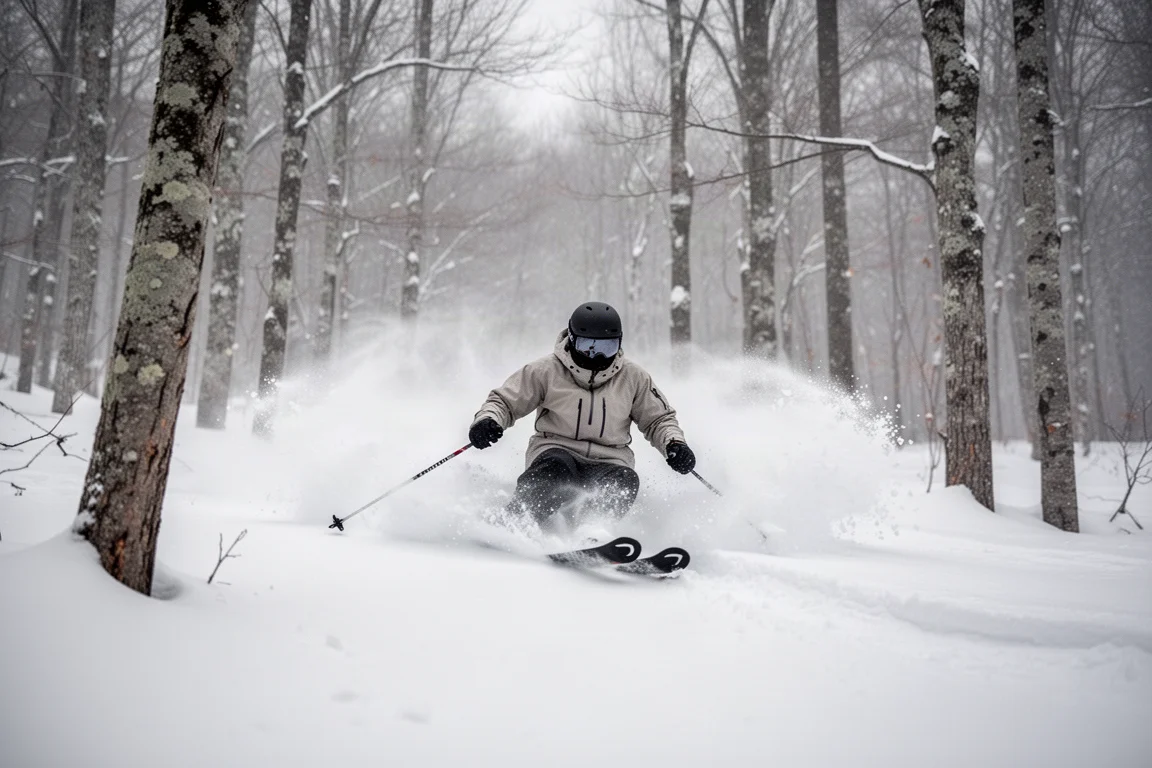
At a little over 2,200 g with a round flex pattern, the QST Blank does not quite match the raw power of the heaviest metal-laminated skis here, but it is close, and it is more floaty and bouncy in return. In tight trees the tail flicks out easily, which is where a shorter radius really pays off.
Atomic Bent 110: Soft, Loose, and Buttery
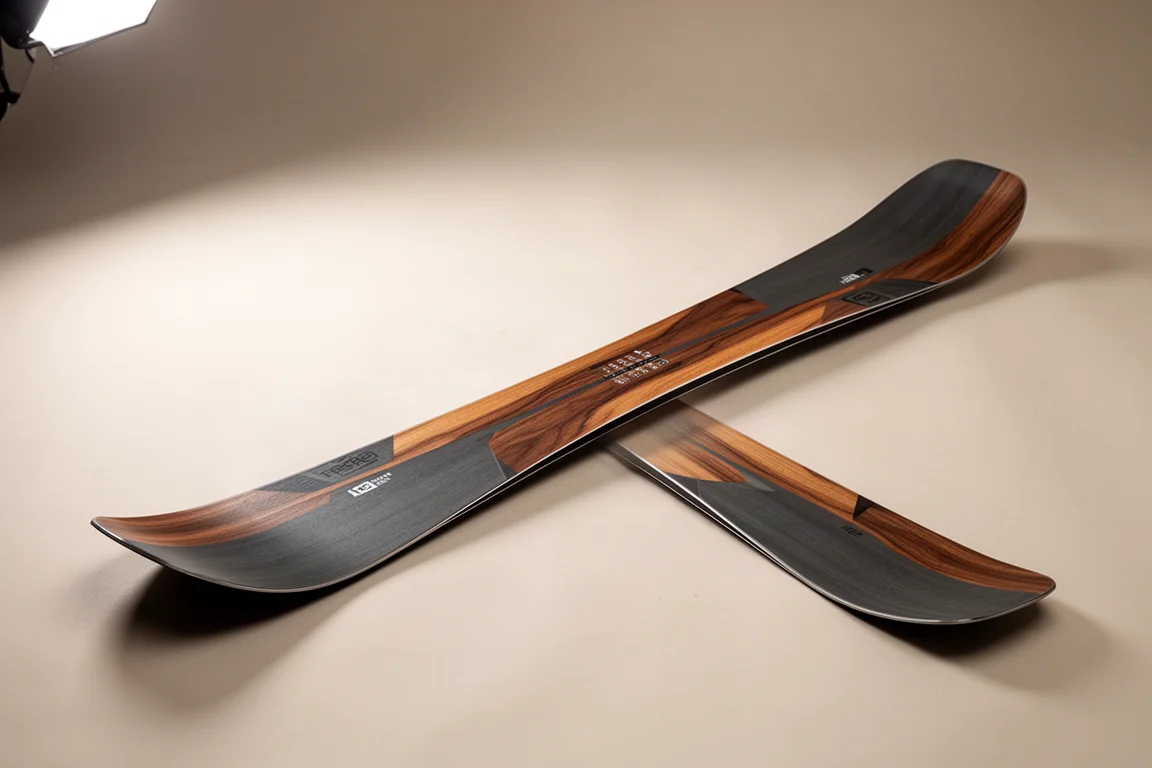
The Bent 110 takes softness further than almost anything else here. The flex is extremely soft, the ski sits around 1,800 g in the 180 cm length, and the rocker is close to symmetrical between tip and tail, with Horizon Tech in both ends. The design goal is obvious: super surfy, super loose, easy to pivot.
Length matters more on this ski than on most. A shorter size can feel like there is nothing in front of you to push against, while a longer size remains easy to ski because the flex is so soft. That is a useful reminder that on very soft, heavily rockered skis, sizing up is often the more forgiving choice.
This is a hybrid freestyle powder ski rather than a charger. It suits riders who want to land switch in soft snow, and it is wide enough that park use is a compromise rather than a natural fit. It is also not automatically the right step up from a narrower Bent. The rocker, flex and camber are different enough that the feel changes substantially.
Nordica Enforcer 110: Burly Stability That Still Turns
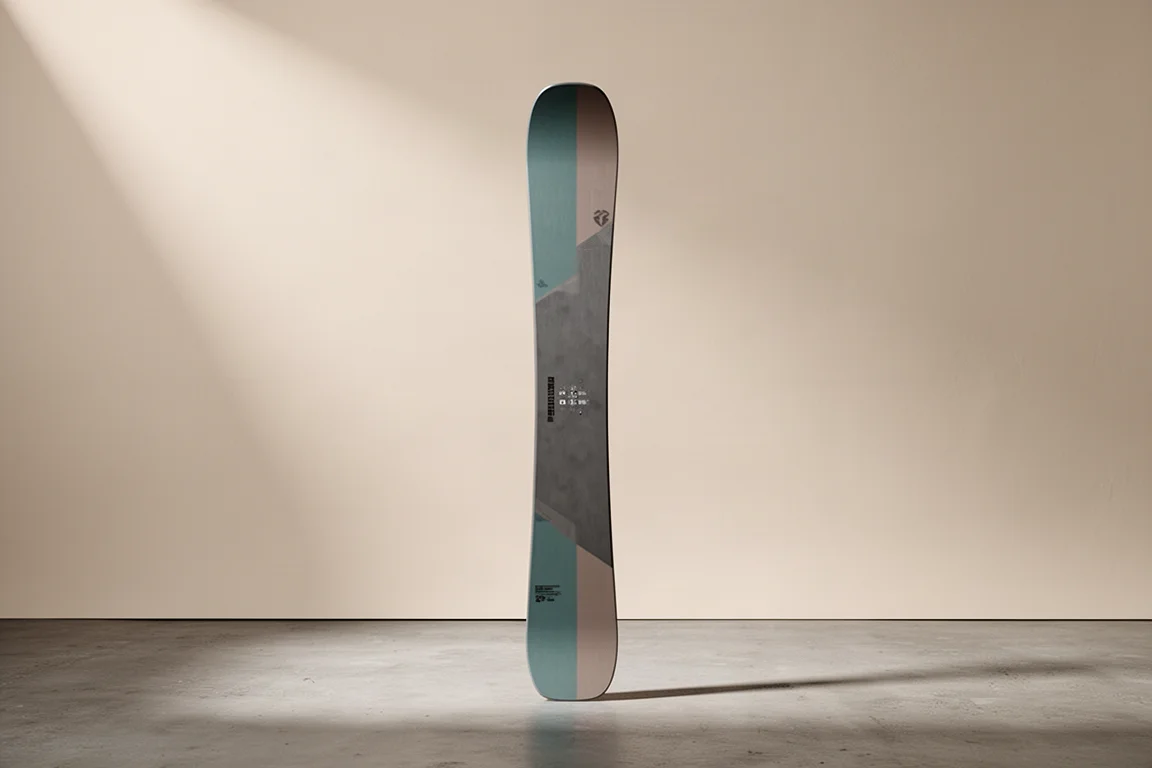
The Enforcer 110 has probably the burliest build in this roundup: a full wood core, two sheets of metal and lighter carbon in the tips. It sits at around 2,300 g, which is a lot of ski to move around, and yet it feels noticeably agile on snow. The sidecut is accessible enough that the ski can be tipped and driven rather than simply survived.
The key difference from the narrower Enforcers is the extended rocker profile. The rocker belly is longer, while the total splay at the tip and tail ends up roughly similar. That extra length is what makes the ski both stronger and surfier at the same time, and it is a large part of why this shape has been so influential.
For advanced and expert skiers who do not mind the heft, this is a very well-rounded wide ski. It surfs and smears in deep snow, it rips through crud and chop, and the rebound, stability and damping are exceptional. Sizing deserves attention: going too long is a common mistake here, and the mid-size option gives most skiers all the stability they need.
Blizzard Rustler 11: Metal Where It Counts
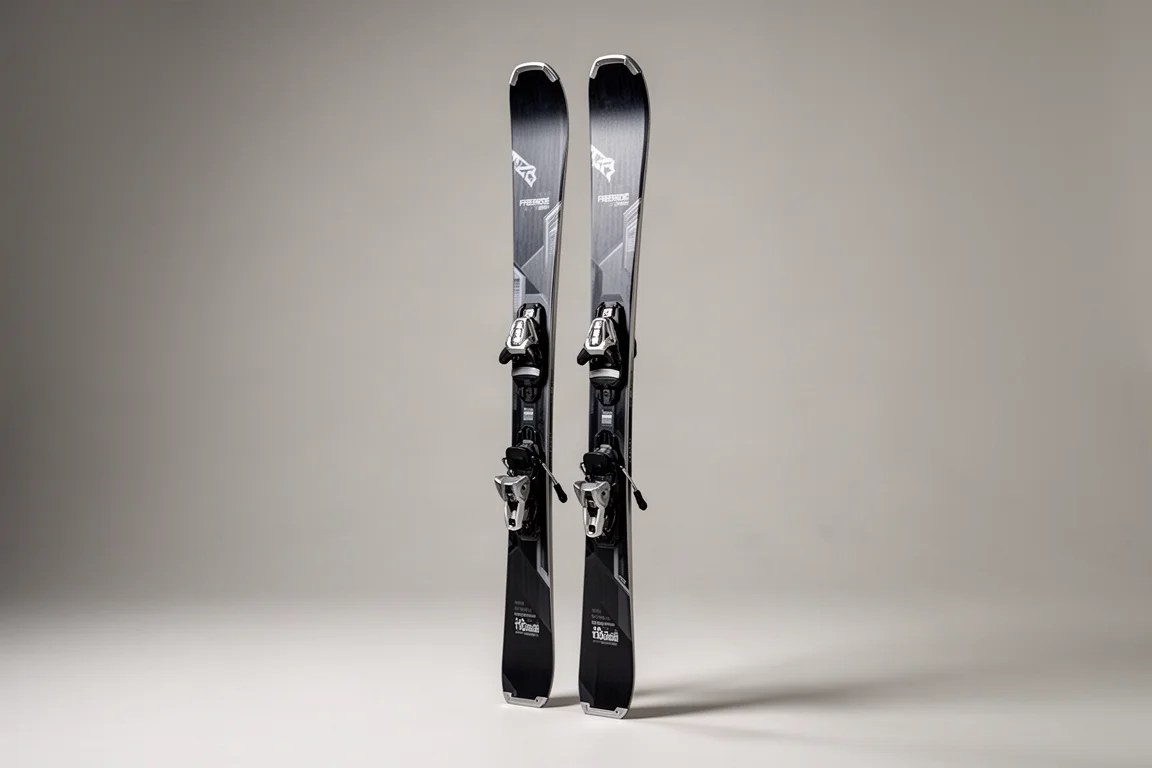
At just under 2,000 g in the 180 cm length, the Rustler 11 is impressively light for a ski with metal in it. The metal runs full width underfoot and then tapers into a central spine through the tips and tails, ending exactly where the rocker begins. That is a neat piece of design: the front of the ski stays light and floaty, the tail releases easily, and the midbody still has grip.
At 112 mm underfoot it works well on trail as well as in soft snow, and the lighter swing weight makes it easier to move from turn to turn than heavier freeride skis. It is not as high octane as an Enforcer 110, but it is still a high-performance ski.
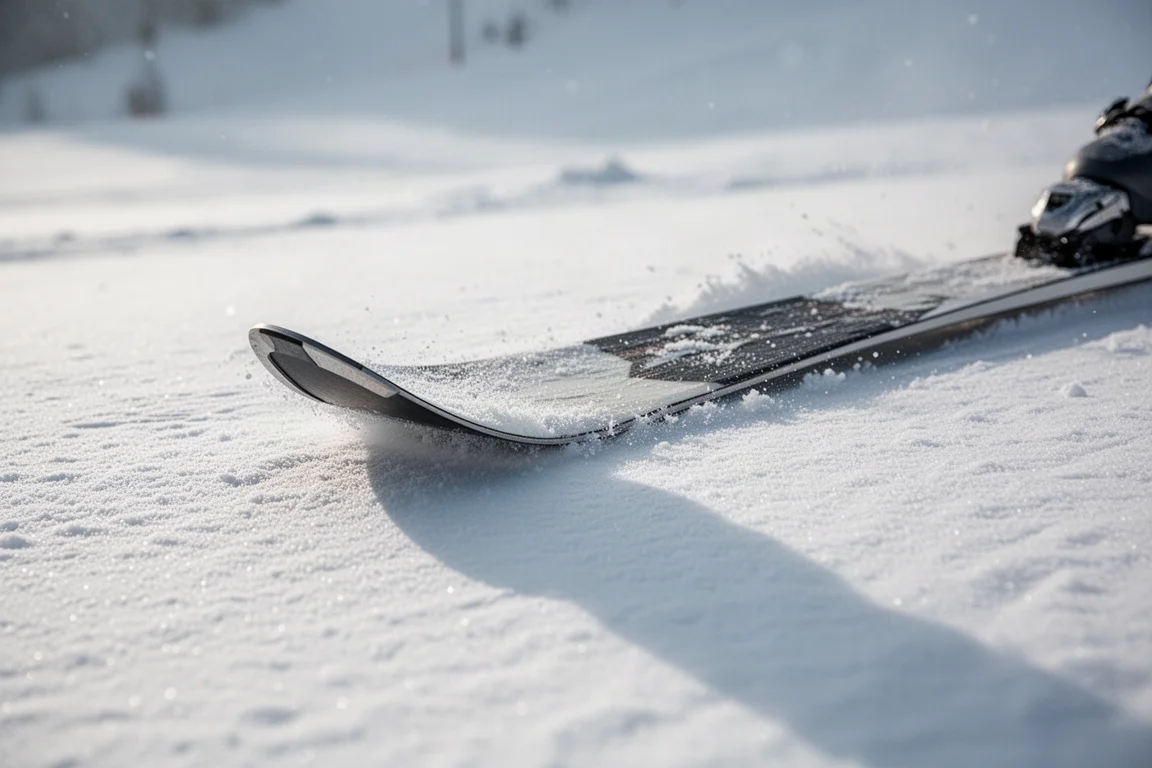
The metal underfoot is more useful than it sounds. Powder days at resorts usually involve traversing something icy at some point, and having grip and camber underfoot in that moment is what makes a wide ski trustworthy rather than merely floaty. The rocker line matching the end of the metal is a good visual reminder of how the ski is meant to be used: loose at the ends, planted in the middle.
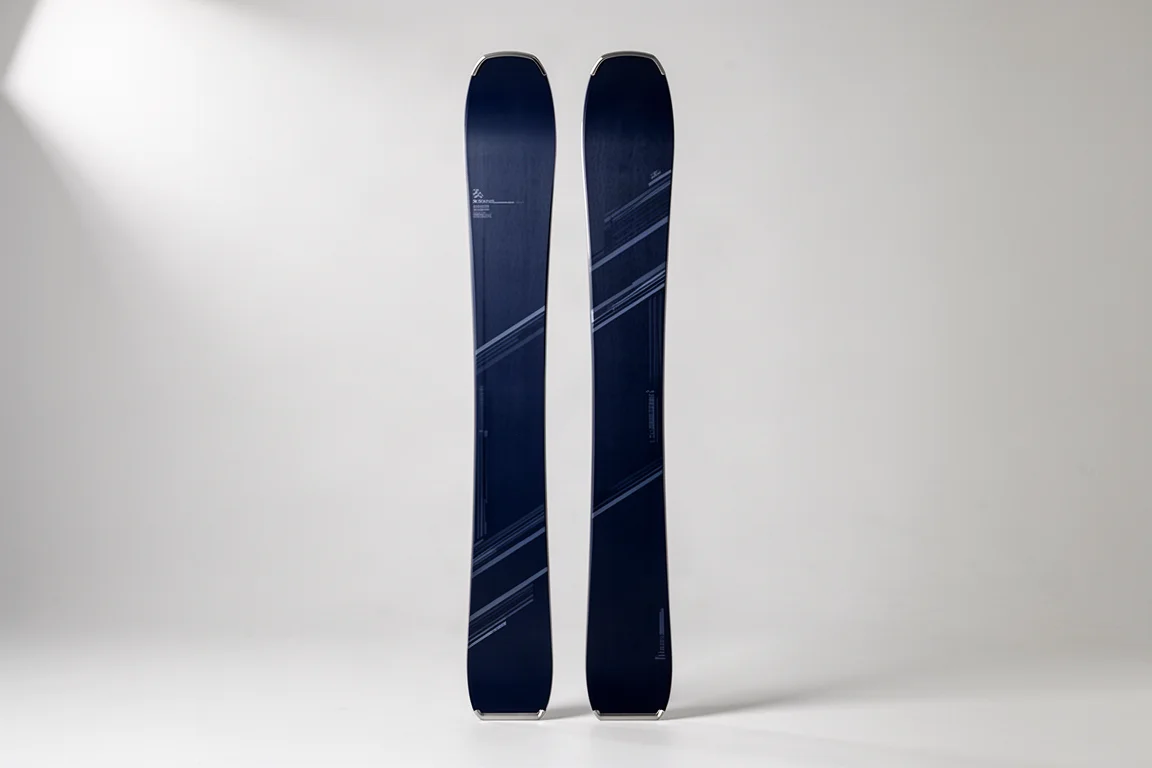
K2 Mindbender 116 C: Directional Float at 116 mm
At 116 mm, the Mindbender 116 C is aimed at directional skiers rather than freestyle riders. The carbon spectral braid is tighter in the shovel and looser in the tail, which puts strength where a driving skier needs it and keeps the back of the ski easy to release.
At around 2,050 g it is light for the amount of surface area it carries. The tip rocker is long and shaped specifically for float, with a straight section that behaves almost like a hinge before curving up into the tip. The tail has little splay but plenty of length, which keeps the ski cutting through snow rather than drifting sideways.
For its width it is remarkably easy to ski, with a sound, approachable flex pattern that still offers support. It is the natural choice for directional skiers in snowier regions who want a lot of float without needing to be the strongest or most aggressive skier on the hill.
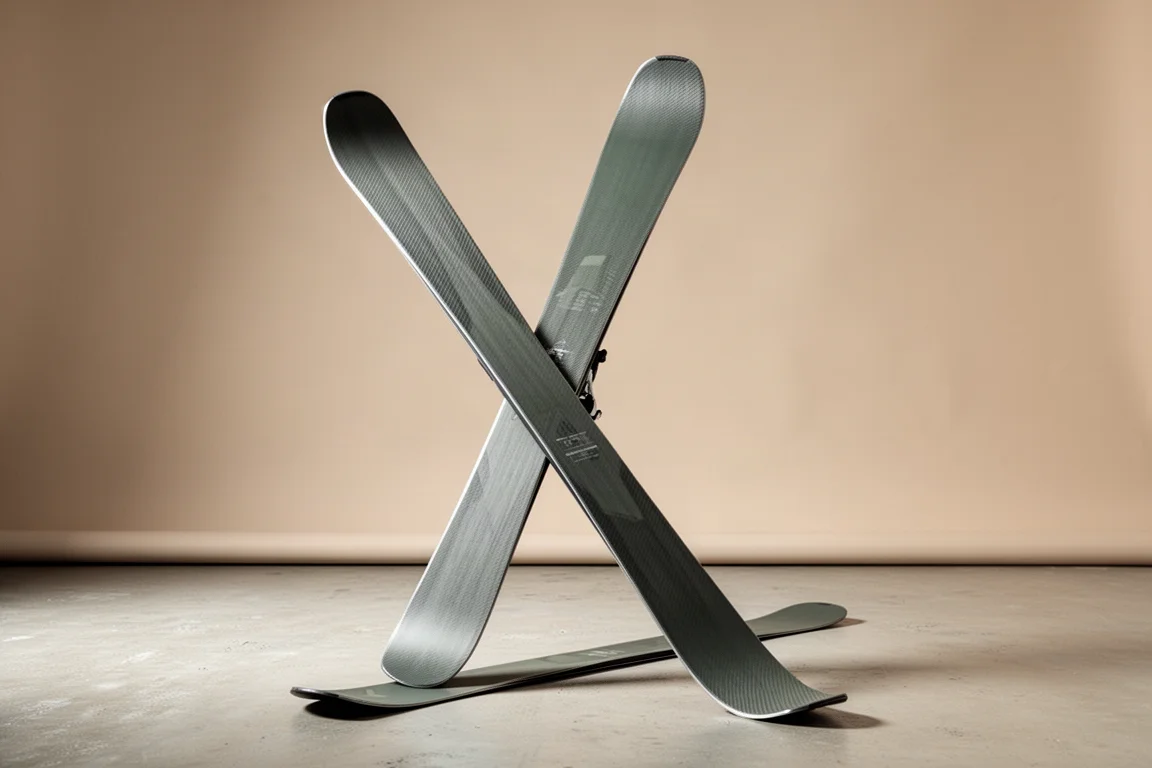
K2 Reckoner 122: A Backcountry Freestyle Specialist
The Reckoner 122 closes out the range at just under 2,200 g, and it is built in much the same way as the 112 mm version in the same line. The rocker starts far down the ski, with a large amount of tail rocker, and the taper is less aggressive at the tip than on some freestyle shapes, which leaves more surface area in the shovel to generate float.
This is a soft-snow-specific ski. The flex wants to be bent and played with rather than driven hard, and the construction is more sophisticated than the simplest freestyle builds, with decent torsional stiffness and responsiveness. It is a backcountry freestyle powder ski, developed with significant input from athletes who wanted something that could land deep and land switch.
Real-world application is narrow. It is the kind of ski that shines in open, untouched terrain with natural features, pillows and wind lips, and it makes far less sense for riders who spend their season on packed snow and tight trails. Within its intended use, it is a genuinely impressive tool.
Buying Advice: Matching Width and Shape to Your Snow
Choose based on the snow you actually ski most, not the snow you hope for. Deep snow is forgiving. Almost anything in this width range will be fun on a genuinely fresh day, so the differences matter most in the conditions that surround those days.
If your wide ski will mostly see chopped, tracked or wind-affected snow, lean toward a damp, metal-backed shape. The Mindbender 108 Ti, the Enforcer 110 and the Rustler 11 all handle that kind of snow well, with the Rustler 11 the lightest of the three and the Enforcer 110 the most powerful. All three also remain usable on groomers, which matters if the ski is going to be a regular part of a quiver.
If the ski is a dedicated deep-snow tool, the QST Blank is the most convincing pure powder option here, and it stays enjoyable when conditions soften. The Mindbender 116 C is the better pick for directional skiers who want float at width without a twin tip, while the Vision 108 and Bent 110 suit riders who prioritize lightness and playfulness over stability. The Reckoner 122 is for backcountry freestyle terrain specifically.
Two final points. First, weight and flex matter more than width alone. A 122 mm ski that is easy to bend can be less demanding than a 110 mm ski built like a race plank. Second, size carefully. On very soft, heavily rockered skis, going too short is usually a bigger mistake than going slightly long.
Conclusion
Powder skis from 108 mm to 122 mm cover a lot of ground, and the eight skis here show how differently that ground can be interpreted. The Mindbender 108 Ti and the Enforcer 110 are built for power and variable snow. The Rustler 11 finds a middle path with a light build and metal underfoot. The QST Blank and Mindbender 116 C chase float with very different tail shapes. The Vision 108, Bent 110 and Reckoner 122 trade stability for playfulness and low weight.
None of these is a compromise on a good day. The right choice comes down to what the rest of your season looks like, and matching the ski to that is the most reliable way to end up happy with it.
Further reading
Related Reviews

Ski Gear
2023 Blizzard Hustle vs Rustler: Six Freeride Skis Compared
Blizzard's 2023 Hustle collection rebuilds the Rustler shape with a lighter core and no metal. Here is how all six skis differ, and which one suits your riding.

Ski Gear
2023 Skis of the Year: Atomic Maverick 88 TI, Salomon QST 106, and Look SPX 12 Pro
Three standout ski picks for all-mountain carving, powder days, and reliable binding performance, with practical buying notes for 2023 models.

Ski Gear
2025 Nordica Enforcer 104 Review: A Directional Charger Replaces the 104 Free
The 2025 Nordica Enforcer 104 drops the Free name and the twin-tip personality, gaining weight, stiffness and composure in rough snow. Here is what changed and who it suits.