Running Watches
Polar Vantage M3 First Look: Polar's Mid-Range Watch Finally Goes AMOLED
Early testing of the Polar Vantage M3, with initial results on GPS accuracy, optical heart rate, battery life, and where it sits against the competition.
Introduction
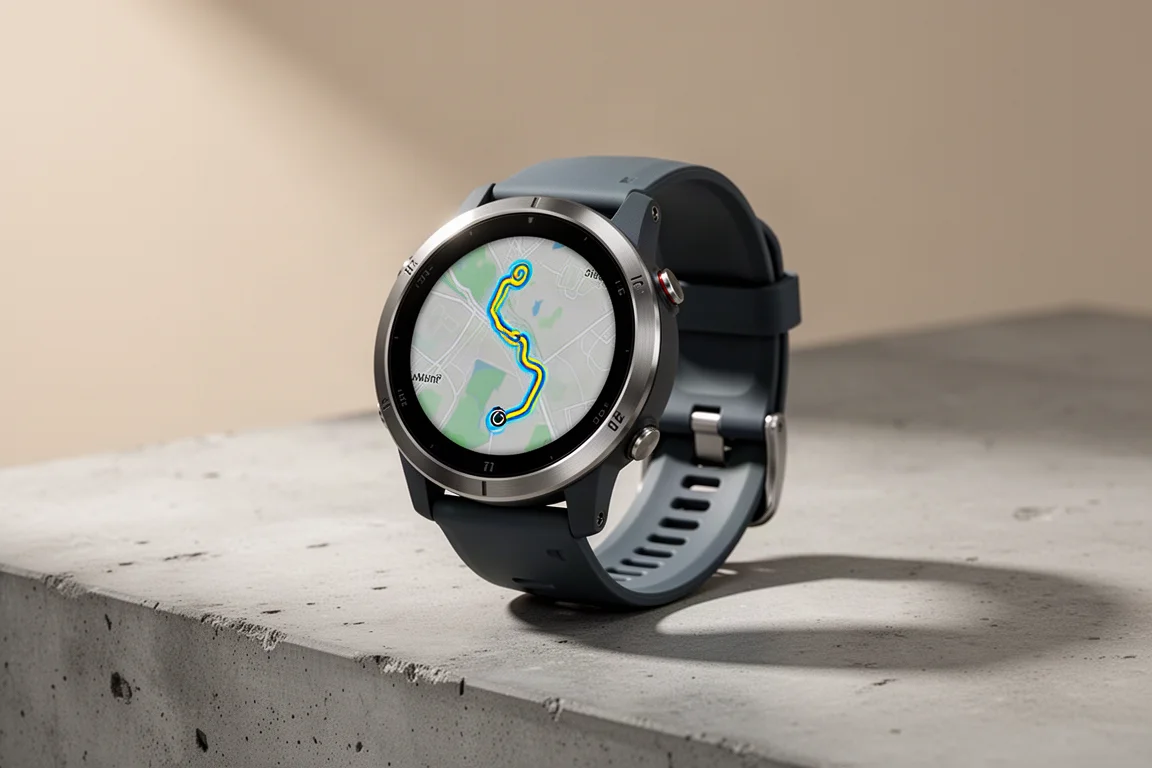
The Polar Vantage M3 is the latest mid-range running watch from Polar, and the third in its lineup to adopt a smartwatch-style AMOLED touchscreen, following the Grit X2 Pro and the Vantage V3. Built on the same platform and carrying the same suite of training, recovery, and health tools as those two higher-end watches, the M3 asks a simple question: how much of the flagship experience can you get at a lower price?
After a few days of early testing, including several runs with GPS, heart rate, and battery comparisons, the initial signs are promising. This is a first look rather than a full verdict, but it should give you a clear picture of what the M3 offers and who it suits.
What’s New With the Vantage M3
It has been ten years since the original M400 launched, and the Vantage M3 reflects just how far running watches have come. The most interesting thing about the M3 is that it carries an identical feature set to the Grit X2 Pro and Vantage V3, built on the same platform. That means new features rolled out by Polar should land across all three watches, so the real differences come down to design, build, battery life, and durability.
Key hardware and specs of the Polar Vantage M3:
- 1.28-inch AMOLED touchscreen with Gorilla Glass 3, brighter at 1,500 nits than the 1,050-nit displays on the Grit X2 Pro and Vantage V3
- Smaller, thinner, and lighter than the Vantage M2: 12 mm thick, 44 mm in diameter, 53 g in weight
- Stainless steel bezel and two lengths of standard 22 mm swappable silicone bands included in the box
- Polar Elixir biosensing platform: Gen 4 optical heart rate sensors, wrist ECG for strap-free orthostatic recovery tests, skin temperature sensor, and SpO2 blood oxygen monitoring
- Dual-frequency GPS with L1 and L5
- 150 sport modes plus the full Polar training toolkit: Training Load Pro, Nightly Recharge, Sleep Plus sleep tracking with sleep score, FitSpark workout recommendations, FuelWise fueling support, and at-rest fitness and performance tests for running, cycling, and walking
- Full color offline maps with pre-installed US and Europe maps, free downloads for other regions, Komoot-compatible routing, route guidance, back to start, and track back. Breadcrumb navigation to points of interest is planned for a future update but is not available yet
- Battery: 30 hours in performance mode, 70 hours in eco mode, 7 days in smartwatch mode
- Waterproof to 50 m, with a larger memory and a faster processor than before
Design and Display
The M3 looks drastically different from the M2. Where the M2 attempted a more stylish, less overtly sporty approach, the M3 goes back to its roots with a look that sits comfortably alongside the Vantage and Grit series. It plays it a little safe, but it feels solid and well made, and the compact, thinner, lighter form factor is clearly aimed at appealing to a wider audience.
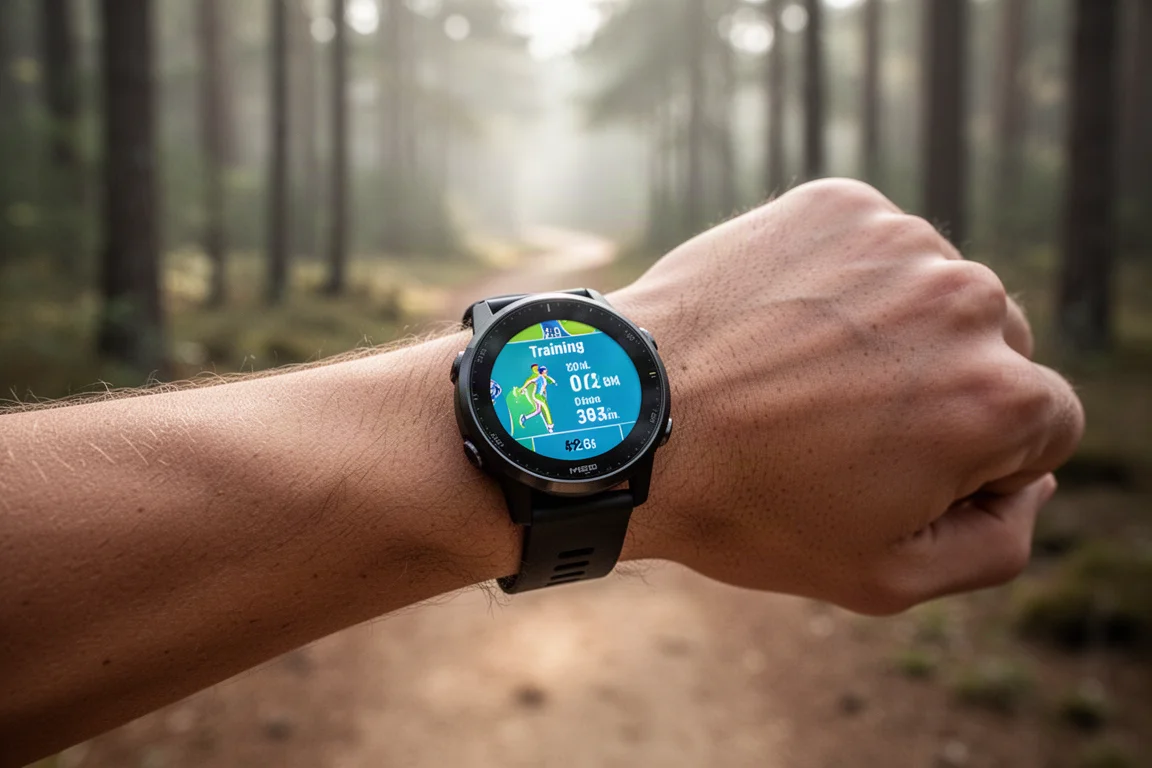
The hero here is the display. The M2’s small TFT screen with a large bezel has been replaced by a bright AMOLED panel with significantly less bezel around it. It is a little smaller than the screen on the Vantage V3, but it is big enough, genuinely clear on the run, and a huge upgrade that brings your metrics and maps to life in a way the old-school screens never did. If there is a lingering wish, it is for an even bigger screen and still less bezel.
Responsiveness has also been good in early testing. The touchscreen and buttons have been snappy and lag-free, and the raise-to-wake gesture is prompt, which makes it easy to switch off the always-on display outside workouts to save battery. One design nitpick: the supplied strap uses a double-pin design that some testers found uncomfortable, though swapping to a Vantage V3 band is straightforward. For a sleeker, more elegant design with a bigger screen, the Vantage V3 still holds a clear advantage, but the M3 is a good-looking watch in its own right.
Maps and Navigation
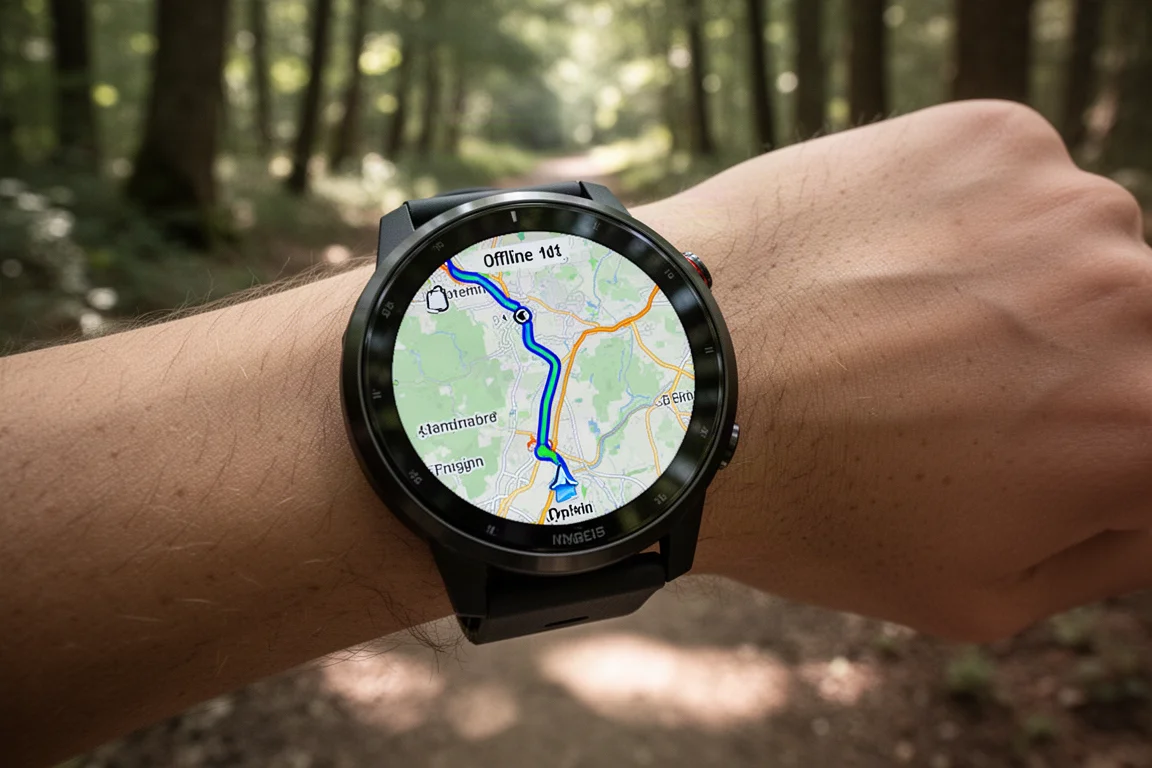
Full color offline mapping at this price point is one of the M3’s biggest selling points. Pre-installed maps for the US and Europe come standard, other regions can be downloaded for free, and Komoot-compatible routing plus route guidance, back to start, and track back features round out the package.
In early use, the maps look clear and are easy to read mid-run, and the back-to-start feature works well. The mapping is not the most detailed available on any watch, but having full navigation support here at all is a genuine differentiator against similarly priced rivals that omit it.
GPS Accuracy: Early Results
Early GPS testing is encouraging. In a first hour-long steady run on forest trails with single-track sections under tree cover, a notoriously tricky environment, the M3 locked onto GPS quickly and tracked closely alongside a Garmin Fenix 8 in its most accurate mode and an Apple Watch Ultra 2. The M3 logged 6.39 miles versus 6.47 for the Fenix 8 and 6.36 for the Ultra 2, all well within the usual margin of error. Per-kilometer pacing looked very similar across all three watches, and the M3 handled a tricky series of underpasses better than both of its more expensive comparison watches.
That is a meaningful turnaround given Polar’s rough start with dual-band GPS on the Ignite 3, which was notably inaccurate at launch. The current chipset and configuration now appear set up to deliver accurate results, though longer testing will be needed to confirm consistency.
Optical Heart Rate: A Mixed Start
Optical heart rate performance was the least convincing element of early testing. Against a chest strap and the Apple Watch Ultra 2, the M3 was a mixed bag. During a steady run it largely tracked the chest strap beat for beat throughout most of the run, and heart rate zones all looked correct, but there were a handful of sizable spikes, and the watch failed to track some drops in heart rate, such as pauses at traffic lights.

During a short interval session it went a bit wild, reading as high as 189 bpm at the end of intervals, figures close to or above the tester’s estimated HR max despite not being all-out efforts. More testing is needed to establish whether this is consistent, but so far this is not the best optical heart rate performance seen, and a chest strap remains the safer option for high-intensity work.
Battery Life
Polar’s official figures give the M3 30 hours in performance mode, 70 hours in eco mode, and 7 days in smartwatch mode, which is shorter than the Grit X2 Pro and Vantage V3 but on par with the Pacer Pro and the older Vantage M2.
Real-world early findings paint a familiar picture for Polar AMOLED watches. With raise-to-wake enabled, overnight drain averaged a relatively stingy 3%, in line with the Vantage V3. A one-hour run in the most accurate performance power mode burned 5%, higher than the 3% average on the V3, though that is a single test. After two full days, including 1 hour 15 minutes of running and 4 hours of cardio workouts using the heart rate sensor, the watch sat at 67%. Roughly 20-25% drain per day looks likely when running regularly, and always-on mode will drain faster still. Polar watches also tend to be intensive overnight, so fast battery drain is something to expect. Rivals like the Suunto Race S and Garmin Forerunner 265 manage always-on AMOLED use more efficiently, and it remains to be seen how the M3 fares over longer testing.
How It Fits Into the Market
The Polar Vantage M3 launches at £349 or $399.90 in the US, positioning it squarely in the busy mid-range running watch market with some clear points of comparison:
- Garmin Forerunner 265: more expensive, with an AMOLED screen and a deep Garmin feature set, but no onboard maps, which the M3 does provide. A significant point in Polar’s favor.
- Suunto Race S: actually cheaper than the M3, with a slightly nicer design and better materials, plus very accurate dual-band GPS. It is a very strong competitor at this level.
- Apple Watch Series 10: a stronger smartwatch with an excellent screen, but shorter battery life and less impressive sports tracking than the M3.
- Polar Vantage V3: a notably nicer and sleeker design with a bigger screen, but at a significantly higher price. The key sports tracking elements and the maps that have now come to the M3 make it genuinely competitive within Polar’s own range.
Within that context, the M3 seems well priced for what it offers. The one lingering question is whether Polar could have priced more aggressively against the very capable and cheaper Race S.
Conclusion
The early signs for the Polar Vantage M3 are good. It is a good-looking, compact, and relatively light watch at a competitive price for an AMOLED screen, with the same platform and feature set as the pricier Grit X2 Pro and Vantage V3. GPS accuracy looks solid, raise-to-wake is prompt and lag-free, and the touchscreen is snappy.
The optical heart rate has not blown anyone away in early testing, and battery life with an always-on display will drain faster than some rivals. But with full offline maps at this price and Polar’s complete training toolkit on board, the M3 ticks a lot of the right boxes and could represent strong value, particularly if a bright AMOLED screen is high on your wishlist. A full verdict will depend on longer-term testing of heart rate and battery consistency, but this looks like a well-judged addition to Polar’s range.
Product link
View more details for Polar Vantage M3
This product is mentioned in the review. Check the specifications, options, and compatibility before buying.
View more details for Polar Vantage M3Further reading
Related Reviews
Running Watches
Coros Pace 3 Running Watch Review: Why Software Matters More Than Specs
The Coros Pace 3 prioritizes runner-focused design and intelligent software over expensive hardware. Here's why it outperforms watches that cost twice as much.
Running Watches
GPS Running Watch Accuracy Test: Seven Watches Compared Across Urban, Trail, and Race Conditions
We tested seven popular running watches from major brands in three different environments to find out which delivers the most accurate GPS tracking for distance and pace.
Running Watches
Garmin Forerunner 70 Review: Garmin's Cheapest Forerunner Is More Capable Than You'd Expect
The new entry-level Forerunner 70 brings an AMOLED screen, a fresh interface, and real training analysis for £219/$249, with a few trade-offs to weigh before buying.