Running Watches
Polar Pacer vs Polar Pacer Pro: Which $200 Difference Makes Sense?
The $200 Polar Pacer shares most of its core internals with the Pacer Pro. Here is what changes, what stays the same, and who each watch suits best.
Introduction
The Polar Pacer is a $200 running watch that tries to be fully featured yet minimalist. On paper it looks like a budget option, but after running with it alongside the Polar Pacer Pro, which costs $100 more, it starts to look like something more interesting: a near Pro-caliber watch at a friendlier price.
This comparison breaks down into three parts: what is different between the two watches, what stays the same, and how those differences actually matter on real runs.
The Polar Pacer: Light, Simple, and Focused
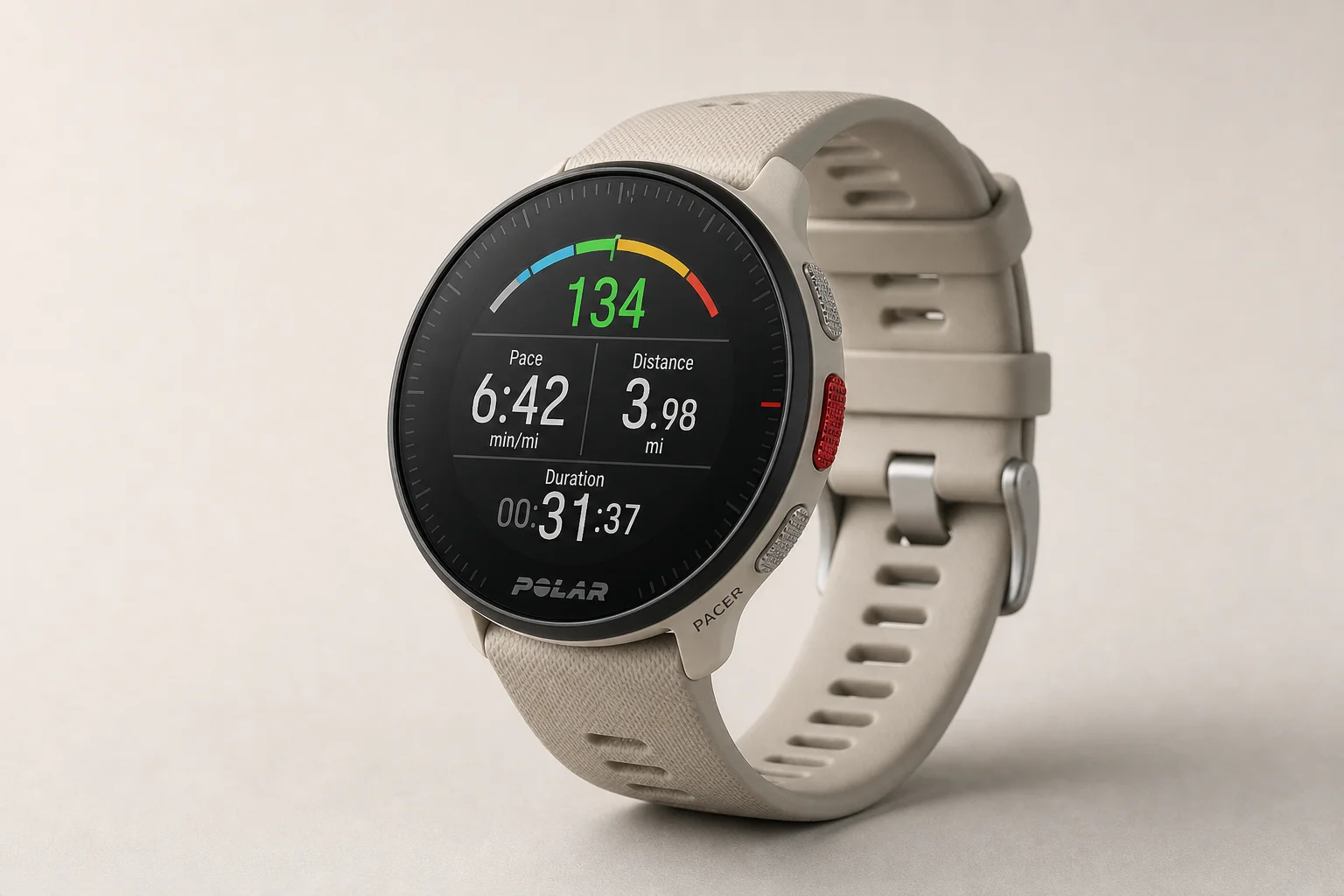
Even though the two watches are nearly identical in weight on paper, they feel very different in hand. The Polar Pacer weighs just 40 g including the band, or 23 g for the watch itself, and its all-plastic construction gives it an almost toy-like lightness. That lightness has a real benefit, though: because it barely slides down a sweaty wrist, the wrist-based heart rate sensor stays in position better than most watches we have run with.
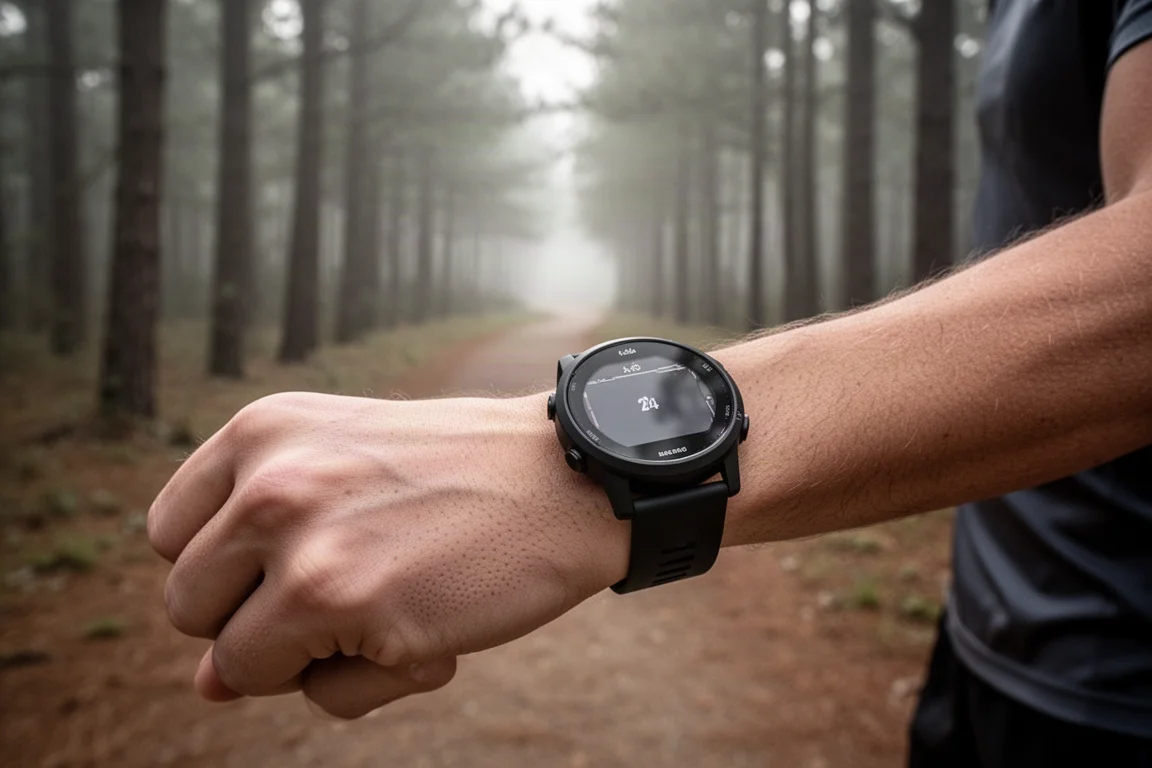
There are trade-offs at this price. The buttons look identical to the Pro’s but feel less crisp and responsive, and the band uses a standard quick-release attachment rather than the Pro’s built-in curved mount, so it lays flatter on the wrist but skips the extra sensor snugness.
The Polar Pacer Pro: More Substantial, More Sensors
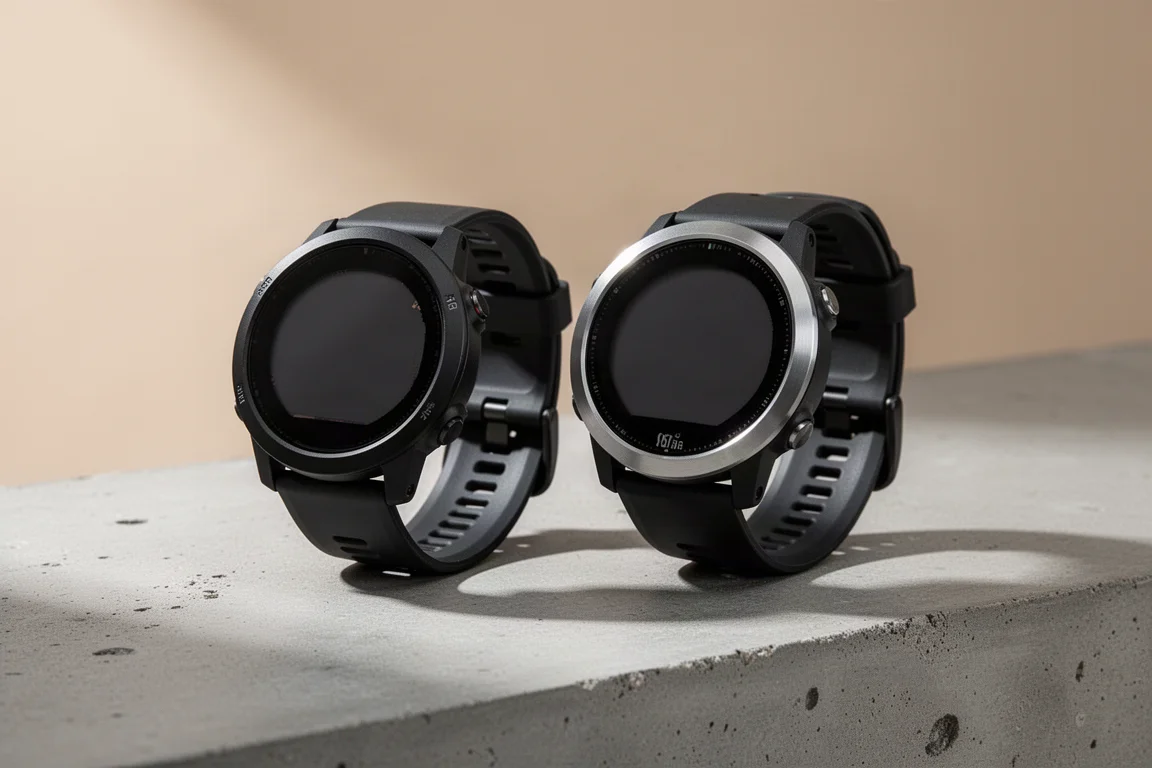
The Polar Pacer Pro weighs only 1 g more than the standard Pacer, yet it feels noticeably more substantial. Its plastic case gains an aluminum bezel, which is a big part of the more premium in-hand feel.
It also carries the features the Pacer drops: a barometric altimeter for direct altitude readings, a magnetometer for compass-guided navigation, and wrist-based running power without a separate pod. The curved band attachment helps keep the heart rate sensor snug against the wrist, though it means the watch does not lay flat unless you use the included adapter for standard bands.
What Stays the Same
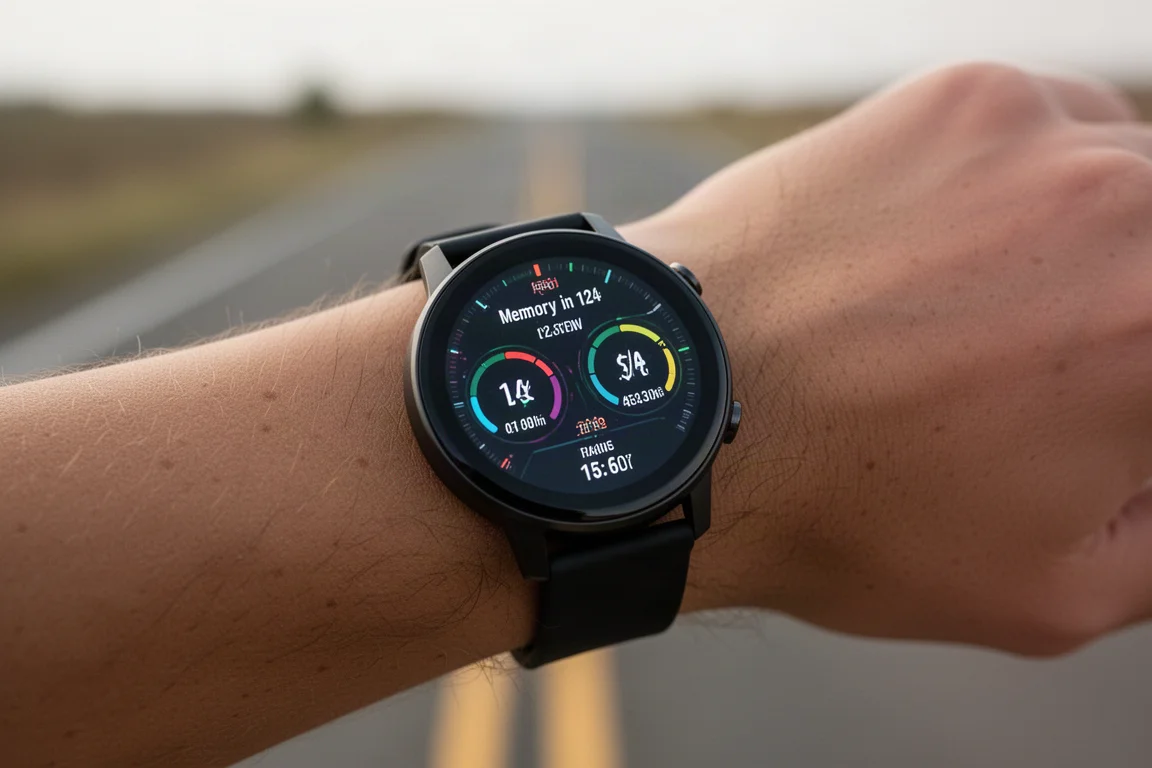
The core experience is remarkably close between the two. Both use the same 1.2-inch, 240 by 240 memory-in-pixel display, which delivers strong brightness and contrast while drawing very little battery power. Corning Gorilla Glass 3.0 sits close to the internal components on both, helping readability in direct sunlight.
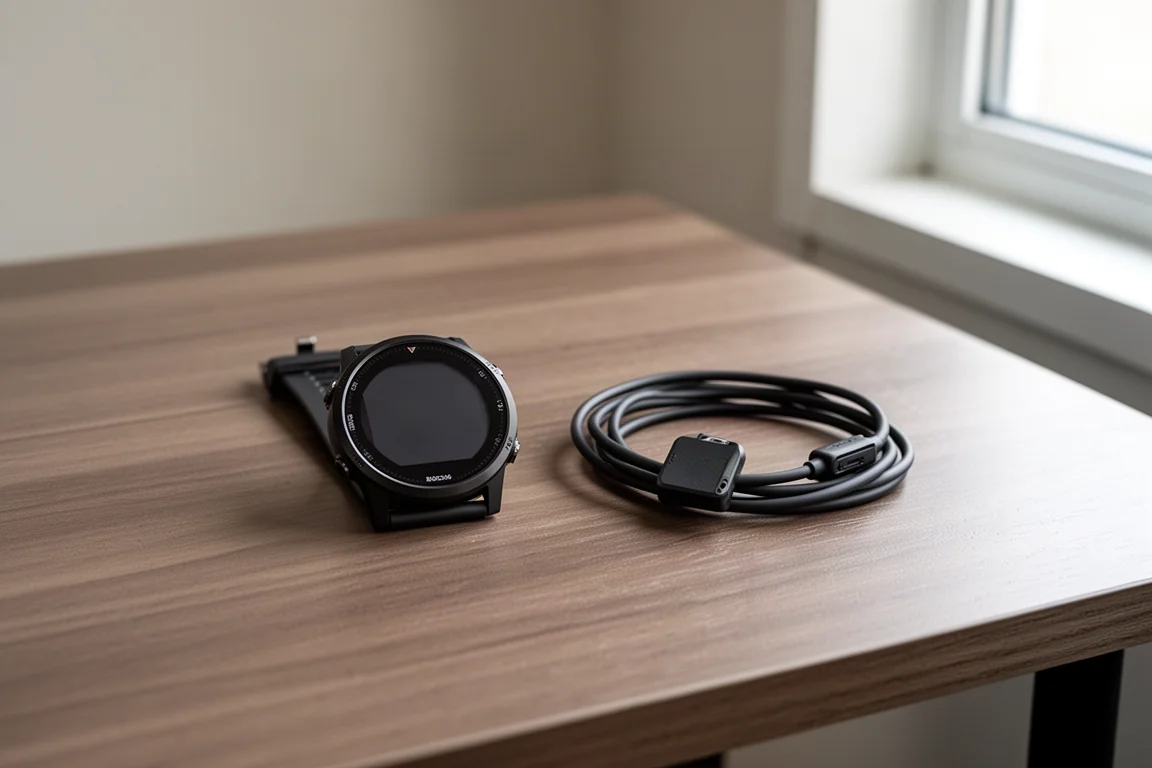
Battery ratings are identical too: up to 100 hours of training time with power save modes on, and up to 35 hours of continuous GPS running. Both watches use the same newer charging cable, which is different from the cables older Polar watches used.
Inside, the shared hardware continues: the same updated heart rate sensor and the same multi-band GPS radios that adapt depending on your region for a reliable signal. Both also share Polar’s signature software strengths, including sleep tracking with heart rate variability, sleeping respiration rate, and sleeping heart rate. A caveat from our testing: two nights produced unusually high heart rate variability readings that did not match how recovered we actually felt, so the occasional odd reading is possible.
Both watches support zone locks for heart rate training, long-press the lap button to toggle one on and the watch beeps and buzzes when you drift out of your target zone. Structured workouts are fully supported as well, with per-phase data screens that can automatically switch metrics, for example showing power during work intervals and heart rate during recoveries. Manually lapped, unstructured runs work just as well for long-run days with warm-up, effort, and cool-down segments.
How the Differences Matter in Real Life
Missing the magnetometer means no breadcrumb navigation on the Pacer, and that is the difference we felt most. Navigation is never foolproof, but it does help with the majority of turns on unfamiliar routes, and runners who travel will notice its absence.
Missing the barometric altimeter means no direct altitude readings, and no wrist-based running power. For runners who already use a foot pod, that is largely a non-issue; the foot pod covers power just fine.
On the flip side, the Pacer’s lightness genuinely improved wrist-based heart rate reliability. Combined with the new sensor, it held a believable heart rate trace even during a tough interval session where the arms were working hard, though it did need repositioning now and then. Everything else used most often, the weather widget, everyday GPS run tracking, structured workouts, sleep tracking, and the Polar Flow ecosystem for post-run analysis, is all present at the $200 price.
Buying Advice: Which One Should You Pick?
It really comes down to two features: mapping and navigation, and wrist-based power. If you want either of those, the Pacer Pro justifies the extra $100. If you run with a foot pod and mostly follow familiar routes or plan ahead, the Polar Pacer saves you $100 while delivering what is essentially Pro-caliber hardware and software underneath.

There is also the subjective factor: some people simply prefer a heavier, more premium-feeling watch with nicer materials, even at a slight performance cost. The Pro is arguably still the best watch Polar makes. But at $200, the Pacer delivers an exceptional amount of value and deserves a spot on nearly every running watch shortlist.
Conclusion
The Polar Pacer and Pacer Pro share displays, batteries, sensors, and software. The Pro adds navigation, altitude, and wrist-based power in a more premium-feeling body; the Pacer strips those away to hit $200. Runners who want mapping and wrist power should step up to the Pro, while everyone else gets remarkable value from the Pacer.
Further reading
Related Reviews
Running Watches
Coros Pace 3 Running Watch Review: Why Software Matters More Than Specs
The Coros Pace 3 prioritizes runner-focused design and intelligent software over expensive hardware. Here's why it outperforms watches that cost twice as much.
Running Watches
GPS Running Watch Accuracy Test: Seven Watches Compared Across Urban, Trail, and Race Conditions
We tested seven popular running watches from major brands in three different environments to find out which delivers the most accurate GPS tracking for distance and pace.
Running Watches
Garmin Forerunner 70 Review: Garmin's Cheapest Forerunner Is More Capable Than You'd Expect
The new entry-level Forerunner 70 brings an AMOLED screen, a fresh interface, and real training analysis for £219/$249, with a few trade-offs to weigh before buying.