Running Watches
Polar Pacer vs Garmin Forerunner 55 vs Coros Pace 2: Affordable Running Watch Comparison
The Polar Pacer enters the budget running watch space against the Garmin Forerunner 55 and Coros Pace 2. Here is how it stacks up on design, tracking, and training features.
Introduction
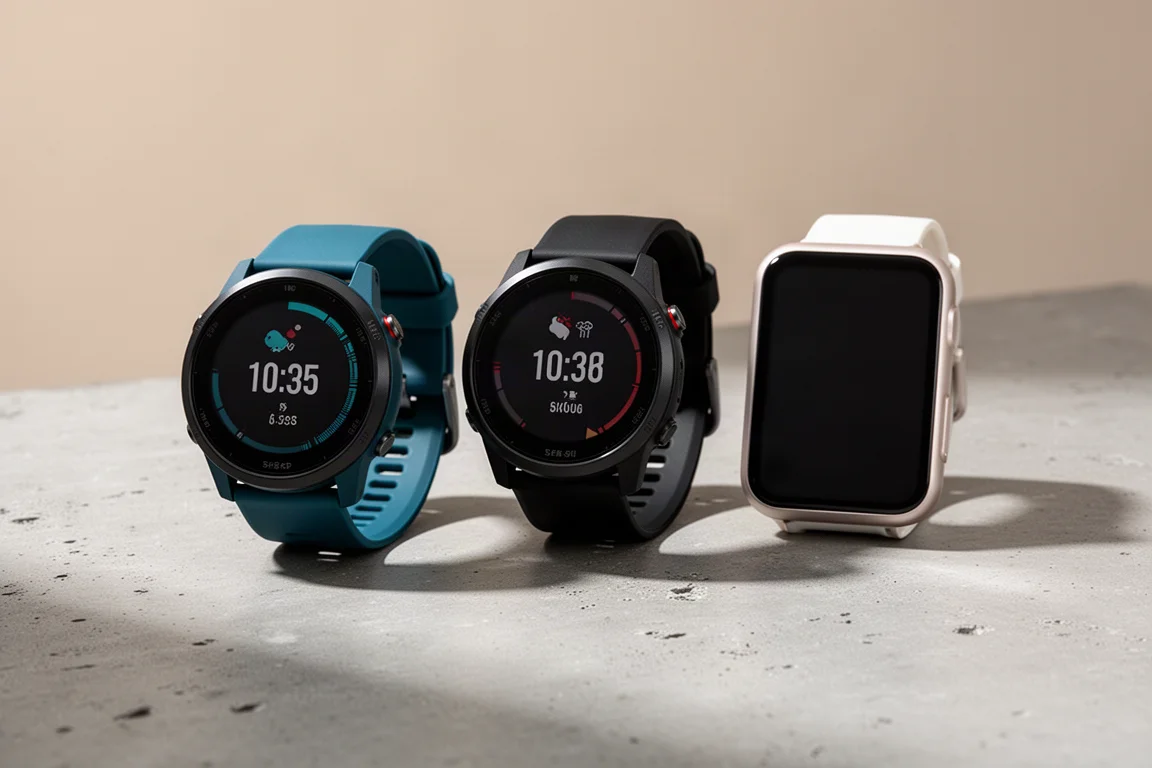
The Polar Pacer is Polar’s running-focused watch aimed at giving runners everything they need to track their runs and optimize training, without the premium price of the Pacer Pro. It sits directly against two established rivals in the affordable running watch space: the Garmin Forerunner 55 and the Coros Pace 2.
With a US price of $199.95 (£169.50 in the UK), the Pacer promises core running features, Polar’s training analysis tools, and a lightweight design. But is it actually the better pick over the Garmin or the Coros? Here is what early testing reveals.
Design and Fit
The Polar Pacer comes with a 45mm case that measures 11.5mm thick and weighs just 40 grams, making it a genuinely light watch to run with. You get one strap size with four color options, including a deep teal that gives the watch a more eye-catching look than typical Polar designs. Straps are removable via a pin mechanism around the back.
The 1.2-inch, 240 x 240 pixel display is not a touchscreen but does stay always-on, and it holds up fine outdoors where visibility matters most. It is not the best screen quality available, and there is more bezel around the screen than ideal, but nothing that gets in the way during a run. Five physical buttons handle navigation, and the watch is water resistant to 50 meters.
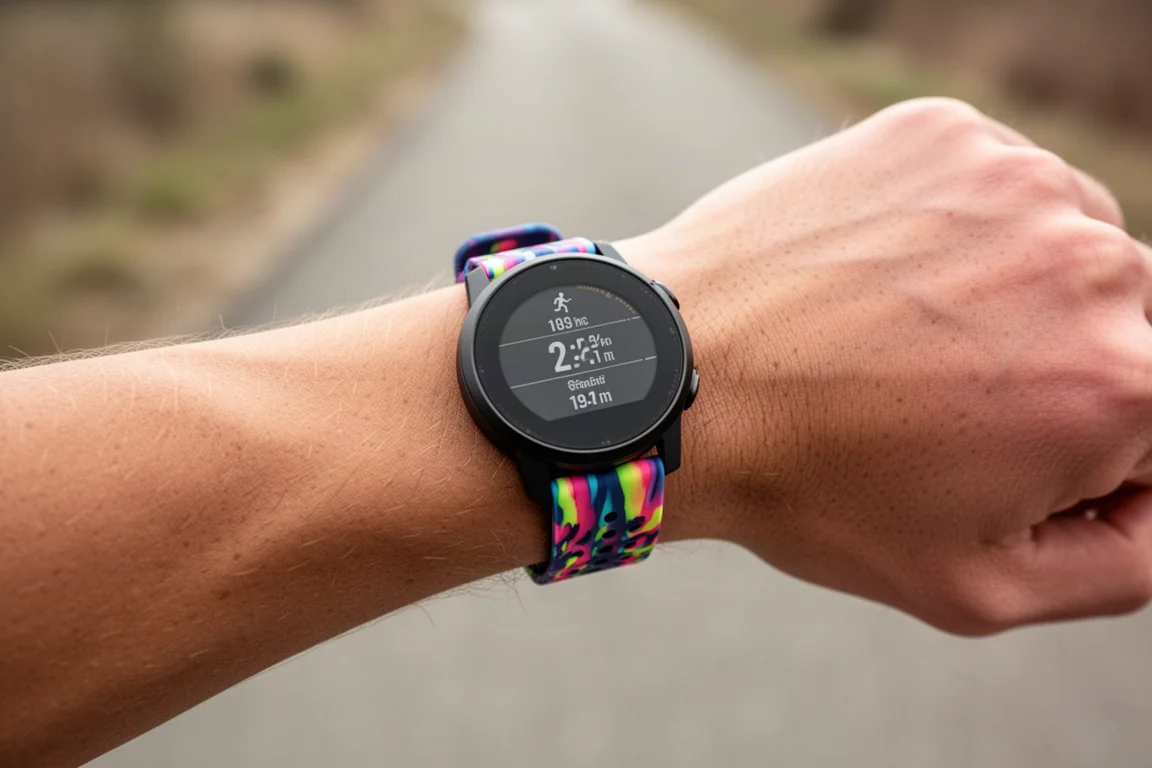
Design-wise, Polar is not breaking new ground here. The watch looks similar to other Polar models apart from the brighter strap options, and next to competitors it is a nice-looking watch rather than an innovative one. Still, for a running watch, the fundamentals of light weight, comfort, and outdoor visibility are all in place.
Running Features
The Pacer supports four key satellite systems with an improved antenna design for better tracking accuracy, and includes Polar’s Precision Prime optical heart rate sensor with the ability to pair external heart rate monitors.
Training features are where the watch earns its price. You get FitSpark suggested workouts, FuelWise smart fueling reminders, Training Load Pro insights, access to Polar’s running program, plus the Running Performance Test and Polar’s new Walking Test to help beginner runners assess their fitness. There is also 24/7 activity tracking, Nightly Recharge recovery measurements, notifications, music controls, and weather updates.
What you give up compared to the Pacer Pro is the navigation side: no route import and planning, no turn-by-turn guidance, no route and elevation profiles, no barometric altitude data, and no Hill Splitter. Running power also requires a third-party sensor. At this price, though, that is expected, and only back-to-start navigation is included.
Battery life matches the Pacer Pro: 100 hours in power save mode, 35 hours with GPS and heart rate monitoring, and up to 7 days in smartwatch mode.
Running Performance: Early Testing
On the first test run, an easy 5K plus a couple of kilometers back home, the overall experience was comfortable and largely solid, but not flawless.
GPS lock was the first sticking point. The initial signal acquisition took well over five minutes, which is a long time to stand around before a run. It improved on the second run, locking on faster, though still not quick. Metrics were fine once locked, but the short first run suffered from the slow start.

Battery performance showed an 8 to 9 percent drop over roughly 30 to 40 minutes of running, which is roughly in line with expectations for this class of watch rather than exceptional.
Heart Rate and Tracking Accuracy
Heart rate tracking was the weakest part of the first run test. The average heart rate matched a chest strap paired to another watch, which is good, but the maximum heart rate read 8 or 9 bpm over the chest strap. The run was easy-paced, though in hot conditions, so a small margin of error is expected, but max readings drifting that high is not the performance you want to see, and optical accuracy may fall further on high-intensity training.
These are the kinds of quirks seen on previous Polar watches, and with very short runs so far, it is fair to reserve judgment on whether longer-term testing shows better GPS lock and more reliable optical heart rate performance.
How the Pacer Compares on Price and Value
Against the Garmin Forerunner 55 and Coros Pace 2, the Pacer sits well in terms of what you get. None of these watches offer route import navigation, so the Pacer is not missing much relative to its direct rivals there. What it does bring is access to Polar’s training analysis features, including most of what the Pacer Pro offers, plus newer tests like the Walking Test. You are not missing out on a huge amount of core running functionality.
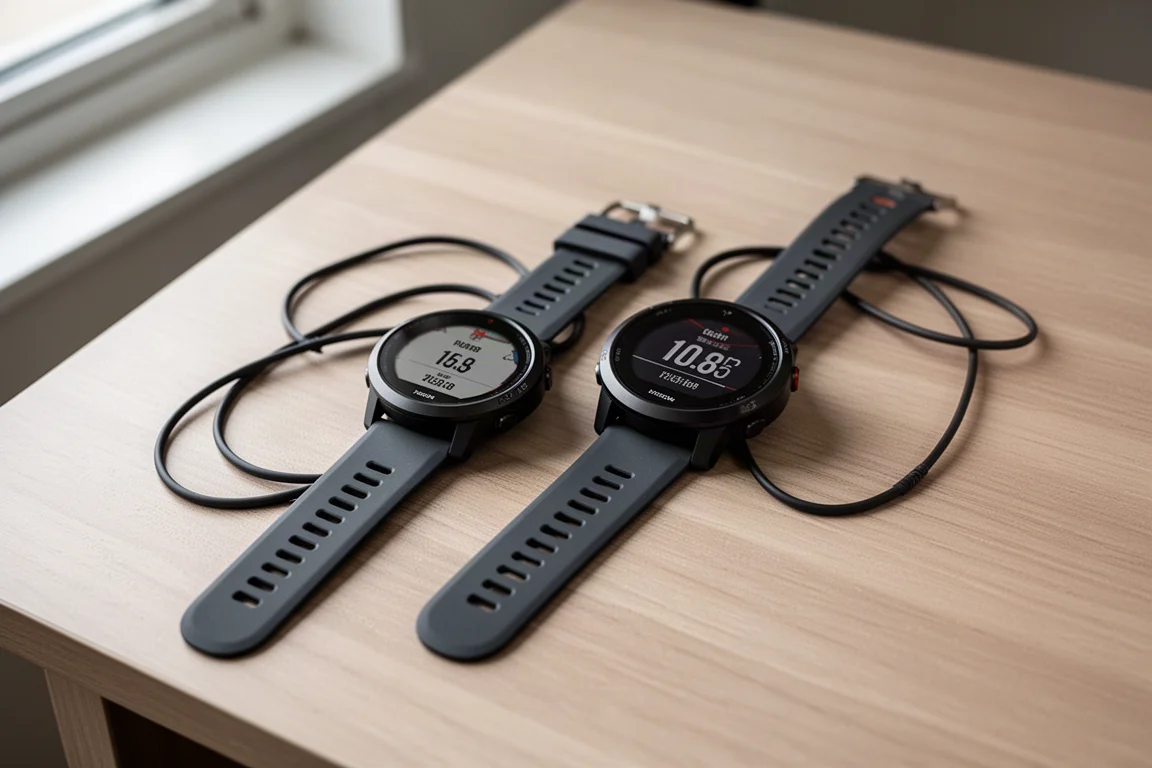
On value, the Pacer holds up well. Whether it is outright better than the Forerunner 55 or Pace 2 is not entirely clear. It is arguably a little nicer looking than the Coros Pace 2, which is itself a nice light watch with arguably stronger battery life on paper, including GPS battery. The honest answer is that the choice comes down to ecosystem: if you like the Polar platform and features such as FuelWise and FitSpark, there is a lot to like here at this price.
Buying Advice
Choose the Polar Pacer if you are drawn to Polar’s training tools and want a light, comfortable running watch with strong battery specs at an affordable price. The Garmin Forerunner 55 remains a safe all-around pick with Garmin’s ecosystem, while the Coros Pace 2 is the option to consider if battery life and a very light build matter most. If slow GPS lock and optical heart rate accuracy are dealbreakers for you, it may be worth waiting for more long-term testing on the Pacer before committing.
Conclusion
The Polar Pacer has all the ingredients of a good affordable running watch: light design, comfortable fit, solid always-on display, Polar’s strong training features, and competitive battery life. Early testing flagged slow GPS lock and mixed optical heart rate accuracy, but those are areas that may improve with longer use. It is not obviously better than the Forerunner 55 or Pace 2, but if the Polar ecosystem appeals to you, it is a compelling option at this price.
Product link
View more details for Polar Pacer
This product is mentioned in the review. Check the specifications, options, and compatibility before buying.
View more details for Polar PacerFurther reading
Related Reviews
Running Watches
Coros Pace 3 Running Watch Review: Why Software Matters More Than Specs
The Coros Pace 3 prioritizes runner-focused design and intelligent software over expensive hardware. Here's why it outperforms watches that cost twice as much.
Running Watches
GPS Running Watch Accuracy Test: Seven Watches Compared Across Urban, Trail, and Race Conditions
We tested seven popular running watches from major brands in three different environments to find out which delivers the most accurate GPS tracking for distance and pace.
Running Watches
Garmin Forerunner 70 Review: Garmin's Cheapest Forerunner Is More Capable Than You'd Expect
The new entry-level Forerunner 70 brings an AMOLED screen, a fresh interface, and real training analysis for £219/$249, with a few trade-offs to weigh before buying.