Fountain Pens
Platinum 3776 Sentry Celluloid (Jade) Review: A Rare Modern Celluloid Fountain Pen
Platinum still manufactures its own celluloid, and the Jade 3776 Sentry shows why that matters: a gorgeous, smaller 3776 with a familiar 14k gold nib and a few trade-offs.
Introduction
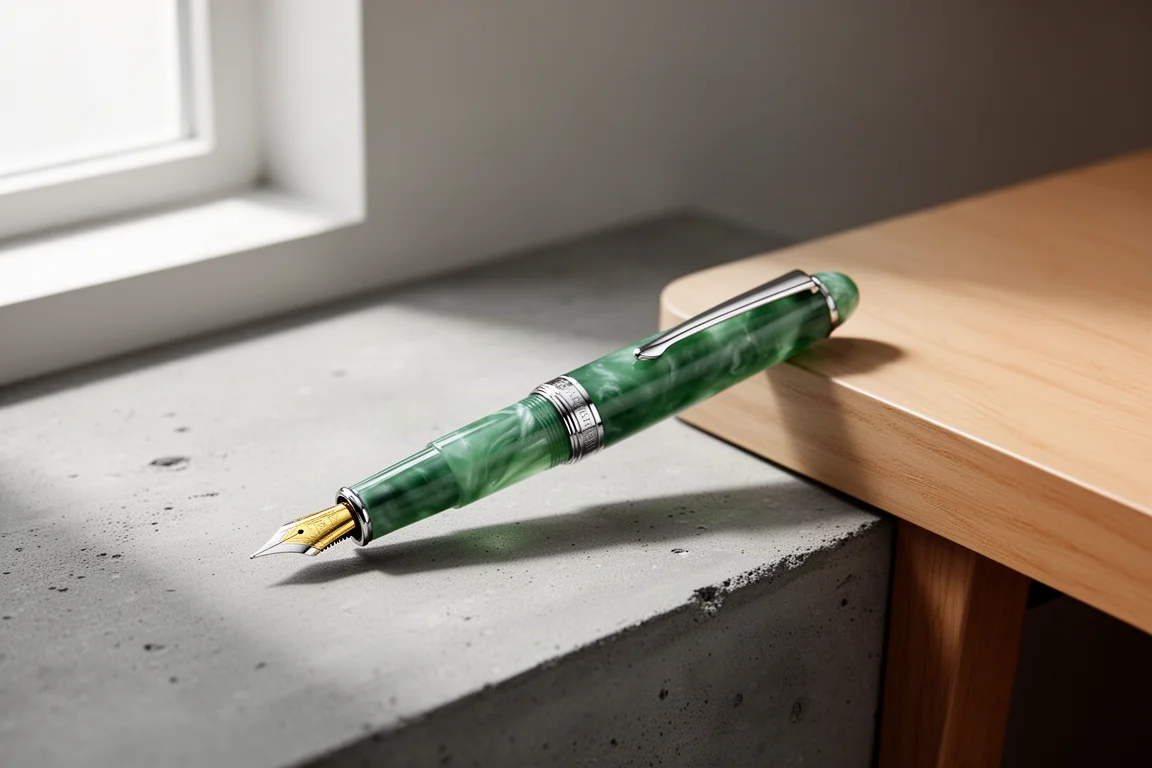
Platinum occupies a special place in the fountain pen world, and the 3776 Sentry Celluloid in Jade is one of the more interesting expressions of that. This is a pen that was an impulse purchase for me a few years back, picked up at a good price during a sale season, and it has earned a permanent spot in the collection.
What makes this pen notable is the material itself. Platinum is one of, if not the only company still manufacturing celluloid pens, and they make the celluloid in house. Rather than a solid rod of celluloid as you would find in older pens, the material is built up in thin laminated layers, formed into a sheet, and then rolled into the finished pen. Whether or not they are still producing the celluloid line, new examples can still be found if you look.
The Jade Celluloid Finish
The Jade finish is the headline. There is a genuine depth to the material that is hard to capture in photographs, and it is the kind of pen you can stare at for hours without even writing. It is absolutely stunning.
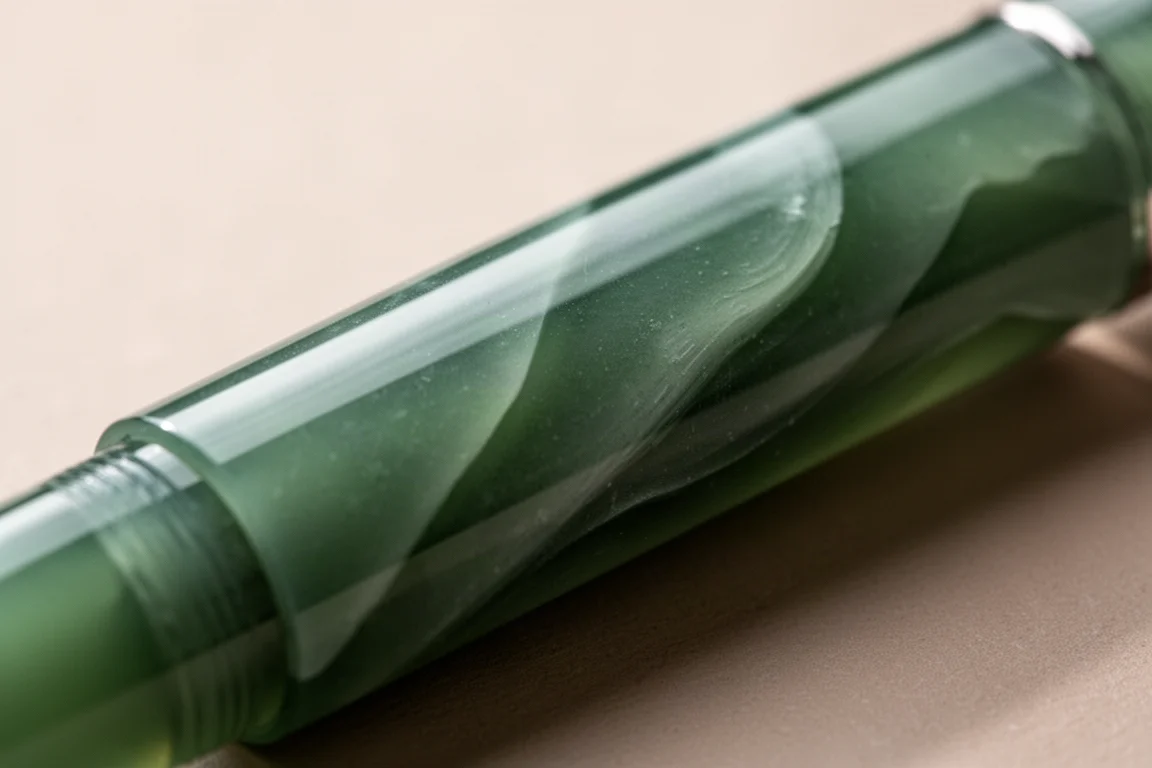
Jade is just one option in this line. Platinum has offered a similar blue, a pink that resembles snakeskin, a koi pattern, and a calico tortoiseshell, so there is likely a finish for nearly every taste. But Jade was the one I could not pass up.
How It Compares to the Standard 3776
Side by side with a regular 3776, the Sentry Celluloid looks like the same pen at first glance. Same rounded ends, same functional Platinum clip that is neither too tight nor too loose, same ring around the cap with the standard Japan 3776 Platinum markings.
Look closer, though, and the differences emerge. The standard 3776 is slightly longer and noticeably wider, largely because of an extra step near the threads that the Celluloid version lacks. With the caps off, the two bodies are practically the same length, within a millimeter or two. The nibs are exactly the same as well.
Two functional differences matter more. The Celluloid version uncaps in one full rotation rather than one and three quarters, so it is quicker to get writing. On the other hand, it drops the slip and seal mechanism found on the standard 3776. In practice I have not noticed the nib drying out, and a plastic insert in the cap helps keep the nib sealed, but the long-term humidity claims of the slip and seal system do not apply here.
Things to Consider Before Buying
This is a smaller, thinner pen than the standard 3776. If you dislike small pens, the Sentry Celluloid may feel too compact. That said, it posts well, and posting adds a bit of weight and a more comfortable length if you want it. I use mine unposted and find it well balanced and comfortable enough for long writing sessions.
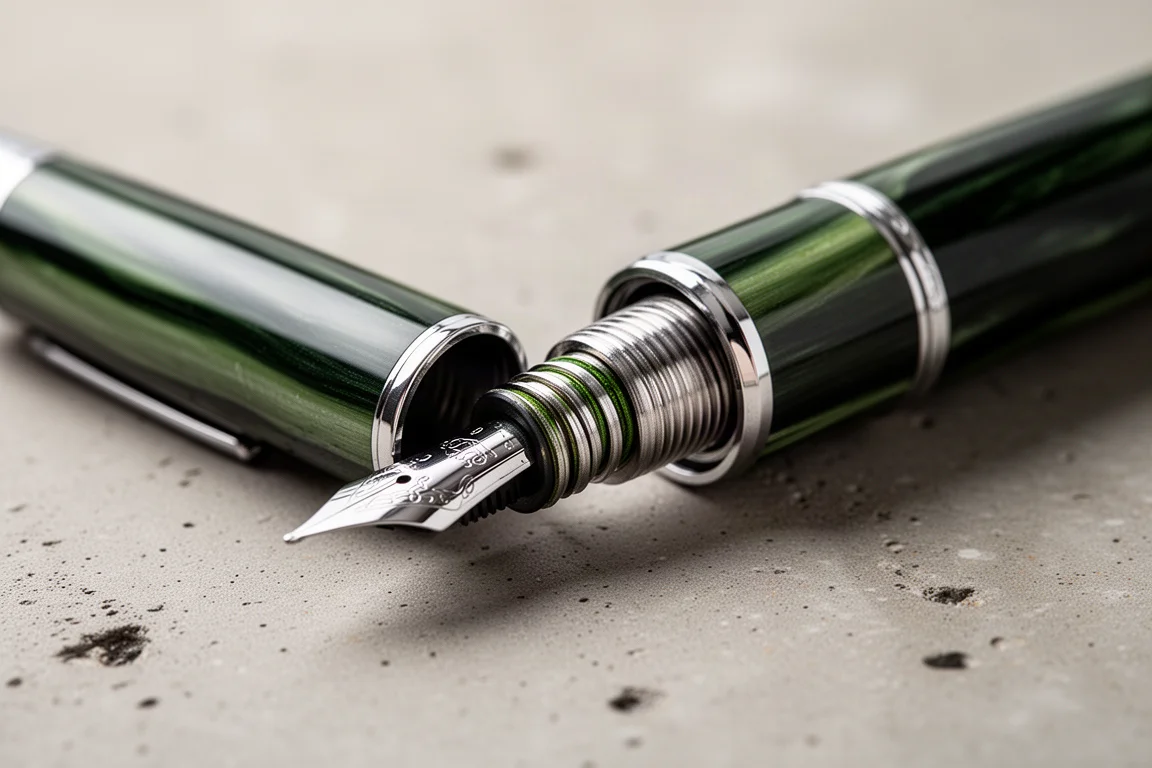
The threads are cut into the celluloid and are not the smoothest, with an occasional squeak while uncaping. It does not affect function, but it does not feel as refined as it could. Interestingly, the metal-on-plastic threads inside the cap, common on Japanese pens, feel smoother than the plastic-on-plastic ones outside, which may explain the design choice.
The section is slightly shorter and thinner than the standard 3776, so the converter sticks out a bit farther, reaching up near the threads. It is Platinum’s standard converter: nothing fancy, but it works.
Writing Performance: A Broad Nib Worth Considering
The nib is the same 14k gold unit as the regular 3776, and my example is a broad, which is out of the ordinary for me but one I genuinely enjoy. It is not a gusher or a fire hose. The flow is wet yet controlled and even, which is exactly what I want from a broad nib: enough ink to show shading and sheen without bleeding or feathering on everything.
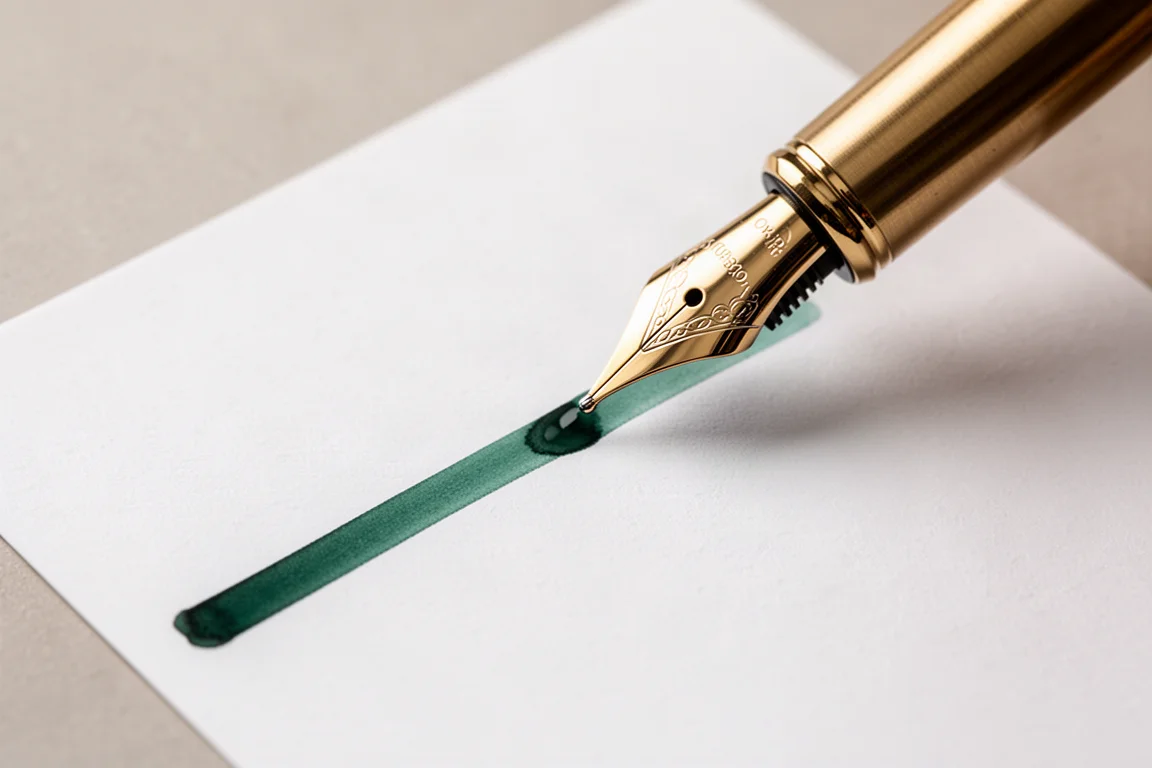
If you are wary of the toothiness or feedback that Platinum’s finer nibs are known for, this one may surprise you. It is extremely smooth, with only an audible feedback that feels closer to a felt-tip marker than a pencil. There is a little bounce with Platinum nibs, but it is barely noticeable here, and there is no line variation, so there is no point in pressing.
As for line width, the broad lands somewhere around a Western medium, perhaps between a Western medium and broad, so it is not as wide as some other brands’ broad nibs. The pen is well balanced despite its shorter length, and I could write with it all day.
Buying Advice
Pricing varies quite a bit depending on retailer, country, and whether the pen is new or used. I have seen examples anywhere from around $200 on the secondhand market to about $400 from a retailer, and new celluloid versions are getting harder to find.
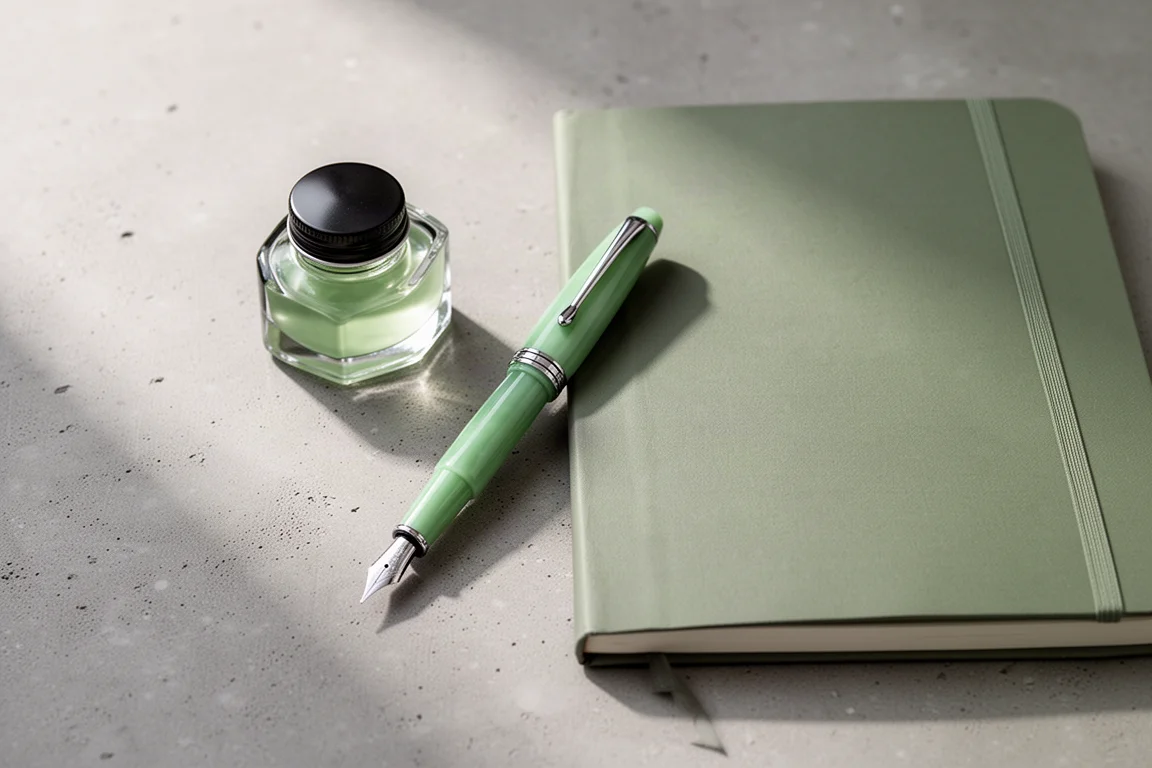
Is it worth it? A regular new 3776 now runs close to $200, so paying more for this lovely finish in the same package feels like a reasonable buy if you want a newly manufactured celluloid pen. Skip it if you dislike small pens or are not a fan of Platinum nibs and styling. But if you love Platinum, appreciate a smaller package, and want a unique celluloid finish, this is a very good purchase when you can find one.
Conclusion
The Platinum 3776 Sentry Celluloid in Jade is a genuinely beautiful pen with real depth to its finish, a proven 14k gold nib, and a compact, well-balanced body. The one-turn cap, missing slip and seal, and squeaky threads are minor trade-offs, not deal breakers. For fans of Platinum and celluloid alike, it is an easy pen to love.
Product link
View more details for Platinum 3776 Sentry Celluloid (Jade)
This product is mentioned in the review. Check the specifications, options, and compatibility before buying.
View more details for Platinum 3776 Sentry Celluloid (Jade)Further reading
Related Reviews
Fountain Pens
Best Budget Fountain Pens Tested: 9 Pens, One Clear Winner
A hands-on comparison of nine affordable fountain pens for everyday writing, calligraphy, and sketching, with a clear standout for flexible nib fans.
Fountain Pens
Aurora Optima Review: An Italian Piston Filler That Punches Above Its Price
A 14k gold nib, ebonite feed, and a beautifully deep oraloid body make the Aurora Optima one of the most rewarding piston fillers around.
Fountain Pens
Cross Bailey Light Review: The Entry-Level Fountain Pen Worth Keeping at the Office
A plastic-bodied Cross with a metal clip, snap cap, and famously smooth extra fine steel nib. Around $15, available almost everywhere, and easy to recommend.