Fountain Pens
Pilot Falcon Metal Review: A Lacquered Metal Fountain Pen with an Outstanding Soft Nib
The Pilot Falcon Metal takes the beloved soft 14k gold nib and wraps it in a lacquered metal body, adding weight, trim, and a $240 price tag.
Introduction
The Pilot Falcon Metal is the metal-bodied sibling of a pen many fountain pen fans already know well: the Pilot Falcon. In some Asian markets, this model is sold under the name Iro-Ushi, a combination of a Japanese word meaning “to choose” and the English word “elaborate”. Whatever you call it, the core appeal is the same: a uniquely shaped 14 karat gold nib with a soft, semi-flex character that adds flair to your handwriting with very little effort.
This review covers the parts and features of the metal version, how it differs from the resin Falcon, its size and ergonomics, and a writing sample. The pen reviewed here is the burgundy version, purchased for $240.
Design and Build
The pen arrives in a fairly plain box. Some of Pilot’s marketing describes it as an elegant gift box, but it is inexpensive and disposable, which is fine given where the money is actually spent. Inside are a use and care guide, a proprietary Pilot cartridge, and the pen itself. It is available in black, brown, burgundy, and sapphire; burgundy is the color shown here.
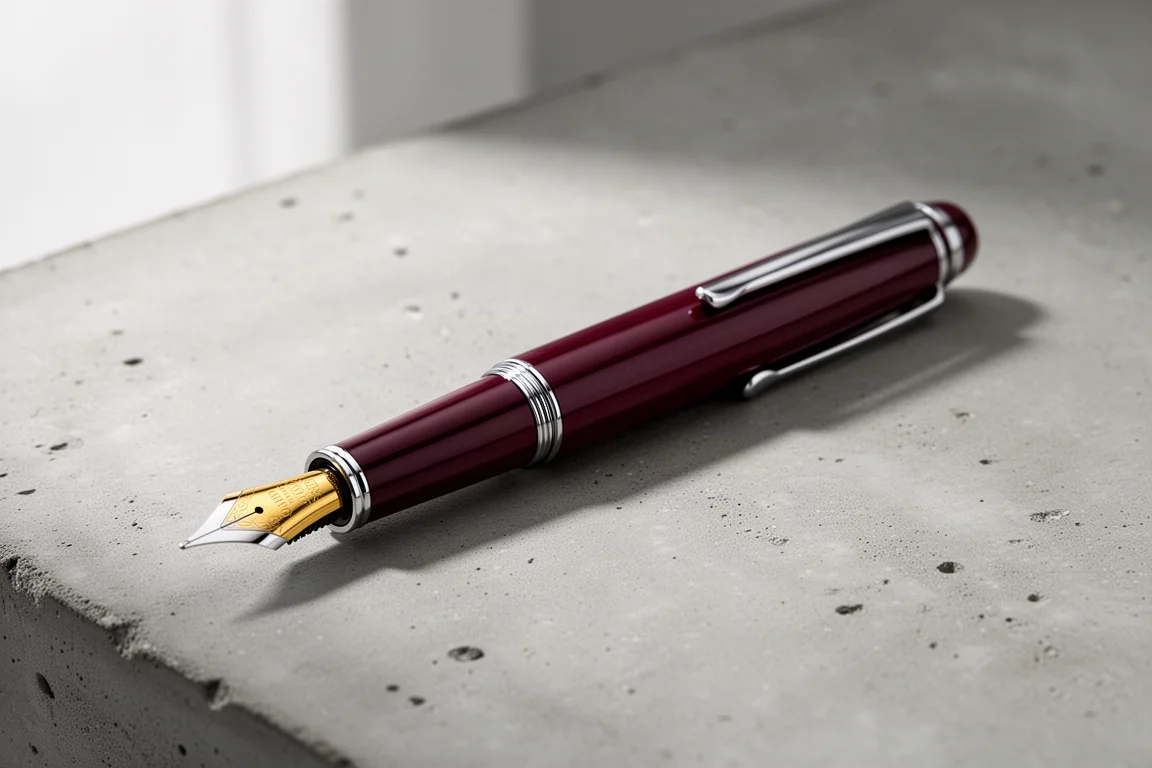
The body is made from lacquered metal and is heavier than the resin version, though not overly hefty. It feels like an appropriate weight rather than a boat anchor. The trim is rhodium, and the lacquer work is genuinely nice: rather than a flat paint, it has visible depth that adds to the pen’s aesthetics.
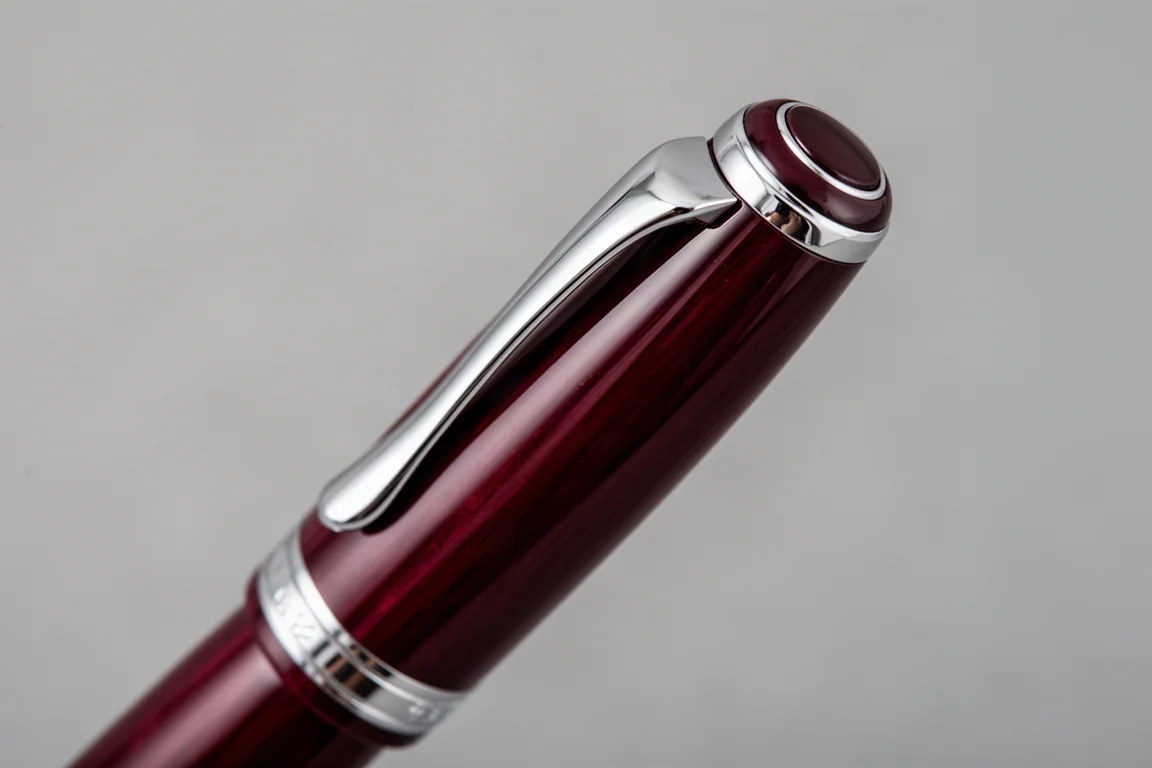
The cap features a flat metal finial with a circular groove, and a unique swooping clip that Pilot appears to use only on the two Falcon models. The clip functions well on both thick and thin materials. The cap angles up from the end, and the back of the cap carries a printed Pilot Japan marking below an angled band. That angled design creates a smooth step down to the barrel, which tapers at an even angle until a flat metal end piece.
The Soft 14k Gold Nib
This is the highlight of the pen. The uniquely shaped 14 karat gold nib allows the tines to be more flexible than most standard nibs, and it is offered in soft extra fine, soft fine, soft medium, and soft broad grades. The “soft” descriptor fits: with minimal pressure you get what could be called effortless flex, adding noticeable line variation without the bouncy feel that many flex nibs have.
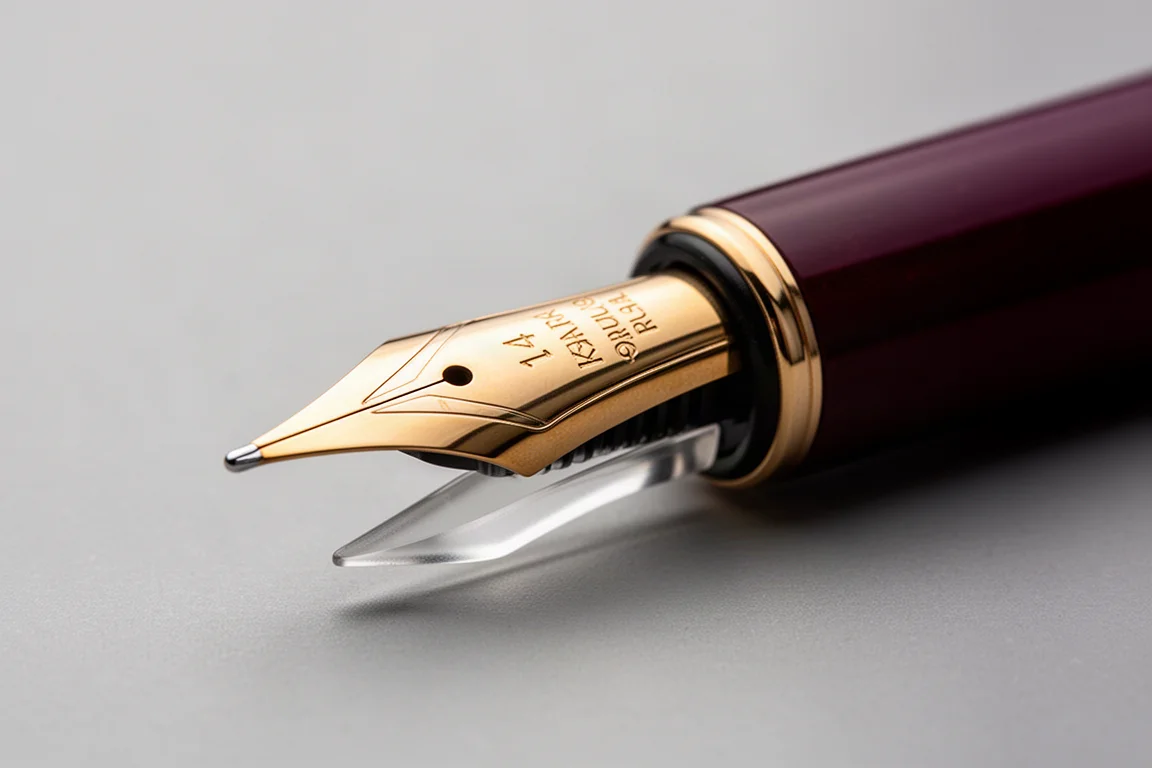
The plastic feed has a low, swooping profile that pairs nicely with the angled nib, making for an attractive front profile. Ink flow is consistently good, and the feed keeps up even during fast writing. Reverse writing gets the job done, though the nib feels rather sharp in that orientation.
Filling System and Ergonomics
This is a cartridge converter pen using Pilot’s proprietary filling system. It accepts Pilot cartridges and comes with the large CON-70 converter, which is a step up from the smaller CON-50 included with the resin version. Eyedropping is not recommended with this pen.
The section is a bit on the long side, with a small forward portion, a ring, and a gentle rise of just over a millimeter before reaching plastic threads. The grip stays comfortable, and even if your fingers drift toward the threads, they are plastic and not sharp or uncomfortable. The pen is long enough to use unposted, and it posts securely, though posting makes it feel slightly back-weighted. Using it unposted is the more balanced option, but if you like posting your pens, it may not bother you.
Writing Sample and Performance
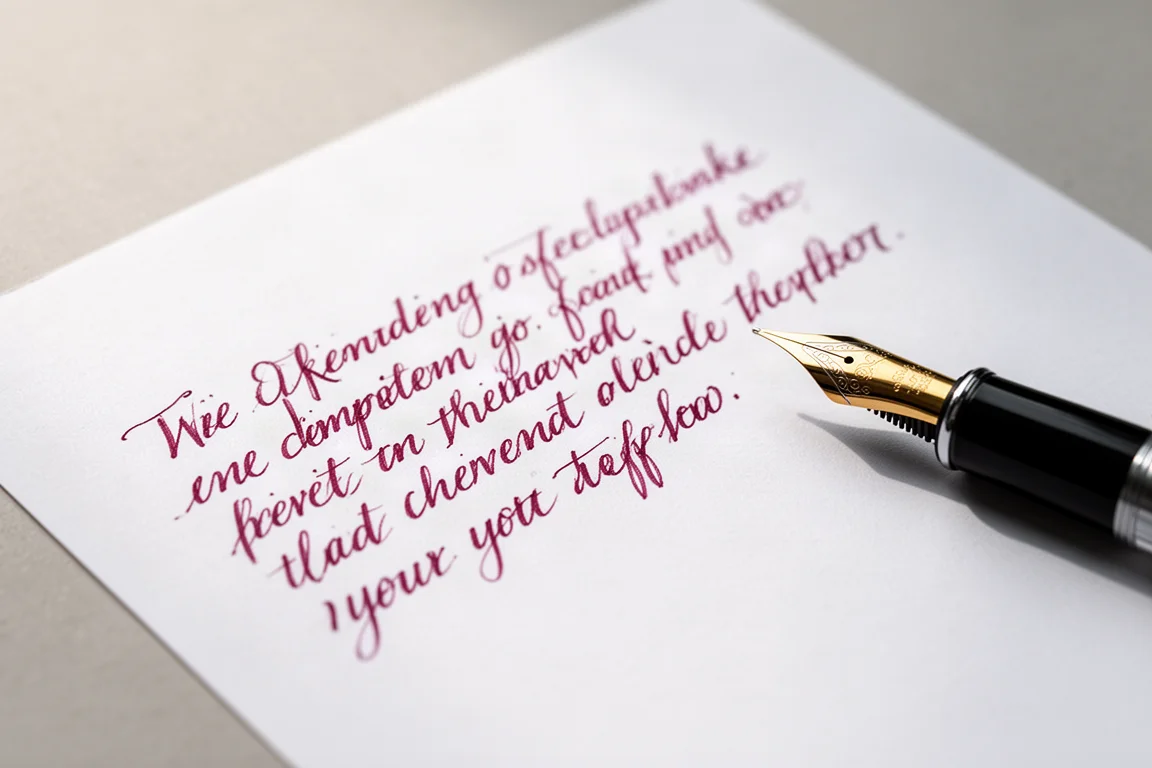
The soft medium nib used for this sample pairs nicely with Pilot Iroshizuku Yama-budo, a favorite reddish purple ink. With light pressure the nib writes fairly normally; push a little and you get pronounced line variation that adds genuine character to your handwriting. Crucially, it never feels too bouncy or fragile, which is a common complaint with more aggressive flex nibs.
The more this pen is used, the more it grows on you. It is the kind of nib that prompts the thought that you should reach for it more often.
Size Comparisons
Capped, the metal Falcon is only a millimeter or two longer than the resin version. The differences are mostly in the details: the resin has a resin finial, the metal has metal with a ring and insert, and the metal’s cap band is solid where the resin uses a more traditional band. Uncapped, the nibs and sections are the same, but the metal version has slightly longer threads and an extra band at the back of the barrel.
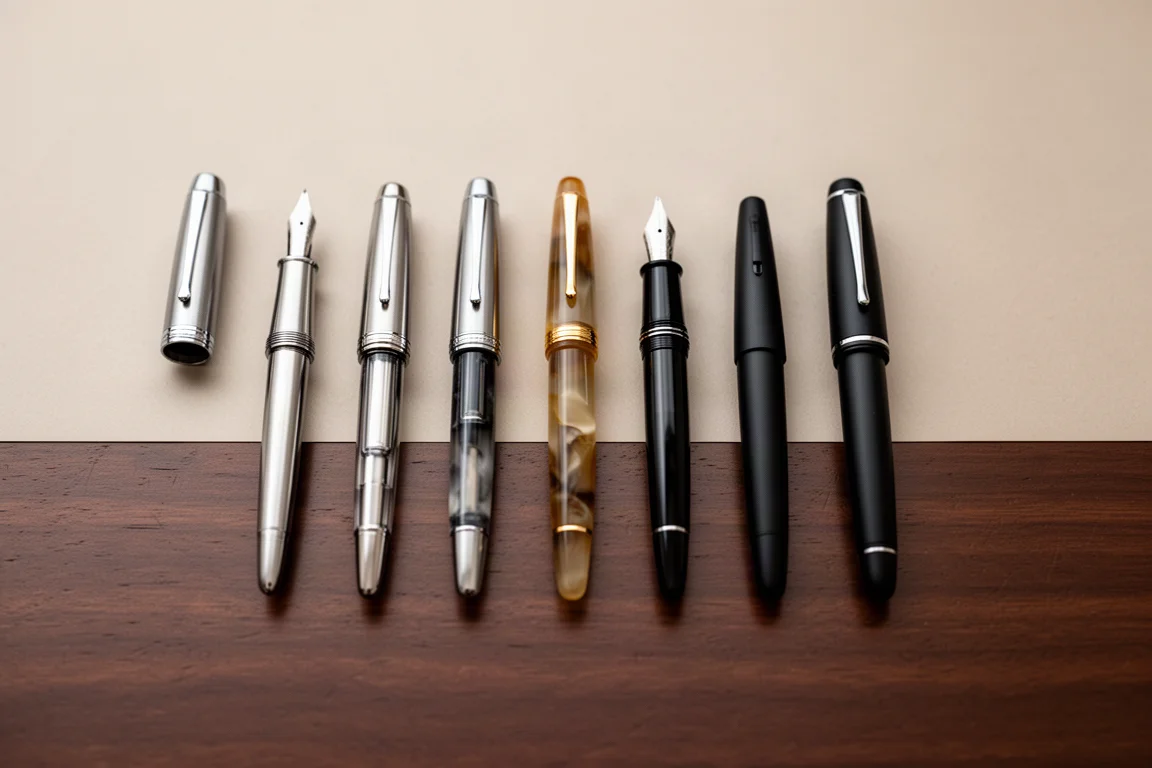
Alongside other Pilot pens like the Custom Heritage 92, Custom 823, and Vanishing Point, as well as the TWSBI Diamond 580 and Lamy Al-Star, the Falcon Metal sits comfortably in the standard full-size range. It is plenty long enough for most hands.
Metal vs Resin Falcon
The resin Falcon sells for about $60 less, at roughly $180, and includes the smaller CON-50 converter. The metal version’s advantages are the lacquered metal body, heavier but still comfortable feel, rhodium trim, and the CON-70 converter. The nib is identical between the two, so the choice largely comes down to body material and price. At $240, the metal version does not feel overpriced, though it would be an easier sell under $200.
Things to Consider Before Buying
The nib is the reason to buy this pen, and it is outstanding. The box is disposable, the posting balance is slightly off, and the proprietary filling system locks you into Pilot cartridges and converters. If those trade-offs sound acceptable for one of the best soft-flex writing experiences available, the metal Falcon is easy to recommend.
Conclusion
The Pilot Falcon Metal takes everything good about the resin Falcon and adds a premium lacquered metal body, rhodium trim, and a better converter. The soft 14 karat gold nib remains the star: effortless flex, reliable flow, and handwriting flair with minimal effort. At $240 it is a considered purchase, but for anyone who loves a soft, characterful nib, it is money well spent.
Product link
View more details for Pilot Falcon Metal
This product is mentioned in the review. Check the specifications, options, and compatibility before buying.
View more details for Pilot Falcon MetalFurther reading
Related Reviews
Fountain Pens
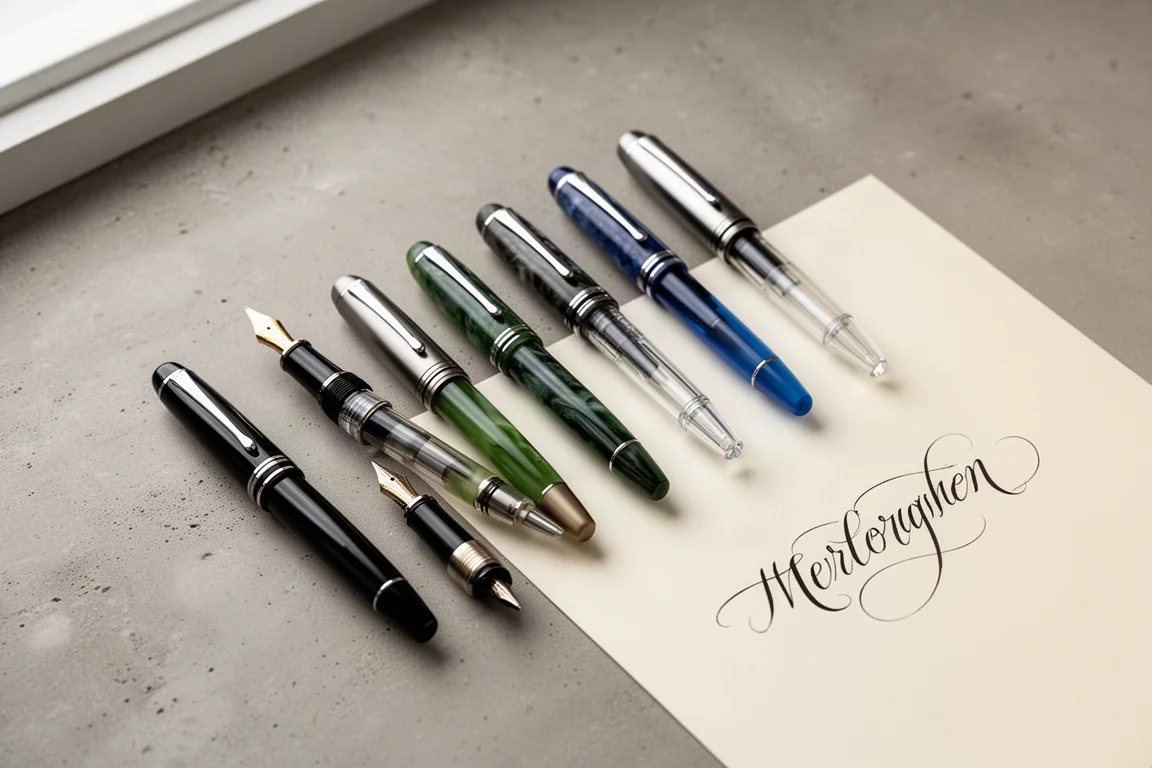
Best Budget Fountain Pens Tested: 9 Pens, One Clear Winner
A hands-on comparison of nine affordable fountain pens for everyday writing, calligraphy, and sketching, with a clear standout for flexible nib fans.
Fountain Pens
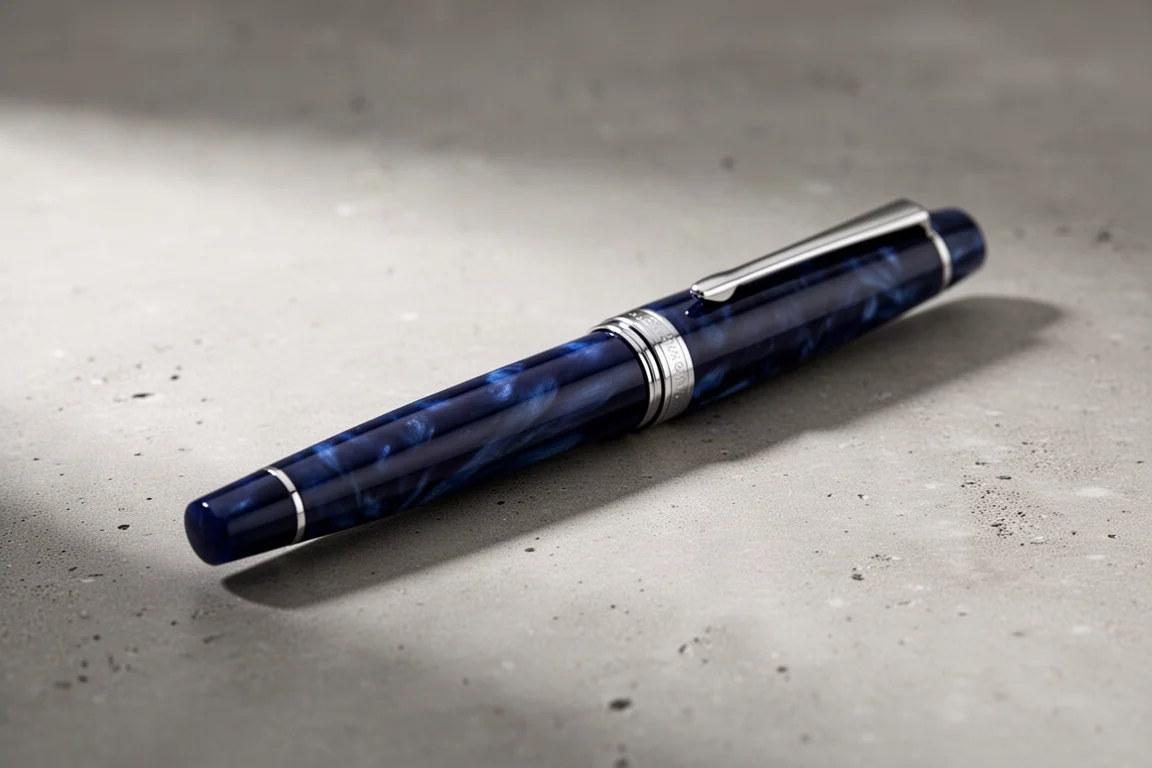
Aurora Optima Review: An Italian Piston Filler That Punches Above Its Price
A 14k gold nib, ebonite feed, and a beautifully deep oraloid body make the Aurora Optima one of the most rewarding piston fillers around.
Fountain Pens
Cross Bailey Light Review: The Entry-Level Fountain Pen Worth Keeping at the Office
A plastic-bodied Cross with a metal clip, snap cap, and famously smooth extra fine steel nib. Around $15, available almost everywhere, and easy to recommend.