Fountain Pens
Pilot Custom 823 vs Montblanc 149: Two Iconic Fountain Pens Compared
A head-to-head comparison of two flagship fountain pens, weighing design, filling systems, nibs, writing feel, and value.
Introduction
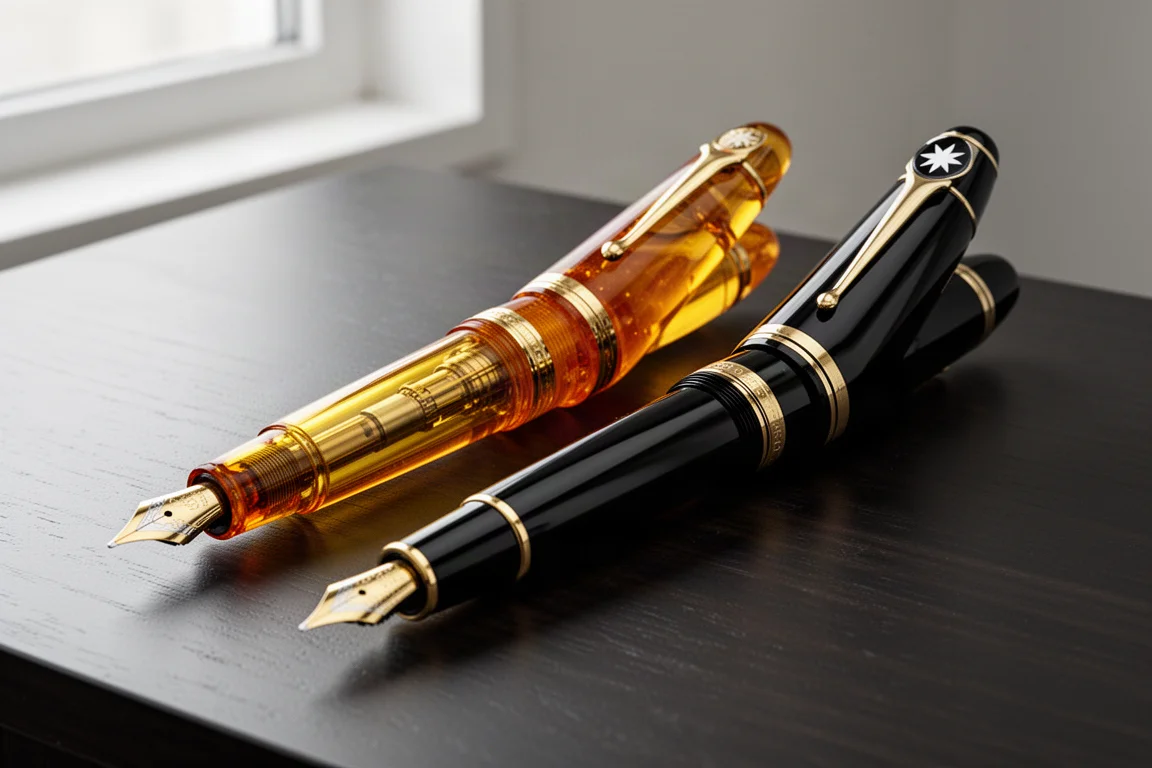
Few comparisons in the fountain pen world carry as much weight as the Pilot Custom 823 versus the Montblanc 149. One is a translucent amber beauty with a vacuum filling system; the other is arguably the most recognizable fountain pen ever made, with a lineage stretching back to the early 1950s. Both are large, gold-trimmed, serious writers, and both have passionate followings. But side by side, they make very different cases for your money, and the gap in price is substantial. This comparison walks through design, clips, caps, filling systems, nibs, writing feel, and value to help you decide which one deserves a place in your rotation.
Design and Aesthetics
The Montblanc 149 is a classic design, and for many people it is simply what a fountain pen looks like. It is, however, a basic black pen with gold bands. It carries the Montblanc emblem atop the cap, which clearly marks it as a Montblanc, a detail that can be a bonus or a detriment depending on the impression you want to make. In its basic form it reads as a somewhat generic, business-oriented pen, though the moment you unscrew the cap is when it really shines.
The Pilot Custom 823, by contrast, is a gorgeous translucent amber color that shows off the vacuum filling mechanism inside. Even capped it is striking, though never over the top. It works seamlessly in academia or in business, and it wears gold bands beautifully. Placed side by side, the aesthetic edge goes to the Pilot Custom 823.
Clips and Caps
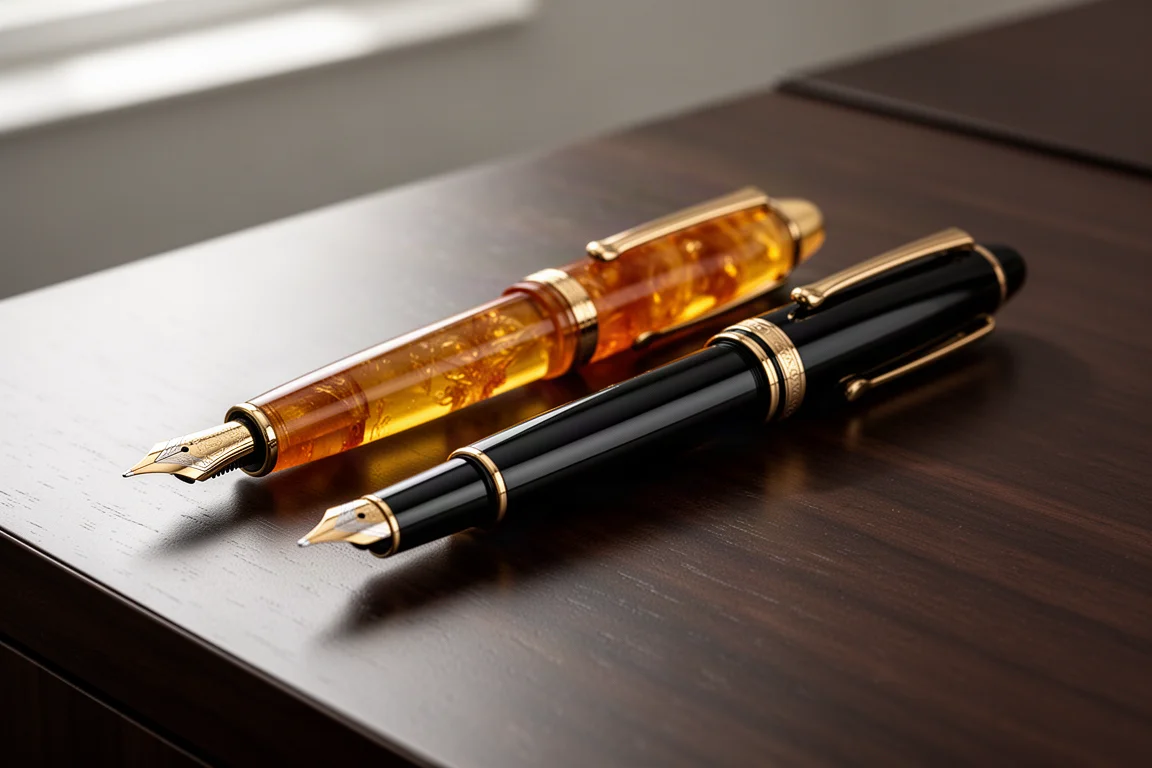
The 149’s clip is springy and grips a shirt or notebook edge aggressively without ever sliding off. Its flat edge does little damage to paper, striking a nice balance between a pretty shape and everyday reliability. The Custom 823’s clip terminates in a large globe of metal that clings with real tenacity. It starts stiff and loosens over time, and you would not clip it to a precious document, but carrying it is a breeze and the look is distinctive.
Both caps share a genuine flaw: unprotected resin near the edge of the cap, leaving each vulnerable to chipping if dropped. Both are also screw caps with roughly the same number of threads and the same experience. If you take constant notes or sign documents many times a day, that is a lot of screwing and unscrewing, and a snap cap would be more convenient. On caps, the two are effectively a wash.
Filling Systems and Ink Capacity
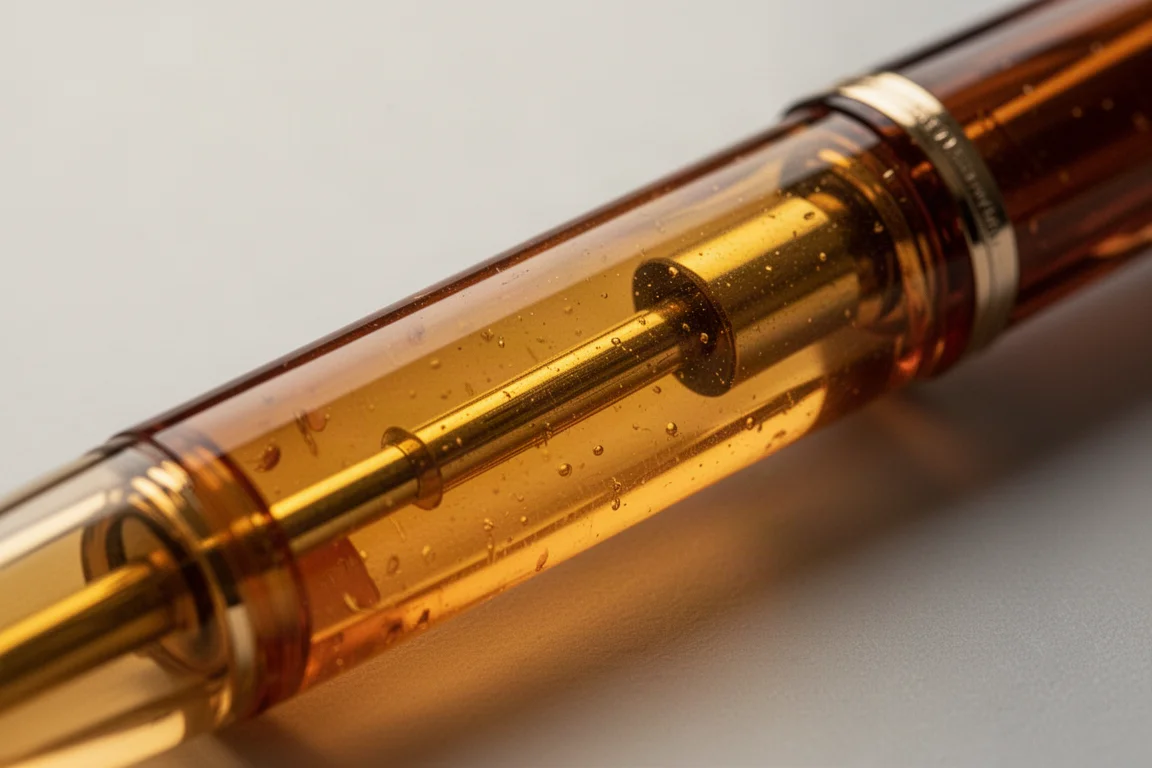
The Pilot Custom 823 uses a vacuum filling system. You immerse the nib in ink, push the plunger down to create a vacuum, and ink rushes in with a dramatic, satisfying motion. It holds a large fill, and as you write, loosening the tail lets the big reservoir feed the nib for longer writing sessions. The trade-off: vacuum fillers are fun to fill but miserable to clean, and because this is a quasi-demonstrator, you will see every drop of ink while flushing it out.
The Montblanc 149 uses a piston filler: loosen, dip, tighten, done. It offers a nice fill and a stylized ink view window, though the window normally looks clear whenever ink is low. Cleaning is much easier, taking roughly three or four water fills to run clear, and since you cannot see the mess inside, the process is psychologically simpler.
On capacity, the Custom 823 holds around 2.5 ml of ink versus about 2.1 ml in the 149. If you are committed to a single ink and hate refilling, that larger capacity is a genuine bonus. If you prefer changing inks regularly, a slightly smaller tank is arguably the friendlier choice.
Nibs and Writing Experience
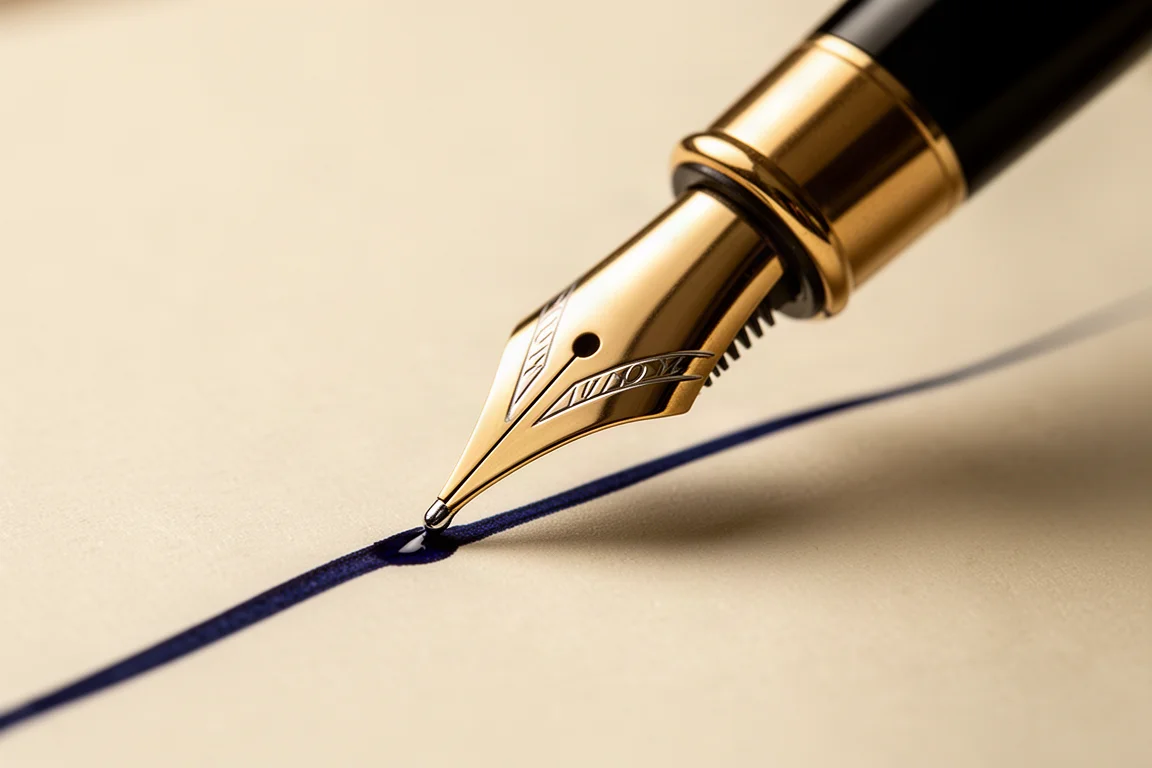
The Montblanc 149 carries an 18k gold nib with a gorgeous two-tone design and an impressively large size 9 nib that never feels awkward in use. The Pilot Custom 823 has a 14k gold nib, smaller but elegant and perfectly matched to the pen. In practice, the extra karat weight makes no felt difference; both nibs are fairly stiff, neither is a pen you exert pressure on, and both feel remarkably similar. On nib aesthetics alone, however, the 149 wins.
On the page, this is a battle of gradations. The Custom 823 is sublime and smooth, yet somehow still delivers a measure of feedback. It is precise to the point of feeling almost too fast, like driving a car with a bigger engine than you are used to. It never false-starts and the feed never runs dry, though its quickness can make handwriting suffer slightly. Note that the medium nib runs a bit on the fine side, as Japanese nibs often do.
The 149 is one of the great intuitive writers: smooth to an extreme, with the faintest space between nib and page, allowing subtle light-to-dark line variation. Ink flow is luscious, with no false starts reported over more than a decade of ownership. Paired with good paper, it is exquisite. On the writing experience, the 149 takes it, even if only by a whisker.
Value Proposition
Here the comparison tips decisively. The Pilot Custom 823 is close to a perfect pen: elegant, wonderful in the hand, and an exquisite writer, all for around $320 US. That is extraordinary value, and many owners find that once they own one, they do not need another pen at all. It makes a fantastic ceiling for a fountain pen collection.
The Montblanc 149 is its own thing: a classic with decades of history, a sensitive nib, and a deeply satisfying writing experience. But it costs almost $1,000 new, though second-hand examples can be found for around $500. Head to head against the 823, that extra outlay is hard to justify on performance alone. If the 149’s presence and heritage are what you want, that is the price of entry.
Two practical notes for sizing: the 149 is a much thicker pen, so make sure you enjoy that girth. The Custom 823 is more refined and slender, with a size somewhat comparable to a Montblanc 146, and its nibs are more comparable to that pen as well.
Conclusion
The Montblanc 149 may win on more individual points, but the Pilot Custom 823 is the smarter buy for most people. At around $320 it delivers elegance, capacity, and a superb writing feel that makes the 823 a natural ceiling for a collection. The 149 remains an icon with a special nib and a price to match; if you find yourself pining for it, the second-hand market around $500 softens the blow. But side by side, the 823 is exquisite, and once you have it, you can confidently move on and simply enjoy the ride.
Product link
View more details for Pilot Custom 823
This product is mentioned in the review. Check the specifications, options, and compatibility before buying.
View more details for Pilot Custom 823Further reading
Related Reviews
Fountain Pens
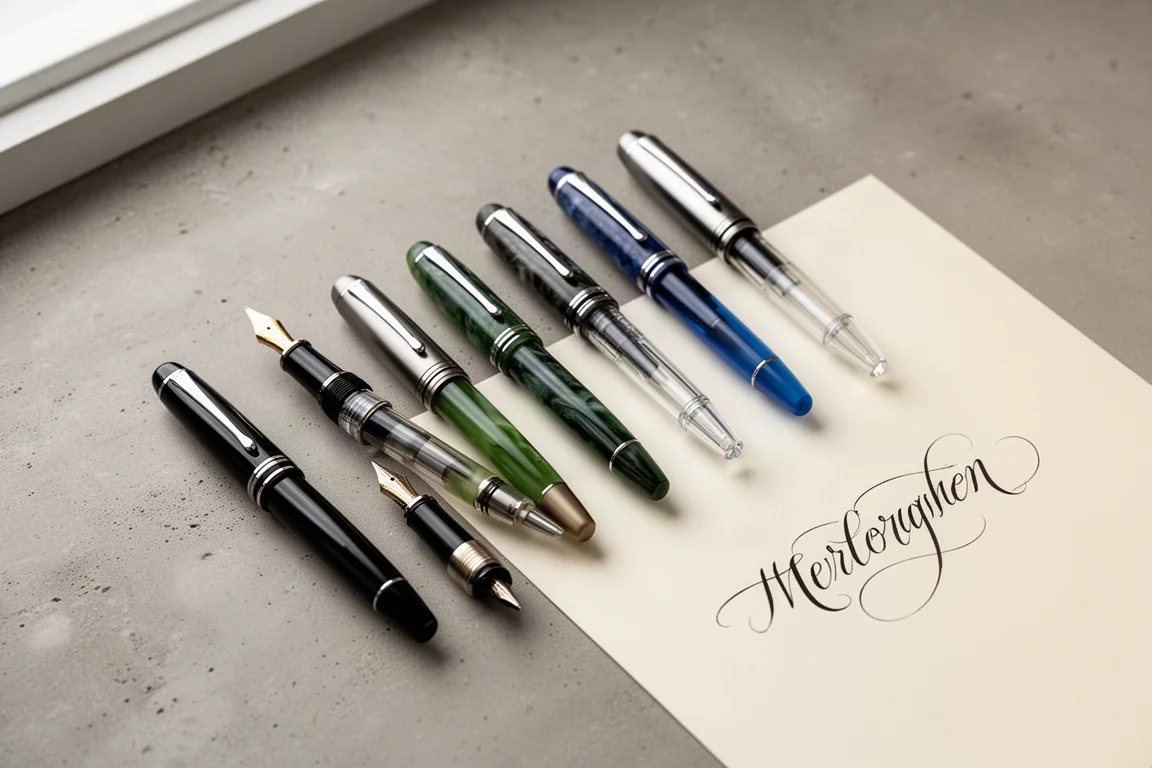
Best Budget Fountain Pens Tested: 9 Pens, One Clear Winner
A hands-on comparison of nine affordable fountain pens for everyday writing, calligraphy, and sketching, with a clear standout for flexible nib fans.
Fountain Pens
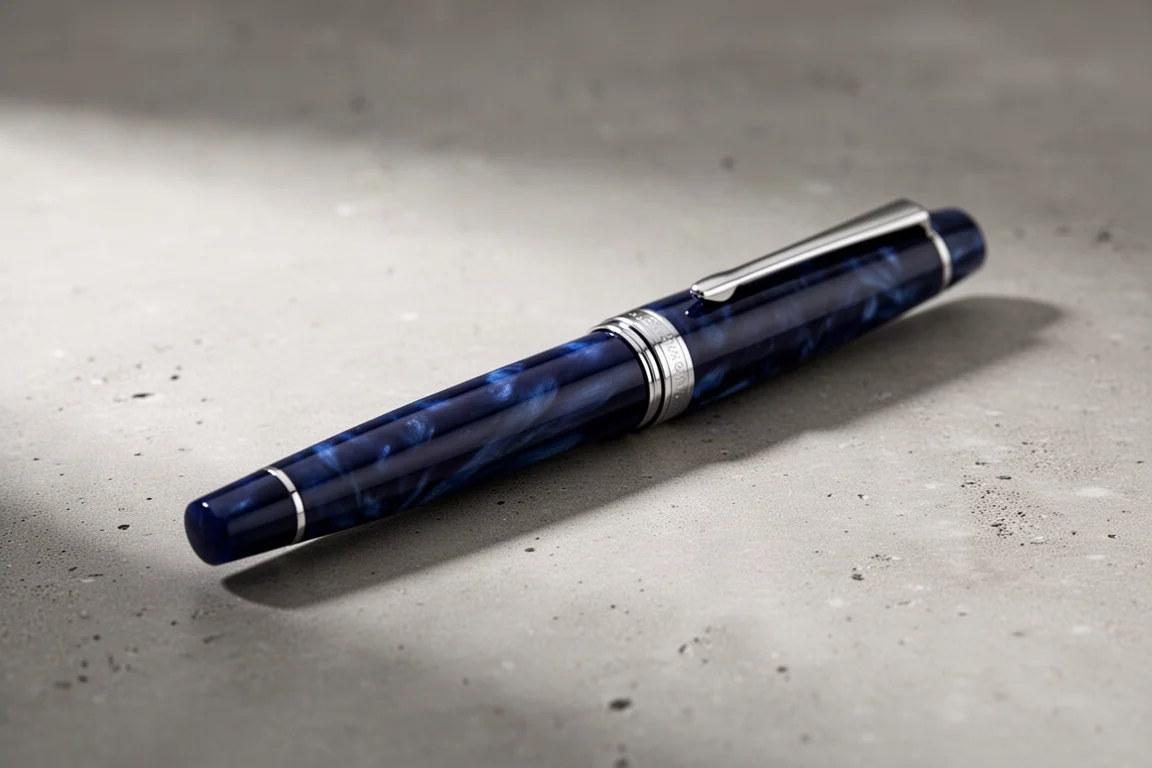
Aurora Optima Review: An Italian Piston Filler That Punches Above Its Price
A 14k gold nib, ebonite feed, and a beautifully deep oraloid body make the Aurora Optima one of the most rewarding piston fillers around.
Fountain Pens
Cross Bailey Light Review: The Entry-Level Fountain Pen Worth Keeping at the Office
A plastic-bodied Cross with a metal clip, snap cap, and famously smooth extra fine steel nib. Around $15, available almost everywhere, and easy to recommend.