Fountain Pens
Pilot Custom 742 Review: A Waverly Nib Worth Grabbing Before Prices Climb
A cigar-shaped Pilot with a number 10 gold Waverly nib that writes ultra smooth at any angle. Here is what it is like to live with and who it suits.
Introduction
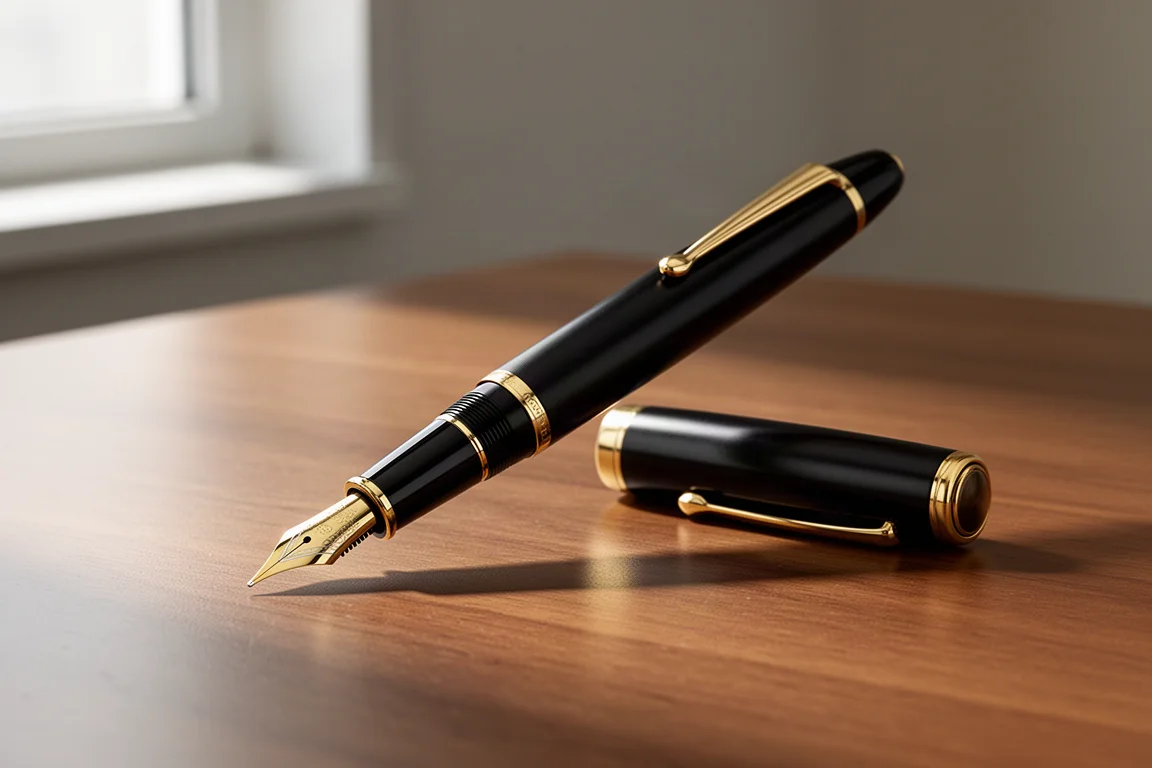
Some pens you plan to buy for months. The Pilot Custom 742 was more of a well-timed decision than a long-considered one. With import costs and gold prices pushing up the price of nearly every Japanese fountain pen brand, models that have been on the wishlist for a while are quickly moving out of comfortable territory. This pen, picked up for $185 from a marketplace listing, felt like one of the last chances to get a number 10 Pilot specialty nib at a reasonable price before that window closes.
The 742 is a cigar-shaped black pen that most people have never encountered in person. It is the less common sibling of the Custom 912, and it is notably harder to find in US domestic retail. That rarity, combined with a genuinely excellent nib, makes it worth a closer look.
Unboxing and First Impressions
The 742 ships in a standard Pilot presentation box. Inside you get an ink cartridge, a use and care guide, and a warranty card, all tucked beneath the pen tray. It is a familiar, tidy package that Pilot has refined over decades.
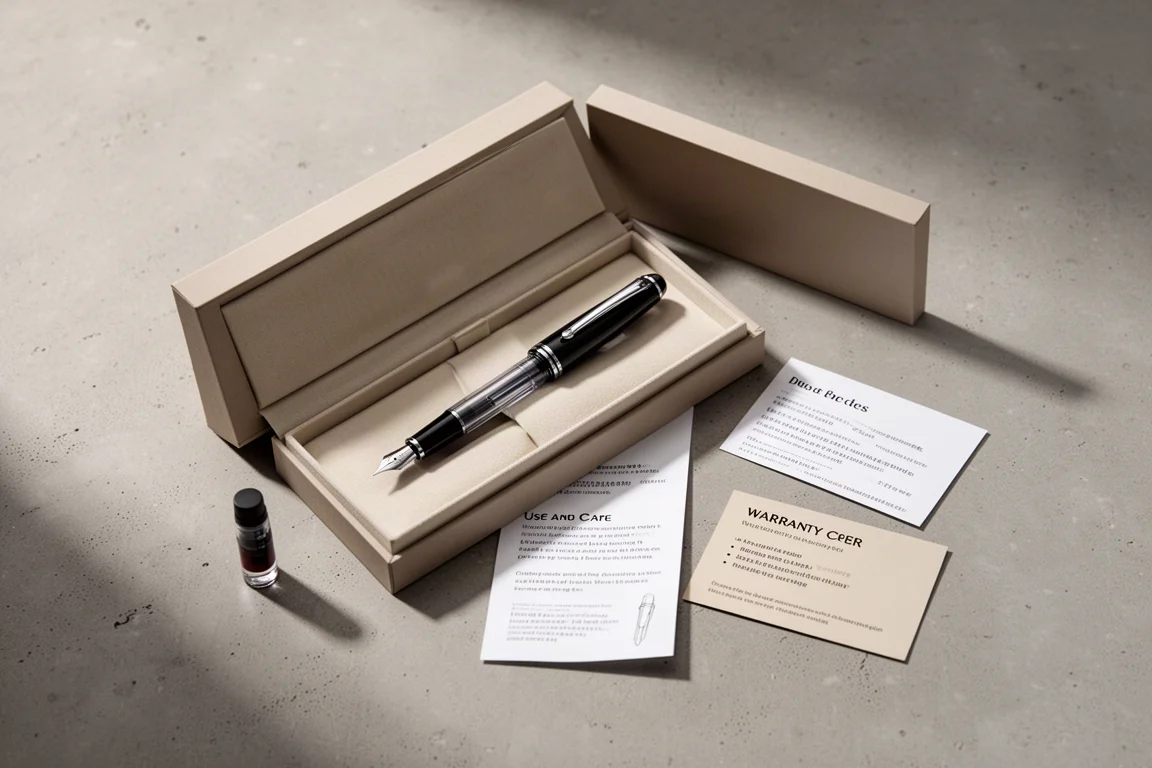
Out of the box, the first thing you notice is the finish. The plastic feels sturdy and everything is polished to the standard you would expect from Pilot. The 742 carries all gold furniture, and as far as we can tell there is no silver-trimmed version. The Custom Heritage 912, its closest sibling, uses silver furniture and a different clip style, while the 742 gets the classic Pilot clip.
At roughly a centimeter longer and slightly wider than the Custom 74, the 742 is a big pen, but it is well balanced. The Con-70 converter inside, especially when full of ink, adds a bit of reassuring heft. It sits comfortably in the hand for long writing sessions.
Understanding the Pilot Numbering System
The naming of Pilot’s custom series looks cryptic until you know the code. The word “Custom” signifies round ends, while “Custom Heritage” means flat ends. The first two digits indicate how many years after Pilot’s founding, in 1918, the model was introduced. The third digit, when present, is the original Japanese list price in units of 10,000 yen.
So the Custom 742 arrived 74 years after Pilot’s founding and originally listed at 20,000 yen, roughly $130 at the time. The Custom 74, its cartridge-converter sibling released at the same time, originally listed at 10,000 yen. The same pattern applies to the Custom Heritage 91 and 912 pair, where the 912 is the more upscale version with the bigger number 10 nib and more nib options. The 742 follows that same logic relative to the 74: functionally the same pen, but with the larger number 10 nib and a slightly larger body.
One point worth clarifying: this is the 742, not the 743. The 743 sits closer to the Custom 823 in size and price, with the third digit signaling its higher original list price.
The Waverly Nib: The Real Story
The outside of the 742 is not what makes it special. The nib is. Like the 912, it carries Pilot’s number 14 karat gold nib, which is noticeably larger than the number 5 nib found on the Custom 74 and Custom Heritage 92.
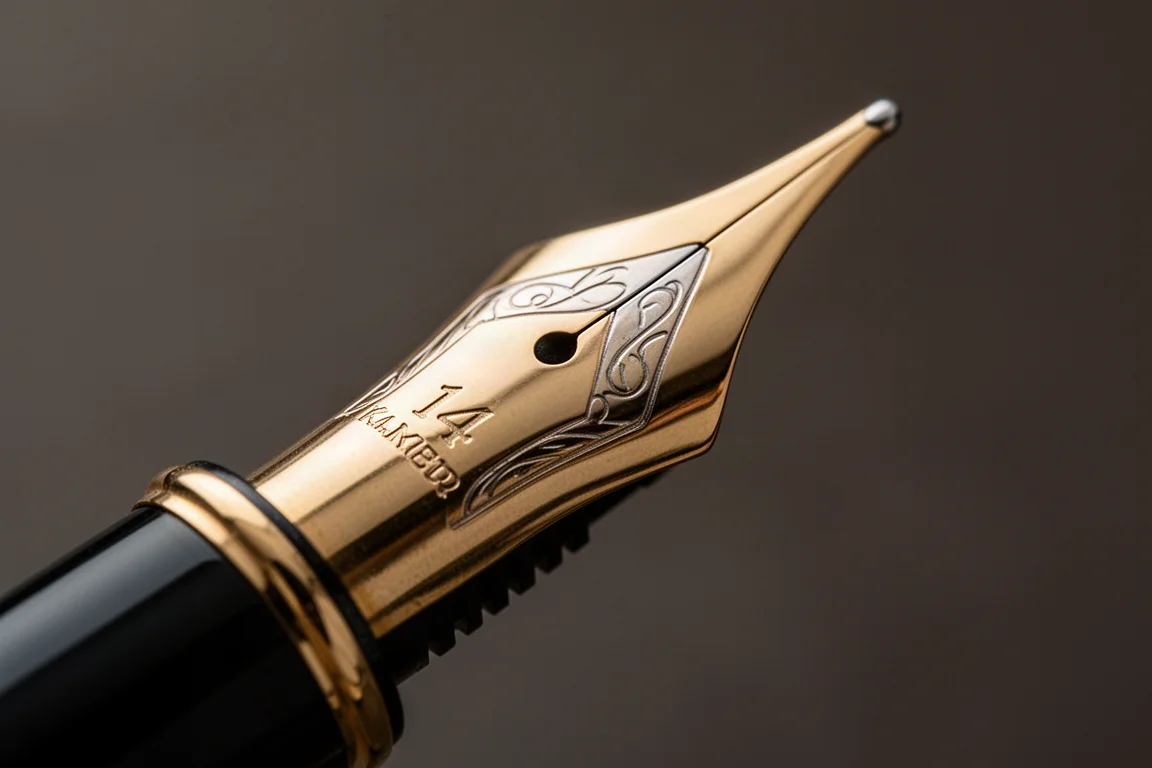
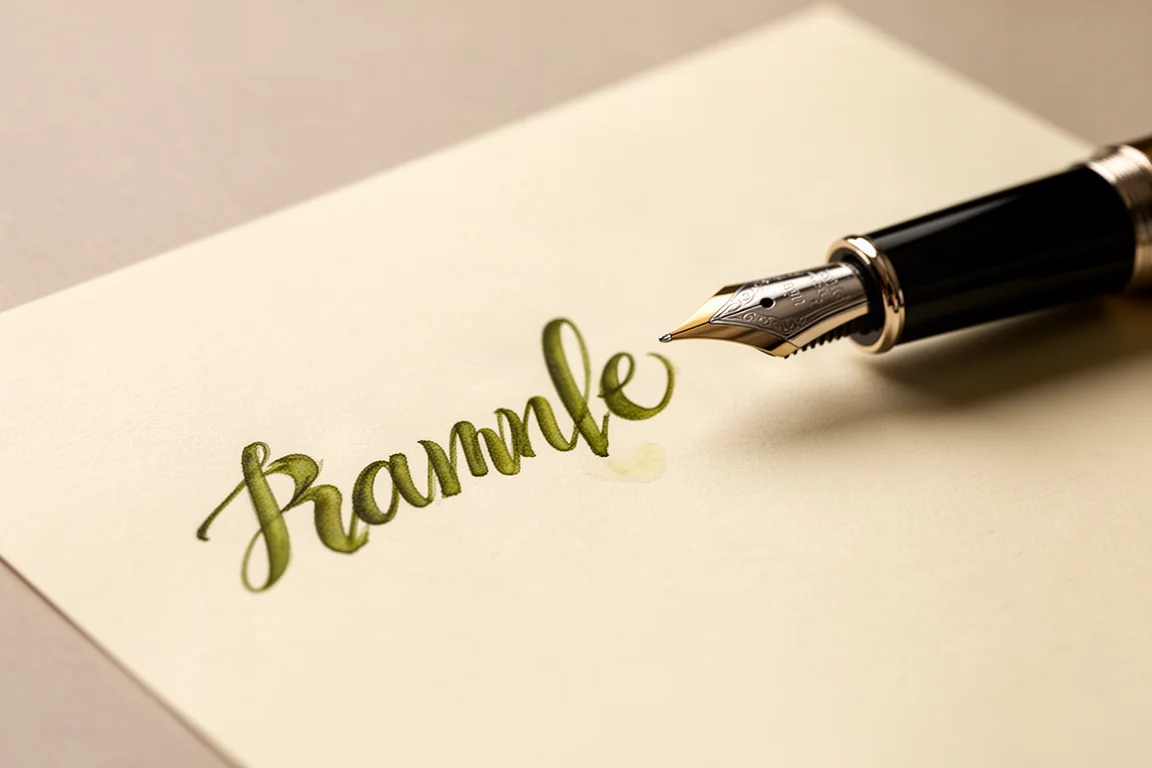
This particular unit came with the Waverly nib, a specialty option that has long been on the wishlist. Look at the nib in profile and you can see the tip is intentionally bent upward. It is not damage; it is the design. Where a Posting nib bends downward to produce a needle-fine, firm line, the Waverly sweeps upward, writing closer to a medium line with remarkable smoothness.
The Waverly nib has a vintage pedigree. It is the kind of nib you normally hunt for on old Schaeffer and Esterbrook pens, which makes having it available on a modern Pilot genuinely appealing. The idea behind it is universal usability: it forgives writing angle and hand position better than almost any conventional nib.
Inking It Up: Con-70 and Syringe Filling
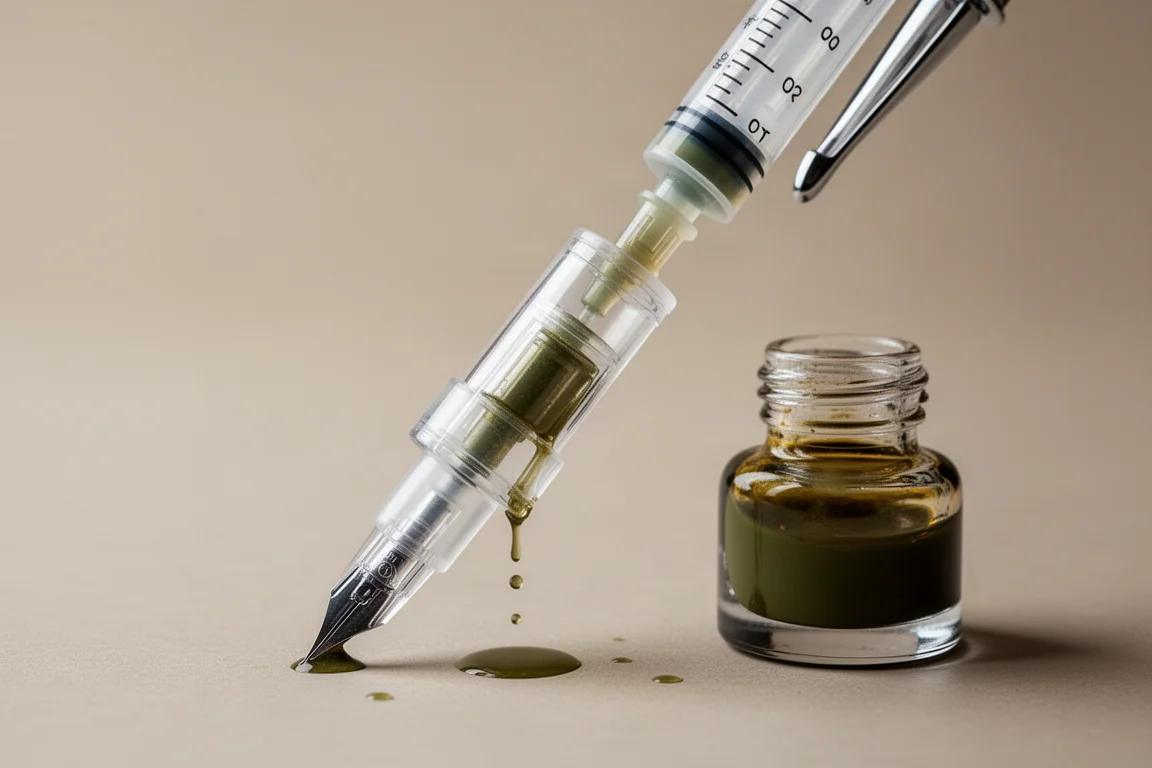
The 742 accepts Pilot cartridges or the Con-70 converter, and this unit shipped with the current style Con-70 included. The Con-70 is one of the best converters in the business, holding well over a milliliter of ink, which means fewer refill interruptions.
For this fill, a syringe was used to transfer the last dregs of a Pilot Iroshizuku Eno sample into the converter. Eno, a muted green-gold shade that suits winter writing well, was part of the first round of Pilot discontinuations, so using up the final milliliter or so felt appropriate. The syringe method keeps fingers clean even when juggling tiny samples, and a quick press on the converter primes the feed before writing.
Writing Experience
Tested on Midori MD paper with Iroshizuku Eno, the combination is seriously wet. The line sits right around a Japanese medium width, and the smoothness is on another level. There is essentially no feedback; it glides about as glassy-smooth as a Japanese pen can get.
The defining trick of the Waverly nib shows up when you change writing angles. You can write at a low angle, a high angle, or even completely vertical, and the line stays nearly the same width and just as smooth. That consistency is almost hard to believe until you try it. The nib keeps up no matter how fast you write.
The wet flow also means the pen shows off shading beautifully with the right ink, and with a sheening ink it would put down plenty of sheen. It behaves like the Japanese equivalent of a true universal nib: wet, smooth, and easy for almost anyone to enjoy.
Things to Consider Before Buying
The 742 is not the most exciting pen to look at. It is a plain black cigar with gold trim, and if you want visual drama out of the box, this is not it. It is also becoming harder to find at original pricing; retailer listings currently run anywhere from about $260 to $330 depending on the nib, and marketplace prices have climbed since the $185 purchase price noted here.
On the other hand, the plain body is an opportunity. If you fall in love with the pen, it is a good candidate to send off for custom urushi or other customization work to make it truly yours. Availability is also a real concern: Japanese brands are raising prices across the board, and specialty nibs like the Waverly are the configurations most likely to become difficult to justify later.
Buying Advice
At $185, this pen is absolutely worth it. A number 10 Pilot nib in a specialty configuration, in a big, well-balanced, comfortable body, is a strong package even before you factor in the pricing environment. The same listing has since climbed over $200, which reinforces the sense that the current era is the last reasonable window for specialty-nib Pilots at approachable prices.
If there is a pen on your list that you have been putting off, particularly one with a Waverly or Posting nib, buying sooner rather than later is a defensible move. Secondary market prices are unpredictable, and waiting rarely gets cheaper. If the budget allows and the pen has been on the list for a while, the Custom 742 with a Waverly nib is an easy recommendation.
Conclusion
The Pilot Custom 742 is a quiet pen with a loud talent. The body is understated and comfortable, the Con-70 keeps it writing for a long time between fills, and the 14 karat gold Waverly nib delivers one of the smoothest, most angle-tolerant writing experiences available on a modern production pen. As a go-to daily writer, it earns its place, and as a buy-it-before-prices-climb acquisition, it makes even more sense.
Product link
View more details for Pilot Custom 742
This product is mentioned in the review. Check the specifications, options, and compatibility before buying.
View more details for Pilot Custom 742Further reading
Related Reviews
Fountain Pens
Best Budget Fountain Pens Tested: 9 Pens, One Clear Winner
A hands-on comparison of nine affordable fountain pens for everyday writing, calligraphy, and sketching, with a clear standout for flexible nib fans.
Fountain Pens
Aurora Optima Review: An Italian Piston Filler That Punches Above Its Price
A 14k gold nib, ebonite feed, and a beautifully deep oraloid body make the Aurora Optima one of the most rewarding piston fillers around.
Fountain Pens
Cross Bailey Light Review: The Entry-Level Fountain Pen Worth Keeping at the Office
A plastic-bodied Cross with a metal clip, snap cap, and famously smooth extra fine steel nib. Around $15, available almost everywhere, and easy to recommend.