Fountain Pens
Pilot Custom 74 and Custom Heritage 92: Two Great Ways Into Gold Nibs
A close look at the Pilot Custom 74 and its piston-fill sibling, the Custom Heritage 92, covering build, nib feel, filling systems, and which one suits different writers.
Introduction
Few pens earn the reputation the Pilot Custom 74 has quietly built for itself. It is a full-size demonstrator with a 14 karat gold nib, honest construction, and a filling system that punches well above its price bracket. For many writers it is the obvious answer to one specific question: which pen should I buy when I want my first gold nib?
Alongside it sits the Custom Heritage 92, a flat-top sibling with the same nib approach but a piston filling system instead. Together they cover two slightly different philosophies, and both deserve a closer look.
Pilot Custom 74: A First Gold Nib That Still Holds Up
The Custom 74 is priced around $160 new in the US, which places it squarely in the step-up or first-gold-nib category. If your collection is mostly entry-level pens and you want something that feels genuinely special, this is exactly the niche it fills. It is also a pen that rewards patience: buying second hand can bring the price down meaningfully, as many long-time owners can attest.
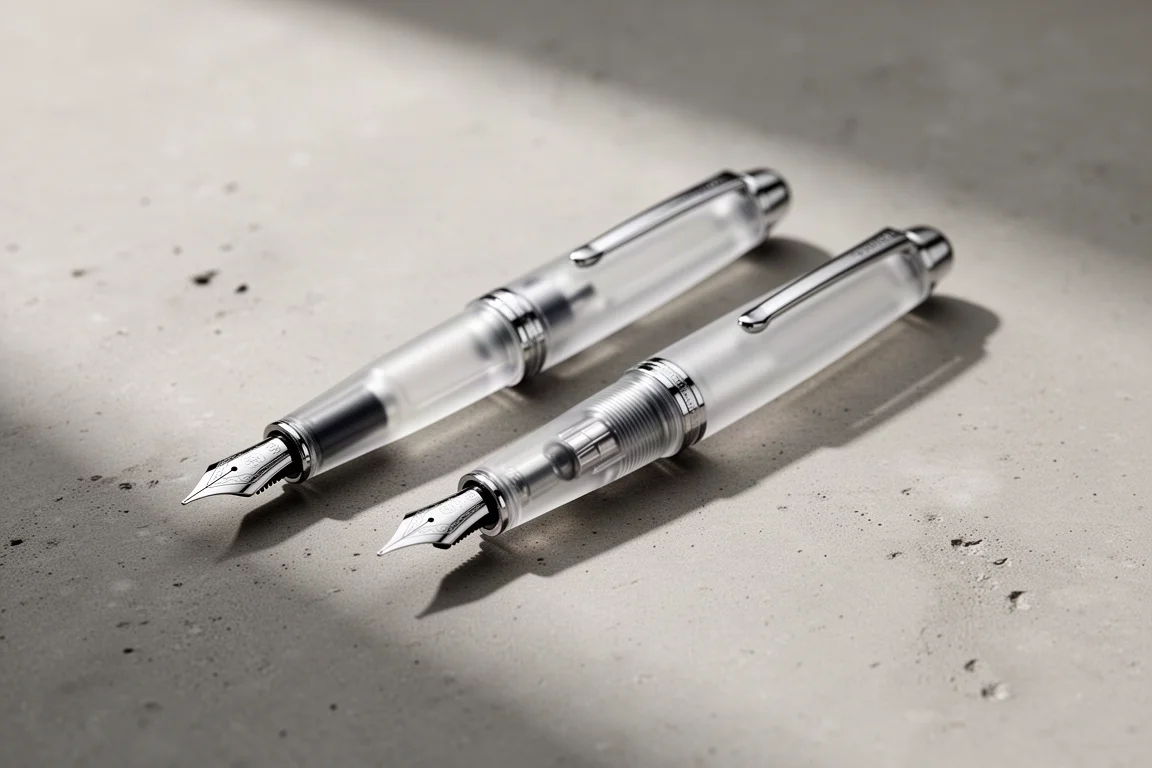
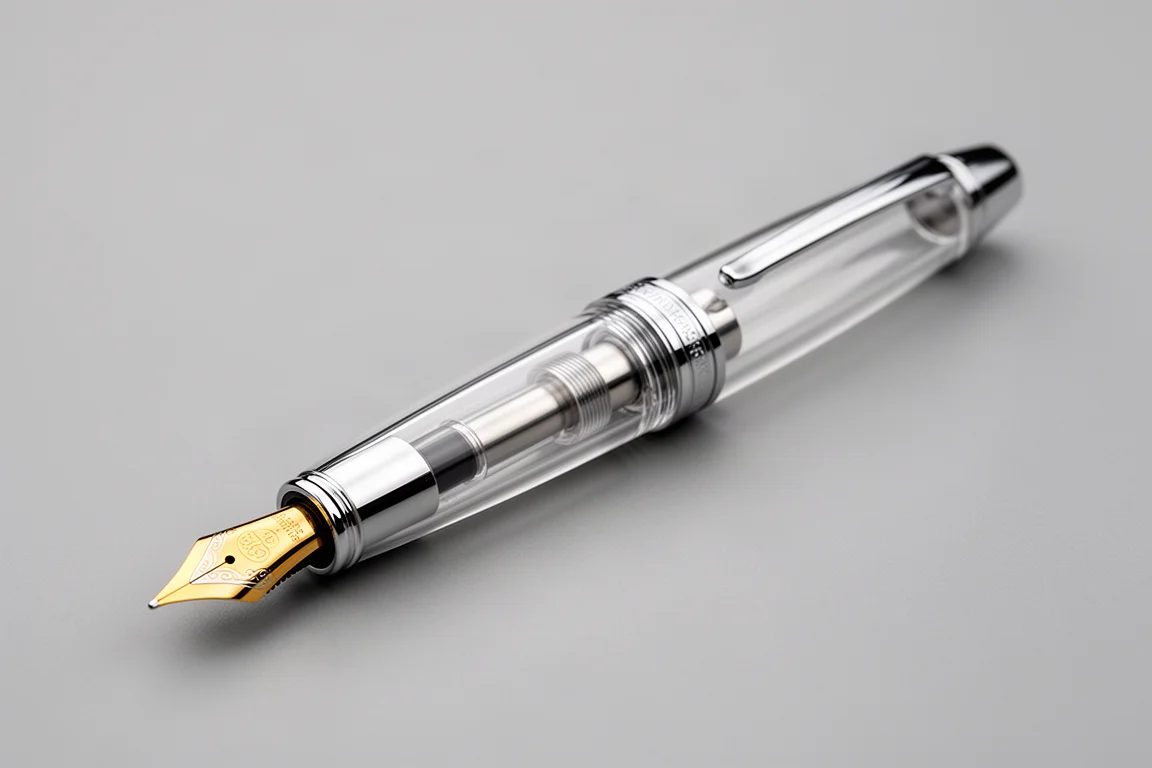
It is a full-size pen, noticeably longer than compact models, so it suits most hand sizes without posting. The demonstrator version shown here has rhodium trim and a translucent body, and the range has expanded well beyond the original blue, orange, clear, and black transparent colors. Buying directly from Japan also opens up solid-color versions with gold trim if a demonstrator is not your style.
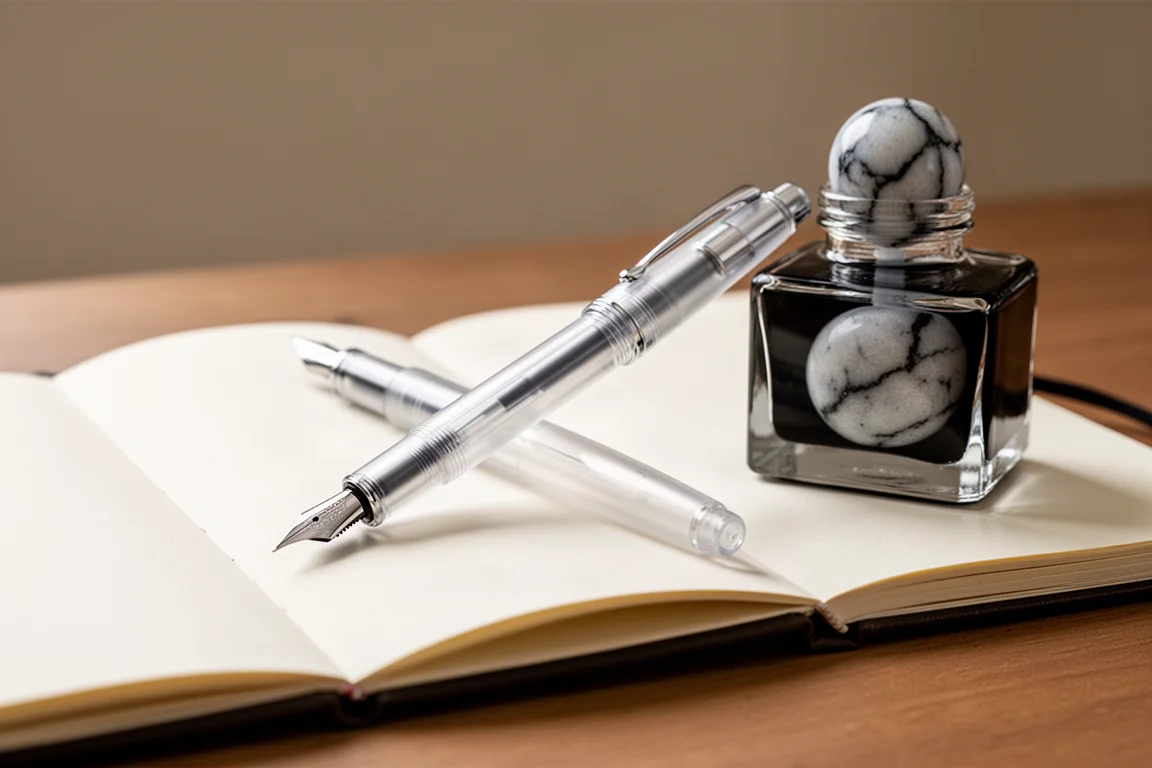
Construction is mostly plastic, but it is thick, substantial plastic that gives the pen a reassuring heft. The rhodium trim is surprisingly sparkly and clean, the clip is Pilot’s dependable ball clip, and the section, while on the smaller side, has a comfortable concave shape with no sharp step, so fingers rest naturally without slipping. One minor gripe: the section uses metal threads against the plastic barrel. Pilot mitigates this with a small O-ring under the threads that prevents over-tightening and cracking, which helps, but metal-on-plastic threads are worth knowing about before you buy.
The Nib: Soft, Wet, and Bouncy
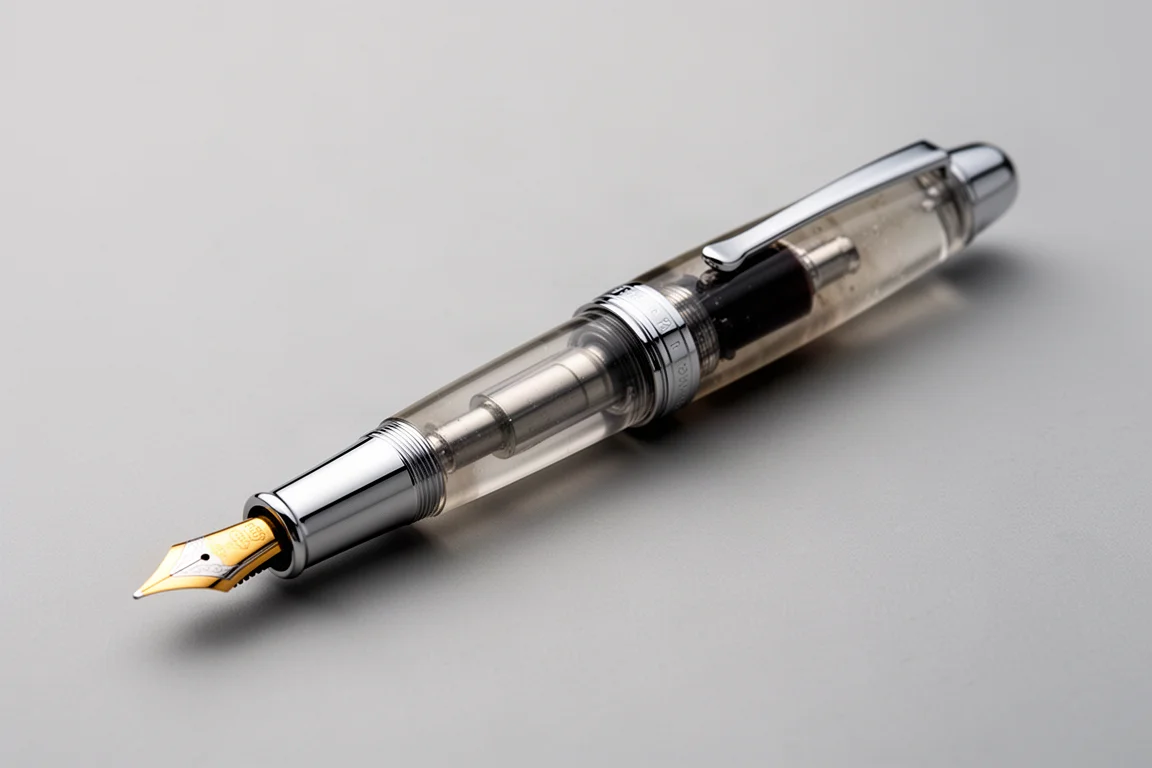
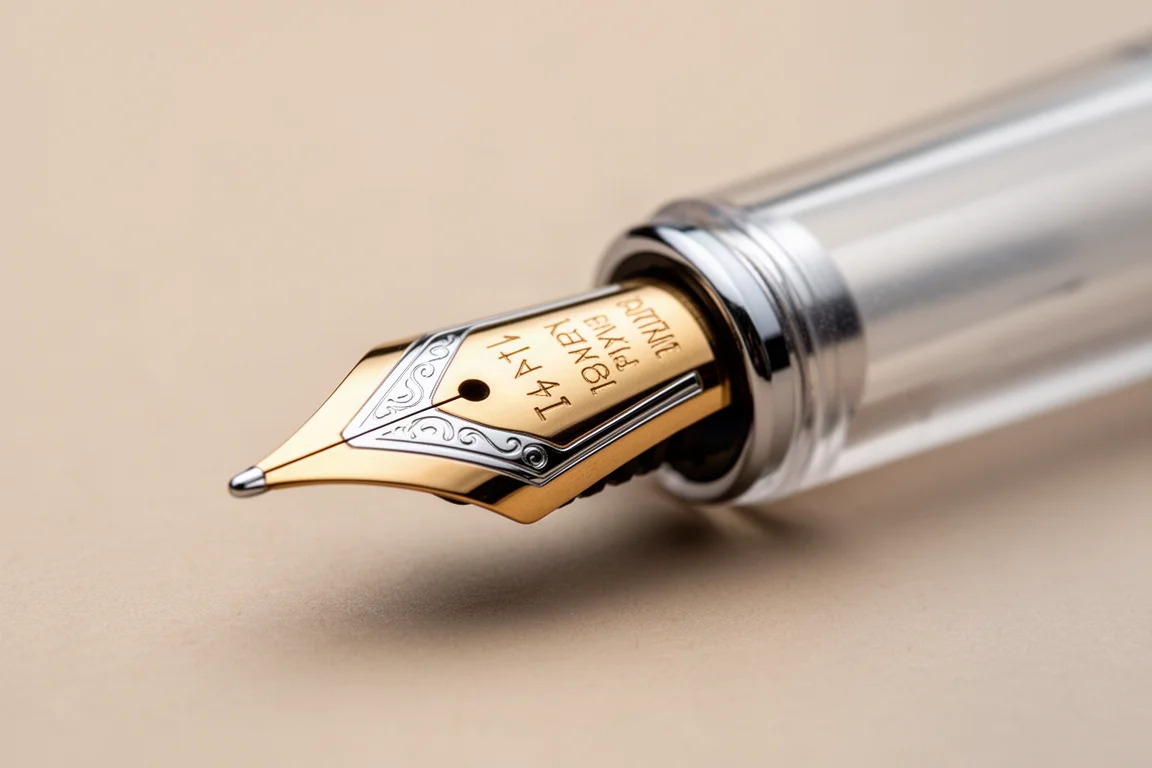
The Custom 74 uses Pilot’s number five 14 karat gold nib, marked 585 for its 58.5 percent gold content, with the size designation and production date stamped neatly alongside. It is a clean, pretty nib that photographs as well as it writes.
In use, the medium nib here is soft, wet, and slightly bouncy, with a shock-absorbing quality rather than true flex. Do not expect line variation from pressure; expect comfort instead. It is noticeably wetter and smoother than many other Japanese nibs, with very little feedback, while still running true to Japanese medium width. Shading inks show off beautifully through it, and it has proven itself a completely reliable writer with no skipping or starting issues.
Custom Heritage 92: The Piston-Fill Alternative
The Custom Heritage 92 is the Custom 74’s sibling. It uses a flat-top design, the same general nib and trim treatment, and a demonstrator body, but it fills via an integrated piston operated by a knob at the end of the barrel. For writers who prefer a self-contained filling system over a converter, this is the more elegant solution.
Interestingly, it can sometimes be found cheaper than expected; listings around $110 have appeared online, which arguably makes it the better value of the two when it shows up at that price. The Custom 74 counters with a wider range of colors and the included converter, so the choice really comes down to filling preference and availability.
Filling and Writing Experience
The Custom 74 ships with the excellent CON-70 converter, a vacuum-style filler: press the button quickly, release, and the resulting vacuum draws ink into the reservoir. The trick is in the rhythm, a fast press and fast release rather than repeated pumping, and it pulls nearly a full fill every time.
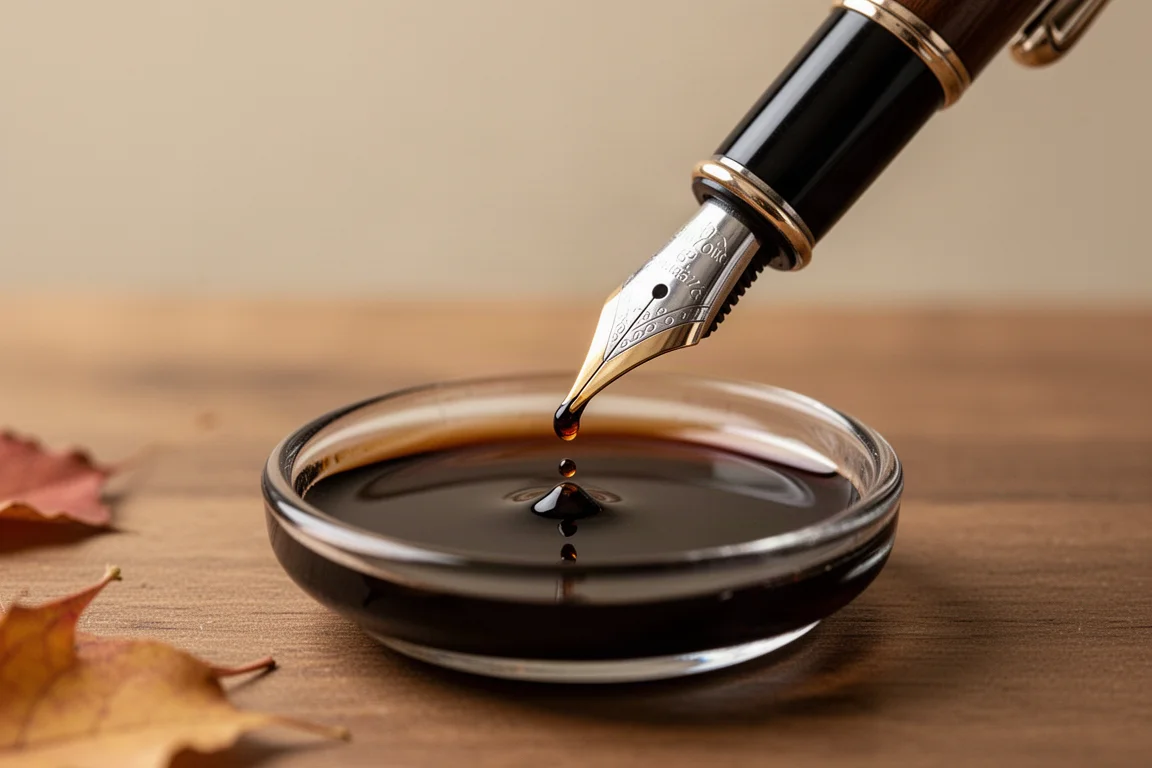
The CON-70 holds roughly a milliliter of ink, the best capacity of any converter most people will encounter, matching what Pilot’s own cartridges hold. It is a hefty unit that adds welcome weight to the all-plastic body, and at around $10.50 on its own in the US, including it in the box is a genuine value. It also fits other Pilot models like the Cocoono and Explorer, making it a useful upgrade path elsewhere in the lineup. On the page, the Custom 74 posts fine but does not need to; unposted it is plenty long and perfectly balanced, even with a full converter onboard.
Which One Should You Buy?
Choose the Custom 74 if you want the broadest color selection, the included CON-70 converter, and the classic rounded profile. Choose the Heritage 92 if piston filling appeals to you and you spot it at a favorable price. Both share the same nib character, so neither choice will disappoint on writing feel.
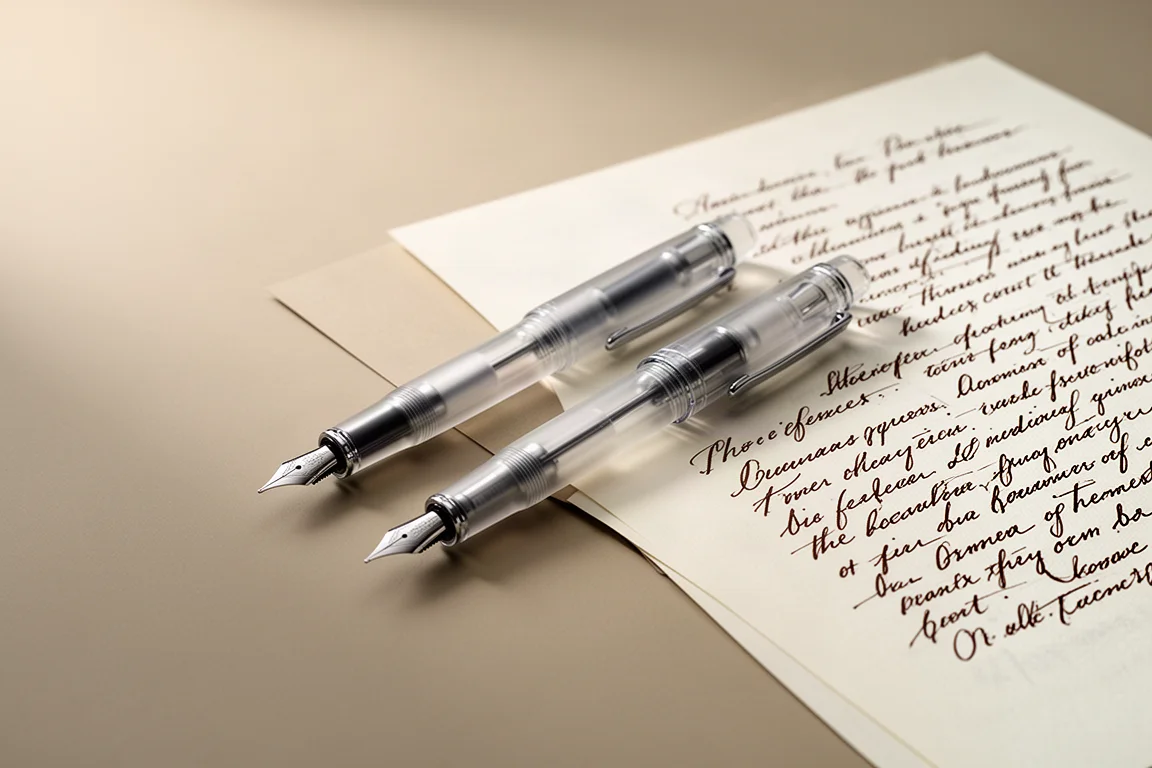
Whichever route you take, you are getting a reliable, comfortable writer that many owners keep returning to even after moving on to pens costing far more. That kind of staying power is the strongest endorsement a pen can get.
Conclusion
The Pilot Custom 74 remains one of the most sensible first gold nib fountain pens available, combining a soft, wet, reliable nib with the best converter in the business at a reasonable price. The Custom Heritage 92 covers the same ground with a piston-filling twist and can be the better deal when found at the right price. Either way, you end up with a pen that is easy to live with and hard to outgrow.
Further reading
Related Reviews
Fountain Pens
Best Budget Fountain Pens Tested: 9 Pens, One Clear Winner
A hands-on comparison of nine affordable fountain pens for everyday writing, calligraphy, and sketching, with a clear standout for flexible nib fans.
Fountain Pens
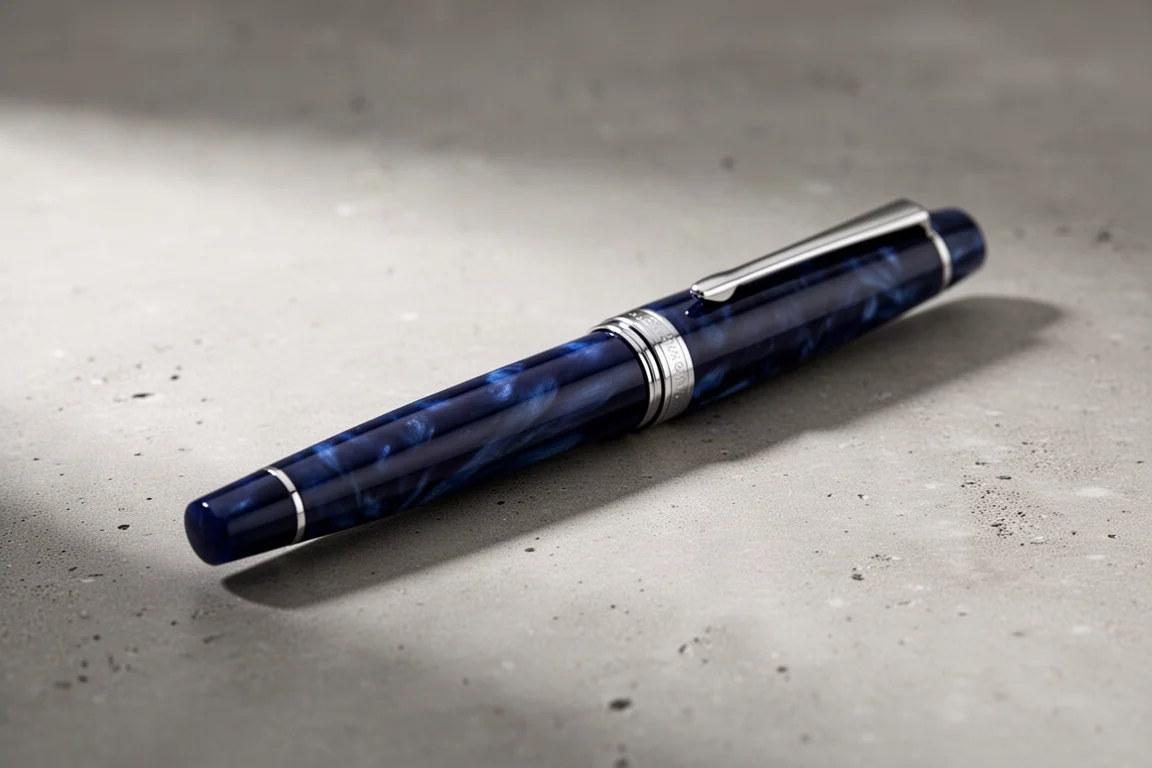
Aurora Optima Review: An Italian Piston Filler That Punches Above Its Price
A 14k gold nib, ebonite feed, and a beautifully deep oraloid body make the Aurora Optima one of the most rewarding piston fillers around.
Fountain Pens
Cross Bailey Light Review: The Entry-Level Fountain Pen Worth Keeping at the Office
A plastic-bodied Cross with a metal clip, snap cap, and famously smooth extra fine steel nib. Around $15, available almost everywhere, and easy to recommend.