Personal Care
Philips Sonicare 1100 (2026 Edition) Review: What Changed From the 2024 Model
The Philips Sonicare 1100 gets a user-replaceable battery, a textured handle, and a new brush head. Here is what actually changed and whether an upgrade is worth it.
Introduction
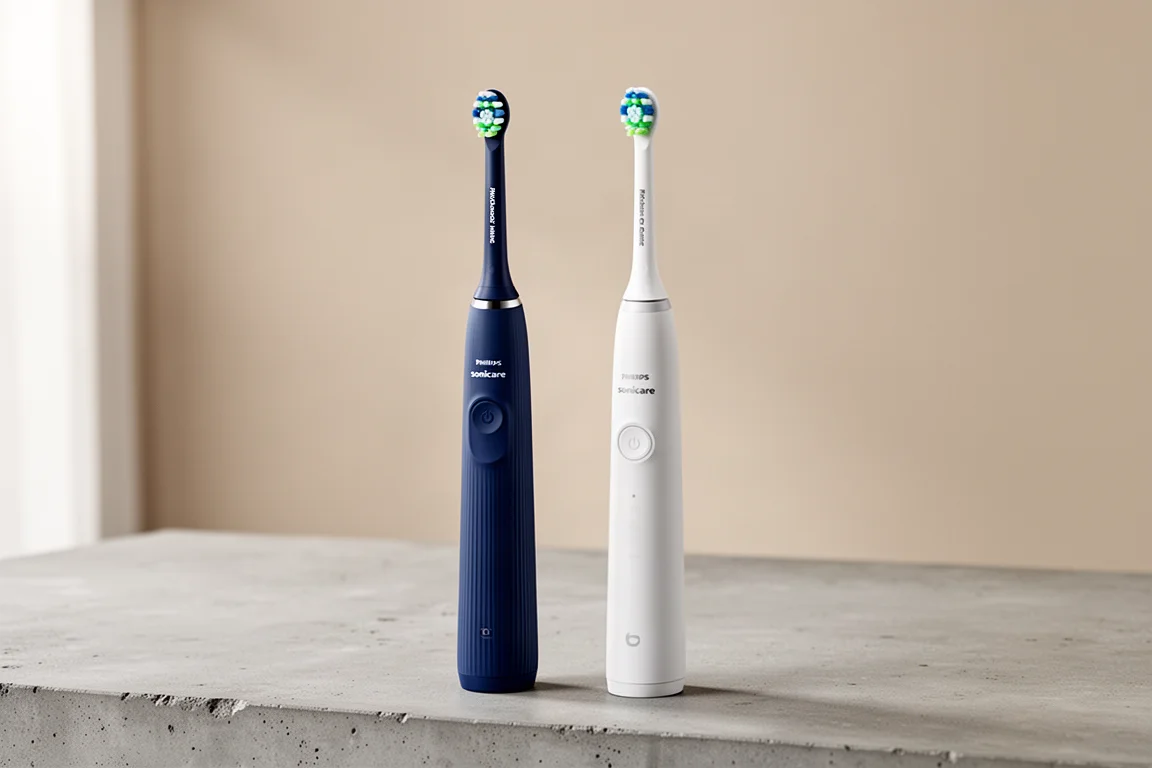
Philips has released a new version of its Sonicare 1100 electric toothbrush, and while the two models share the same name, there are some subtle differences that set the 2026 edition apart from the model that launched back in 2024. If you already own the earlier version, the most important thing to know is that there is no need to switch. Nothing about the newer model will fundamentally change or improve your overall experience. The motors used in the brush are the same, and the cleaning results are comparable.
That said, the 2026 edition does bring a few meaningful refinements. The most significant difference centers on the battery, but there are also changes to the charging setup, the handle design, and the included brush head. This review breaks down each change so you can decide which version makes more sense for your routine and budget.
Who This Product Is For
The Philips Sonicare 1100 is aimed at people who want a straightforward, no-frills electric toothbrush. It has a single cleaning mode, a 30-second pacer, and automatic power off after 2 minutes. There are no app integrations, no pressure sensors, and no multiple intensity levels to manage. If you prefer a simple brushing routine without extra features, this is a solid option.
The 2026 edition is particularly relevant if you care about sustainability and long-term product life. The user-replaceable battery and paper-based packaging make it a more environmentally conscious choice than many competing models. It is also a good pick for travelers, thanks to the compact charging cable that connects directly into the base of the brush.
Battery Life: A Bigger Difference Than Expected
The most significant difference between the two models is the battery. The newer 2026 variant has a user-replaceable battery. You should not need to replace it under normal use, but if you ever do, you can do so with tools available at home. This allows you to get more life from the handle and makes the brush a more sustainable product.
Both models are claimed to offer 14 days of battery life from the rechargeable lithium-ion cell. However, in hands-on testing, the 2026 variant achieved 52 days compared to 17 days for the 2024 version. That is a substantial real-world difference, even if the official claim remains the same. If you travel frequently or simply forget to charge your toothbrush, the longer battery life of the 2026 model is a genuine advantage.
Charging: Stand vs Cable
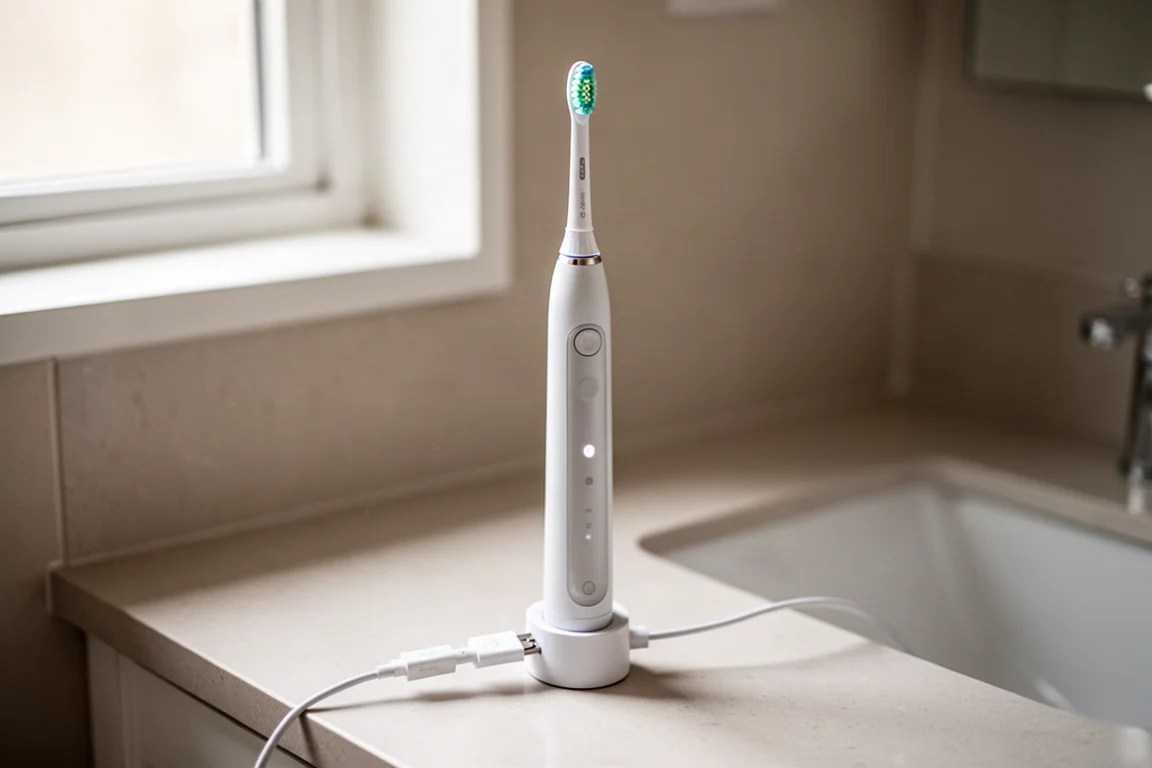
The charging setup is another area where the two models differ. The older 2024 variant has a USB charging stand that the brush sits on. The 2026 model, by contrast, uses a proprietary USB charging cable that connects into the base of the brush.
This is largely a matter of personal preference. In some ways, the cable is better for travelers because it takes up less space and can be packed flat. However, most people will probably prefer the stand, since it keeps the brush upright and doubles as a storage spot between uses. If you already have a bathroom setup built around a charging stand, the 2026 model may require a small adjustment.
Handle Design: A Subtle Grip Improvement
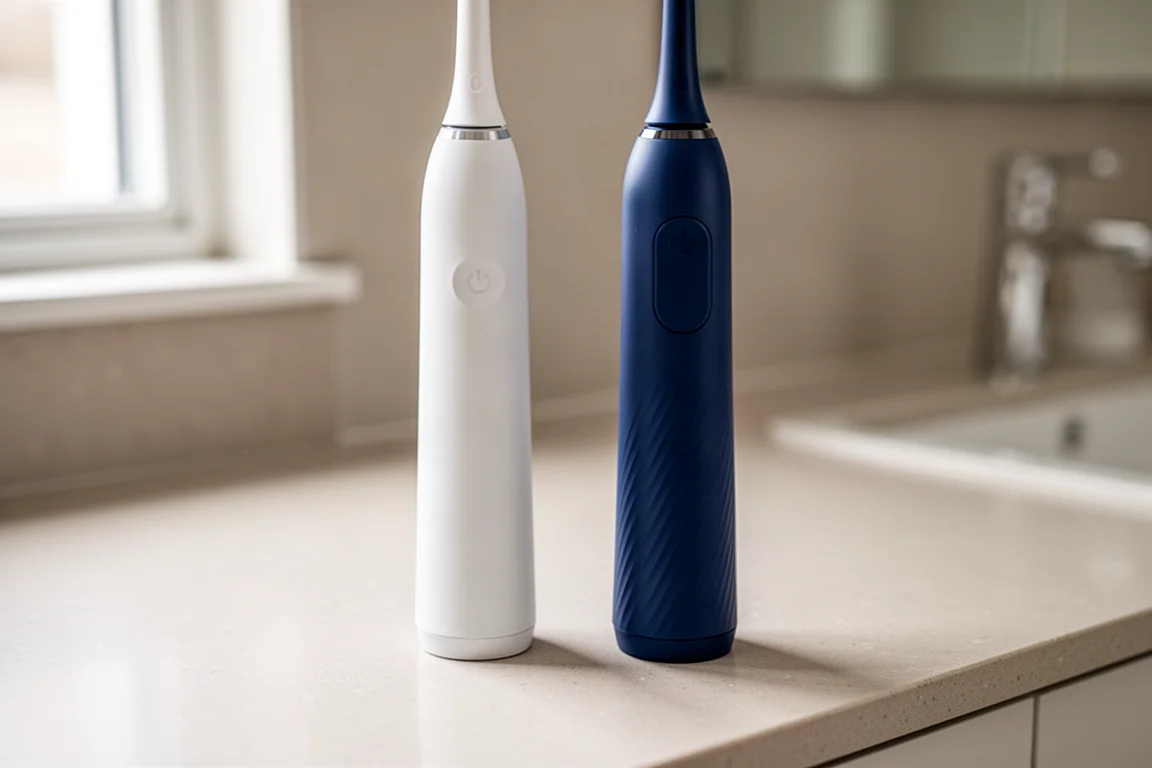
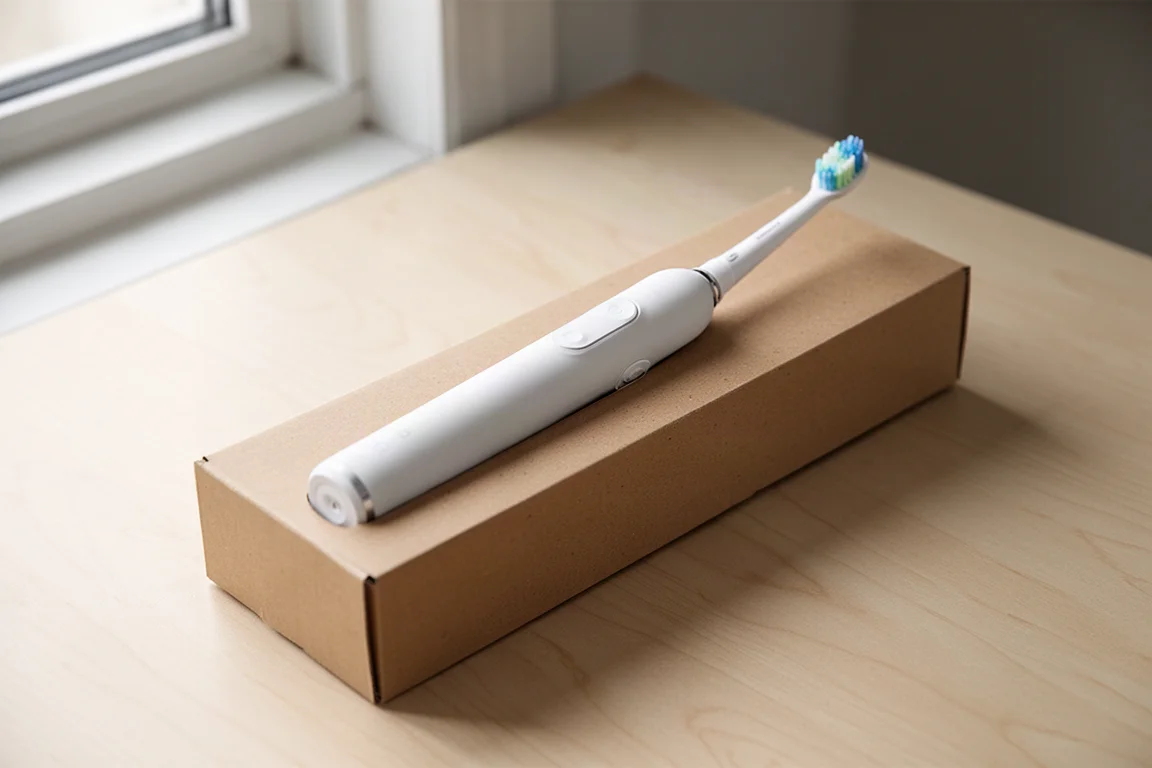
Something you may also notice is the handle design. On the newer 1100 series, there are a series of raised lines or ridges in the plastic body that give a texture to the handle and provide additional grip. This is a positive improvement over the previous edition, which was smooth to the touch.
The ridges are not perfectly vertical. They run at a slight angle to give a consistent, slightly twisted effect. The design looks intentional and modern, and it does not make the brush any harder to clean or use. If you brush with wet hands or prefer a more secure hold, this is a welcome change.
Brush Head: InterCare vs C1 Pro Results
Both models have one cleaning mode, a 30-second pacer, and automatic power off after 2 minutes. The new 1100 series typically comes supplied with one brush head, like the 2024 variant, but rather than the C1 Pro Results head, it now comes with the newer InterCare option.
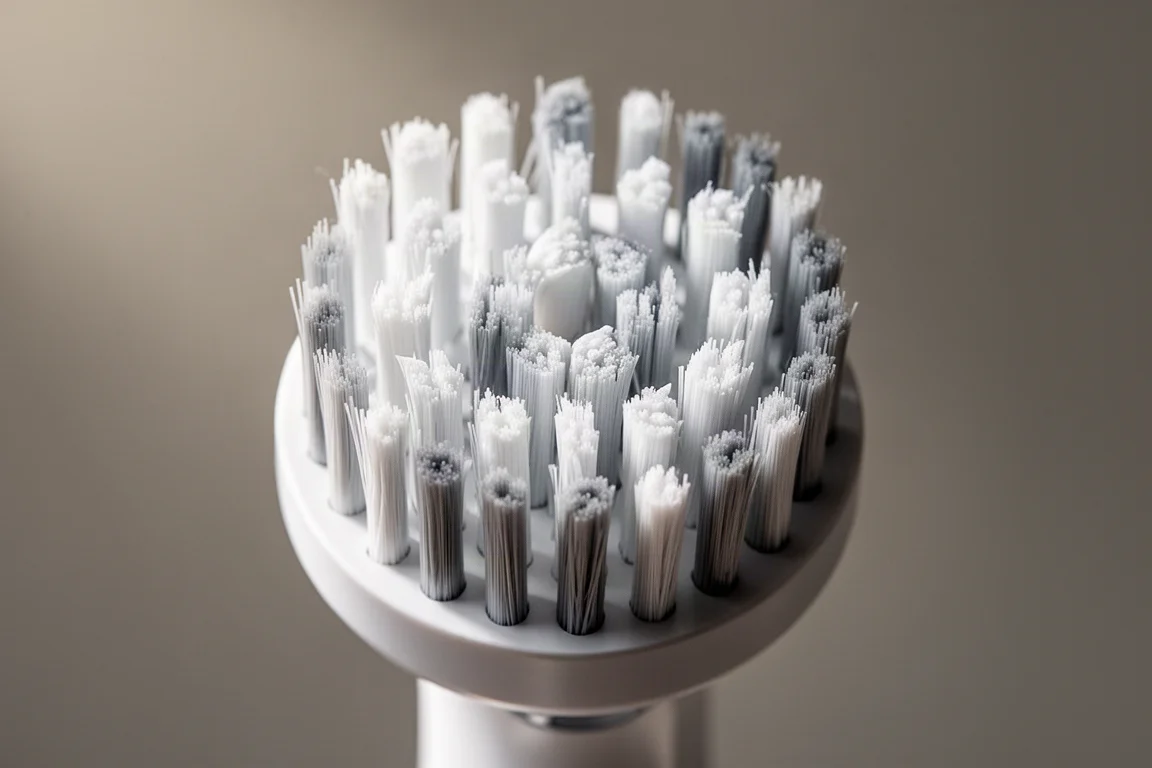
The InterCare head has a new bristle design compared to the previous version of this head. Elongated bristle clusters help reach and clean deeper between the teeth. Unlike some other brush head styles, the bristles are no longer anchored into the plastic body of the head with staples. This means a safer brushing experience with denser bristles for a better in-mouth experience.
In practice, the cleaning results are good, and the longer bristles do help between the teeth. They are not a replacement for regular flossing, though. You should also be aware that you can buy and fit InterCare heads to any Sonicare handle with a push-on and pull-off style attachment. Other styles of head can also be fitted to the 1100 handle, so you are not locked into a single brush head format.
Sustainability and Packaging
Additional sustainable approaches have been embraced by Philips. All the packaging is now paper-based rather than using protective plastic, and the brush heads are now made using 70% biobased plastic. These changes reduce the environmental footprint of the product without affecting performance.
If sustainability is a priority for you, the 2026 edition is clearly the better choice. The combination of a user-replaceable battery, paper-based packaging, and biobased brush head plastic makes it a more responsible purchase than the 2024 model.
Buying Advice
There are a few different configurations of the 1100 series, as is often the case with Sonicare toothbrushes. While the core handle technology and design remain the same, the colors and box contents differ. There are three main handle colors: marine blue is a new option in addition to the white and black. The 2024 version came in white only.
The retail price at the time of writing is £50 for the 2026 edition, compared to £60 for the 2024 edition. Typical selling prices tend to be half of retail, so the two models are fairly comparable in terms of value for money. To help you tell the difference between them, the 2024 version typically has a model number starting with HX36, whereas the 2026 version starts with HX39.
If you already own the 2024 model, there is no compelling reason to upgrade. The cleaning performance is essentially the same, and the differences are mostly about convenience and sustainability. If you are buying your first Sonicare 1100 or replacing an older brush, the 2026 edition offers better battery life, a replaceable battery, and a more sustainable design for a slightly lower retail price.
Conclusion
The Philips Sonicare 1100 (2026 Edition) is a thoughtful refinement of an already solid budget electric toothbrush. The user-replaceable battery, longer real-world battery life, textured handle, and more sustainable packaging all add value without complicating the brushing experience. The charging cable instead of a stand is a minor trade-off, but it is unlikely to be a dealbreaker for most people.
For new buyers, the 2026 edition is the better pick. For existing 2024 owners, there is no urgent reason to upgrade. Either way, the Sonicare 1100 remains a dependable, straightforward choice for anyone who wants a simple electric toothbrush that gets the job done.
Product link
View more details for Philips Sonicare 1100
This product is mentioned in the review. Check the specifications, options, and compatibility before buying.
View more details for Philips Sonicare 1100Further reading
Related Reviews
Personal Care
Best Electric Razors for Women: Five Options for Every Budget and Need
A practical guide to five electric razors for women, from budget-friendly travel models to premium all-in-one epilators, with clear strengths and best-use cases.
Personal Care
Braun Series 6 SensoFlex Review: A Mid-Range Electric Shaver Worth Considering
The Braun Series 6 SensoFlex offers a comfortable, capable shave at a mid-range price. We review its design, features, performance, and who it suits best.
Oral Care
AI Electric Toothbrushes: What the Technology Really Does
A practical look at AI-enabled electric toothbrushes, what the sensors and apps actually track, and whether the extra cost is worth it.