Backpacking Tents
Perea Arches One-Person Tent Review: A Roomy Double-Wall Trekking Pole Shelter for $140
The Perea Arches is a two-door, two-vestibule trekking pole shelter with a rectangular floor, a double-wall design, and a $140 price that undercuts most ultralight alternatives.
Introduction
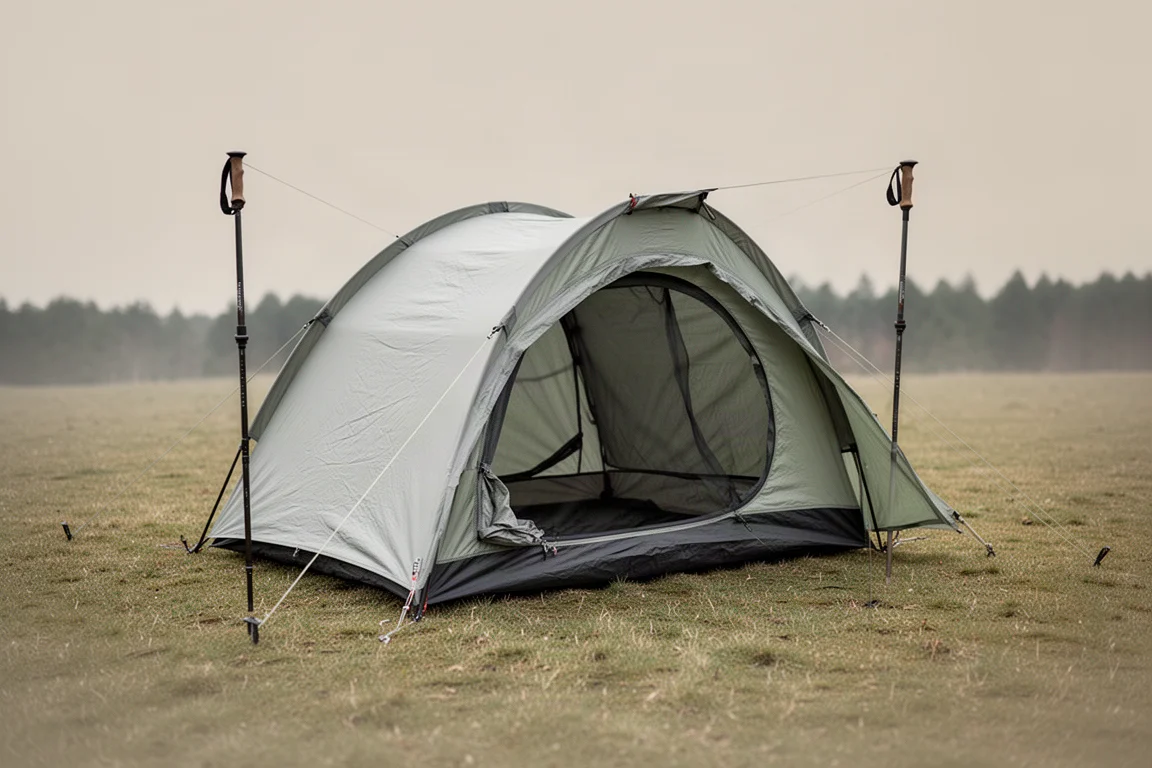
The Perea Arches is a one-person, double-wall trekking pole shelter built for three-season backpacking. It needs two trekking poles to stand, ships with a matching footprint, and weighed 3 pounds 1 ounce on a scale, which lines up closely with the 3 pounds 2 ounce figure Perea lists with the footprint in place.
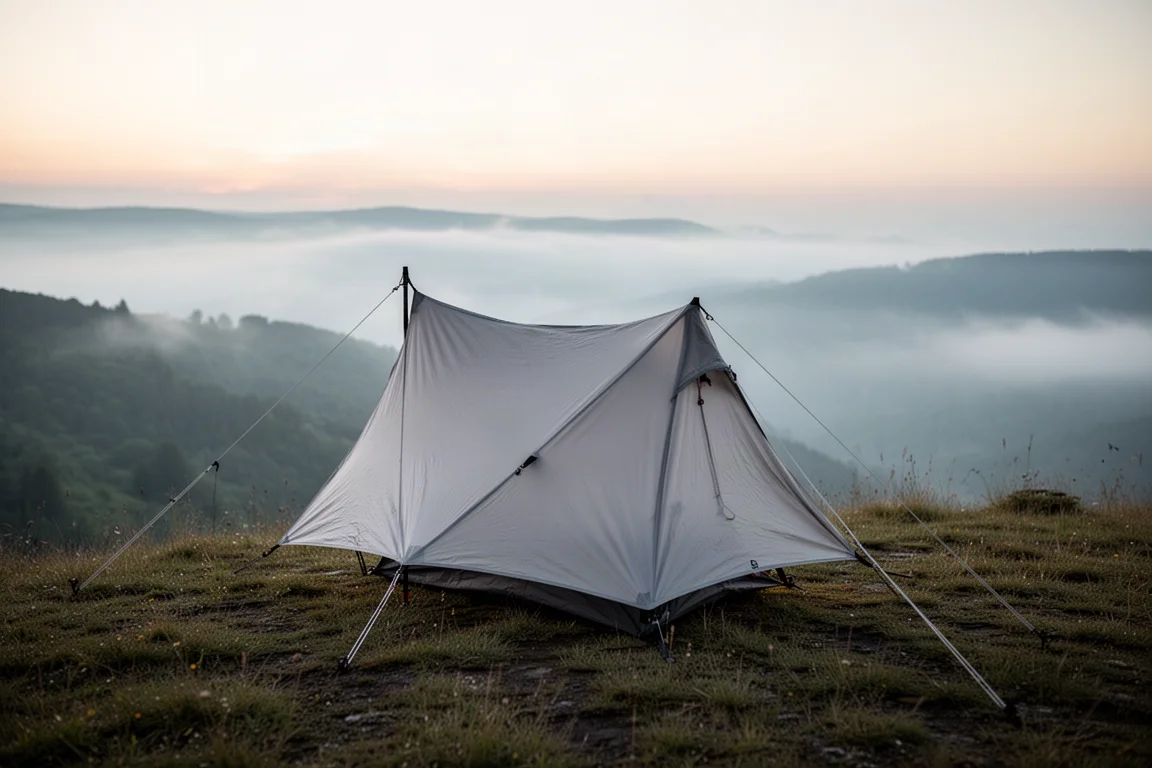
At $140, the Arches sits in a price bracket where most shelters force a choice between interior space and cost. Perea’s answer is a rectangular floor, two doors, and two vestibules, a combination that is genuinely uncommon on a one-person shelter.
The design follows a familiar trekking pole formula rather than reinventing it, so the useful questions are about execution: how it pitches, how it lives on a trip, and what you trade away in weight to get the extra room.
Who this product is for
The Arches makes the most sense for three-season backpackers and summer campers who already carry trekking poles and want a roomy one-person shelter without moving up to a two-person tent. The 36-inch floor width and the two-door layout are the whole point here, and they are the reason this shelter feels bigger than its category suggests.
It also suits anyone who wants to save weight without spending hundreds of dollars. Perea positions the Arches as a budget-friendly route into trekking pole shelters, and the $140 price reflects that intent more than any pursuit of the lowest possible gram count.
If your priority is the lightest shelter you can buy, this is not the tent for you. If your priority is space, ventilation, and a low price, it is worth a close look.
Main strengths
The floor is the headline. The Arches measures 90 inches long and 36 inches wide, and it stays rectangular from the head end to the foot end, so the width holds up along the entire sleeping area instead of tapering away. That consistency is what makes a one-person shelter feel comfortable rather than merely adequate.
Two doors and two vestibules are the second big advantage. Each side gives you a covered area for cooking, sorting gear, or storing a pack, and having an exit on either side means you are not climbing over your own equipment in the dark.
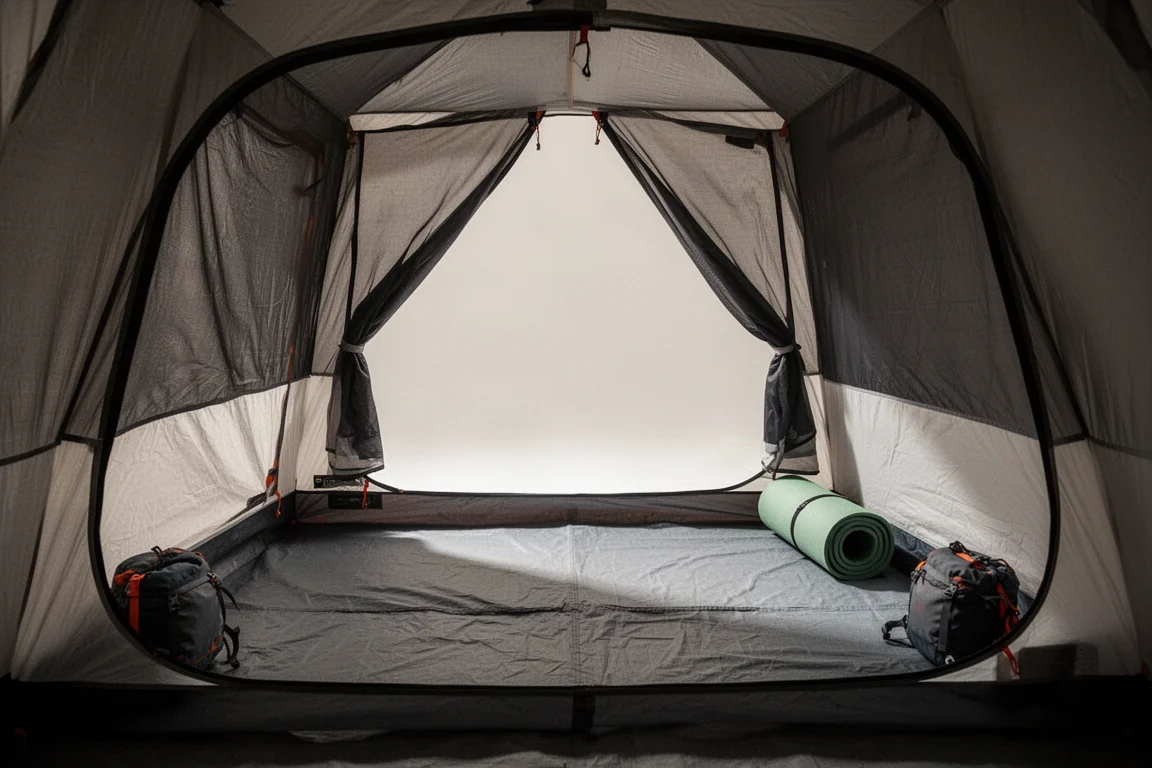
The double-wall construction adds real flexibility. You can pitch the rainfly on its own, set up the mesh inner on its own, or run the full shelter together. That modularity is a meaningful advantage over single-wall designs, especially when the weather is settled and you want maximum airflow.
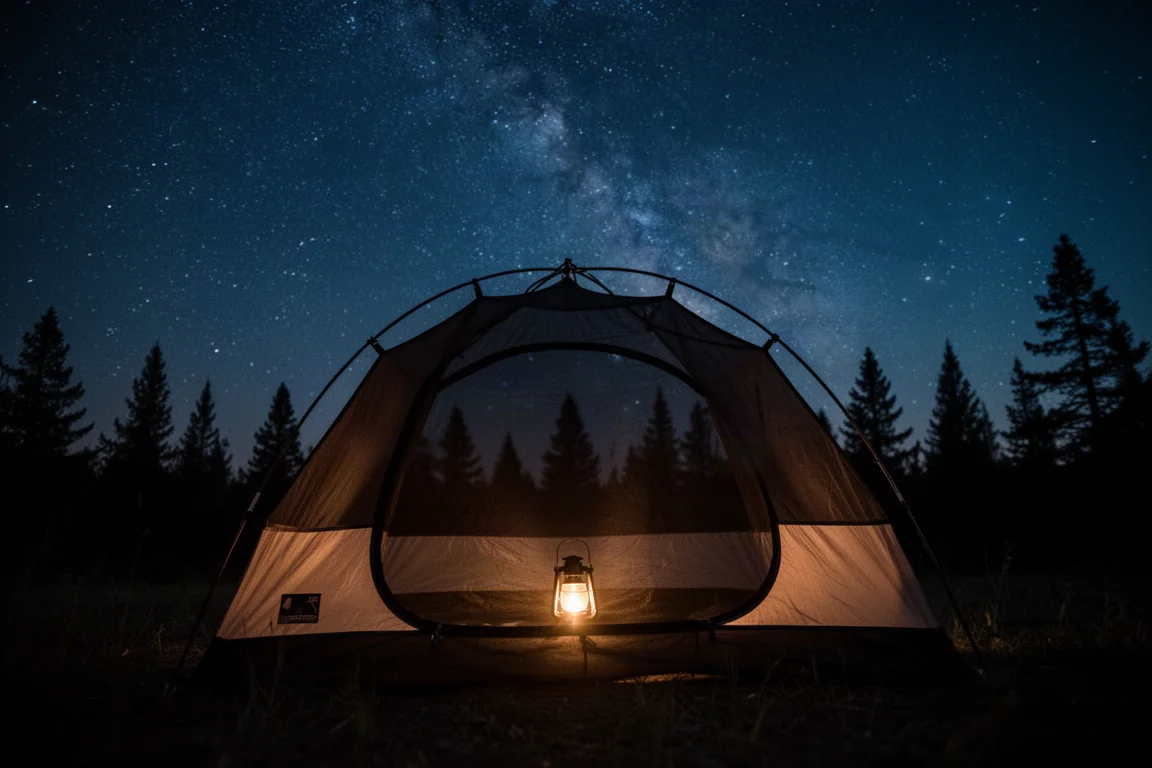
Ventilation is generous. There is a lot of mesh in the inner, which makes this a comfortable shelter for warm summer nights when bugs are the main concern and rain is not. Hooks at the head and foot ends attach to the guy-out points and pull the mesh away from your body, which adds usable space where it matters most.
Interior space and layout
Sitting up inside the Arches is easy. With trekking poles set at 125 centimeters there is plenty of clearance above your head, and the peak height can be adjusted by raising or lowering the poles to suit the pitch you want.
Lying down, your head and feet sit fairly close to the end walls, but the pull-out hooks at each end do open up the space around you. Combined with the 36-inch width, the result is a one-person shelter you can move around in rather than one you simply occupy.
The storage pockets are the least impressive detail. They sit on the corner rather than on the mesh, which is a less practical placement, so most gear ends up on the floor or in one of the two vestibules. For a shelter at this price, it is a minor complaint rather than a dealbreaker.
Things to consider before buying
Weight is the clearest trade-off. At 3 pounds 1 ounce on a scale, the Arches is not the lightest option on the market, and Perea does not market it as such. The two doors, two vestibules, wide rectangular floor, and included footprint all add grams, and you are choosing space and price over minimum weight.
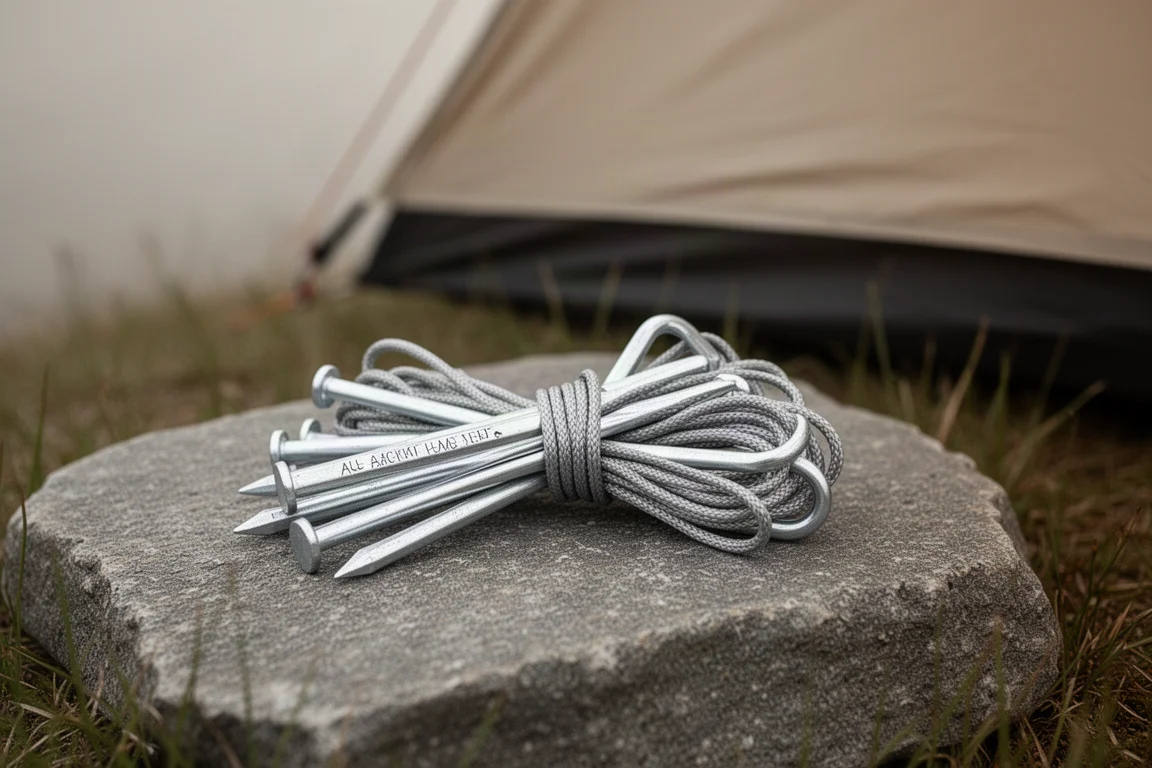
The included stakes are basic. They are on the heavy side and bend easily, so many buyers will want to replace them with something more durable, such as mini groundhogs or full-size groundhogs, and factor that small cost into the purchase.
Setup has a learning curve. The first pitch involves working out how the trekking poles seat into the loops at the top and how everything lines up with the stakeout points, and that took a few minutes to sort out even with plenty of experience pitching different shelter styles. Non-freestanding trekking pole shelters always take practice, and this one is no exception.
Setup and pitch notes
Pole height matters more than you might expect. Around 125 centimeters is the sensible starting point, and 130 centimeters works if you can manage it, though you can pitch higher or lower depending on the conditions and the shape you want.
The shelter includes extra-long guy-out lines, which makes it easy to pitch in less than ideal ground. You can rig it between trees or wrap the cord over the tops of the trekking poles, and the opposing doors on either side keep entry and exit simple no matter how you set it up.
Leave the rainfly off and the Arches becomes an open, well-ventilated mesh shelter, which is a genuinely pleasant way to sleep on a clear summer night.
Buying advice
At $140 for the one-person version, with the two-person version costing roughly $10 more, the Arches undercuts most double-wall trekking pole shelters while keeping two doors, two vestibules, and a footprint in the package. For a shelter under $200, that combination is hard to argue with.
Skip it if minimum pack weight is your main goal, or if you dislike fiddly pitches and want something that goes up without thought. Buy it if you want a roomy, well-ventilated three-season shelter and you would rather spend your money on trips than on titanium.
Budget a little extra for replacement stakes, and give yourself a calm afternoon for the first pitch so the learning curve stays a one-time cost.
Conclusion
The Perea Arches is not a revolutionary design, and it does not pretend to be. What it offers is a roomy 90 by 36 inch rectangular floor, two doors, two vestibules, a double-wall build you can pitch in three different configurations, and a footprint in the box, all for $140. The weight and the basic stakes are the honest compromises, and the first setup takes some figuring out.
For three-season backpackers who want more space and better ventilation without spending hundreds of dollars, the Arches earns its price. If you are chasing the lightest possible shelter, look elsewhere.
Product link
View more details for Perea Arches One-Person Tent
This product is mentioned in the review. Check the specifications, options, and compatibility before buying.
View more details for Perea Arches One-Person TentFurther reading
Related Reviews
Backpacking Tents
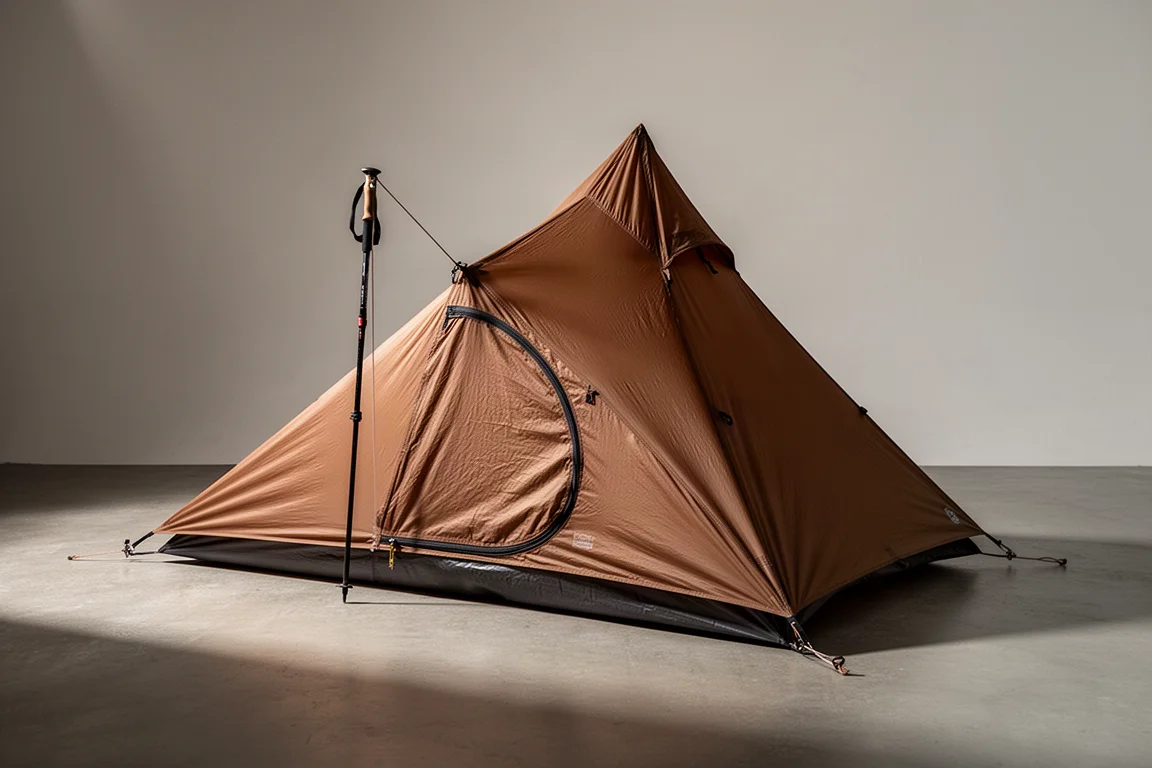
3F UL Lanchan Pro 1 Review: A 1 lb 8 oz Single-Wall Trekking Pole Tent
A practical look at the 3F UL Lanchan Pro 1, a single-wall trekking pole shelter with a 1 lb 8 oz weight, 20D silnylon fabrics, and a roomy 90 x 31 x 49 inch interior.
Backpacking Tents
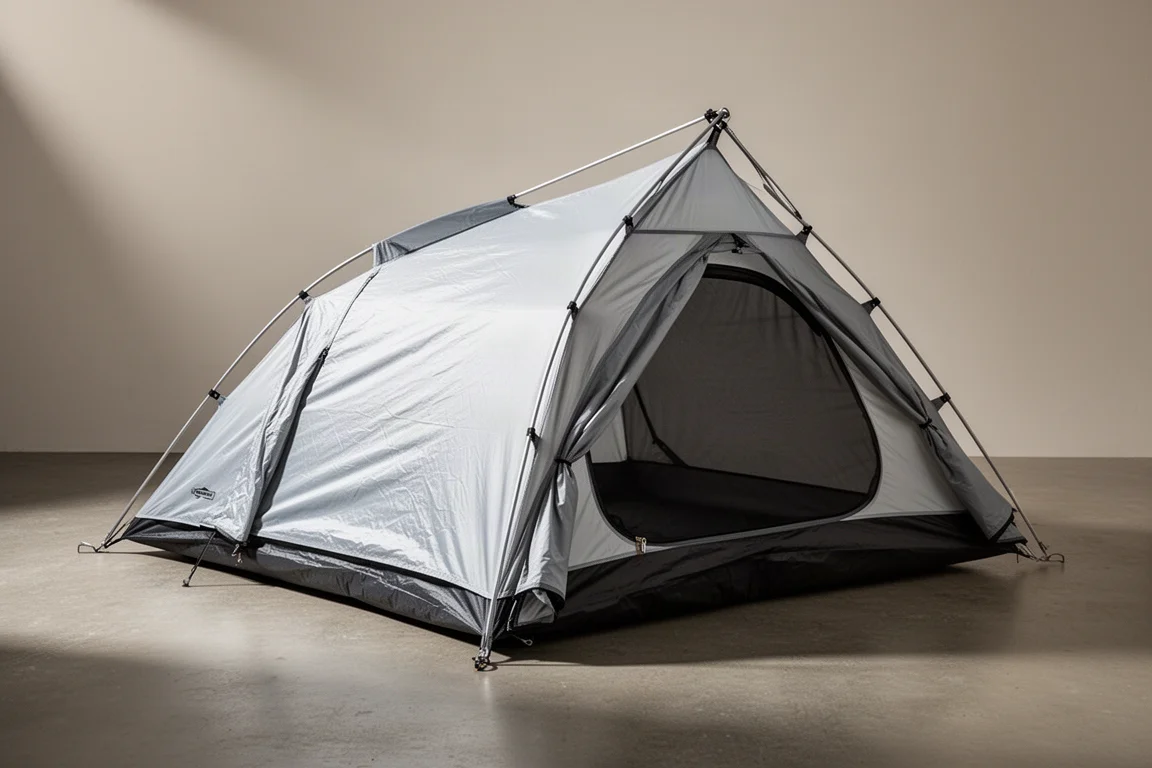
3F UL Taiji 2-Person Tent: A Convertible Backpacking Shelter Worth a Closer Look
A practical look at the 3F UL Taiji two-person tent, covering its materials, true two-person interior, fly-first pitching, and the seasonal inner swap that lets one shelter cover more of the year.
Backpacking Tents
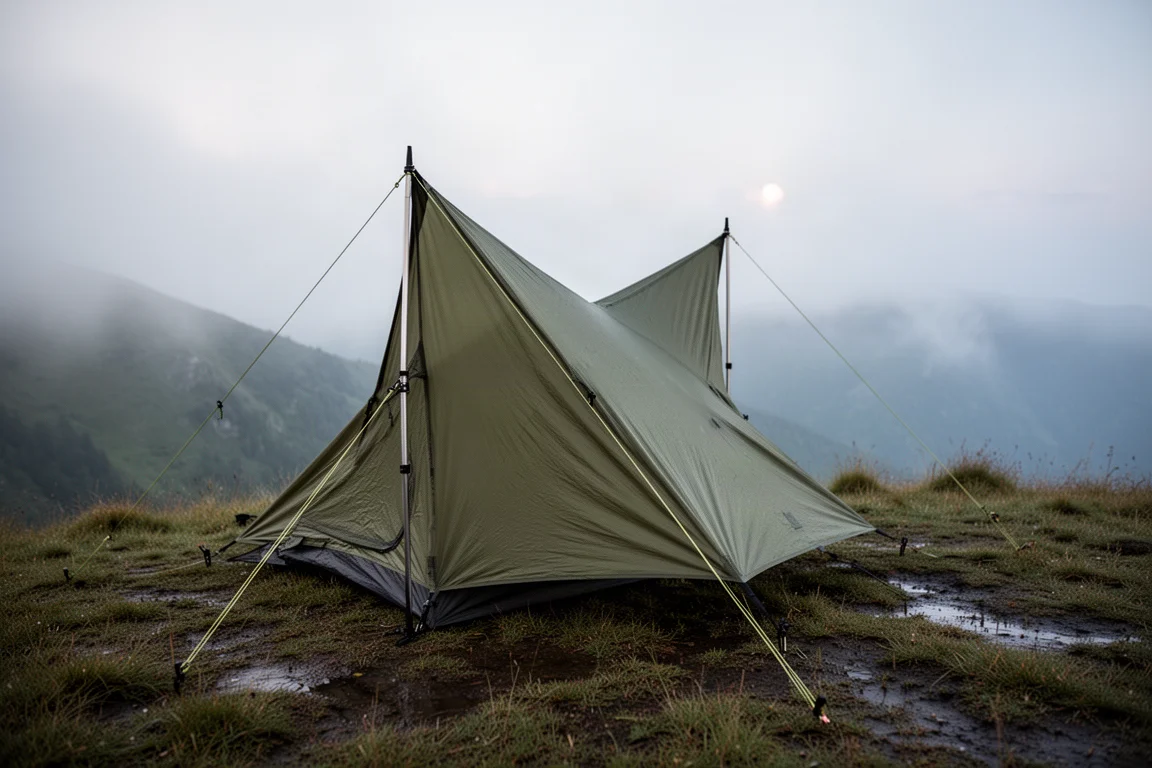
3FUL Lanshan Twoerson Pro Review: A Light Trekking Pole Shelter That Struggled in Rain
A two-person trekking pole shelter with a 2026 redesign, pitched with sticks and put through a night of steady rain. Here is what worked, what did not, and what to check before buying.