Backpacking Tents
Perea Arches 1-Person Tent Review: A Double-Wall Trekking Pole Shelter for Around $140
A roomy, double-wall trekking pole shelter with two doors, two vestibules, and an included footprint, plus the setup quirks and weight trade-offs to weigh before buying.
Introduction
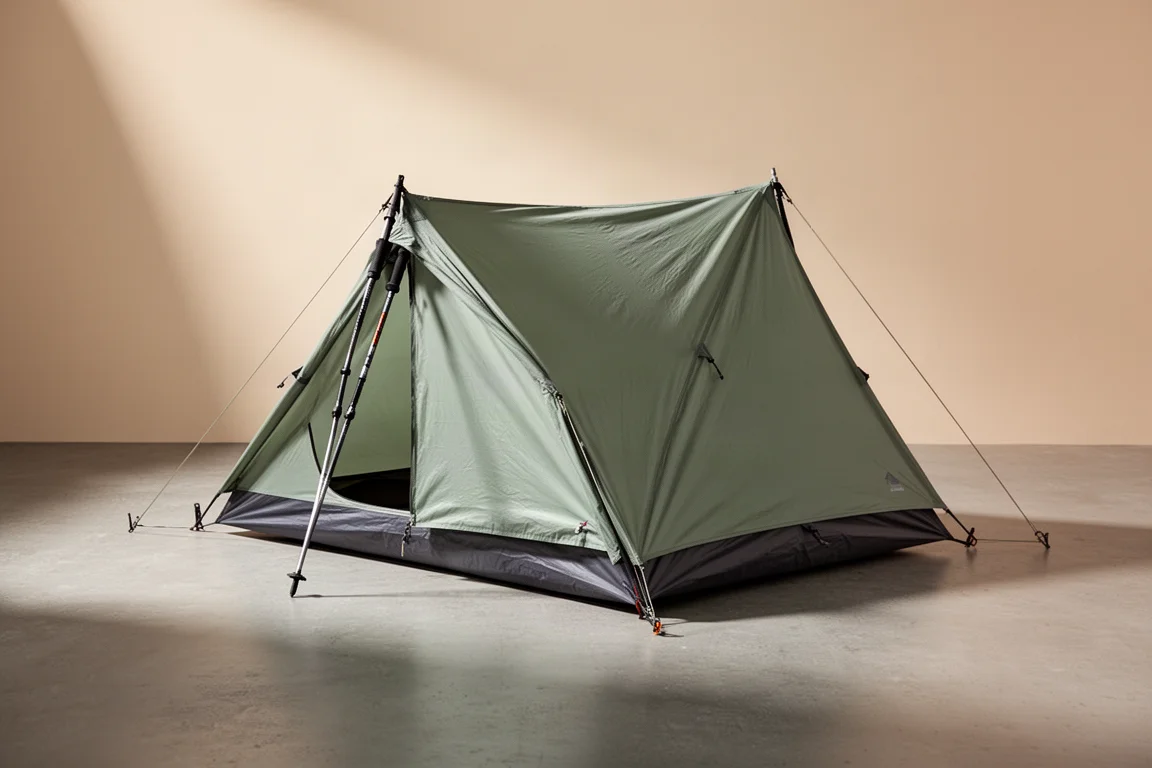
The Perea Arches 1-person tent is a double-wall trekking pole shelter that comes in at 3 pounds 1 ounce on a home scale, with Perea listing 3 pounds 2 ounces, and it ships with a footprint included. It needs two trekking poles to stand, so it is aimed at hikers who already carry them rather than campers who want a freestanding tent.
At $140 for the one-person version, and roughly $10 more for the two-person version, the Arches sits in a price bracket where most shelters either drop the double-wall construction, cut the door count, or ask for several hundred dollars more. The result is not the lightest option on the market, and Perea does not appear to be chasing that title. What it offers instead is a genuinely roomy one-person interior with a modular design at a price that stays under $200.
Who the Arches 1P Is For
Three-season backpackers, summer campers, and anyone who wants a roomy one-person shelter without spending hundreds and hundreds of dollars fit this tent’s brief. Because it is a non-freestanding trekking pole shelter, it suits hikers who already walk with poles and who are comfortable pitching on ground that accepts stakes.
It is also a reasonable choice for campers who value interior space over the lowest possible pack weight. The 36-inch width and 90-inch length give it a footprint that feels closer to a small two-person tent than a typical one-person shelter, which matters on longer trips when you want room to sit up, spread out gear, and change clothes without a fight.
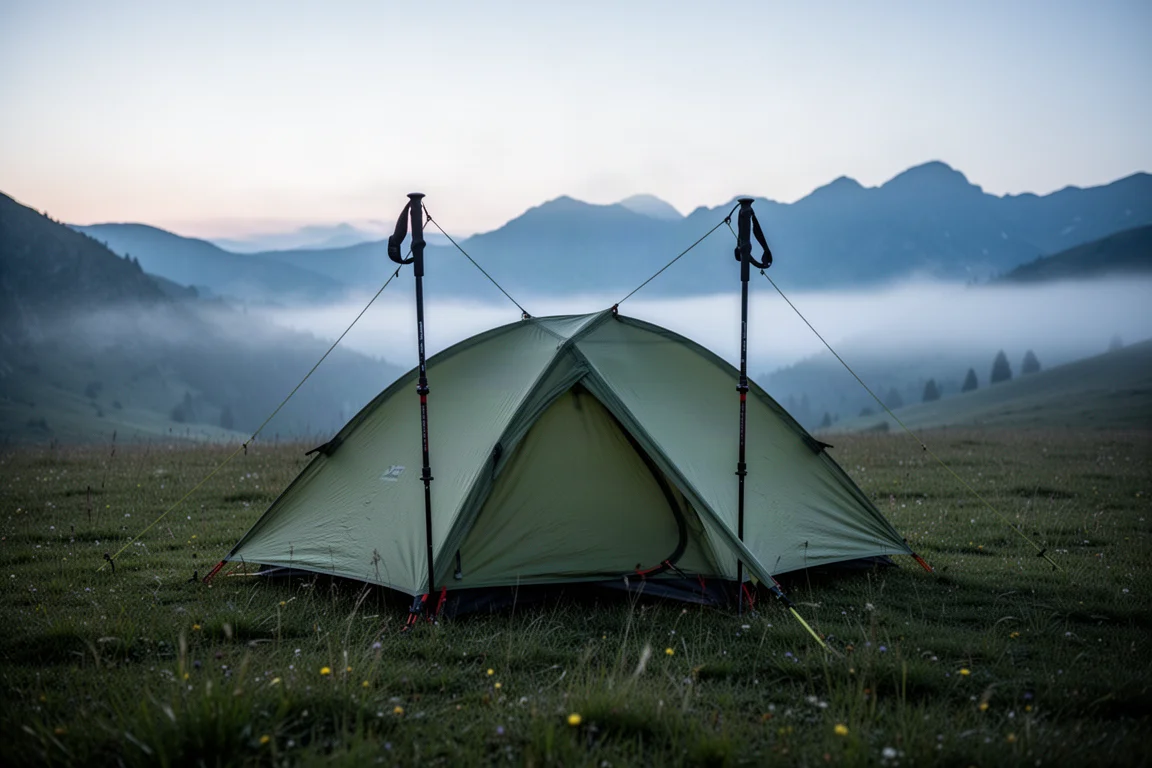
Two doors and two vestibules push it further in that direction: there is a dedicated entry and a gear storage area on each side, which is unusual on a one-person shelter and makes a real difference when you are cooking, sorting a pack, or getting in and out after dark.
Design and Setup Notes
The Arches follows a well-established trekking pole shelter concept rather than reinventing it: two poles at either end, a ridge running between them, and a double-wall body with a separate rainfly and mesh inner. Several other shelters share this general layout, and the differences here come down to details rather than architecture.
Setup takes some figuring out. Pole tips need to seat correctly in the loops at the top, and the stakeout points need to be tensioned in the right order to get a clean pitch. With the poles set at 125 centimeters the shelter pitched well, and going up to 130 centimeters adds a little more headroom when the ground allows. As with any non-freestanding shelter, expect a learning curve on the first few pitches and a faster process once the sequence becomes familiar.
Main Strengths
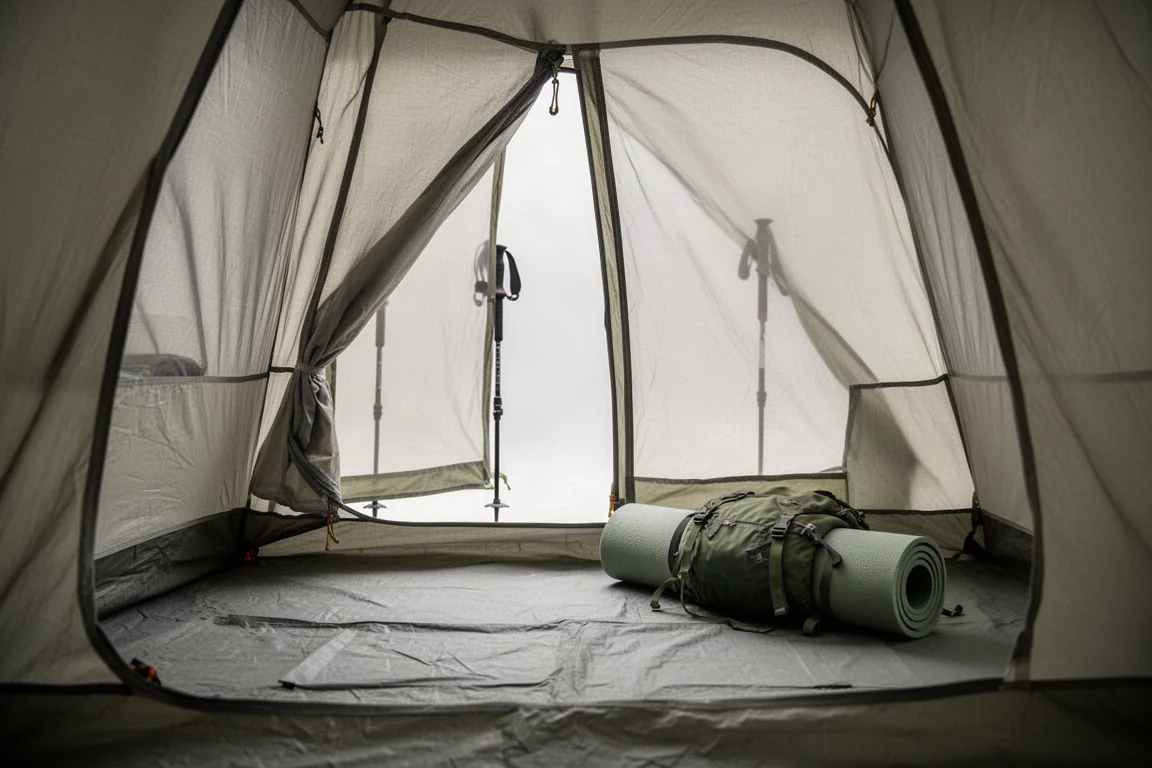
Interior space is the headline. The tent measures 90 inches long and 36 inches wide with a rectangular floorplan that holds its width from the head end to the foot end, so there is no taper to work around. Headroom is generous for the class, and even with the poles at 125 centimeters there is clear space above a seated occupant.
Hooks at the head and foot ends clip to the guy-out points and pull the mesh away from the sleeping area, which adds usable volume where it counts. Two doors and two vestibules mean gear storage and cooking space on both sides, and the double-wall construction adds modularity: the rainfly can be pitched on its own, or the mesh inner can be used by itself when the weather allows.
That modularity pays off on warm, clear nights. With the fly off, the large mesh panels make for a well-ventilated shelter that keeps bugs out while leaving the sky visible, which is a comfortable setup for summer trips. The weight also matches the specification closely, at 3 pounds 1 ounce measured against 3 pounds 2 ounces advertised with the footprint.
Things to Consider Before Buying
Weight is the main trade-off. At roughly 3 pounds with the footprint, the Arches is not the lightest shelter in its category, and buyers who prioritize pack weight above all else will find lighter options. What the extra weight buys is interior volume, a second door, and a lower price.
The included stakes are basic. They are heavy and bend easily, so most buyers will want to swap them for something like mini groundhogs or full-size groundhogs, which also trims a little weight from the package. Non-freestanding shelters also need firm ground and a bit of practice, and pitching in soft or rocky soil takes more care.
Inside, the head and feet sit fairly close to the ends of the tent when lying down, even with the guy-out points tensioned, so taller sleepers should plan their sleeping position accordingly.
Pockets and Included Stakes
Storage pockets are simple corner pockets rather than the mesh pockets along the side walls that many backpackers prefer, so small items tend to end up on the floor. It is a minor complaint at this price, and the floor space is generous enough that loose gear is not much of an inconvenience.
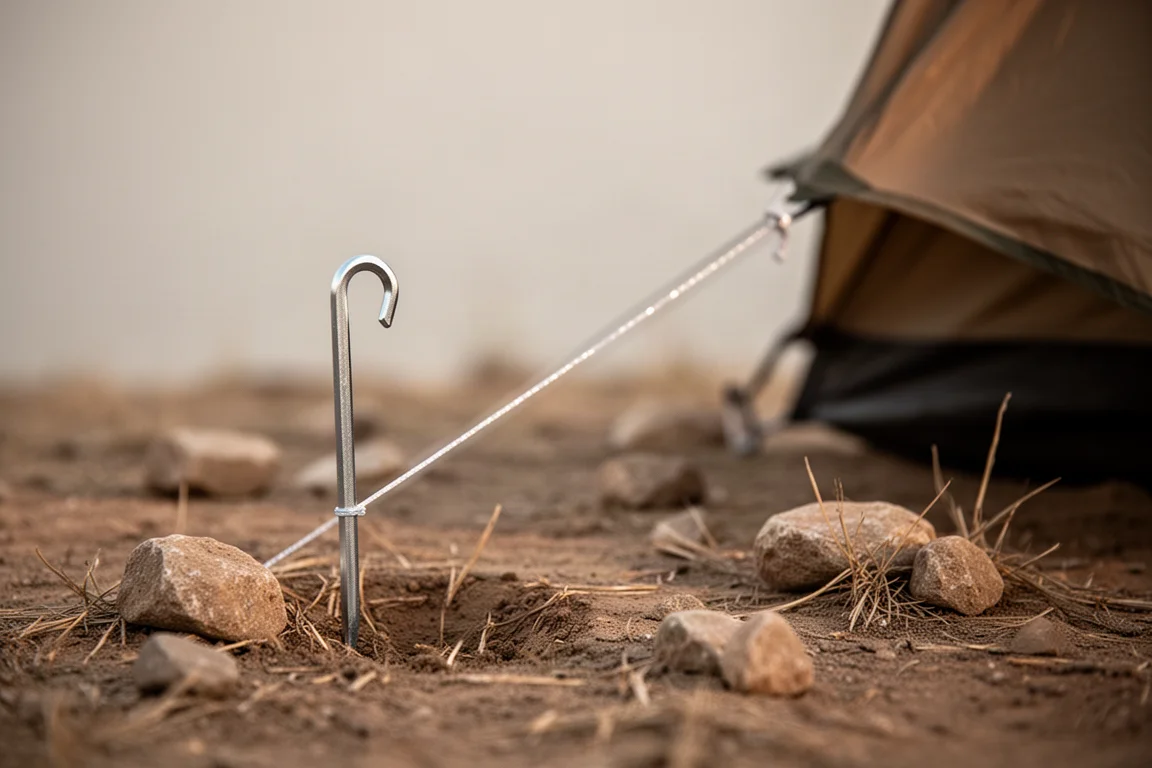
Stake quality is the more practical consideration. The stock stakes work, but they are the first thing worth replacing, and doing so improves both pitching confidence and total weight. Pairing the shelter with stakes you already trust is an easy way to get more out of it.
Buying Advice
At $140 for the one-person version, the Arches is a sensible buy for backpackers who want a double-wall trekking pole shelter with two doors and real interior space without crossing the $200 mark. The two-person version adds about $10 for anyone who wants more room or plans to share.
Buy it if you already carry trekking poles, you value space and modularity over the lowest possible weight, and you are willing to spend a few minutes learning the pitch. Skip it if you need a freestanding tent, if you want the lightest shelter available, or if you would rather not deal with swapping out the included stakes.
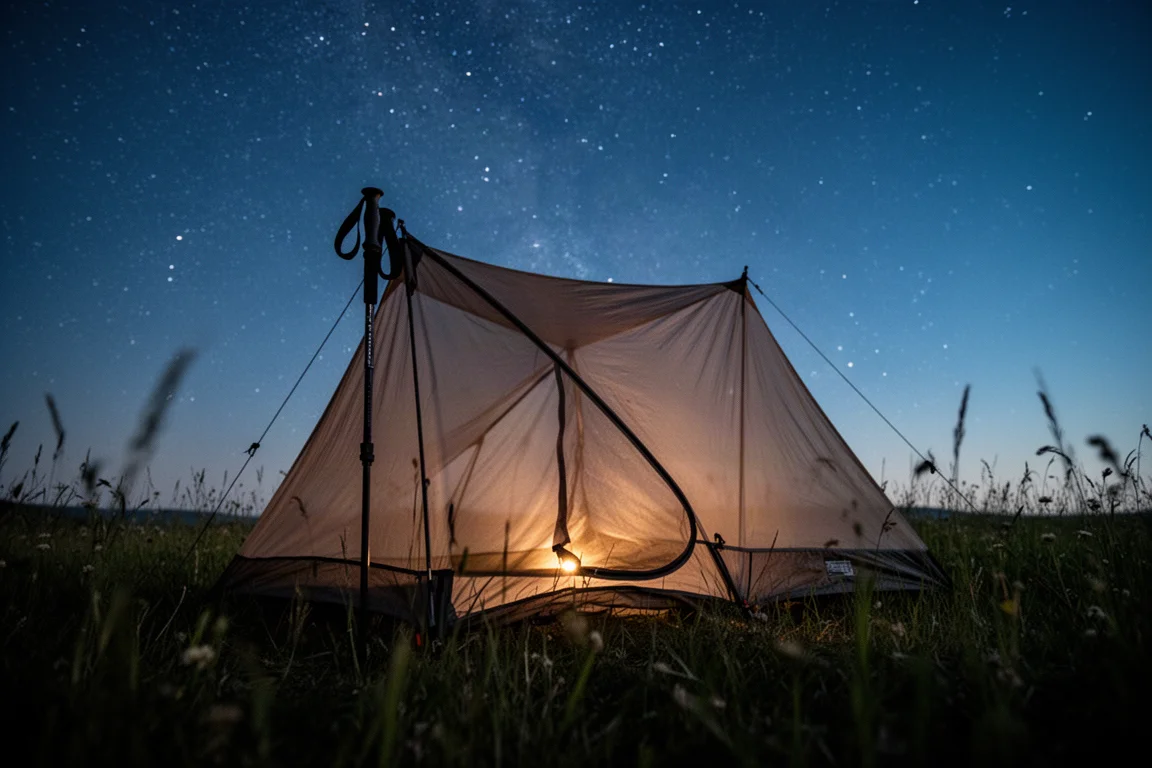
Budget for a set of replacement stakes in the overall cost, and note that the included footprint adds value that many shelters charge extra for. For a three-season, budget-conscious setup, the package makes a lot of sense.
Conclusion
The Perea Arches 1-person tent is not a radical design, and it does not try to be the lightest shelter on the market. What it delivers is a double-wall, two-door, two-vestibule trekking pole shelter with an unusually roomy interior, an included footprint, and a price that keeps it accessible. The setup takes practice and the stock stakes are worth replacing, but for three-season backpackers who want space and modularity without spending hundreds and hundreds of dollars, the Arches is worth a closer look.
Product link
View more details for Perea Arches 1-Person Tent
This product is mentioned in the review. Check the specifications, options, and compatibility before buying.
View more details for Perea Arches 1-Person TentFurther reading
Related Reviews
Backpacking Tents
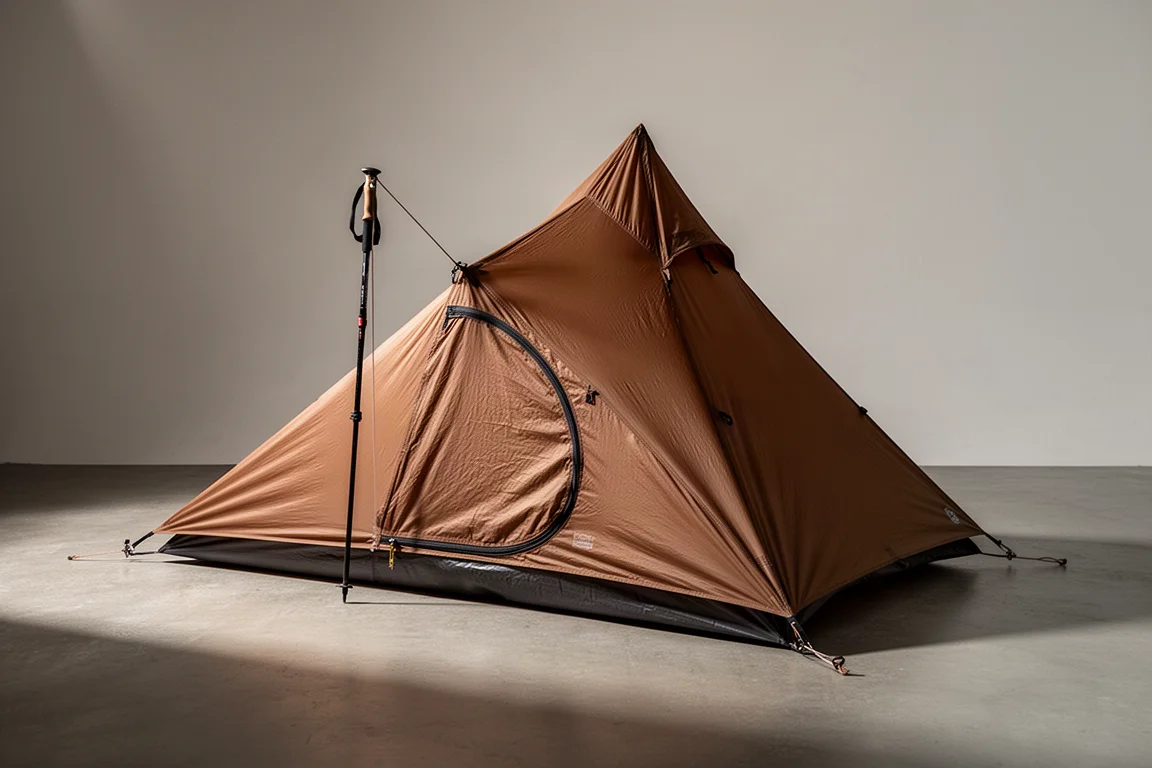
3F UL Lanchan Pro 1 Review: A 1 lb 8 oz Single-Wall Trekking Pole Tent
A practical look at the 3F UL Lanchan Pro 1, a single-wall trekking pole shelter with a 1 lb 8 oz weight, 20D silnylon fabrics, and a roomy 90 x 31 x 49 inch interior.
Backpacking Tents
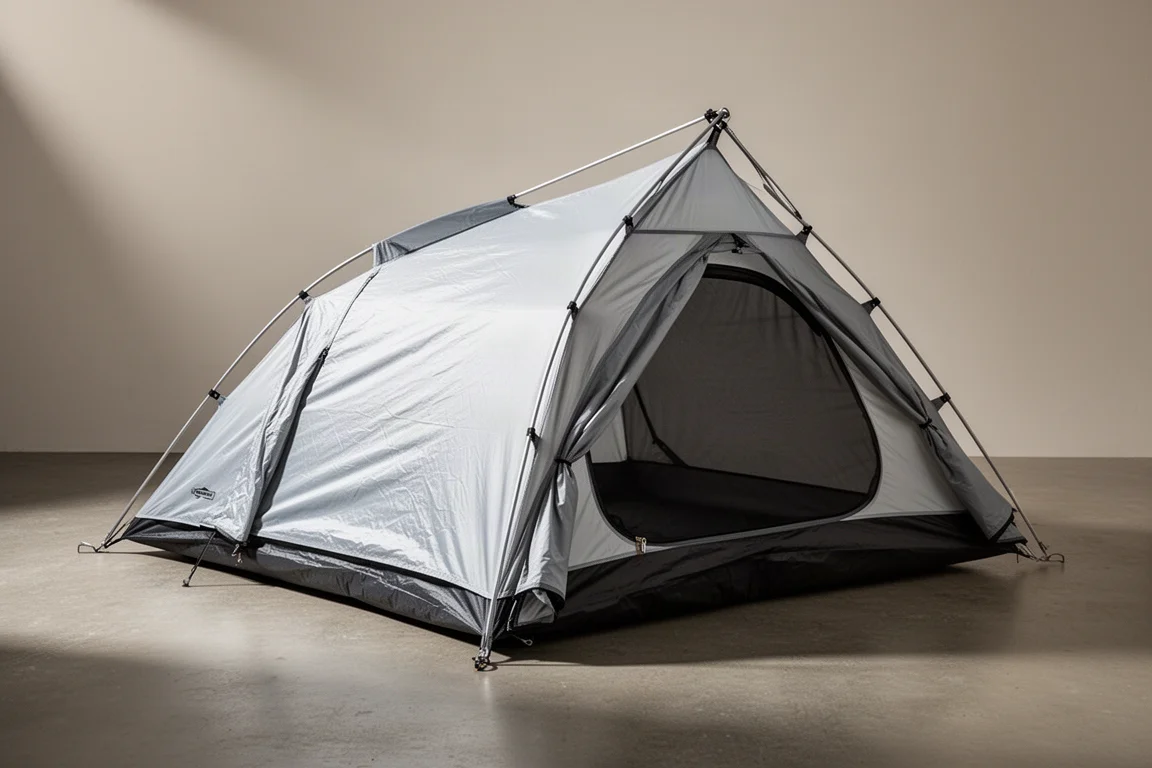
3F UL Taiji 2-Person Tent: A Convertible Backpacking Shelter Worth a Closer Look
A practical look at the 3F UL Taiji two-person tent, covering its materials, true two-person interior, fly-first pitching, and the seasonal inner swap that lets one shelter cover more of the year.
Backpacking Tents
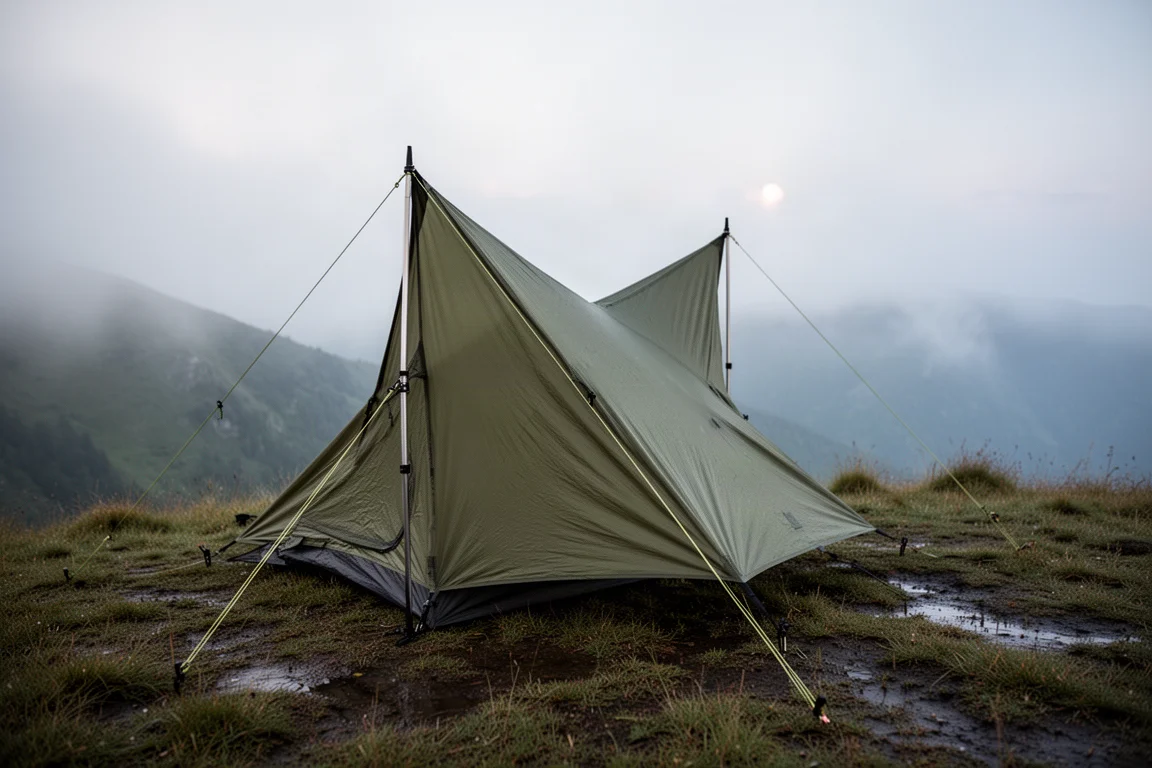
3FUL Lanshan Twoerson Pro Review: A Light Trekking Pole Shelter That Struggled in Rain
A two-person trekking pole shelter with a 2026 redesign, pitched with sticks and put through a night of steady rain. Here is what worked, what did not, and what to check before buying.