Fountain Pens
Pens by Casey Mokuzai Inkai Review: Northern Silky Oak Beauty
A bespoke Australian fountain pen in northern silky oak with a Cypress nib and a Fordite accent in the section. Hands-on impressions, measurements context, and writing performance.
Introduction
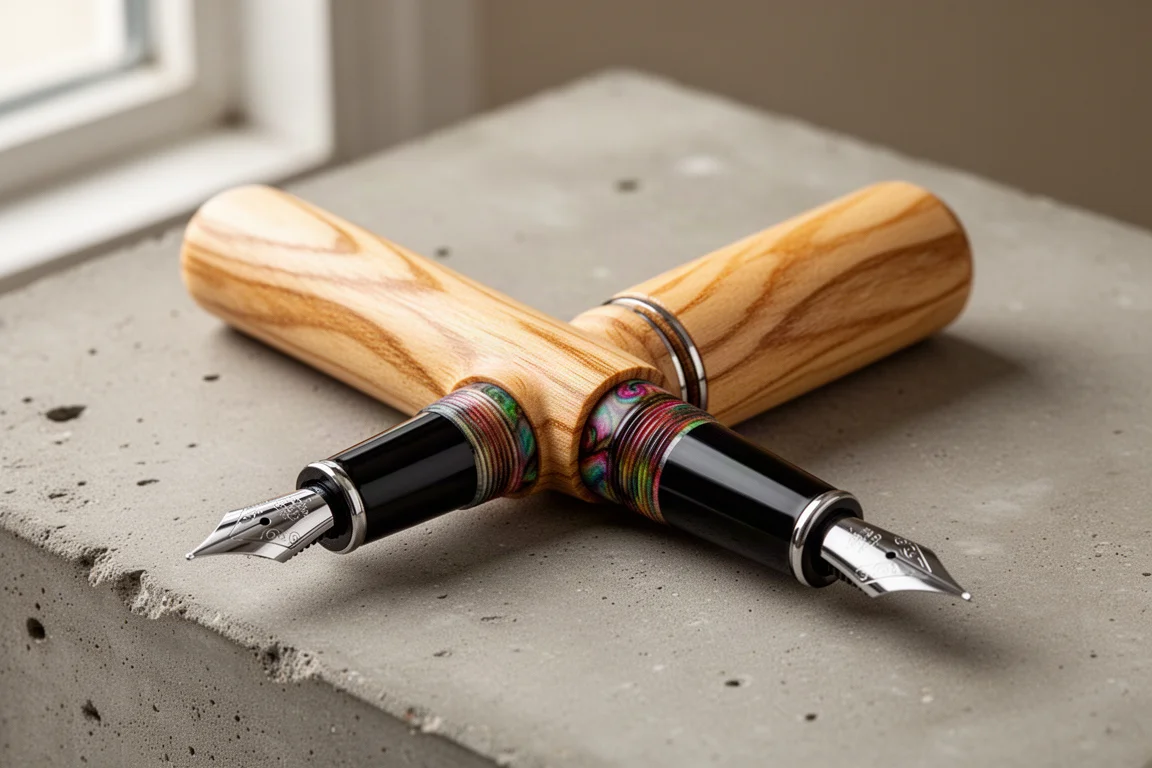
Independent pen makers are where some of the most interesting materials in the hobby turn up, and this pen is a good example. The Mokuzai Inkai comes from Pens by Casey, a small maker based in Gisborne, a town about 45 minutes outside Melbourne, Australia. Casey Giddens started making pens four years ago and now does it full time, specializing in Australian and exotic timbers.
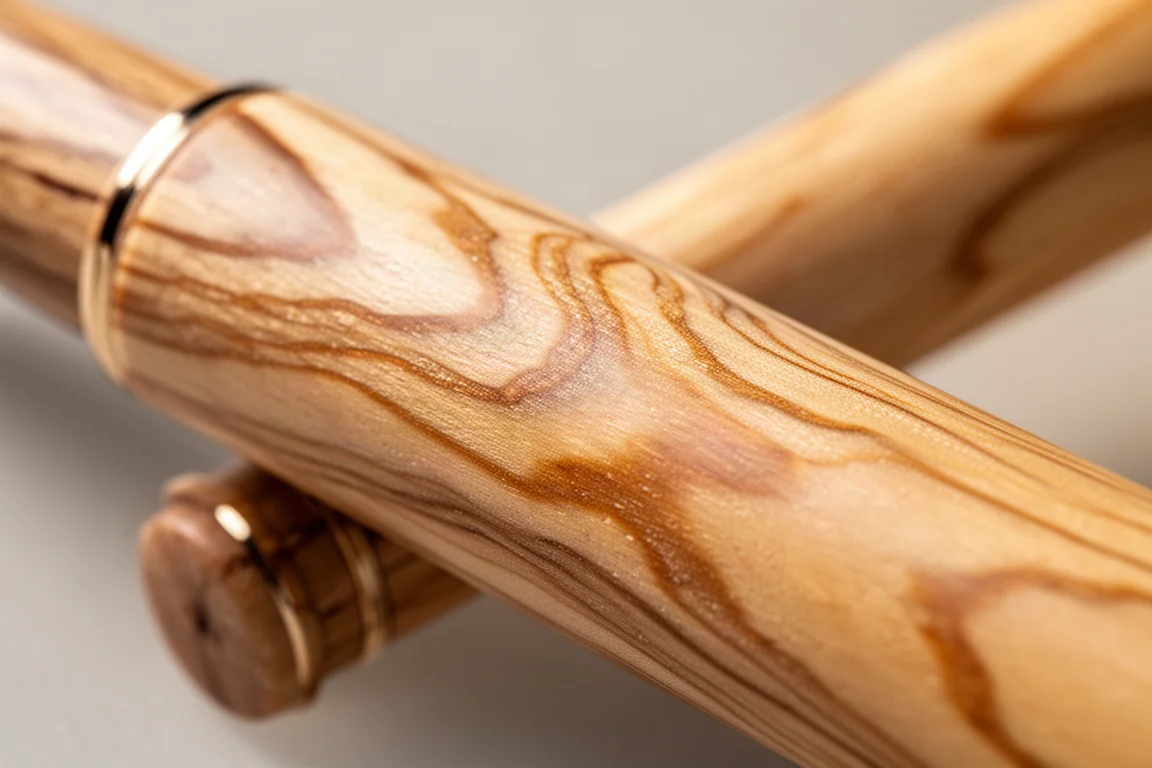
The material here is northern silky oak, a wood native to Queensland, Australia. It is light and not very dense, but hard enough to resist everyday damage. Casey lines the inside of the barrel with a thin layer of ebonite to stabilize the wood and protect it from humidity changes inside the barrel.
Who This Product Is For
This pen suits buyers who want something genuinely unique and are happy to support a small independent artisan. Casey mainly does custom work and sells through Instagram and Facebook; when he lists pens for sale they tend to go quickly. If you prefer a mass-market pen with a wide retail network and easy returns, this is not that kind of purchase. It is a bespoke offering for people who enjoy owning an object with a story.
Main Strengths
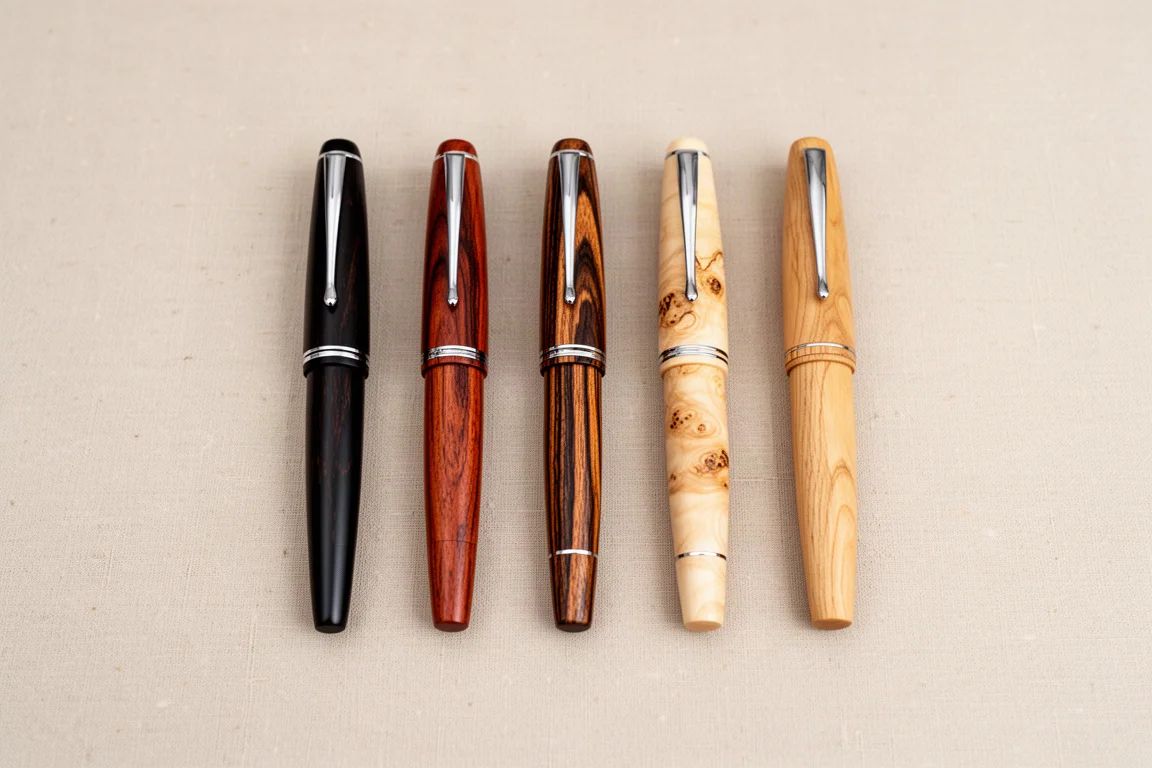
The material is the headline. The meandering grain of the northern silky oak is unlike anything you typically see on a pen barrel, and cutting with the grain brings out the artistic, almost painterly figure of the wood. The rounded cap top, the slight taper of the barrel, and the complete absence of a clip all keep the wood’s look uninterrupted, which was the right call.
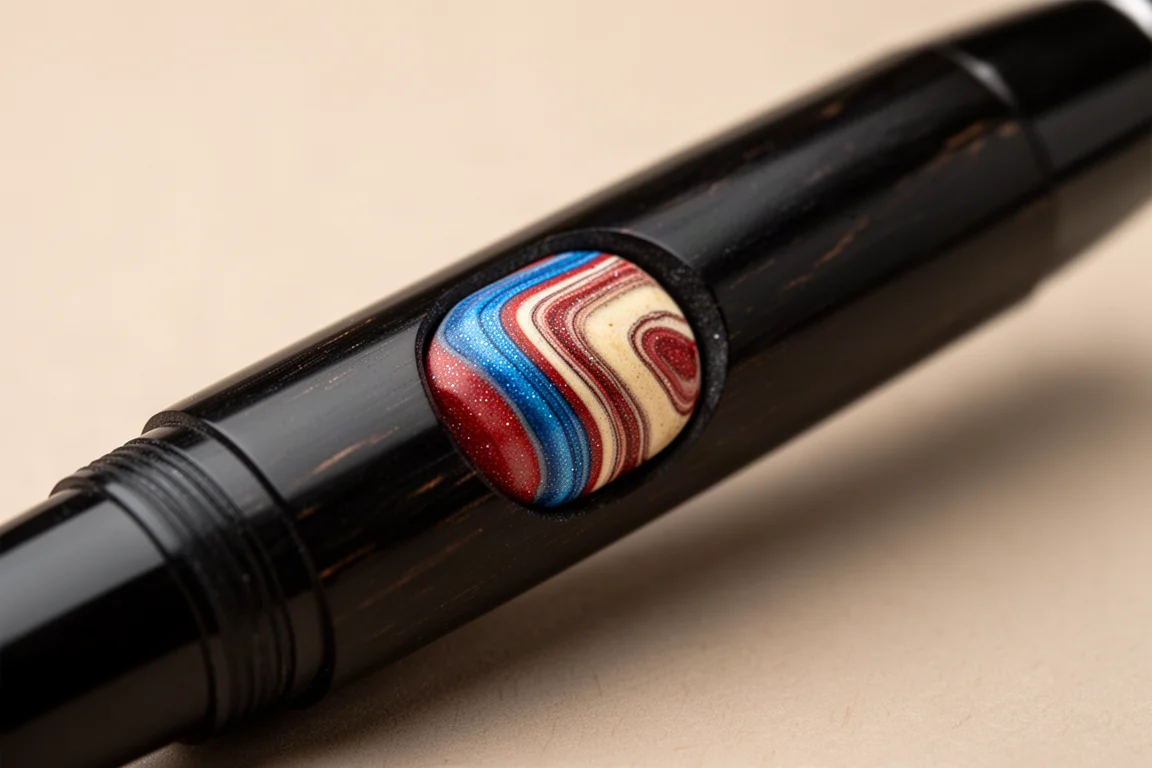
The ebonite section is another highlight. It is very slightly concave and offers a genuinely secure grip, and the pen feels light in the hand without ever feeling off-putting. At the back of the section sits a bonus pop of color: Fordite, also known as motor agate, a cured and hardened buildup of automotive paint overspray from the days when car bodies were spray-painted by hand. The material is no longer produced the same way, which makes it a rare and charming detail.
The nib is also worth noting. It is a two-tone steel nib made in-house by the Taiwanese company Cypress, previously known as Mr. Cypress. In this case it is a broad nib that writes closer to a Japanese broad, and reverse writing is smooth with decent ink flow.
Things to Consider Before Buying
A few details are worth weighing. The stamping of the nib maker’s name could be a little sharper, and the nib slit sits very slightly off-center in relation to the breathing hole, though this is common even on nibs from major manufacturers. There is no line variation to speak of from this nib.
Practical points: the cap does not post, which is sensible for a wooden pen, and the pen takes standard international cartridges with a converter included. Even with the ebonite lining, eye-dropper conversion is not recommended; wood and ink saturation are simply a risky combination.
Writing Performance
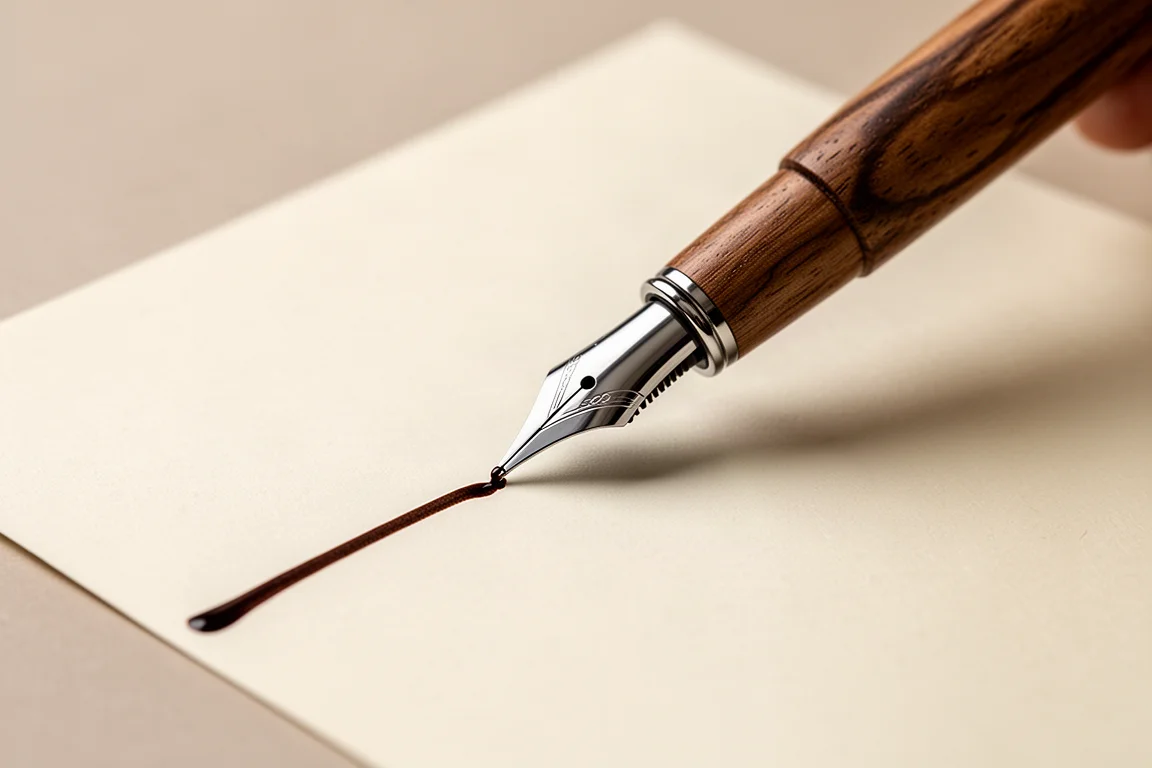
Ink testing used Montblanc Toffee Brown, a solid darker chocolaty brown that suits the wood tones well. The broad steel nib from Cypress lays down a smooth, slightly narrower-than-expected line and handles fast writing without the feed falling behind. Reverse writing is a particular strength here, laying down a nice fine line with particularly decent flow.
Buying Advice
This model retails for roughly $250 depending on currency exchange rates, which is reasonable for a well-made bespoke pen in a genuinely eye-catching material. Expect an uncapped length fairly similar to other handcrafted wooden pens in this class. If you want to buy one, watch Casey’s Instagram and Facebook pages, since his pens generally get snatched up quickly when made available. A dedicated website would help his work reach more people, but for now social channels are the way in.
Conclusion
The Mokuzai Inkai is a distinctive wooden fountain pen that gets the fundamentals right: a comfortable ebonite section, a capable smooth nib, and thoughtful construction details like the ebonite barrel lining. If you are looking to support an independent artisan and want a pen whose material you will not see everywhere else, this one is easy to recommend.
Product link
View more details for Pens by Casey Mokuzai Inkai
This product is mentioned in the review. Check the specifications, options, and compatibility before buying.
View more details for Pens by Casey Mokuzai InkaiFurther reading
Related Reviews
Fountain Pens
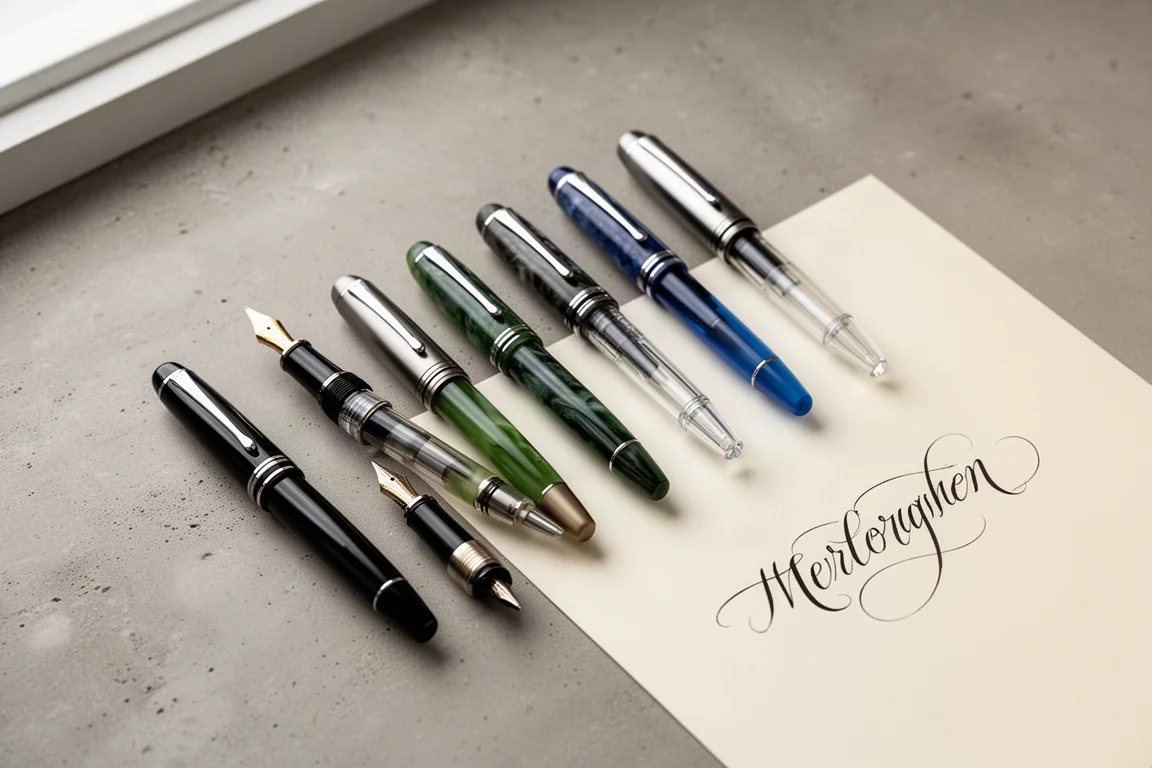
Best Budget Fountain Pens Tested: 9 Pens, One Clear Winner
A hands-on comparison of nine affordable fountain pens for everyday writing, calligraphy, and sketching, with a clear standout for flexible nib fans.
Fountain Pens
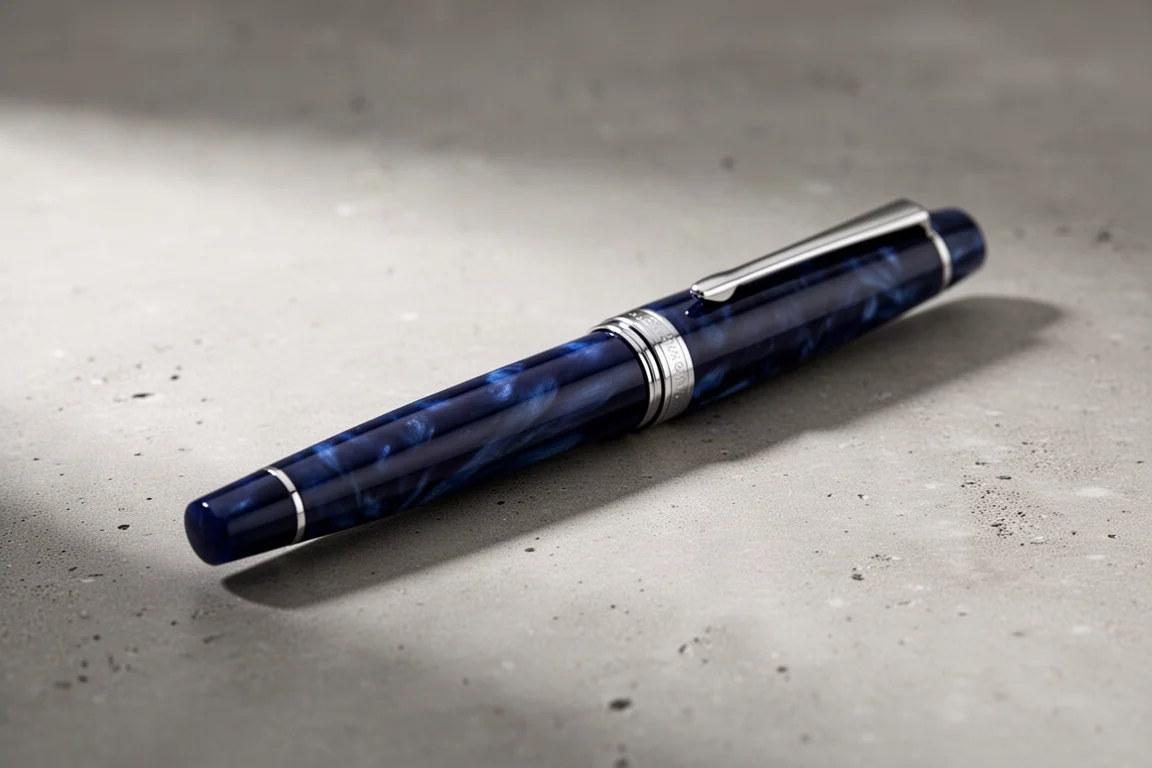
Aurora Optima Review: An Italian Piston Filler That Punches Above Its Price
A 14k gold nib, ebonite feed, and a beautifully deep oraloid body make the Aurora Optima one of the most rewarding piston fillers around.
Fountain Pens
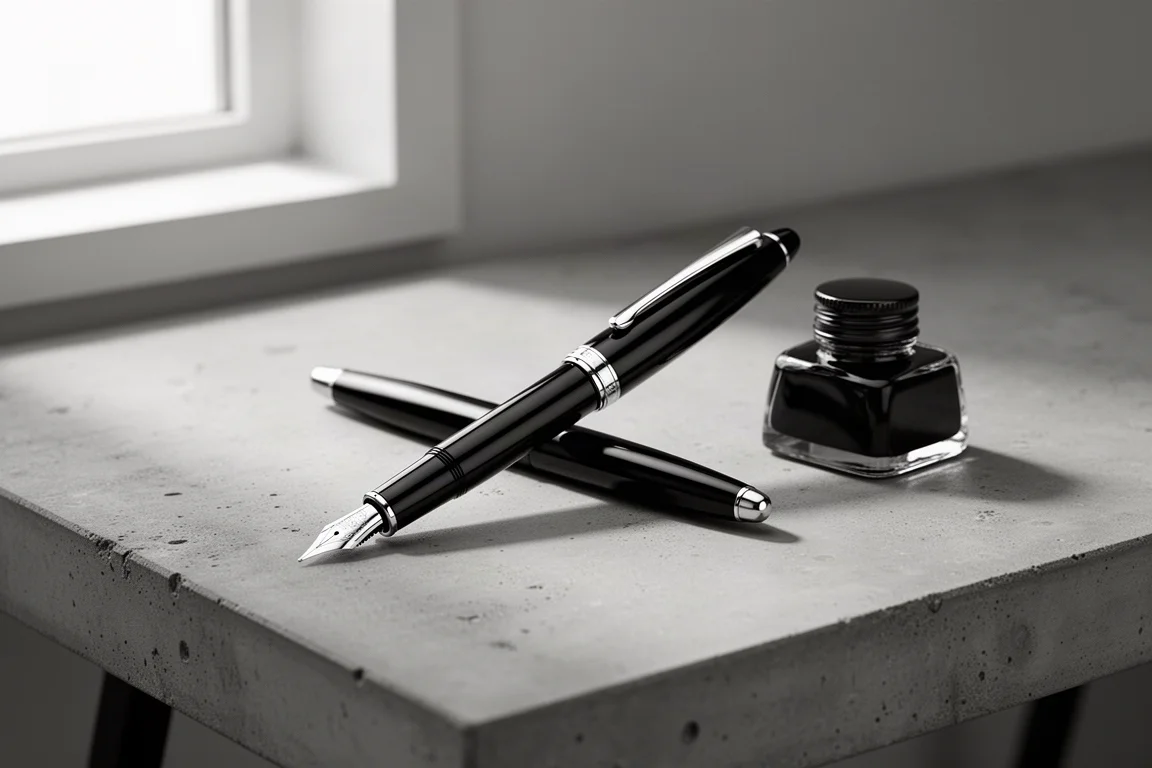
Cross Bailey Light Review: The Entry-Level Fountain Pen Worth Keeping at the Office
A plastic-bodied Cross with a metal clip, snap cap, and famously smooth extra fine steel nib. Around $15, available almost everywhere, and easy to recommend.