Camping Gear
Ozark Trail Camping Gear Review: A $250 Budget Kit Tested in the Field
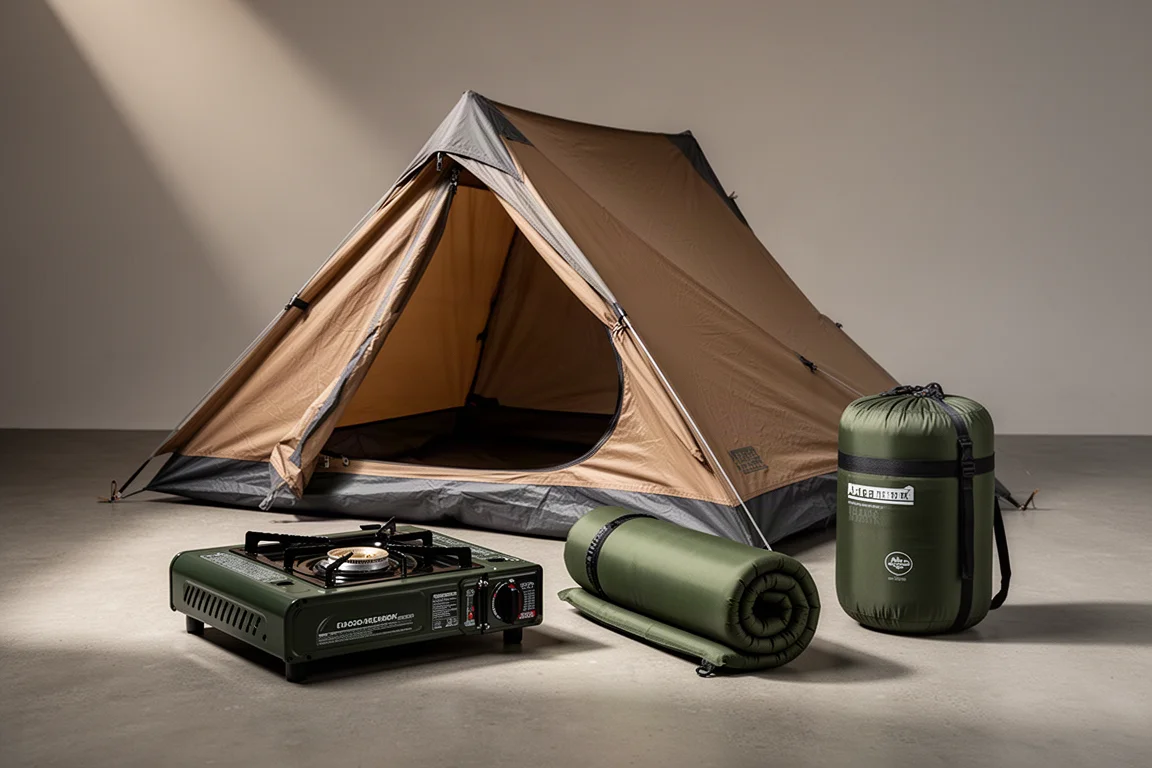
We took four Ozark Trail pieces, an A-frame tent, a propane stove, a self-inflating air mattress, and a sleeping bag, on an overnight trip to see what a $250 budget camping kit can realistically handle.
Introduction
A full camping setup for the price of a single premium sleeping bag is an appealing idea, so we put one to the test. This kit came from a single budget-focused shopping trip: roughly $250 spent on Ozark Trail gear, the house brand sold at Walmart, covering the tent, the stove, the sleeping pad, and the sleeping bag.
The overnight trip took place at around 3,500 feet of elevation on a mild day, with temperatures near 65 degrees Fahrenheit in the shade and a dry cold front arriving after dark. That combination is close to ideal for budget gear, and it is exactly the kind of night these products are built for. Here is how each piece performed, where it fell short, and who should consider it.
What This Ozark Trail Kit Includes
Four core pieces make up this kit: an A-frame tent, a large propane stove, a self-inflating air mattress, and a sleeping bag. Together they came to about $250, which is less than many single high-end sleeping bags cost on their own.
We judged each item on four things: how much effort setup required, how the materials and construction held up in use, how well the gear matched real weather conditions, and whether the price made the shortcomings easy to accept.
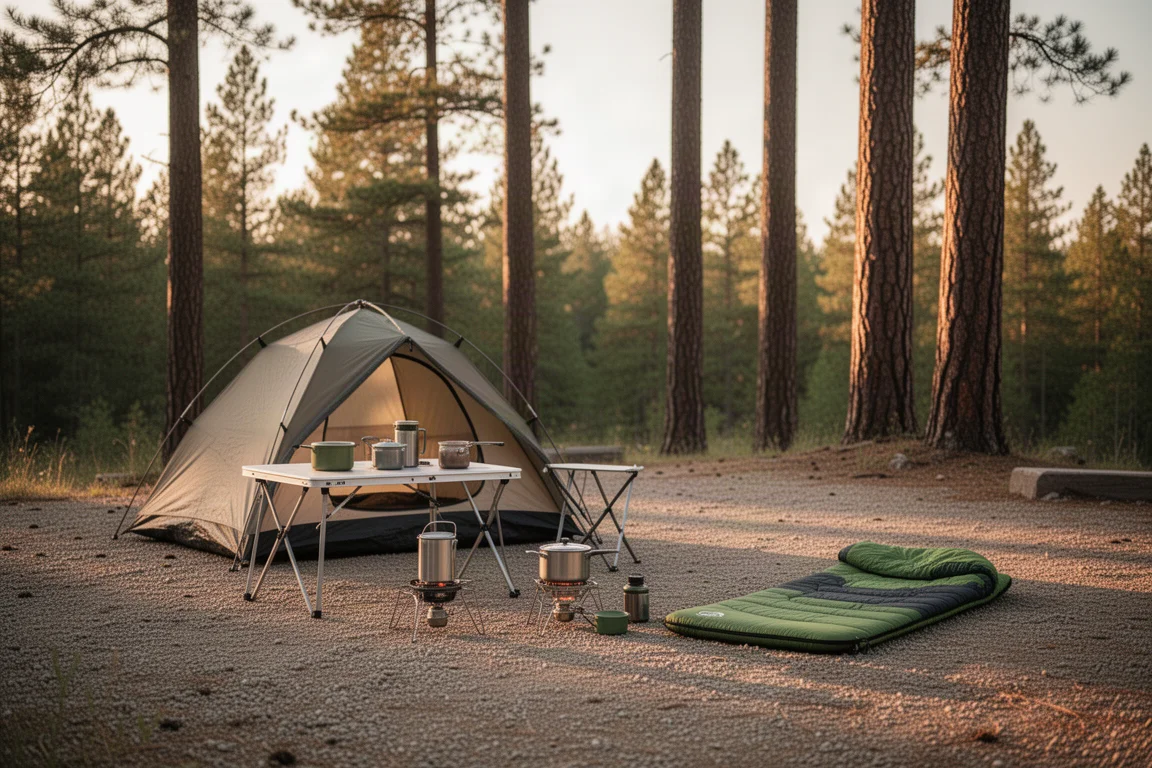
Because the goal was a realistic budget setup rather than a gear showcase, the standards are simple. A product earns a recommendation here if it does its job on a fair-weather night without creating new problems.
Ozark Trail A-Frame Tent
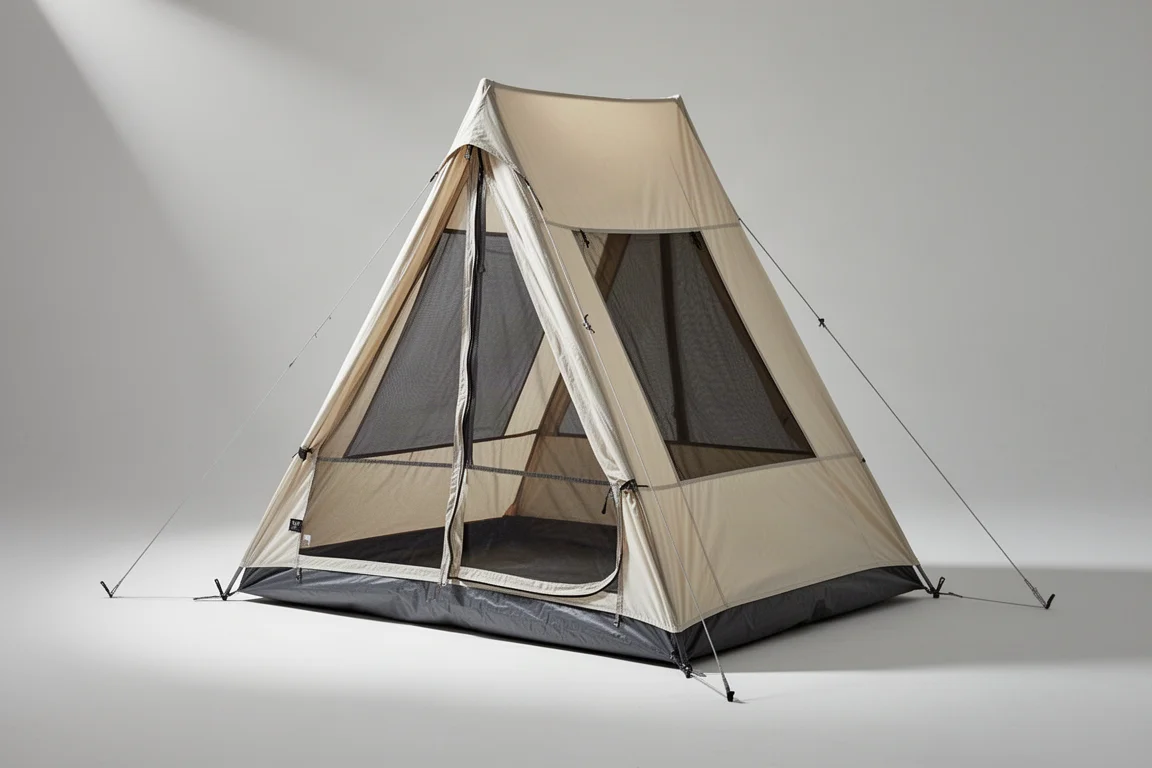
At roughly $50 to $60, the Ozark Trail A-Frame Tent is the anchor of this kit. The first thing that stands out is the amount of mesh: ventilation is generous, and the interior is larger than the price suggests.
Setup is the weak point. The tent ships with five poles, and one of them is about a millimeter smaller than the others. They look identical in hand, and if the smaller pole does not go in the correct place, the tent will not go up. Color coding would solve this in seconds; without it, expect to spend a few minutes sorting poles before the first pitch.
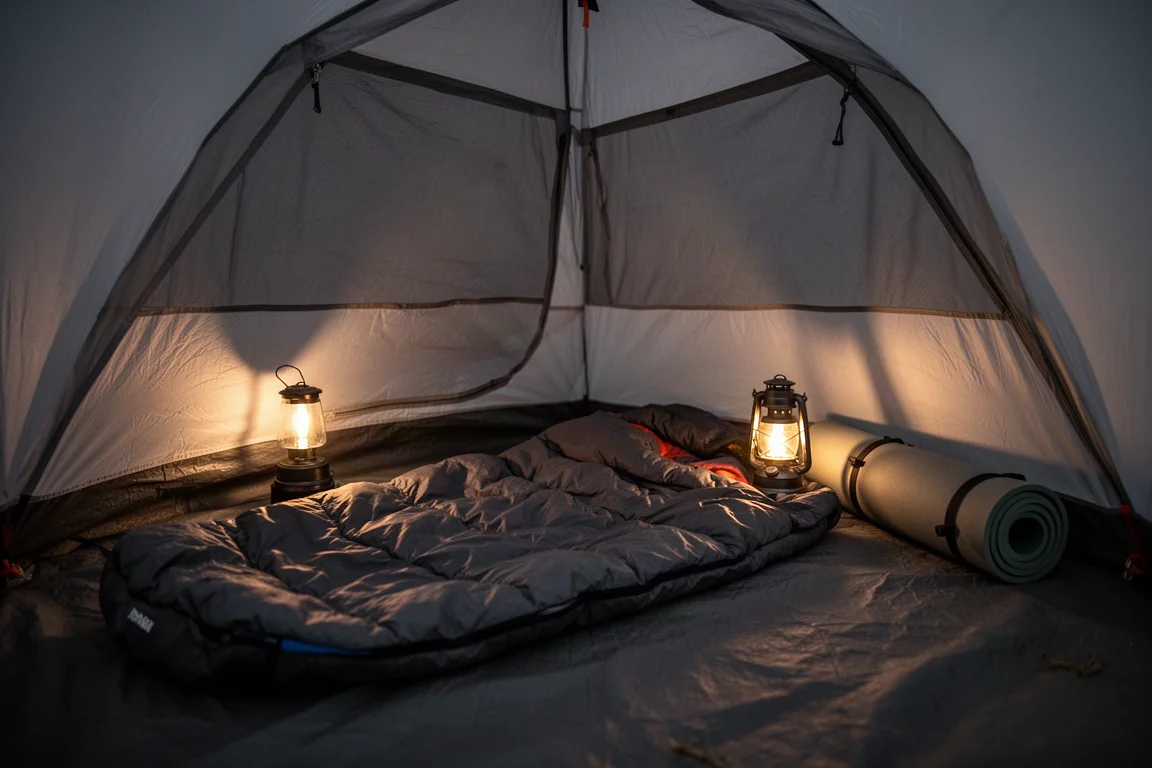
Once standing, the tent does what a budget tent should. It kept insects out, stayed stable through a breezy night, and stayed comfortable with plenty of airflow. When temperatures dropped, closing a single side panel noticeably warmed the interior, which is a useful trick for anyone sleeping in one.
What it is not is a storm shelter. This is a tent for dry, calm forecasts, and buyers should treat it that way.
Ozark Trail Propane Stove
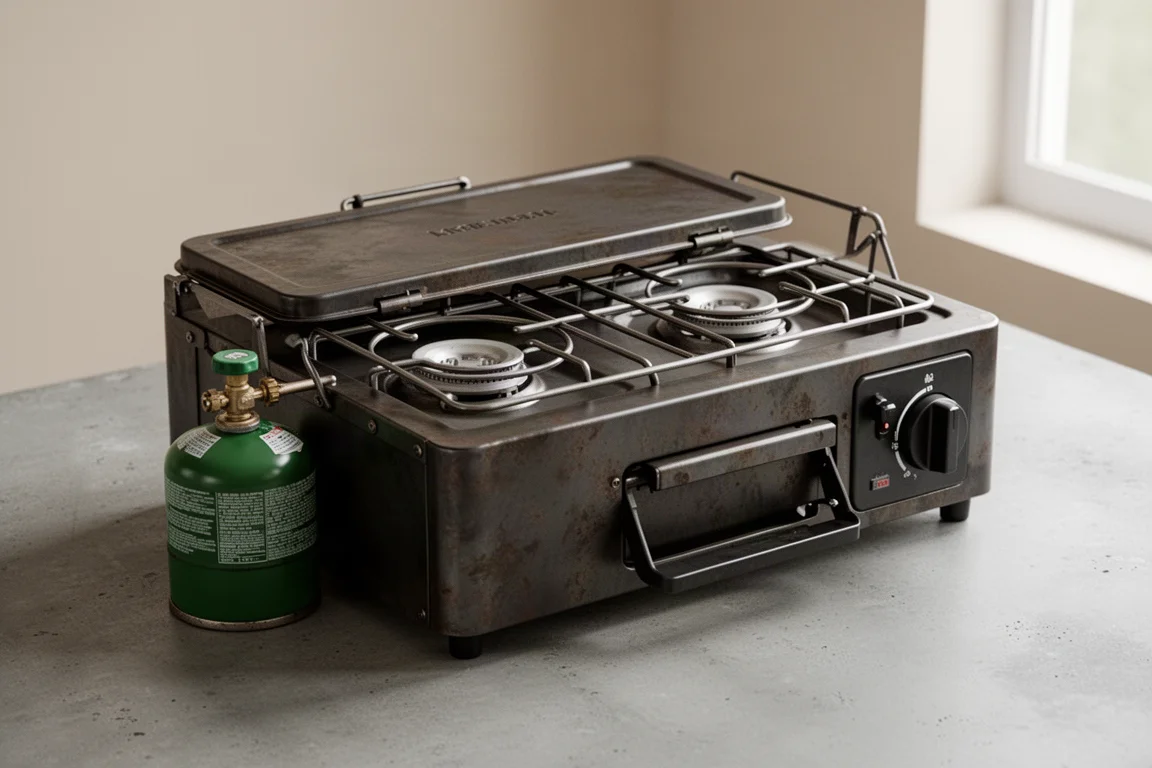
There is no way around it: this stove is enormous. The packaging describes it as a backpacking stove, but no one is carrying it on a hike. For car camping, the size translates into a wide cooking surface and a stable footprint for pots and pans.
The spec sheet claims 10,000 BTUs. In practice, the output feels closer to half that figure, which is enough to boil water and cook a simple meal but not enough to expect fast, aggressive heat. Our stove also arrived slightly bent, and the pot supports do not line up evenly with each other, so a kettle or pan tends to rock and slide rather than sit flat.
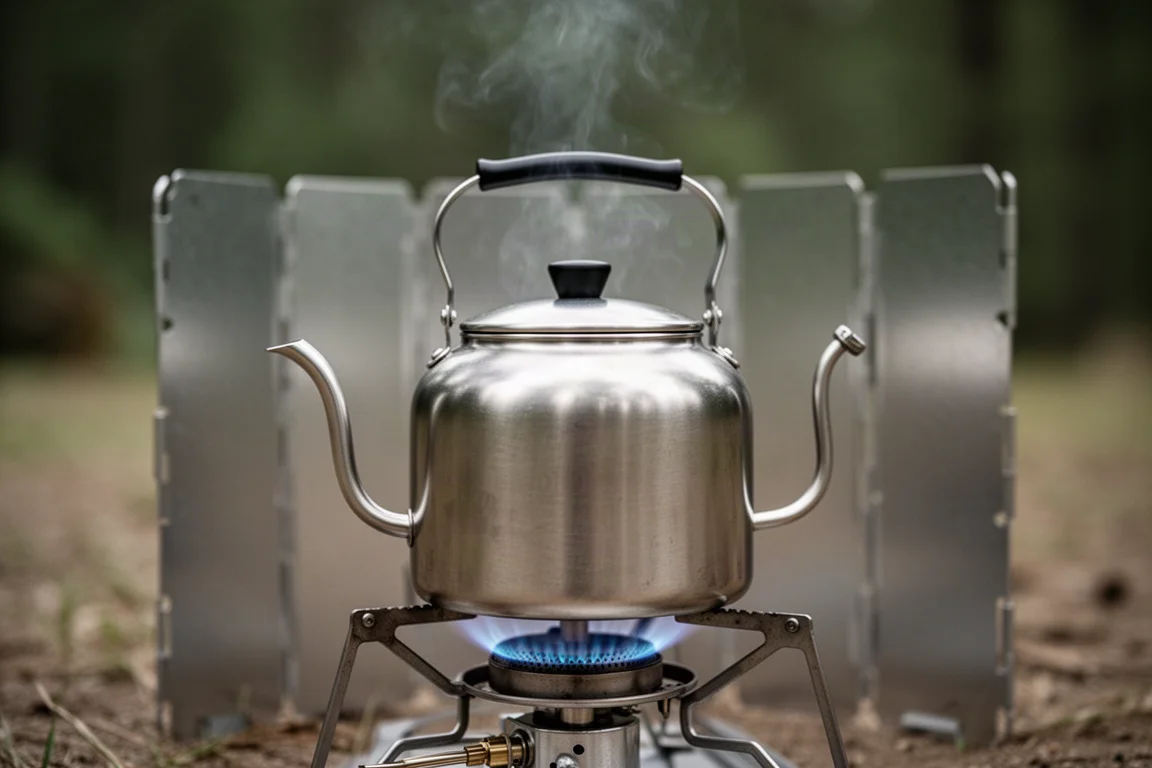
Those are real annoyances, but they did not stop the stove from doing its one essential job. Water came to a boil, a dehydrated meal rehydrated properly with hot water, and lunch happened on schedule. For a low-cost stove that lives in the trunk and comes out on weekend trips, that may be an acceptable trade.
Ozark Trail Self-Inflating Air Mattress
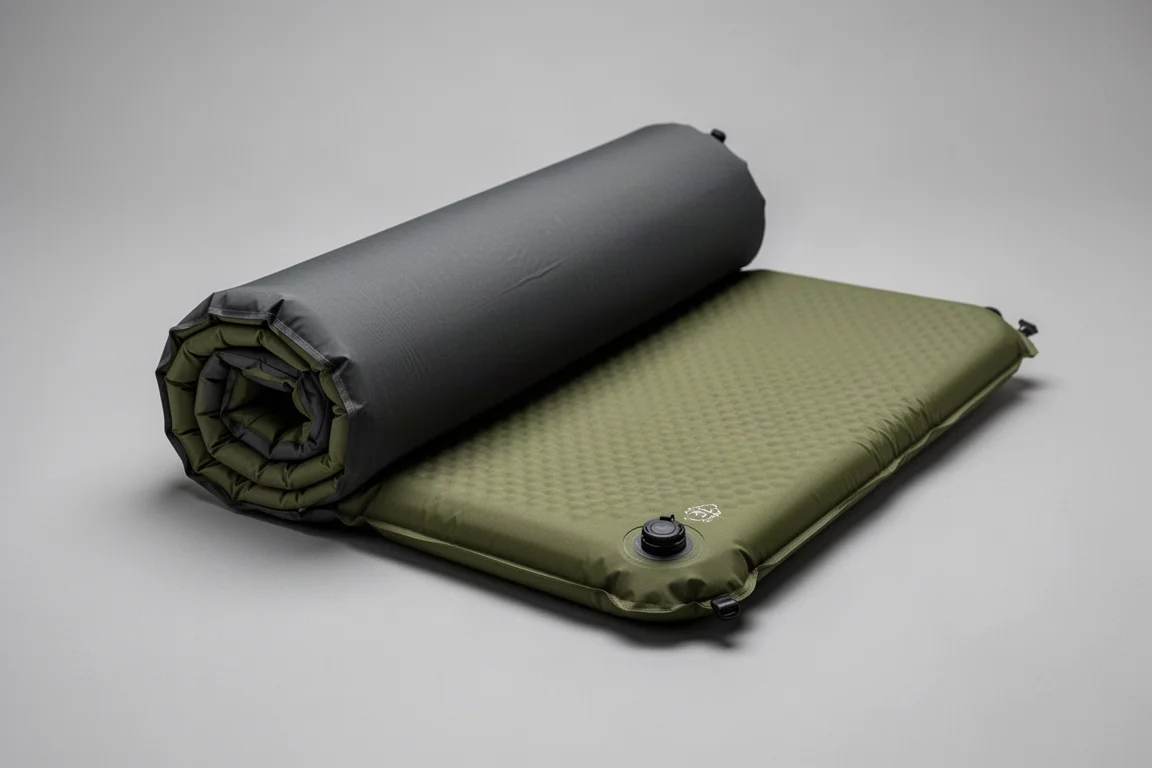
The name promises convenience, and that is where expectations should be adjusted. A self-inflating mattress relies on the foam inside the pad expanding and pulling air in, and a pad that has been rolled up tight for a long time will not do much of that on its own. This one needed help to reach a usable state.
Even once it was ready, the cushioning was minimal. Comfort landed much closer to sleeping directly on the ground than to sleeping on a proper pad, with only a thin layer of padding under the body. By morning, the lack of support was noticeable.
For anyone who sleeps on their side or needs real cushioning, this is the weakest link in the kit. It works as a light barrier between a sleeping bag and the ground, and not much more.
Ozark Trail Sleeping Bag
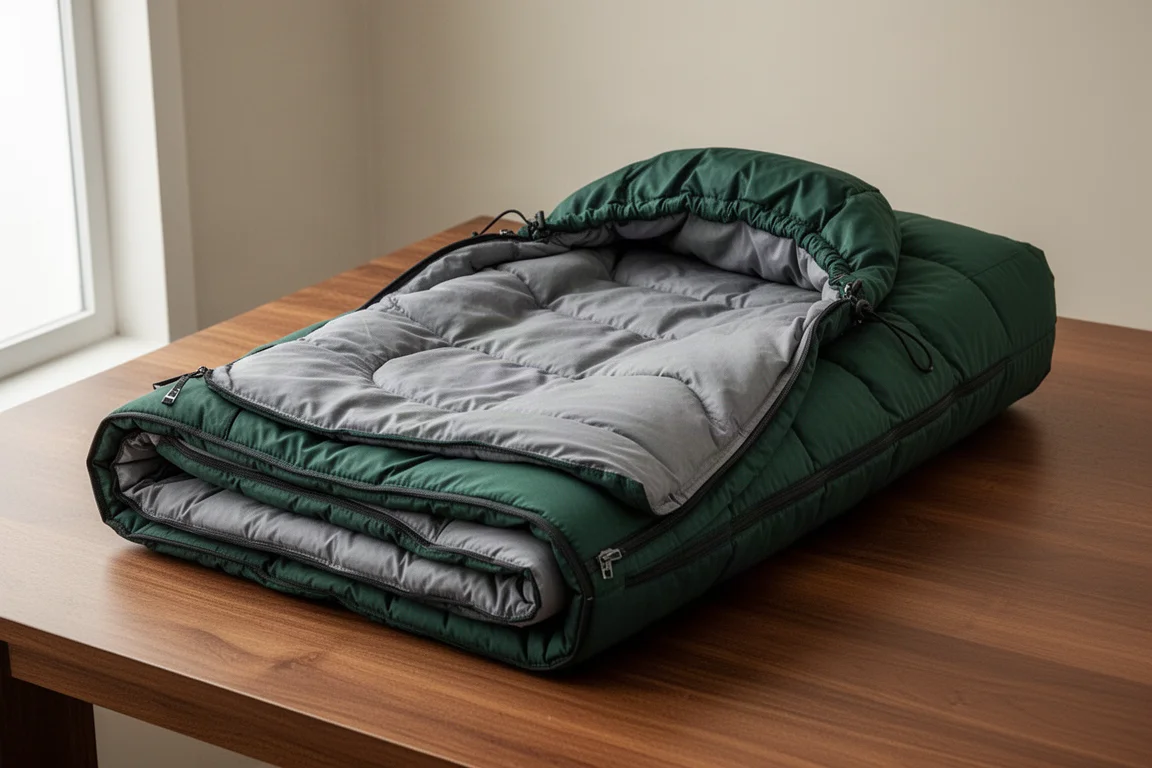
Of the four products, this is the one that earned genuine approval. The bag is comfortable, the materials feel reasonable for the price, and it handled a mild night without complaint.
The claimed 35 degree Fahrenheit comfort rating deserves skepticism. As the temperature fell overnight, the bag began to feel cold, and a small heater was needed to stay comfortable. Treat that number as a best-case figure and plan for warmer conditions, or add a liner for shoulder-season trips.
For summer camping and mild-weather weekends, though, this is a sensible buy. It packs away simply, it is easy to live with, and it costs far less than most bags with comparable comfort on a warm night.
How the Gear Held Up Overnight
The overnight weather was the real test: a dry cold front moved through, the wind picked up, and temperatures dropped. Nothing failed. The tent stayed put, the closed panel made the interior noticeably warmer, and the sleeping bag plus a small heater kept the night manageable.
Two practical notes came out of the trip. First, ventilation matters more than warmth in a mesh-heavy tent, and being able to close one panel is a genuine advantage. Second, anyone running a heater inside a tent should keep it away from bedding and from their own body, maintain airflow, and use a carbon monoxide monitor. That is basic safety rather than a product feature, and it applies to every tent.
The honest summary is that this gear is good enough to get by. It keeps bugs out, it covers basic cooking and sleeping needs, and it does so on a dry, comfortable night. It is not gear to trust in a downpour or a cold snap.
Overall Buying Advice
Think of this kit as fair-weather gear with a clear purpose. If the forecast is dry, the temperatures are mild, and the trip is a casual weekend at a drive-up campsite, these four pieces cover the essentials for about $250, which is a remarkably low entry point.
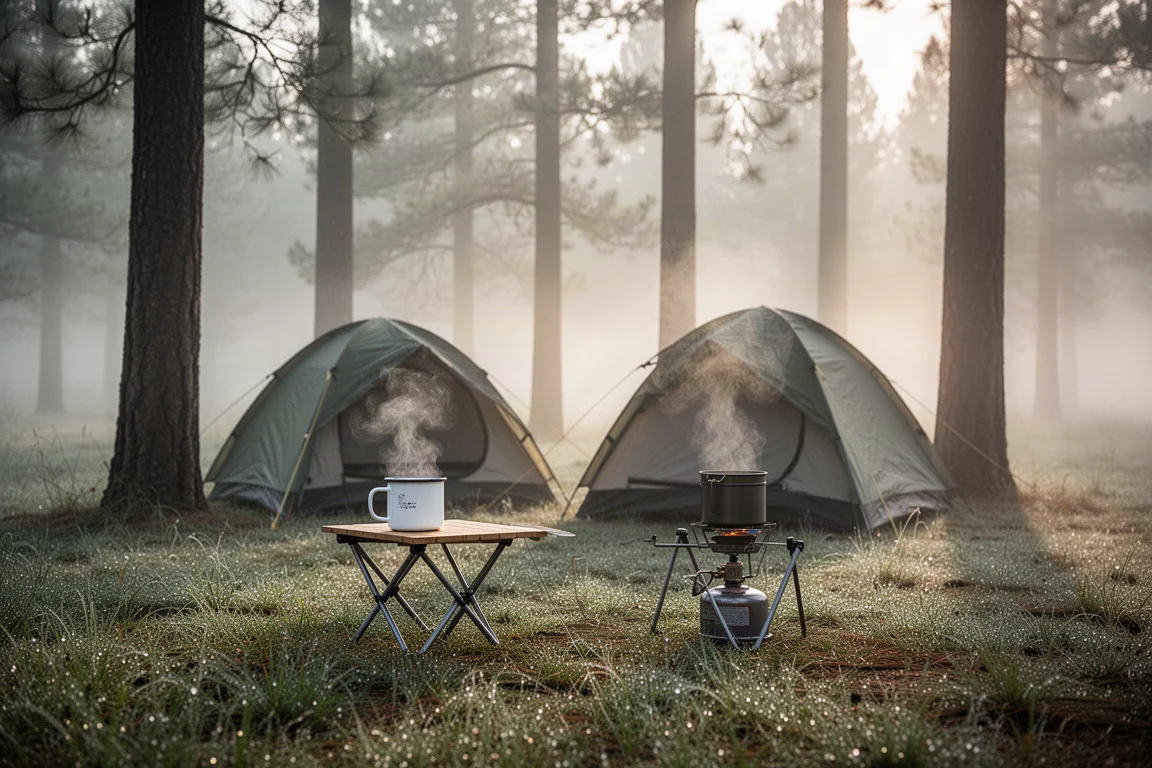
Buyers who should look elsewhere are those planning trips in rain, wind, or cold. A tent this open and a bag rated optimistically will both struggle once the weather turns, and no amount of value pricing fixes that.
If the plan is occasional summer camping, a first camping trip, or a backup setup to keep in the car, this Ozark Trail kit is a reasonable starting point. Budget the tent and sleeping bag first, treat the mattress as a thin ground layer, and accept the stove for what it is: a large, inexpensive car-camping burner that gets water hot.
Conclusion
The value here is real, as long as expectations match the price. The A-frame tent and the sleeping bag are the strongest parts of the kit for mild-weather camping, the propane stove works despite sloppy construction and overstated output, and the self-inflating mattress is best understood as minimal padding rather than a comfortable bed. For dry, calm nights, that combination is enough.
Further reading
Related Reviews
Camping Gear
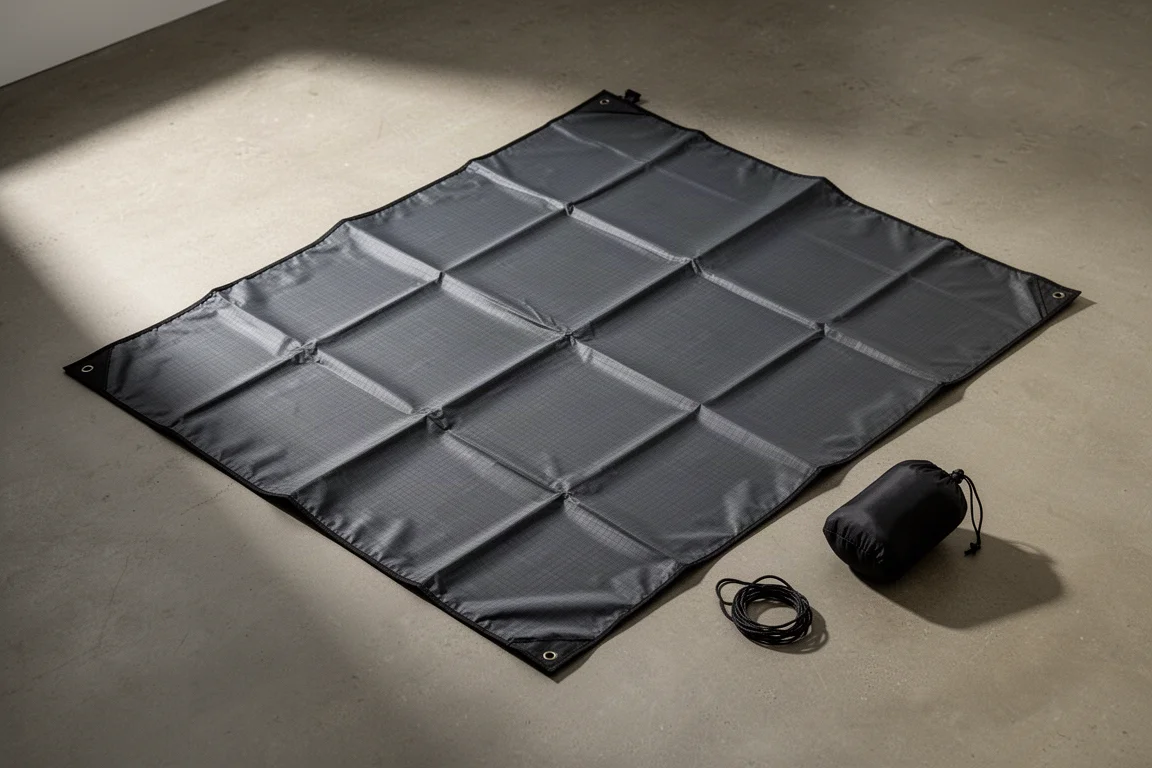
3FUL Ultralight Ground Sheet Review: A Two-Person Footprint Worth Packing
A 6.7 oz two-person ground sheet in ripstop silnylon, priced around $30. Here is what it protects, what it does not do, and who should pack it.
Camping Gear
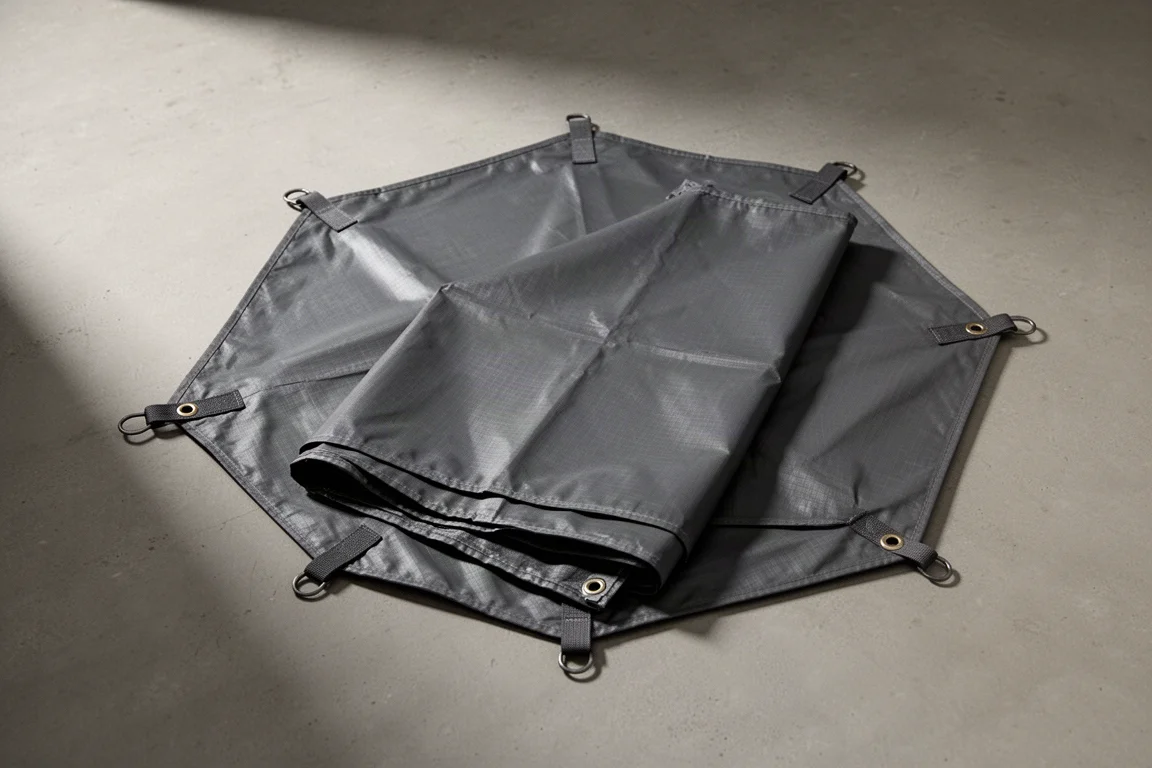
Backcountry Light Dual-Function Tarp and Floor Review: A Footprint First
A dual-purpose tent floor and tarp that keeps falling rain off you, but cannot block wind. Here is where it works and where it does not.
Camping Gear
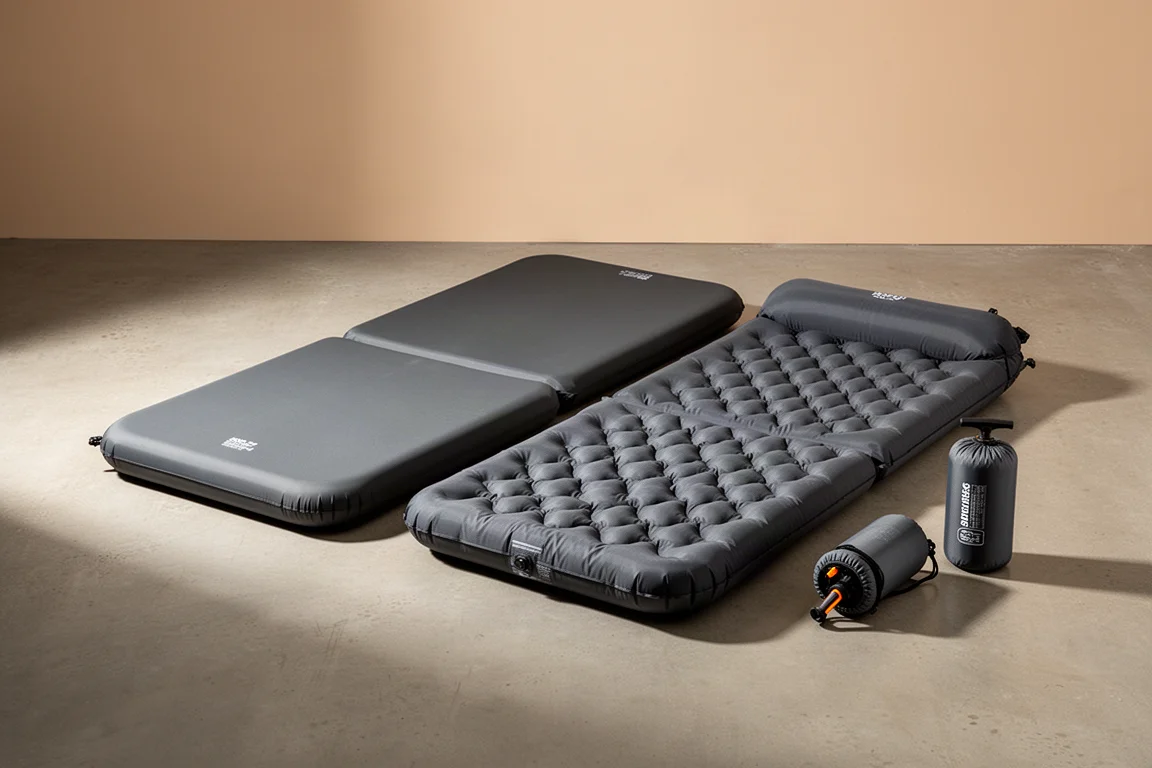
Best 2-Person Camping Mattresses for Couples: 10 Options Compared
A practical comparison of ten two-person camping mattresses, covering self-inflating pads, air pads and air mattresses for couples.