Camping & Overlanding
Overland Camp Kitchen Setup: A Practical Guide to Organized Cooking in the Field
Learn how to organize a compact, efficient camp kitchen that fits in one box and keeps all your cooking gear accessible and ready to use.
Introduction
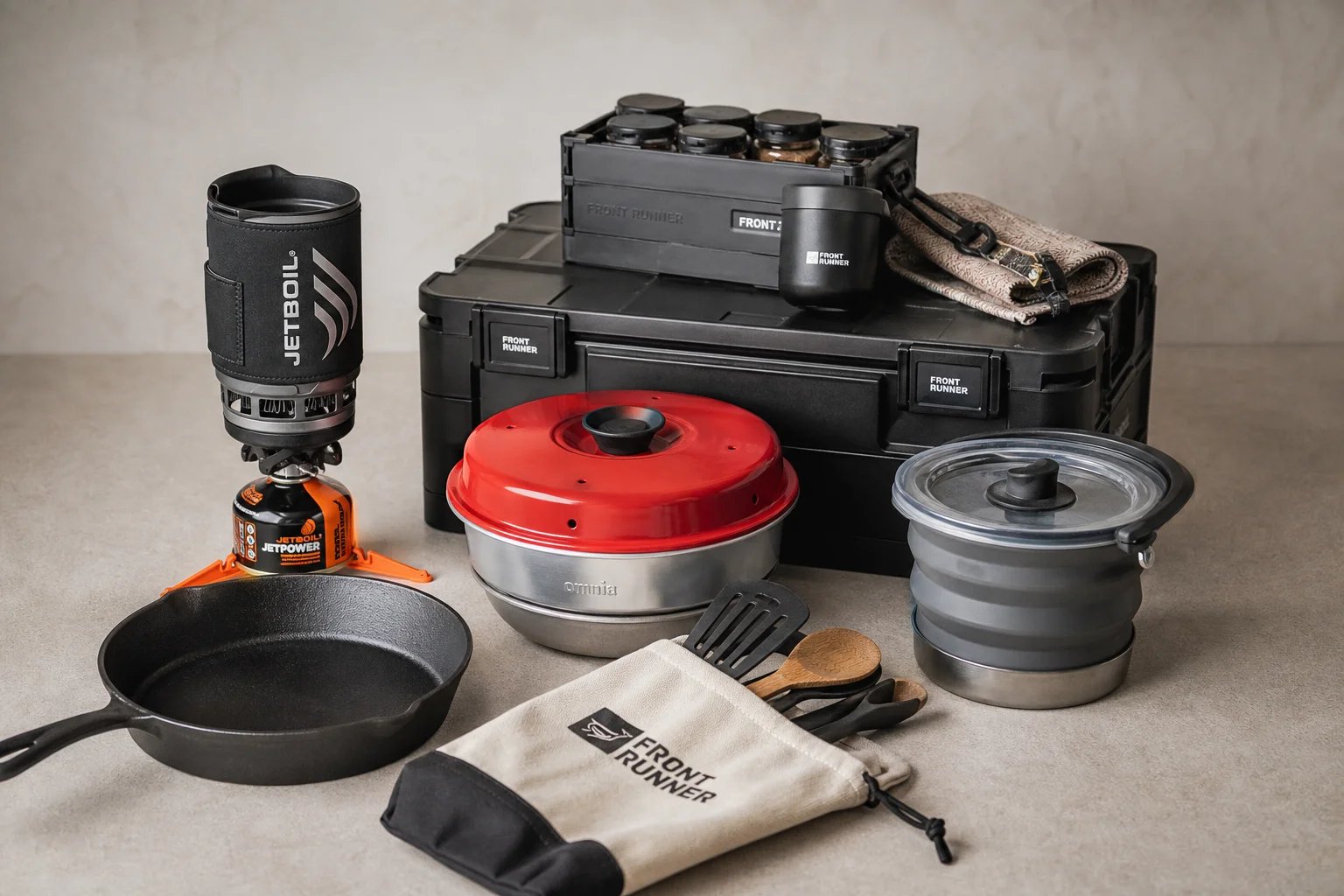
Building an efficient camp kitchen is about more than just having the right gear. It’s about understanding what you actually use, keeping everything accessible, and eliminating the frustration of searching through multiple storage locations. After testing different setups over time, a condensed, organized approach proves far more practical than spreading kitchen equipment across drawers and scattered boxes.
The All-in-One Kitchen Box Approach
The foundation of an effective camp kitchen is consolidation. Rather than distributing cooking gear across multiple storage locations, keeping everything in one dedicated box transforms camp meal prep from a frustrating hunt into a straightforward process.
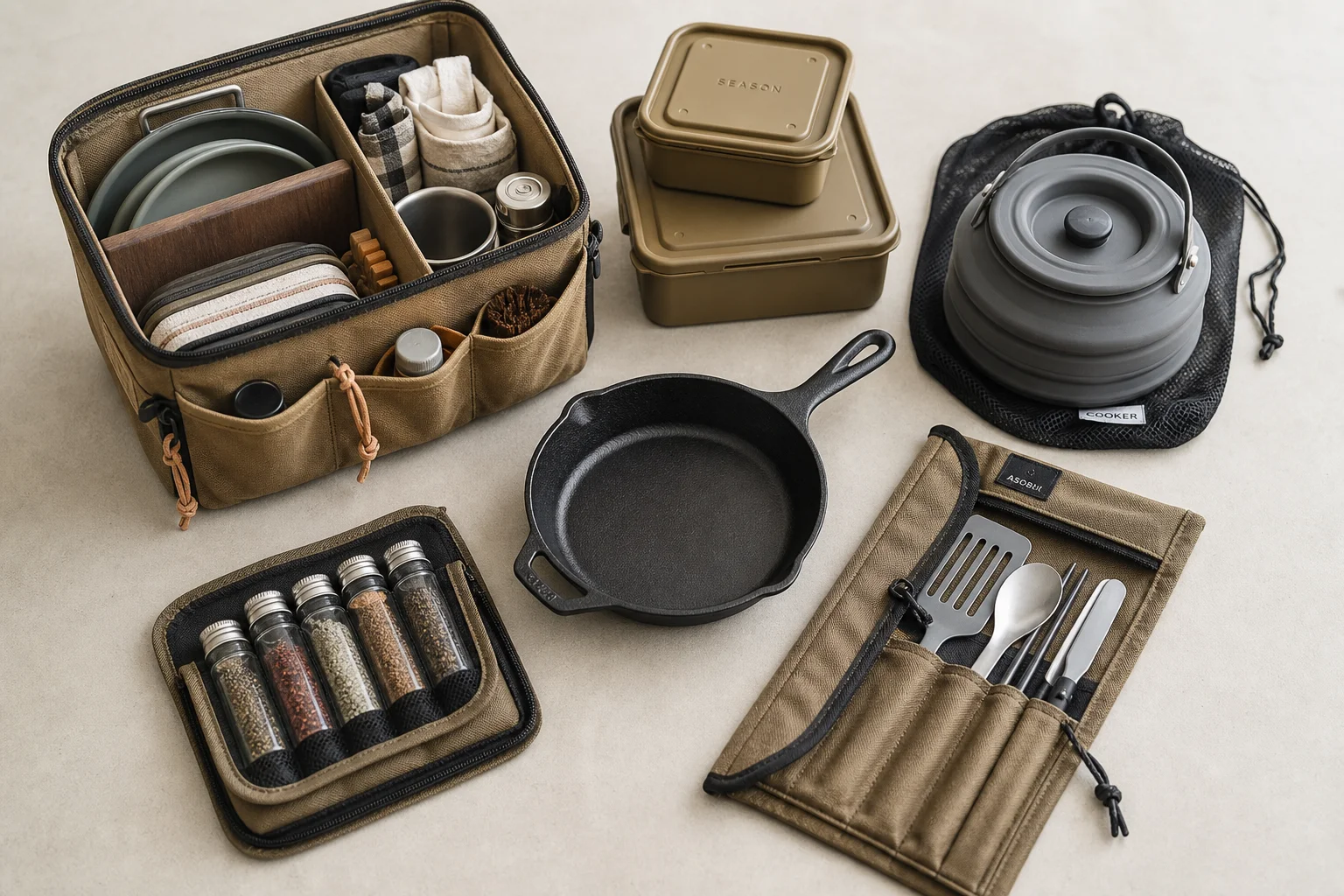
A single storage box becomes your kitchen hub. Inside, you’ll organize your Jetboil camping stove, cast iron skillet, collapsible pot, and all supporting equipment. This approach eliminates the constant question of which box holds which item. When you arrive at camp, you have one step to access your entire kitchen. When you leave, everything packs into one place.
The beauty of this system is that it works whether you’re car camping or living in an overland vehicle. Everything you need for meal preparation stays together, making setup and breakdown faster and more reliable.
Essential Cooking Equipment
Your core cooking equipment should be versatile, durable, and space-efficient. A cast iron skillet becomes one of your most valuable tools. While cast iron requires proper seasoning and care, a well-maintained skillet handles everything from breakfast eggs and bacon to evening chili and roasted meats. The heat retention and even cooking surface make it ideal for camp cooking.
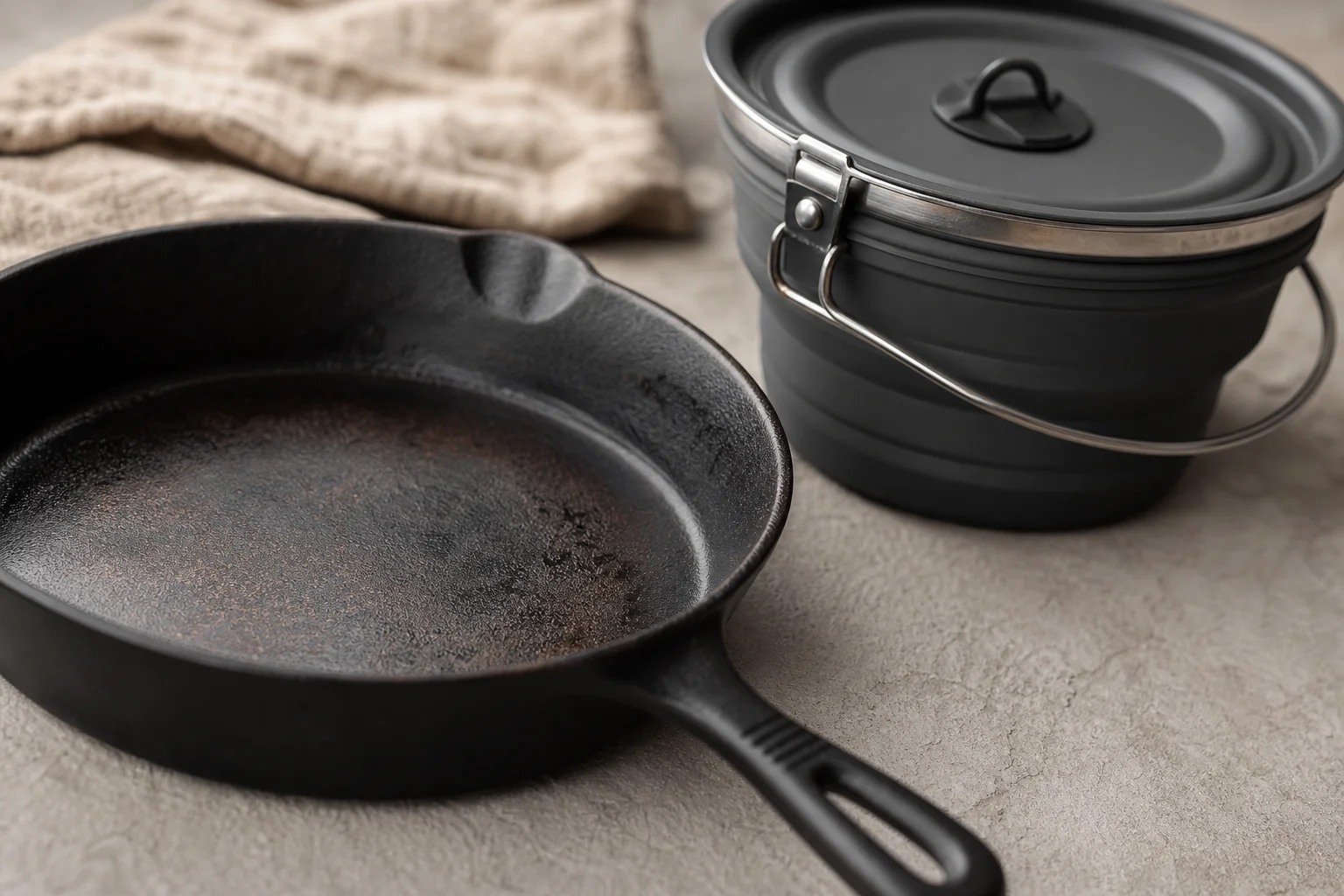
A collapsible pot reduces storage footprint without sacrificing capacity. Paired with your Jetboil or other camp stove, it gives you flexibility for boiling water, heating pre-made meals, or preparing simple dishes. The Omnia Oven adds another dimension to your camp cooking capabilities, functioning as a convection oven that lets you bake cookies, brownies, and reheat home-prepared food at camp.
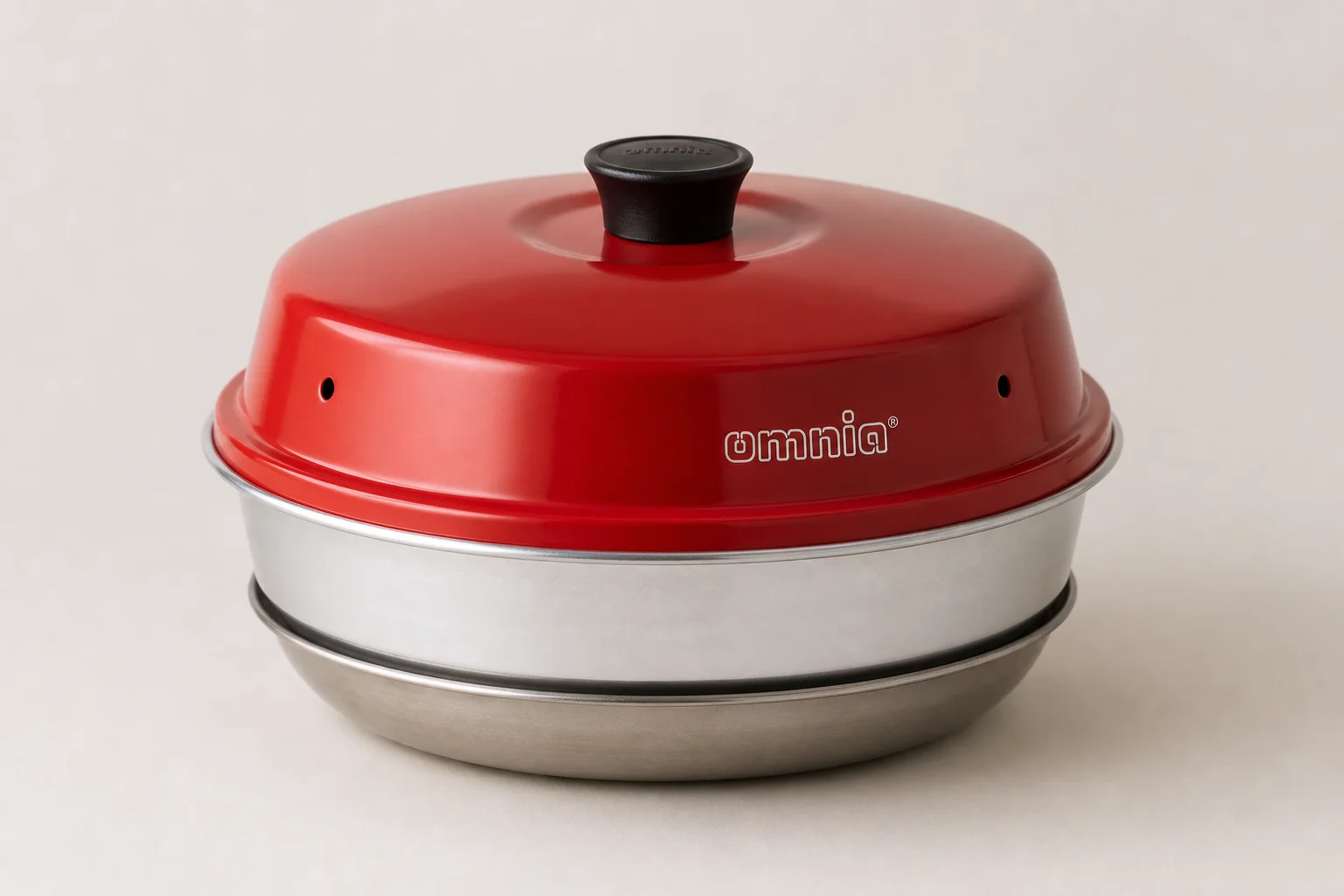
Beyond these core pieces, a cook sack or utensil organizer keeps your spoons, forks, and other tools in one accessible location. A small zip pouch dedicated to spices, sugar, and salt ensures you’re not eating bland camp food. These small organizational touches make a significant difference in how enjoyable camp meals become.
Storage Solutions for Easy Access
The physical storage system you choose directly impacts how easily you can access and use your kitchen. Traditional drawer systems in overland vehicles create a problem: you’re constantly opening and closing slides, moving items around, and losing track of where specific gear lives.
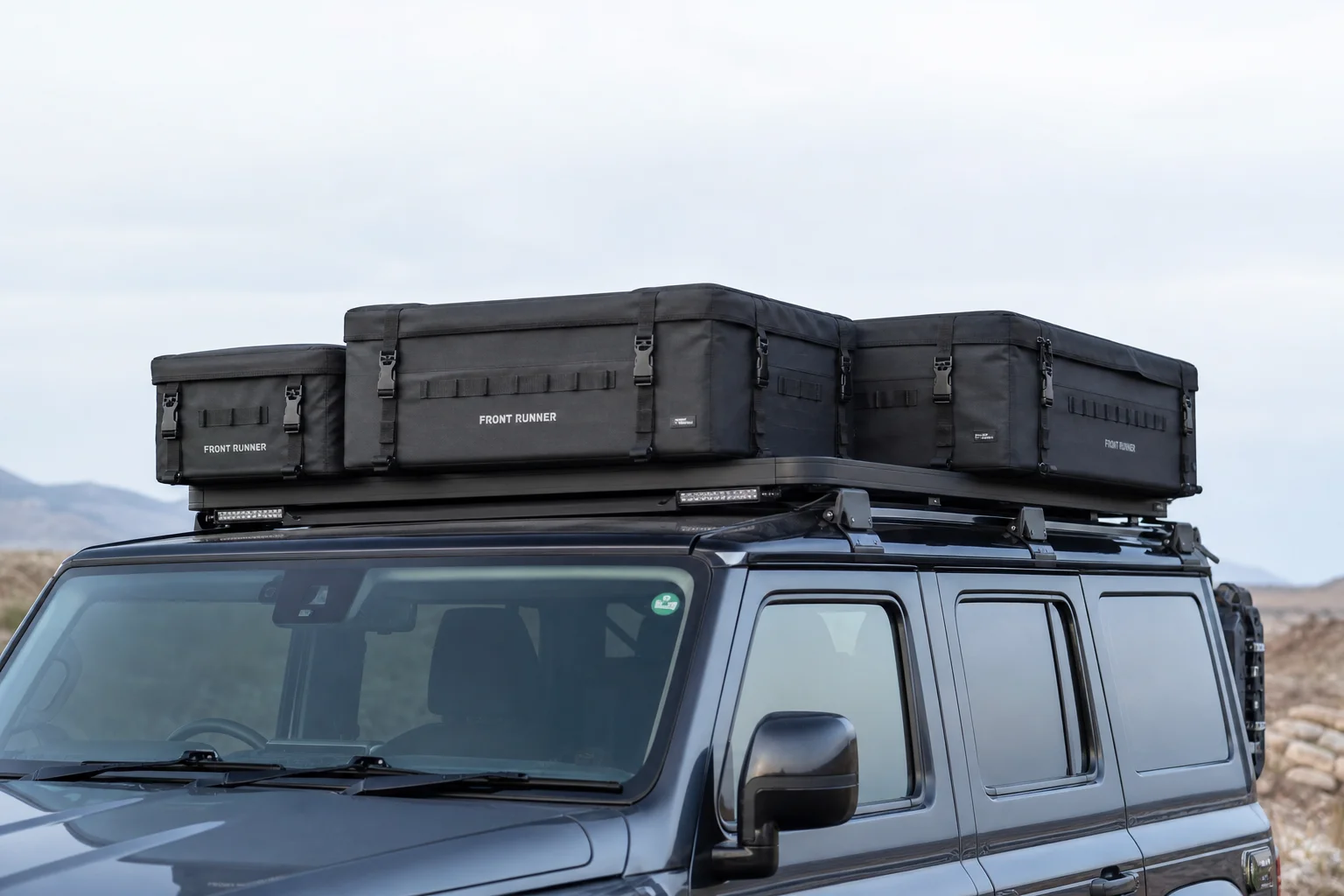
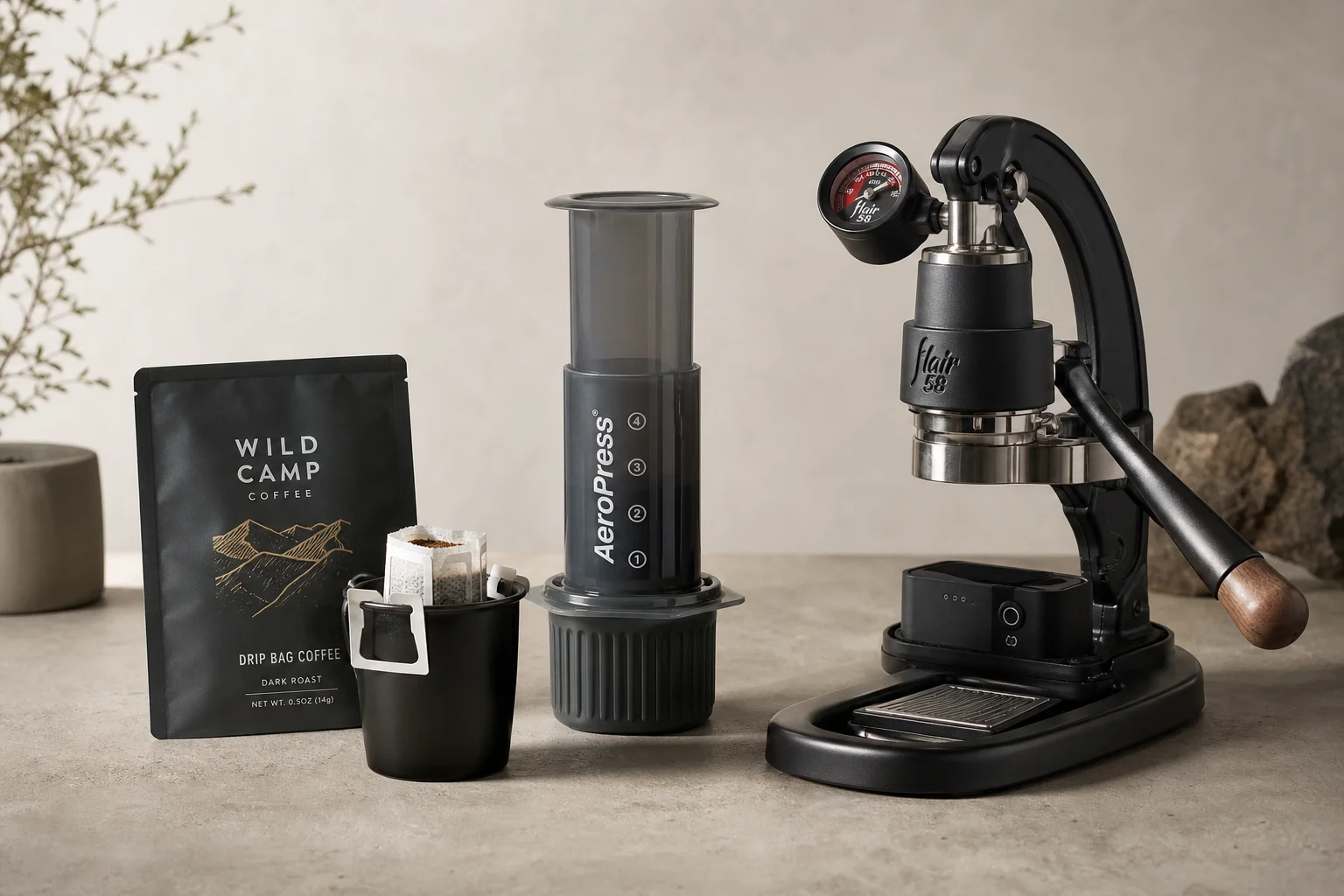
Front Runner storage boxes offer a cleaner solution. By using soft-top boxes mounted to your vehicle, you create dedicated storage zones without the complexity of drawer systems. One box can hold your dry goods and general kitchen supplies. Another becomes your coffee bar, keeping your entire coffee setup organized and ready. When you arrive home, you simply carry the boxes inside, reload, wash dishes, and return them to the vehicle. They slide in and out of the way without the friction of traditional drawer systems.
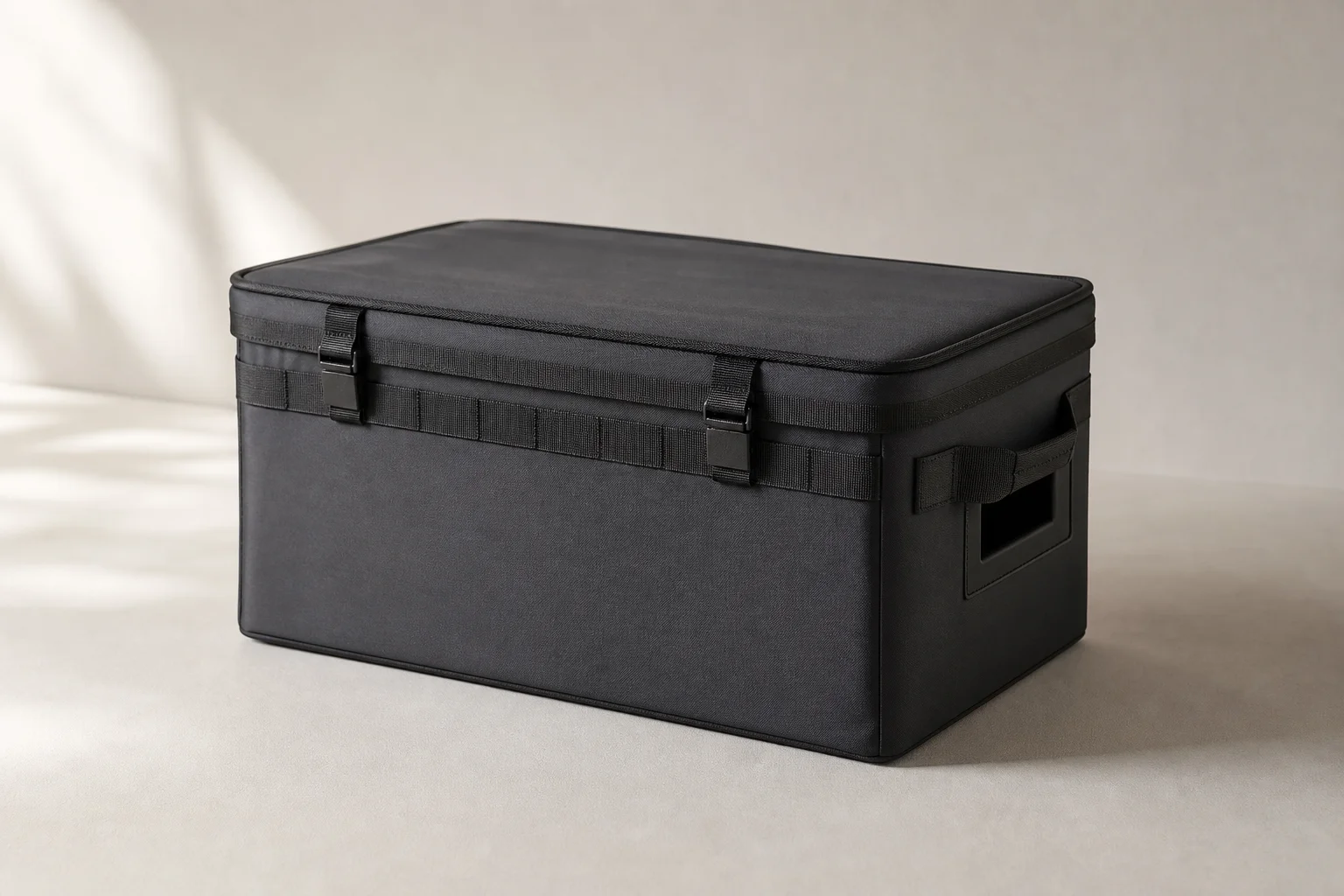
This modular approach also solves a common overlanding frustration: having your kitchen scattered across multiple locations. When everything is in one or two dedicated boxes, you always know where to find what you need.
Keeping Camp Life Simple and Organized
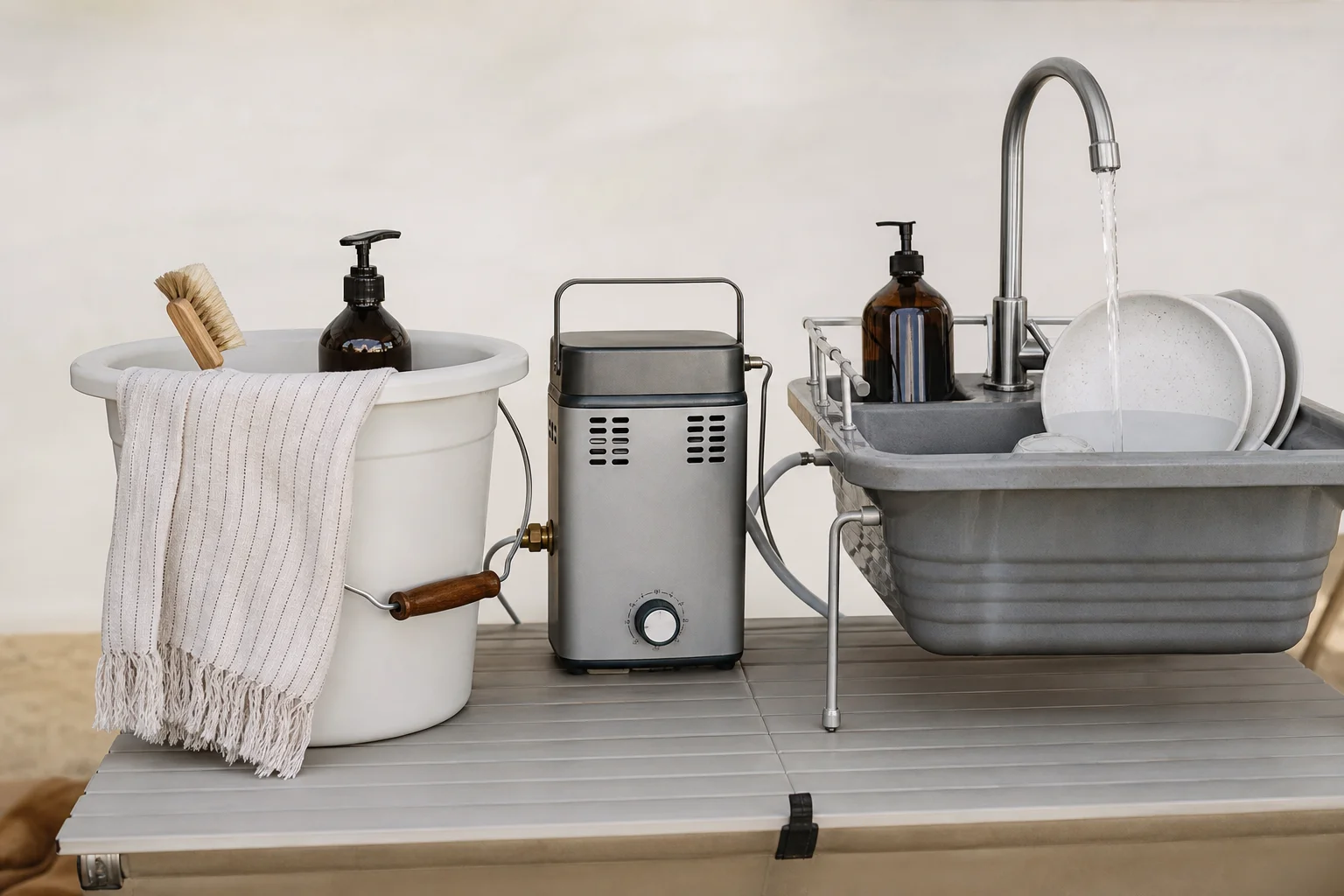
Winter camping and cold-weather trips introduce new challenges, particularly around dishwashing. Washing dishes in cold water causes real physical discomfort and makes the task feel miserable. A simple hot water setup transforms this experience. An instant hot water heater paired with a basic wash bucket and portable sink gives you warm water for cleaning without the complexity of larger systems.
The overarching principle behind an effective camp kitchen is learning what you actually use and eliminating excess. Many people arrive at camp with far more gear than they need, creating clutter and confusion. Through repeated trips and honest assessment, you discover which tools genuinely improve your camp experience and which ones just take up space.
The goal is less weight, better organization, and only bringing what you’ll actually use. This philosophy applies whether you’re car camping for a weekend or living full-time in an overland vehicle. A kitchen that works for you is one that stays organized, stays accessible, and stays simple.
Conclusion
An efficient camp kitchen doesn’t require expensive gear or complex systems. It requires thoughtful organization, versatile equipment, and the discipline to keep only what you actually use. By consolidating your cooking equipment into dedicated storage, choosing multi-purpose tools, and maintaining a simple dishwashing setup, you transform camp meal prep from a frustrating chore into an enjoyable part of your outdoor experience. Start with the essentials, organize them well, and refine your setup as you learn what works best for your style of camping.
Further reading
Related Reviews
Camping & Overlanding
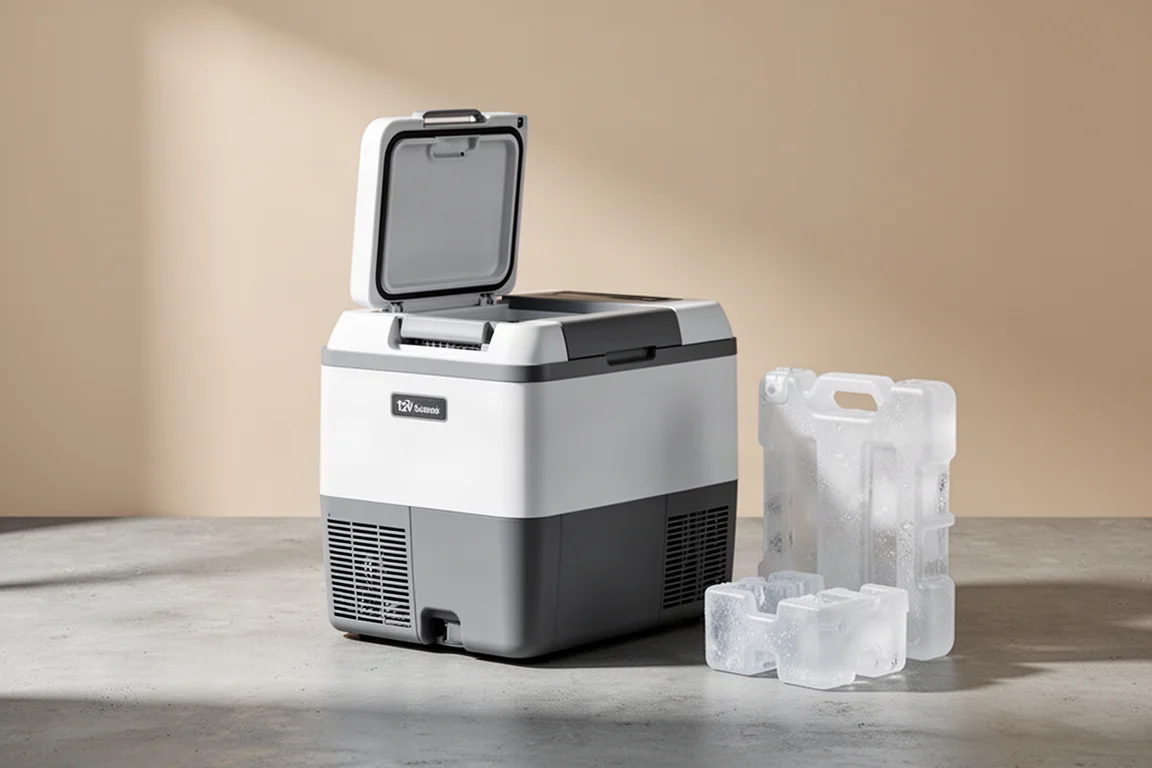
SetPower RF25 and RF30 Pro Review: A Convertible Compressor Fridge That Keeps Its Cool
We test the SetPower RF25 and RF30 Pro, a compact 12V compressor fridge with a convertible lid, integrated ice packs, and a three-year warranty.
3D Printing
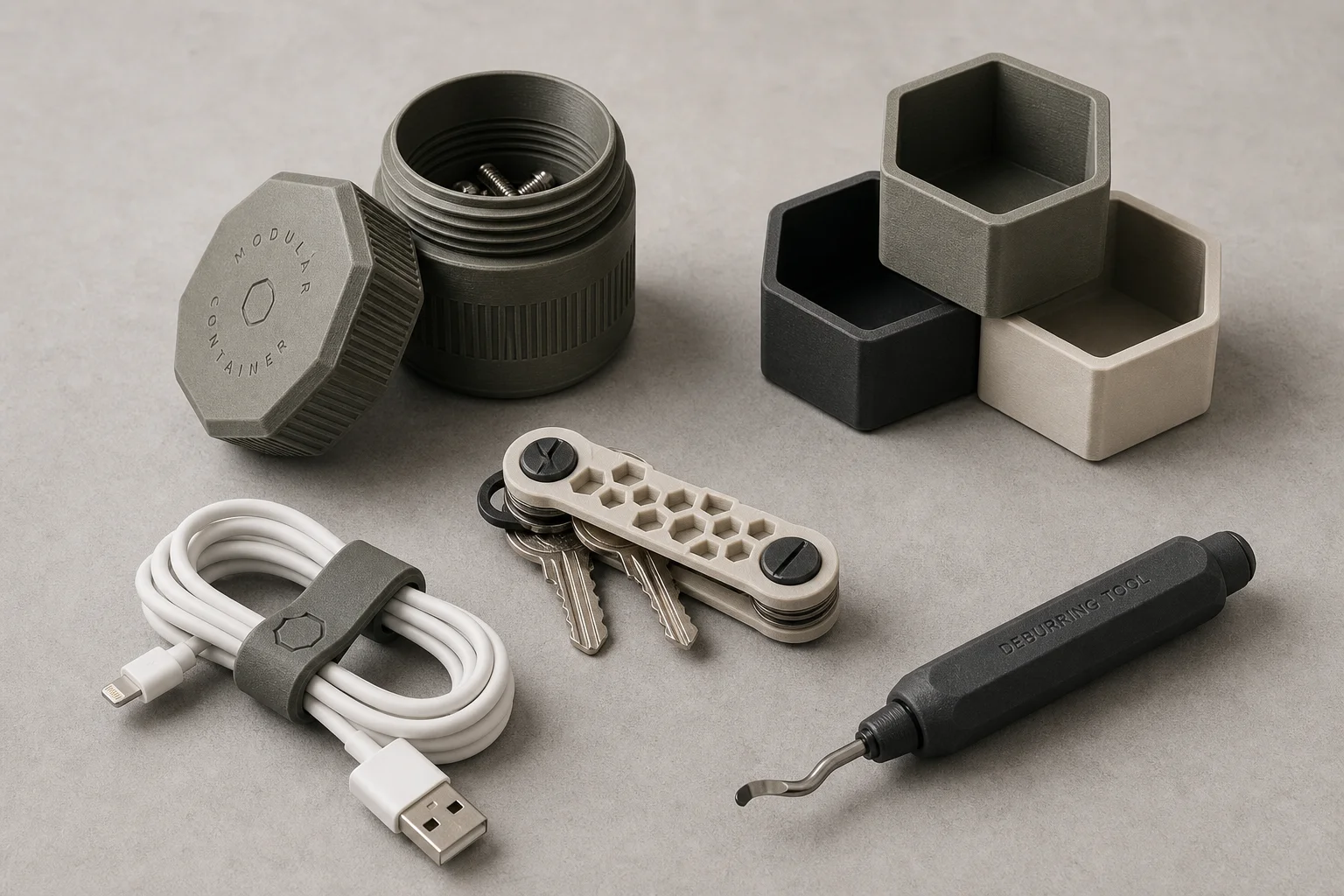
Best 3D Prints of All Time: 20+ Designs Worth Making
A curated collection of the most practical and durable 3D printed designs that deliver real value in daily use, from organizational systems to functional tools.
Backpacking Gear
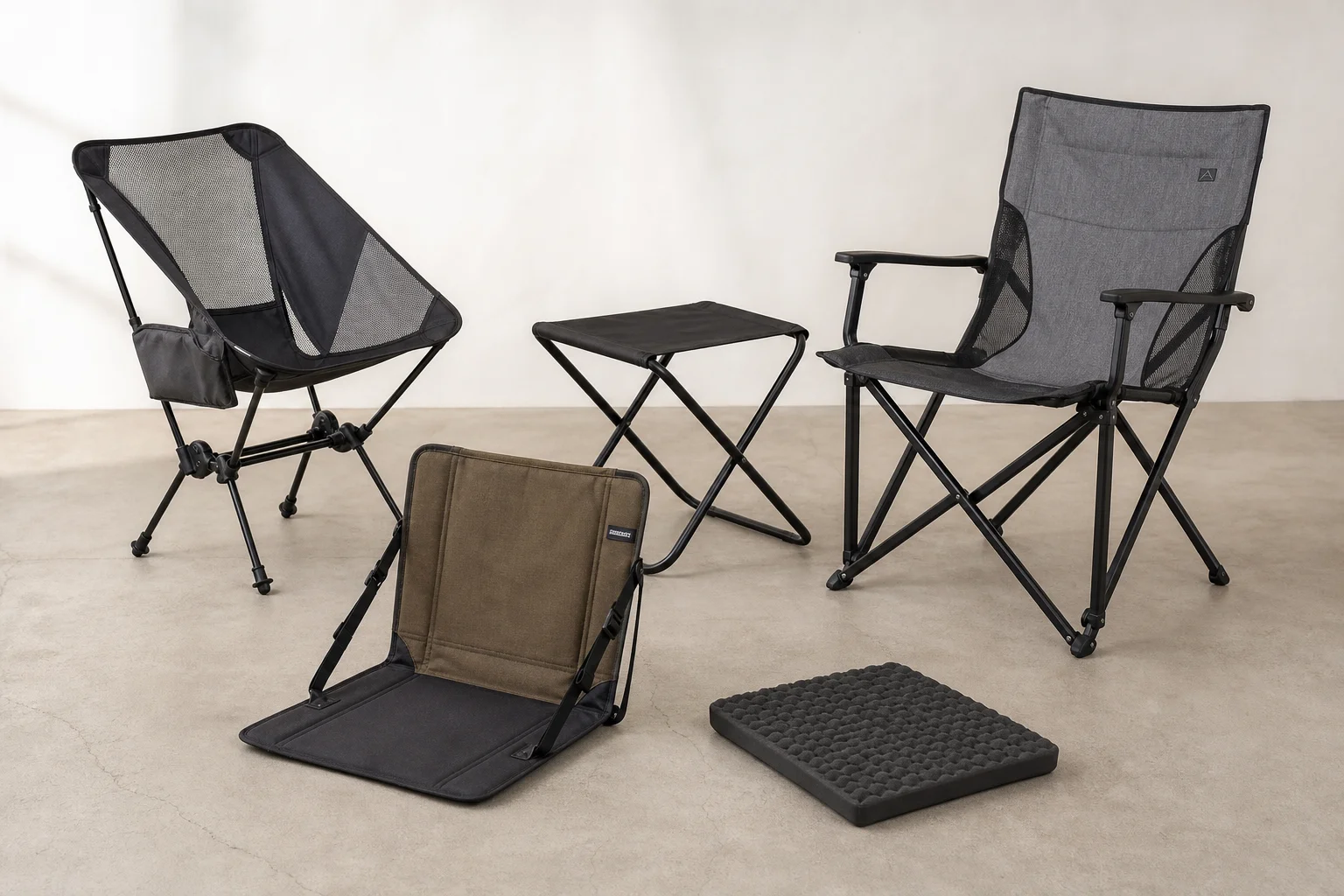
Best Backpacking Chairs Tested: Five Options From Luxury to Budget
Five backpacking chairs tested on real trips. One is a gold standard, one is an underdog bargain, one is a classic, one is essential minimalism, and one to avoid.