Backpacking Tents
Outdoor Vitals Fortius 1P vs Dominion 1P: Trekking Pole or Freestanding Tent?
A two-night field comparison of two one-person ultralight tents at a similar price point, covering space, condensation, wind performance, setup, weight, and value.
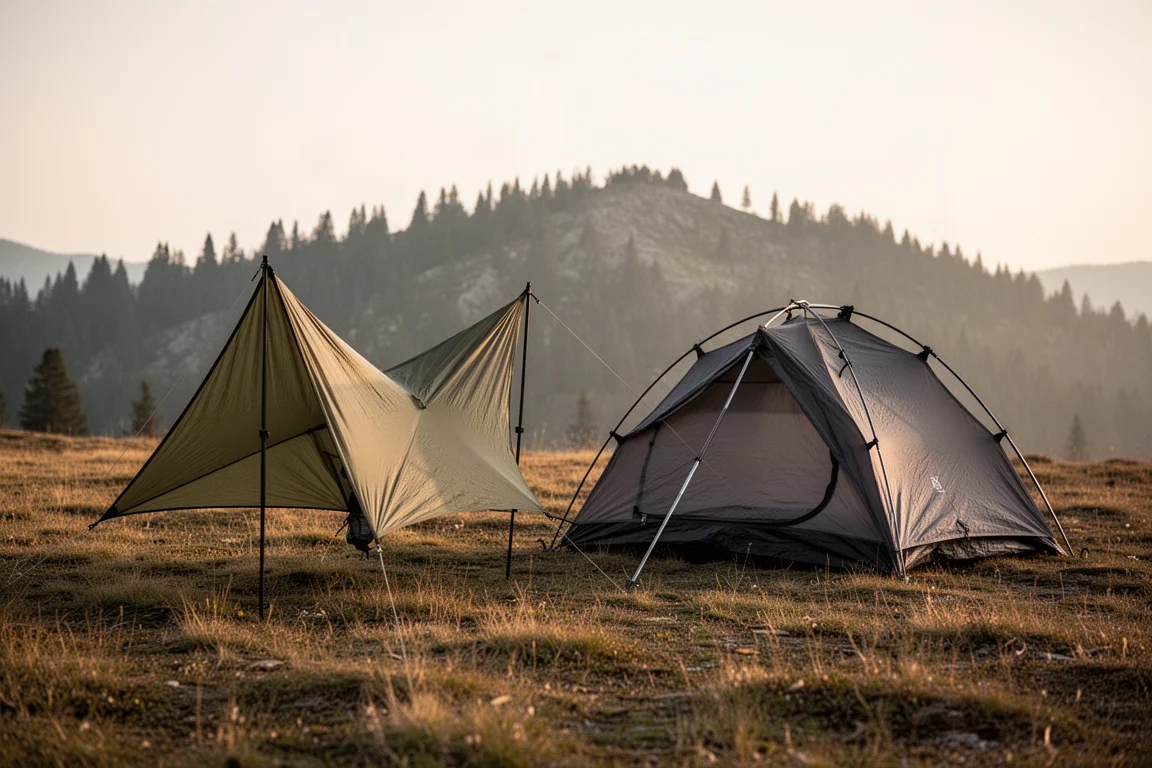
Introduction
Ultralight backpackers face a familiar fork in the road: carry a trekking pole shelter that saves weight and packs small, or carry a freestanding tent that holds its shape anywhere. Outdoor Vitals builds a one-person option on each side of that divide, the Fortius 1P and the Dominion 1P, and both sit at a similar price point with similar fabrics. Each is considered ultralight within its own category.
To see how the two designs behave in practice, both tents went out on a two-night field comparison, with the sleepers swapping shelters after the first night. What follows covers space, condensation, weather performance, setup, weight, and value, along with a clear recommendation for each type of camper.
Trekking Pole vs Freestanding Tents at a Glance
A trekking pole tent uses the poles you already carry as its structure. The shelter is staked out at the corners and tensioned, and the trekking pole or poles hold the ridge up. That approach removes the weight of a dedicated pole set, which is why these shelters tend to pack down smaller.
A freestanding tent carries its own poles. It holds its shape before it is staked, so it can be picked up and repositioned, and it does not depend on finding soft ground at every anchor point. The trade-off is weight and bulk in the pack.
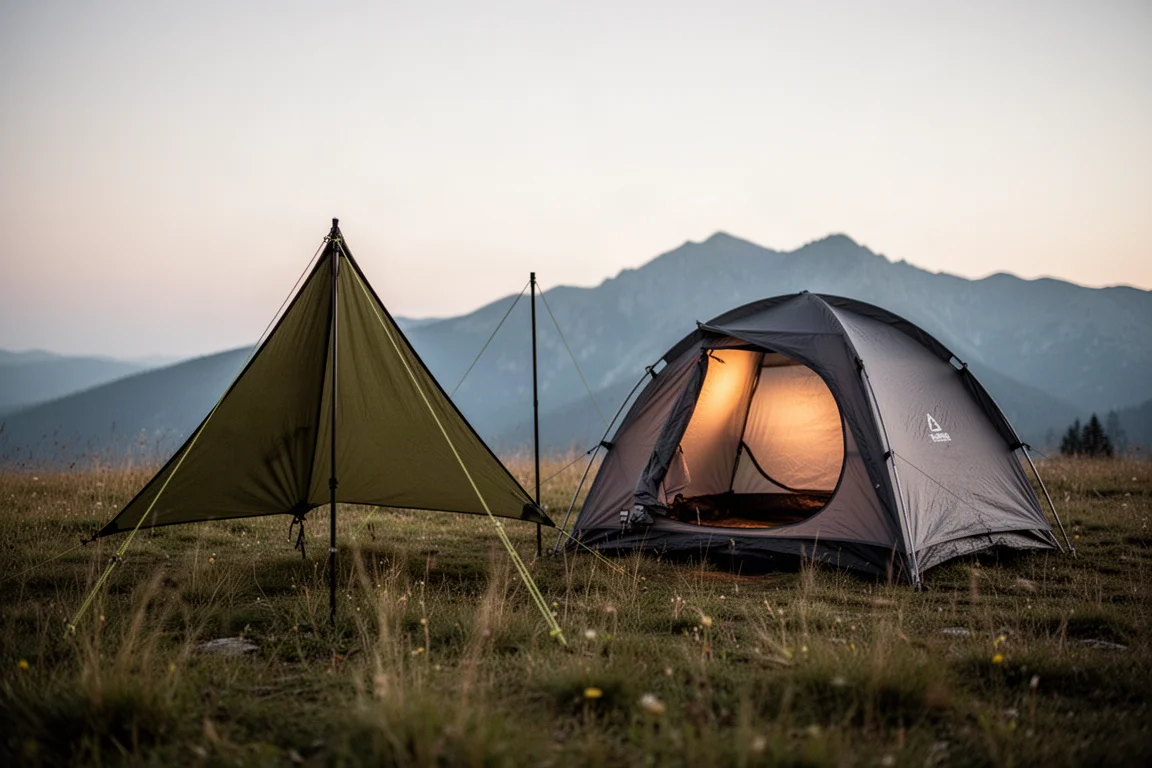
Neither design is automatically better. What matters is the terrain you walk, how much weight you are willing to carry, and how much practice you have pitching the shelter you own.
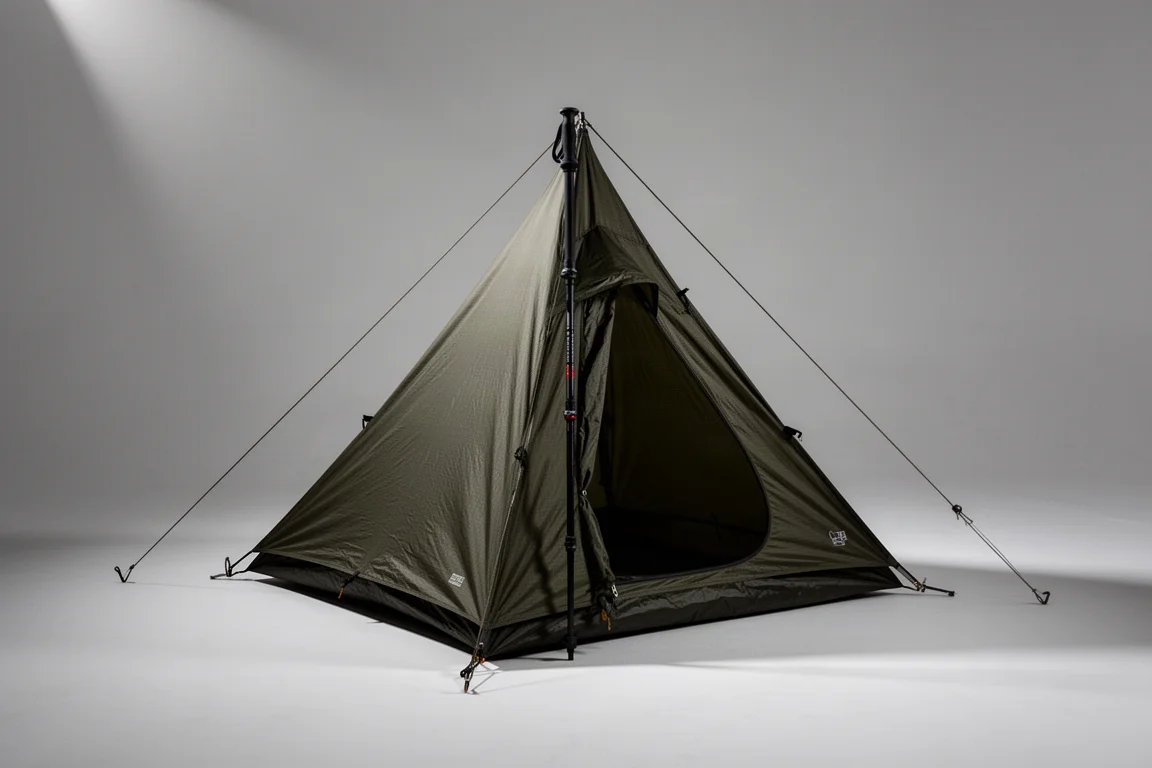
Outdoor Vitals Fortius 1P Trekking Pole Tent
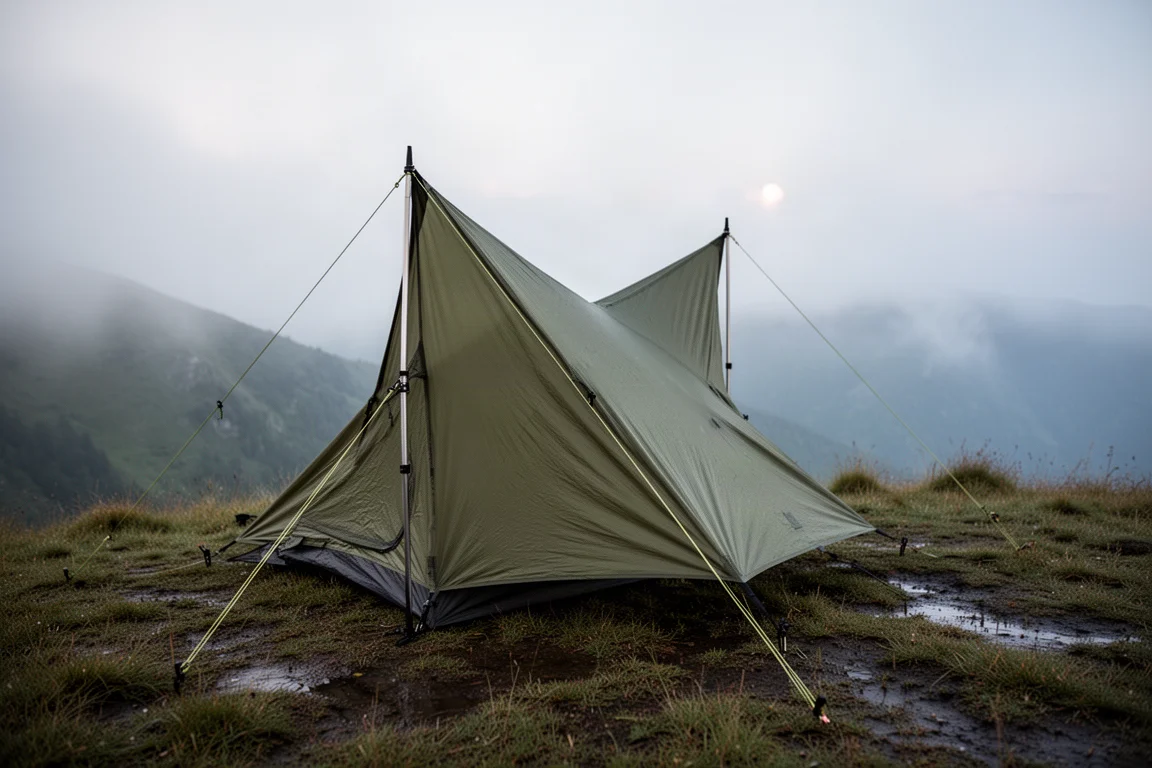
The Fortius 1P is the trekking pole shelter in this pair, and it came in at roughly 26 ounces with everything. That is the headline number, and it showed up in the pack as clearly as it did on the scale.
Inside, the tent felt long, and the ventilation openings at the foot end doubled as a shelf, a genuinely useful spot for stashing small items that would otherwise slide loose around a sleeping pad.
Setup was straightforward even on a first attempt. There are fewer moving parts than a freestanding design: stake the corners, insert the trekking pole, tension the shelter, and adjust the guy lines. Condensation was low, and in wind the shelter held up well. One memorable trip in Texas brought a wind storm that ran for roughly three hours and folded a companion’s semi-freestanding tent, while the trekking pole shelter stayed put through the night.
Outdoor Vitals Dominion 1P Freestanding Tent
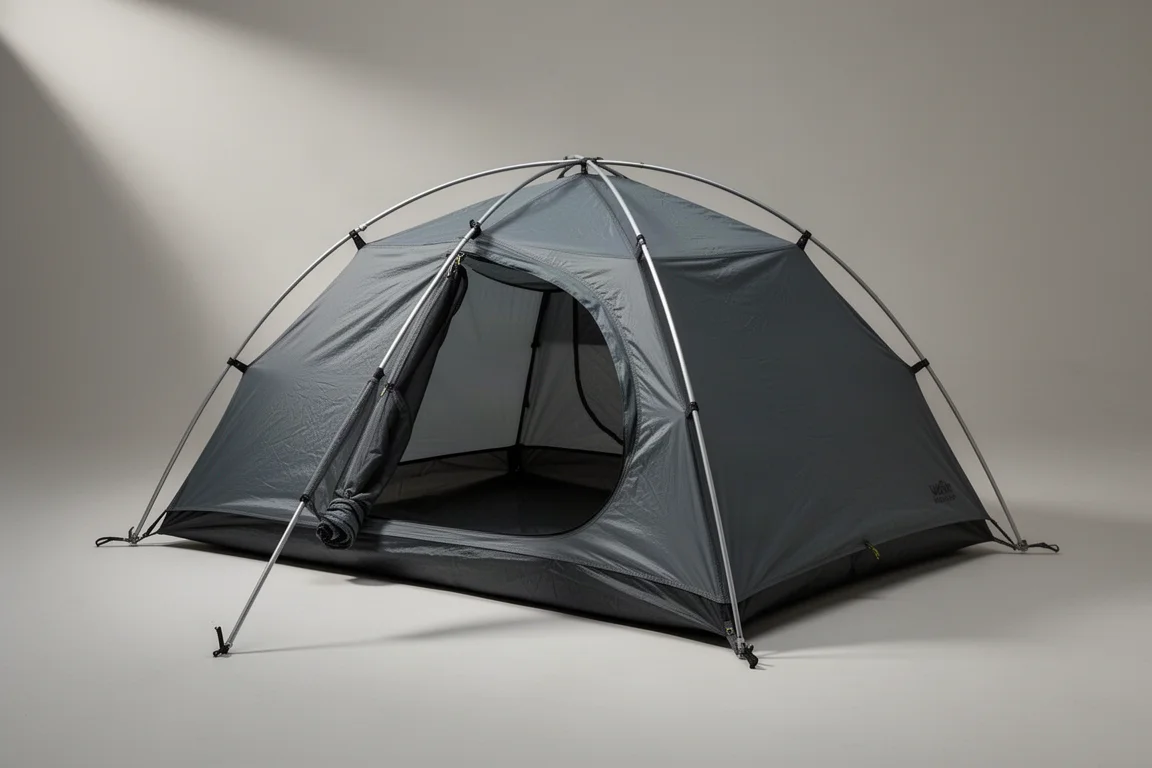
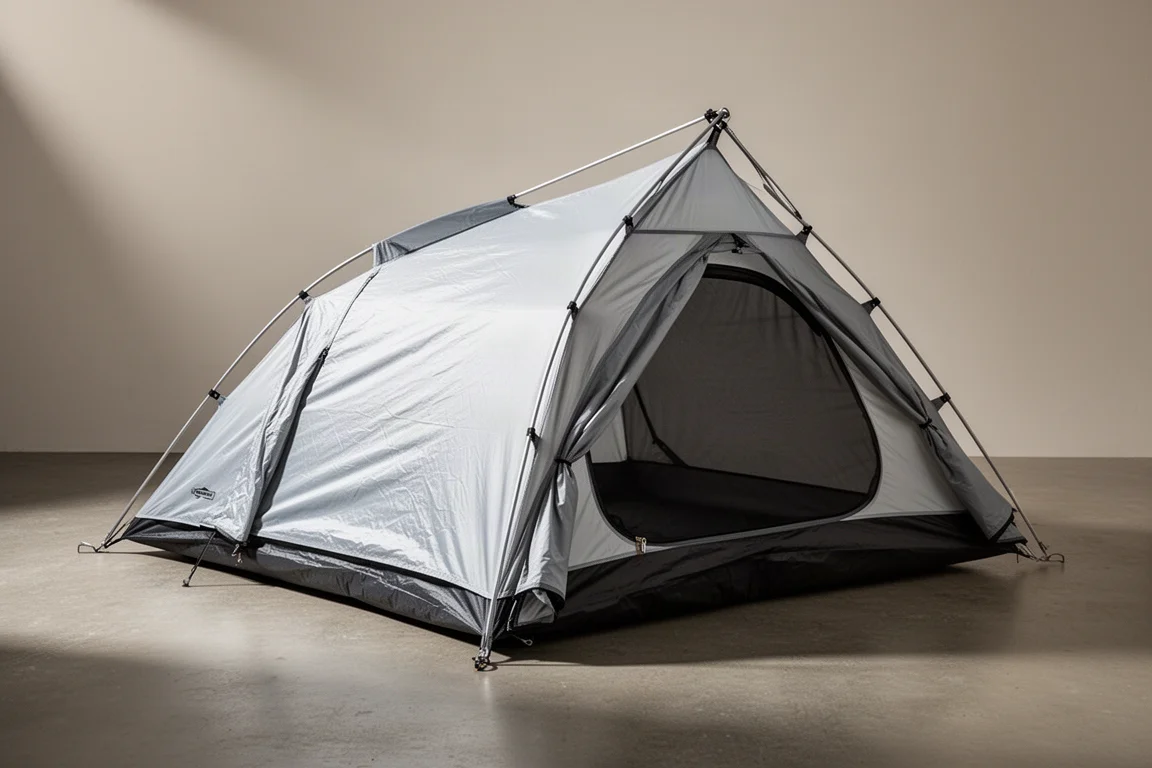
The Dominion 1P is the freestanding option, and it weighed in at about 2 pounds 12 ounces. It holds its shape on its own poles, which makes it convenient to reposition and easier to live with in a crowded camp.
For space and convenience, this was the tent that stood out in the comparison. The interior felt more open, and the structure meant less fiddling once it was standing. The cost is carried weight: the gap between the two shelters is more than a pound, and the packed size is noticeably larger.
Space, Comfort, and Ventilation
Space and convenience went to the freestanding Dominion 1P. It simply feels roomier, and because it does not rely on trekking poles, it is easier to arrange once you reach camp.
The Fortius 1P answered back with length and with those end vents that act as a shelf. Neither tent produced much condensation on the test nights, and the trekking pole shelter was the slightly drier of the two. Both managed airflow well enough that a damp sleeping bag was never an issue.
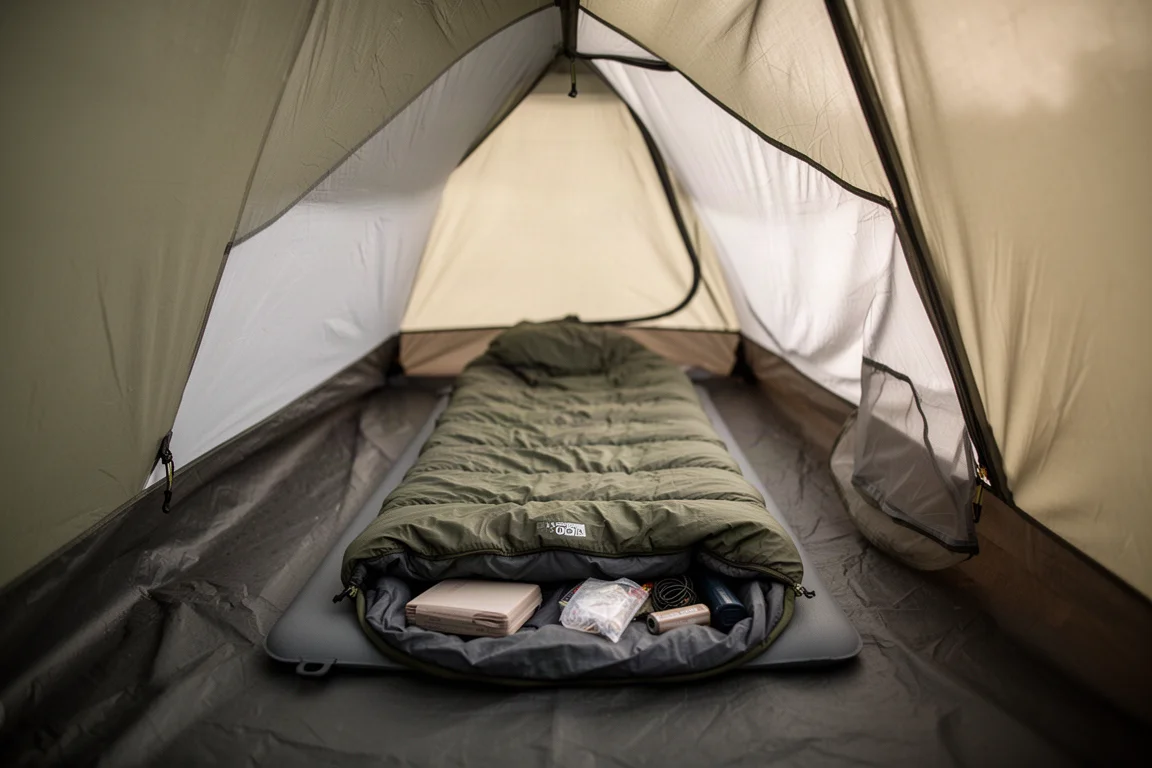
If you sleep on a long, wide pad and like to keep gear beside you, the freestanding layout is the more forgiving of the two. If you travel light and want the shelter to disappear into your pack, the trekking pole design earns its place.
Weather Resistance and Wind Performance
The trekking pole shelter was the more impressive of the two in weather. There is a persistent assumption that a freestanding tent is automatically more stormworthy, and this comparison did not support it.
Pitching quality matters more than the category. A trekking pole tent that is staked out properly and tensioned evenly can handle rough conditions, including the most severe weather one of these shelters had been camped through. The same principle applies in reverse: a freestanding tent left loose and unstaked will not perform either. Stake everything down, and bring a little extra guy line.
Weight, Packability, and Setup
Weight and packability went clearly to the Fortius 1P at roughly 26 ounces, against about 2 pounds 12 ounces for the Dominion 1P. That gap is the entire reason many backpackers accept the extra fuss of a trekking pole shelter, and it is most noticeable on long days with real elevation gain.
Setup preferences were split. The trekking pole tent has fewer parts, so getting it standing was quicker for one tester: four corners, pole, tension, done. The other view was that both tents need a similar number of stakes, so the difference is smaller than it looks on paper.
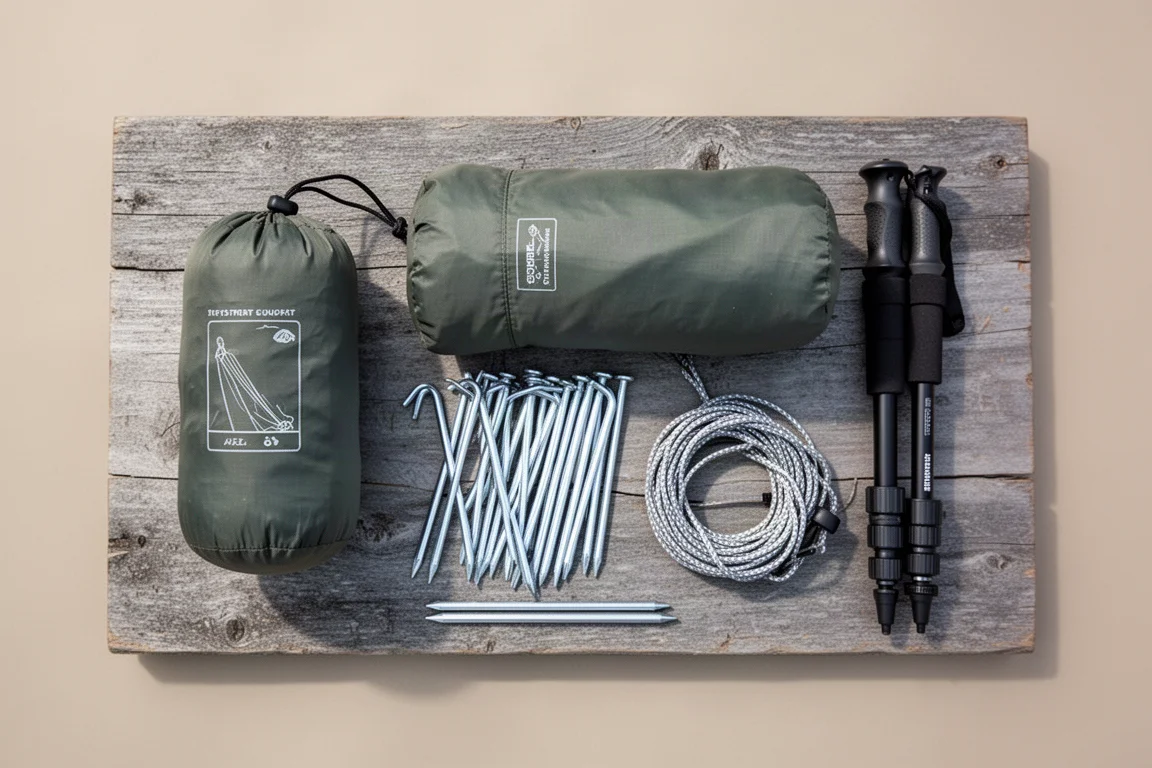
The practical takeaway is the same for either design. Pitch your tent at home before you take it out, and always stake it down. Tents that are not anchored can lift at the corners overnight, and weather rarely arrives on schedule.
Price and Value
The two tents sit at a similar price point and use similar fabrics, so the decision is not really about cost. Both are positioned as ultralight one-person shelters, and each is competitive within its own category.
What you are choosing between is the weight penalty of a freestanding pole set and the convenience of a shelter that stands on its own.
Which Tent Should You Choose
For hikers chasing big miles who count every ounce, the Fortius 1P is the natural pick. It is lighter, packs smaller, and performed well in wind and weather during the comparison.
For anyone who wants the most versatile single shelter, the freestanding Dominion 1P is easier to live with. It offers more space, sets up without trekking poles, and does not depend on staking out every corner before it holds its shape. The long-term pick for a single do-everything tent in this comparison was a fully freestanding double-wall design, on exactly those grounds.
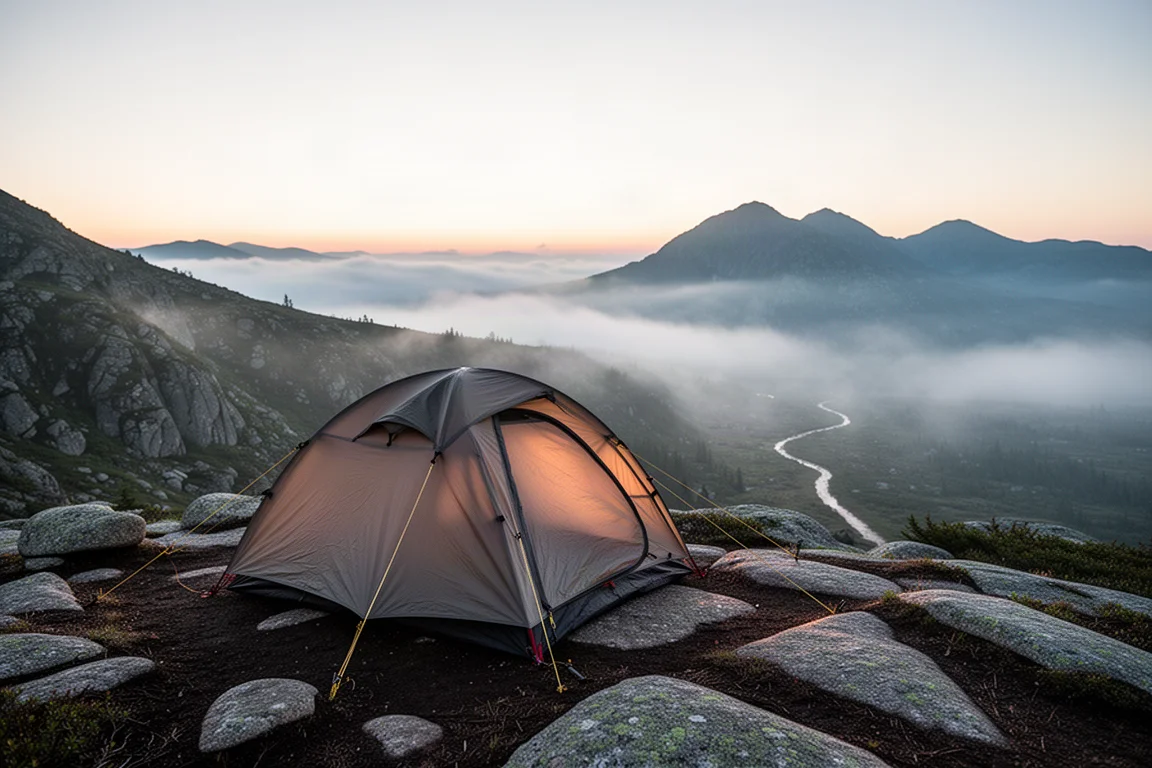
If you are new to trekking pole shelters, the nerves fade with practice. Set the tent up a few times in the backyard, carry a bit of spare guy line and a few extra stakes, and the design becomes second nature.
Conclusion
Both tents are strong ultralight options. The Fortius 1P wins on weight, packability, and weather confidence, while the Dominion 1P wins on space and convenience. Match the shelter to how you actually hike, and either one will serve you well.
Further reading
Related Reviews
Backpacking Tents
3F UL Lanchan Pro 1 Review: A 1 lb 8 oz Single-Wall Trekking Pole Tent
A practical look at the 3F UL Lanchan Pro 1, a single-wall trekking pole shelter with a 1 lb 8 oz weight, 20D silnylon fabrics, and a roomy 90 x 31 x 49 inch interior.
Backpacking Tents
3F UL Taiji 2-Person Tent: A Convertible Backpacking Shelter Worth a Closer Look
A practical look at the 3F UL Taiji two-person tent, covering its materials, true two-person interior, fly-first pitching, and the seasonal inner swap that lets one shelter cover more of the year.
Backpacking Tents
3FUL Lanshan Twoerson Pro Review: A Light Trekking Pole Shelter That Struggled in Rain
A two-person trekking pole shelter with a 2026 redesign, pitched with sticks and put through a night of steady rain. Here is what worked, what did not, and what to check before buying.