Cookware
Our Place Titanium Always Pan Pro Review: A Chemical-Free Non-Stick Pan That Claims to Last a Lifetime
A textured pure-titanium cooking surface promises non-stick cooking without coatings. Here is how it performs in real cooking, and where the design falls short.
Introduction
Our Place says the Titanium Always Pan Pro is the first non-stick pan built to last a lifetime. That is a bold claim in a category where most coatings wear out and get replaced within a couple of years, so it deserves a proper test. After cooking with this pan across eggs, sears, and liquid-heavy meals, the results are genuinely surprising in places, and disappointing in others.
This review covers what the pan is made of, how its coating-free non-stick surface performs, what the heat tests show, and the design choices that make a roughly $200 pan hard to recommend to everyone.
What the Titanium Always Pan Pro Is Actually Made Of
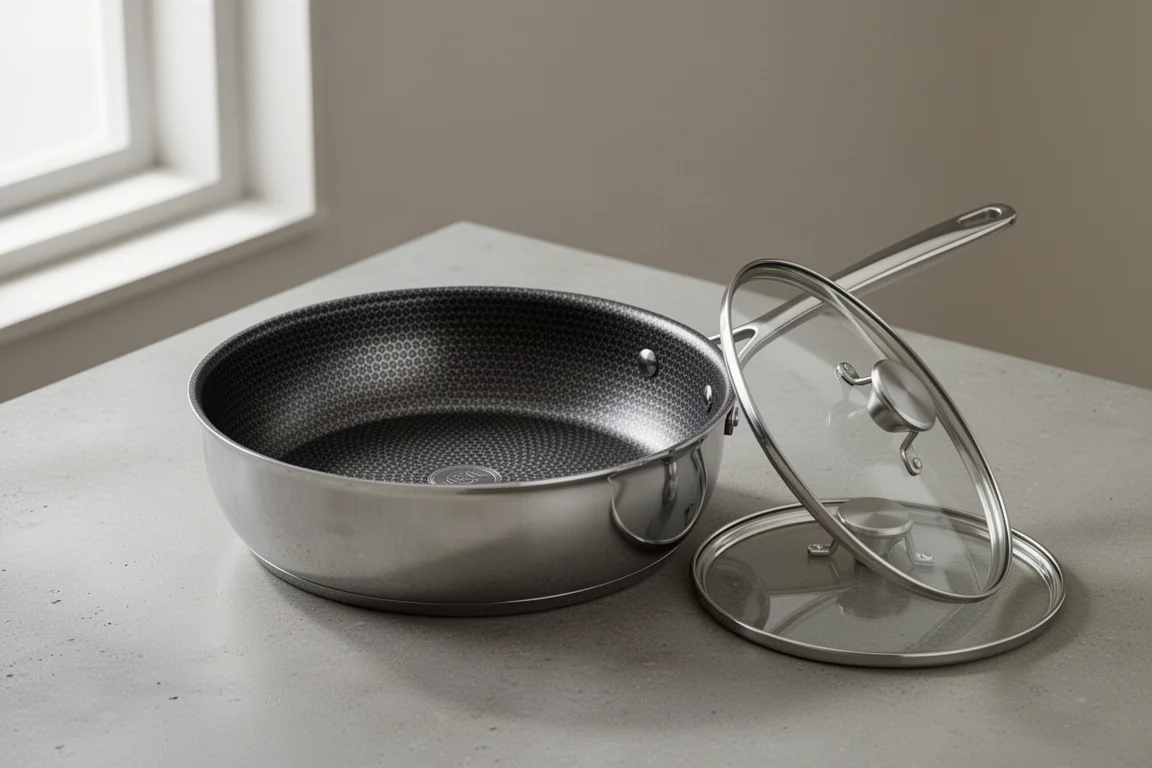
Our Place’s marketing leans heavily on materials jargon, so it helps to cut through it. The pan is built from three bonded layers: a 430-grade stainless steel exterior, an aluminum core, and an interior that is pure titanium with no coatings or chemicals added. Despite looking somewhat like a steel-and-nonstick hybrid, it is not that. The darker patches on the cooking surface come from oxidation during the company’s proprietary curing process.
Titanium is extremely hard and damage resistant, which is why this pan is rated for oven use up to 1000°F. Our Place also measured in at a slightly thicker build than claimed: 3.2 mm rather than the stated 3 mm, a touch thicker than a typical 3-ply pan.
How the NoCo Surface Works
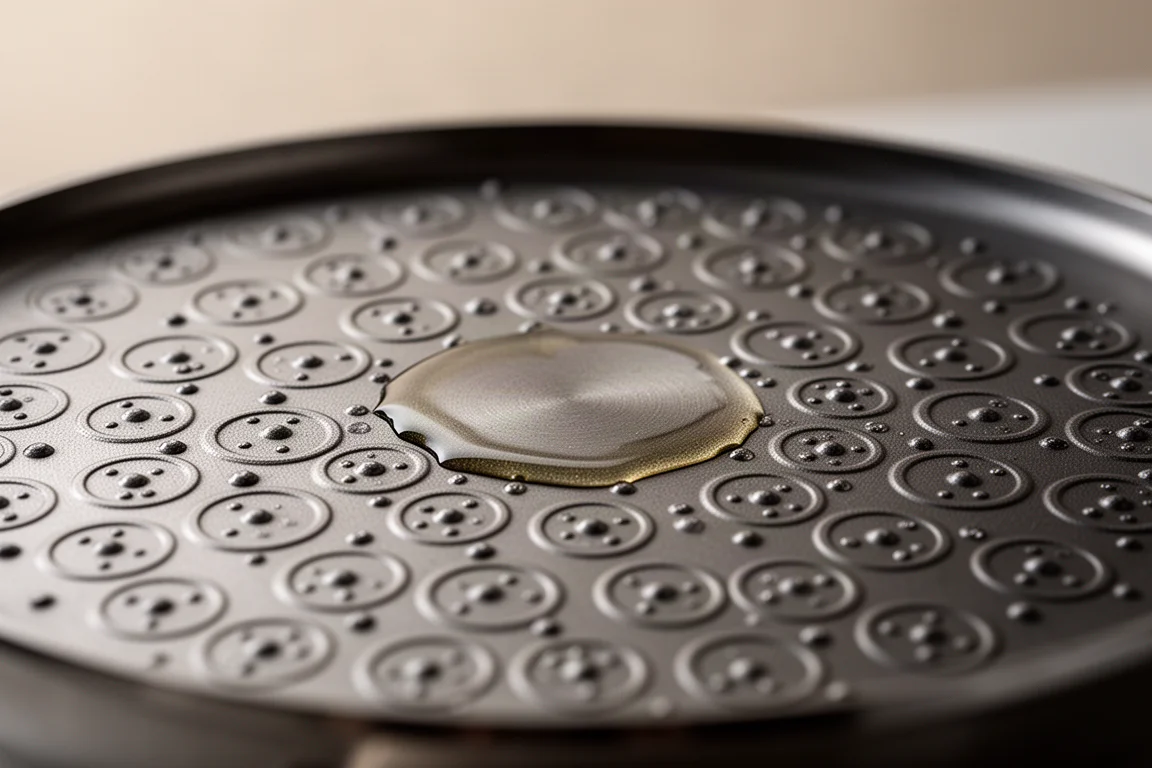
The core technology is what Our Place calls NoCo, short for No Coating. The cooking surface carries a raised pattern of small circles debossed into the titanium, with tiny raised dots inside each circle. The company claims this texture creates airflow between the food and the pan, making the surface repel liquids the way a hydrophobic lotus leaf does. That, in theory, is how the pan achieves non-stick performance without any chemical coating.
Non-Stick Performance in Real Cooking
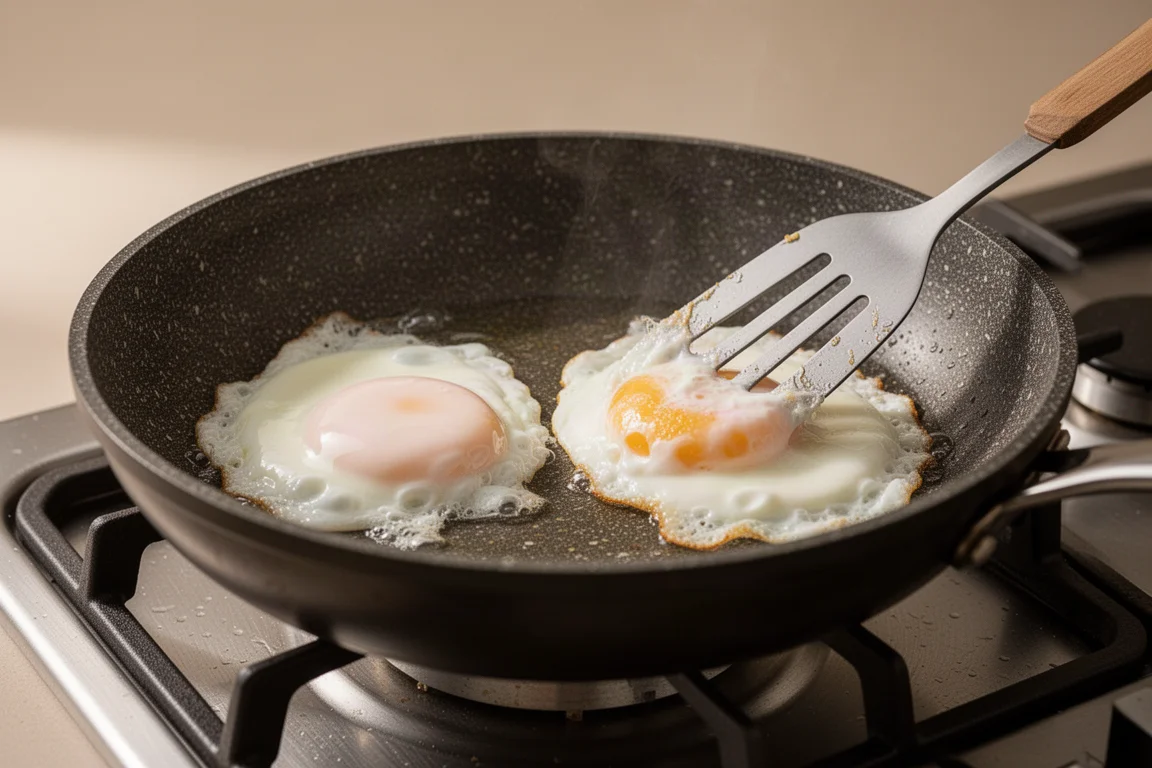
Eggs are the most reliable sticking test, and the pan passes with a caveat. The instructions call for greasing the surface with at least a teaspoon of oil. After preheating, adding oil and a little butter, and letting the eggs cook for about a minute, they moved freely with zero sticking and flipped cleanly. An omelet test produced the same result: perfect release, no sticking.
Pushing further, an egg cooked in a completely dry pan did stick, but not badly. The spatula slid under it without breaking the yolk or tearing the whites, and the stuck-on bits rinsed right off afterward.
Beyond eggs, the pan sears well. Burgers, steak, salmon, and chicken all brown nicely and cook evenly. The textured surface also keeps oil pooled in the center of the pan rather than letting it run straight to the edges, so the middle of the cooking surface stays lubricated.
Heat Conduction and Retention
Standard boil tests tell an interesting story. Time to boil two cups of water puts the pan at average heat conduction, but heat retention is above average, likely because the thick walls and tall sides absorb a lot of heat. That combination suits braising and slower, liquid-heavy cooking more than quick, responsive saute work.
Design: What Works and What Does Not
The good parts are real. The handles are rivetless, which leaves a clean, uninterrupted cooking surface. The helper handle is large with a wide opening, and the sides stand about an inch taller than a typical frying pan, giving enough capacity for braising and other liquid-heavy meals.
The bad parts are harder to overlook at this price. The main handle is thick, squared, and uncomfortable, with a peg you have to clean around, and the corner digs into your hand at the end of the grip. Because of the rounded edges and slick polished finish, the handle gets slippery when your hands are soapy or greasy, or when you are wearing an oven mitt.
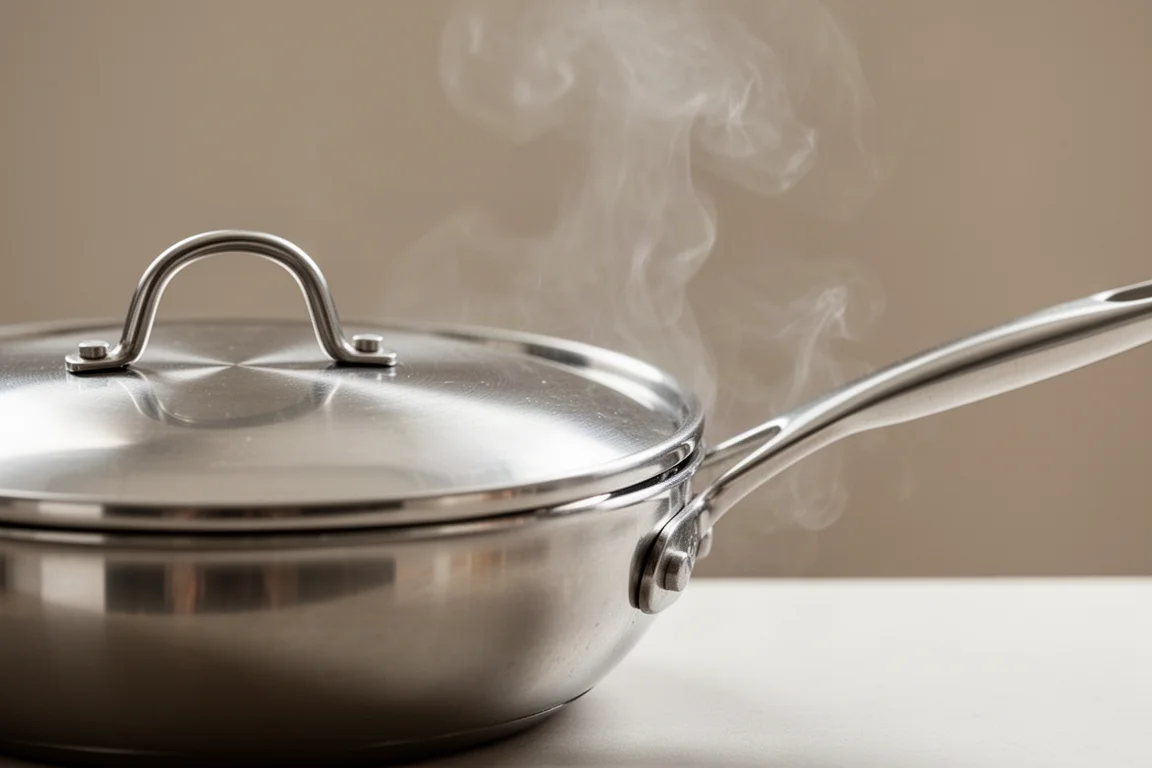
The lid is the other frustration. It is designed so the included spatula can slide underneath while resting on the handle, but that gap lets steam escape. Even with the spatula removed and the lid twisted, steam still leaks, and it blasts directly onto the handle, leaving it wet and piping hot. Most pans let you shift the lid back to vent steam on the opposite side. This one offers no way to fully seal the lid and redirect the steam elsewhere.
The polished finish is polarizing too. It looks striking at first, but it picks up fingerprints and smudges quickly and ends up looking like a mess. And the lid itself feels fragile: it is only 0.8 mm thick and weighs 1 pound, noticeably lighter than comparable lids from other brands.
Buying Advice: Who Should Actually Buy It
This is a genuinely torn verdict. On the plus side, the pan lives up to its core promise. Even delicate foods like eggs do not stick, and because there is no ceramic or Teflon coating, there is no reason to expect the performance to degrade over time. It is not as slick as a traditional non-stick pan, but it is far less fussy than stainless steel, releases food better than well-seasoned cast iron or carbon steel, weighs less than cast iron, and never needs seasoning.
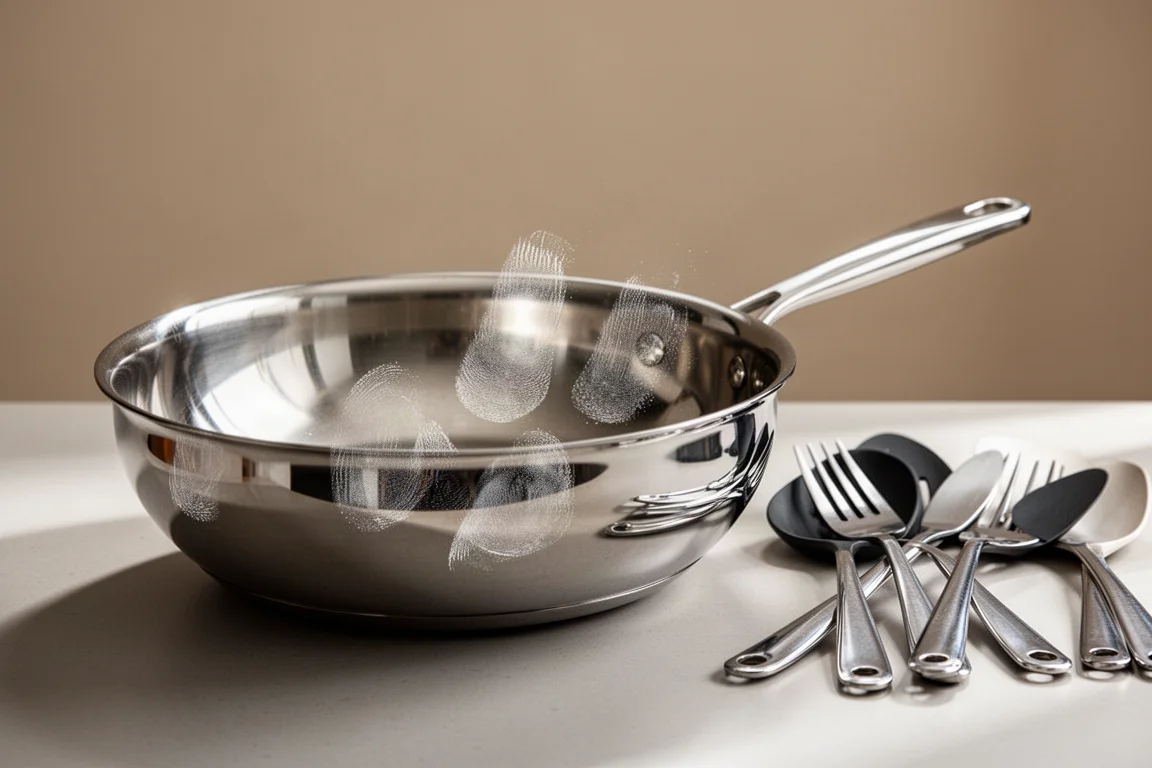
On the minus side, at almost $200, the slippery square handle and the flimsy, poorly sealing lid are hard to forgive. For the same budget, you could buy a quality stainless steel pan that lasts forever plus an affordable non-stick pan just for eggs, and still have $100 left over.
This pan makes the most sense for two types of cooks: people who want to avoid Teflon and are tired of replacing ceramic non-stick pans every six months, and people with limited kitchen space who want a single all-purpose pan that can do everything.
Conclusion
The Titanium Always Pan Pro delivers a combination of non-stick performance and durability that most cookware cannot match. If that textured titanium surface came on a pan with a comfortable handle and a standard lid, it would be an easy recommendation for almost everyone. As it stands, it is a strong pick for a specific kind of buyer, and a frustrating one for everyone else.
Product link
View more details for Our Place Titanium Always Pan Pro
This product is mentioned in the review. Check the specifications, options, and compatibility before buying.
View more details for Our Place Titanium Always Pan ProFurther reading
Related Reviews
Cookware
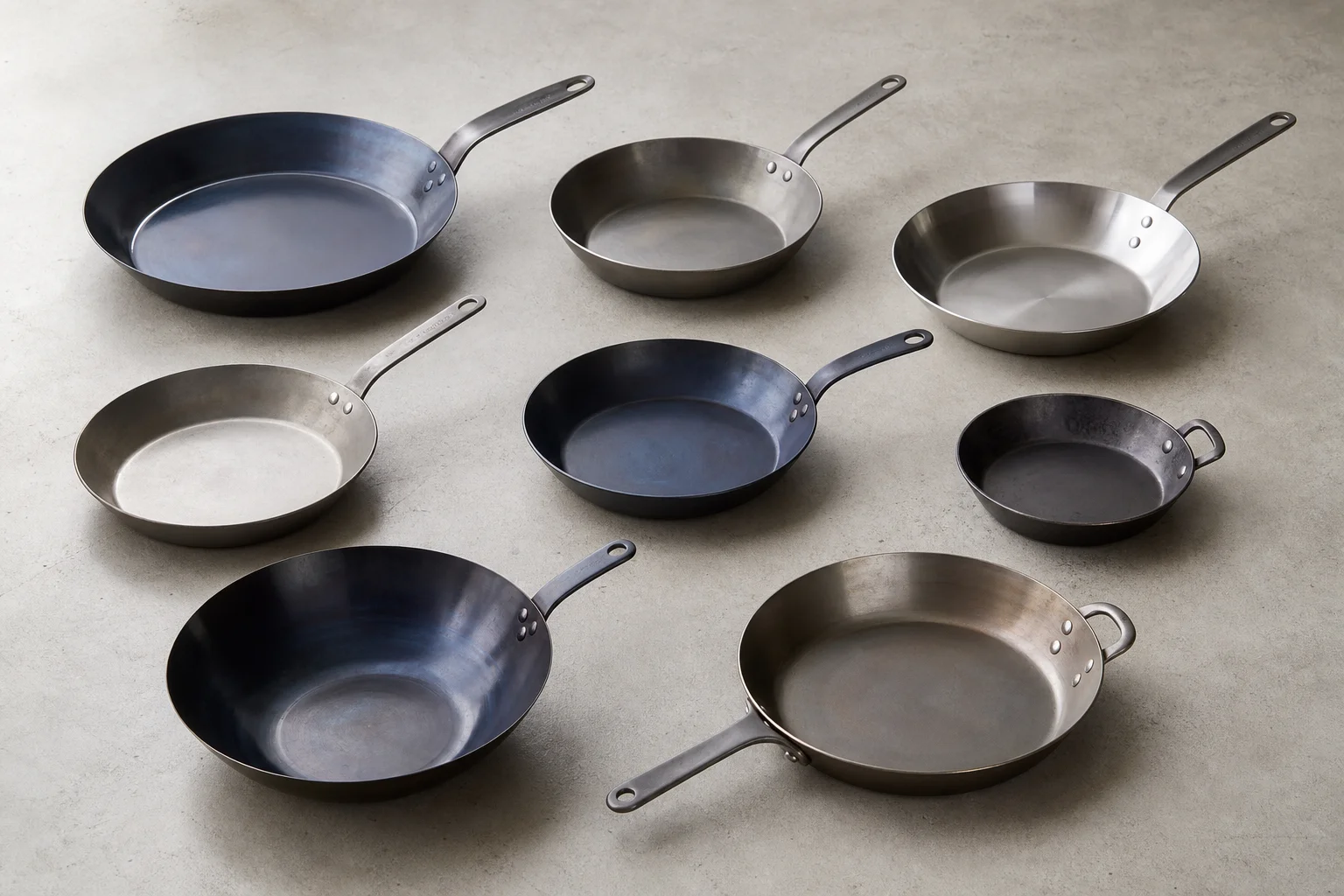
Best Carbon Steel Pans Tested: Which Brands Deliver Real Value
We tested eight popular carbon steel pans with controlled durability, heat, and cooking tests. Here's which ones perform best and which to avoid.
Cookware
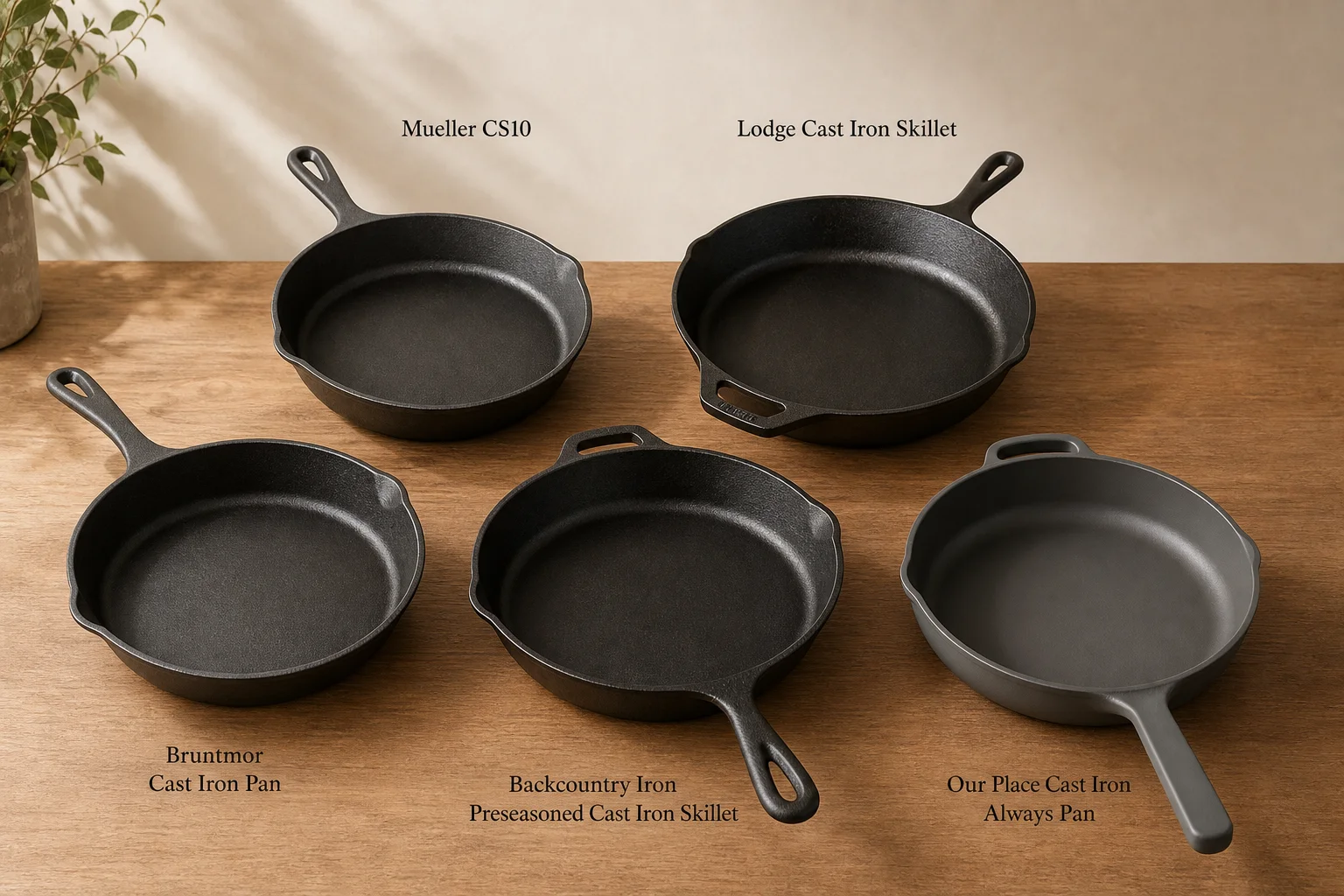
Best Cast Iron Pans 2026: Five Options from Budget to Premium
A practical breakdown of five cast iron skillets, from affordable Mueller to premium Our Place, with clear strengths and trade-offs for different cooking needs.
Cookware
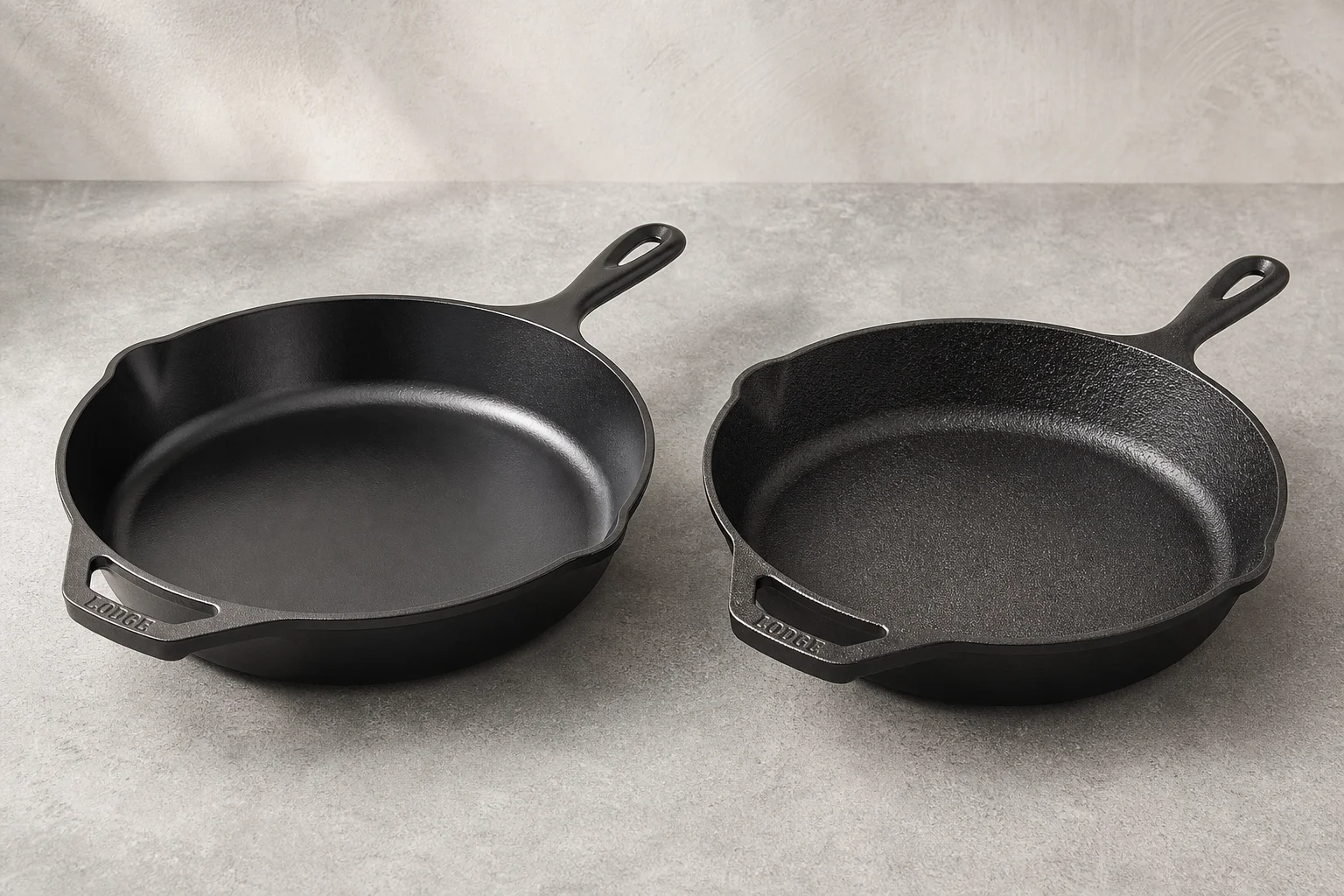
Best 12-Inch Cast Iron Skillets: Premium Craftsmanship vs. Reliable Budget Option
Two standout 12-inch cast iron skillets tested for heat retention, surface finish, and durability. One premium choice and one budget-friendly alternative that both deliver.