Power Stations
OUPES Guardian 6000 Review: A 6kW Home Backup Power Station With Serious Value
The OUPES Guardian 6000 packs a 4608Wh LFP battery, a 6000W inverter, and a six-year warranty into a value-focused home backup power station. We break down the strengths and the trade-offs.
Introduction
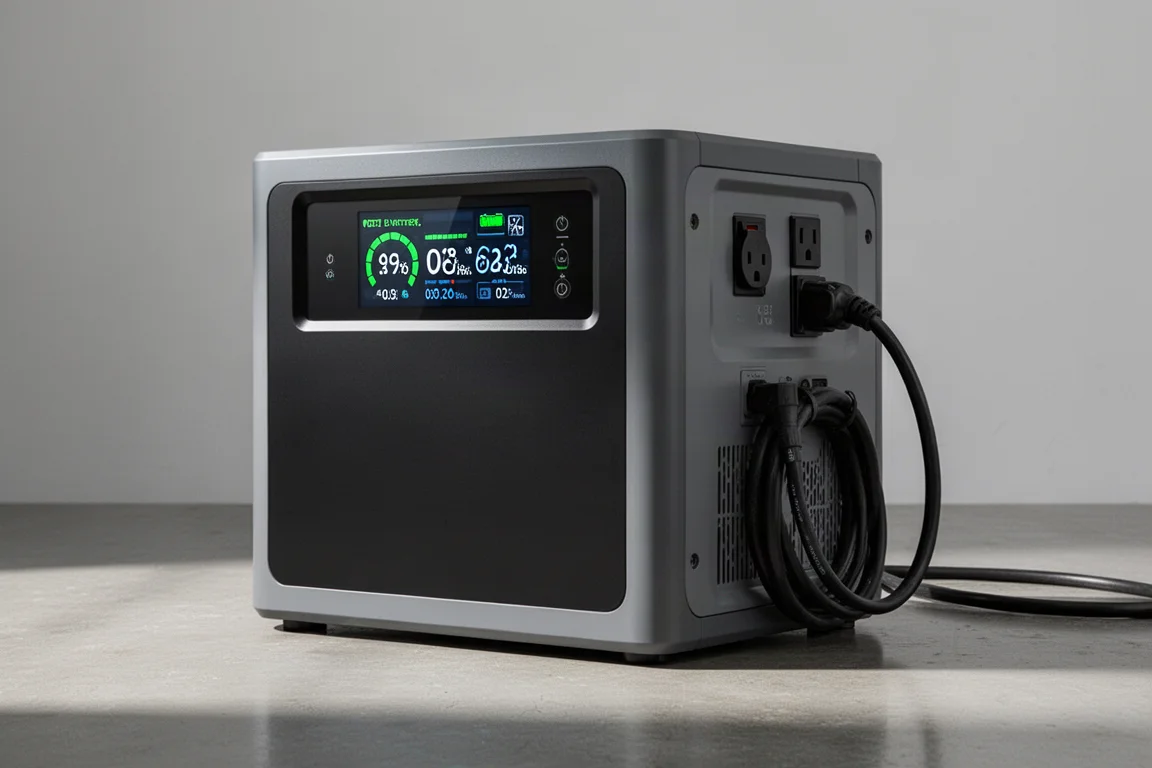
Home backup power stations have grown into serious investments, and the OUPES Guardian 6000 enters that space with a clear promise: more capacity and more features for less money than the bigger names. With a 4608Wh LFP battery, a 6000W pure sine inverter, and a six-year warranty, it is positioned as a value flagship. The question is whether the savings come with compromises that matter.
Who the OUPES Guardian 6000 Is For
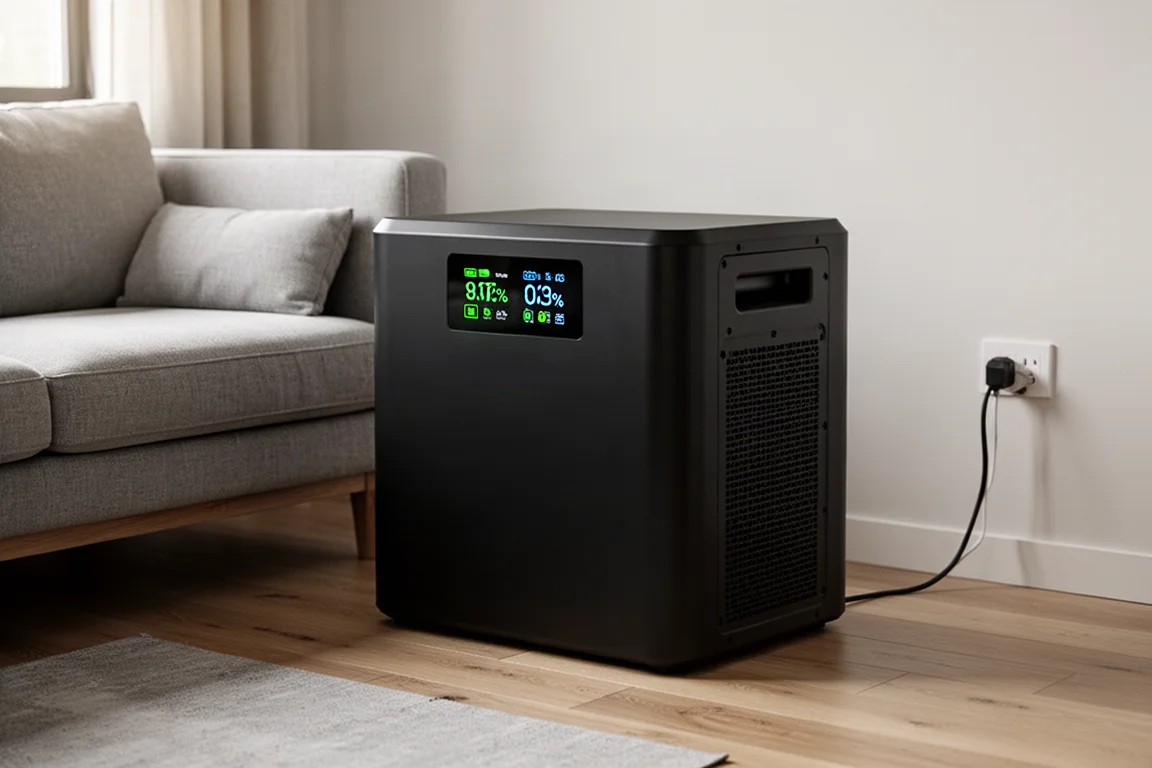
This is not a portable camping unit. The Guardian 6000 measures 25 x 16 x 7 inches and weighs just over 111 pounds. It is designed to stay in one place, whether that is a garage, an RV, or a room in your home. The target buyer is someone who wants whole-home or large-appliance backup during outages without paying flagship prices.
The unit is built around a 4608Wh LFP battery rated for 4,000 cycles to 80% capacity. That chemistry choice means longer service life compared to older lithium-ion packs, which matters for a device that may sit idle for long stretches between outages.
Main Strengths
Output Options That Cover Nearly Every Scenario
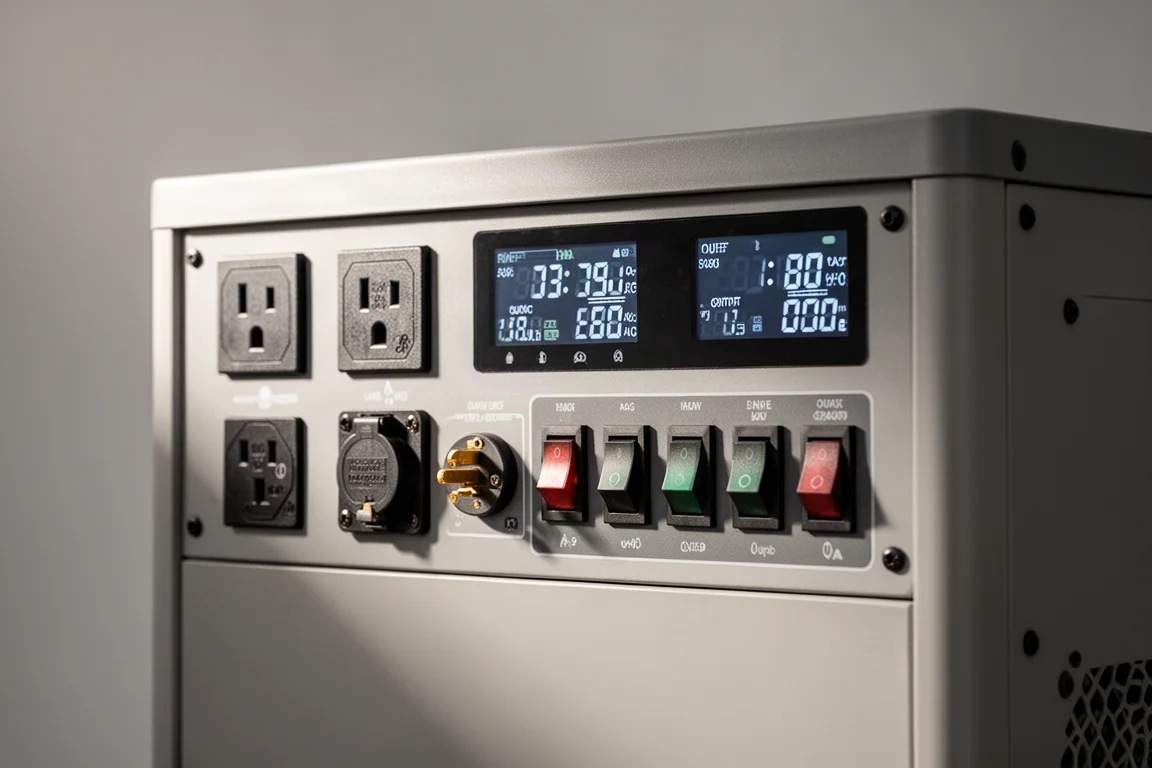
The Guardian 6000 offers one of the most complete outlet selections seen on a home backup unit. On the 120V side, you get four standard 20A AC outlets plus a TT-30R 30A RV hookup. For 240V split-phase, there is a NEMA L14-30R twist lock and a NEMA 14-50R 50A appliance/RV hookup. A NEMA 6-20R covers straight 240V needs like compressors.
That range means most users will never need an adapter or a “dog bone” cable. It is a thoughtful design choice that other manufacturers often skip on large 240V models.
Dual-Voltage Inverter
The 6000W pure sine inverter supports both 120V and 240V split-phase simultaneously. There is no separate setting to toggle; the inverter simply handles both. In testing, it held 120V at 60Hz and 240V at 60Hz under load, and it managed to push 6,600W for just under five seconds during an overload test.
Strong Solar Controller Efficiency
The built-in MPPT controller supports a wide voltage range from 12V up to 140V, with a 15A limit and a hard cap of 2,100W. In testing, the controller delivered 94% efficiency, meaning only about 6% of incoming solar power is lost to heat. That is among the best results recorded for this class of product.
Six-Year Warranty
OUPES backs the Guardian 6000 with a six-year warranty. For a value-focused brand, that is an aggressive commitment and a strong signal of confidence in the product.
Things to Consider Before Buying
High Idle Consumption
The most significant drawback is idle power draw. With the inverter enabled and Wi-Fi off, the unit consumed about 73 watts over a 24-hour period. That means a 60W laptop effectively becomes a 133W load, and a refrigerator burns 73 watts even when the compressor is not running.
For a home backup unit, which often runs small loads for long periods, that idle draw adds up quickly. At 73 watts, the 4.6kWh battery would drain in about 2.6 days with nothing plugged in. Most comparable units idle in the 40-50 watt range, so this is a real gap.
Fan Noise
The Guardian 6000 is noticeably loud under load. Fan noise measured 59 dB at maximum load and 57 dB during solar charging. It also produces occasional zappy, crackling sounds that can be unnerving. The unit ran fine and showed no issues at max loads, but it is one of the louder large home backup units available. Anyone planning to sleep in the same room or use it in an RV should factor that in.
Battery Percentage Does Not Recalibrate With Expansion Batteries
The Guardian 6000 has two built-in battery expansion ports, allowing capacity to grow up to 41kWh with OUPES expansion batteries. However, when an external battery is connected, the display does not recalculate the combined state of charge. If the main unit is at 100% and the expansion battery is at 50%, the screen still shows 100%. That is a meaningful issue for anyone relying on an accurate runtime countdown during an outage.
No 240V Output While Charging From 120V
When charging from a standard 120V outlet, the unit will not provide 240V output. This is a limitation other power stations have overcome in recent years, and it may matter for users who need to charge and run 240V appliances simultaneously.
Missing XT90 Cable
The unit includes a 30A XT90 DC output that can be switched between 12V and 24V, but the cable adapter is not included. That is an odd omission for an otherwise well-equipped unit.
Outputs and Charging Options
Beyond the AC outlets, the Guardian 6000 offers a pair of 12V outputs. One is a standard 10A cigarette lighter socket. The other is an XT90 rated at 30A, switchable between 12V and 24V via a physical switch. The XT90 output is a feature other brands often charge extra for, so its inclusion is a genuine win, even if the cable is missing.
USB charging is minimal, as expected for a home backup design. There are two USB-A quick charge ports and a single 140W USB-C port. The 140W USB-C protocol is a welcome choice, as many newer devices can charge at that rate.
Solar Charging Performance
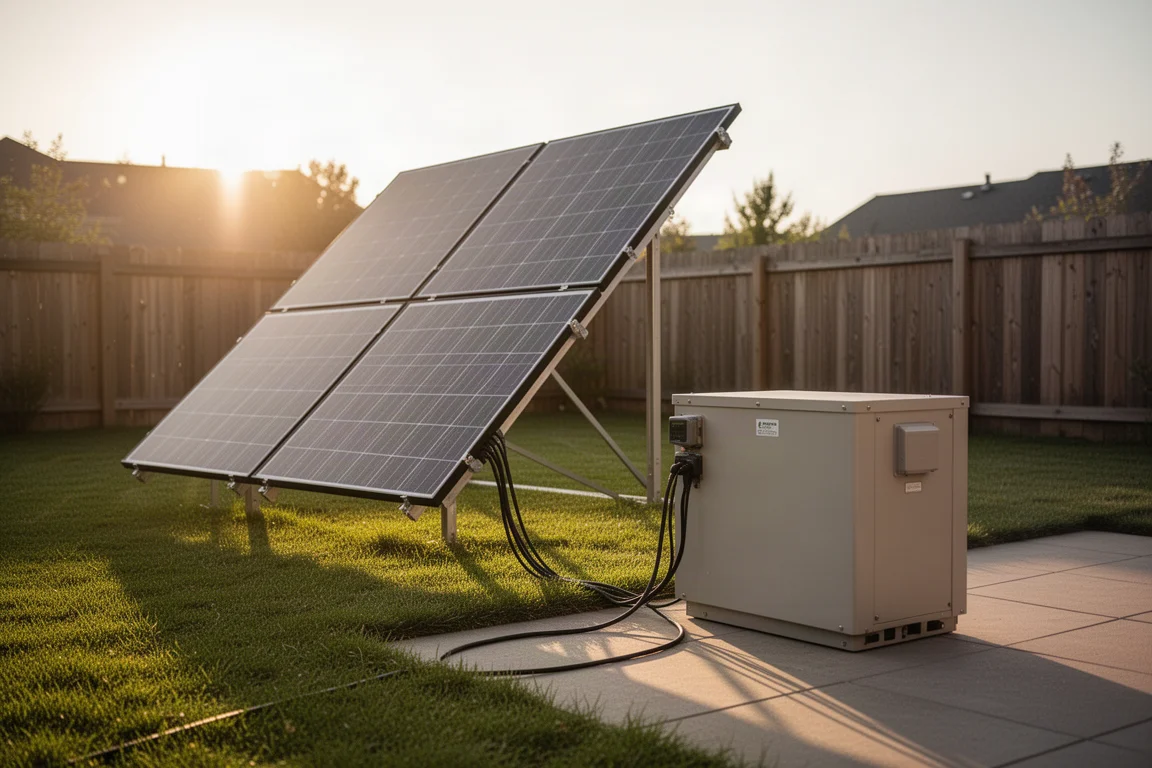
The solar input performed well across the voltage range in testing. At 12V, the unit pulled 100W; at 24V, 343W; at 48V, 700W; at 60V, 890W; at 80V, 1,200W; and at 120V, 1,800W. The maximum achieved was 139V at 2,050W, just shy of the 2,100W cap.
The key to maximizing solar input is running panels in series as close to the 140V max as possible, then adding a second identical string in parallel to reach the wattage cap. At full solar input, a full charge can take under three hours under ideal conditions, though real-world conditions will add time.
The unit also supports simultaneous AC and solar charging, which delivered 3,800W combined in testing. That is useful for topping up quickly in an emergency, potentially under 90 minutes with a generator and solar panels working together.
Charging Speed and Noise
AC charging from a standard 120V outlet tops out at 1,800W, which recharges the battery in about three hours. The unit also supports 240V charging, which is claimed to reach full in 84 minutes, though the cable was not supplied for testing.
A physical switch on the side lets you choose between fast charging and a custom rate from 200W to 1,800W. At the lowest setting, the fans are essentially silent. Even at 1,000W, fan noise was too low to register on a sound pressure meter. At the maximum 1,800W AC charge rate, the unit remained quiet, measuring below 44 dB.
UPS Mode and Other Test Results
The Guardian 6000 includes an EPS (emergency power supply) mode with a claimed 20-millisecond switchover. In testing, a computer running a full-screen music video stayed online through a simulated power cut, with the relay kicking back in without interruption. That is a pass for protecting sensitive electronics.
The 12V car socket held 11.7V while pulling its rated 10A, and the USB-C port delivered the full 140W. The inverter output was clean on both 120V and 240V sides, with no visible interference. EMF readings were low with wireless transmitters off, rising to 85-90 with the AC inverter on, which is typical for a 6kW inverter.
Buying Advice
The OUPES Guardian 6000 is a value-focused product, and that shows in a few areas. The 73W idle draw and the fan noise are the most obvious compromises. The battery percentage issue with expansion batteries is a genuine concern for home backup use. The app is basic and offers only a single page of settings.
That said, the core performance is solid. Every test passed, including the 6,000W heat soak run and the 6,600W overload burst. The outlet selection is best-in-class, the 30A switchable DC output is a rare feature at this price, and the 140W USB-C port is a welcome inclusion. The physical wireless kill switch is a thoughtful touch for privacy-minded users.
Conclusion
The Guardian 6000 is not a perfect product, but it is a compelling one. The idle consumption and noise are real drawbacks that buyers should weigh, especially for overnight or long-duration use. However, the combination of a 4608Wh battery, a 6000W dual-voltage inverter, an excellent solar controller, and a six-year warranty makes it a strong value in the large home backup segment. For anyone who needs serious backup power without paying flagship prices, the Guardian 6000 deserves a close look.
Product link
View more details for OUPES Guardian 6000
This product is mentioned in the review. Check the specifications, options, and compatibility before buying.
View more details for OUPES Guardian 6000Further reading
Related Reviews

Power Stations
Anker SOLIX F3800 Plus Review: A Powerful 6,000W Power Station With Some Trade-Offs
The Anker SOLIX F3800 Plus delivers a robust 6,000W inverter, fast solar charging, and solid UPS performance, but high idle draw and a hefty weight give buyers real things to consider.
Power Stations
Best Portable Power Stations Under 2000Wh: 2025 Lab Tested Recommendations
Nine portable power stations tested in real-world conditions, from compact 500Wh units to capable 2000Wh models. Unsponsored recommendations for camping, emergencies, and creative work.

Power Stations
BLUETTI Charger 2 Review: A 1200W DC-to-DC Charger for Van Life and Overlanding
The BLUETTI Charger 2 combines 800W alternator charging with 600W solar input for a 1200W total, but compatibility and price deserve a closer look.