Chest Rigs
Osprey Archeon Chest Rig Review: A 4L Chest Rig Compared With the Helikon-Tex Numbat
A close look at the Osprey Archeon Chest Rig, from its 4L pocket layout and materials to its ventilation trade-offs, plus how it compares with the Helikon-Tex Numbat.
Introduction
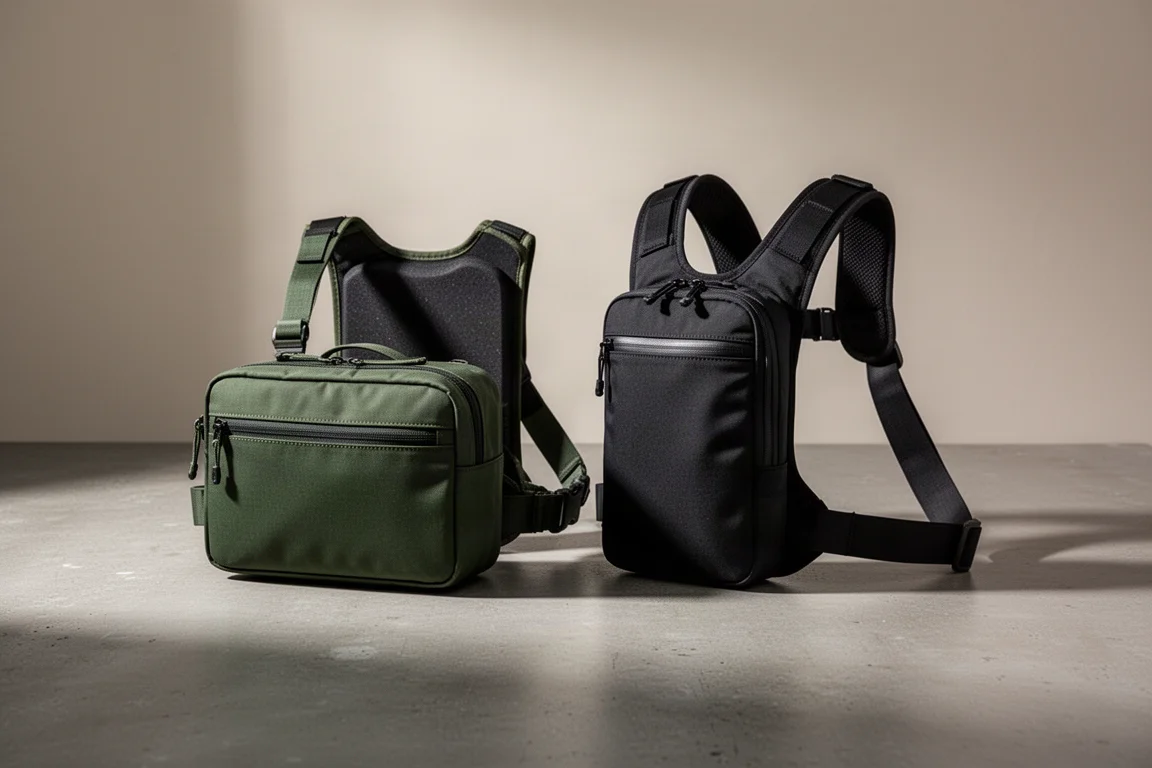
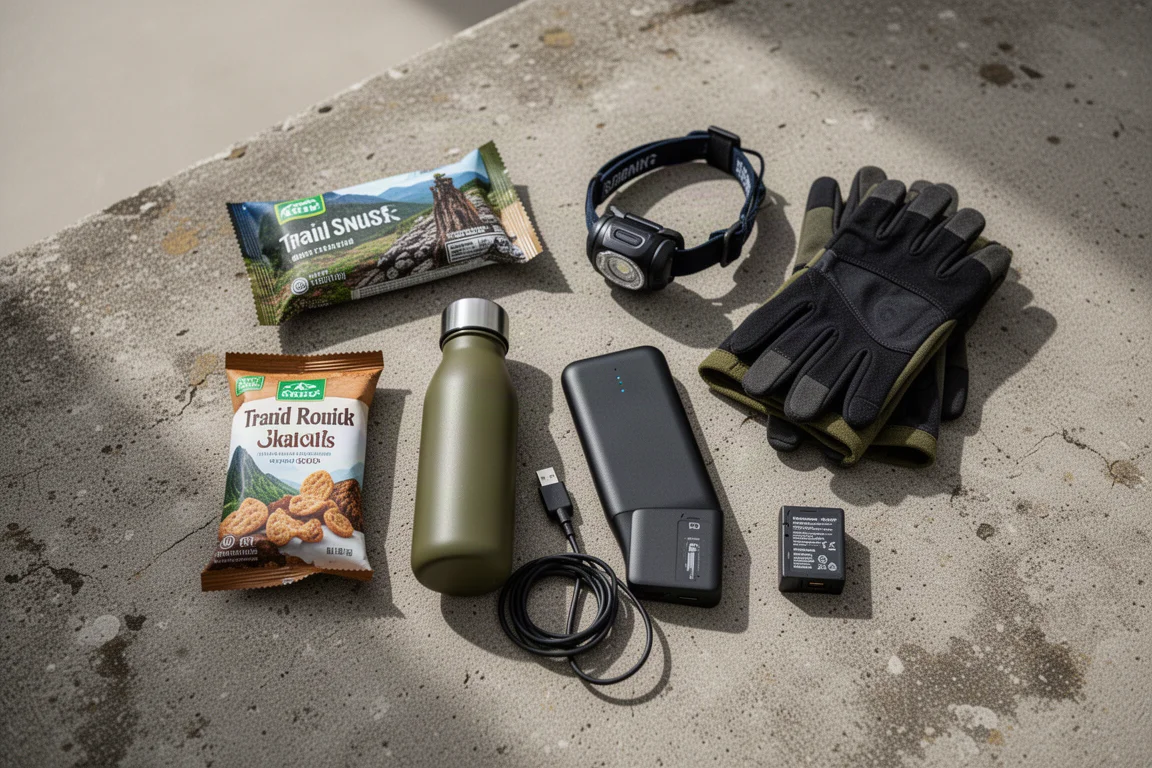
A chest rig earns its place quietly. It keeps the items you want close and secure within easy reach on a hike or backpacking trip: snacks, water, a phone, keys, a wallet, camera batteries, a headlamp, a power bank with a charging cable, and even a cold weather kit with a face mask, gloves, a hat, and hand warmers. Because the weight sits on your chest instead of your back, you can reach any of it without stopping or taking off your pack.
The Osprey Archeon Chest Rig is a 4L option priced at $80. It is well made, thoughtfully organized, and flexible in how it can be carried. It also carries one clear drawback that anyone considering it should weigh first. This guide covers the build, the pocket layout, the comfort trade-offs, and how the Archeon compares with the Helikon-Tex Numbat Chest Pack, a long-running alternative in the same category.
What to Look For in a Chest Rig
Four things matter most when you are choosing a chest rig.
Capacity and organization come first. A rig in the 4L range is enough for a day hike loadout, but only if the pockets are laid out so that small items do not disappear into one open space.
Materials and weather resistance come next. A durable face fabric with a durable water repellent finish, paired with coated zippers, keeps contents dry through light rain and splash. Water resistant is not the same as waterproof, and most chest rigs sit in the first category.
Carry flexibility decides how often you will actually use it. Some rigs only work on the chest. Others can also be worn as a waist belt or lumbar pack, or mounted to a backpack.
Finally, ventilation and fit determine whether you keep wearing it. A rig with a rigid, unventilated back panel traps heat against your chest, which becomes obvious within the first half hour of a climb.
Price sits outside all four of these. Chest rigs range widely, from around $40 at the low end to several hundred dollars at the top, and a higher price does not automatically mean a better carry.
Osprey Archeon Chest Rig: Build, Materials, and Carry Options
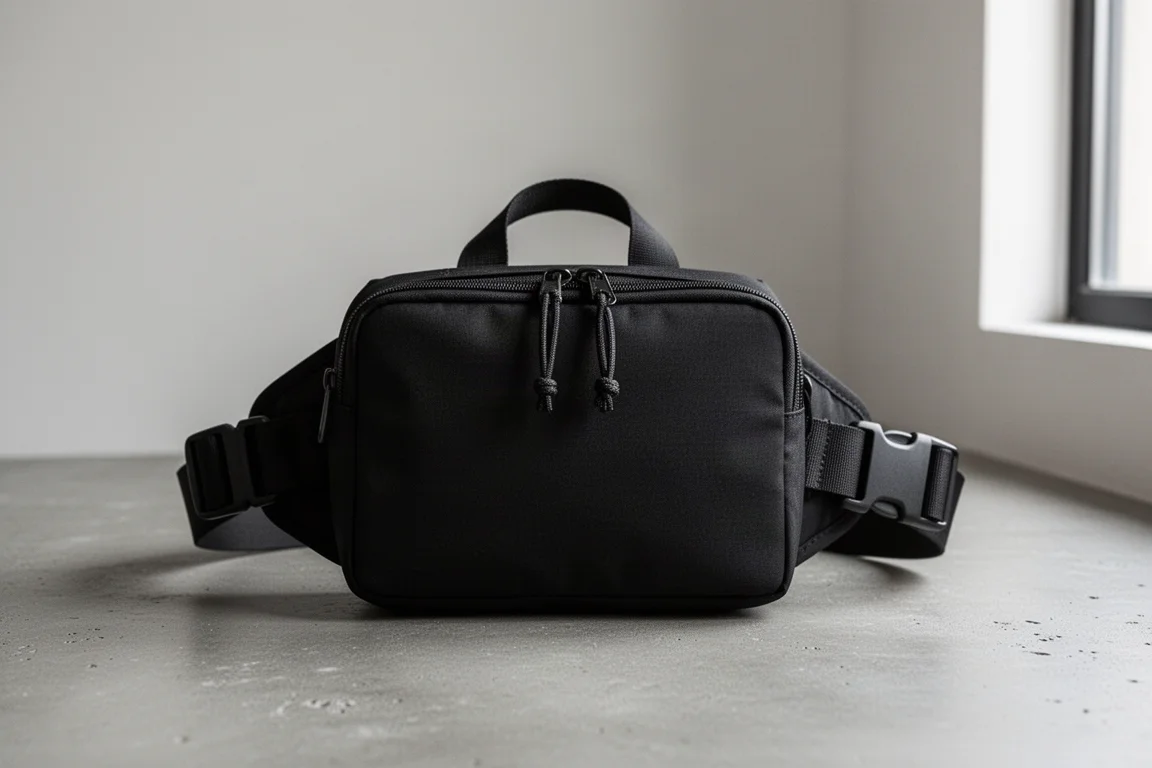
The Archeon is available in two colors, green and black. The main body uses an 840D ballistic polyester with a DWR treatment, and the accent panels use a 200D nylon polyester that is also DWR treated. The base of the rig uses the same 840D ballistic polyester. The construction is excellent: the stitching, the panel alignment, and the overall finish all read as a well-made product.
The zippers are #10 coated YKK units. They run smoothly and resist water, though they are not fully waterproof.
Carry options are one of the Archeon’s strongest arguments. It can be worn on the chest, worn as a waist belt or lumbar pack with an optional Archeon 40L waist belt, or mounted to a backpack. Mounting is designed around the Archeon 24, 30, and 40L packs, so the rig can be combined with a backpack rather than replacing it. The harness uses adjusters at the top that can be disconnected, though there are no buckles there, and buckles at the bottom that are adjustable. The straps can be tucked into the mounting points on the back for storage.
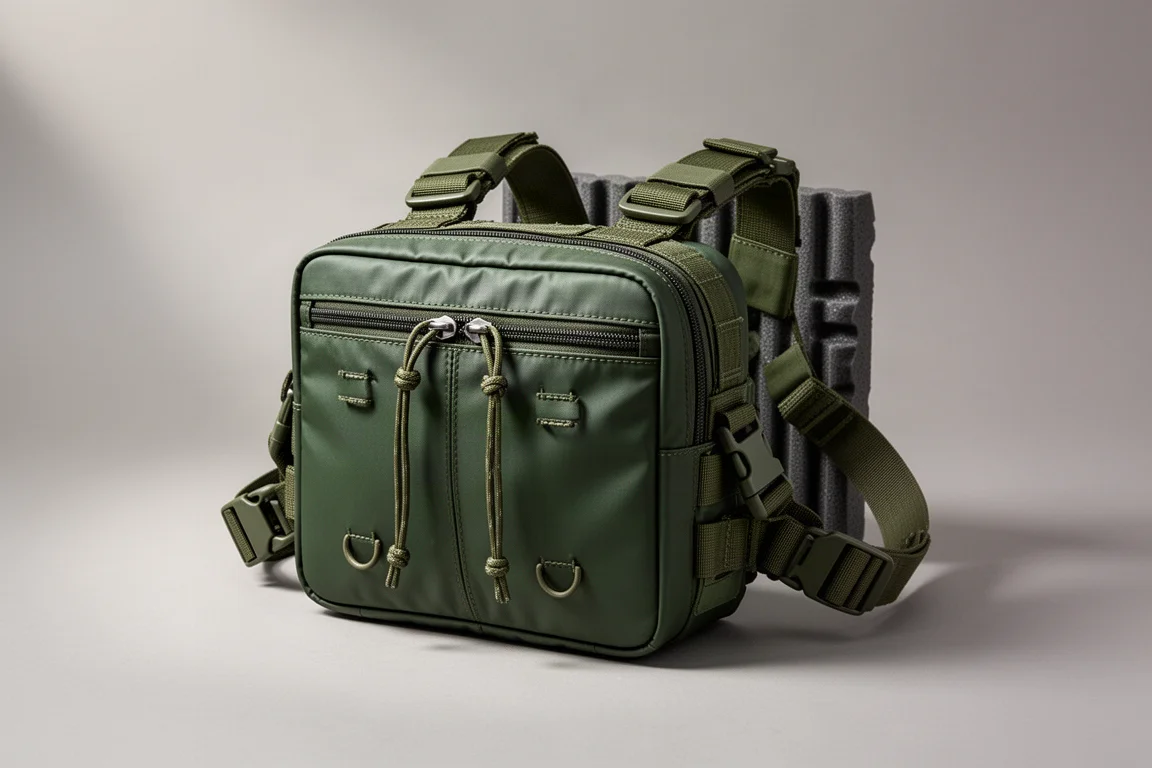
The one visual surprise is the finish. The fabric has a noticeable sheen that reads as plasticky up close, and it does not sit naturally alongside the matte fabrics most backpacks and outdoor gear use. It looks sharp at a distance, but the shine is a real consideration if matching your existing kit matters to you.
Capacity and Pocket Layout on the Osprey Archeon
The Archeon holds 4L and measures 11.8 inches long, 7 inches tall, and roughly 4.3 inches deep.
Up front there are four attachment loops and a zippered pocket sized for thin items: a phone, keys, a wallet, or a narrow snack. Behind it sits a second zippered pocket with enough room for a phone or a GPS unit, plus a clip for keys. That second pocket has only a single zipper pull, so it always opens from the right side.
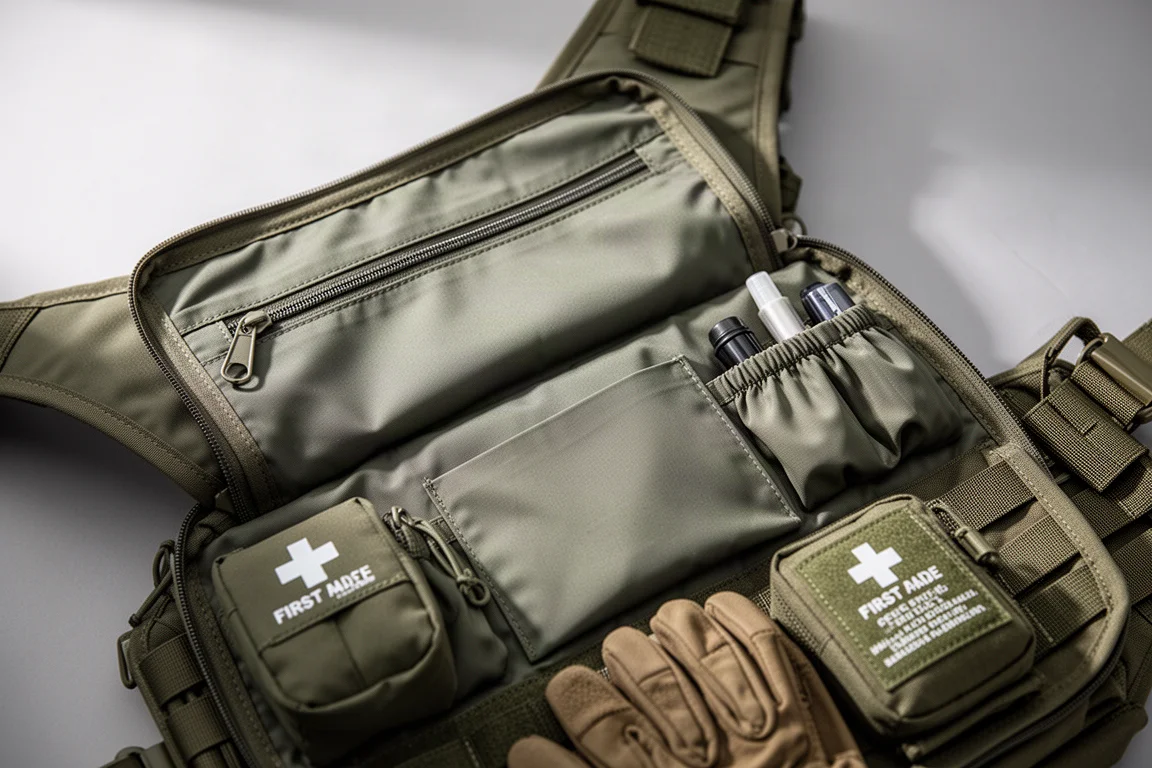
The main compartment is the centerpiece. It uses two-way zippers and opens very wide, almost like a shelf. Inside there is a zippered pocket, a large sleeve, a center pocket, and two stretchy elastic pockets on the opposite side. A sample loadout of a first aid kit, a pocket knife, hand warmers, and camera batteries fits with room to spare.
One small annoyance: the zipper pulls on the main compartment are long, so they can flop down into the pocket below and get caught when that pocket is zipped closed. It is not a functional problem, just something to get used to.
The back panel is a compression molded EVA foam piece with three raised levels and recessed sections, and the straps tuck into those recesses for storage. The foam gives the rig useful rigidity, which is part of why the pocket layout stays usable when the rig is loaded.
Ventilation, Fit, and Everyday Wear
This is where the Archeon gives back some of what it gains. The compression molded EVA back panel has no mesh cover and no airflow channels, and it holds heat against the chest. In practice the front of a shirt ends up damp quickly, and the problem shows up within the first twenty minutes of wearing the rig, well before a long climb is finished. The rigid foam is a deliberate trade for structure, but the comfort cost is significant, and it is the single biggest reason to think carefully before buying.
The harness design also matters for fit. Because a chest rig sits directly across the chest, the pouch and straps press against the bust, and the layout is uncomfortable for many women. Other carry formats work better for that fit, and it is worth testing in person if you can.
Two smaller points round out the picture. There is no Velcro panel on the front, so patches and similar accessories cannot be attached. Earlier versions of this rig had Velcro on the front and used matte fabrics, which makes the current configuration feel like a step backwards for anyone who used the older design. The rig also reads as tactical, with visible straps and a back pad, which makes it an awkward choice for wearing around town or while travelling. Chest rigs are built for trails, and the Archeon does not change that.
Helikon-Tex Numbat Chest Pack: A Long-Term Benchmark
The Helikon-Tex Numbat Chest Pack is a useful reference point because it has been in steady use for years across a wide range of trips, and it costs around $70.
Its back panel also uses foam, and it will build up sweat on a long climb. The difference is degree: heat and moisture build-up is noticeably less severe than on the Archeon, which matters over the course of a full day. For a rig that sits on your chest for hours at a time, that gap is the kind of detail that decides which one you reach for.
The Numbat is the more established, familiar option, and its price sits slightly below the Archeon. If ventilation is your priority, it is the more comfortable of the two.

For buyers comparing the two, the practical question is not which one is better made. Both are solid. It is which set of compromises you would rather live with: the Archeon’s more flexible mounting system and larger, more structured pocket layout, or the Numbat’s easier relationship with heat.
Price and Value in the Chest Rig Market
Chest rig pricing is wide. Basic rigs start around $40, the Helikon-Tex Numbat sits at roughly $70, and specialized options can run into the hundreds. Against that spread, $80 for the Archeon is fair. The materials are good, the zippers are quality hardware, and the craftsmanship is excellent.
Value, though, is not only about build. A rig that is uncomfortable enough that you leave it at home is poor value at any price, and ventilation is the factor that most often decides whether a chest rig becomes part of your routine.
Buying Advice: Choosing Between the Two
If you already run an Osprey Archeon 24, 30, or 40L pack and want a chest rig that mounts to it, the Archeon is the obvious match. The same goes for anyone who wants a wide-opening main compartment with real internal organization and does not mind a firm, warm back panel.
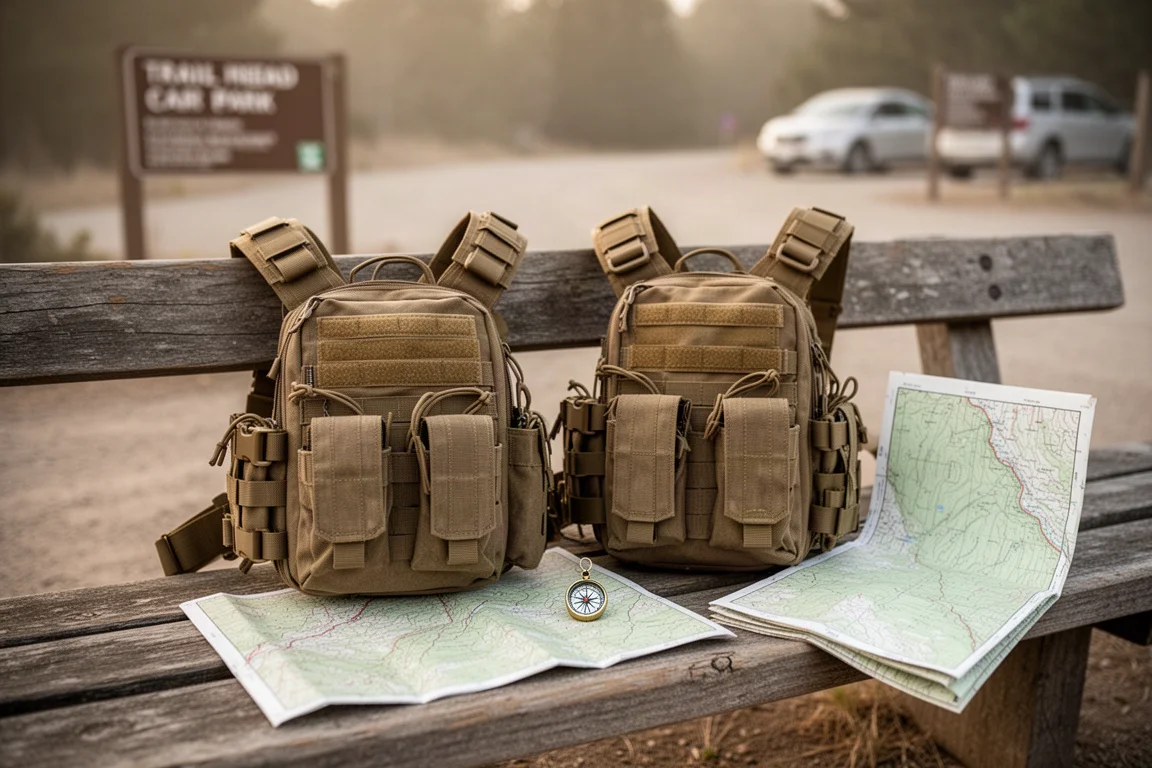
If you hike in warm conditions, run hot, or simply want the more comfortable option on long days, the Helikon-Tex Numbat is the safer choice. It has proven itself over years of use and manages heat better, even though it still builds up sweat.
Either way, buy for the loadout you actually carry. A 4L rig is a good size for a day hike and a reasonable size for a backpacking trip where you want quick access to snacks, water, and electronics without stopping.
Conclusion
The Osprey Archeon Chest Rig is a well-built, well-organized 4L chest rig with genuinely flexible carry options and a fair $80 price. Its weaknesses are specific and worth taking seriously: a shiny fabric finish that will not suit everyone, a rigid EVA back panel that traps heat, and no front Velcro for patches. For the right buyer, one who wants the mounting options and the pocket layout, it is a capable piece of kit. For anyone who prioritizes comfort on long, warm days, the Helikon-Tex Numbat remains the more comfortable of the two.
Further reading
Related Reviews
Chest Rigs
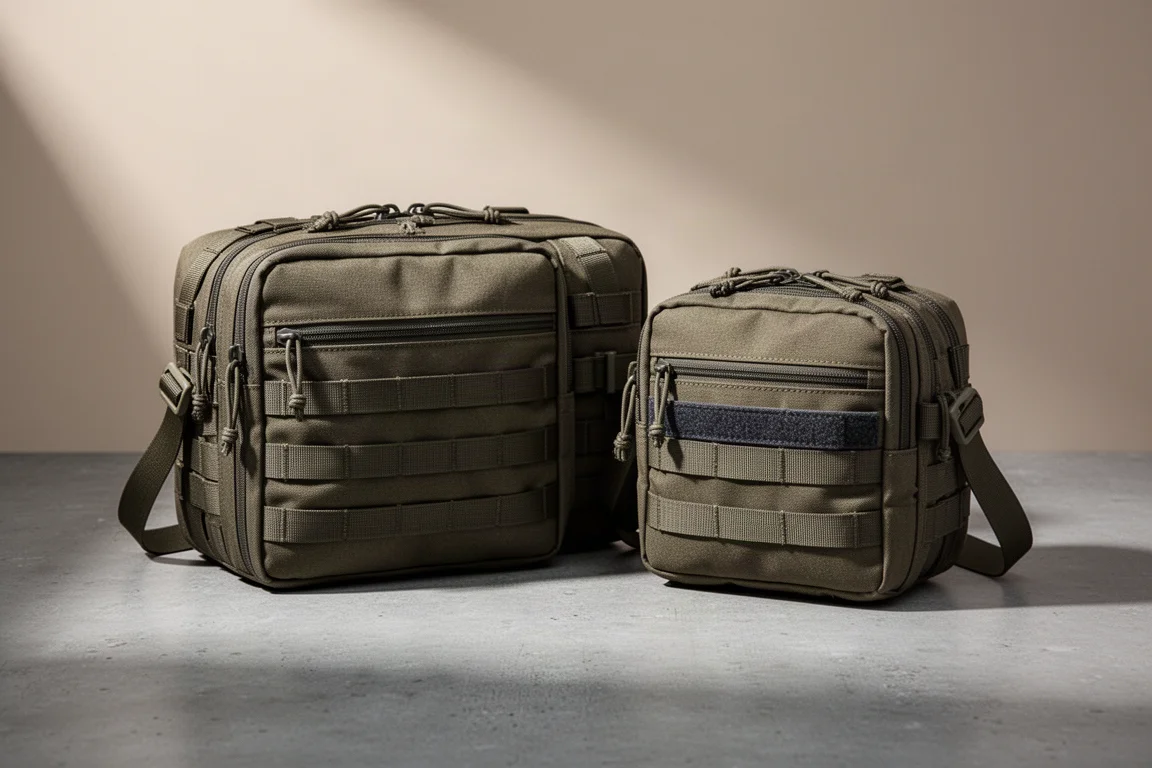
Helikon-Tex Numbat Review: A Chest Rig Built to Last
After more than five years of near-weekly use, the Helikon-Tex Numbat still stands out for durability, organization, and all-day comfort.
Chest Rigs
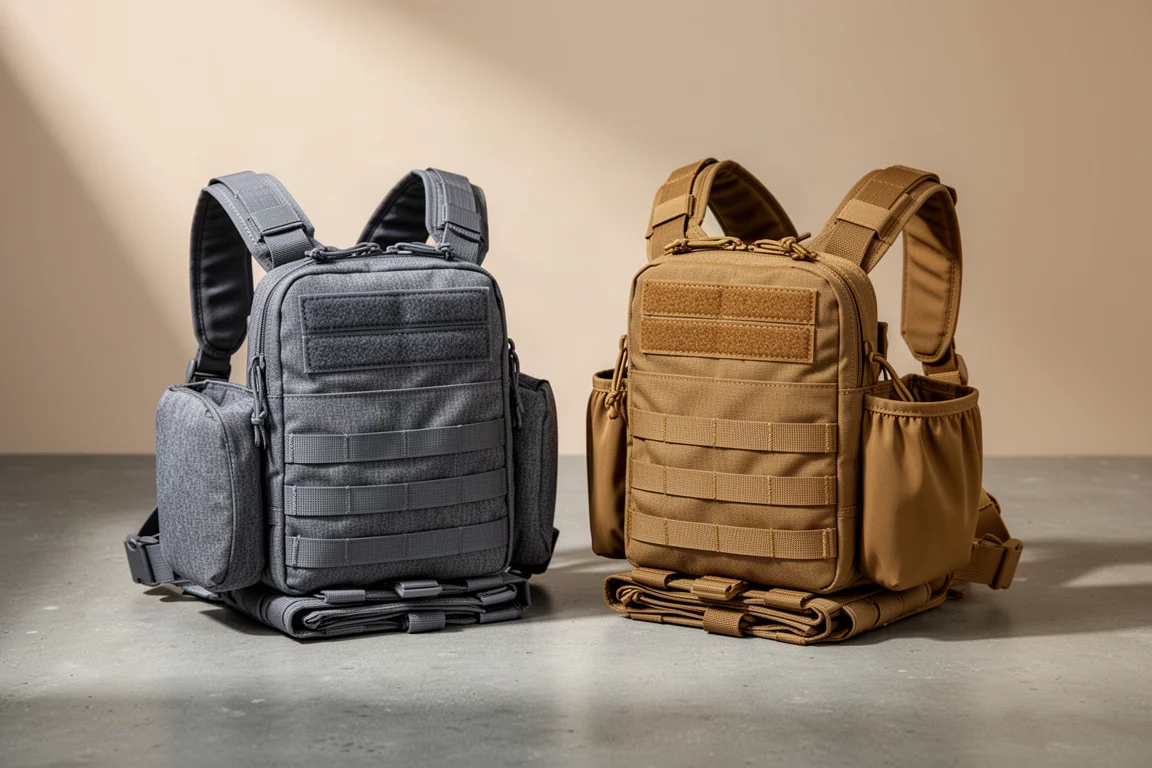
Helikon-Tex Numbat vs Feywood Gear Chest Rig: Original or Lower-Cost Copy?
Two nearly identical chest rigs, one at $70 and one at $35. Here is what actually differs and which one suits the way you carry your gear.

Backpacking Gear
Building a 10 lb Base Weight: An Ultralight Backpacking Gear List
A practical walkthrough of the ultralight pieces behind a 10 lb base weight, from a 765 g pack and a roomy one-person tent to a full camp chair and a dependable water filter.