Backpacking Tents
OneWind Solo Vent Tent Review: A Bivvy With a Rain-Ready Awning
A single-wall bivvy tent with a fold-out awning extension panel, taped seams, and a 2.3 lb packed weight. Here is what works, what to check, and who it suits.
Introduction
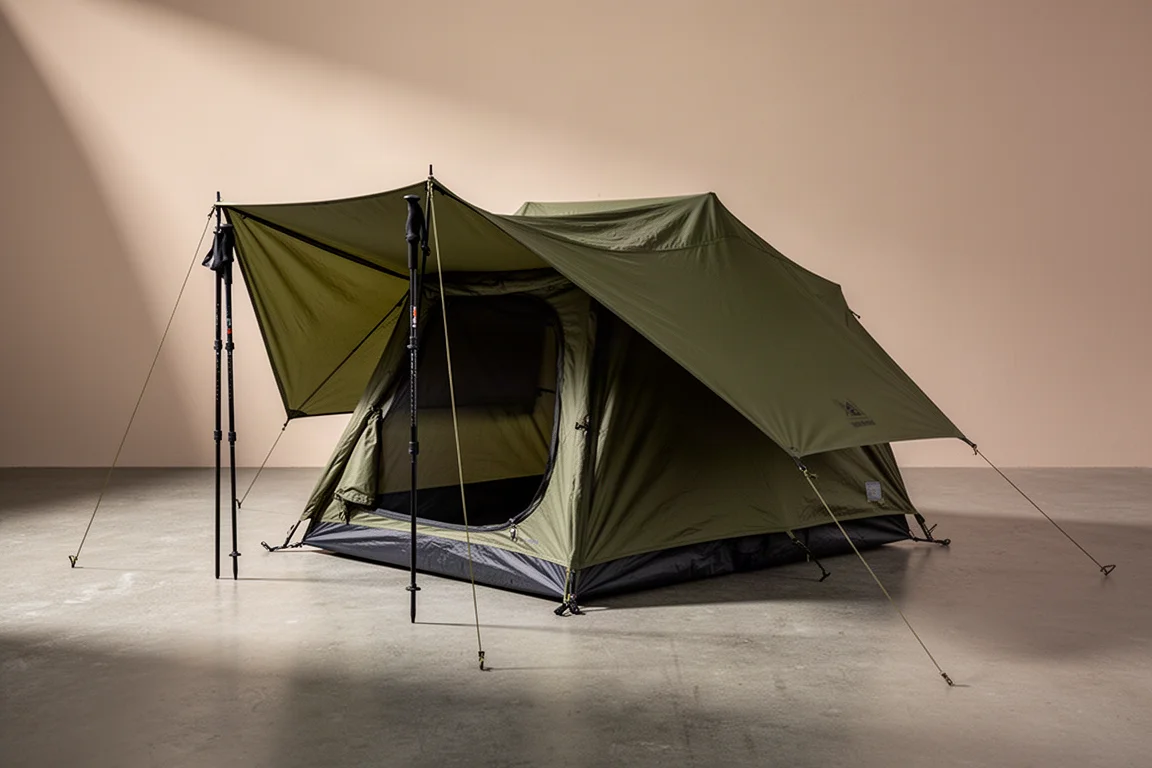
Bivvy shelters occupy a practical middle ground: larger than a traditional bivvy sack, smaller than a conventional backpacking tent. The OneWind Solo Vent Tent takes that familiar formula and adds one genuinely new idea, a fold-out extension panel on the front awning that allows the awning to stay open in rain.
That detail is what separates this shelter from the many low-profile tents with awnings already on the market. Most of them have to be sealed shut the moment rain starts, because water falling straight down would otherwise land inside. With the extension panel staked out, the awning covers the interior and the inside stays dry.
This is a single-wall, non-freestanding shelter built for one person. It uses trekking poles instead of included poles, packs to roughly 15.8 by 9.4 by 6.1 inches, and weighs about 2.3 lb with every component and storage bag. It is listed at $110 and comes in a single color, OD Green.
Who This Tent Is For
This shelter suits backpackers who want a compact, low-profile option that disappears into a pack, along with riders or paddlers who need something small enough to strap to a bike or stow in a kayak hatch. Its dark earth tone color and low silhouette also make it a sensible choice for stealth camping, where staying out of sight matters more than interior volume.
It works as a just-in-case shelter on day hikes as well, since the packed size is small enough to carry without much penalty. The main condition is weather range: this is a warm-season design built around airflow, so it fits spring through autumn trips rather than cold-weather camping.
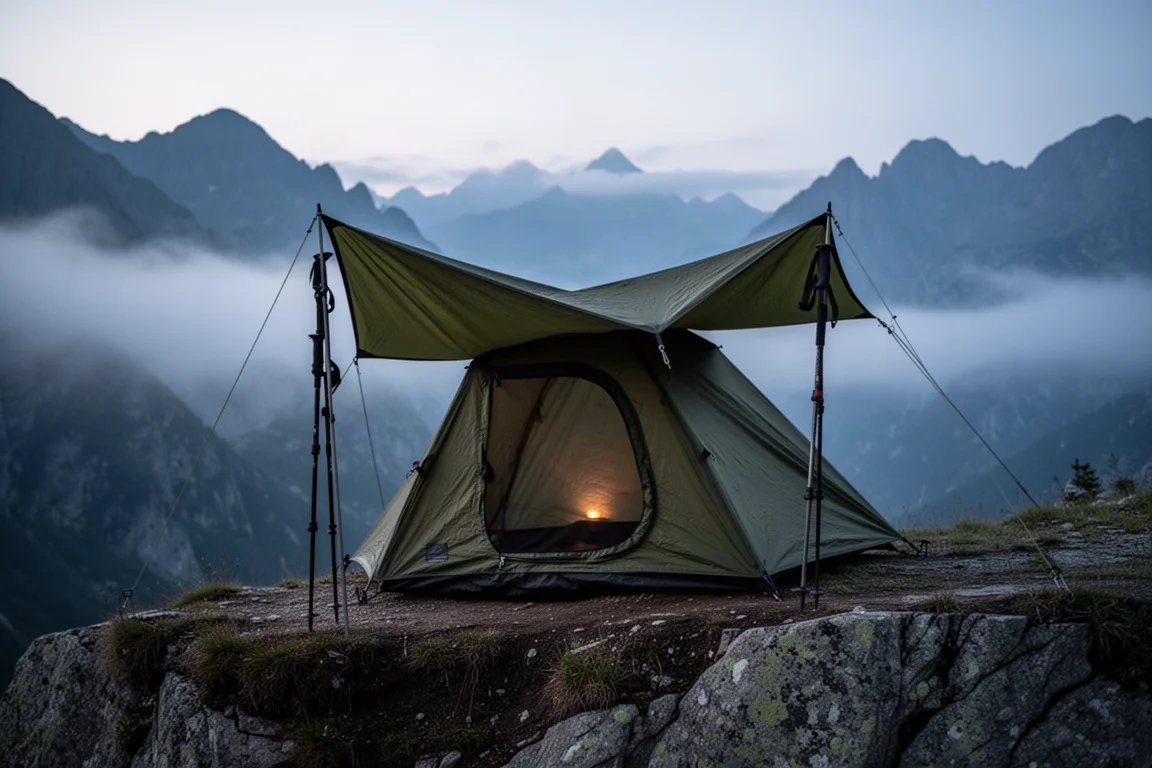
Anyone who wants a roomy tent for two, or a freestanding design that pitches without stakes, should be looking at a different category entirely. This tent needs ground it can stake into, and it needs a trekking pole or a found stick to hold its shape.
Main Strengths
Three things stand out here: the awning extension, the ventilation, and the balance of low weight with solid materials.
The Awning Extension Panel
Unzip the front door, and the panel folds outward and stakes to the ground. That converts a standard awning into a covered porch that keeps rain out of the sleeping space while still leaving the awning open for air and gear storage. To get the full benefit, one side has to be zipped closed. The opposite side does not have an extension panel, so it stays less protected in wet weather.
In storm mode, the extension panel is deployed along with the awning over the top and the end closed off. When conditions clear, the panel folds away by disconnecting the guy lines, lowering the pole, folding the panel inward, and zipping the front shut. Storm flaps cover the zippers in that configuration.
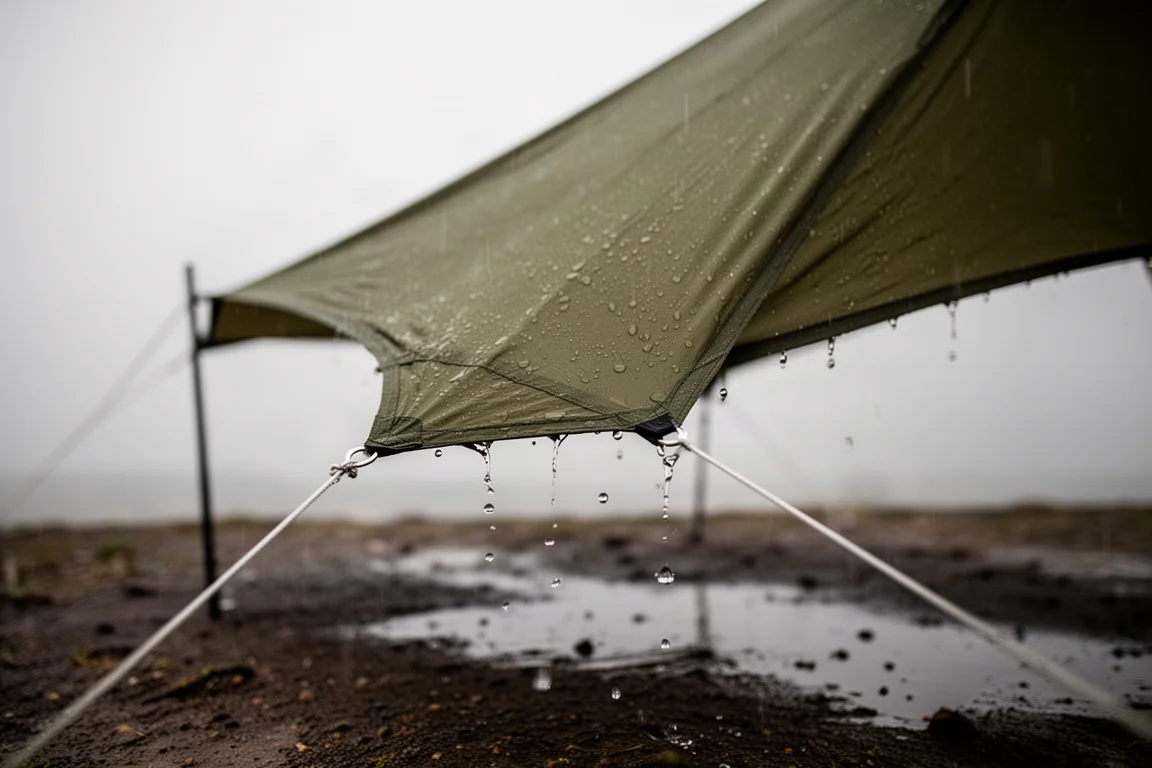
That sequence takes a few minutes to learn, but it turns the awning into something usable in conditions where most bivvy awnings simply have to be closed.
Ventilation and Inside Access
The shelter has a large vent at the back, a smaller vent above it, and a front door made from solid mesh with two-way zippers. The small top vent can be closed from inside the tent, which is unusual and genuinely useful: if wind picks up overnight, the vent can be sealed without stepping outside. The lower rear vent must be closed from outside, though in most conditions it can simply stay open.
Two mesh pockets, one at the head and one at the foot, keep small items off the floor. The door panel rolls up and stores out of the way, and the fly can be rolled and stored inside the tent as well. Airflow is strong enough that a night out produced no condensation problems. A practical tip for windy nights: stake the doors out so the fly pulls away from the inner, which lets air move underneath and helps manage condensation.
Lightweight Pack Size and Materials
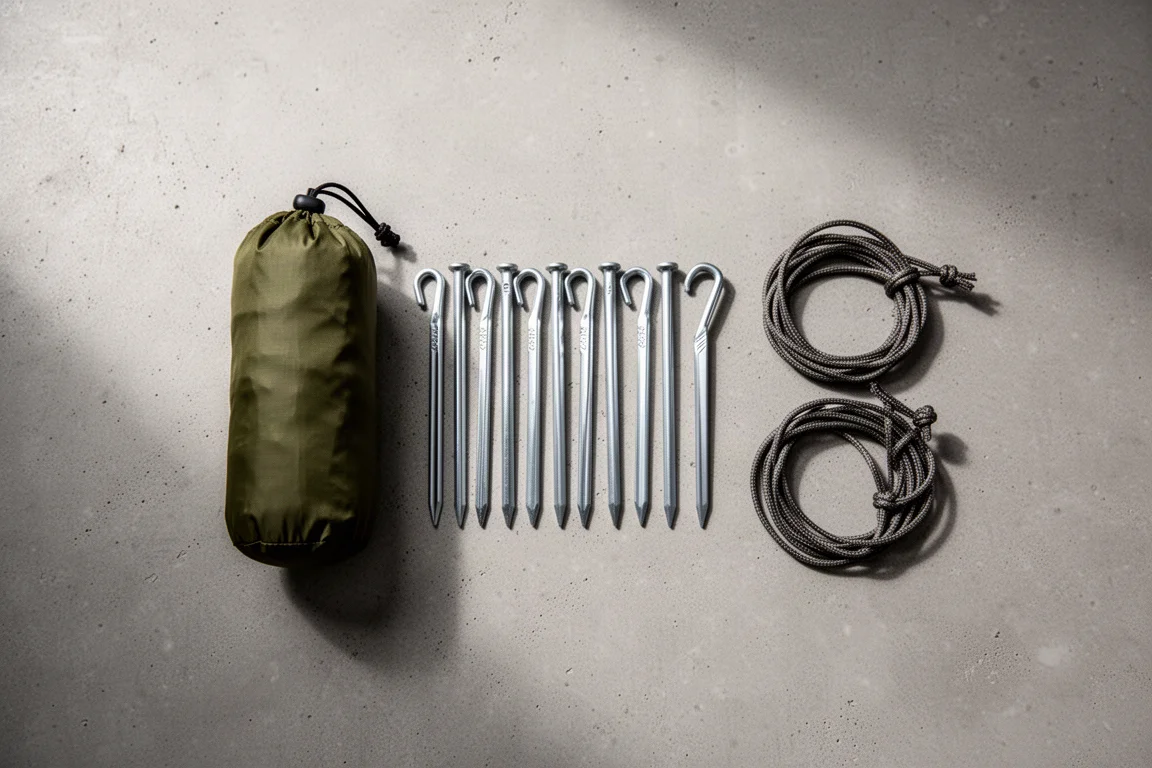
At 2.3 lb including all components and storage bags, with a packed size of 15.8 by 9.4 by 6.1 inches, this is easy to fit inside a backpack. The fly is 1.1 oz silnylon with a 3,000 mm hydrostatic head rating, the floor is 40D ripstop nylon rated to 5,000 mm, and the vent mesh is polyester. Seams are taped and the included stakes are aluminum.
Usable interior dimensions are 81 inches long, 38 inches at the peak by the head and 26 inches at the foot, and 34 inches wide at the head narrowing to 28 inches at the foot. The large door makes getting in and out straightforward despite the low profile. In the box you get the tent, storage bags, ten stakes, and two additional guy lines, for seven lines in total.
Things to Consider Before Buying
A few practical points matter more than the spec sheet, and they are worth weighing against how you actually camp.
Setup Time and Stake Placement
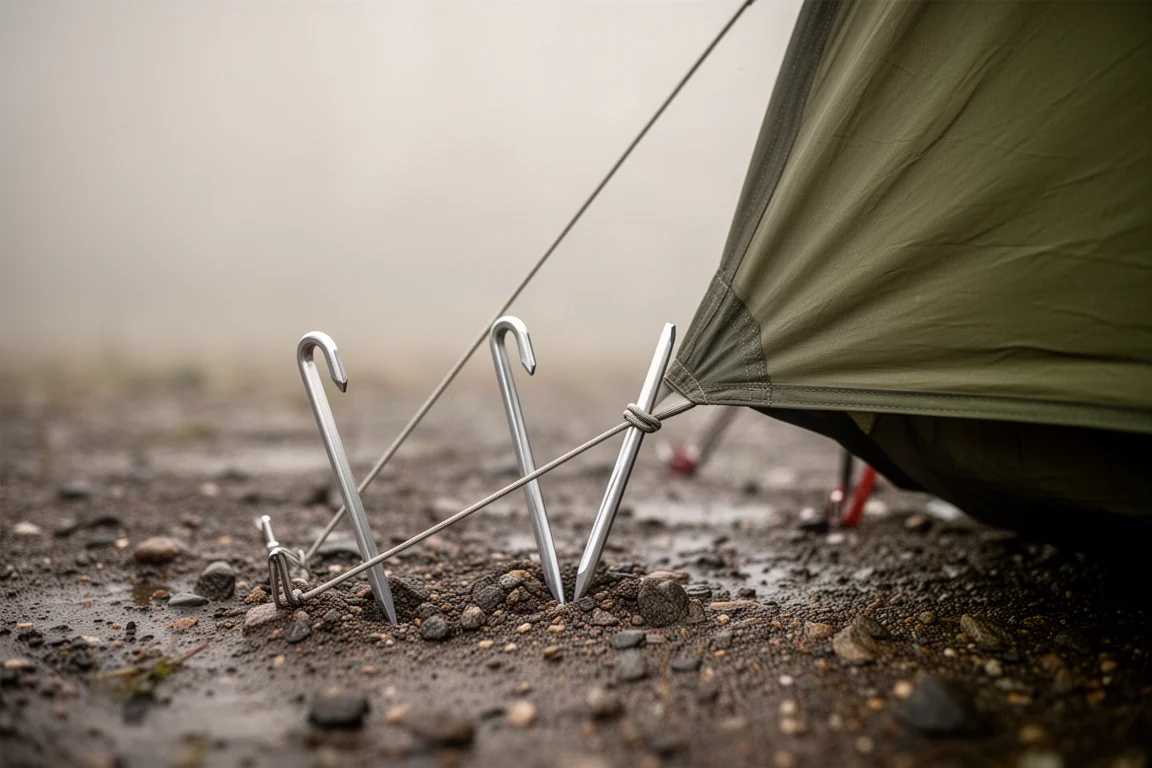
No poles are included, so trekking poles or found sticks are required. Setup runs about 10 to 15 minutes: roughly 15 minutes with the awning deployed and about 10 without it, and it gets faster with practice. Because this is a trekking pole tent with a long stake-out list, expect a longer pitch than a freestanding design.
At the corners, do not drive stakes through the elastic loops at the base. Staking through the elastic lifts the tent off the ground. Use the loops that the elastic attaches to instead, which anchors the floor properly.
Fabric Sag and Weather Limits
Silnylon is light and highly waterproof, but it sags, particularly once it gets wet. After a full day and night of rain, the shelter needed re-tensioning to stay taut. In calm conditions that is a minor chore. In wind, loose fabric flaps, so it is worth checking the guy lines periodically.
The other limitation is season range. OneWind lists this as a three season tent, while some retail listings describe it as four season, which overstates it. Ventilation this open will not hold heat, so winter camping is not the intended use.
Interior Space and Footprint
Bivvy tents are larger than a bivvy sack and smaller than a tent, and that holds true here: there is room for a sleeping pad, a sleeping bag, and one person, with little left over. Most users will want the awning up to store a backpack and extra gear outside the sleeping area.
No footprint is included, so the floor needs protection when the ground is rough. A 3F UL one-person footprint matches this shelter well and keeps the added weight low.
Buying Advice
At $110, the case for this shelter rests on the awning extension. Other low-profile tents with awnings exist, and some cost far less, but they have to be sealed in rain, which removes much of the point of having an awning at all. If a rain-usable porch matters to you, there is currently little on the market that competes directly with this design.
It suits warm-season backpackers, bikepackers, and paddlers who already carry trekking poles and are comfortable with a stake-heavy pitch. Buyers who want a freestanding tent, a winter shelter, or generous interior space should look elsewhere. Adding a suitable footprint to the budget is worth planning for.
Early field use included light and moderate rain, and the interior stayed dry with no leaks. The hydrostatic head ratings and taped seams suggest that should hold in heavier weather, though long-term durability will only become clear with more use.
Conclusion
The OneWind Solo Vent Tent solves a real problem in a simple way. The extension panel keeps the awning usable in rain, the ventilation is excellent for warm-weather trips, and the packed weight and volume are easy to live with. Its limits are equally clear: no poles included, a stake-heavy pitch, silnylon that needs re-tensioning, and a three season range that will not suit winter.
For anyone who wants a low-profile bivvy shelter with a genuinely useful awning, this is a strong first version of the idea.
Product link
View more details for OneWind Solo Vent Tent
This product is mentioned in the review. Check the specifications, options, and compatibility before buying.
View more details for OneWind Solo Vent TentFurther reading
Related Reviews
Backpacking Tents
3F UL Lanchan Pro 1 Review: A 1 lb 8 oz Single-Wall Trekking Pole Tent
A practical look at the 3F UL Lanchan Pro 1, a single-wall trekking pole shelter with a 1 lb 8 oz weight, 20D silnylon fabrics, and a roomy 90 x 31 x 49 inch interior.
Backpacking Tents
3F UL Taiji 2-Person Tent: A Convertible Backpacking Shelter Worth a Closer Look
A practical look at the 3F UL Taiji two-person tent, covering its materials, true two-person interior, fly-first pitching, and the seasonal inner swap that lets one shelter cover more of the year.
Backpacking Tents
3FUL Lanshan Twoerson Pro Review: A Light Trekking Pole Shelter That Struggled in Rain
A two-person trekking pole shelter with a 2026 redesign, pitched with sticks and put through a night of steady rain. Here is what worked, what did not, and what to check before buying.