Camping Gear
OneWind Bivvy Tent and Naturehike Stove Heater: Two Gear Picks for Cold, Wet Camps
Field notes on a bivvy tent whose fly hides an awning extension panel, and a butane stove heater that warms a tent for roughly nine hours on one canister.
Introduction
Some trips are about the destination, and some are about finding out whether the gear in the back of the vehicle actually holds up. This one landed firmly in the second category: a remote national forest site beneath a granite wall, temperatures close to 60°F in the middle of winter, and rain that arrived almost exactly when the shelter went up.
Two pieces of gear carried the trip. The first was a compact bivvy tent with a fly feature that is genuinely unusual. The second was a butane-powered stove heater built to warm a tent or a vehicle and still work as a cooktop.
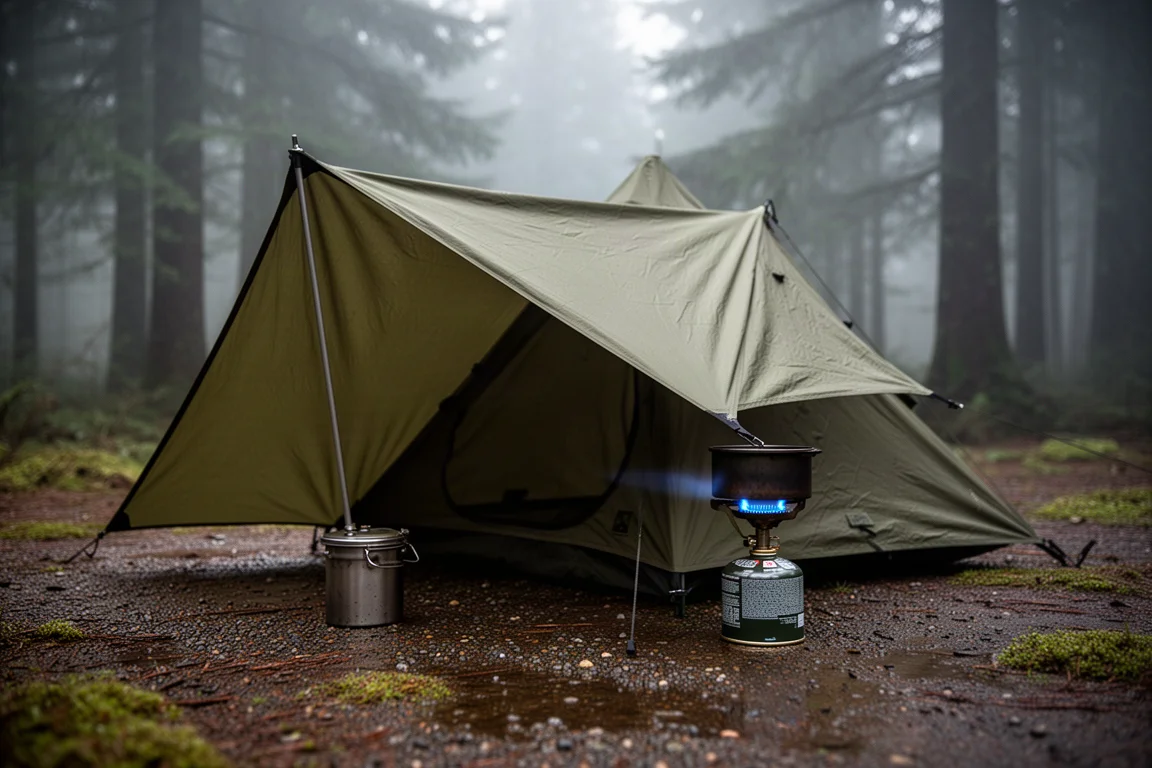
Both were tested deliberately. The tent was pitched in the open rather than under the tarp, with a tarp and a vehicle standing by as fallbacks. That is the right way to approach any single-wall shelter you have not slept in before.
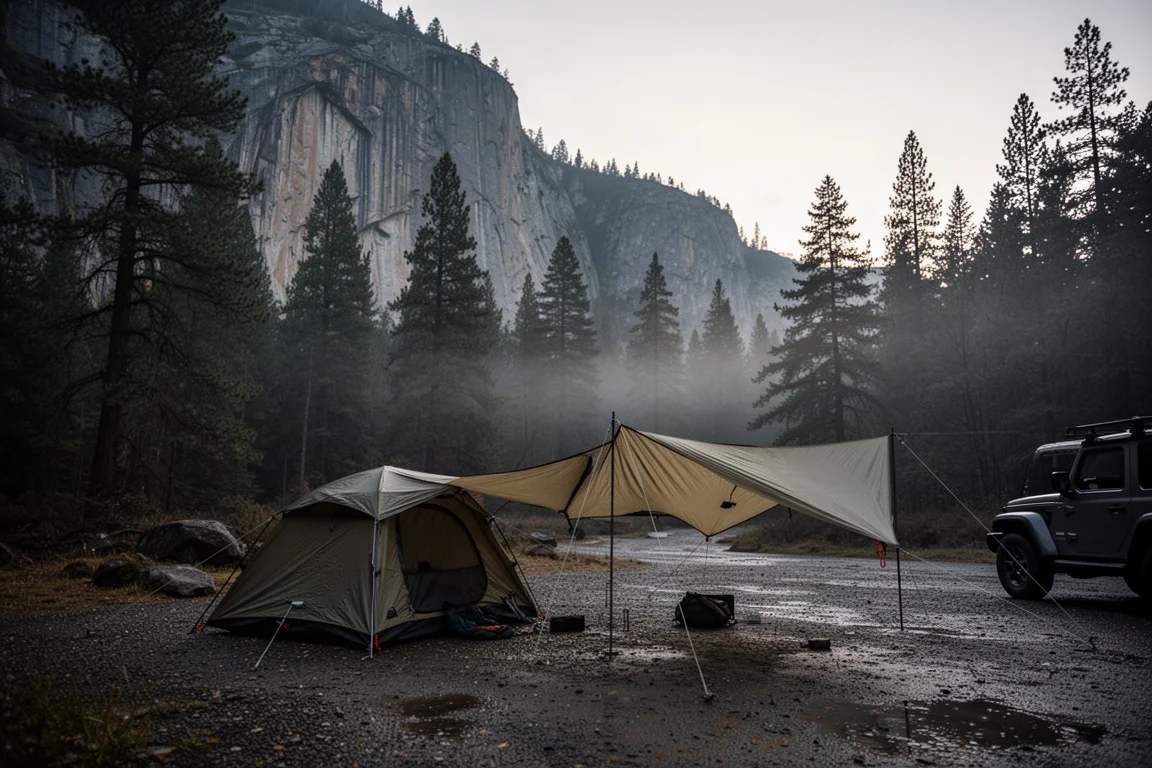
The rain stayed light for most of the night, which made this a useful first look rather than a full stress test. Even so, both products answered the questions that mattered: did the shelter stay dry, and did the heater earn its place in the pack?
How These Two Pieces Fit a Cold, Wet Camp
Three things decide whether gear like this is worth carrying. The first is rain behavior, meaning whether a shelter can shed water without being sealed shut, because a closed single-wall tent trades dryness for condensation. The second is ventilation, since a small shelter with poor airflow ends up wet from the inside. The third is fuel economy, because a heater that is pleasant for an hour and empty by midnight is not much of a heater.
Weather added a real constraint to this trip. Conditions were unusually dry for the season, and nearby wildfire activity made an open fire a poor idea until the ground had taken on enough moisture. That put more weight on the stove heater to provide warmth, and it made the shelter’s rain performance the main event.
OneWind Bivvy Tent: An Awning That Stays Up in the Rain
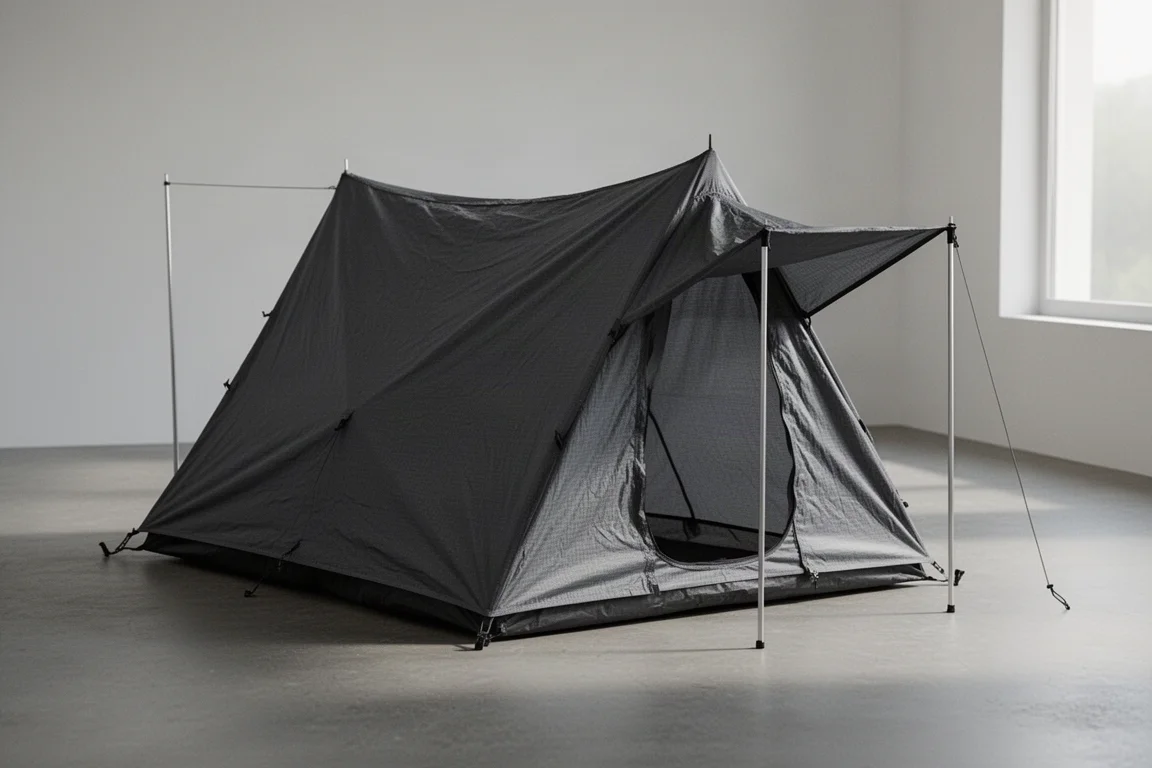
This is a single-wall bivvy tent, the kind of low, compact shelter that keeps a pack light and a footprint small. What separates it from the bivvy tents already on the market is what happens when you open the door. An extension panel is built into the fly and connected to the door itself, so the awning can stay up while it rains.
That matters more than it sounds. On most shelters with an awning, rain arriving at the wrong angle means the awning has to come down and the tent has to be closed up. Here, the extension panel can be left out for airflow or wrapped around the other way for more protection, and neither setup requires sealing the shelter completely.
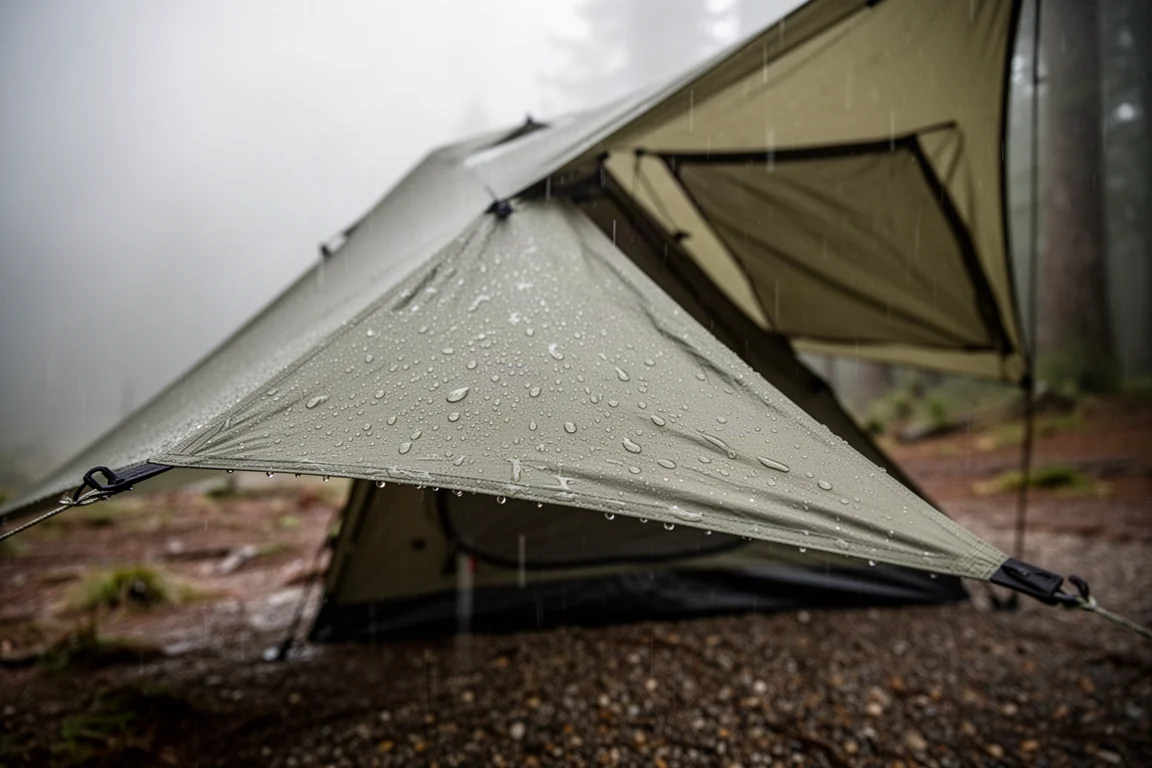
Overnight it rained on and off, with one heavier stretch around 3 a.m. The tent stayed dry with the awning left open, ventilation was excellent, and there was no condensation inside by morning. The interior is small, which is the nature of a bivvy, and the foot end does not get an extension panel of its own, which is the one place the design stops short.
Awning Extension Panel: Rain Protection Without Sealing Up
The panel is the reason to look at this tent. It gives you two configurations: extended outward for maximum airflow, or wrapped around for a tighter barrier against wind-driven rain. Because the panel is part of the fly rather than a separate accessory, there is nothing extra to pack and nothing to attach in the rain.
It is worth being clear about what this outing did and did not prove. The rain was light to moderate, so the tent has not yet been through a sustained downpour. What it did show is a shelter that stays dry while remaining open, which is the harder problem to solve in a small single-wall design.
Naturehike Stove Heater: Heat and Runtime From One Canister
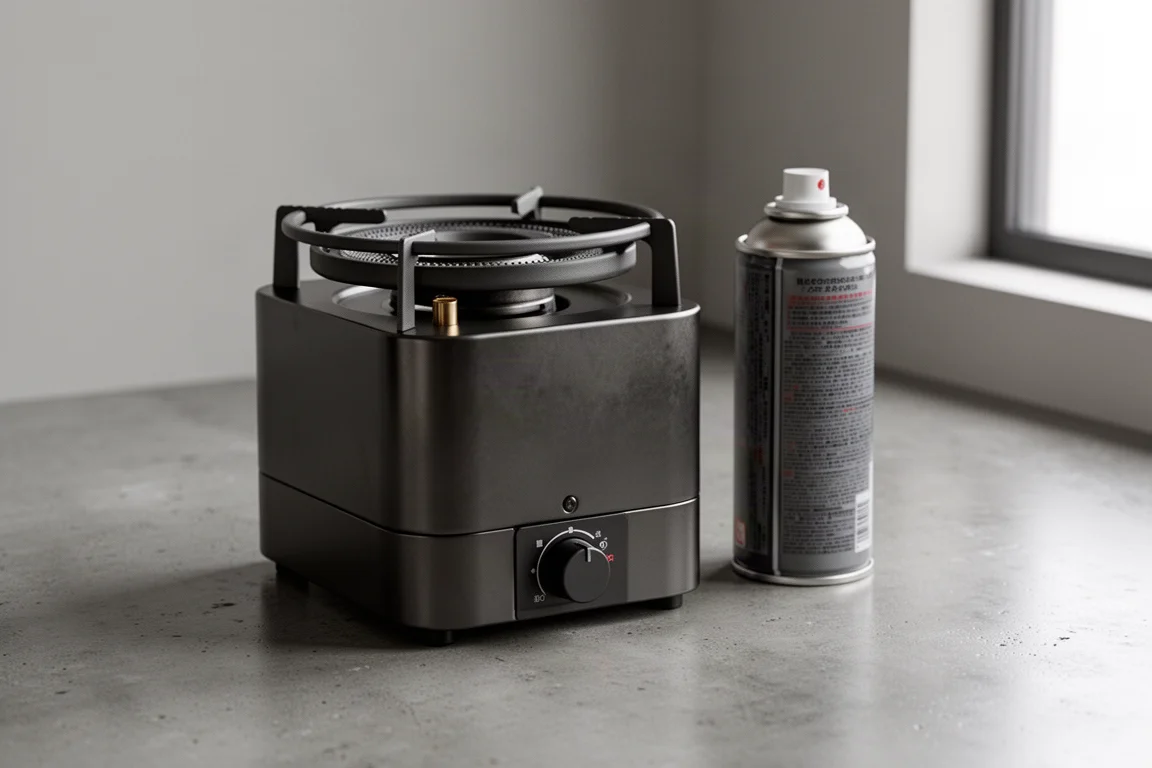
The second piece is a butane-powered unit that works as both a heater and a stove. On high, the output is startling, enough that fuel consumption becomes the immediate concern. The good news is that the output dials down smoothly, and at a low setting it still throws meaningful heat.
That range is what makes the runtime work. Across one evening and the following morning, running a mix of high and low, the unit went for roughly nine hours on a single canister, well past the six-hour figure typical of a comparable canister heater.
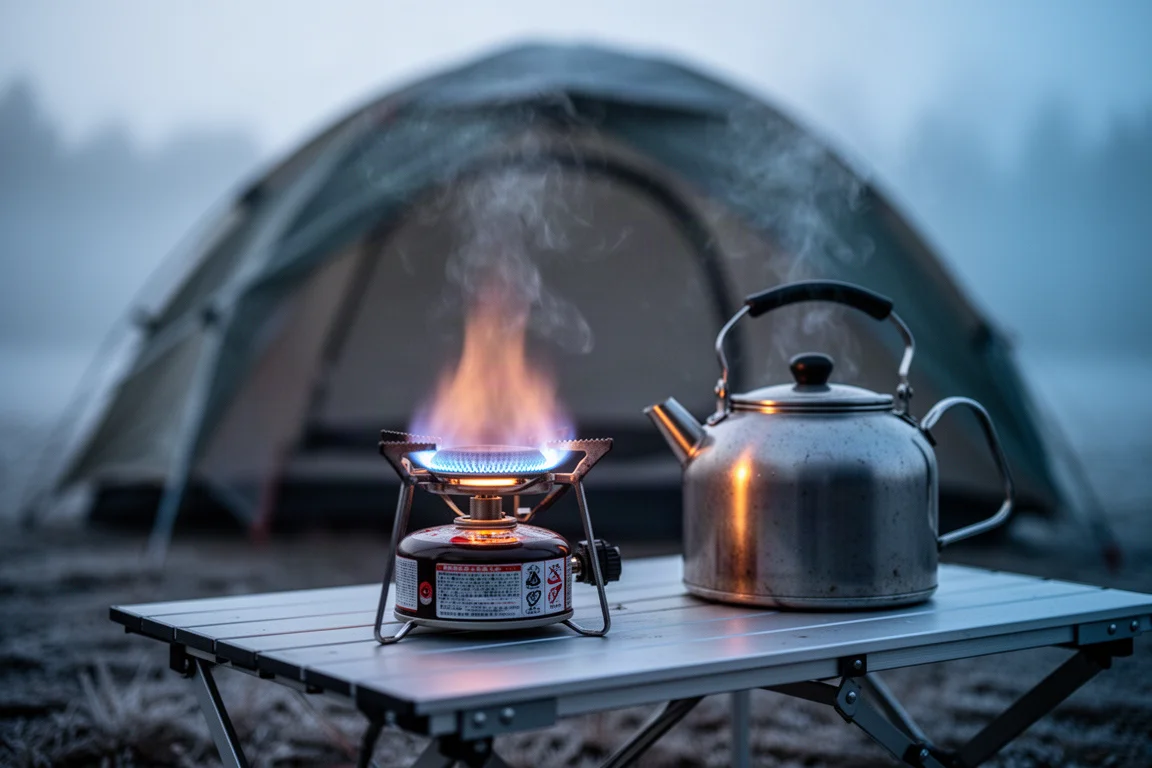
As a stove it is more limited. Boiling water for morning coffee took a long time, and that is the clear trade-off of a dual-purpose design. Where it shines is warming: coffee, food, and the space around it, quickly and with heat you can feel even when the burner is not pointed at you.
Anyone who needs a fast boil should treat this as a warmer rather than a cooktop. As a heater and a food warmer it does its job well, and the runtime on one canister is genuinely impressive.
How the Two Compare on a Wet Trip
Together they cover the two things a cold, damp camp needs: a dry place to sleep and a way to stay warm without a fire. The tent handles the weather problem without forcing you to shut yourself in, and the stove heater handles warmth and hot drinks while the ground is too dry for anything else.
The practical lesson applies to both. A single-wall shelter and a fuel-burning heater are worth testing close to home, or at least with a fallback shelter nearby, before they become the only option on a longer trip. Setups that look fine in a driveway often behave differently in wind, rain, and near-freezing mornings.
Buying Advice: Matching Each Piece to Your Trip
Choose the bivvy tent if you want a small, light shelter that can stay ventilated in light rain. Its awning extension panel is a genuine design advantage for anyone who has had to choose between a stuffy night and a wet one. Expect a compact interior, and plan a real rain test before relying on it in sustained weather.
Choose the stove heater if your priority is warmth and quickly warmed food or drinks rather than fast cooking. Its adjustable output and long runtime on a single canister make it a practical addition to cold-weather camps, as long as you accept that boiling water is not its strength.
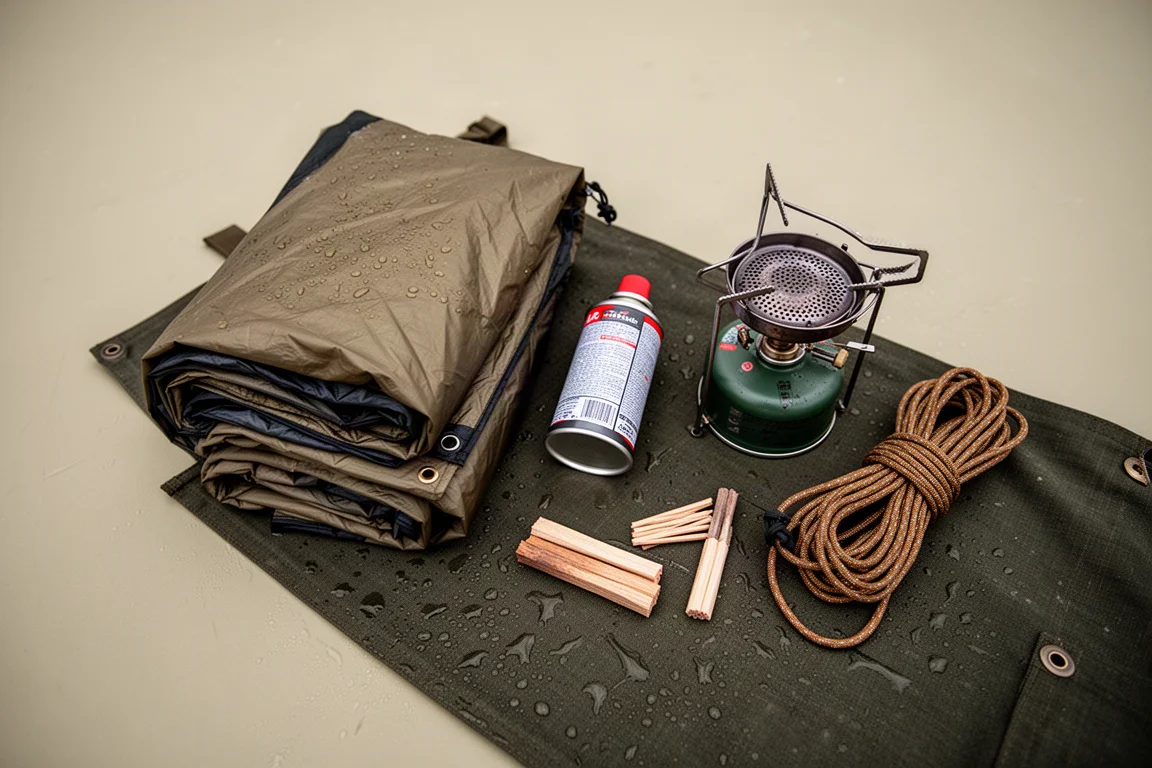
If you are building a cold-weather kit around both, match them to how you actually camp: the tent is the shelter, the stove heater is the warmth, and neither is trying to be the other.
Conclusion
This outing answered the questions it was meant to answer. The bivvy tent stayed dry with its awning open, ventilated well, and produced no condensation overnight, with the fly-integrated extension panel doing exactly what it promises. The stove heater delivered strong, adjustable heat and roughly nine hours of runtime on one canister, while making clear that it is a warmer first and a stove second.
Both are worth considering on their own merits, and both deserve a proper trial run before they carry a trip on their own.
Further reading
Related Reviews
Camping Gear
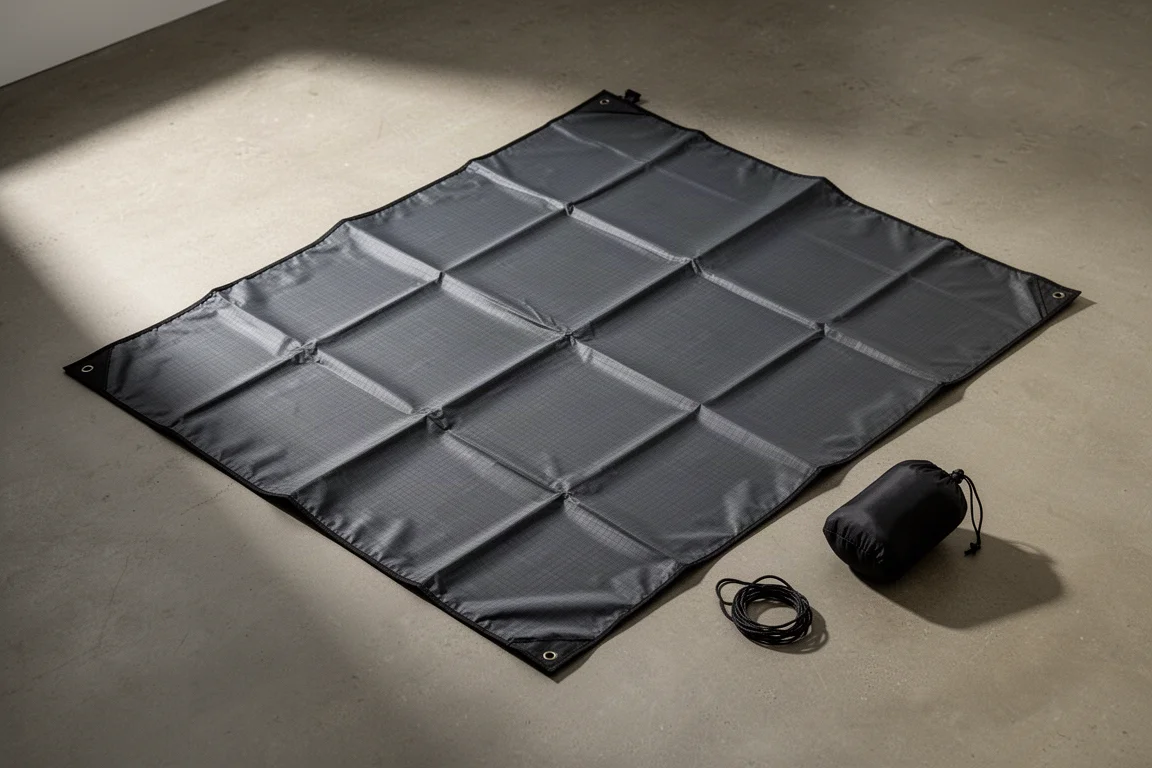
3FUL Ultralight Ground Sheet Review: A Two-Person Footprint Worth Packing
A 6.7 oz two-person ground sheet in ripstop silnylon, priced around $30. Here is what it protects, what it does not do, and who should pack it.
Camping Gear
Backcountry Light Dual-Function Tarp and Floor Review: A Footprint First
A dual-purpose tent floor and tarp that keeps falling rain off you, but cannot block wind. Here is where it works and where it does not.
Camping Gear
Best 2-Person Camping Mattresses for Couples: 10 Options Compared
A practical comparison of ten two-person camping mattresses, covering self-inflating pads, air pads and air mattresses for couples.