Camping Gear
OneTigris Warm Poncho Review: A Light Hybrid Poncho, Blanket, and Quilt
A 1.5 lb poncho hybrid with 3M Thinsulate insulation that doubles as a blanket and warm-weather quilt, plus the limits to check before buying.
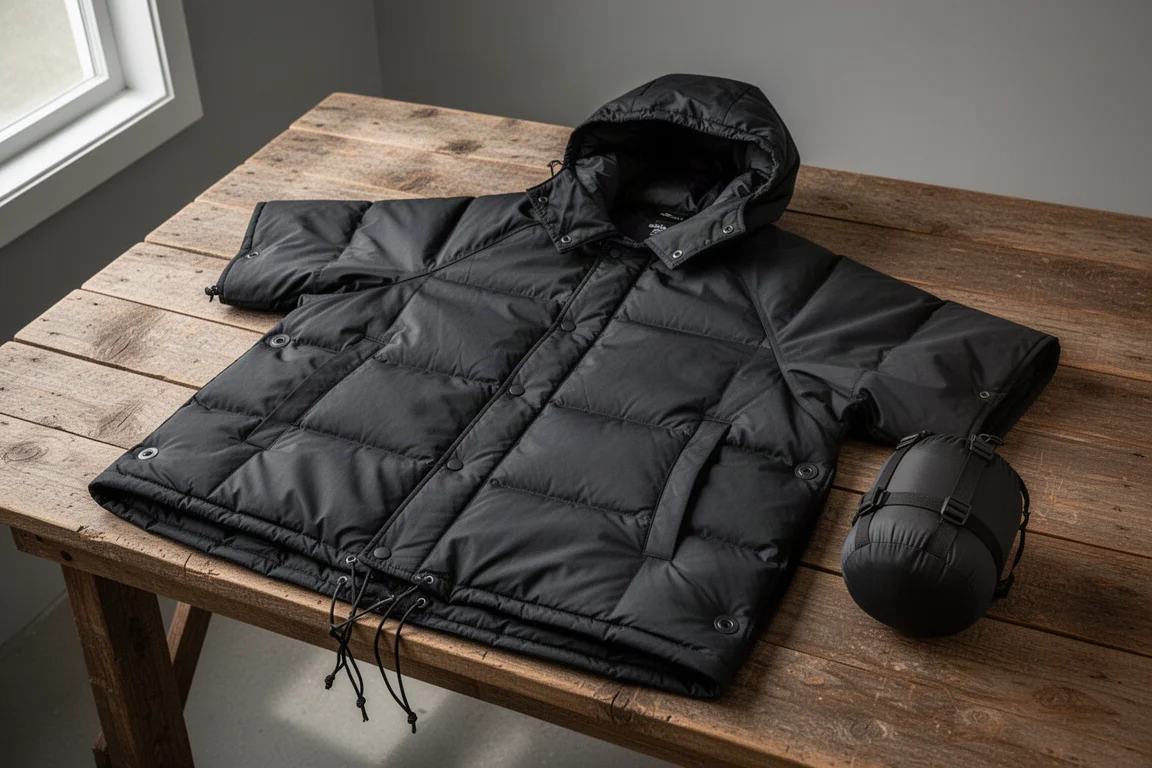
Introduction
Hybrid insulation pieces that convert between a poncho, a blanket, and a quilt have a loyal following among campers who would rather carry one item than three. The OneTigris Warm Poncho is one of the lightest versions of that idea: a hooded shell with 3M Thinsulate insulation and a row of side snaps that lets it open out flat.
It weighs 1.5 lb and costs around $60, which makes it a genuinely packable option rather than a bulky bag substitute. The trade-offs matter, though, because this design is at its best in mild, dry weather.
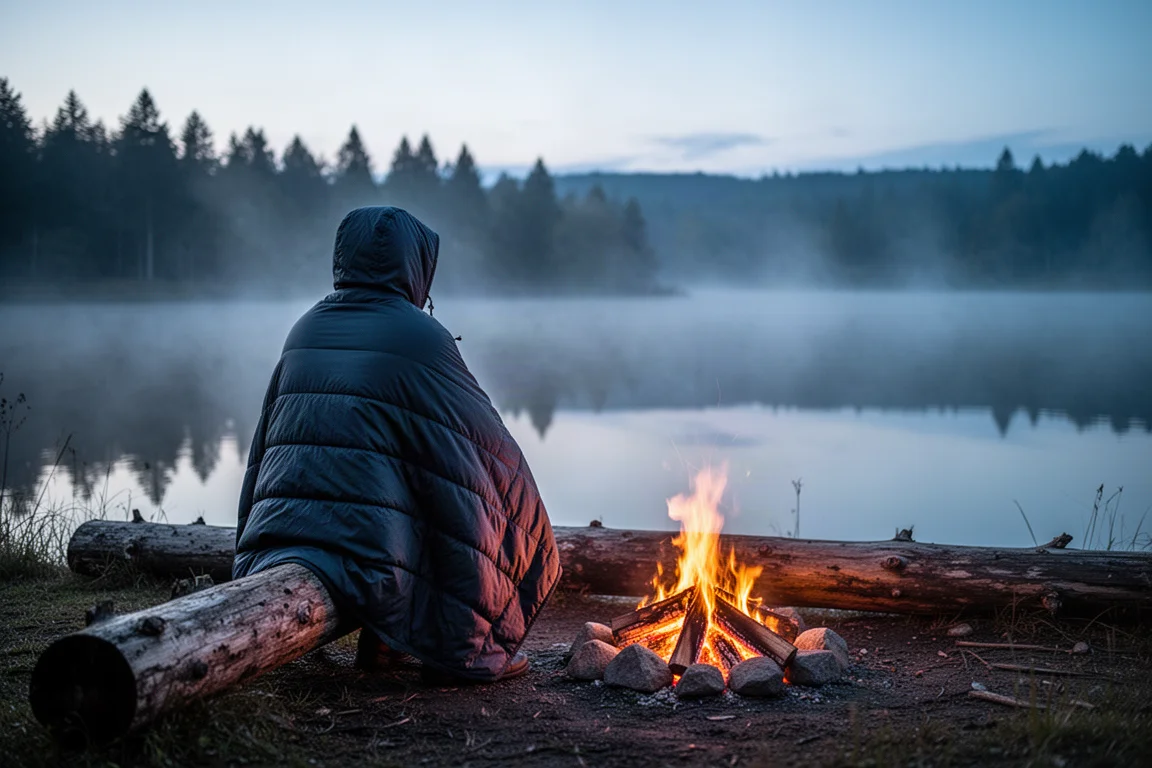
This review covers what the Warm Poncho does well, where it falls short in real use, and which campers will get the most from it.
Who This Product Is For
The Warm Poncho is built for warm-weather camping. It works as a poncho you can pull on when the evening cools, as a blanket or top quilt over a sleeping pad, and as an extra layer inside a shelter. Anyone who hikes or camps in summer and wants one piece of insulation that handles several jobs should find it useful.
It is a poor match for cold, wet trips. There is no published temperature rating, the shell is water repellent rather than waterproof, and the design cannot be sealed closed like a sleeping bag. If you camp in heavy rain or shoulder-season cold, this is not the piece to rely on.
Main Strengths
The first strength is weight. At 1.5 lb, the Warm Poncho is light enough to carry as a just-in-case layer without thinking twice about it. It is also among the most compact poncho hybrids of this kind, and that combination of low weight and small packed size is what opens up trips that bulkier hybrids make awkward.
The insulation is 3M Thinsulate inside a 20D nylon shell with a 300T polyester lining. It feels and compresses more like down than like typical synthetic fill, and with enough effort it can be squeezed down to roughly the size of a one-litre bottle. Compared with the Helikon-Tex Swagman Roll, it is lighter, it packs smaller, and it is far easier to pull over your head.
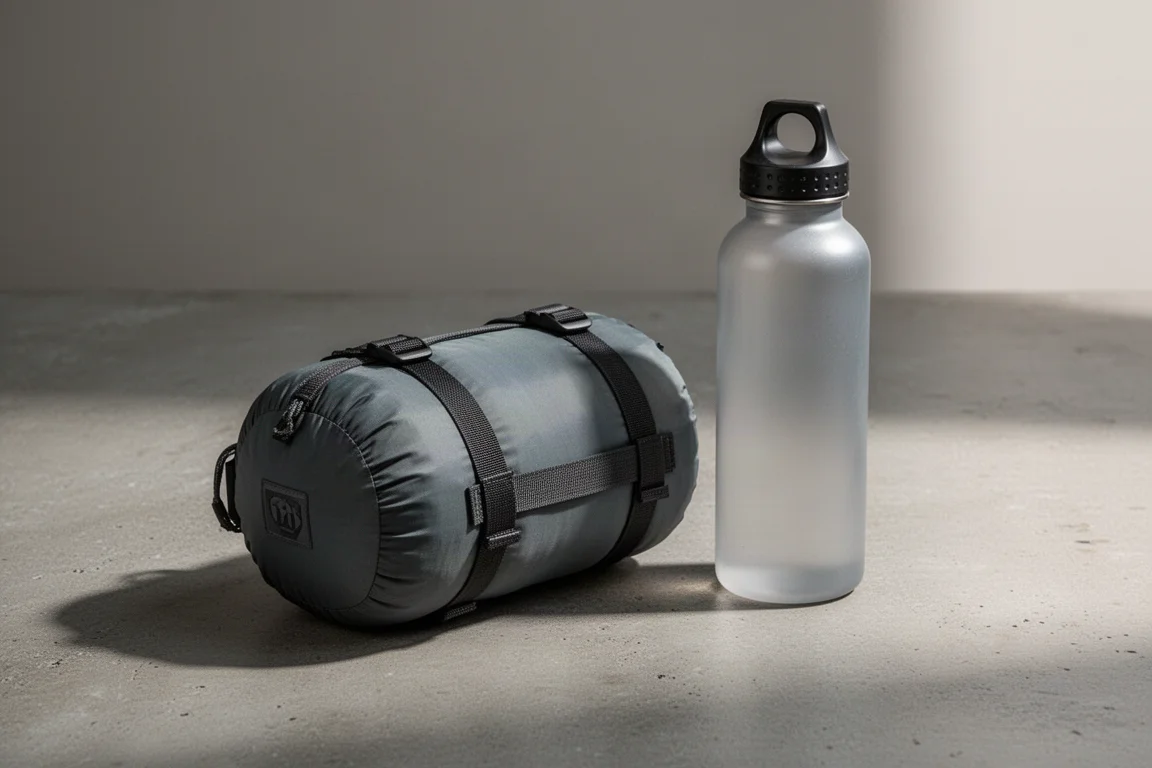
Build quality is another plus. The stitching is clean throughout, with no loose threads or crooked seams, and the included storage bag is well made with compression straps all around, a top drawcord, and a grab handle at the base. In use, the design details do their job: the hood has drawcords on both sides, a protective flap over the top helps cut wind, the zipper opens the head hole wide enough to get the poncho on and off easily, the hand-warmer pocket runs straight through to the other side, and the hem drawcords let you close the bottom.
How It Performs in Cool, Wet Conditions
In field use at around 50°F, with constant rain, thunderstorms, heavy fog, and a lot of moisture in the air, the Warm Poncho kept its wearer warm for hours at a time. That is a solid result for a mild-weather layer.
Water is still the main thing to watch. The shell carries a water-repellent treatment, which means rain beads up and rolls off for a short while, but that is not the same as waterproof, and water will eventually soak in. Insulation like this holds some warmth when damp, but it will not keep you comfortable, and getting wet in cold conditions is genuinely risky. Treat the Warm Poncho as a dry-weather layer and keep it out of sustained rain.
Things to Consider Before Buying
There is no temperature rating published for the Warm Poncho, so you have to judge its limits from your own conditions. Based on experience around 50°F, it handles cool evenings well, but there is no manufacturer figure to plan around.
It also does not work as a sleeping bag. The side snaps run along the head and foot ends with none in the middle, so the shell cannot be sealed shut. Used as a quilt, it makes much more sense: cinch the foot end, slip your feet into the closed section, and lay the rest over you. You cannot tuck it underneath yourself, so it covers the top of the body only.
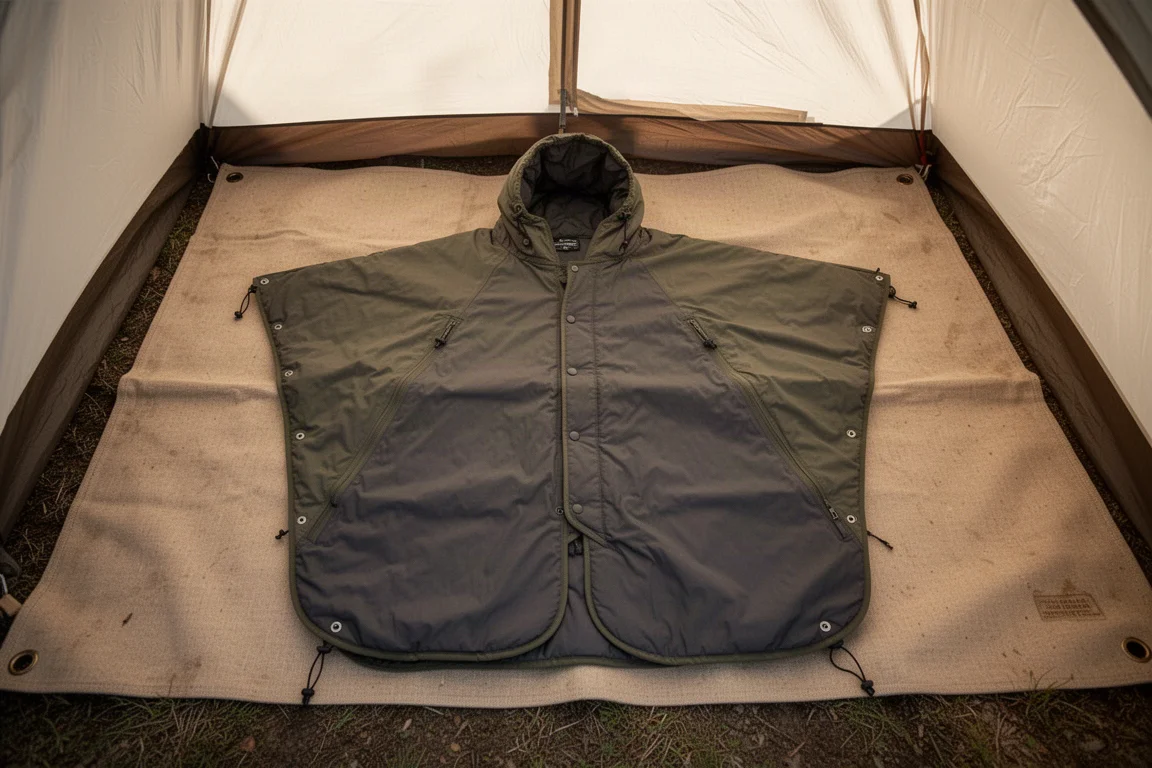
The cut is another consideration. Maximum width is about 60 in at the middle, tapering to roughly 46 in at the head and foot, and there is no front or back cinch to gather the material in. That wide middle section swings when you move around camp, and it is easy to sweep a mug or a stove off a table if you are not careful. A shaped cut also means less coverage when the poncho is laid out flat as a blanket.
Finally, handle the snaps gently. They are plastic, so they will not bend, but snaps on this kind of gear are known to tear out of the fabric if they are pulled apart quickly. Slow and steady when opening it out will keep them intact.
Packing, Storage, and Care
Packed, the Warm Poncho measures about 15 in by 7 in, and with enough force you can compress it further. The supplied storage bag is roomy enough that getting it back inside is easy, and the compression straps let you cinch it down tight.
Care is straightforward: keep it dry, air it out after trips, and be gentle with the snaps when converting between poncho and blanket. Because the shell is only water repellent, a dry bag or pack liner is worth using when rain is likely.
Buying Advice
At $60 for the black version and $58 for the green version at the time of writing, the Warm Poncho is fairly priced against comparable hybrids. A $5 coupon was available on the listing when it was purchased, though that may not be there when you look. For warm-weather camping and summer trips, it is worth the money.
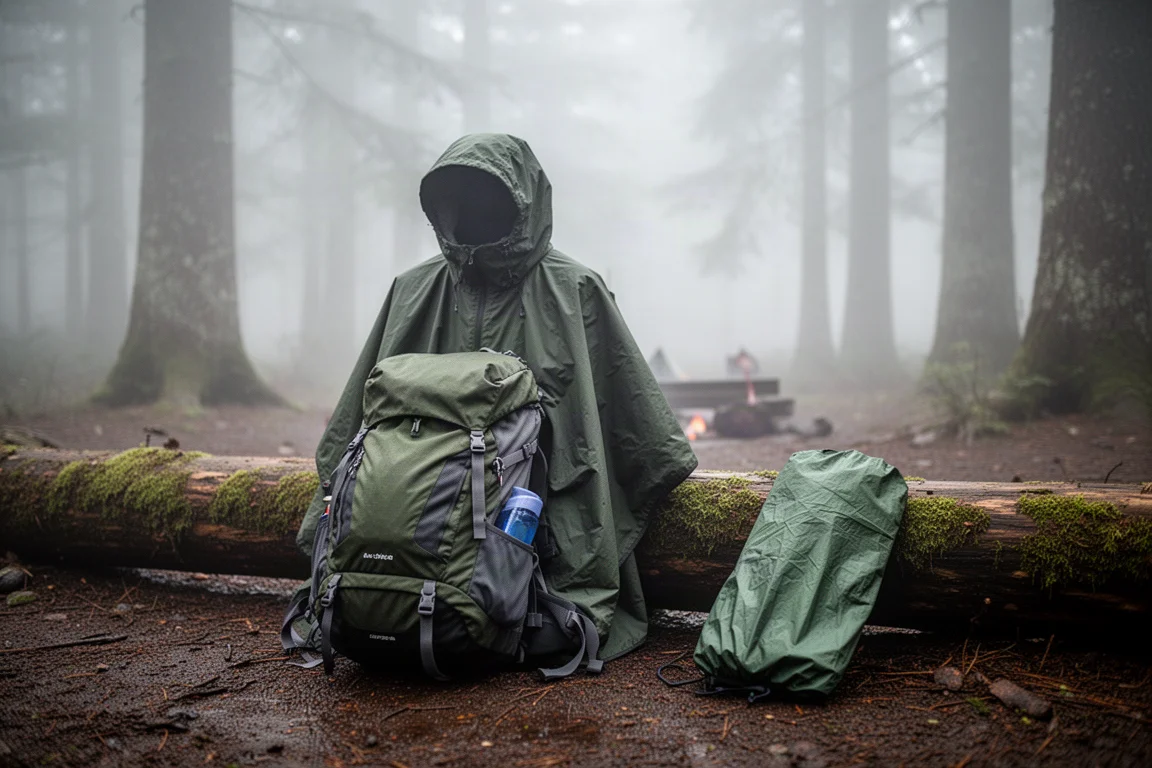
The deciding factor is what you want from a hybrid. If you want the lightest, most compressible option and you mostly camp in mild conditions, the Warm Poncho is the better pick. If you want a hybrid that zips closed so you can crawl inside it like a sleeping bag, a zip-closed design such as the Helikon-Tex Swagman Roll suits that job better. The Warm Poncho also does not compress around the waist, so it stays loose when worn.
Conclusion
The OneTigris Warm Poncho is a well-made, genuinely light hybrid that shines as a poncho, blanket, and warm-weather quilt. Its 3M Thinsulate fill packs down impressively, the stitching and hardware are clean, and the large head opening makes it easy to throw on when the temperature drops. Plan around its limits: keep it dry, expect quilt duty rather than sleeping bag duty, and treat it as a summer and mild-weather layer. On those terms, it earns its place in a pack.
Product link
View more details for OneTigris Warm Poncho
This product is mentioned in the review. Check the specifications, options, and compatibility before buying.
View more details for OneTigris Warm PonchoFurther reading
Related Reviews
Camping Gear
3FUL Ultralight Ground Sheet Review: A Two-Person Footprint Worth Packing
A 6.7 oz two-person ground sheet in ripstop silnylon, priced around $30. Here is what it protects, what it does not do, and who should pack it.
Camping Gear
Backcountry Light Dual-Function Tarp and Floor Review: A Footprint First
A dual-purpose tent floor and tarp that keeps falling rain off you, but cannot block wind. Here is where it works and where it does not.
Camping Gear
Best 2-Person Camping Mattresses for Couples: 10 Options Compared
A practical comparison of ten two-person camping mattresses, covering self-inflating pads, air pads and air mattresses for couples.