Backpacks
OneTigris Big Bear Bushcraft Backpack Review: A 63L Duffel With a Harness
A 63L carry that blends duffel and backpack design, with a $65 price, generous pocket organisation, and some real compromises to weigh before you buy.
Introduction
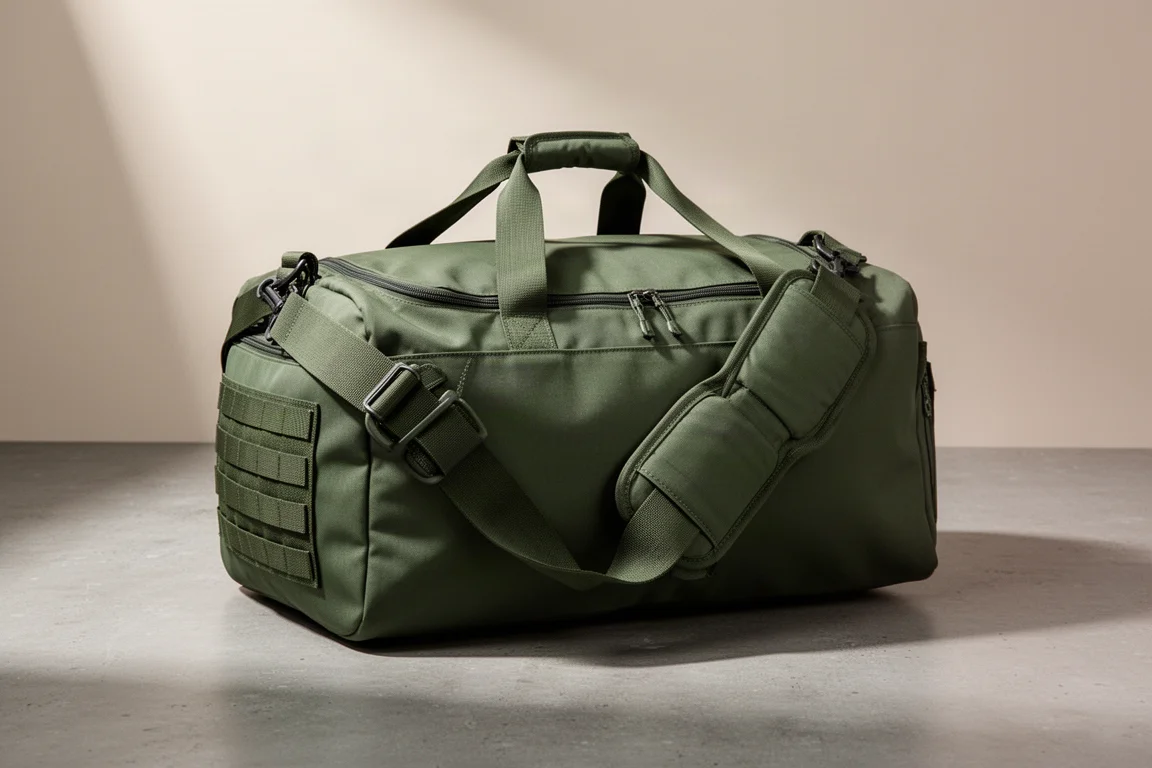
The OneTigris Big Bear is marketed as a bushcraft backpack, but in physical terms it is a duffel bag with a shoulder harness attached. It loads from the top like a duffel, holds 63 litres, and ships in a single Ranger Green colourway for around $65. Understanding that mix is the entire story here, because how useful the bag turns out to be depends on which of those two roles you actually need it to fill.
The spec sheet reads well on paper: 63 litres of capacity, a claimed place as the largest pack in the OneTigris line, 3.4 lb (1.5 kg) of empty weight, and dimensions of 23.6 in tall, 15.7 in wide and 11 in deep. The questions start once you look at how the bag is actually built and carried.
Who This Backpack Is For
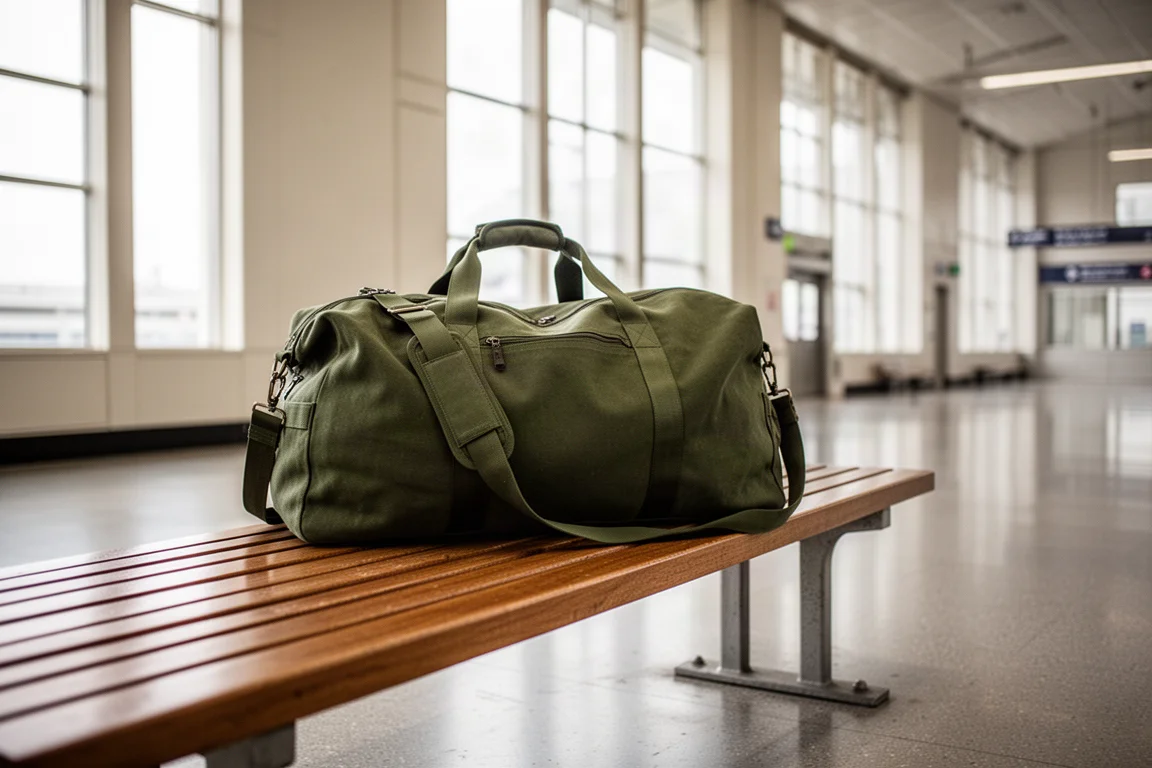
This is a travel bag. The harness deploys when you want to wear it and folds away against the back panel when you would rather carry it by hand, which suits short transfers: airport to car, car to hotel room, hotel room to the next terminal. For that kind of movement, the arrangement works and the bag does what it promises.
For backcountry use, the design works against you. There is no internal frame, no waist belt, and the back panel is a solid sheet of coated fabric with no mesh or venting. Under load it holds heat against your back almost immediately, and the shoulder straps carry very little padding. Wearing this on a long hike is not what the bag was built for, regardless of the bushcraft label.
Main Strengths
Capacity is the headline. At 63 litres this is the largest pack OneTigris says it makes, and the interior volume is genuinely generous for a bag in this price bracket. The organisation is thoughtful too, with a long list of pockets across both faces of the bag rather than one open cavity.
Switching between carry modes is quick. The shoulder straps detach from their buckles and stow against the back panel, and reconnecting them takes only a moment when you want to wear the bag again. For anyone alternating between carrying by hand and wearing it on their back during a single trip, that flexibility is a practical benefit.
The price is the other clear advantage. At $65, a 63-litre bag with a deployable harness and this much pocket detail sits at the accessible end of the market.
Pocket Layout and Carrying Options
There is a lot going on here. The front face carries two compression straps, a very small zippered pocket with a key clip, and a larger pocket with two-way zippers that opens onto mesh sleeves inside. Above that pocket sits a velcro panel for patches, and further along the bag you get PALS webbing for attaching additional pouches.
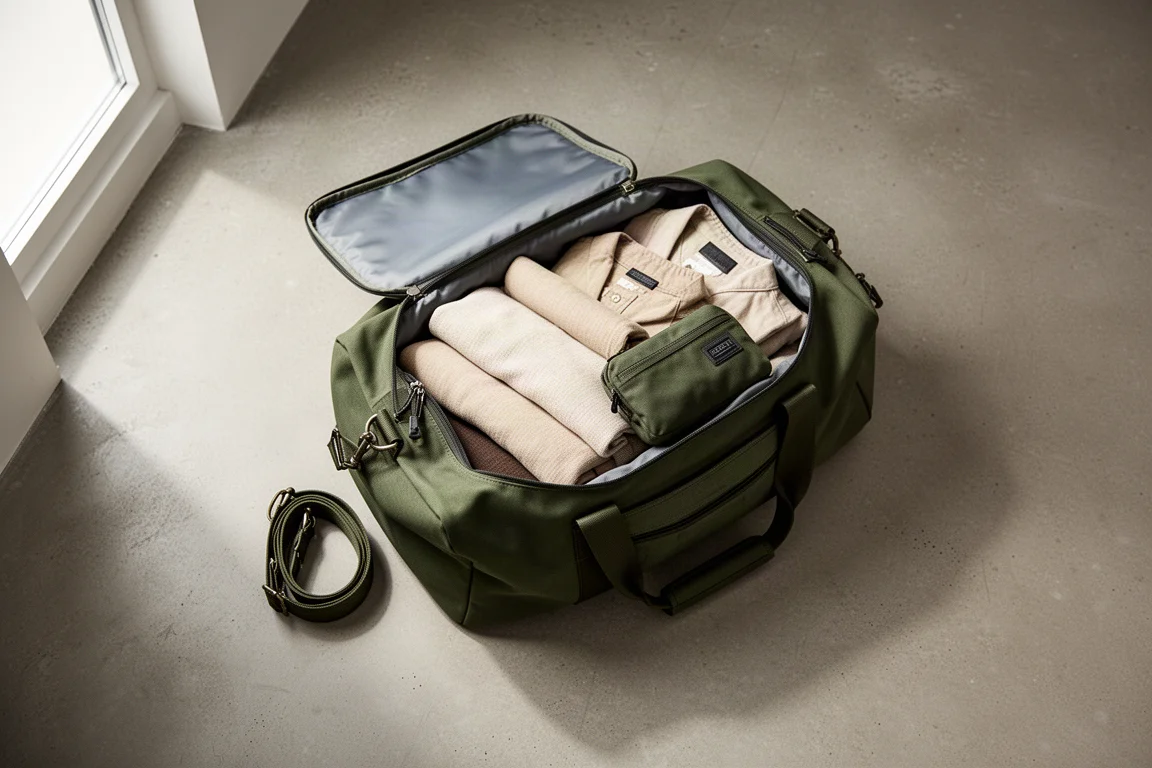
The main compartment opens along the top through lockable two-way zippers with pulls. Inside there is a side zippered pocket, a compression strap, and a pair of zippered mesh pockets under the lid. A name tag holder and a top zippered pouch sit at the upper end, and each end of the bag has a grab handle flanked by two plastic D-rings.
The carrying layout is where the design gets awkward. There is no grab handle at the centre of the bag, so picking it up by hand means using the side handles, which rolls the bag onto its side and lets the contents shift. You load from the top, then turn the bag over to carry it. For a duffel, that is a significant omission.
Things to Consider Before Buying
Structure is the biggest issue. There is no frame, and the sides and base have no rigidity of their own, so the bag slumps noticeably even when it is sitting flat on a surface. The only way to make it hold its shape is to pack it completely full. Anything less and the fabric sags, and loose items slide around inside because nothing in the interior stops them.
The harness is basic. There is an adjustable sternum strap and the shoulder straps detach, but padding is minimal and there is no waist belt to transfer weight to your hips. Combined with the non-breathable back panel, that limits comfortable carry to short distances.
Materials, Zippers, and Hardware
The exterior is a 1200D Oxford polyester, with a 210D polyester lining, 500D mesh for the pockets, and a very thin EVA foam pad in the base. Zippers are not YKK, and the buckles feel inexpensive in hand. Overall construction is acceptable, with a few loose threads visible, but the materials do not feel like a $65 bag once you handle them.
OneTigris states that these are the same materials used in high-end military products. That claim deserves scrutiny. High-end tactical and military bags are typically built from nylon, which offers higher tear strength, better durability and lower weight. Oxford polyester is a budget, civilian-grade material. There is nothing wrong with using it in a travel duffel, but it is worth knowing exactly what you are buying. This bag also marks a departure from the brand’s earlier use of higher-grade fabrics, zippers and buckles.
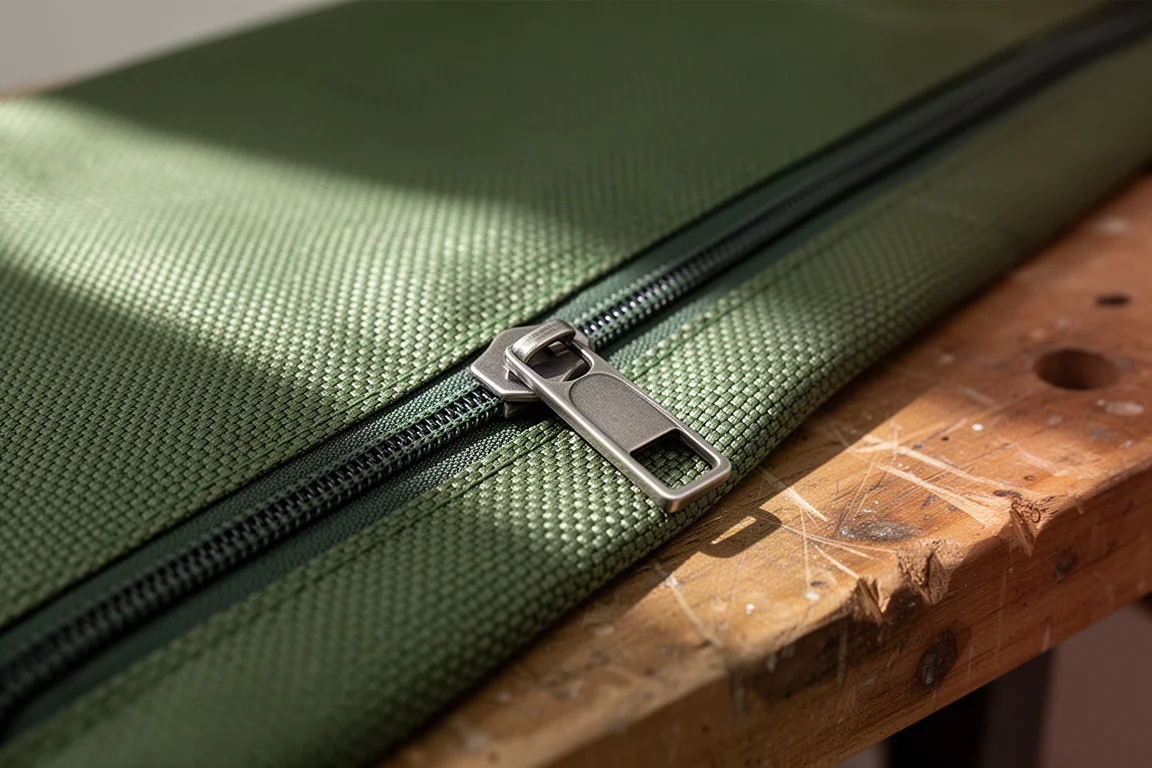
The practical takeaway is simple. The fabric and hardware are adequate for hauling clothing and gear between a car and a room. They are not the specification you would choose for rough outdoor use.
Buying Advice
If what you need is a large, inexpensive bag that moves gear between a car and a hotel room, with the option of wearing it on your back for short distances, the Big Bear covers that brief and the pocket layout is genuinely useful. The harness conversion is fast, the capacity is substantial, and the price is low.
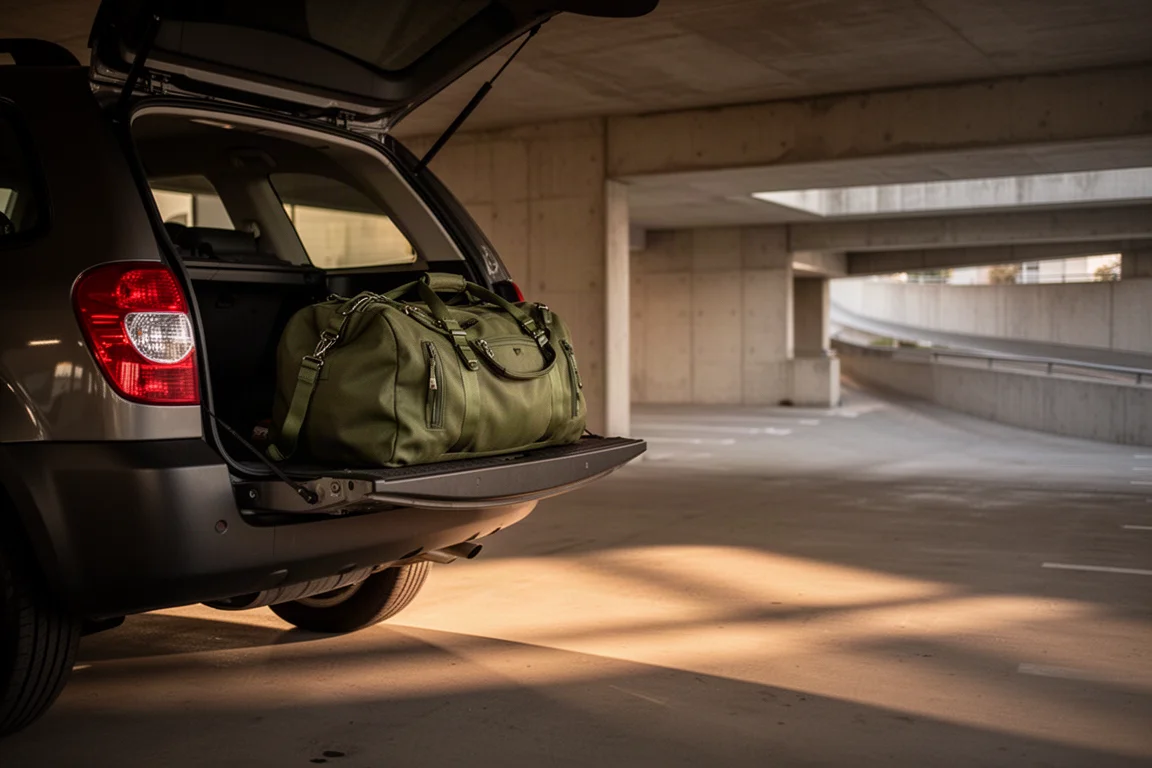
If what you need is a bushcraft or hiking pack, this is not the right purchase. The lack of a frame, waist belt and breathable back panel, plus the sag when the bag is not packed completely full, all work against extended carry. Buyers who want a pack for the trail should look for a design with a frame sheet and stiffer walls, which is the norm for duffels that are meant to be worn as well as carried. Treat the bushcraft name as marketing rather than a description of capability.
Conclusion
The OneTigris Big Bear is best understood as a 63-litre travel duffel with a stowable harness rather than a bushcraft backpack. Its strengths are real: generous capacity, extensive pocket organisation, quick mode switching and a low price. Its weaknesses are just as real: no frame, no top grab handle, a non-breathable back panel and materials that feel below the asking price. Buy it for short-haul travel and it will serve you well. Buy it expecting a trail pack and you will be disappointed.
Product link
View more details for OneTigris Big Bear Bushcraft Backpack
This product is mentioned in the review. Check the specifications, options, and compatibility before buying.
View more details for OneTigris Big Bear Bushcraft BackpackFurther reading
Related Reviews

Backpacks
Best Backpacks 2026: Laptop Protection, Durability, and Comfort Compared
We tested 12 backpacks from $18 to $350 for laptop protection, durability, back padding, comfort, zipper smoothness, and water resistance.
Backpacks
Best Backpacks Under ₹500 in India: Five Practical Options Compared
Five backpacks tested side by side, from budget-friendly to premium Indian brands. Real strengths, trade-offs, and honest buying advice for daily use.
Backpacks
Decathlon Trek 100 70L Backpack Review: Serious Value for Backpacking
A 70-litre backpacking pack with a torso system you can adjust while wearing it, a rigid frame, and a 10-year warranty for $120.