Portable Fans
O2Cool Treva Portable Fan Review: A Budget Desktop Fan With Two Power Sources
A practical look at the O2Cool Treva portable fan, covering measured airflow, noise, battery runtime, running costs, and the situations where this budget fan makes the most sense.
Introduction
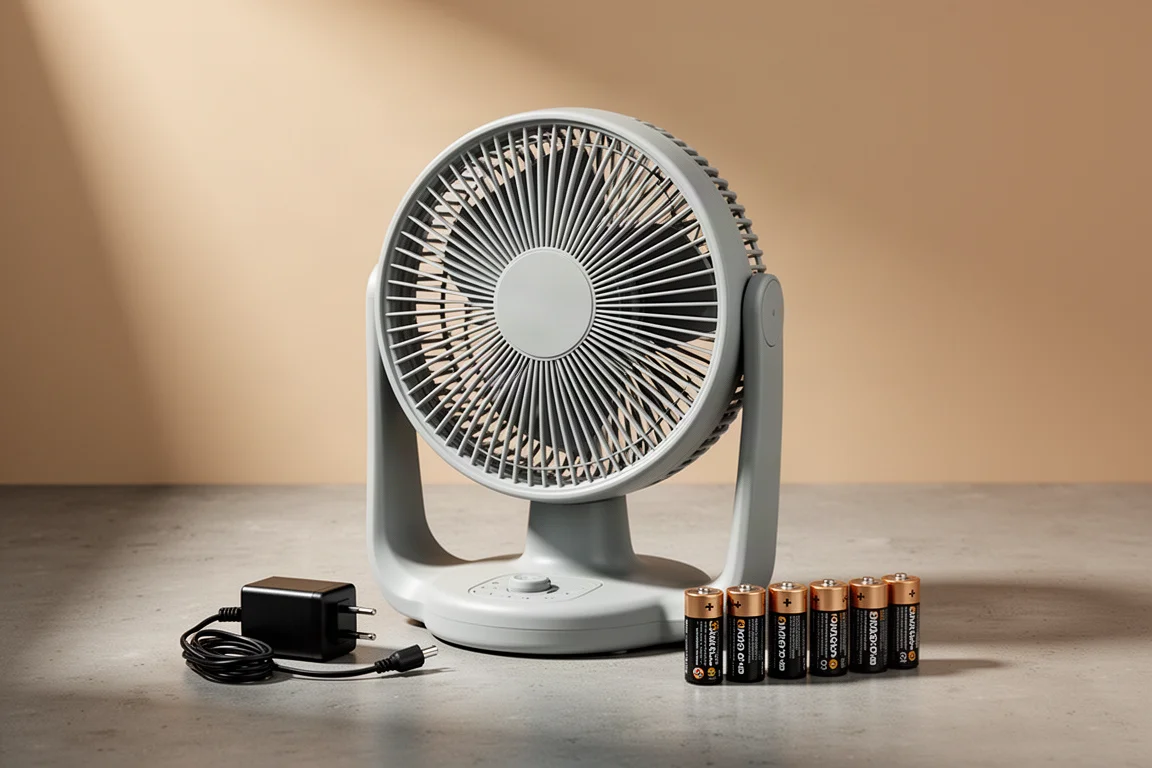
The O2Cool Treva is a 10-inch portable fan built around a simple idea: move a useful amount of air without costing much. It runs on either six D-cell batteries or the included AC adapter, which makes it one of the few fans in this class that can switch between cordless and wall power. At roughly $30, it sits at the affordable end of the 10-inch portable fan market, and that price is the main reason it draws attention.
This review walks through measured airflow, noise, battery runtime, running costs, and the practical details worth knowing before buying.
Who This Fan Is For
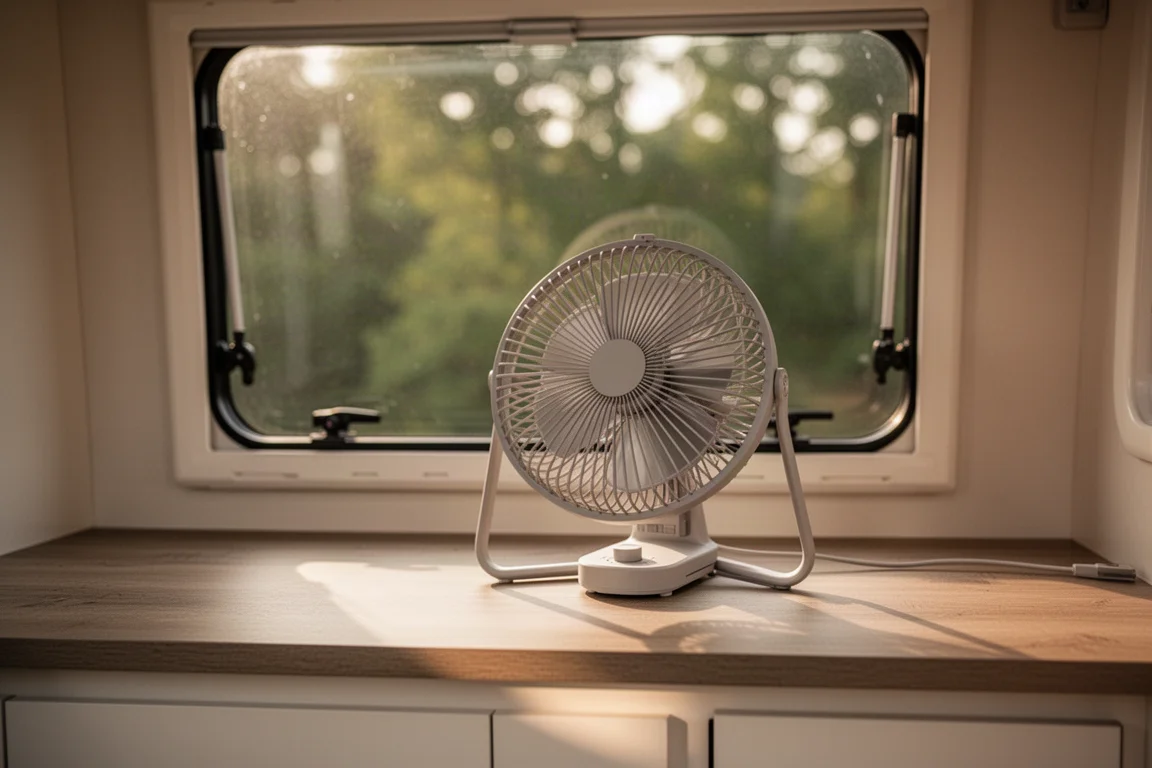
The Treva makes the most sense as a desktop fan that occasionally travels. It is comfortable on a table, a workbench, or a nightstand, and it works well in an RV where a power outlet is usually within reach. It is also a reasonable emergency fan if you keep a stock of D batteries on hand.
It is less convincing as a serious tent camping fan. The base is narrow, so it can tip over on its own, and the airflow does not carry far enough to cool a large tent.
Anyone shopping for a fan to cool a six-person tent overnight should read the airflow numbers further down first, because they are the clearest indicator of what this fan can and cannot do.
Main Strengths
Price is the headline. At around $30, it was the cheapest 10-inch portable fan found in a search of the category, which makes it an easy entry point for anyone who wants a large fan without spending much.
The second strength is raw air movement. Because the fan is big, even the low mode pushes a noticeable amount of air, enough to cool a person sitting nearby.
Runtime is the third. On battery power the Treva runs for roughly 60 hours on high and about 85 hours on low, which covers close to a full week of camping on a single set of batteries.
Finally, having two power sources is unusual in this category. Battery power covers cordless use, and the AC adapter covers any situation with an outlet nearby.
Airflow, Noise, and Runtime in Practice
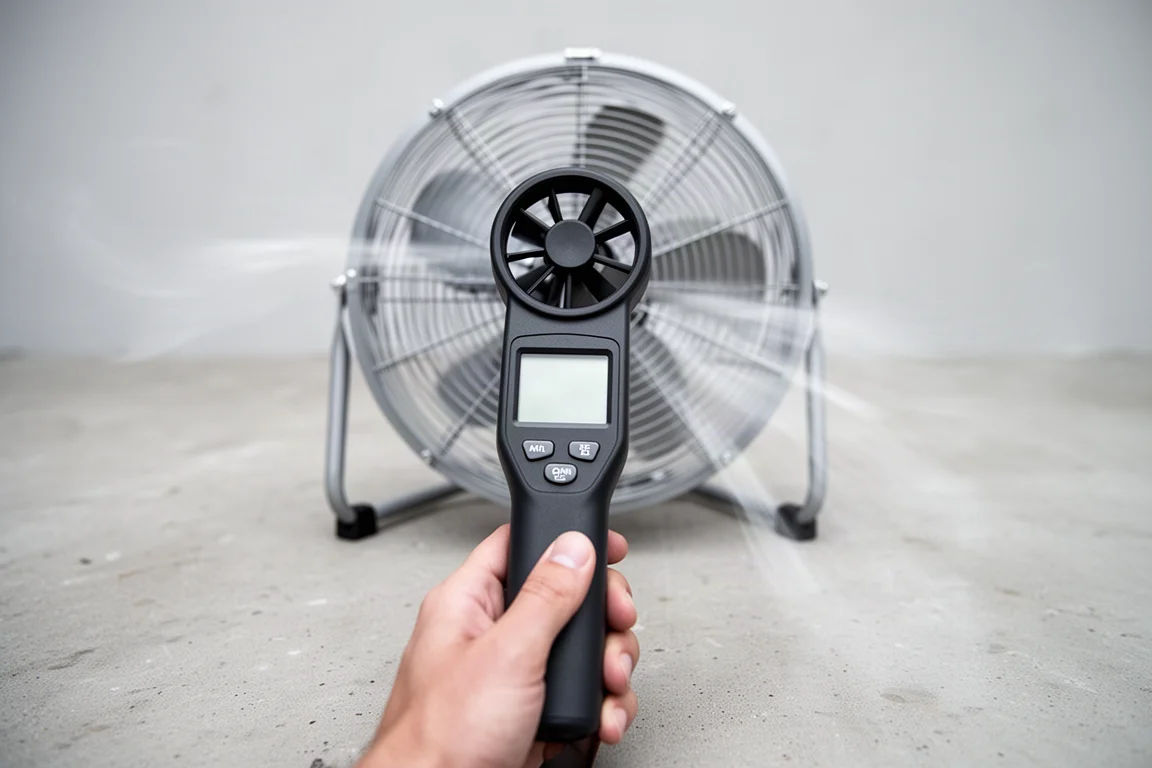
Measured directly in front of the fan, the low mode produced roughly 2.2 to 2.3 meters per second, or about 7.4 feet per second. The high mode reached about 2.6 meters per second, or 8.5 feet per second, and readings occasionally touched 3 meters per second, close to 10 feet per second, depending on meter placement.
Noise is moderate. With the fan off, ambient noise measured about 40.5 decibels. Low speed raised that to roughly 53 decibels, and high speed averaged about 57 decibels before dropping back to the ambient range when the fan was switched off.
Airflow distance tells a similar story. Indoors with no external wind, the high mode pushed air far enough to register on a meter at about 138 inches, or roughly 11.5 feet. The low mode reached about 94 inches, or about 7.8 feet.
On six D batteries, high speed ran for about 60 hours before the airflow dropped noticeably, and the fan stopped completely around the 65-hour mark. Low speed ran for about 85 hours with only a minor drop in the final stretch.
Those figures are the useful ones to keep in mind, because they explain both why the fan feels capable at close range and why it struggles to fill a large tent.
Things to Consider Before Buying
The narrow base is the most practical concern. Placed on a campsite floor or inside a tent, the fan can fall over from a small gust, which is a real drawback for tent use. A camping fan with a wider footprint is noticeably more stable.
Build quality is acceptable but not rugged. The fan is entirely plastic, and the grills of the safety cage flex easily under light pressure.
There is no IP rating. In a 30-minute moderate rain test the fan kept running on both speeds, but water collected around the rim of the battery compartment, so it should not be expected to handle sustained rain.
Features are minimal. There is no sleep timer, no battery level indicator, no built-in light, no charge-out function, and no way to tilt or angle the airflow. The battery compartment is secured with two screws and needs a tool to open, and the compartment itself takes some getting used to. The fan also does not ship with a warranty.
Power Sources and Battery Costs
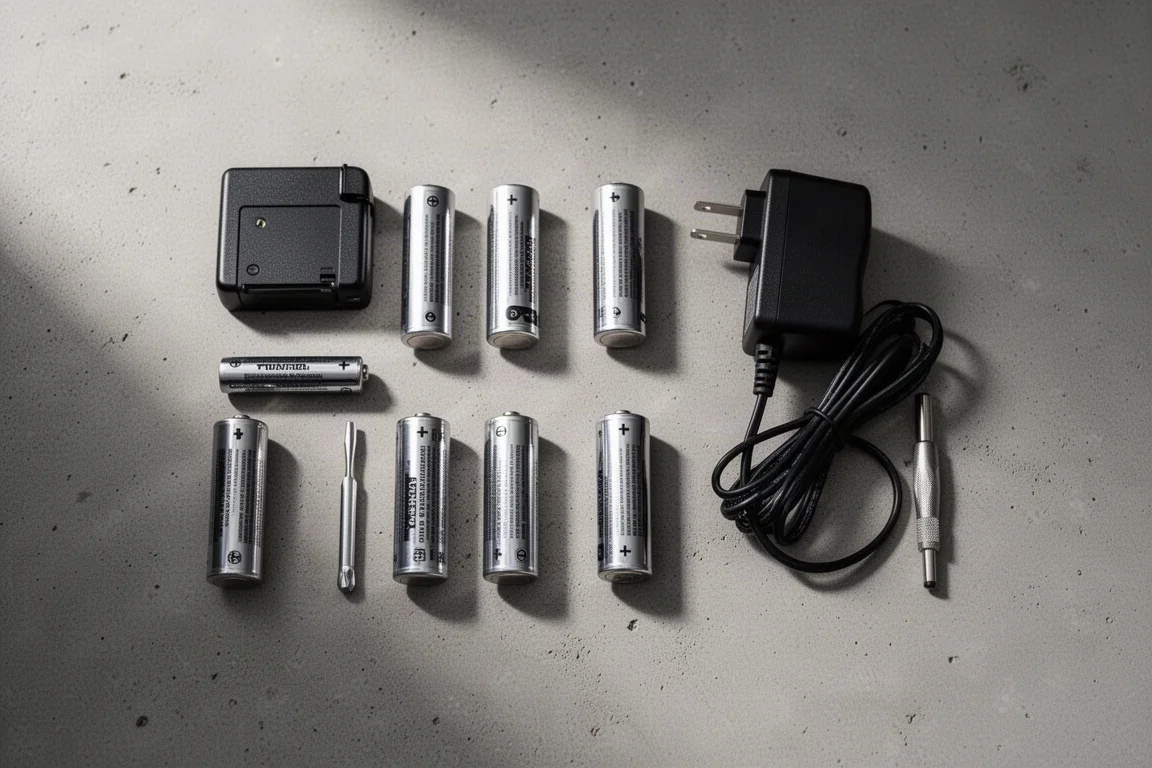
The Treva accepts six D-cell batteries, loaded into a compartment at the back with polarity markings in each slot. It also ships with an AC adapter rated at 9 volts DC and 700 milliamps. Plugging the adapter in disconnects the battery from the circuit, which preserves battery life, and fan speeds on wall power matched battery performance closely, around 2.2 meters per second on low and 2.8 to 3 meters per second on high.
Batteries are the hidden cost. Cheaper D cells can be found for as little as $1.15 each, while premium cells run closer to $2 each. With six batteries per set, that is roughly $12 per charge cycle, and the two runtime tests alone consumed $24 worth of batteries.
That running cost matters most for anyone planning to use the fan off-grid for long stretches, where the low purchase price can be offset by what it takes to keep the fan running.
Where the Treva Works Best
Weight and size are manageable. The fan alone weighs a little under 1 kilogram, about 34.5 ounces, while a full set of six D batteries adds roughly 30 ounces, bringing the total to about 64.4 ounces, or 1.8 kilograms. Packed, it measures about 12 by 12.75 inches with a depth of about 2.8 inches. The fan face is slightly over 10.25 inches across, and the blade diameter is about 9.25 inches.
In a six-person tent, the airflow reached the far end only weakly. Beyond roughly 80 to 90 inches the breeze was too gentle to spin a small windmill, and while a faint movement of air could be felt, it was not enough to cool anyone down. A fan with a wider, more stable base and stronger long-distance airflow is a better fit for that kind of use.
The Treva is at its best indoors, on a desk or in an RV, and as a backup fan for emergencies where a supply of D batteries is already on hand.
Buying Advice
Buy the Treva if you want a large, inexpensive fan for a desk, a workshop, or an RV, and if the idea of switching between batteries and wall power appeals to you. It moves a good amount of air on either mode, runs for days on a set of batteries, and costs very little to begin with.
Plan for the extras. Budget for D batteries if you intend to run it cordless, keep it on flat and stable ground, and store it somewhere dry, since it has no water resistance rating. If tent camping is the main goal, especially in a large tent, a fan with a wider base and stronger long-distance airflow will serve you better.
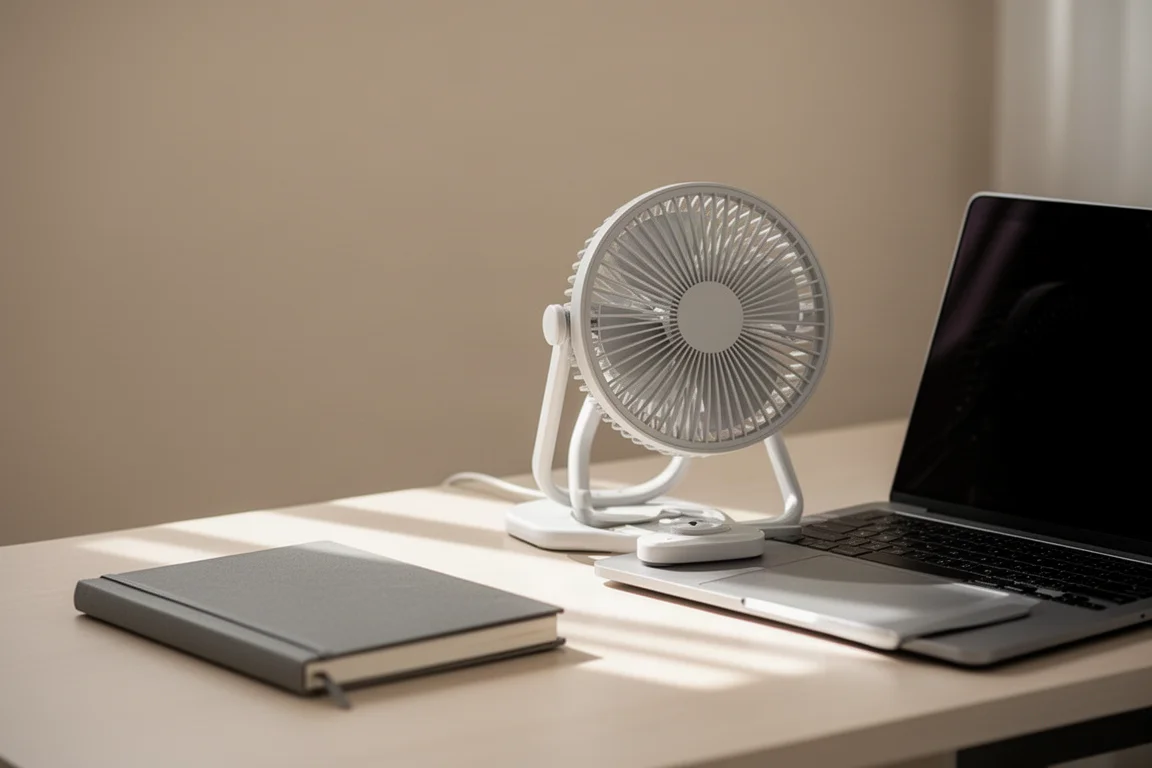
For everyone else, the Treva does exactly what a budget desktop fan should do, and the two power sources give it a flexibility that is hard to find at this price.
Conclusion
The O2Cool Treva is a straightforward, affordable portable fan with genuine strengths in price, runtime, and power flexibility, alongside clear limits in stability, features, and tent-ready airflow. Match it to the right job and it delivers solid value.
Product link
View more details for O2Cool Treva Portable Fan
This product is mentioned in the review. Check the specifications, options, and compatibility before buying.
View more details for O2Cool Treva Portable FanFurther reading
Related Reviews
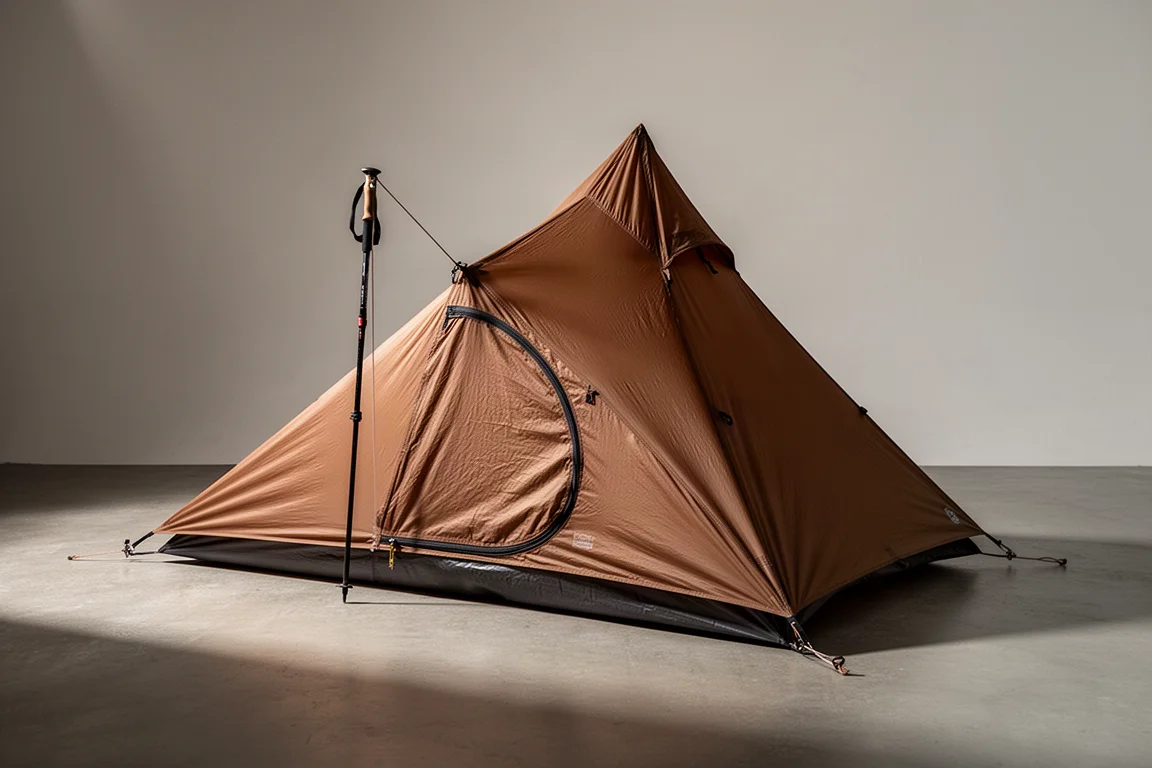
Backpacking Tents
3F UL Lanchan Pro 1 Review: A 1 lb 8 oz Single-Wall Trekking Pole Tent
A practical look at the 3F UL Lanchan Pro 1, a single-wall trekking pole shelter with a 1 lb 8 oz weight, 20D silnylon fabrics, and a roomy 90 x 31 x 49 inch interior.
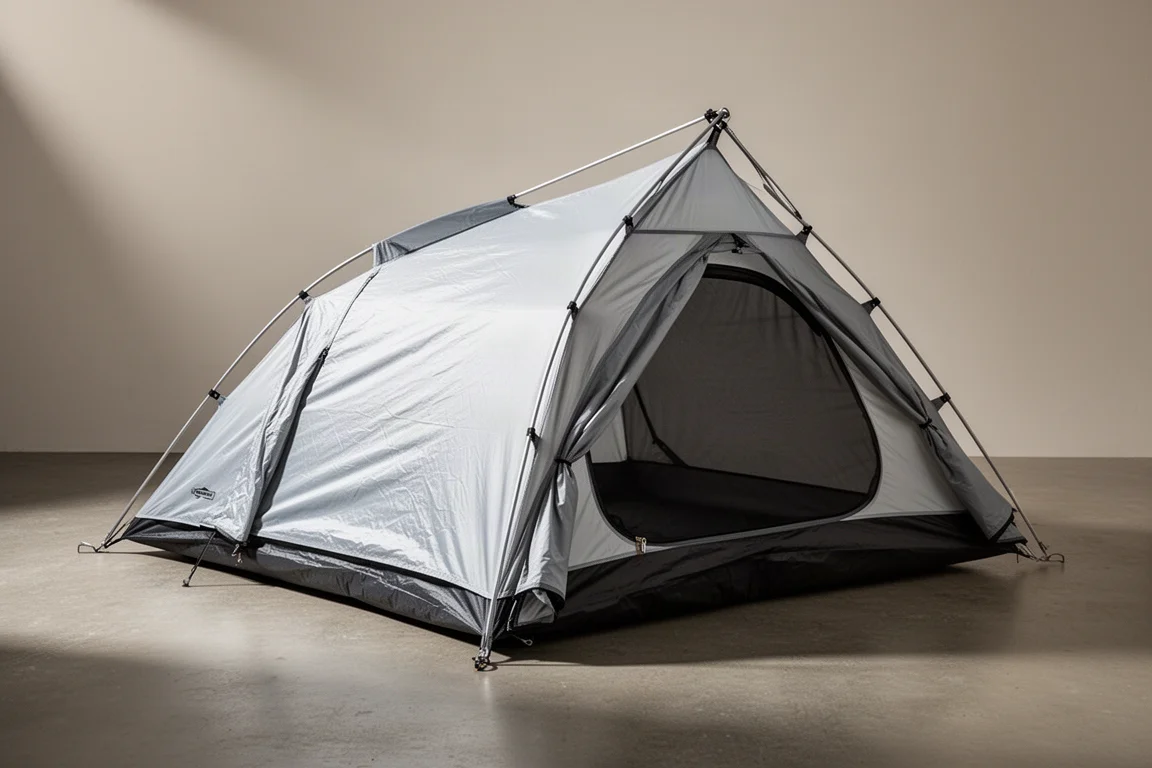
Backpacking Tents
3F UL Taiji 2-Person Tent: A Convertible Backpacking Shelter Worth a Closer Look
A practical look at the 3F UL Taiji two-person tent, covering its materials, true two-person interior, fly-first pitching, and the seasonal inner swap that lets one shelter cover more of the year.
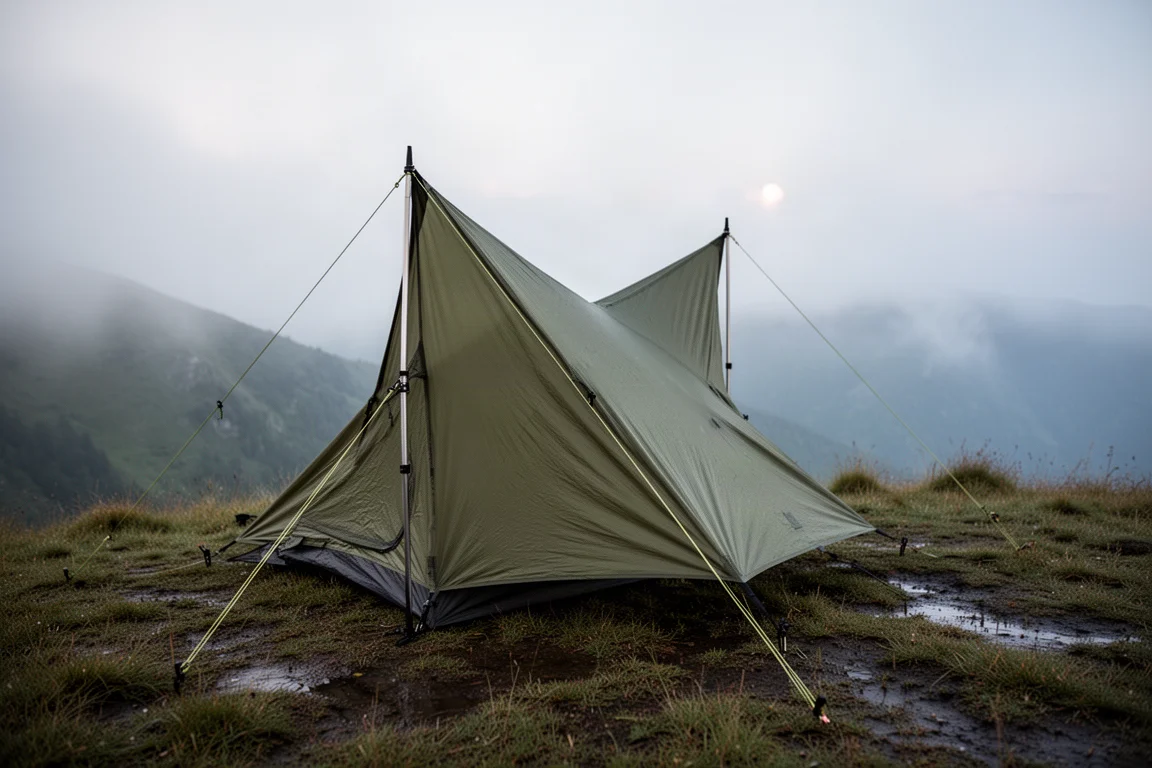
Backpacking Tents
3FUL Lanshan Twoerson Pro Review: A Light Trekking Pole Shelter That Struggled in Rain
A two-person trekking pole shelter with a 2026 redesign, pitched with sticks and put through a night of steady rain. Here is what worked, what did not, and what to check before buying.