Snowboard Bindings
NOW Select Pro YES Binding Review: Precision and Power for All-Mountain Freestyle
A stiffer-than-middle binding built around a skate tech chassis, with forgiving straps, tunable bushings, and a wider Hanger 3.0 for bigger boots.
Introduction
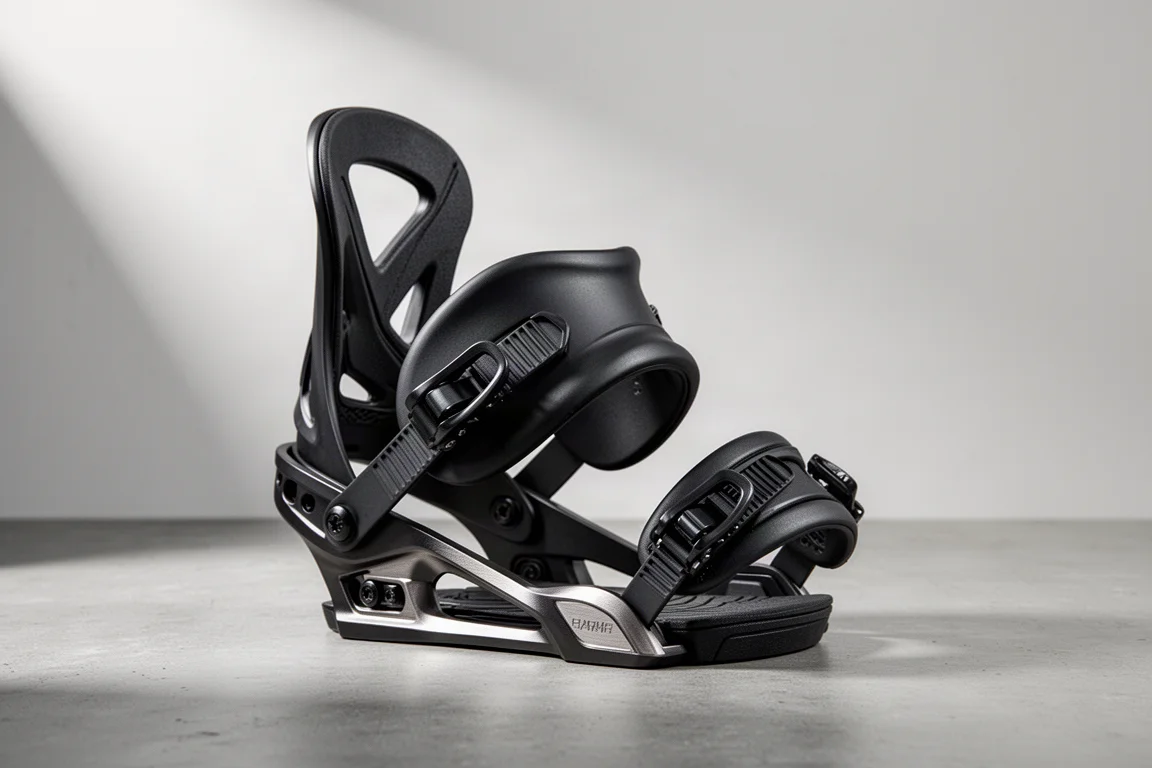
The NOW Select Pro YES binding was tested on a warm, slushy day at Copper Mountain, where the snow ran the full gamut: soft slush, ice patches, chunder, and the occasional death cookie. Mounted on a Telos snowboard with K2 Thraxis boots, the binding had to handle a mix of conditions rather than a clean groomer day, and it came through as a predictable, put-it-on-and-go piece of gear.
Adjustments and Setup
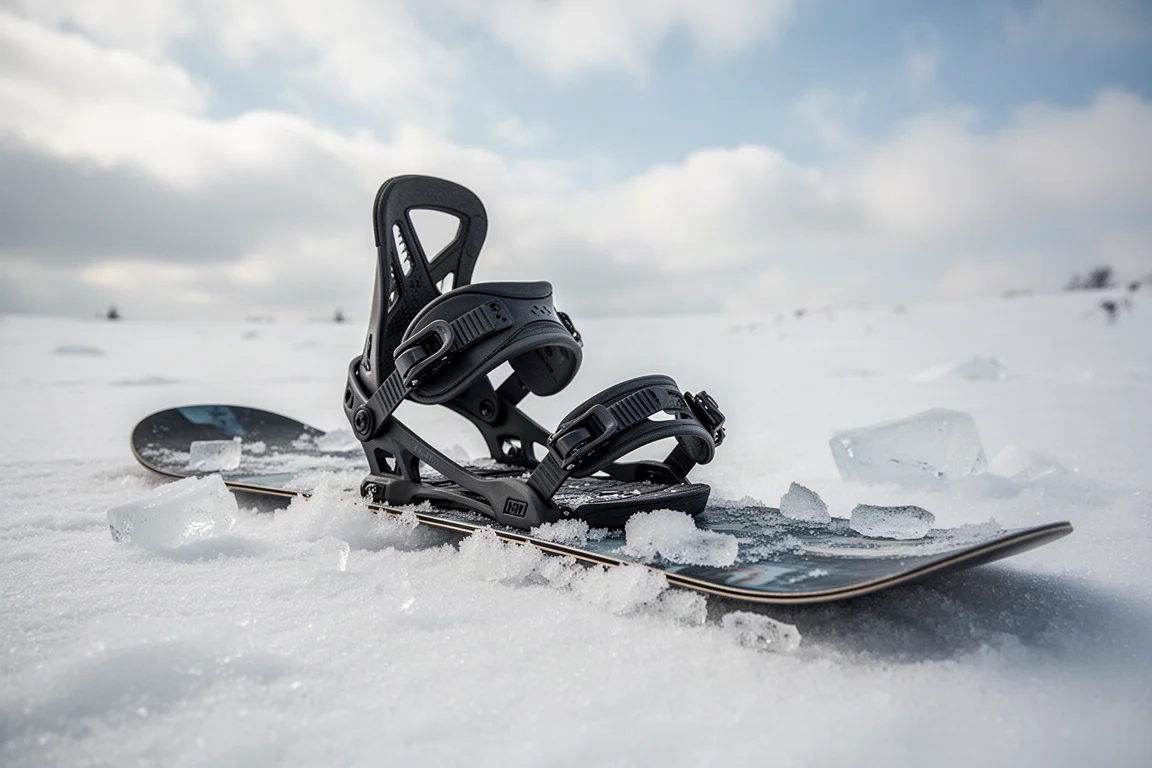
There is not a lot of fiddling required here. You get flip tabs on the toe and heel strap to lengthen or shorten the fit, a forward lean adjustment on the highback, and bushings on the base that let you choose a soft, medium, or hard ride feel through the skate tech chassis. That is a short, sensible list, and it covers the adjustments most riders will actually use.
Straps and Ratchets
The heel strap is foam, so it contours to just about any boot shape. A small hinge flips the strap out of the way while strapping in, which makes entry smoother. Because it is foam rather than a rigid cut, it does not develop the break-in pinch points some straps eventually get.
The toe strap has a smaller cutout, so it fits certain boot shapes a little differently. With the test boots, it gripped well, wrapped over the toe cleanly, and never created pressure points. The ratcheting area is a bit firmer and has less give, so riders with some boot shapes could feel it, though that did not happen here.
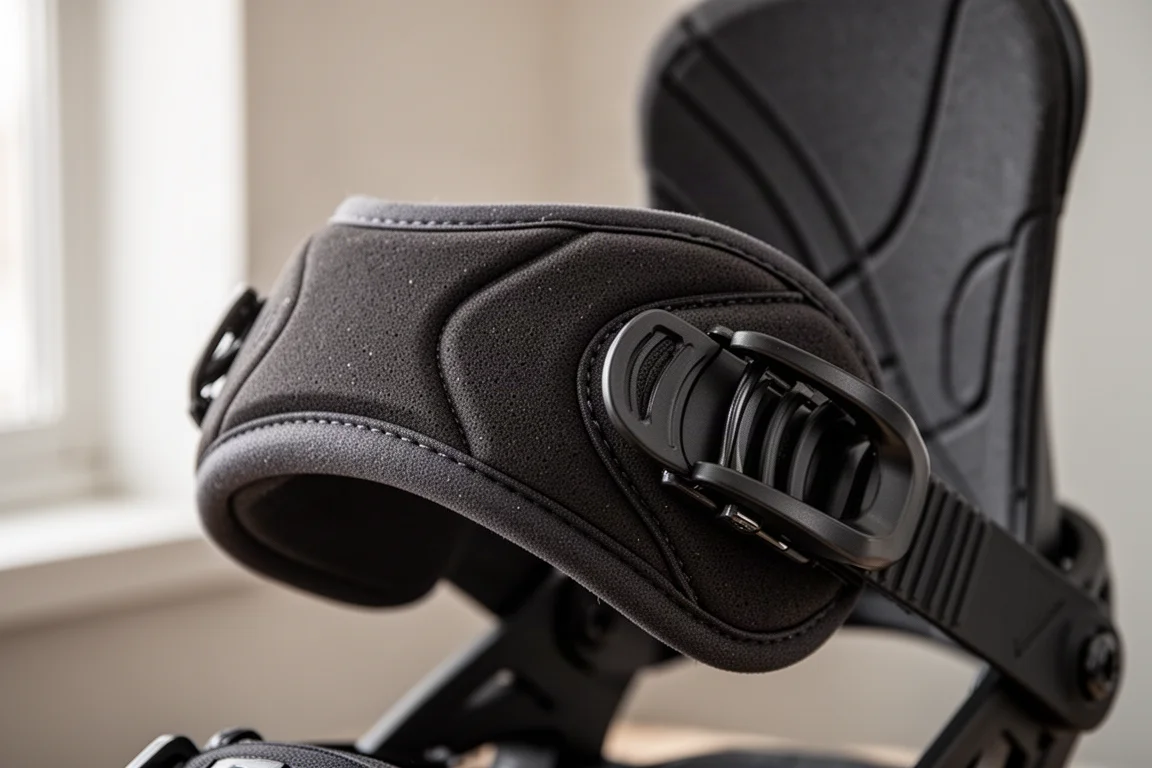
The ratchets themselves climb and release well, with no sticking and no trouble feeding the strap. The one gripe: the toe ratchet uses a push-down release rather than the one-finger quick release found on the heel. It still works, and you can get a finger under the front to push and release, but the inconsistency is noticeable.
Highback and Flex
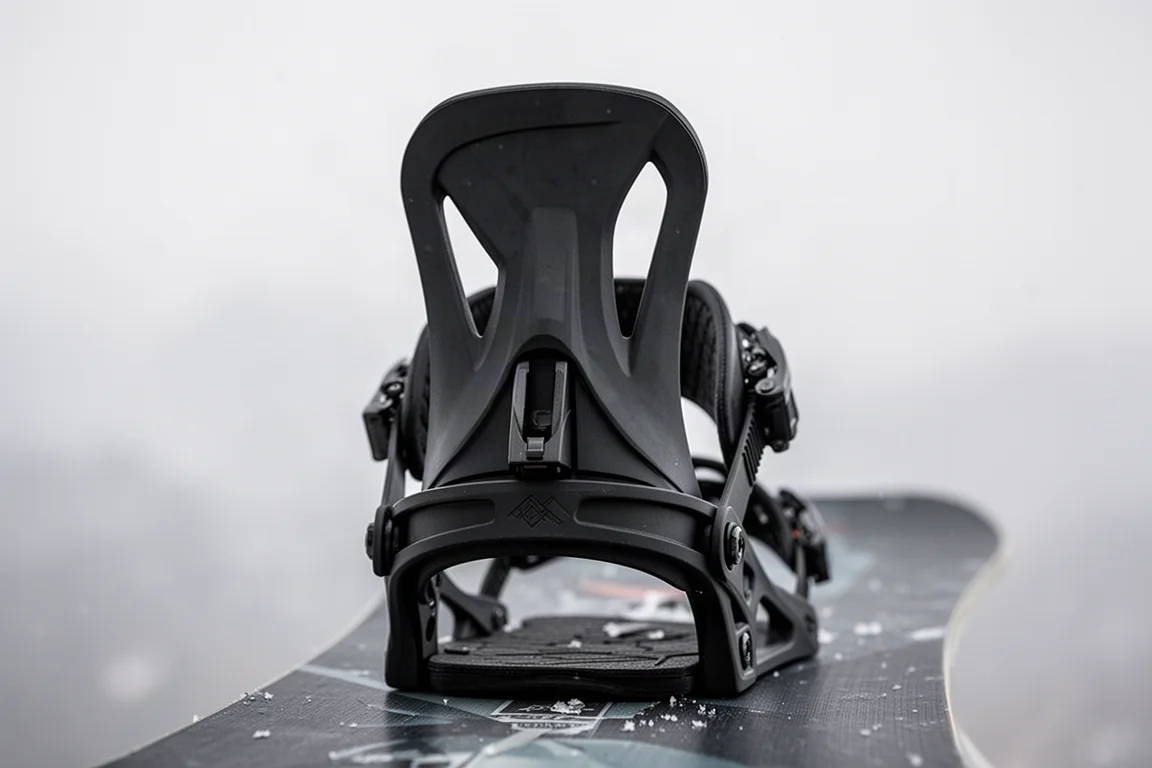
This is a forgiving highback. Push into it and you can genuinely feel the give, which matters if you tweak grabs and lean into your highbacks. Structurally, there is a stiffer section down the middle with more give out toward the sides, plus a touch of natural forward lean that is easy to crank down or back off depending on preference. It does not force your knees into a bend you did not choose.
Overall flex sits just past the middle of the road, a hair stiffer than average, largely thanks to the skate tech chassis underneath. That chassis creates a bigger dead spot for more power toe to heel. You gain lateral drive but give up some lateral play. Riders who like to drive the binding through a turn will not mind the trade-off.
Ride Feel: Precision and Power
The ride character is precision and power. Push down on your toes and the chassis raises the heel, driving more pressure into the toe edge. Lean onto your heels and the toe rises, doing the same in reverse. The result is a stronger connection into both edges than a conventional chassis delivers.
The Hanger 3.0 also fixes a long-standing complaint. It is a little wider than Hanger 1.0 and 2.0, so it fits wider boots better. The bushing points sit further out on the binding as well, which channels more power down into your edges. If you kick your knee into a carve or push hard out the tail exiting a turn, you will feel that extra drive.
Who This Binding Is For
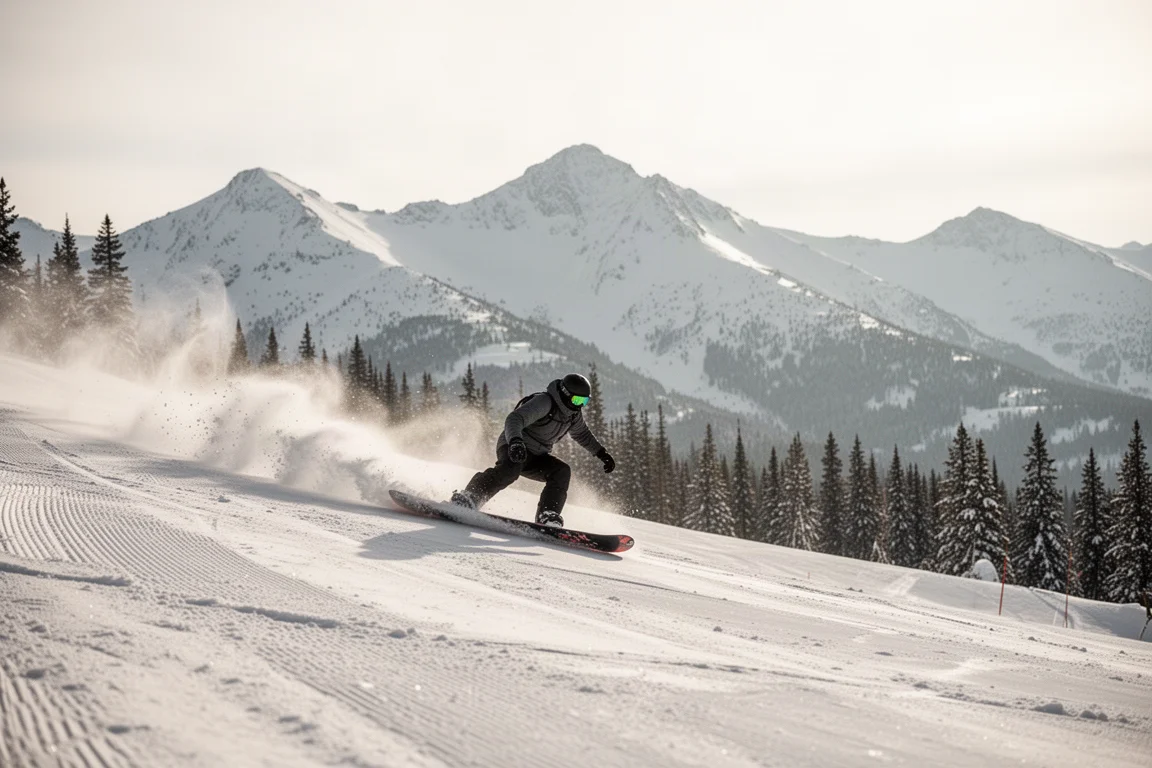
This binding suits the freestyle rider who wants a little more precision and power underfoot, and it is arguably at its best as an all-mountain freestyle setup. It is also a solid pick for riders with wider boots who were previously squeezed out by the narrower hangers.
Buying Advice
Comparable bindings to weigh against it include the Rome Katana, the Union Force, and the K2 Formula. If you want a plush, forgiving strap package with a stiffer, more powerful chassis underneath and simple, effective adjustability, the Select Pro YES belongs on that shortlist. If maximum lateral play matters more to you than edge drive, a softer-flexing alternative may fit better.
Conclusion
The NOW Select Pro YES is a great binding that fits well, stays predictable, and delivers real precision and power from its skate tech chassis without becoming a stiff, unforgiving ride. The push-down toe ratchet release is a small gripe in an otherwise confident package, and for all-mountain freestyle riders it is an easy recommendation.
Product link
View more details for NOW Select Pro YES Binding
This product is mentioned in the review. Check the specifications, options, and compatibility before buying.
View more details for NOW Select Pro YES BindingFurther reading
Related Reviews

Snowboard Bindings
2024 Union Ultra Snowboard Bindings Review: A Cushy, Freestyle-Focused Favorite
Two seasons on the 2024 Union Ultra: a lightweight, tweakable freestyle binding with standout comfort, a damp molecular bushing, and thoughtful hardware fixes.

Snowboard Bindings
32 Team Phase Binding Review: A Fast Entry Binding Built for Freestyle Laps
The first binding from 32 uses the Phase chassis for quick step-in entry with a softer, freestyle-leaning flex. Here's how it performed on the snow.

Snowboard Bindings
Arbor Cypress Snowboard Binding Review: A Laid-Back Cruiser That Can Charge
A closer look at the Arbor Cypress binding's adjustability, strap feel, and that oddly tall highback before you decide to buy.