Backpacking Tents
Nortent VA1 Review: A Freestanding Four-Season Tent for Cold Weather Camping
A close look at the Nortent VA1, a 2.8 kg four-season shelter with double-coated silicone nylon, a porch big enough to lie down in, and a delivered price that undercuts its closest premium rival.
Introduction
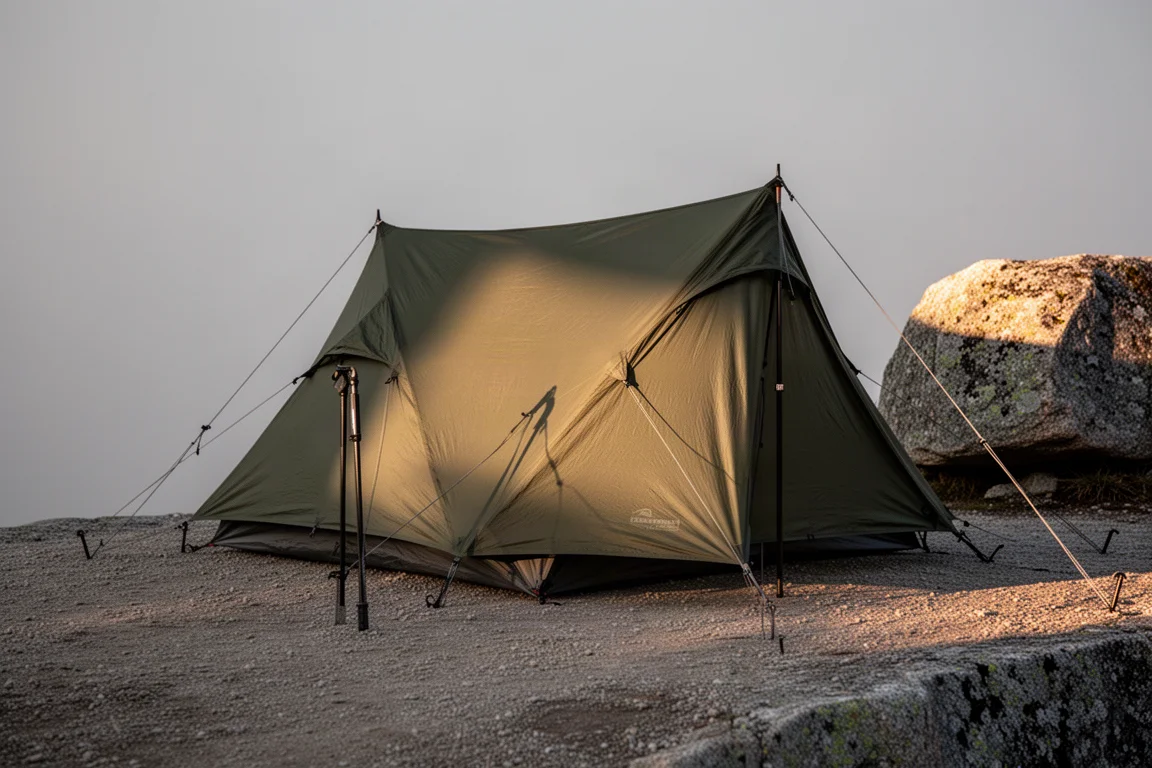
The Nortent VA1 is a freestanding four-season tent built for cold weather camping, and it has built a strong following among winter campers who want a roomy shelter that goes up quickly once the weather is already turning. Nortent describes it as a 1.5 person design, which in practice means a comfortable interior for one person plus a full set of gear rather than a squeeze for two.
On the scale, the tent and poles come in at 2.8 kg without the bag or the pegs. That figure will put some buyers off, particularly anyone comparing it with a lightweight three-season tent, but for a winter shelter of this size it is a reasonable number, and the packed bundle is small enough to sit in the top of a backpack.
Who the Nortent VA1 Is For
This tent makes the most sense for campers who head out in wind, rain and sub-zero temperatures and want a shelter that stays standing and stays dry. The inner and outer pitch together, so the inner tent stays protected while the shelter goes up in the rain, which matters a great deal in the conditions this tent is designed for.
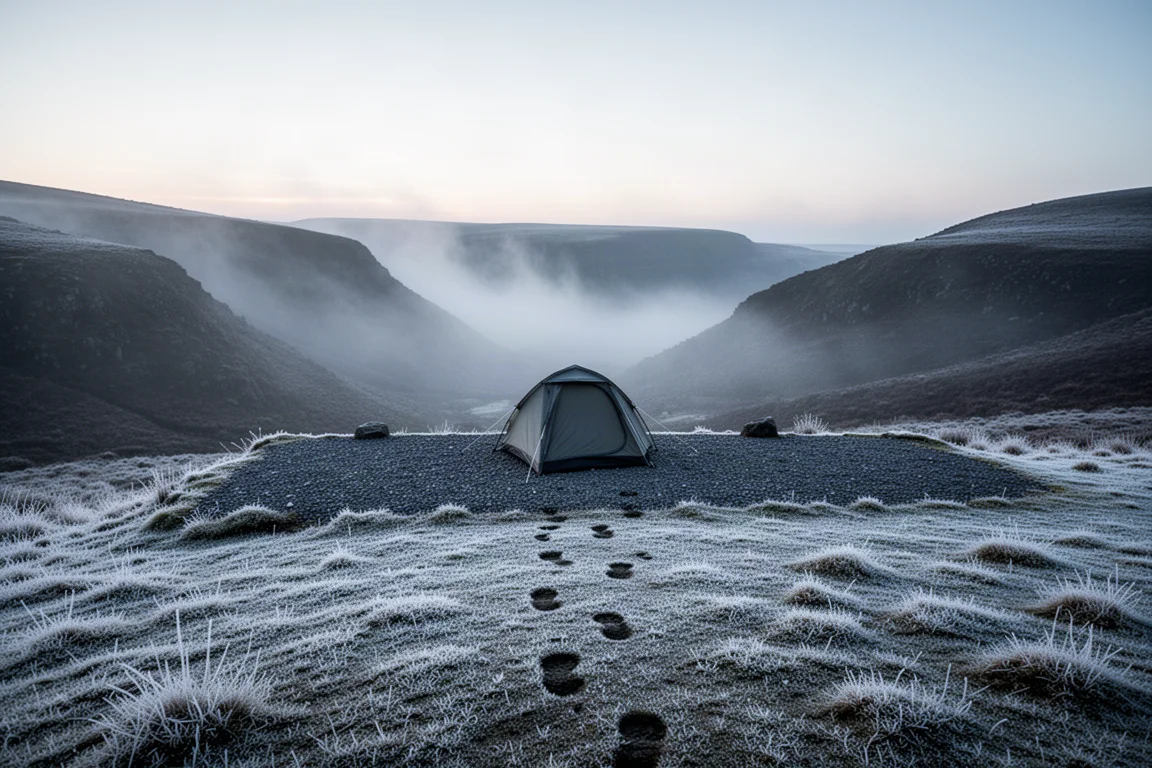
It is equally appealing to anyone who values living space over grams. The inner measures 240 cm end to end with 100 cm of internal height, and the porch is large enough to lie down in, so there is room for cooking, for wet kit and for sheltering a companion in a storm. Buyers who count every gram on fast summer trips will find lighter options, but for a four-season shelter the VA1 trades weight for room and stability.
Main Strengths of the Nortent VA1
Nortent builds the VA1 from silicone-coated ripstop nylon, coated on both sides, in the stronger nylon 66 version. The fly carries a 30,000 mm hydrostatic head and the bathtub floor a 10,000 mm rating, and the seams are stitched with expanding thread using a cool-down needle so the stitch holes close up after sewing. In a heavy downpour that left the surrounding ground flooded, the floor stayed completely dry inside. The zippers are YKK.
Storage is generous. There are several pockets inside, including overhead pockets sized for a phone, a lantern or a head torch aimed downwards, plus a large lower pocket and a washing line across the roof. The zipper pulls glow in the dark after a short charge from a torch, which is a small but genuinely useful touch when you need to find your way out quickly.
Ventilation has clearly been thought through as well. The fly panels can be lifted using the bungees and clips supplied in the repair kit, pulling the fabric away from the lower edge of the tent so air can move through, and the same trick works on the doors. Combined with the door vents, that gives a controllable amount of cross flow rather than an all-or-nothing choice.
Pitching and Pole Structure
The VA1 uses four 9.6 mm DAC NSL poles, colour coded with two black ends and two blue ends so the sequence is obvious. The pole sleeves are reinforced and wide enough to take a second set of poles if you want extra strength in serious weather. The exoskeletal layout means the tent can be pegged out low to the ground and then raised, which is far easier than wrestling a shelter into shape after the wind has already picked up.
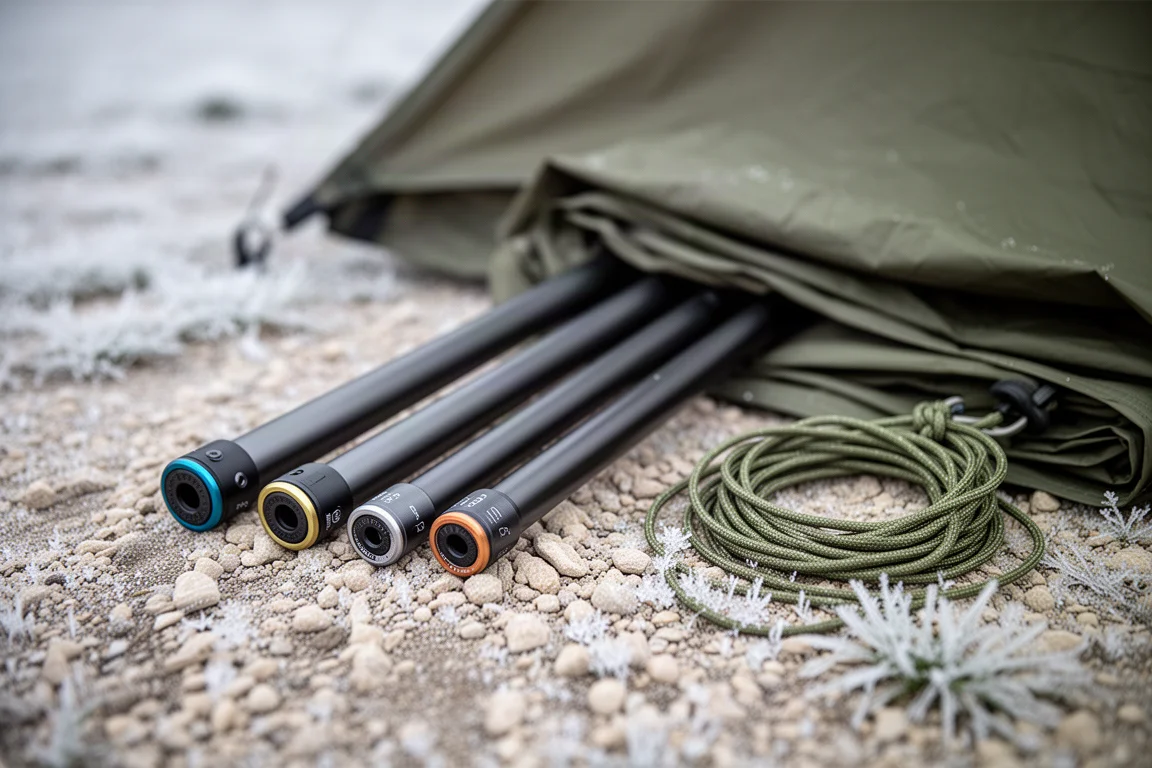
The pitching order is straightforward: peg the six lower points first, insert the long poles, then the short ones, and work the clips from the bottom of the tent upwards. Clips alternate direction around the pole, which balances the load, and the guy lines use long pegs and small toggles to stay tidy. The tent has already been out in rough conditions and held up without damage.
Interior Space, Ventilation and Condensation
Inside, the tent is 240 cm long, 100 cm high, 60 cm wide corner to corner and 105 cm across the middle section, so there is real room for gear beside a sleeping mat. A regular wide sleeping pad fits without trouble. The porch is the headline feature: it is big enough to lie down in with the door zipped, and it handles cooking, wet clothing and pack storage.
Both doors open widely, and the inner door has a solid panel plus a mesh panel that can be left half open or just cracked at the top for a little more airflow, with toggles to tie it back or a pocket to stuff it into.
Condensation depends heavily on how the tent is used. With the vents open and part of the mesh door exposed, there was virtually none. Sealed up completely through a freezing night of heavy rain and strong wind, some condensation formed on the fly and on the inner, and there was dew on a quilt. Leaving a vent or a sliver of mesh open makes a clear difference.
Things to Consider Before Buying
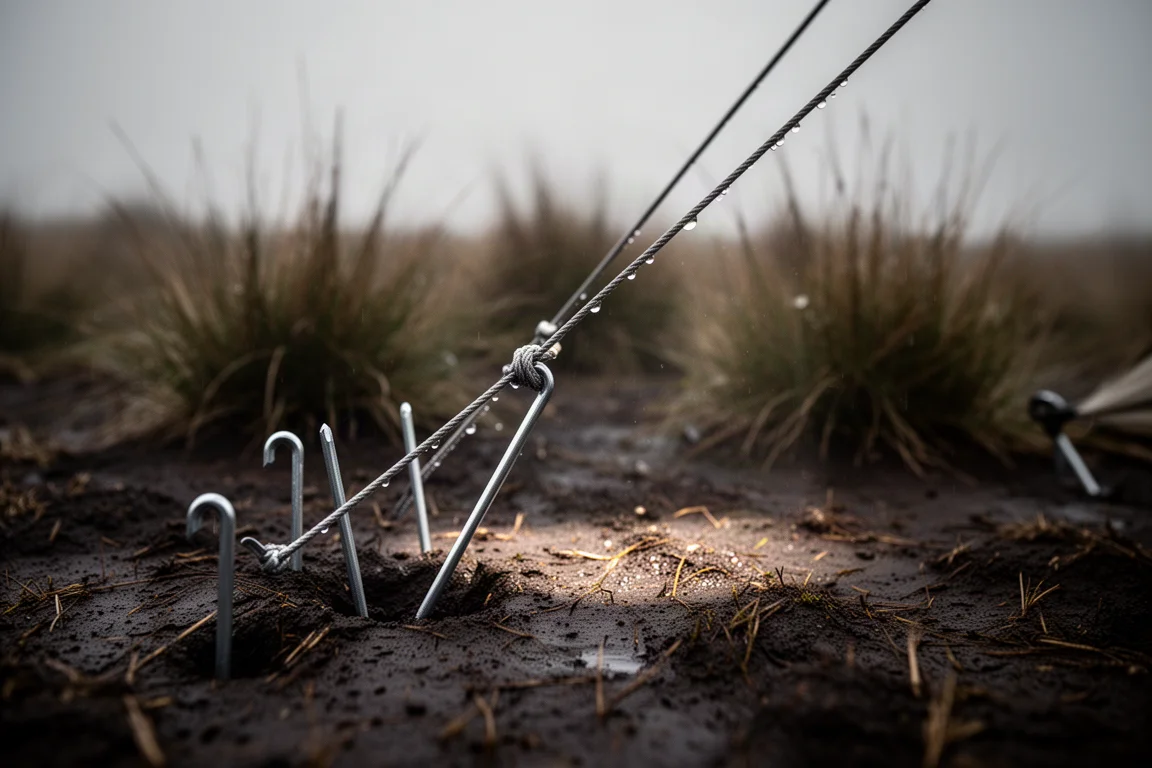
The 2.8 kg weight is the first thing to weigh up, along with the number of pegs needed to guy the tent out fully. The pegs supplied with the tent are light, at around 6 to 8 g each, but they are short for a four-season shelter. Nortent offers longer alternatives, a 16 g stronghold peg and a 24 g heavy duty peg, and budgeting for longer stakes of your own is a sensible move, since a tent is only as strong as what holds it to the ground.
The silicone-coated nylon brings the usual trade-offs of the material. It can stretch slightly as temperature and humidity change and when it gets wet, so guy lines may need a little extra tension after a few hours and a check during the night. The fly also holds some water when it is time to pack away, although that is true of silicone and PU coated fabrics generally.
The second door is the weakest part of the design in daily use. One door is straightforward, but the inner opening on the other sits awkwardly, so getting in and out means crawling in to reach it. The extra door adds weight, and in wind its storm flap flaps and vibrates, which is noisy on a winter night.
The convertible front, which opens the shelter into an open-fronted configuration for fair weather, is a calm-conditions feature only. In any wind it risks damaging the tent, and for a shelter designed for cold, stormy weather most owners are unlikely to use it. It is an interesting option rather than a reason to buy.
The repair kit is comprehensive, with an instruction booklet, patches for the inner and outer tent, extra guy lines and bungees with clips. Seam sealing glue is not included, although the tent has not leaked in heavy rain.
Buying Advice
Bought directly from Nortent, the VA1 works out at roughly £600 delivered to the UK: £411 for the tent, £40 for shipping, and duty and VAT on top. Delivery took about three days with a trackable courier. That places it at a premium price for a one-person-plus shelter, but well below its closest premium rival.

Value is where the VA1 makes its strongest case. A comparable Hilleberg shelter costs nearly twice as much, and both stood through a night of torrential rain and wind, with the VA1 offering more interior room for the same job. The KUIU Storm Star, at around £600 to £650, is a little lighter at roughly 2.4 kg but uses silicone coating on the outside with PU coating on the inside, which is less durable and less flexible than double-coated silicone nylon, and it is a two-person tent.
For anyone coming from a Nortent Vern 1, the VA1 is a step up in design and sturdiness rather than in material quality, and it costs a little more. Adding the dedicated footprint is a worthwhile extra for anyone who camps on rough or wet ground.
Conclusion
The Nortent VA1 is a roomy, sturdy four-season tent that pitches inner and outer together, stands up to wind and rain, and keeps its floor dry even when the ground around it floods. Its weaknesses are real but manageable: the weight, the short supplied pegs, the awkward second door and the noise its storm flap makes in wind. For cold weather campers who want space and confidence in bad conditions, it is an easy tent to recommend.
Product link
View more details for Nortent VA1
This product is mentioned in the review. Check the specifications, options, and compatibility before buying.
View more details for Nortent VA1Further reading
Related Reviews
Backpacking Tents
3F UL Lanchan Pro 1 Review: A 1 lb 8 oz Single-Wall Trekking Pole Tent
A practical look at the 3F UL Lanchan Pro 1, a single-wall trekking pole shelter with a 1 lb 8 oz weight, 20D silnylon fabrics, and a roomy 90 x 31 x 49 inch interior.
Backpacking Tents
3F UL Taiji 2-Person Tent: A Convertible Backpacking Shelter Worth a Closer Look
A practical look at the 3F UL Taiji two-person tent, covering its materials, true two-person interior, fly-first pitching, and the seasonal inner swap that lets one shelter cover more of the year.
Backpacking Tents
3FUL Lanshan Twoerson Pro Review: A Light Trekking Pole Shelter That Struggled in Rain
A two-person trekking pole shelter with a 2026 redesign, pitched with sticks and put through a night of steady rain. Here is what worked, what did not, and what to check before buying.