Backpacking Tents
Nordisk Norheim 1 Review: A Four-Season Solo Tent With Real Living Space
A close look at the Nordisk Norheim 1, a four-season solo backpacking tent with a 30D sil nylon fly, a 70D bathtub floor, twin doors and vestibules, and interior space that sets it apart from the tent it is inevitably compared with.
Introduction
Solo backpacking tents tend to force a choice. Go light and you usually accept a narrow sleeping area and a vestibule that only just swallows a pack. Go roomy and you end up carrying something that feels closer to a two-person shelter. The Nordisk Norheim 1 is built to close that gap.
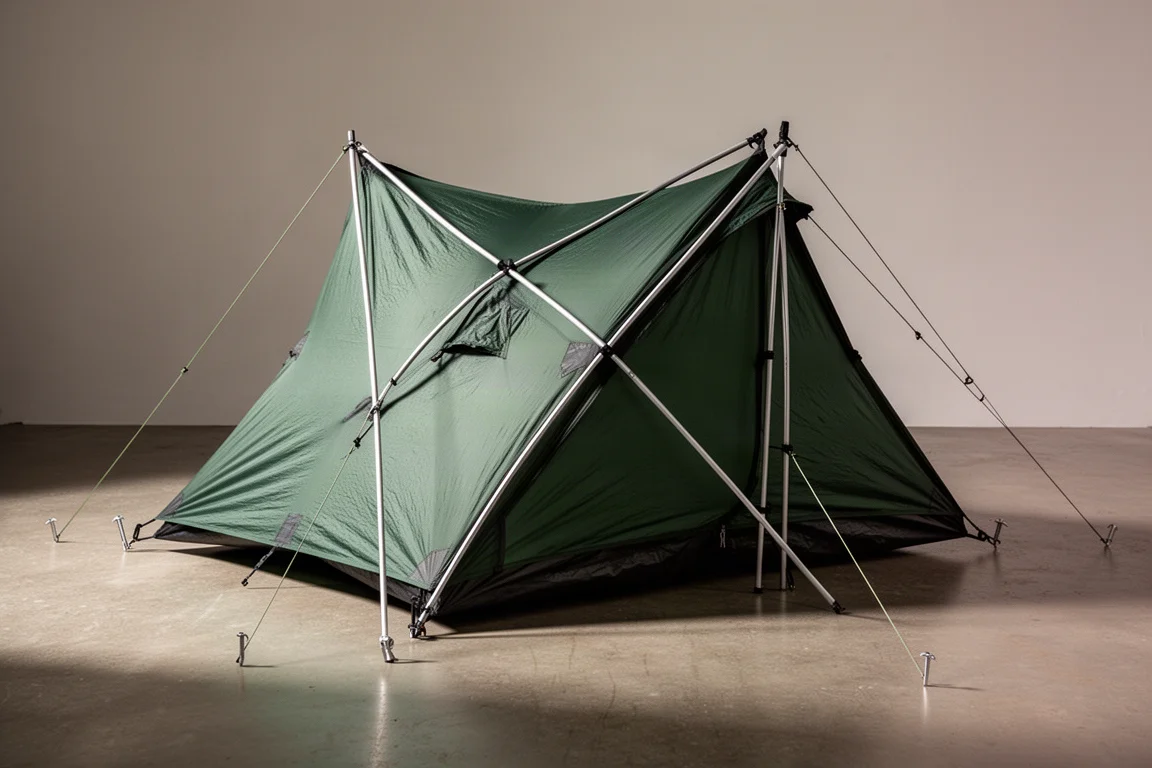
It is a four-season solo tent with three aluminium poles, two doors, two vestibules on the same side, and an interior that measures 1.35 m across at its widest point. The inner and outer pitch together, the fly is 30D sil nylon, and the floor is a 70D bathtub design. On paper it reads like a serious winter shelter. In use, the details are what make it interesting.
Who the Nordisk Norheim 1 Is For
This is a tent for backpackers who camp through the colder half of the year and want one shelter that covers everything from a windy autumn night to a snow camp. The four-season construction, the dense guy line layout, and the option to double-pole the frame all point toward exposed, changeable conditions rather than summer weekends on sheltered campsites.
It also suits a particular kind of solo camper: someone who finds most one-person tents too cramped but does not want to carry a two-person shelter. The interior is long enough to keep gear beside a wide inflatable sleeping pad, and there is enough headroom to sit up without stooping.
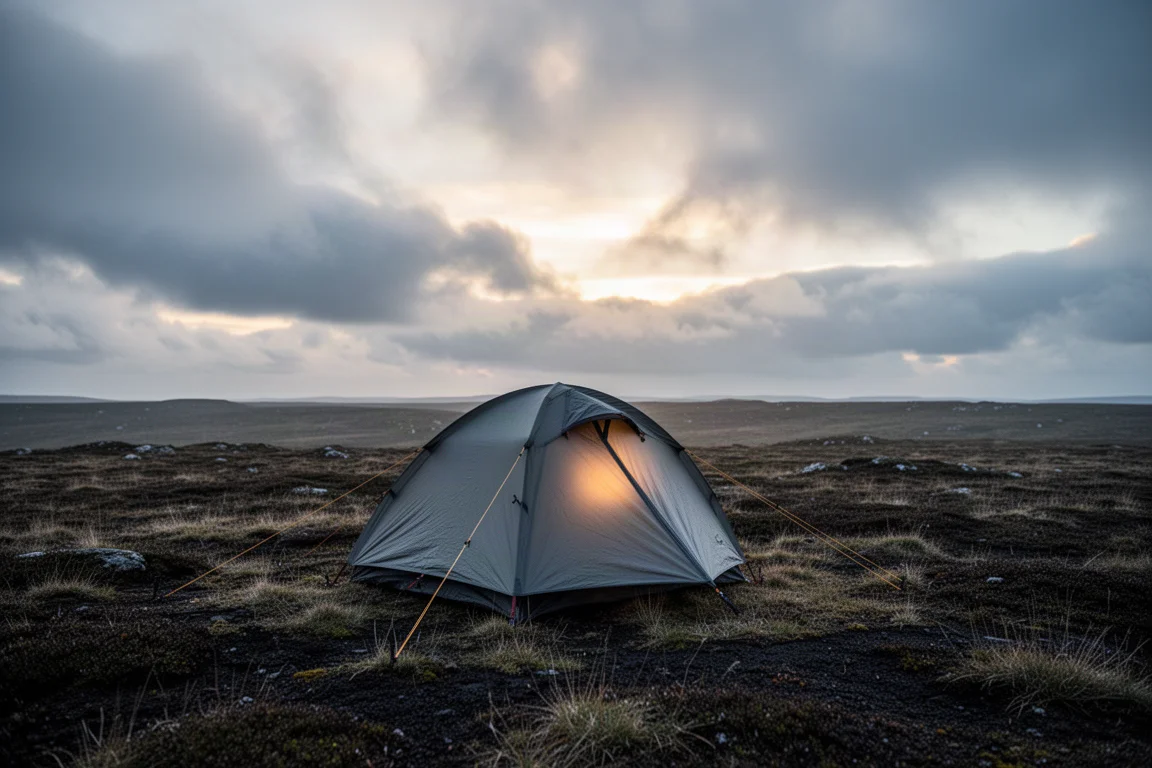
That blend of living space and weather protection is the core of the argument for this tent, and it is the reason it deserves attention from anyone who spends long nights inside waiting out bad weather.
Main Strengths: Weather Protection and Materials
The fly uses 30D sil nylon with a 3,000 mm hydrostatic head rating. The floor is a 70D bathtub design rated to 10,000 mm. Those are the numbers of a tent intended for sustained rain and wet ground rather than the occasional shower.
Ventilation is handled in several places rather than one. There are vents at either end of the tent, plus a canopy vent above the two front doors. The inner tent adds zippable vents at each end, so airflow can be adjusted overnight without opening a door and letting the weather in.
Guy lines are generous: two on each side and three at each end, all anchored to reinforced, taped patches that support the brackets attaching to the fly. That is a lot of anchoring points, and it is why the tent can be battened down when the wind swings around during the night.
Main Strengths: Interior Space and Living Comfort
Inside, the tent opens up. Two doors and two vestibules sit on the same side, which keeps the layout predictable and means one side can stay closed to the wind while the other is used. Each vestibule is 65 cm wide, and both are tall and steep enough to take a large pack and still leave room to cook under cover.
The doors are large, available as solid fabric or see-through mesh, and use double zippers with glow-in-the-dark pulls. They roll right back and stay out of the way thanks to a toggle and loop. A canopy above the door opening adds a layer of rain protection when the tent is open, which matters most when you are cooking in poor weather.
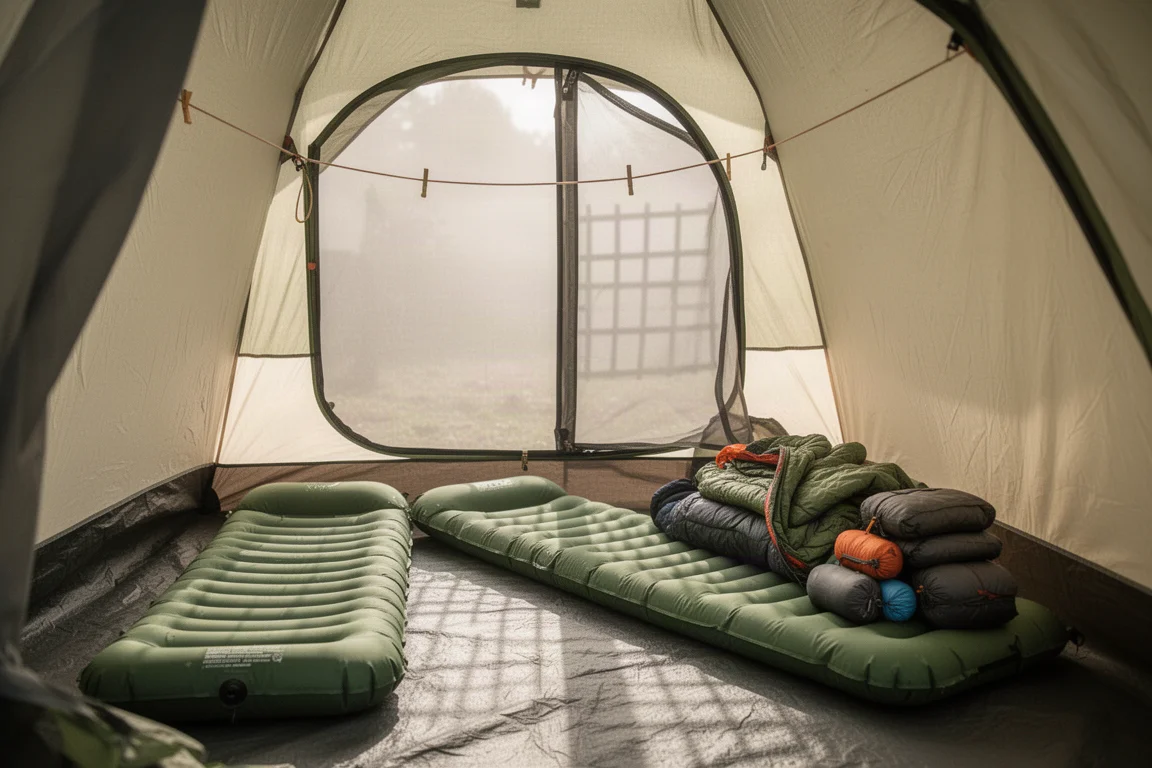
The smaller details add up as well. Fastening tabs at each inner corner and at the centre keep the inner taut so it does not flap in wind, there are pockets at each end and at the sides, and a washing line runs across the interior for drying damp layers. The interior measures roughly 240 cm by 125 cm by 90 cm on a tape measure, which is noticeably more generous than the solo tent it is most often compared with.
Main Strengths: Pitching Speed and Pole Layout
The tent pitches inner and outer together, which keeps the sleeping area dry during setup. It can also be pegged out first and have the poles threaded afterwards, which is useful on hard or uneven ground.
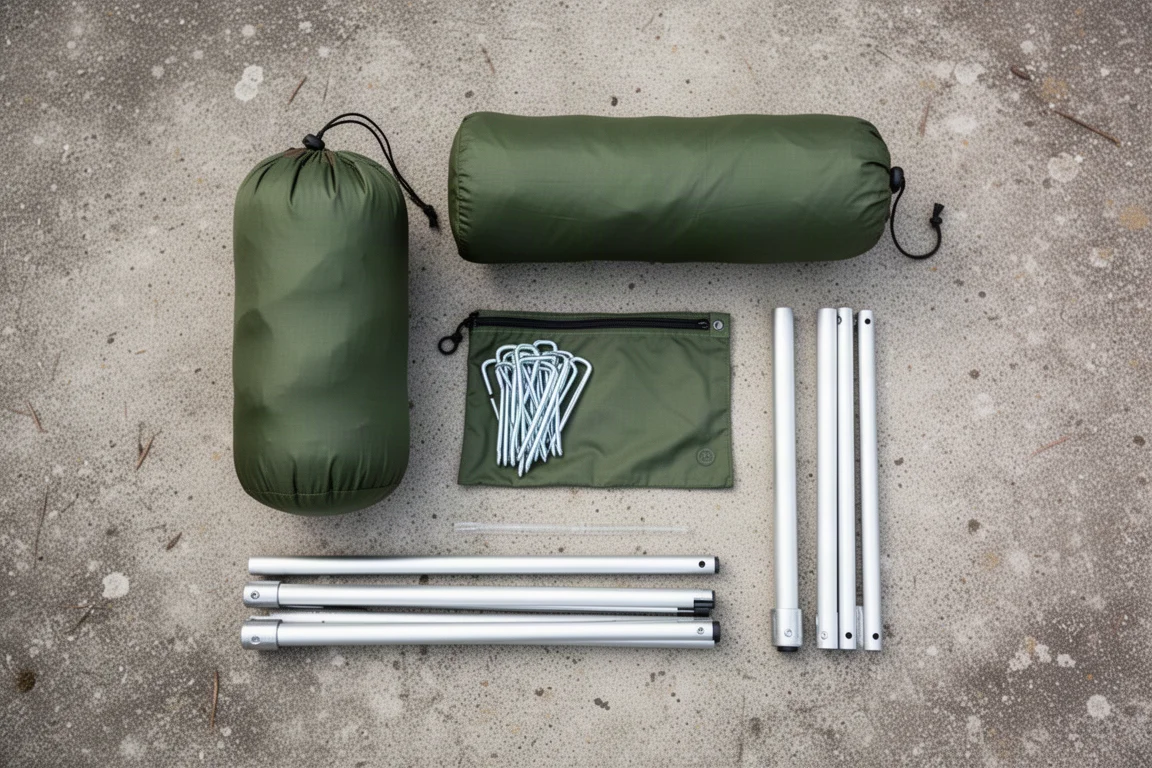
Three 9 mm 7000-series aluminium poles make up the frame. The shorter centre pole has blue pole ends and the two long poles have black ends, so the right pole is easy to pick out in poor light. The poles slide into sleeves and then clip to the tent, working from the bottom upward. Six pegs are enough for a basic pitch.
Once the sequence is familiar, the pitch takes two to three minutes. That speed matters in genuinely bad conditions: get the tent up, get inside, get warm. The frame can also be double-poled for extra stability when the weather justifies the additional weight.
Pack Size, Weight, and How It Compares
The minimum weight is 2.3 kg and the all-in weight is 2.6 kg. Packed with the footprint, bags, spares, and documentation, the whole package comes in at just over 3 kg. The bundle is around 40 cm long but chunky and wide, so a large-volume pack is a sensible partner, especially alongside a winter sleeping bag.
Comparisons with the Hilleberg Soulo are unavoidable. The Soulo is lighter at 2.4 kg and packs down smaller, and it uses the same 9 mm pole diameter and the same 30D sil nylon fabric. Where the Norheim 1 pulls ahead is interior space: it is wider and longer inside, with more room beside the sleeping pad and a more usable vestibule area.
For anyone weighing the two, the decision comes down to priorities. Choose the smallest possible pack and the lowest weight, or choose a roomier interior within the same general class of four-season solo tent.
Things to Consider Before Buying
Pack size is the main practical compromise. A wide, chunky bundle takes up space, and it is worth checking that a winter setup has room for it before committing.
Weight sits in the same ballpark as the tent it is most often compared with, so this is not a lightweight summer shelter and is not meant to be one. It is a four-season tent that carries the weight that four-season protection requires.
Buyers should also plan around the footprint, which clips into the tent and is part of the package price quoted for this setup. Double-poling is another consideration: it adds stability, and it adds weight.
Buying Advice
The Norheim 1 makes the most sense for backpackers who want a genuine four-season solo tent and who value living space as much as packed weight. If most of your camping is three-season and weight is the priority, a lighter shelter will serve you better.
Priced as a package with the footprint, the tent comes in at probably just under £600, which works out at roughly just over half the cost of the Hilleberg Soulo. That gap is the headline argument: comparable pole diameter and fly fabric, more interior room, and a significantly lower outlay.
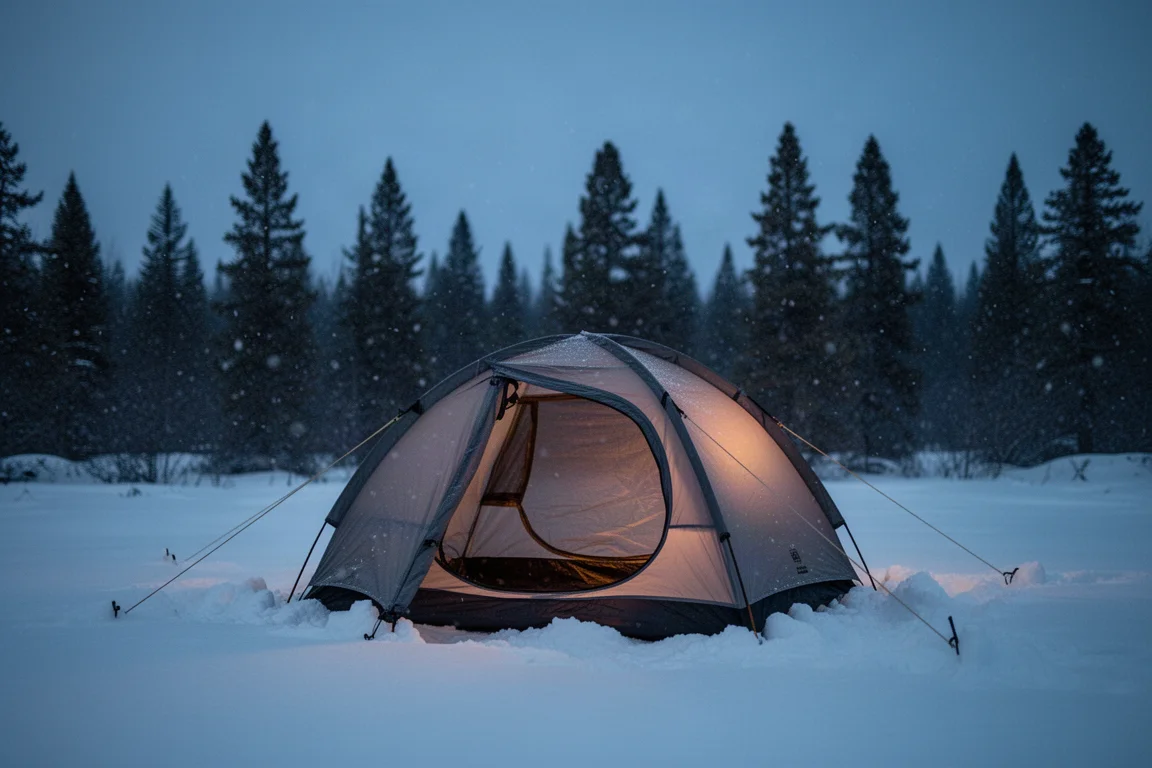
If you camp in exposed places where the wind shifts overnight, the guy line count and the taut inner are the features that will matter most in use. If you camp in wet, cold conditions, it is the bathtub floor, the multiple vents, and the door canopy that will earn their place.
For a solo camper who has been squeezed into one-person tents for years, the extra interior width is the detail most likely to change how a trip feels.
Conclusion
The Nordisk Norheim 1 is a well-considered four-season solo tent. It pitches quickly, stands up to hard weather, and offers an interior that is noticeably more generous than the solo tent it is inevitably measured against. Its compromises are honest ones: a chunky pack size and a weight that reflects its four-season build.
For solo backpackers who want more room without stepping up to a two-person shelter, this is a genuinely compelling option.
Product link
View more details for Nordisk Norheim 1
This product is mentioned in the review. Check the specifications, options, and compatibility before buying.
View more details for Nordisk Norheim 1Further reading
Related Reviews
Backpacking Tents
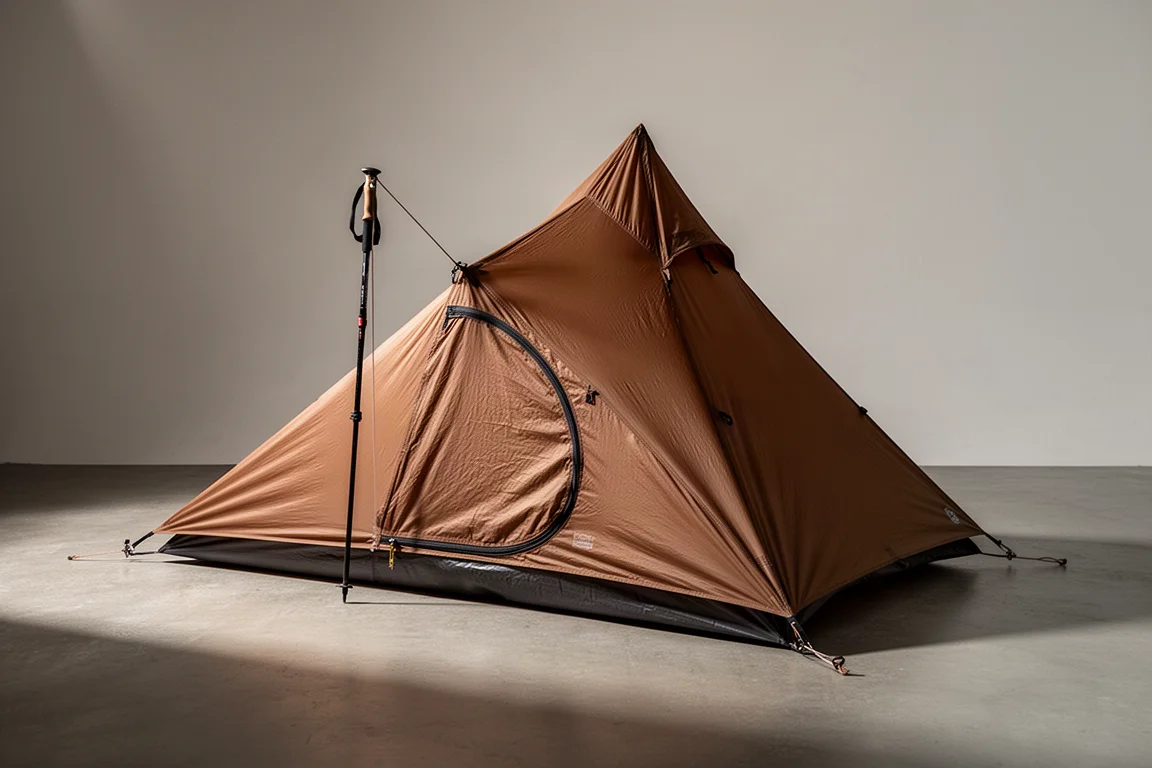
3F UL Lanchan Pro 1 Review: A 1 lb 8 oz Single-Wall Trekking Pole Tent
A practical look at the 3F UL Lanchan Pro 1, a single-wall trekking pole shelter with a 1 lb 8 oz weight, 20D silnylon fabrics, and a roomy 90 x 31 x 49 inch interior.
Backpacking Tents
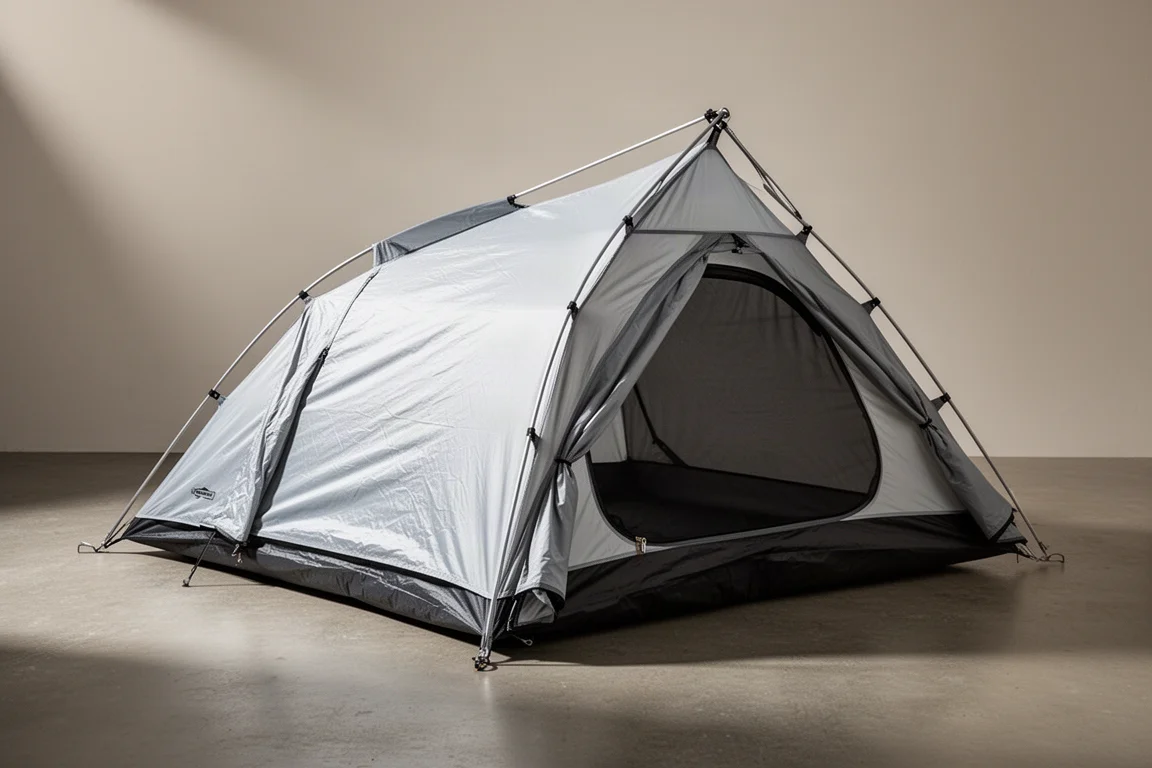
3F UL Taiji 2-Person Tent: A Convertible Backpacking Shelter Worth a Closer Look
A practical look at the 3F UL Taiji two-person tent, covering its materials, true two-person interior, fly-first pitching, and the seasonal inner swap that lets one shelter cover more of the year.
Backpacking Tents
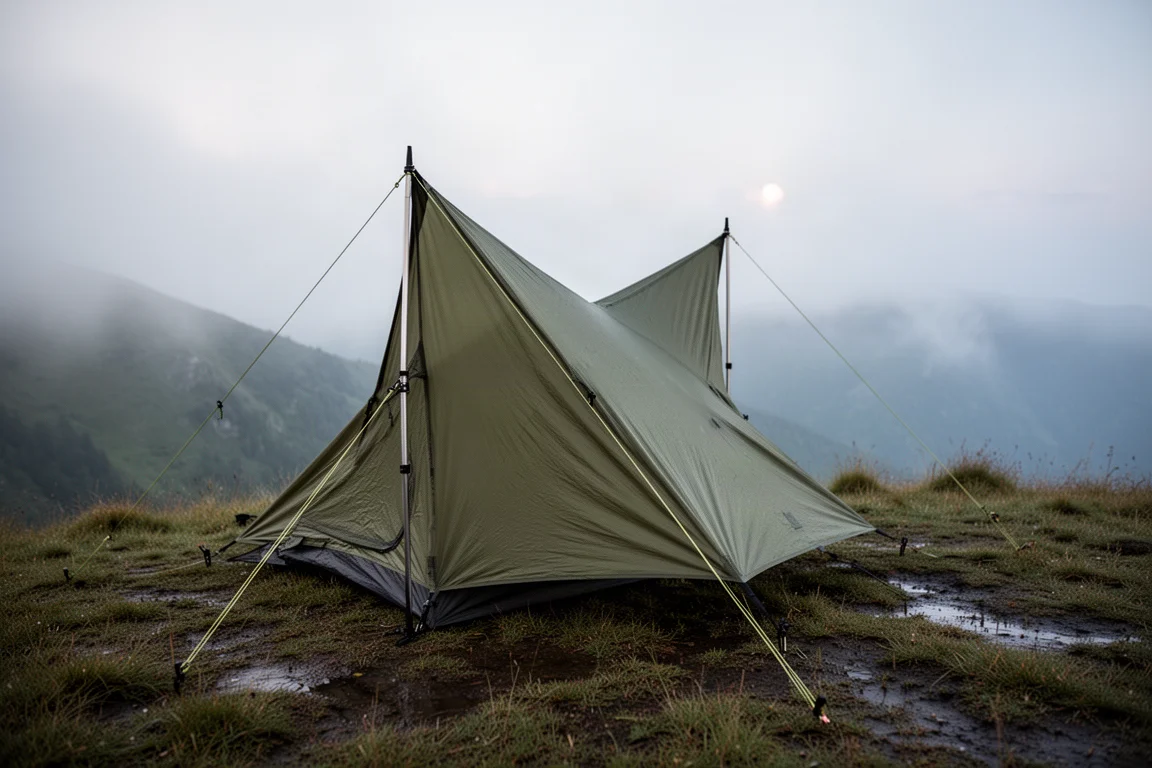
3FUL Lanshan Twoerson Pro Review: A Light Trekking Pole Shelter That Struggled in Rain
A two-person trekking pole shelter with a 2026 redesign, pitched with sticks and put through a night of steady rain. Here is what worked, what did not, and what to check before buying.