Kitchen
HexClad vs GreenPan vs Tramontina: Which Nonstick Pan Actually Survives Abuse?
Three new nonstick pans went through a series of stress tests to see which coating really holds up under metal utensils, scrapers, and drops.
Introduction
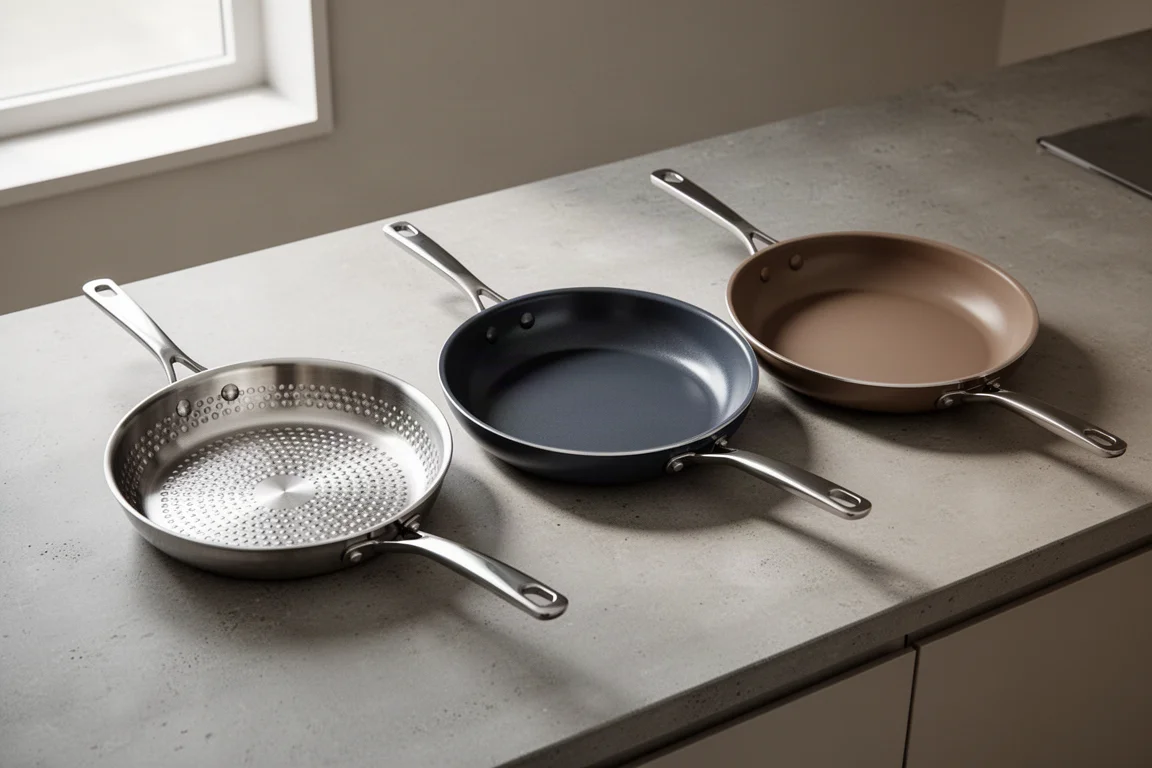
Nonstick pans make big promises about durability, especially when the marketing leans on celebrity chefs and “metal utensil safe” labels. To see how much of that is real, three brand-new nonstick pans were put through a series of deliberate stress tests: a hybrid stainless-and-nonstick pan from HexClad, a ceramic nonstick GreenPan, and a PTFE (Teflon-style) Tramontina pan.
Each pan started fresh, went through identical abuse, and was retested with an egg at the end to measure how much nonstick performance was lost. The results upended expectations in a couple of places, and the overall winner was not the pan the marketing would suggest.
How the Test Started: A Nonstick Baseline
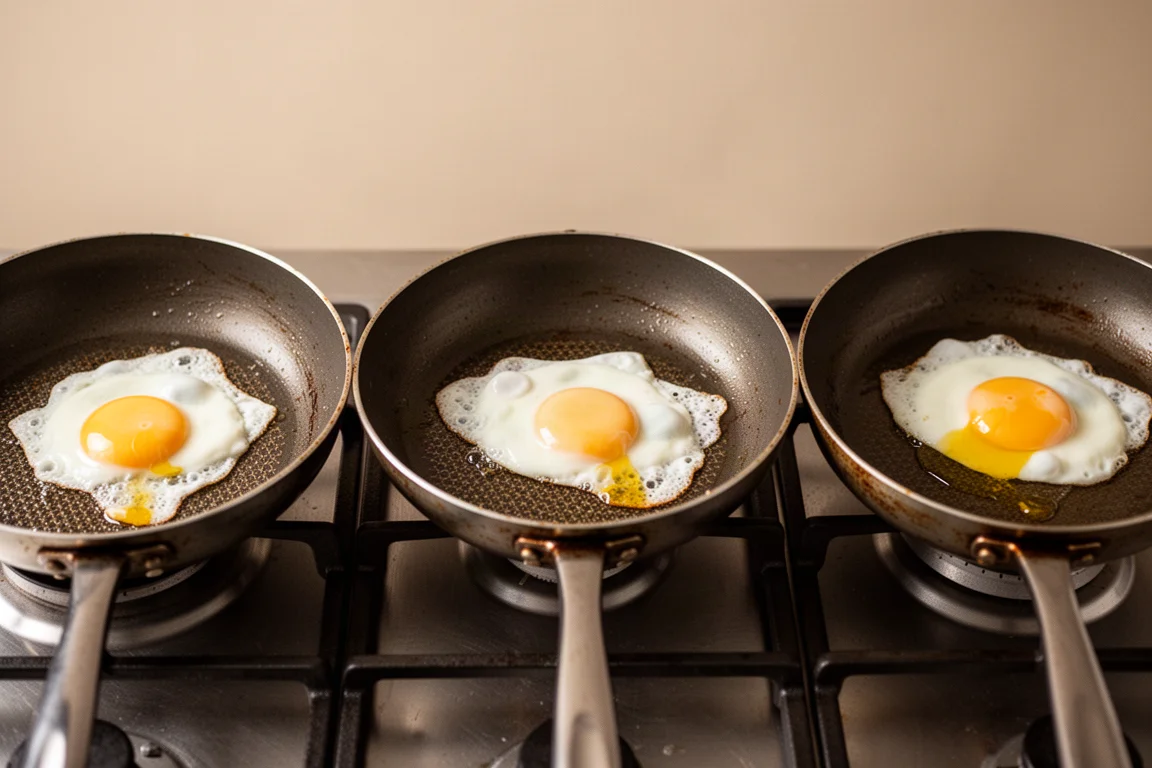
Before any abuse, each pan got the same treatment: heated to 300F, wiped with half a teaspoon of oil, and given an egg. GreenPan and Tramontina performed flawlessly, with eggs sliding around with zero sticking. HexClad, with its rougher surface of exposed steel, needed a nudge with a spatula to get the egg moving, but after that it slid around just fine.
That baseline matters, because it shows what each coating can do when new. Any decline after the stress tests is a direct measure of how much damage the abuse caused.
Abrasion and Metal Utensil Tests
The first durability test attached a 5-pound weight to a wooden spatula and rubbed it across each pan 150 times, ensuring consistent pressure on all three. HexClad showed zero marks or damage. Tramontina and GreenPan both showed faint streaks and rub marks visible under the right lighting, but nothing serious.
Things got more revealing with a metal ladle at 50 strokes. GreenPan came off worst: the ladle cut several deep scratches into the ceramic coating. Tramontina held up surprisingly well with only faint streak marks, despite being the only pan of the three not advertised as metal utensil safe. HexClad showed noticeable marks too, but they turned out to be metal dust from the ladle scraping against the steel ridges rather than actual scratches, and they wiped off easily.
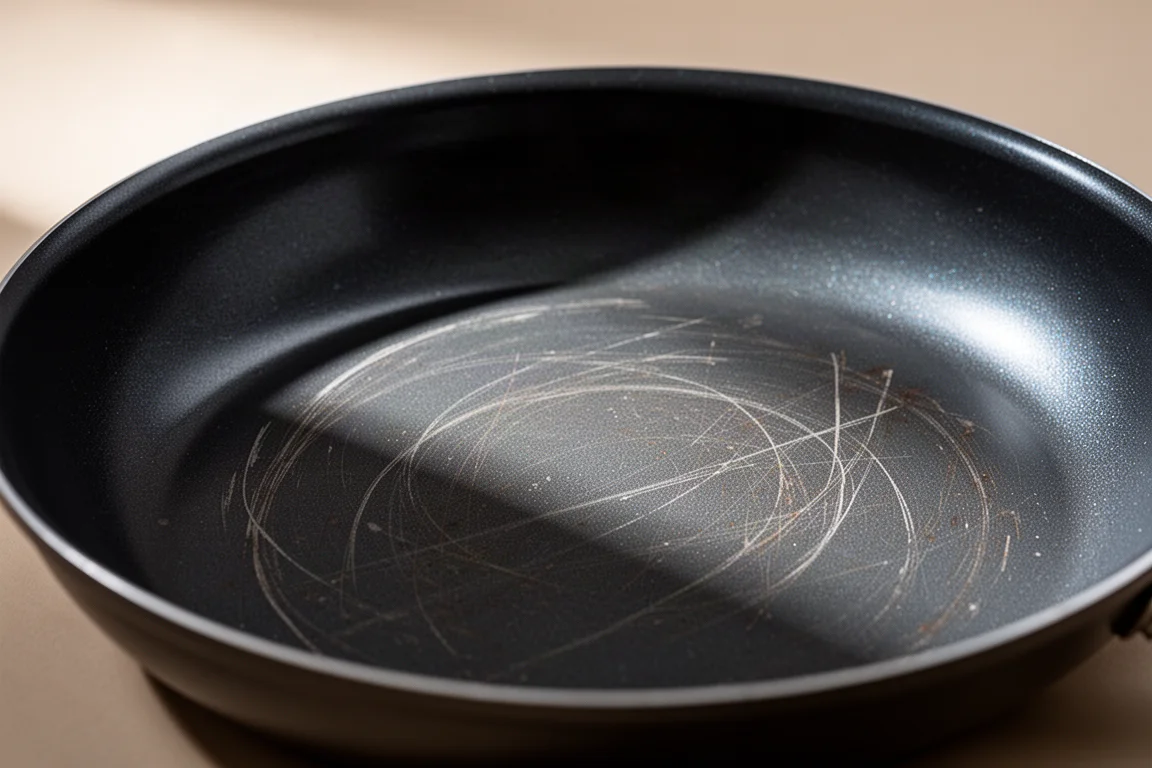
The final utensil test used a metal spatula weighted with two 4.5-ounce magnets, scraped back and forth 50 times. HexClad again showed white streaks that wiped away completely. Tramontina finally showed some weakness: noticeable streaks, minor scratches, and tiny bits of nonstick coating rubbing off onto the spatula. GreenPan looked almost untouched, with no visible damage at all.
The Stand Mixer Whisk Test
To apply consistent, repetitive force, each pan was propped up so a stand mixer beater made full contact with the cooking surface, then run on low speed for exactly two minutes, with the pans rotated halfway through. HexClad again showed marks that were mostly dust wiping right off. Tramontina and GreenPan held up better than expected, with circular rub marks but no deep scratches.
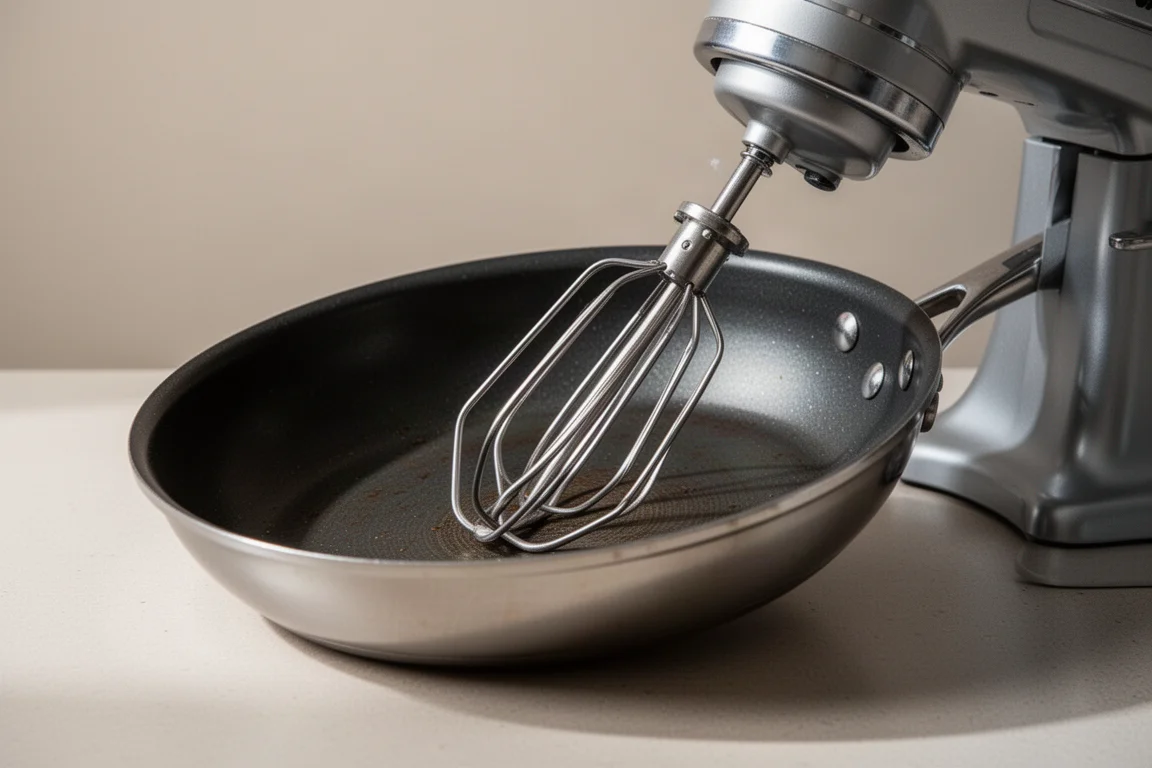
Then the beater was swapped for a metal whisk for 30 seconds, and this is where HexClad struggled. The whisk produced a loud grinding sound and left obvious white marks across the surface. Most wiped off, but real scratches were visible underneath. Tramontina escaped with light rub marks and one tiny scratch, while GreenPan again showed only a few faint marks.
Impact and Storage Wear Test
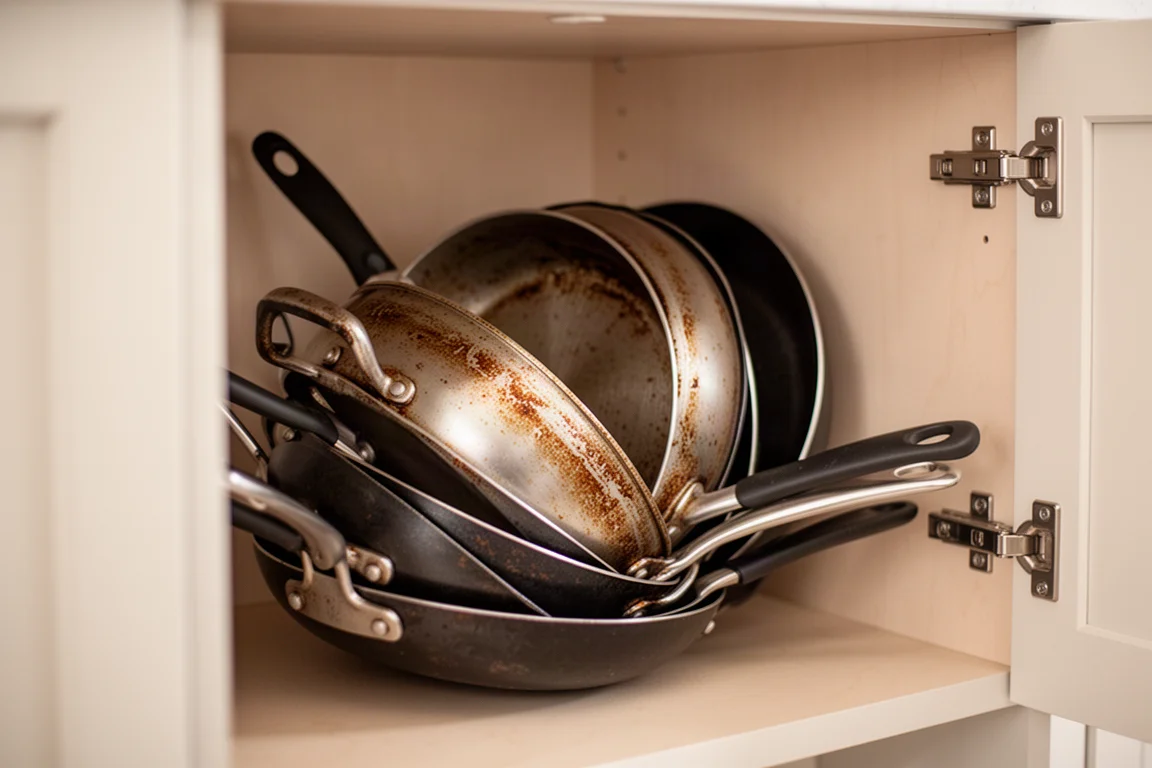
To simulate months of stacking pans in a cabinet, a 2-pound steel saucepan was dropped on each pan’s surface from about one inch high, 20 times. All three pans survived with no visible damage, which is reassuring for anyone who stores pans nested without protectors.
The real verdict came after all the abuse, when another egg was cooked in each pan. HexClad showed some decline, with eggs sticking a little more, especially after flipping, though the stuck parts came off easily. GreenPan’s decline was the most significant: the egg would not budge even when shaken, and it stuck after flipping, though it still wiped off without much effort.
Tramontina held up best. Its eggs still slid around almost as if the pan had never been touched. Two theories explain this. First, Tramontina uses PTFE, which is widely believed to be more durable and flexible than ceramic nonstick, though it does carry safety concerns when overheated. Second, HexClad’s steel ridges may have caused the whisk to catch and snap down hard into the nonstick valleys between them, creating a hammering effect rather than simple scraping.
What the Results Actually Mean
HexClad’s hybrid surface does a good job of protecting against scratches from larger utensils like spoons and spatulas, and the raised steel dots genuinely shield the coating in many scenarios. But there is space between the ridges, so forks, knives, and whisks can still reach and scratch the coating between them.
GreenPan’s ceramic coating proved surprisingly resilient to scraping in some tests but suffered deep scratches from the metal ladle and the largest performance drop by the end. Tramontina, the unglamorous PTFE option with no metal utensil claims, emerged as the most consistent performer overall.
The broader lesson: be careful with any nonstick coating, regardless of marketing claims. No pan in this test was indestructible, and durability varies more by coating type and utensil shape than by advertising.
Conclusion
If you want a pan that shrugs off everyday spatula use and wipes clean after contact with metal, HexClad’s hybrid surface is genuinely effective, though pointed utensils remain a risk. If you prefer ceramic and handle your pans gently, GreenPan performed well in several tests but showed real vulnerability to hard scraping. If maximum lasting nonstick performance is the priority, Tramontina’s PTFE coating delivered the most consistent results through every round of abuse.
Product link
View more details for HexClad Nonstick Pan
This product is mentioned in the review. Check the specifications, options, and compatibility before buying.
View more details for HexClad Nonstick PanFurther reading
Related Reviews
Kitchen
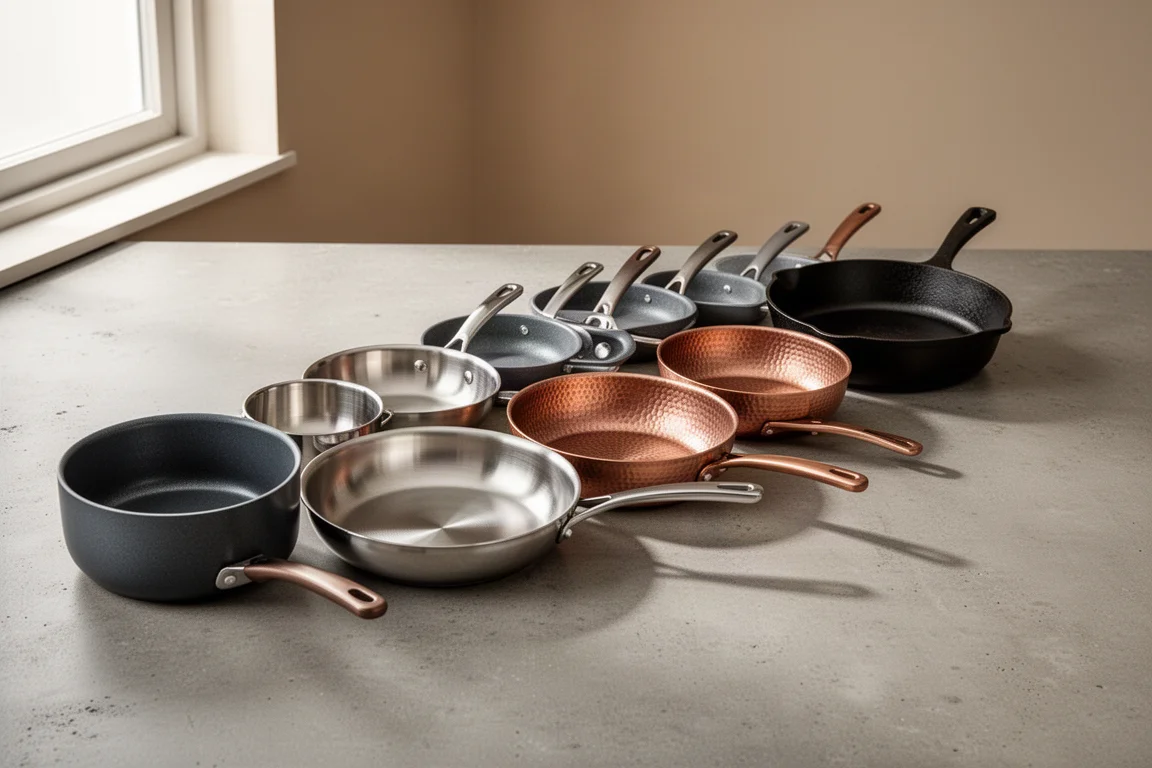
Best Nonstick Frying Pans Compared: 11 Skillets From $16 to $185, Tested
Eleven nonstick frying pans go head to head in pancakes, eggs, heat distribution, thermal efficiency, and scratch resistance to find out whether a cheap pan can really compete with a premium one.
Kitchen
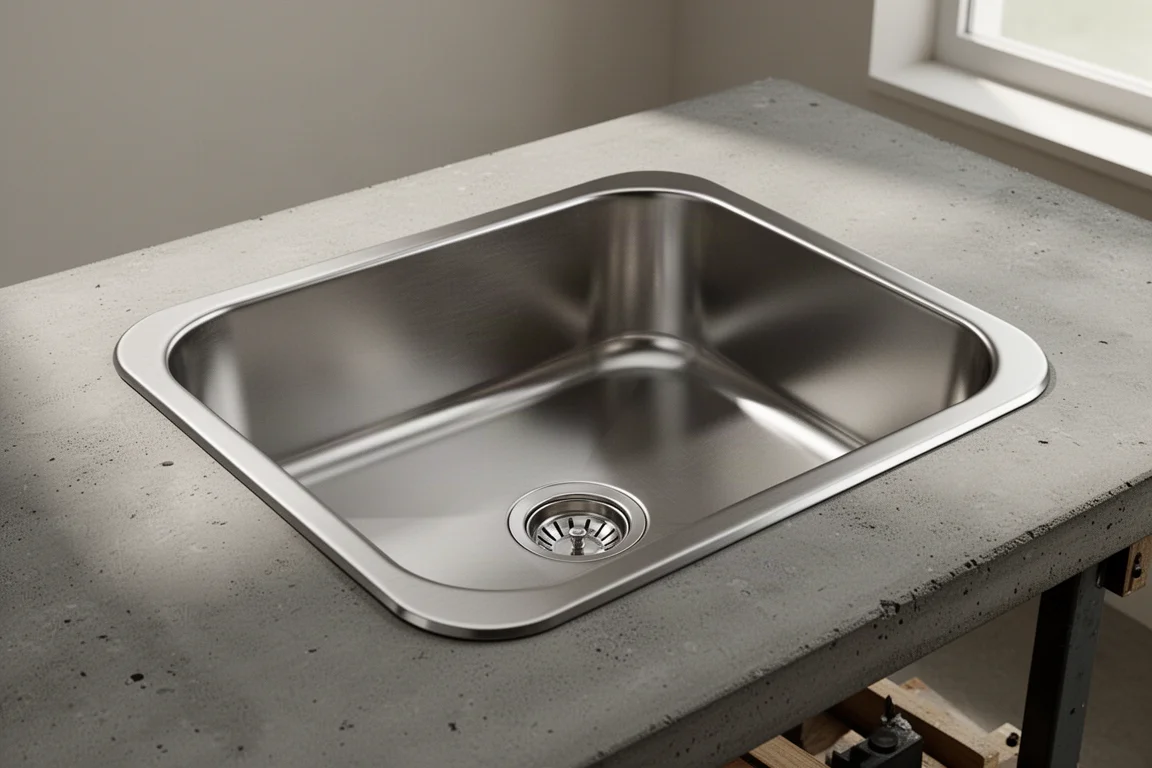
Vivor Stainless Steel Kitchen Sink Review: A Solid Drop-In Upgrade With One Weak Spot
An all-stainless single-basin drop-in sink with easy-clean rounded corners and a drain-sloped base, at a roughly $200 price point.
Kitchen
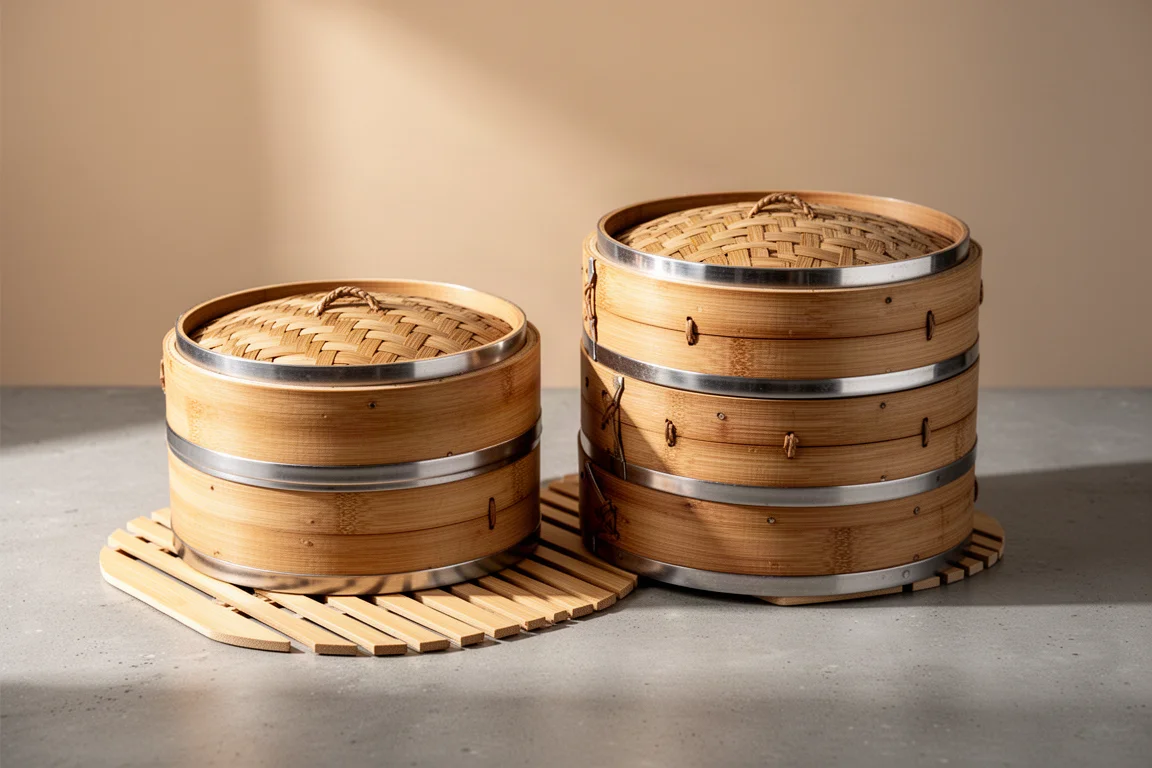
Best Bamboo Steamers: Two Tested Picks for Dumplings, Bao, and More
After hands-on steaming tests with dumplings and bao, two bamboo steamers stood out for build quality and staying in alignment.