Snowboards
Nitro Optisim Snowboard Review: An Asymmetrical Freestyle Deck With Clear Limits
A practical look at the Nitro Optisim, an asymmetrical cam-out camber freestyle snowboard, covering its pop, pressing feel, carving limits, and who it genuinely suits.
Introduction
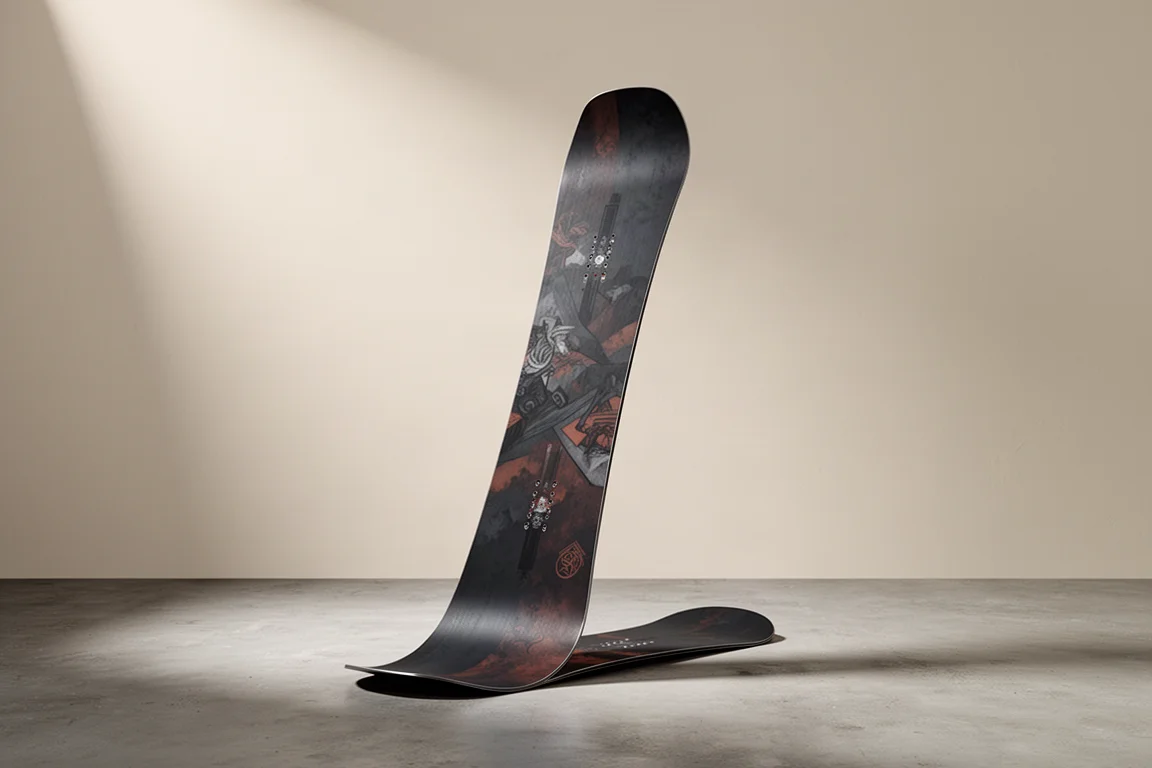
The Nitro Optisim is an asymmetrical snowboard built around Nitro’s cam-out camber, a profile that keeps traditional camber through the middle of the board and adds a small amount of early rise, or rocker, in the nose and tail. It is available in 146, 149, 153, and 156.
Conditions during testing ranged from chunder and lumpy groomers to firm, fast groomers on a mostly bluebird day, with a storm rolling in at a distance, slightly warmer temperatures, and low to moderate winds. The board was ridden with Rome Black Label bindings and K2 Thraxis boots.
That mix of terrain matters, because the Optisim is a freestyle-first deck with a very particular personality. It rewards riders who work with its flex points and resists riders who fight them.
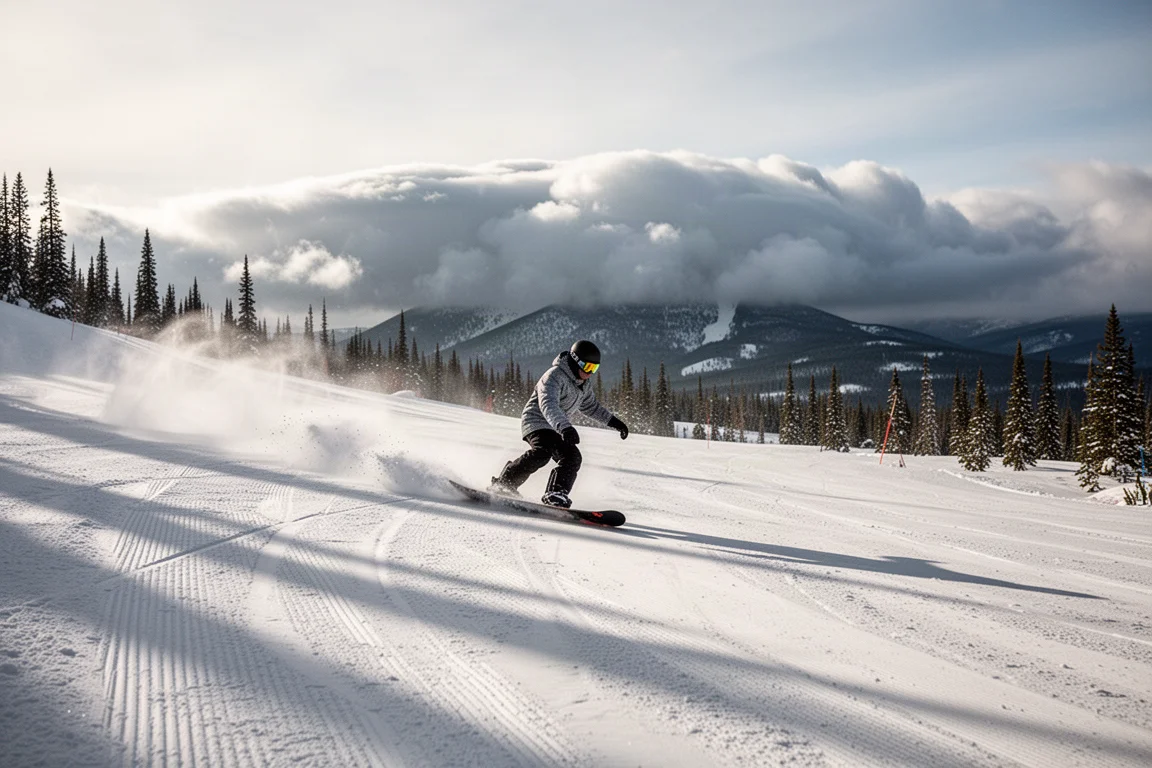
The result is a board with genuine strengths in the park and clear limitations once the terrain turns firm and fast. Understanding where those lines fall is the whole decision.
Who the Nitro Optisim Is For
This board is aimed at the asymmetrical-loving freestyle rider. If the day is built around park laps, presses, and playful side hits rather than laying trenches on a groomer, the Optisim’s profile is designed for that brief.
It is not the deck to choose if carving performance sits at the top of your list. The asymmetrical shape does not translate into the locked-in, laid-over carve that many riders expect from an asym board.
Riders who let a jump’s lip do the work and who ride with a relaxed, calculated style will get more out of it than riders who want the board’s own rebound to snap them off the tail.
Main Strengths
The cam-out camber profile is the source of most of the Optisim’s strengths. It delivers the snap and pop associated with traditional camber, while the early rise in the nose and tail makes turn entry and exit easier and gives a better platform for pressing.
On the mountain, that translates into a board that can launch a roller, a side hit, or a cat track gap with ease. It handles small and medium jumps comfortably and can be pushed into some larger features, though it would not be the first pick for that.
The camber section also supplies pop off the end of a feature, which helps when you need to clear a runout or a messy landing.
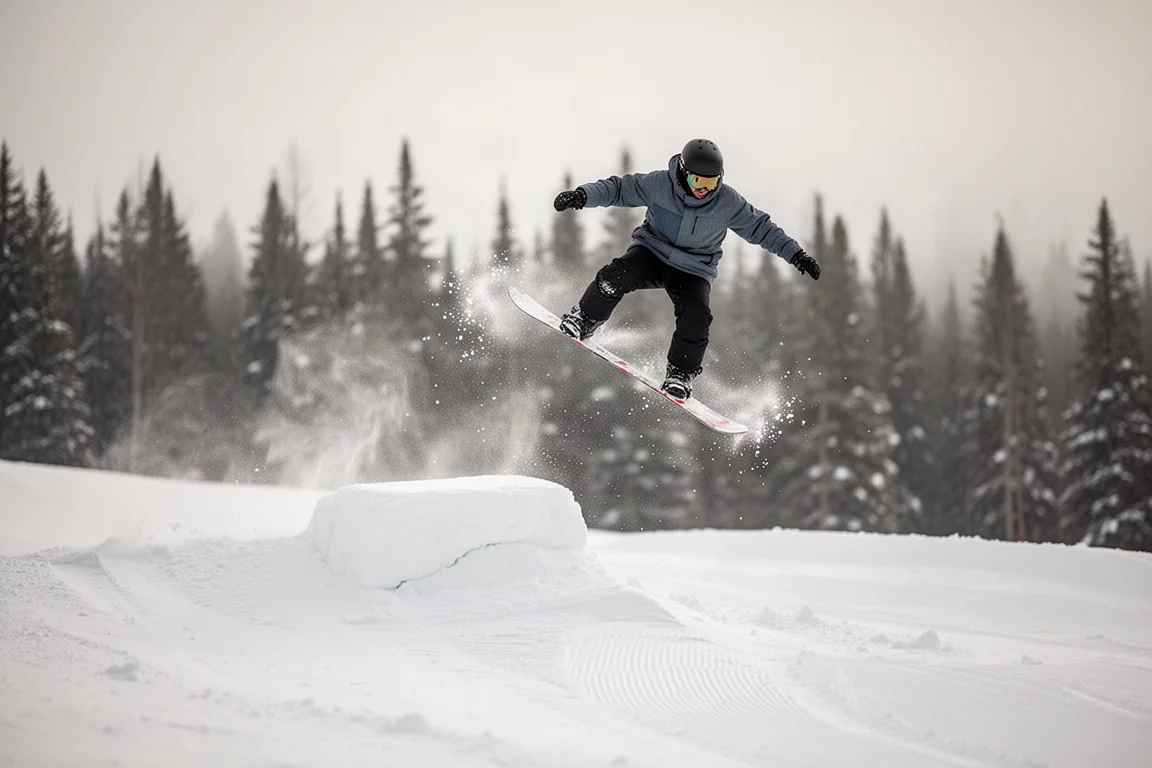
Pressing works well when weight goes where the board wants it. Pushing into the flex point and out toward the tip produces a solid, predictable press rather than a vague one.
Camber Profile, Flex, and Pressing
The flex sits slightly past the middle of the road for a freestyle board. There is a defined flex point in the nose and tail, roughly midway between the inserts and the upkick. Press into the board and you feel a softer section, then that flex point, then a stiffer zone running through the middle, with a moderate amount of torsional flex overall.
Flat basing produces a little chatter in the nose, but it stops at that flex point instead of travelling through the board. On rough, tracked-out terrain the board does get around, and keeping the knees a bit more bent helps absorb the jarring hits.
Despite the rocker sections, the Optisim rides predominantly like a traditional camber board. There is no load coming off the rocker where it meets the camber. Instead you get the load and snap of camber, with a slight delay in the response. Load it up and it springs back rather than reacting instantly, so popping on this board is more calculated than reflexive.
That delay means the lip does more of the work on jumps. Riders with a laid-back style will be fine. Riders expecting the board’s own rebound to do the job on loading-dock-style jumps will find it lackluster.
Buttering and jibbing demand precision. The camber section fights you, the board can feel hooky, and weight needs to sit exactly on that flex point. A poorly weighted butter can catch and put a rider on the ground. Going slightly faster and muscling the board a little helps, but this is a finesse game rather than a forgiving one.
When it does line up, the flex wraps around a feature instead of clapping out or teeter-tottering, and the camber section supplies the pop to get off the end of it.
Carving and Edge Hold
The asymmetrical shape suggests a carving weapon. It is not. On edge, the board does not feel locked in, and it cannot be laid over as far as its shape might imply.
The heel side edge is where the asymmetry does its job, compensating for body anatomy and allowing a deeper trench on that side. Even there, the locked-in feeling never fully arrives.
Edge-to-edge transmission is slow and methodical rather than quick and aggressive. Push the board hard and its limits show: the tail tends to kick out and does not want to grip, which asks for light feet and constant attention whenever the board is on edge.
Riders who mostly smear, press, and play will notice this far less than riders who want to rail a firm groomer at speed.
Things to Consider Before Buying
- Carving is not the Optisim’s strength. Expect slower edge-to-edge transitions and a tail that can break loose under hard pressure.
- Buttering and jibbing are hooky. Weight placement needs to be deliberate and centred on the flex point.
- Pop arrives with a slight delay. Jumping works best when you let the lip contribute.
- Nose chatter appears when flat basing, though it stops at the flex point. More bend in the knees helps.
- It handles small and medium jumps well, and some larger ones, but it is not the deck to choose if big jumps are the priority.
Buying Advice
The Optisim comes in 146, 149, 153, and 156. Riders who already enjoy asymmetrical freestyle boards and want a playful, park-focused option can consider it, provided they accept the carving trade-off.
If you want something closer to a traditional all-mountain feel from the same brand, the Nitro Team is the more natural comparison. Other asymmetrical boards in a similar space include the Yes Greats, the GNU Headspace, and the Ride Zero, while the Bent Metal Transfer and the Rome Vice are common binding pairings for this style of riding.
Overall, the Optisim has a familiar feel. It recalls the older Nitro Fury, but with a softer flex and without the ability to rip a turn the way that board could.
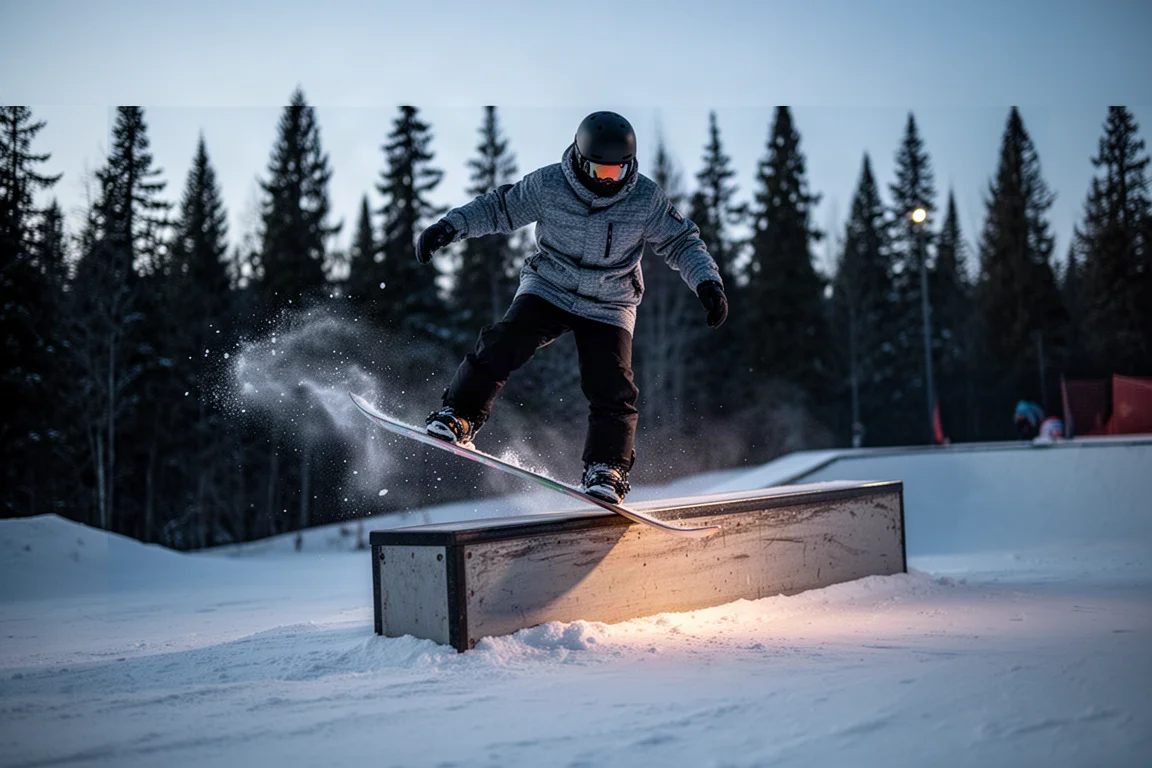
At the end of the day this is a specialised deck. Buy it for playful freestyle riding and an asymmetrical shape, not for carving performance or an instant, reactive pop.
Conclusion
The Nitro Optisim is a cam-out camber asymmetrical freestyle board with real strengths in presses, jibs, and small-to-medium jumps, alongside clear limitations in carving and edge hold. Riders whose style matches that brief will find a usable, playful platform. Riders who want a locked-in carve or immediate pop should look at the alternatives first.
Product link
View more details for Nitro Optisim
This product is mentioned in the review. Check the specifications, options, and compatibility before buying.
View more details for Nitro OptisimFurther reading
Related Reviews

Snowboards
32 Middle Earth Scott Stevens Pro Model Snowboard Review: A Park Board With a Reversed Flex
A medium traditional camber park board with carbon V reinforcement that is stiffer in the tips and more playful between the feet. Here is how it rides and who it suits.

Snowboards
32 Snafu Review: A Directional All-Mountain Freestyle Board with Serious Pop
The 32 Snafu pairs a directional camber-rocker profile with a stiffening tail for powerful carves, big ollies, and a surprisingly damp ride.

Snowboards
32 XXX Pat Fava Pro Snowboard Review: A Stiff Camber Beast for Hard-Charging Riders
A full-width traditional camber deck that rewards aggression with stability and edge power, but demands effort everywhere else.