Camping Gear
Nitecore NEF10 Review: A Tent Fan and Lantern in One
A compact rechargeable camping fan with a built-in lantern, a 10,000 mAh power bank output, and a sleep timer, plus the runtime and water-resistance limits worth knowing first.
Introduction
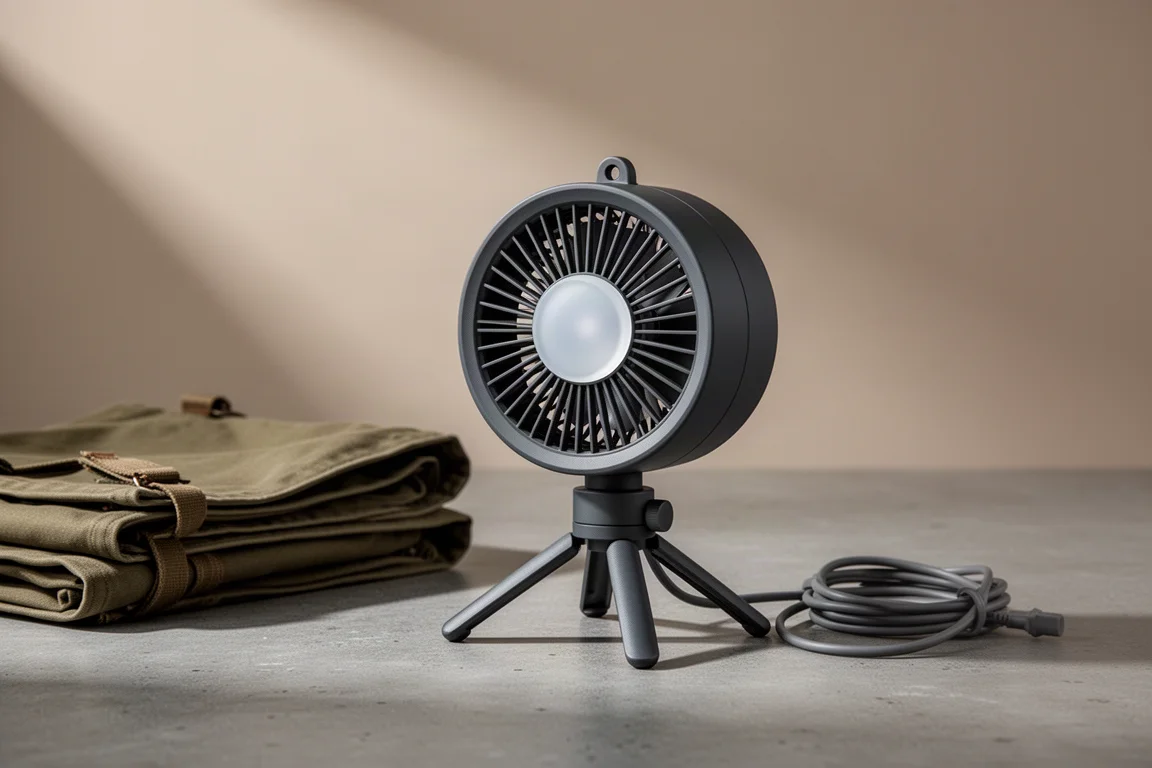
The Nitecore NEF10 is a compact camping fan with a lantern built into the same housing. It runs on a rechargeable 10,000 mAh battery, offers three fan speeds and three light levels, and adds a sleep timer, a power bank output for phones, and a detachable ball-head tripod. For anyone who has juggled a battery-powered tent fan and a separate lantern, the appeal is obvious: one device, one charging routine, less to pack.
This guide covers what the NEF10 does well, where it falls short, and which campers will get the most out of it.
Who the Nitecore NEF10 Is For
The NEF10 suits campers who want airflow, light, and phone charging from a single rechargeable unit. It fits neatly into a small dome tent, works well on a picnic table or inside a van, and is a natural choice for anyone who dislikes buying disposable batteries for every trip.
Its size helps here. The fan weighs 653 g, with a base measuring roughly 18 by 18 cm and a depth of about 11 cm, while the fan blades are around 13 cm across. The detachable tripod legs are about 20 cm long when packed, so the whole unit stores easily alongside a sleeping bag.
Tent size matters more than most buyers expect. In a six-person dome tent, the NEF10 still produced a faint draft at the far end, but that is close to the practical limit. A four-person tent is a better match, where the airflow has less interior volume to fill.
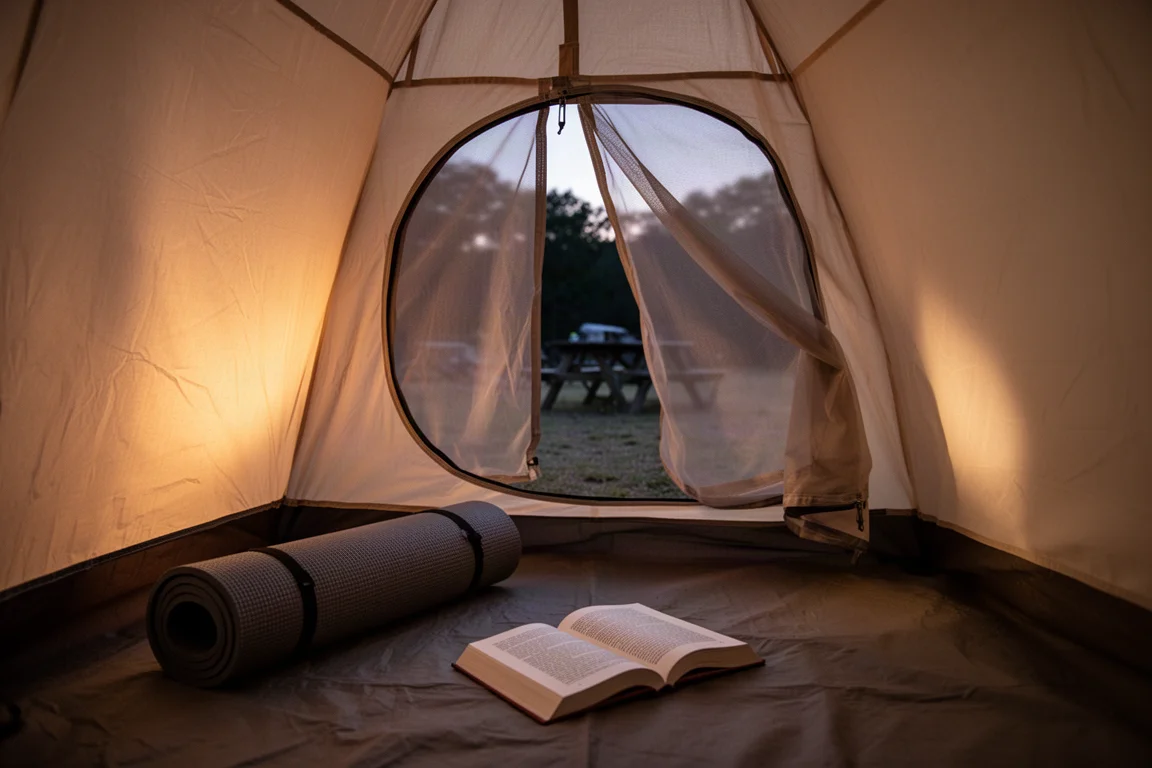
Where the fan really earns its place is overnight, when a steady breeze and a low light are both useful and a phone battery is quietly running down.
Main Strengths
The NEF10’s strongest argument is consolidation. Airflow, lighting, power bank function, and a timer all live in one small housing, and none of them feels like an afterthought.
Airflow and Fan Modes
Three fan modes are available, and the rated maximum fan speed is 4 m/s. Measured directly in front of the grille, the low mode produced about 2.7 m/s, medium about 3.7 m/s, and high about 4.2 m/s, so the high setting reaches slightly beyond the rated figure.
Airflow reach is the more telling number for tent use. On high, the fan moved air about 3.1 m before the reading dropped to zero, medium reached roughly 2.3 m, and low about 1.8 m. That is a usable spread for a small tent, where the fan can be hung at one end and still reach a sleeper at the other.
Noise is the pleasant surprise. With the fan switched off, ambient room noise measured about 41 dB. Low mode added little, landing near 45 dB, medium came in around 51 dB, and high stayed around 56 dB. High is quiet enough to sleep through.
Lantern Modes and Light Quality
The lantern has three brightness levels. Measured output came in at roughly 34 lumens on the dim setting, 71 lumens on medium, and 124 lumens on high.
The high setting lights a tent floor comfortably, and text on a page stayed legible from the far edge of a six-person tent, which makes it genuinely useful for reading or playing cards after dark. Medium is workable for reading but more tiring on the eyes, and the dim setting is best treated as a night light for moving around without waking anyone.
Light quality is where the NEF10 separates itself. The frosted diffuser spreads light evenly rather than throwing a harsh hotspot, and the tint runs slightly cooler than some campers may prefer while remaining comfortable to look at.

That even diffusion is worth more than raw brightness inside a tent, where a harsh lantern reflects off pale fabric and makes the space feel glaring.
Battery, Charging, and Power Bank
Charging runs through a USB-C input behind a sealed flap, with an indicator light that turns red while charging and green once the battery is full. A full charge takes about four and a half hours, matching the rated figure.
The USB-A output turns the fan into a power bank. From a 10,000 mAh battery, a phone went from 14 percent to 98 percent in two and a half hours, and a second run took another phone from 14 percent to 96 percent in the same window. A third attempt added only a small top-up before the output shut down on its own, so the realistic total is two full phone charges plus a little extra. Charging a phone between 20 and 80 percent instead stretches that to roughly three charges.
Runtimes and the Sleep Timer
Fan runtimes came in ahead of the published figures. High mode ran about 9 hours, medium about 14 hours 45 minutes, and low about 32 hours, roughly 15 percent more than the rated 8, 13, and 27 hours.
Lantern-only runtimes went the other way. High lasted about 23.5 hours, medium about 38.5 hours, and low about 75.5 hours, which is 20 to 25 percent below the rated 28, 50, and 100 hours.
Running both functions together shortens things further. High fan with low light ran about 8 hours, high fan with medium light about 7 hours 11 minutes, and both at maximum about 6.5 hours.
The sleep timer is a smart addition for overnight use. Pressing the top button once sets a one-hour shutoff, twice gives three hours, and three presses give five hours. Each timer stopped within about a sixth of a second of its target, so the fan turns off when it says it will.
Things to Consider Before Buying
A few limits are worth weighing before you commit, and two of them matter more than the rest.
Water Resistance Is Limited
No IP rating is published for the NEF10, so the housing should be treated as splash-resistant at best. A short spell of light rain caused no problems, but roughly 30 minutes of moderate rain let water reach exposed wiring inside. After that, the fan function stopped working entirely, while the lantern and sleep timer kept running.
If you camp in wet conditions, plan to keep the fan inside the tent or under cover rather than trusting it to shrug off a downpour.
Tripod Height Claims Are Modest
The included ball-head tripod is genuinely useful. Loosening the collar lets the fan head rotate through 360 degrees, including sideways and upward, and tightening it locks the angle firmly in place.
Height adjustment is less impressive. Five levels are listed, and the legs do have five positions, but the total extension adds only about 3 cm, or slightly over an inch. The legs are stable once spread, though they do not lock, and the standard quarter-inch thread sits deeper inside the base than ideal. A shorter external tripod thread will not reach it at all.
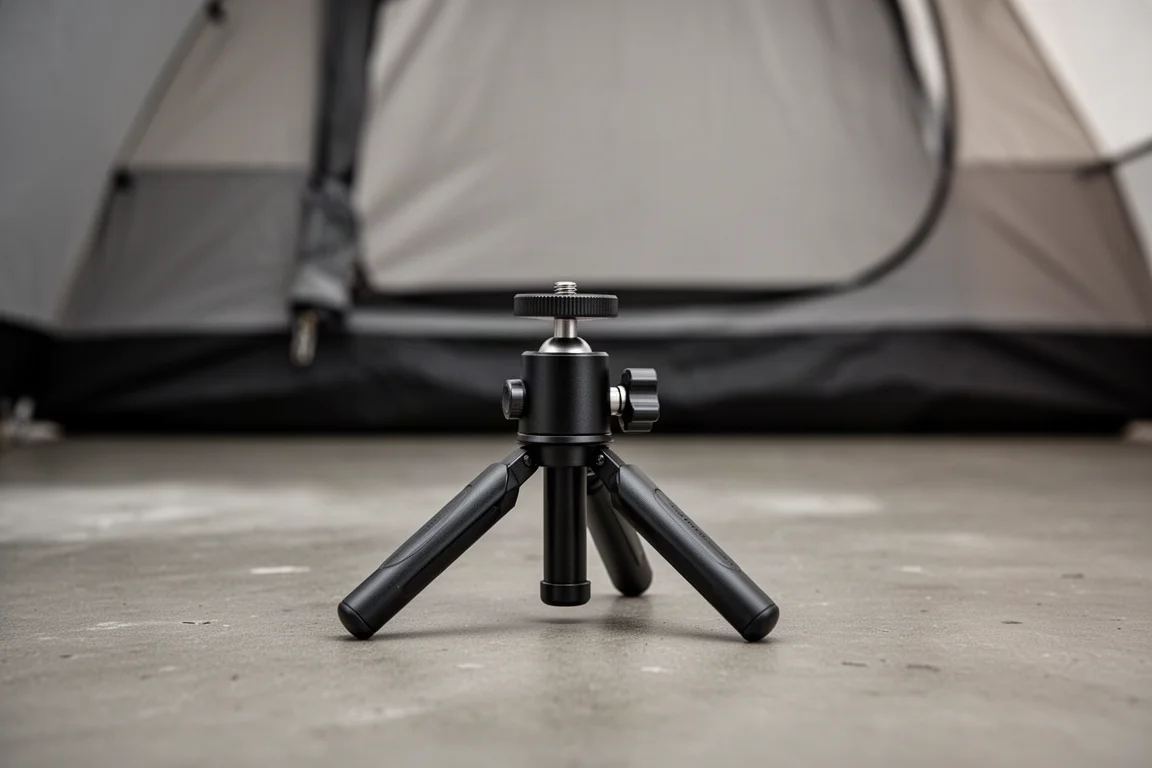
Practical mounting options are still good. A small handle at the back gives a solid grip for carrying, and the bundled carabiner clips onto that handle so the fan can hang from a tent lantern loop. The fan hood twists off anticlockwise for cleaning the blades and clicks back into place with a light press and a clockwise turn.
Build, Warranty, and Maintenance
The body is plastic throughout, with the fan face and power ports using a slightly better grade than the detachable tripod. Warranty coverage runs for 12 months, and the details sit in the included user guide.
Indicator lights are well judged. The top three show the sleep timer setting, the next three show the fan mode, and the last shows power status: blue when charging a phone, red while the fan itself charges, green when full, and a slow red blink when the battery runs low. They are bright enough to read in the dark without being distracting, and effectively invisible in daylight.
How It Compares to Battery-Operated Tent Fans
Two common alternatives, the Coleman CPX 6 and the Odoland camping fan, both include built-in lanterns and both run on D batteries. The Coleman takes four, the Odoland takes two, and at roughly $2 per battery that works out to $4 to $8 per use.
The NEF10 wins on airflow. Its minimum fan speed is comparable to both, but its maximum speed and airflow distance are noticeably higher, and it is far quieter. Both alternatives were as loud on their low settings as the NEF10 is on high.
Brightness is a closer call. The NEF10 is dimmer on paper, but the other two lanterns are harsh enough to be uncomfortable, and the Coleman in particular is unpleasant at close range. The NEF10’s heavier diffusion is easier on the eyes even at lower output.
Feature count and long-term cost settle it. Phone charging, a sleep timer, and a removable hood for cleaning blades are all absent from the battery-powered options, and while the NEF10 costs more upfront, it avoids the recurring battery spend.
Buying Advice
The NEF10 makes the most sense for campers who want one rechargeable device to handle airflow, light, and phone top-ups, and who mostly camp in dry conditions or can keep the fan sheltered. A four-person tent is the sweet spot, and a six-person tent is workable but about the ceiling.
Buyers who mainly need a light and rarely use a fan may find the lantern-only runtime figures disappointing, and anyone expecting the fan to survive heavy rain should look elsewhere.
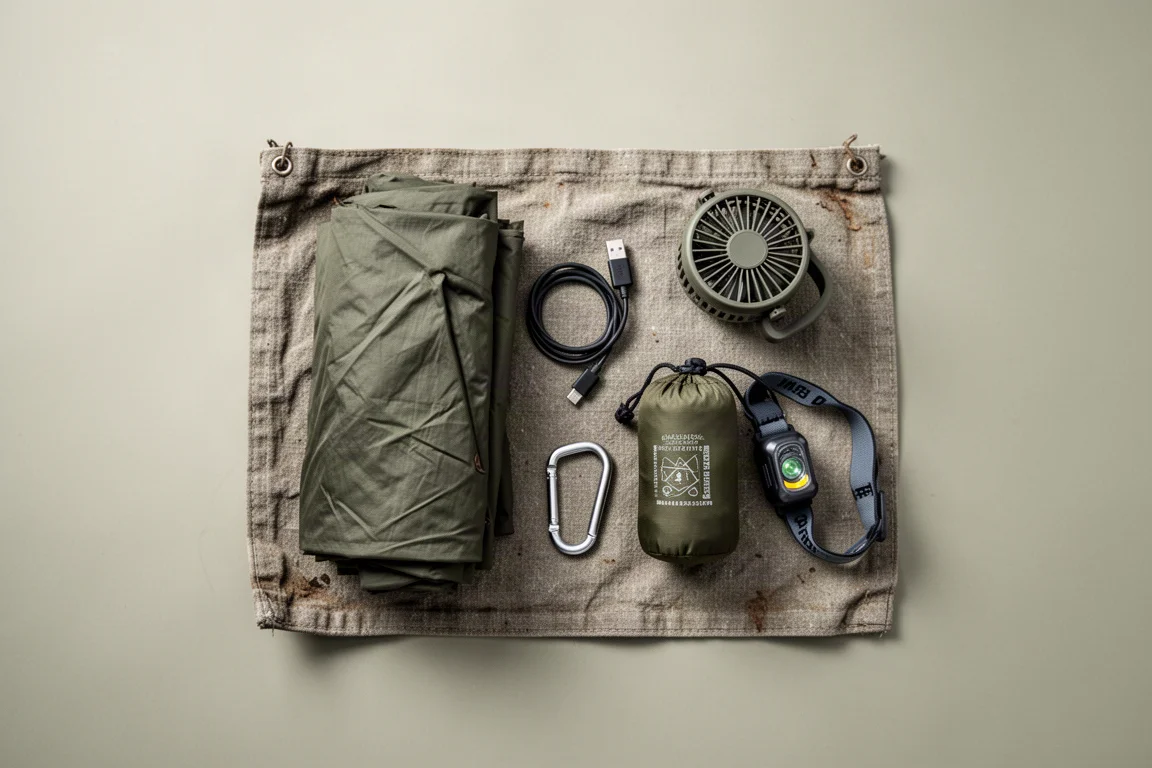
If those trade-offs sound acceptable, the NEF10 removes a lot of small frustrations: no last-minute battery runs, no separate lantern to pack, no noisy motor keeping you awake, and no fumbling for a phone charger in the dark.
Conclusion
The Nitecore NEF10 gets the fundamentals right. It moves air quietly, spreads light evenly, charges a phone twice over, and shuts itself off on a timer that keeps its word. Its fan runtimes beat the published numbers, and its size and weight make it easy to bring along.
The caveats are real but narrow. Lantern-only runtime falls short of the rated figures, the tripod’s height adjustment is more marketing than function, and the lack of meaningful water protection means it belongs inside the tent when the weather turns. Weigh those against the convenience, and the NEF10 is a convincing choice for three-season tent camping.
Product link
View more details for Nitecore NEF10
This product is mentioned in the review. Check the specifications, options, and compatibility before buying.
View more details for Nitecore NEF10Further reading
Related Reviews
Camping Gear
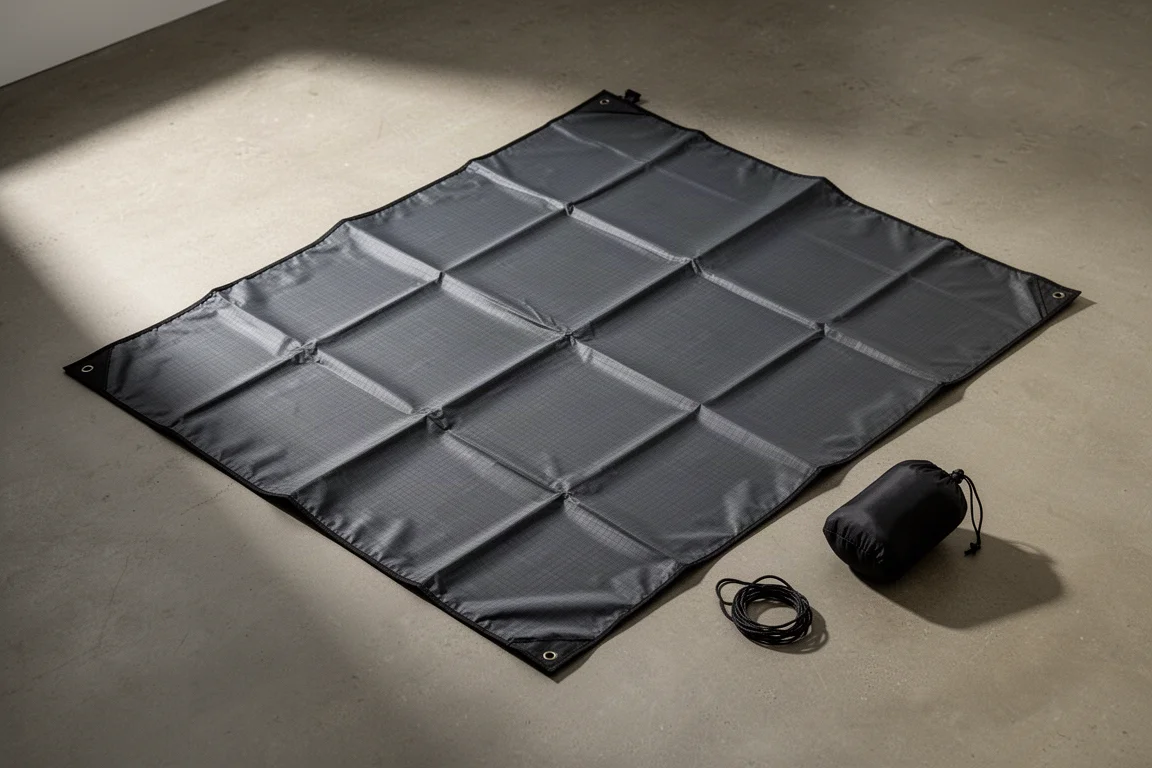
3FUL Ultralight Ground Sheet Review: A Two-Person Footprint Worth Packing
A 6.7 oz two-person ground sheet in ripstop silnylon, priced around $30. Here is what it protects, what it does not do, and who should pack it.
Camping Gear
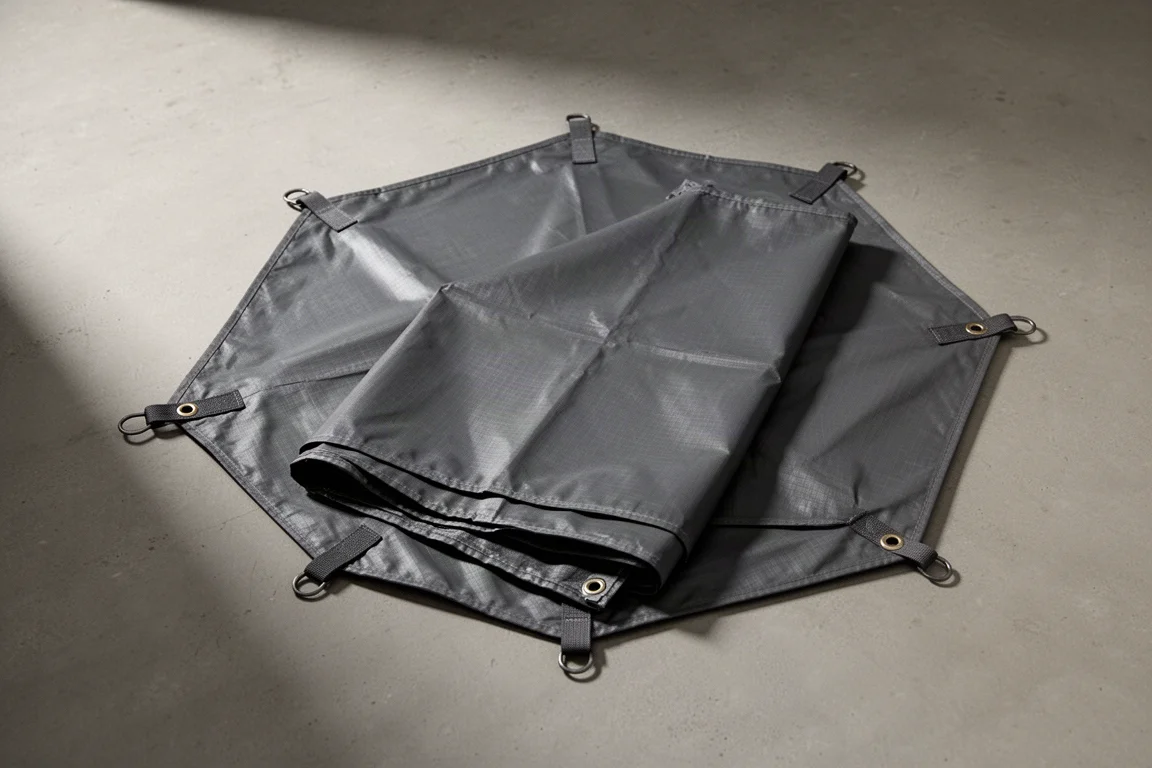
Backcountry Light Dual-Function Tarp and Floor Review: A Footprint First
A dual-purpose tent floor and tarp that keeps falling rain off you, but cannot block wind. Here is where it works and where it does not.
Camping Gear
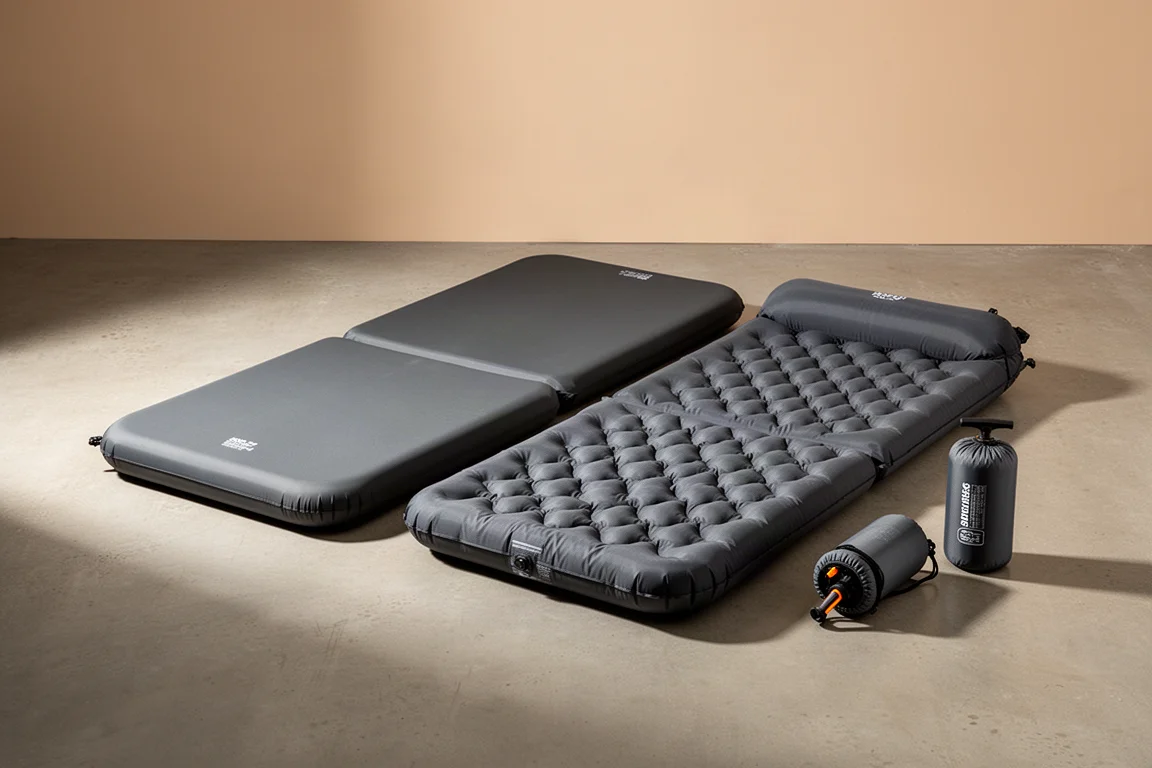
Best 2-Person Camping Mattresses for Couples: 10 Options Compared
A practical comparison of ten two-person camping mattresses, covering self-inflating pads, air pads and air mattresses for couples.