Kitchen Appliances
Glass Air Fryers Tested: Ninja Crispi, Crispi Pro, and the Best Alternatives
After cooking more than 100 meals across two glass air fryers and five basket-style rivals, here is how the Ninja Crispi and Crispi Pro stack up against the Typhur Dome 2, Instant Pot Vortex, and COSORI TurboBlaze.
Introduction
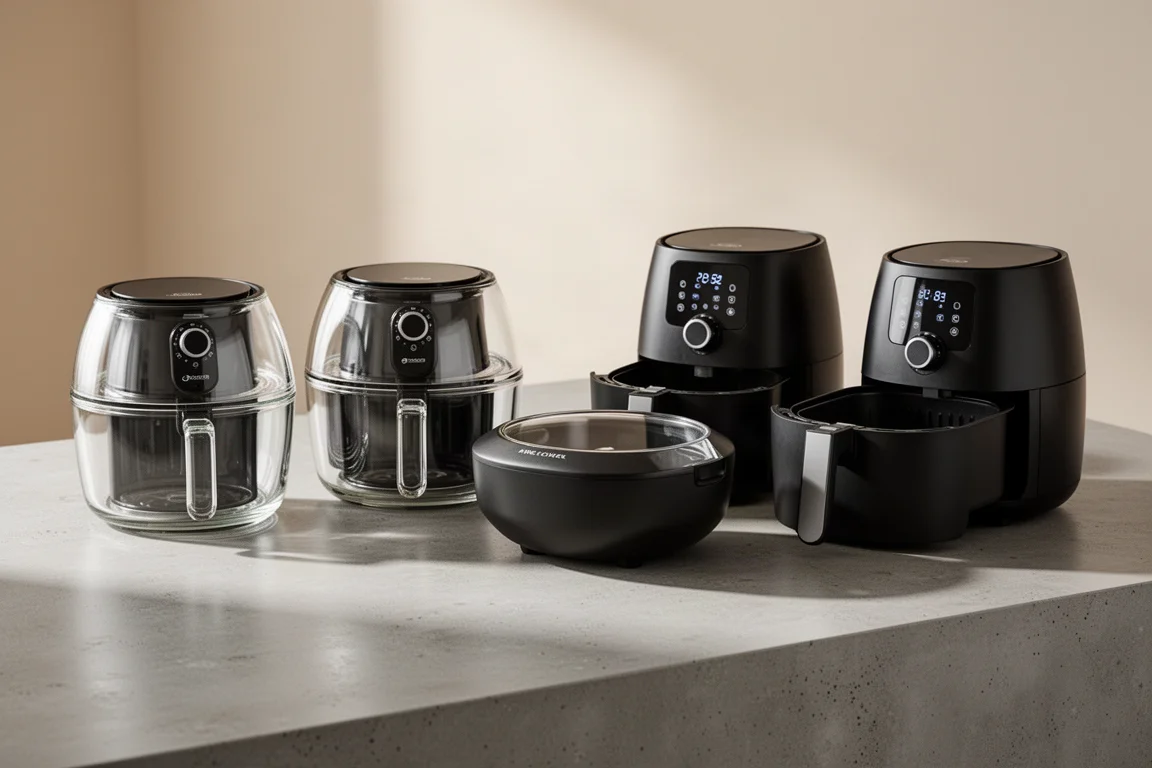
If you have searched for non-toxic air fryers, two names keep coming up: the Ninja Crispi and the Ninja Crispi Pro. Both cook your food in thick, heat-resistant glass rather than a coated aluminum basket, which is exactly why Ninja markets them as a safer choice.
To find out whether that promise holds up, this comparison covers cooking tests with fries, cookies, squash, and chicken wings on identical settings, noise measurements on air fry mode at 400 degrees Fahrenheit, dozens of cleaning cycles, and 100 removals of the crisper plates to see how the rubber bumpers hold up. Shaking tests checked whether the plates stay secure, and the glass was stress-tested from extreme heat to ice water, and from the freezer straight to the highest heat setting.
The result: two glass air fryers that cook impressively well, with a few real trade-offs and one risk you should understand before buying. And if glass is not for you, the same testing surfaced three strong alternatives, including one that clearly outperformed everything else.
How Glass Air Fryers Actually Work
Most air fryers use a thin aluminum basket coated in a non-stick material. With the Crispi and Crispi Pro, food cooks inside thick borosilicate glass, which drastically reduces the coated surface area around your food. That is the honest core of the non-toxic pitch: it is not that the coating itself is different, but that there is simply less of it.
Here is the detail that matters. Your food does not sit directly on the glass. It sits on an aluminum crisper plate with a nano-ceramic, Teflon-free coating, the same material used across many conventional air fryers. Like any non-stick surface, ceramic can scratch and flake over time. So compared with other ceramic-coated models, Ninja is not necessarily safer. The real difference is a smaller coated area, plus the visibility, odor resistance, and storage convenience that glass brings.
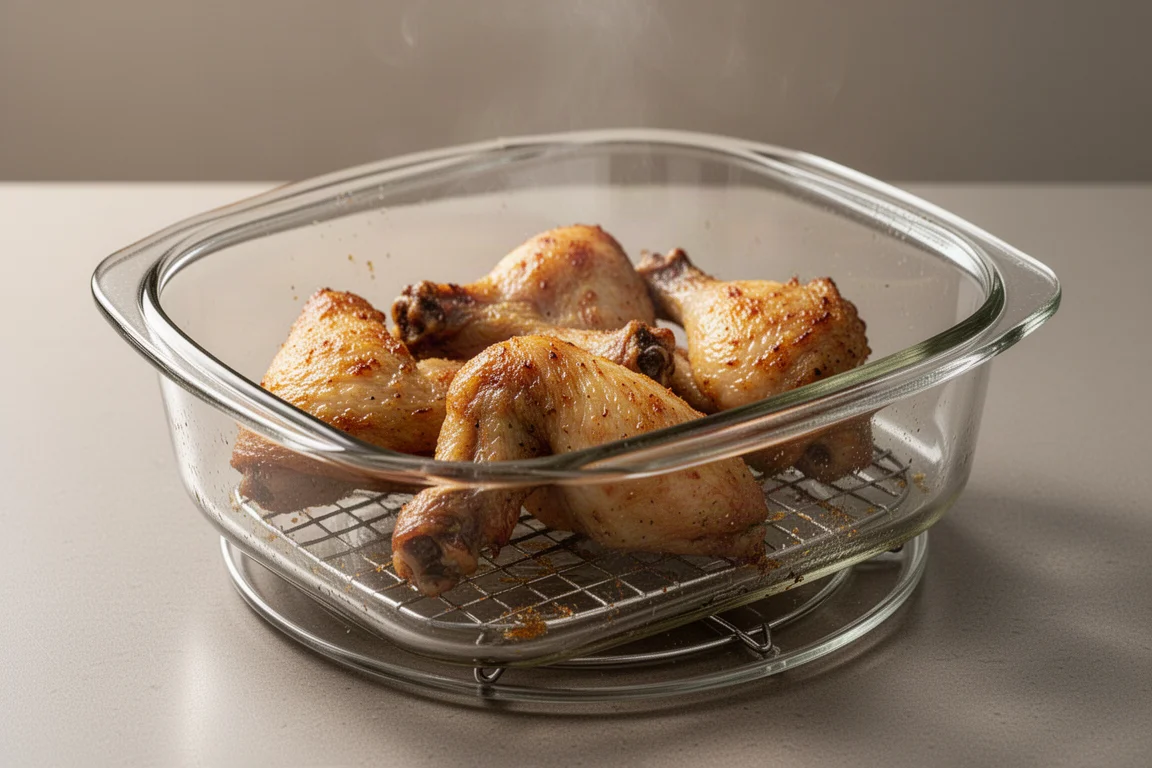
The two models differ in design. The original Crispi has a heating unit that sits on top of the glass container and lifts off. The Crispi Pro fixes the heating element in place and instead adjusts the base height depending on which container size you use. More importantly for everyday cooking, the original Crispi does not let you set an exact temperature; you pick a mode and it runs within a range. The Crispi Pro lets you choose anywhere from 80 to 450 degrees Fahrenheit in five-degree increments, which makes following recipes far easier.
Cooking Performance: Fast, Consistent, and Mostly Excellent
In testing, fries crisped quickly and cooked evenly in about 10 minutes. Chicken wings finished in under 25 minutes with crispy skin and juicy meat, and vegetables roasted evenly with good color. Both Crispi models performed on par with the top air fryers tested, and there was no meaningful performance difference between the two.
The weak spots were consistent too. Cookies browned too quickly on top before the bottom cooked through in both Crispi models, while several rivals handled them more evenly. In the Crispi Pro, the outside of butternut squash browned faster than the inside softened, requiring a mid-cook temperature adjustment. If you are willing to flip food and make small tweaks, results are consistently good, and food crisps back up quickly when reheating without drying out.
One more practical note: the Crispi Pro was the loudest air fryer in the entire test group, and the regular Crispi, while noticeably quieter, is still not subtle. Noise matters more than most people expect in open-plan kitchens.
Day-to-Day Use: Weight, Heat, and Handling
This is where the glass design cuts both ways. The large Crispi container weighs over 4 pounds and the Crispi Pro container just over 5 pounds, versus around 2.5 pounds for a typical aluminum basket. You cannot slide these out one-handed. With the Crispi Pro you need two hands and have to line the container up straight to seat it correctly under the heating element. With the original Crispi there is nothing to align, but you have to lift the hot heating unit off and set it down somewhere.
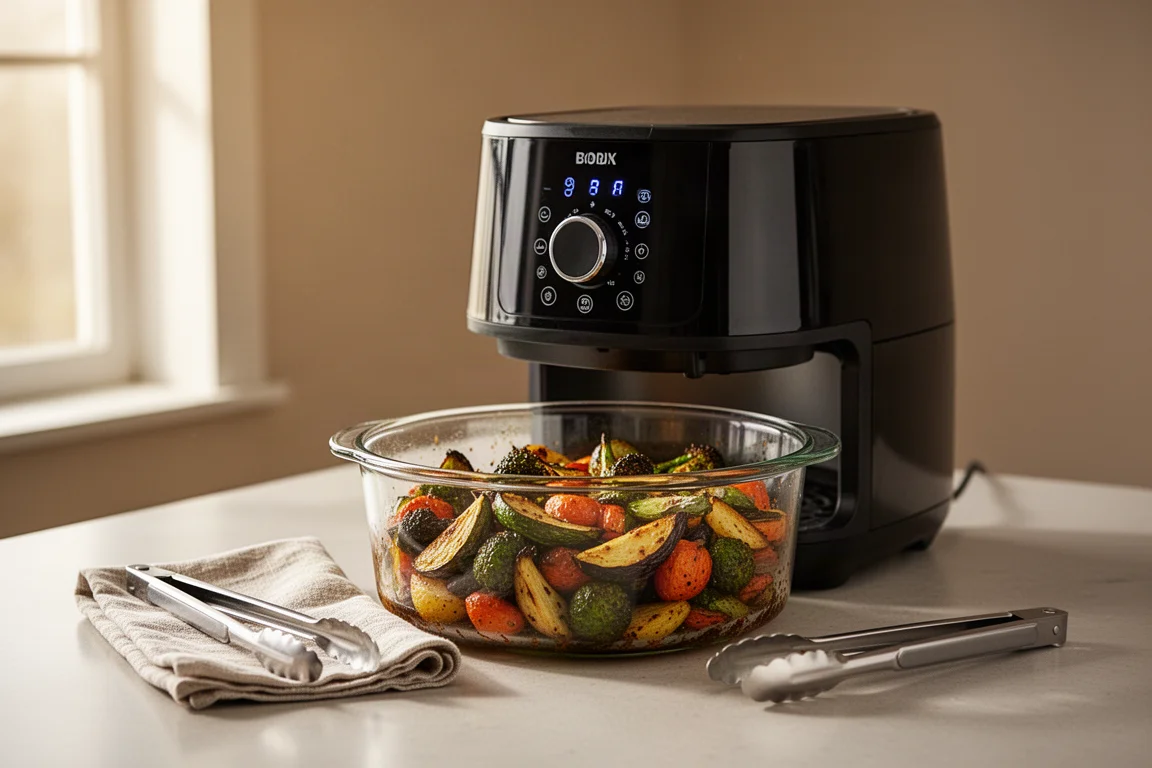
That last point was tested directly: after 10 minutes on air fry mode, the heating unit was placed on a granite countertop and the surface rose by only about 8 degrees Fahrenheit, so stone counters are fine. Paper, packaging, or a cookbook under a hot coil would be a very different story. Two smaller design gripes: the air vent on the original Crispi sits directly below the power cord and blasts it with hot air, and the glass itself gets extremely hot and stays hot for 5 to 10 minutes after cooking. The handles and nearby plastic guard get hot too. You can handle it without oven mitts, but mitts are the wiser habit.
On the positive side, the glass containers are dishwasher safe, they do not hold onto odors, and cooking, serving, covering, and storing leftovers in the same container is genuinely convenient. The annoyance is the permanently attached plastic base: there is a small gap underneath you can rinse, but never truly scrub or dry.
The Glass Shattering Risk
Ninja describes the glass as thermal shock resistant, and the stress tests backed that up. The container survived a hot-to-cold tap water shock, an ice water shock, and even several hours in the freezer followed immediately by 10 minutes on Max Crisp without shattering.
That said, there are documented reports online of these glass containers breaking. It is rare, and the containers involved most likely had an invisible chip or hairline crack, but it is a risk worth understanding. If you are not comfortable accepting it at all, the alternatives below should be at the top of your list.
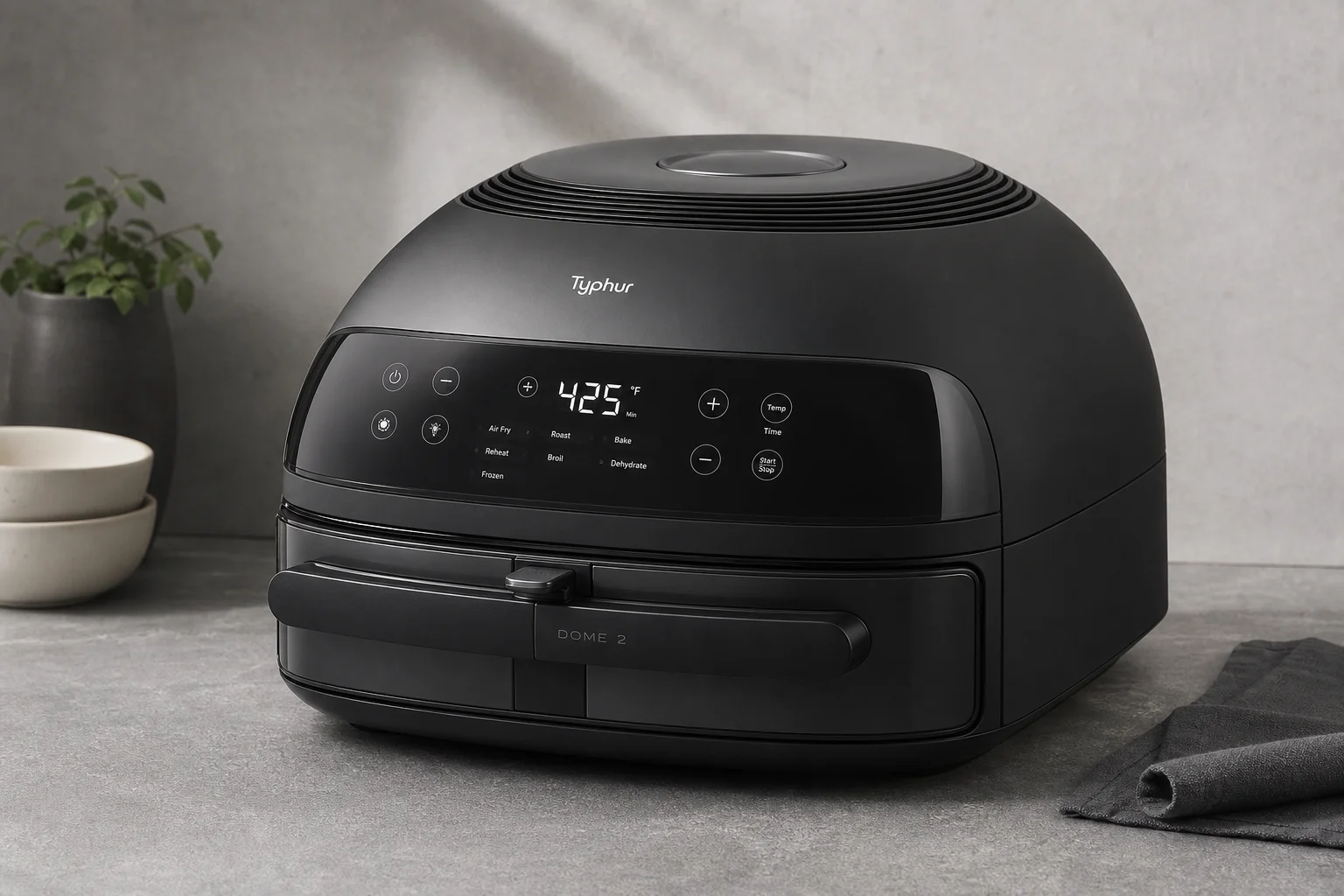
The Standout Alternative: Typhur Dome 2
The only air fryer that clearly outperformed the rest of the field was the Typhur Dome 2. Heating elements on both the top and bottom make a real difference: wings finished in just 18 minutes, and cookies baked the most evenly of any model tested. Flipping food is also less necessary thanks to the dual-sided heat.
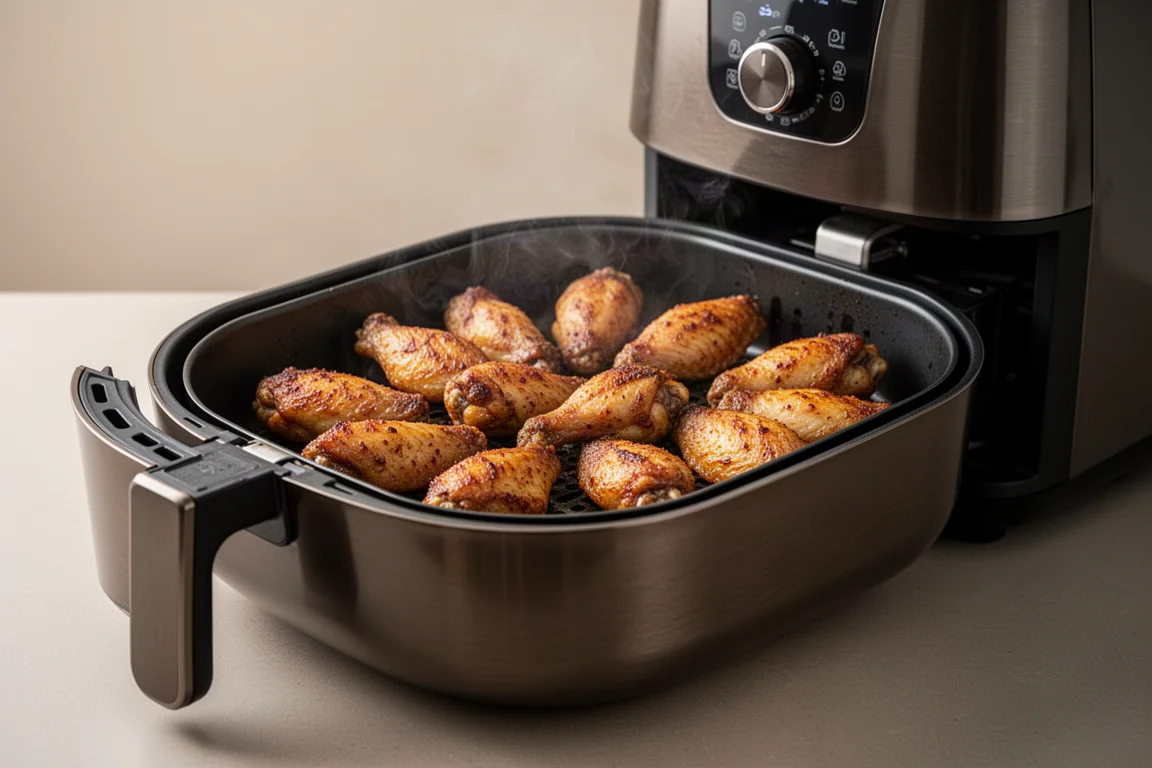
You get the same ceramic coating on the crisper plate, but with a much wider cooking surface than either Crispi. It is expensive, but the performance is excellent, and it is the top pick if the glass shattering risk bothers you.
Best Budget-Friendly Alternatives
If the Typhur Dome 2 is too pricey, the Instant Pot Vortex and the COSORI TurboBlaze are both cheaper, high-performing options. Both offer the larger cooking surfaces the Crispi line lacks and the familiar convenience of a slide-out basket with a cool-touch handle.
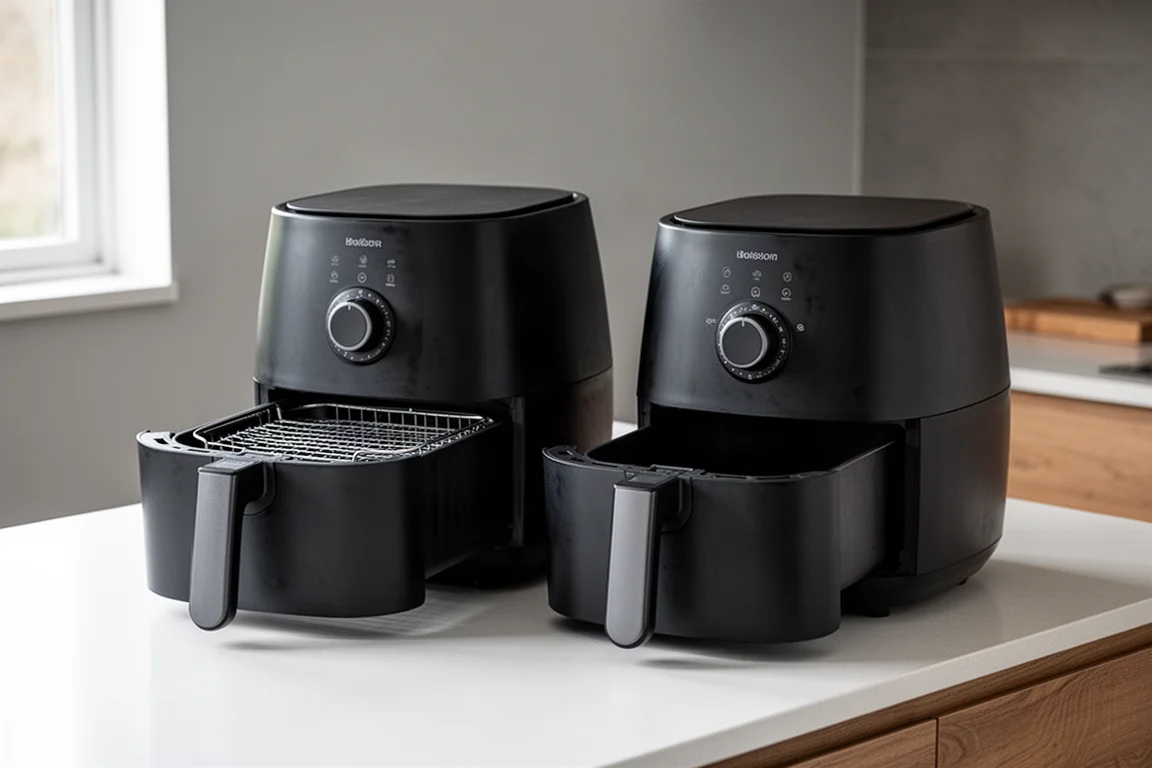
For context on the Crispi capacity issue: even though the Crispi Pro is a six-quart air fryer, the actual cooking surface is only 8 by 8 inches, the same plate size as the original Crispi’s four-quart container. Capacity grows vertically, not horizontally, fitting about four overlapping slices of bread or 10 to 11 chicken wings without stacking. That is fine for one or two people, but noticeably smaller than basket-style models.


Should You Buy the Ninja Crispi or Crispi Pro?
For most home cooks, the original Crispi is hard to recommend. The lifting heating element that needs somewhere to go, the limited capacity, and the fact that despite being marketed as portable the unit is clunky and the glass containers are heavy all add up.
The Crispi Pro is the stronger buy of the two. You get precise temperature control in five-degree increments, a fixed heating element, and a capacity that works well for one to three people. The biggest remaining concern is shared by both models: the glass gets extremely hot, and while it passed every stress test here, the reports of shattering are a legitimate consideration.
Conclusion
The Ninja Crispi and Crispi Pro cook genuinely well, offer a visibility and storage convenience no basket air fryer can match, and reduce the coated surface around your food. But they ask you to accept heavier containers, slower handling, louder operation, and a small glass-breakage risk. If those trade-offs do not bother you, the Crispi Pro is the model to get. If they do, the Typhur Dome 2 delivers the best cooking performance of the group, and the Instant Pot Vortex and COSORI TurboBlaze cover the value end superbly.
Further reading
Related Reviews
Kitchen Appliances
Arboleaf Smart Kitchen Scale Review: Connected Cooking Made Simple
A Bluetooth-enabled kitchen scale that syncs with a nutrition-tracking app, offering real-time weight monitoring and recipe guidance for home cooks.
Kitchen Appliances
Best Air Fryer Toaster Ovens Under 100: Five Practical Options for Budget-Conscious Kitchens
Five air fryer and toaster oven combinations that deliver real cooking performance without breaking the bank, each with distinct strengths for different kitchen needs.
Kitchen Appliances
Best Air Fryer Toaster Ovens: Three Top Picks for Multi-Function Cooking
Three high-performing air fryer toaster ovens tested for versatility, ease of use, and real-world cooking results. Find the right fit for your kitchen.