Snowboard Bindings
Nidecker Supermatic Carbon Review: Rear-Entry Power Without Compromise
The stiffer, lighter carbon version of Nidecker's easy-entry binding delivers more precision and response, with a few trade-offs to know before buying.
Introduction
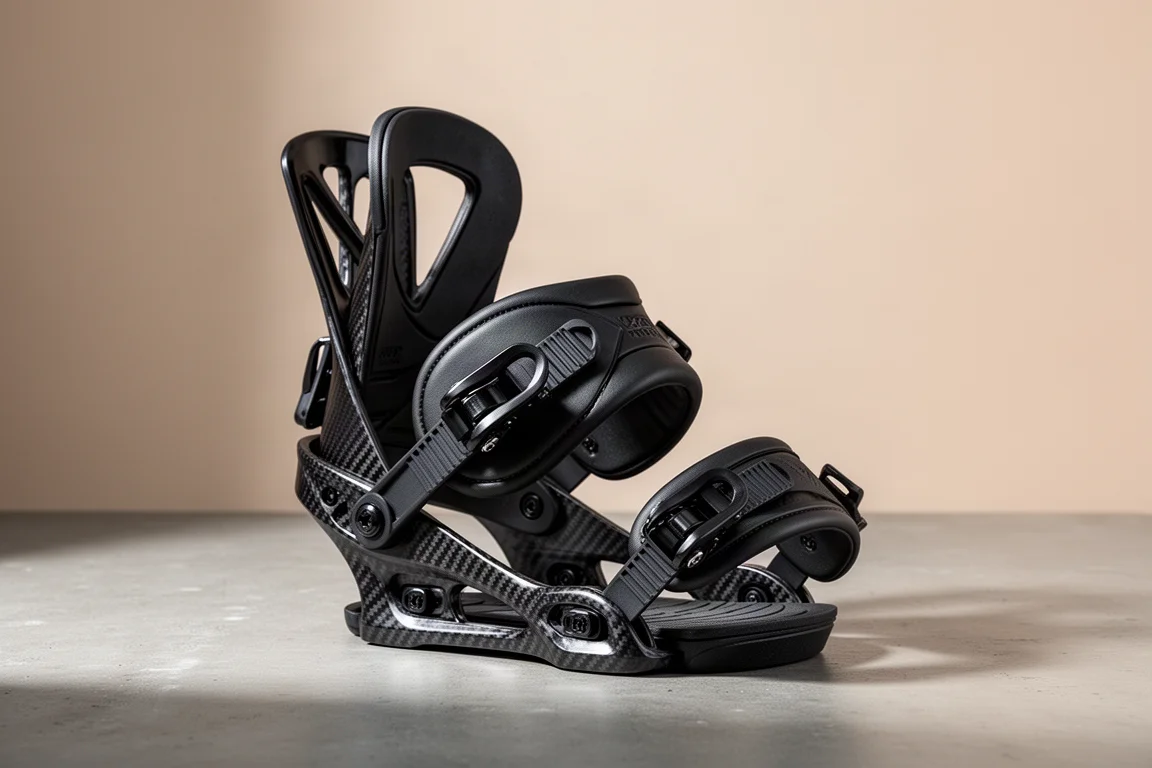
The Nidecker Supermatic Carbon is the stiffer, lighter version of Nidecker’s rear-entry Supermatic binding. It was ridden in a mix of conditions at Arapaho Basin: slush on the lower mountain, perfect corduroy mid-station, and choppy chunder off the groomers, mounted on a Ride Shadowban snowboard with K2 Thraxis boots.
The core pitch is unchanged from the regular Supermatic: drop your boot in through the open heel, push down, and ride. What the Carbon version adds is more response, less weight, and a chassis aimed at riders who want power and precision rather than a soft, forgiving feel. Anyone who has used a two-strap binding will need new muscle memory for entry, but after roughly five days of riding, most people should have it dialed.
Who This Binding Is For
This is a binding for riders who want true step-in convenience without giving up performance or being locked into a specific boot. Nidecker’s drop-in entry system works with a wide range of boots, unlike systems that restrict you to proprietary boot sole designs. That flexibility is the standout of the concept, and it has been refined again in this generation with more carbon, less weight, and more responsiveness.
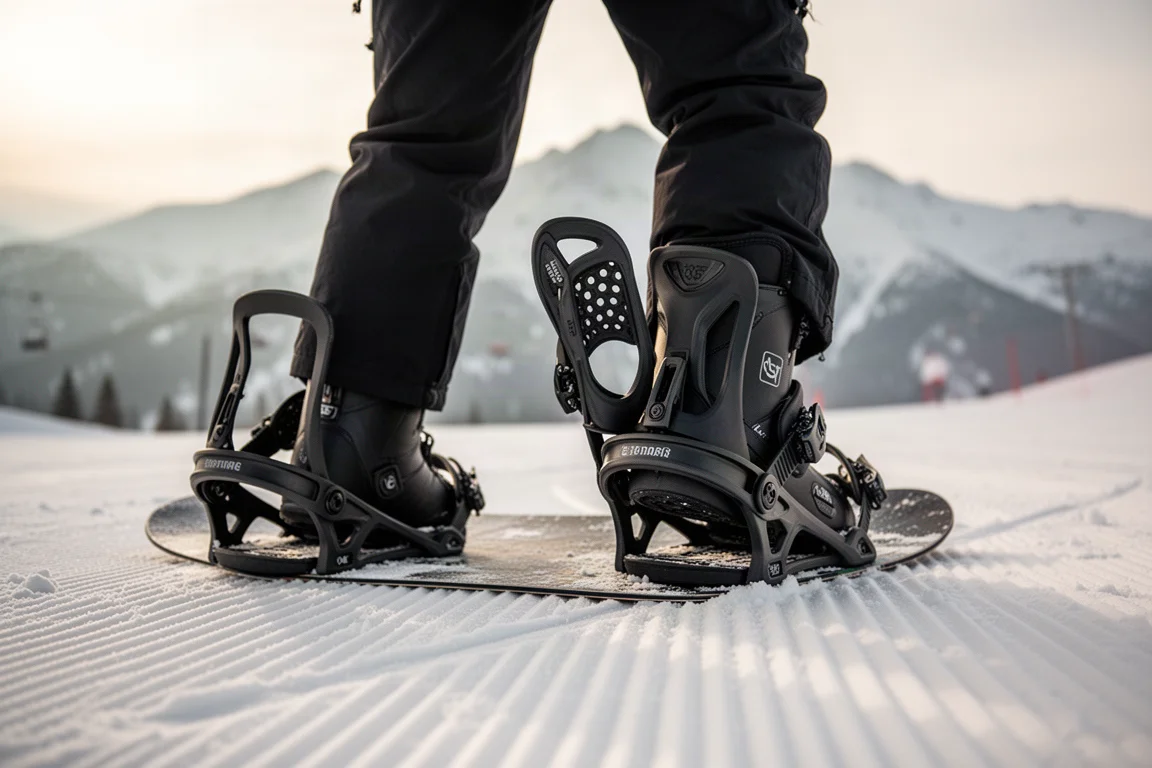
It is especially aimed at heavier riders who want precision and power but who cannot comfortably bend over to strap in, and who still want a binding that does not limit their boot choices. Bulkier boots fit this binding better than narrow-heeled boots: a narrow heel may feel some play, while a bulky boot feels more snug, though bulkier boots are also slightly harder to push into when stepping in.
Main Strengths
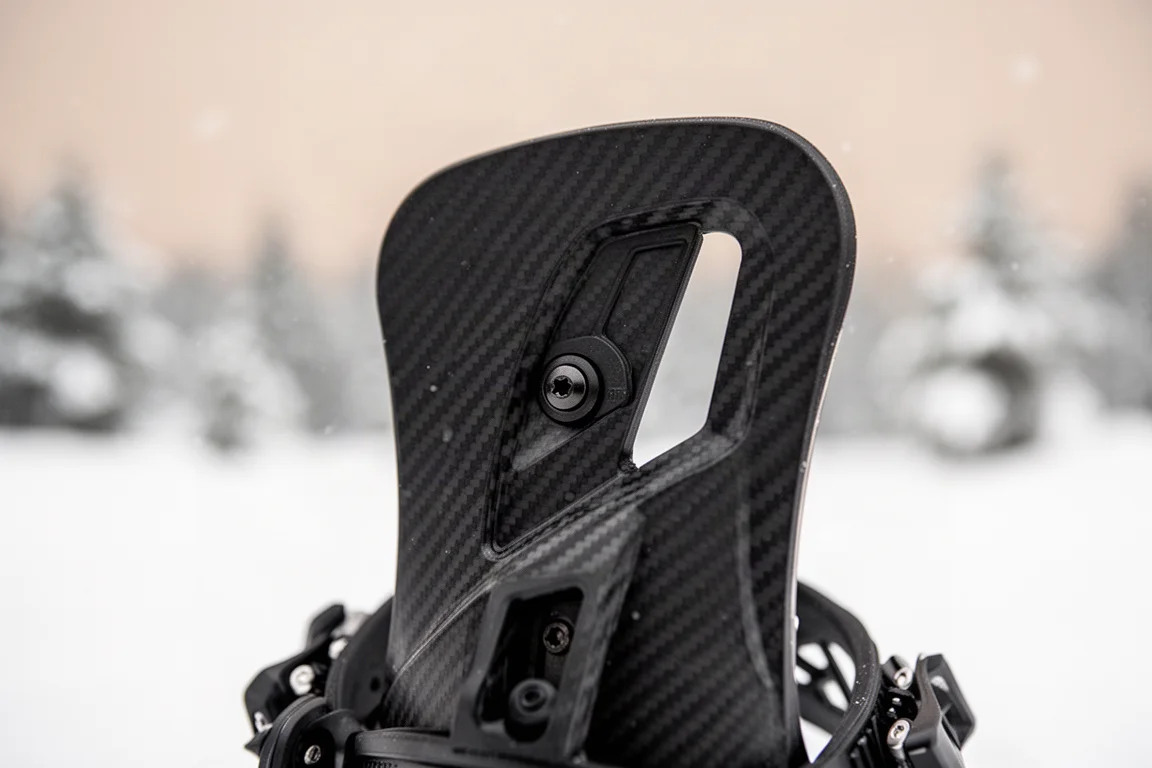
The carbon construction changes the ride character in a meaningful way. The highback is stiff and responsive with no real delay, and when you drive into it, you feel the power immediately. The binding is designed to be lighter and more reactive than the regular Supermatic, so if you found that version lacking in response, the Carbon compensates by adding more carbon underfoot.
Power transfer is strong from toe to heel thanks to a large disc and a big chassis, and lateral performance has improved as well, partly due to the way the straps are shaped. There is also less lateral play in the design, which means you are not compensating for a dead spot the way you might with softer bindings. This is a lively, precise binding rather than a damp one: you feel more of the kinetic energy coming up through it, and the carbon amplifies that sensation.
Setup is simple and set-and-forget. Adjustments are limited to flip tabs for lengthening or shortening the heel and toe straps, a set screw for forward lean, and three toe ramp positions to center the ramp under your boot. That small adjustment range suits a binding you set once and then leave alone all season.
Things to Consider Before Buying
The strap system is a three-strap setup: two heel straps and one toe strap. The lower heel strap guides and locks the boot in and should be set a bit looser, while the upper strap does the holding. It feels like a regular strap, just slightly beefier than the standard Supermatic’s. The toe strap’s shaped webbing encapsulates a wide range of boot shapes and grips well, though there is still a little lateral give with the toe strap. The molded heel strap has some padding for absorption over the instep, but not a lot.
The ratchets work well and release exactly as you would want, but the redesign requires you to engage the release tab and guide the strap in more aggressively before it will climb. Simply feeding it in does not work. Unlike the regular Supermatic, there is no locking mechanism to hold the strap in place once ratcheted. There is a tiny bit of play in the ratchets, but not enough for most people to notice.
The biggest trade-off is ride feel. This binding is not damp. You will feel a lot of that kinetic energy coming up underfoot, and it was noticeable in the back at the end of a full day. If you prefer a plush, absorbent ride, the regular Supermatic is likely the better match. Entry also takes adjustment: coming from conventional two-strap bindings, you need to learn different muscle memory, and bulky boots add resistance when pushing in.
Ride Feel and Performance
On snow, the binding rewards aggressive riding. When you really drive into it, you feel it react: there is more power and a bit more precision than the standard version, and there is no real delay between input and response. The carbon is tuned to be lighter, more rigid, and more responsive, and that is exactly what you get.
The design keeps excess moving parts to a minimum to shed weight while retaining carbon response. The flip tab on the highback is gone, replaced by an interior set screw for forward lean, which makes sense for a binding you set and forget. You still check your screws, but nothing here is meant to be tweaked on the fly.

This is not the binding for someone who needs damping or a forgiving, playful character. It is a precision tool for riders who want the binding to perform and are willing to accept a livelier, more rigid feel in exchange.
Buying Advice
For riders seeking an ease-of-entry binding that does not limit boot choice, this is a genuinely strong option. Nidecker’s drop-in technology is well ahead of comparable systems in this space, and it does not lock you into specific boots. This generation has been refined again with added carbon, lower weight, and better response, and the concept is a solid one.
There is essentially nothing else on the market that works the same way. Rear-entry bindings from brands like Flow are the closest comparison, along with fast-entry speed-strap systems. Claims that this behaves like other step-in systems do not hold up: it flexes differently and rides more like a normal binding.

If you pick up a pair, take the time to set them up properly before heading to the slopes, and give yourself those first few days to relearn entry and exit. Once that muscle memory is in place, the system makes sense.
Conclusion
The Nidecker Supermatic Carbon is a refined, responsive take on the rear-entry binding idea. It trades some damping for power, precision, and lower weight, and its boot compatibility remains its biggest advantage over competing step-in systems. It is not for every rider, but for heavier or precision-focused riders who want easy entry without performance limits, it is one of the better options available.
Product link
View more details for Nidecker Supermatic Carbon
This product is mentioned in the review. Check the specifications, options, and compatibility before buying.
View more details for Nidecker Supermatic CarbonFurther reading
Related Reviews

Snowboard Bindings
2024 Union Ultra Snowboard Bindings Review: A Cushy, Freestyle-Focused Favorite
Two seasons on the 2024 Union Ultra: a lightweight, tweakable freestyle binding with standout comfort, a damp molecular bushing, and thoughtful hardware fixes.

Snowboard Bindings
32 Team Phase Binding Review: A Fast Entry Binding Built for Freestyle Laps
The first binding from 32 uses the Phase chassis for quick step-in entry with a softer, freestyle-leaning flex. Here's how it performed on the snow.

Snowboard Bindings
Arbor Cypress Snowboard Binding Review: A Laid-Back Cruiser That Can Charge
A closer look at the Arbor Cypress binding's adjustability, strap feel, and that oddly tall highback before you decide to buy.