Snowboard Boots
Nidecker Rift Review: A Freestyle-Friendly All-Mountain Boot Worth a Look
A close look at the Nidecker Rift's shell, Ascent sole, double Boa lacing, and silver heat-moldable liner, plus the trade-offs to know before buying.
Introduction
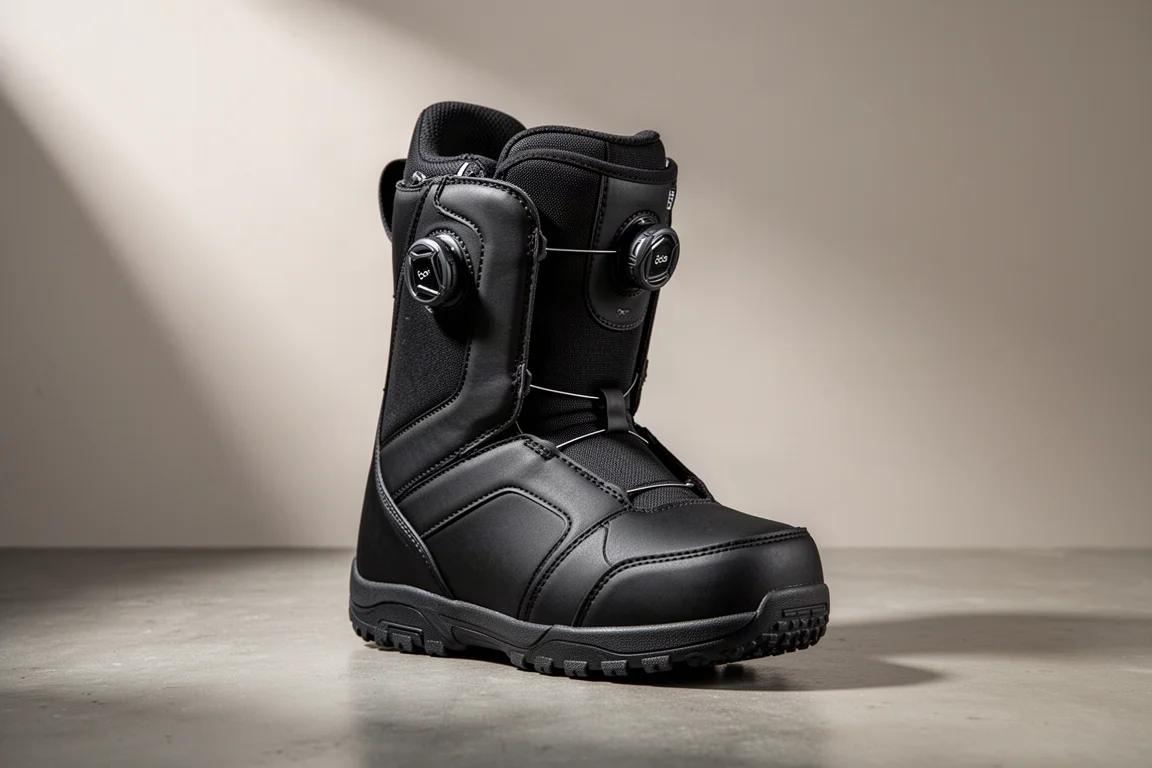
The Nidecker Rift is a boot that quietly earns attention. Nidecker has invested heavily in its boot line in recent years, and the Rift shows that investment across the shell, the lacing, the sole, and the liner. It is positioned as a slightly softer, quicker-to-break-in sibling in the lineup, aimed at riders who want ankle articulation and freestyle friendliness without giving up all-mountain versatility.
As always, the best boot is the one that fits your foot and fits your needs. Get sized properly first, then consider whether the Rift’s features line up with how you ride.
Shell Construction and Durability Notes
The most prominent shell feature is a large TPU toe cap. It adds protection at the forefoot, but it comes with a double stitch seam that sits right where a toe strap crosses. Cranking the strap down hard may make that seam noticeable, and over time it can pull a little and potentially separate. There is also double stitching along the front near the lacing, so riders who drag their board across the toes could eventually cause fraying. Realistically, that kind of wear usually comes down to riding style rather than a fault in the boot.
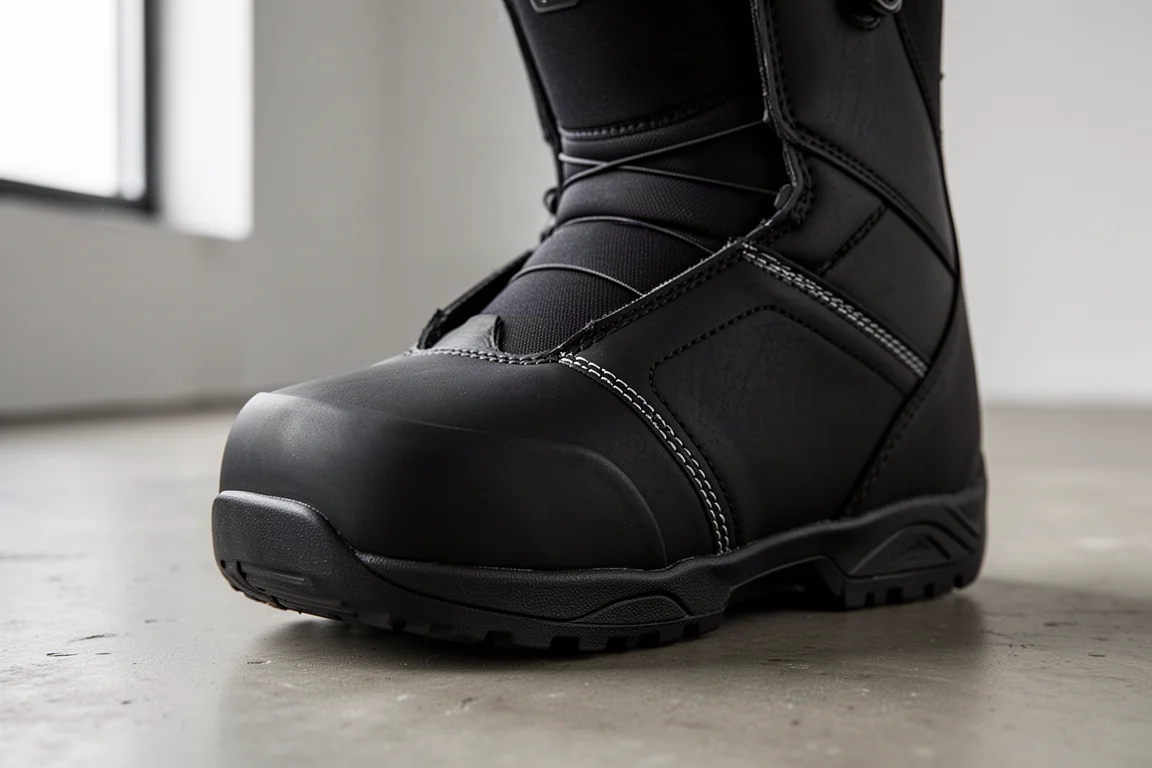
The cuff is articulated and starts out very rigid, softening and flexing more as it breaks in. At the back, a multi-piece spine combines a lower rubber section that delivers strong drive and power transfer with a more rigid upper section, so you should feel the boot pushing back when you lean into a heelside turn. Riders with bigger calves get some relief from a generous cutout that lets the spine push outward.
Double Boa Lacing and Asymmetrical Design
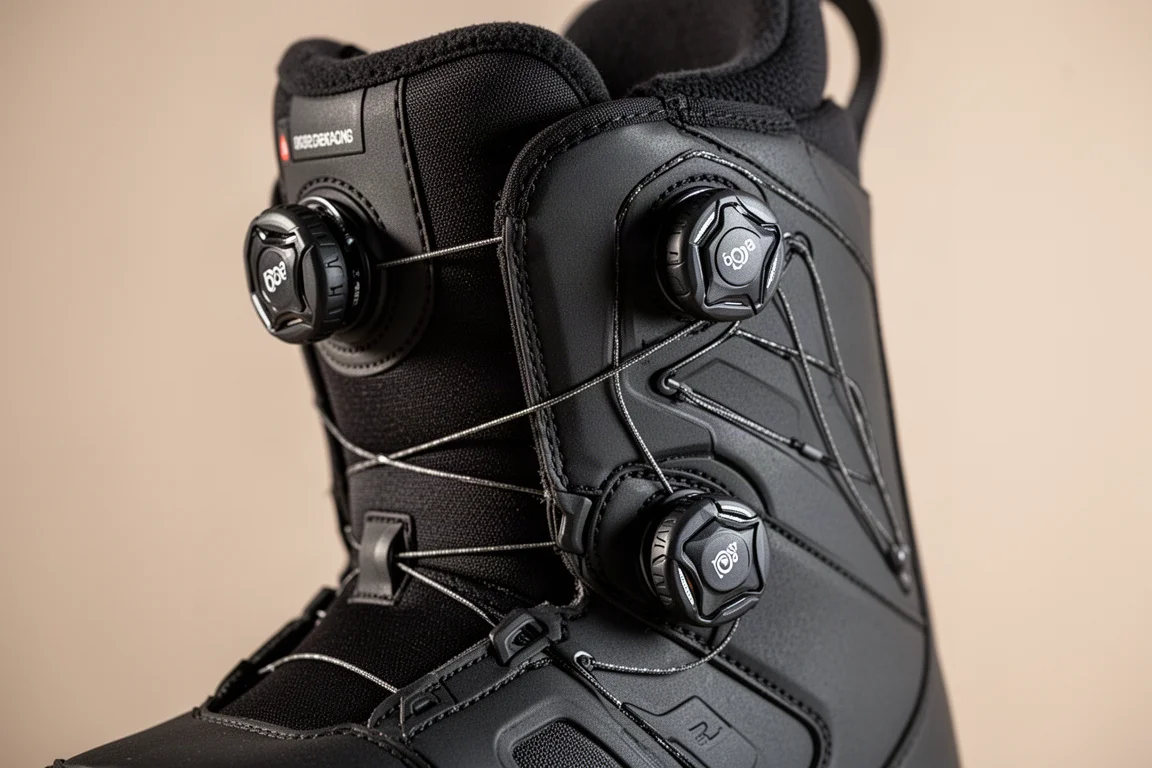
The Rift uses a double Boa setup: the front dial handles the upper zone and the side dial handles the lower zone. There is a clear definition right at the boot’s articulation point, which means you can run the lower zone tight while keeping the upper looser, or the reverse, and fine-tune the fit to taste.
The asymmetrical lacing is the smarter detail. Anyone who has ridden Boa for years knows the cable tends to pull toward the outside of the boot. The Rift’s asymmetric layout counteracts that and matches the body’s natural alignment on the board, where the angled front foot puts more pressure on the outside edge. The idea is better power distribution where it matters.
Ascent Sole: Grip Without the Washboard
The Ascent sole mixes rubber and foam. It is mostly rubber, with foam placed in the hollow sections. The result is strong grip and a smoother ride underfoot. There is some give, but plenty of rebound, so the sole does not collapse under hard landings, and additional foam helps absorb bigger impacts. On the whole, it is a well-built sole.
The Silver Liner: Fit, Foam, and Heel Hold
Inside the shell, an internal harness sewn into the shell comes up fairly high and drops very low, with a pull tab so you can cinch the liner down for a snug lockdown feel. The liner itself is Nidecker’s silver liner, a multi-density foam construction that is well worth heat molding. Softer, more malleable foam at the top pushes out to accommodate your leg, and the distinct foam zones visibly mark the different densities.
A butterfly wrap cradles the ankle bone and adds rigidity around the ankle, while softer white foam zones deform to your shape during heat molding. The catch is a pair of seams in that area; riders with sensitive feet may feel them. Aggressive Velcro at the top wraps around the tongue, which is worth considering if you have thinner calves.
Inside, low-friction materials help your foot slide in, and deep, aggressive J-bars hold the heel down in a slightly tighter heel pocket. The stock footbed is the weak point: if you ride more than five days a year, replace it with an aftermarket footbed and you will be glad you did.
Measurements (US 9 / Mondo 27)
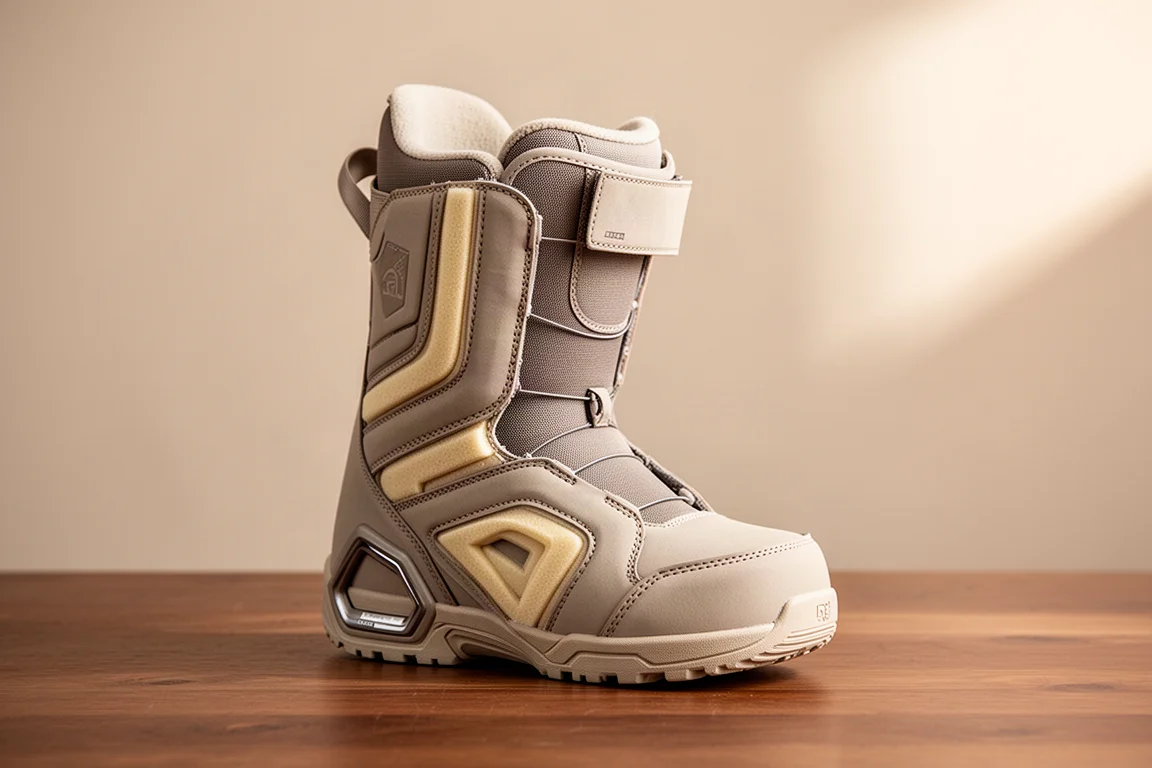
For those who like the numbers, the sample measured here is a US 9, equivalent to Mondo 27. At the back of the boot it measures about 10.75 inches, and slightly less at the front. Liner height is around 11.5 inches at the back and 11 inches at the front.
The shell measures roughly 4.25 inches wide at the foot at its widest section, and just shy of 12 inches toe to heel. The liner at the foot’s widest portion comes in around 4.75 inches, so it runs a touch narrower than the shell. Not dramatically narrow, just something to be aware of if you have wider feet.
Things to Consider Before Buying
The double stitching at the toe cap and along the front is the main durability question mark, particularly for riders who tend to drag their board across their toes. The liner’s foam seams may bother sensitive feet. The top Velcro wrap suits larger calves better and may leave room for riders with thinner calves.
Compared with the Rift Pro, the choice comes down to stiffness. The Pro is beefier and appeals to riders who want more support, while the standard Rift breaks in faster, offers quicker ankle articulation, and leans more all-mountain versatile while staying freestyle friendly.
Buying Advice
The Rift makes the most sense for riders who want a boot that breaks in without a long fight, values ankle mobility, and splits time between all-mountain riding and park laps. Nidecker’s boot program is one of the more solid offerings on the market right now, and plenty of riders are overlooking it. If the fit measurements above match your foot, it deserves a spot on your shortlist. Sizing and fit matter more than any feature list, so try before you buy if you can.

Conclusion
The Nidecker Rift pairs a power-driven multi-piece spine and a grippy, impact-resistant Ascent sole with a genuinely thoughtful double Boa and asymmetrical lacing layout. Its trade-offs are honest ones: a couple of double stitch seams to watch, liner seams for sensitive feet, and a stock footbed worth replacing. For riders seeking a softer, freestyle-friendly, all-mountain capable boot, it is one of the stronger options available today.
Product link
View more details for Nidecker Rift (Women's)
This product is mentioned in the review. Check the specifications, options, and compatibility before buying.
View more details for Nidecker Rift (Women's)Further reading
Related Reviews

Snowboard Boots
32 Team Two Double Boa Review: 32's Highest-End Women's Snowboard Boot
A closer look at 32's top-tier women's snowboard boot, from the 3D molded toe box and double Boa lacing to the Performance Fit liner and heat-reflective footbed.

Snowboard Boots
Bataleon Acid BOA Snowboard Boot Review: A Serious First Entry from a Board Brand
Bataleon's first snowboard boot, designed by a former Burton boot designer, brings a stiff flex, dual BOA closure, and a heel hold system worth a closer look.

Snowboard Boots
Battalion Acid Boot Review: A Stiff, Aggressive Boot Built to Last
The Battalion Acid Boot is the brand's highest-end offering, built with seamless construction, TPU reinforcement, dual BOA lacing, and a heat-moldable liner. Here is what to know before buying.