Snowboard Boots
Nidecker Rift Pro Women's Snowboard Boot Review: A Burlier All-Mountain Freestyle Option
The Rift Pro is Nidecker's beefed-up women's all-mountain freestyle boot, built for riders who charge hard. Here is what it offers, how it fits, and when the regular Rift makes more sense.
Introduction
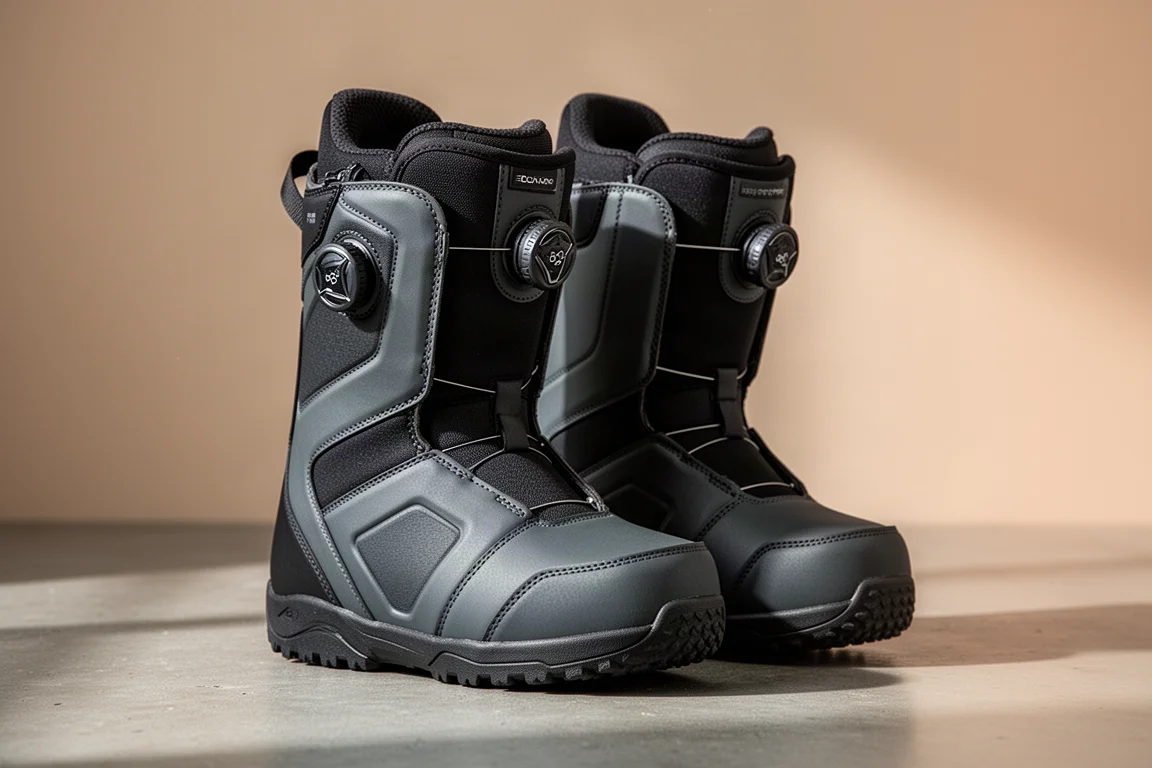
The women’s Nidecker Rift Pro is the beefed-up version of the regular Rift, positioned as Nidecker’s all-mountain freestyle boot for riders who put real pressure into their gear. This breakdown covers the shell, flex, outsole, lacing, liner, and fit, plus who each version of the boot actually suits. One note before diving in: if you are shopping online, it is still worth visiting a shop to get sized properly. The best boot is the one that fits your foot and your needs.
Shell and Flex: Built to Resist Breakdown
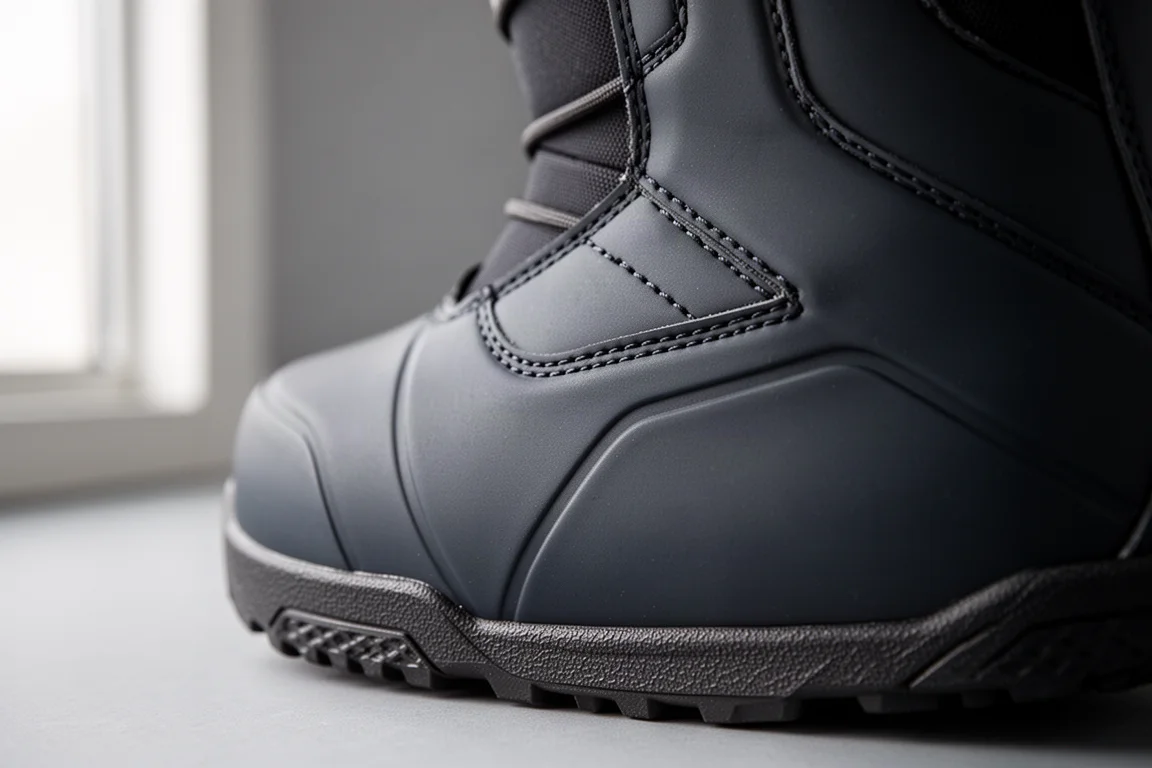
The lower shell is fully molded with no excess seams, which keeps the boot more rigid over time. It will not break in as fast as softer constructions, and when you crank your toe strap over the boot will not collapse in on itself. The only seams worth mentioning are the double-stitched ones around the lace seam and eyelets, and even those are recessed into the shell.
Ankle articulation is tuned so the forward flex works naturally with your anatomy. Compared to the regular Rift, the Pro is noticeably stiffer: you get more rebound, a taller rubber spine at the back, and more rigidity in the tongue. The result is a boot that pushes back when you drive into it, which makes it the more responsive of the two. At the top cuff there is a cutout with a bit of neoprene, so riders with a wider lower calf should still get comfortable give in that area.
Outsole: Grip and Impact Damping
The Rift Pro uses Nidecker’s Surface outsole with generous rubber coverage and dedicated impact points that dampen the harsh kinetic energy that travels up through the boot when you ride over choppy terrain. The tread pattern is designed to grip better on ice, so you are less likely to slide around on frozen patches in the parking lot or on cat tracks.
A thicker heel pad at the back sits you slightly higher in the boot, which helps absorb landings when you are coming down from bigger features in the park or charging through freeride lines. Together, these details give the boot a more aggressive, durable character than a typical women’s park-oriented soft boot.
Lacing: Dual Boa with Asymmetrical Pull
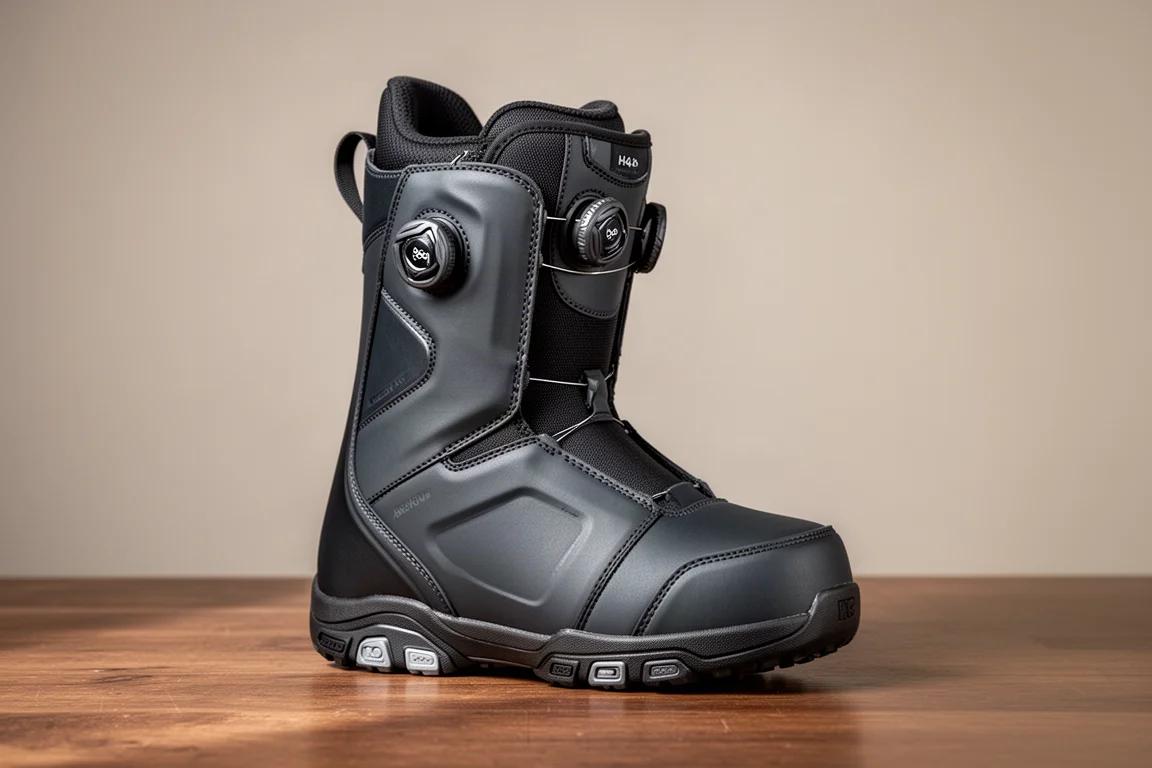
Lacing is dual Boa. The upper H4 knob controls the top portion of the boot, while the M+2 dial on the side controls the lower zone. That means you can run the lower looser and the upper tighter, or the reverse, and fine-tune the fit zone by zone.
The boot also features asymmetrical lacing, which pulls naturally toward the outside of the boot. Since your front foot puts more pressure on the outer edge, this compensates for the way a traditional boot would let the tongue shift under load. The tongue stays put, which helps you drive into the boot more effectively and keeps the power transfer consistent.
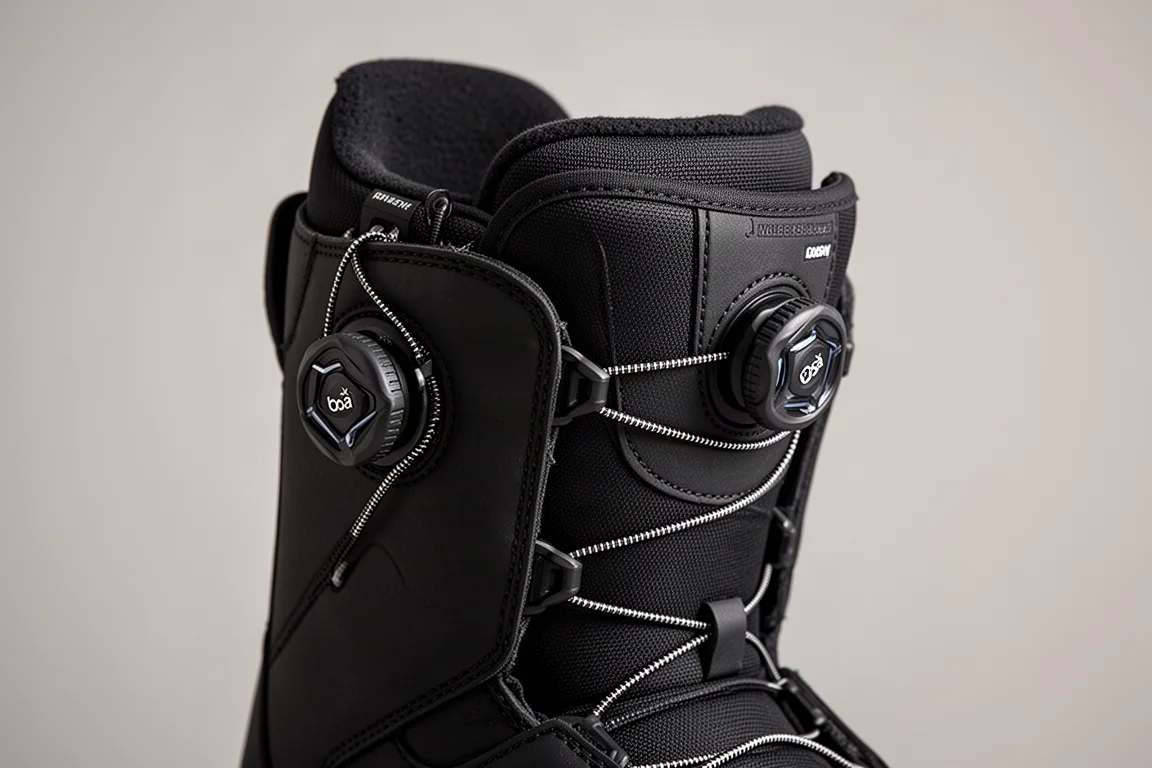
Inside the shell, an internal harness is sewn in low and comes up higher than on many other boots. That locks the liner down, improves heel hold, allows a cleaner flex, and adds overall performance. The integrated drawstring is easy to use as well.
Liner and Footbed: Heat Moldable, But Swap the Stock Footbed
The liner is a heat-moldable silver liner with multiple foam densities, making it slightly more rigid and responsive than a single-density liner. Getting it heat molded is recommended, as it speeds up the break-in process. The back spine uses denser foam that transitions into a butterfly wrap at the heel for retention, while the toe uses a softer, more malleable foam to accommodate pressure points or extra toe volume.
Two trade-offs are worth knowing. First, there are two seams in the liner that riders with very sensitive feet may feel. Second, the heel pocket is deep but U-shaped rather than an aggressive V, so wider heels should be comfortable while very narrow heels may find it slightly too roomy. A Velcro tab on the liner tongue holds it in place, which is a nice touch.
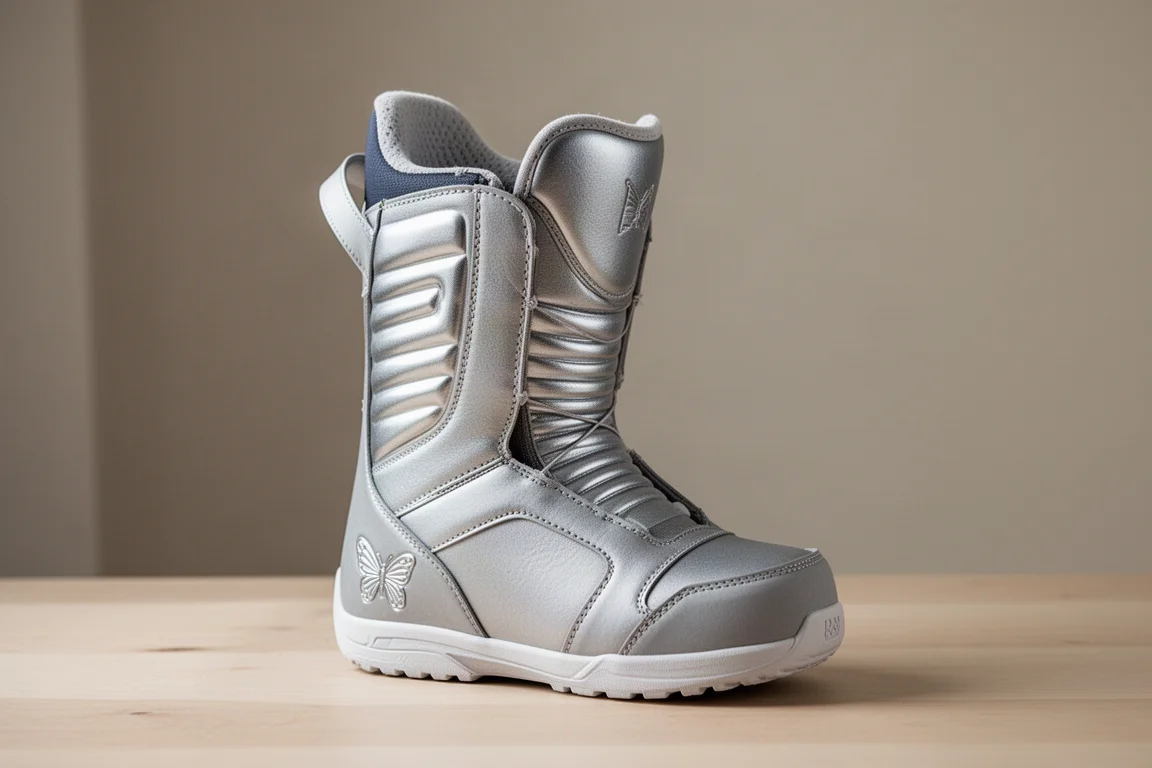
The stock footbed provides next to no support. If you ride more than five days a year, replacing it with an aftermarket footbed matched to your arch height and width will make the boots fit noticeably better over the long run.
Fit and Measurements
Measured in a US women’s size 7 (25 mondo) at the rear of the boot:
- Back height: about 10.25 inches at the rear, just under 10 inches at the front
- Back of the boot: 10 inches; front of the boot: just under 10 inches
- Shell forefoot width: 4 inches
- Toe-to-heel length: 10.5 inches
- Forefoot width measured from the 1-inch mark: just under 5 inches, or about 3.75 inches
The takeaway is that this boot runs a little narrower in the forefoot, so riders with wide feet should factor that in before ordering.
Who the Rift Pro Is For
This is a boot for women who charge hard, put a lot of pressure into their boots, and demand real performance. A lot of high-end women’s boots historically have not been designed for genuinely rugged riders, but the Rift Pro goes the other way: heavy TPU in the shell, durable materials, and a construction meant to last longer and stay burlier under hard use.
The Alternative: Nidecker Rift
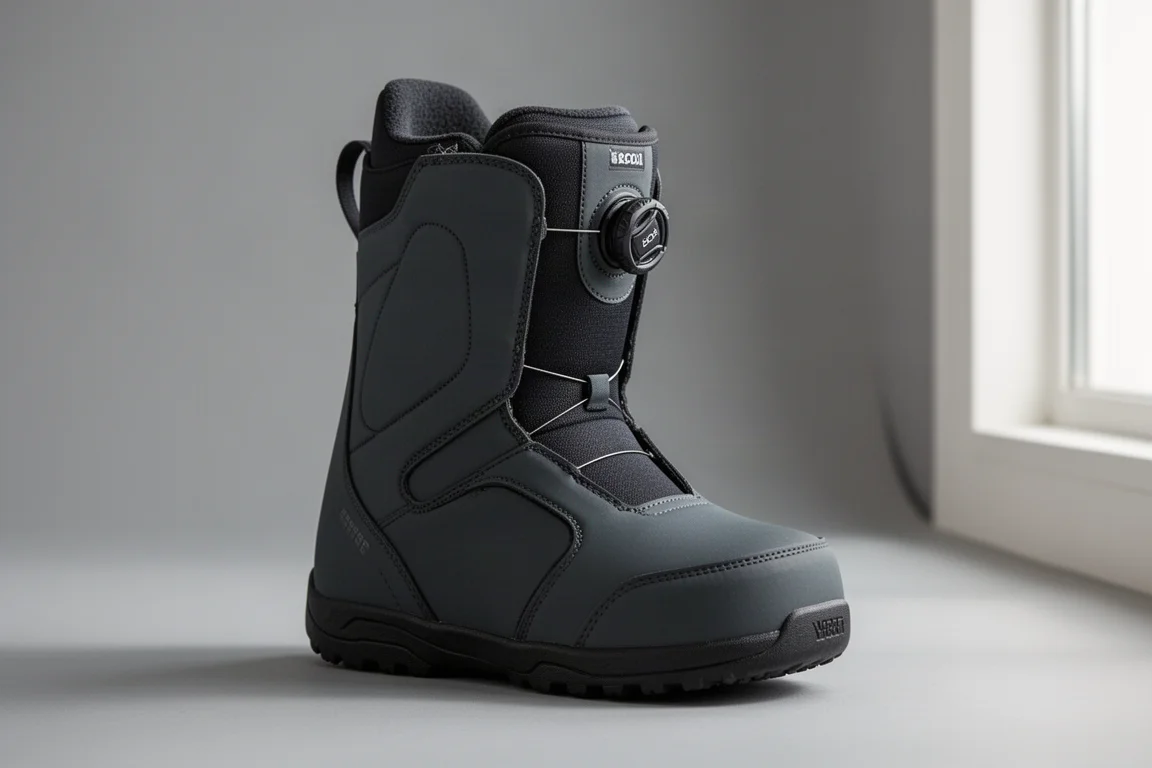
If the Rift Pro sounds like too much boot, the regular Rift is the better starting point. It is a good all-around boot from Nidecker with a softer, more forgiving character, and it suits riders who want the same brand DNA without the stiffer, more demanding flex of the Pro.
Buying Advice: Pro or Regular Rift?
Choose the Rift Pro if you ride aggressively, value response and durability, and want a boot that will not pack out quickly. Choose the regular Rift if your riding is more casual or all-around and a softer flex sounds more comfortable. And whatever you decide, prioritize fit above every feature on the spec sheet.
Conclusion
Nidecker has put genuine design effort into the Rift Pro, from the molded seam-free shell to the dual Boa system and heat-moldable liner. For hard-charging women who want an all-mountain freestyle boot built to last, it is an easy recommendation. Riders after a gentler ride should simply step down to the regular Rift.
Further reading
Related Reviews

Snowboard Boots
32 Team Two Double Boa Review: 32's Highest-End Women's Snowboard Boot
A closer look at 32's top-tier women's snowboard boot, from the 3D molded toe box and double Boa lacing to the Performance Fit liner and heat-reflective footbed.

Snowboard Boots
Bataleon Acid BOA Snowboard Boot Review: A Serious First Entry from a Board Brand
Bataleon's first snowboard boot, designed by a former Burton boot designer, brings a stiff flex, dual BOA closure, and a heel hold system worth a closer look.

Snowboard Boots
Battalion Acid Boot Review: A Stiff, Aggressive Boot Built to Last
The Battalion Acid Boot is the brand's highest-end offering, built with seamless construction, TPU reinforcement, dual BOA lacing, and a heat-moldable liner. Here is what to know before buying.