Snowboard Bindings
Nidecker Orbit Snowboard Binding Review: A Playful, Softer-Flexing All-Mountain Binding
The Nidecker Orbit leans playful with adjustable footbeds, toolless straps, and a forgiving flex. Here is how it rides and who should buy it.
Introduction
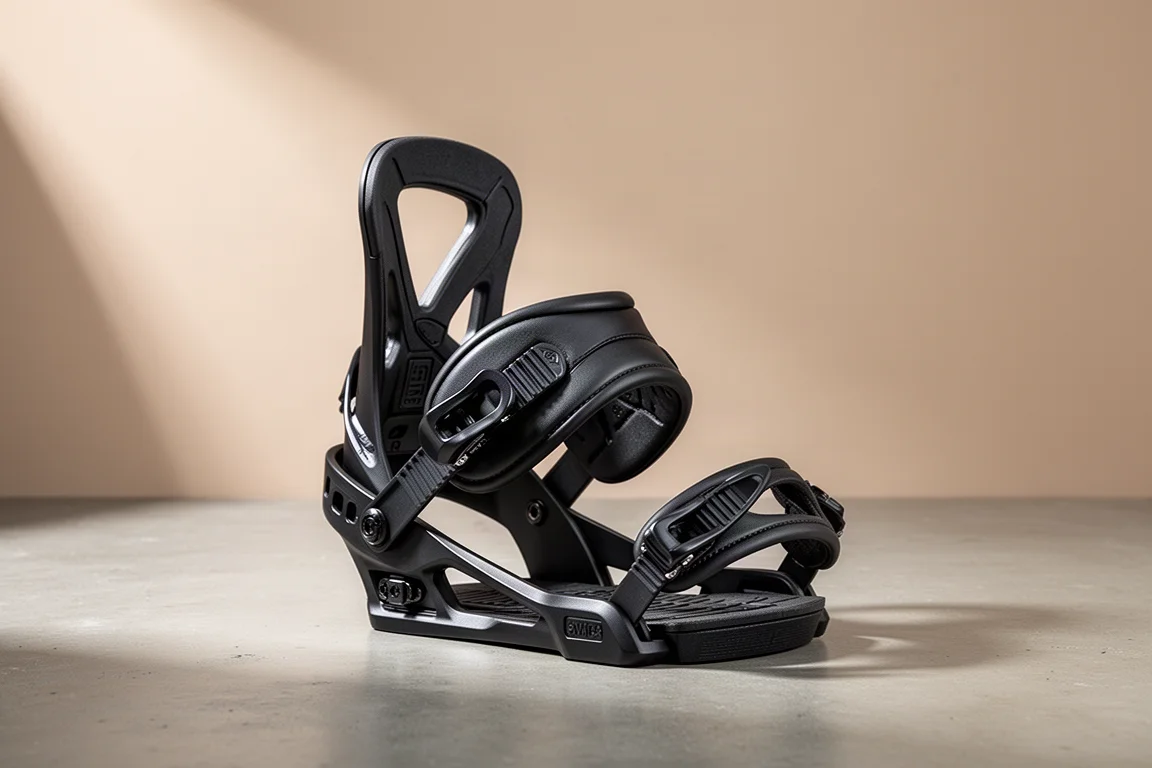
The Nidecker Orbit arrived with a modest goal: take a proven binding formula, keep it simple, and fix the complaints riders had with the previous generation. After a full day on firm, chattery snow at Copper Mountain, the Orbit comes across as exactly that. It is a softer-flexing, playful binding that trades maximum response for comfort and versatility, and it does most of what it promises without drama.
Testing conditions were worth noting. The day started with hard, icy patches and abundant chatter, then softened enough to trust edges in tighter sections. That mix is actually a useful proving ground: soft bindings on firm snow usually expose every weakness in dampening, and the Orbit held up reasonably well there.
Adjustability: Mostly Toolless and Genuinely Easy
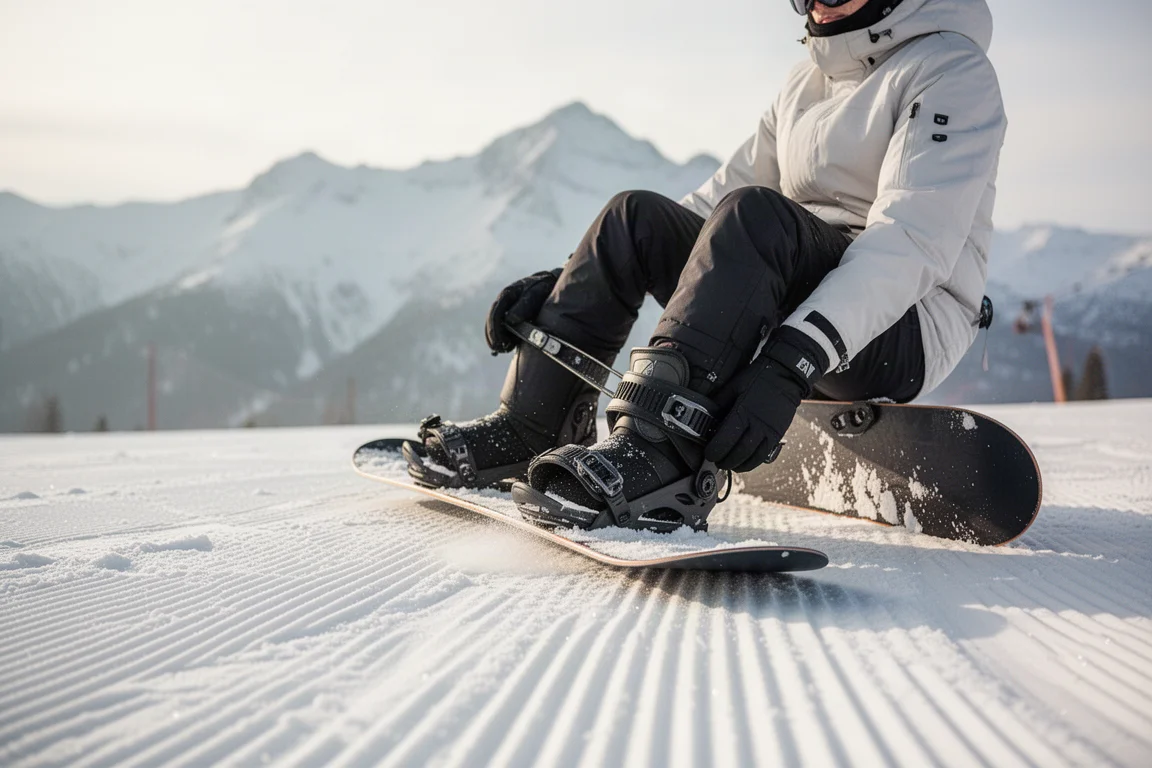
Most of the adjustment on the Orbit is toolless. Both straps use flip tabs with numbered settings, so you can dial in one foot and mirror it on the other. The toe strap uses a two-position push-pull system, letting you choose whether it wraps over the toe or sits on top. That is personal preference rather than a performance hierarchy.
The highback gets its own toolless flip tab for forward lean, so you can change it on the fly. Centering the heel cup does require a screwdriver for two ankle screws, but it is straightforward, with one caveat: when removing those screws, take them almost all the way out and make sure the internal hold pieces line up perfectly, or you will have a bad time.
The most unusual feature is the adjustable footbed. The heel is a separate piece from the toe, so you can slide each independently to match your boot size and find the perfect stance position. It takes a little getting used to. The first one is fiddly; the second one takes seconds. If you are skeptical, it is worth trying in person before buying, but the concept makes sense once you handle it.
Straps and Ratchets: Solid with One Early Quirk
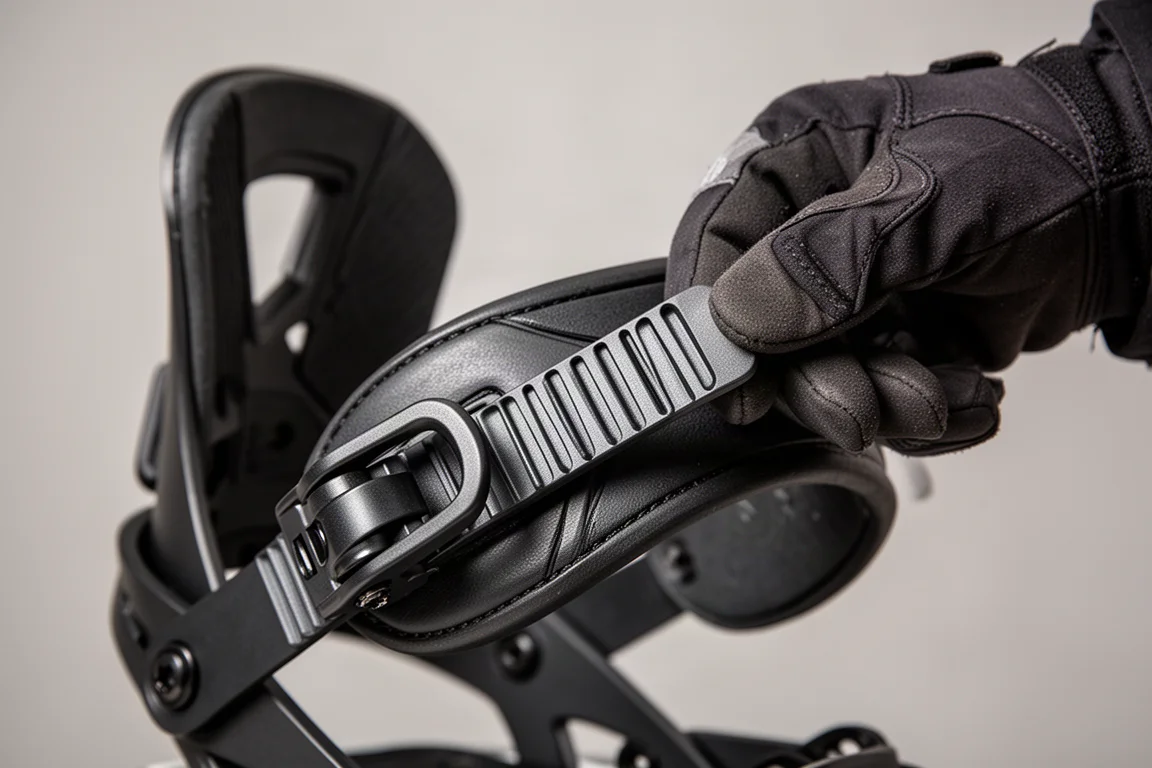
The ankle strap is big, molded, and solid. Toe-to-heel it felt responsive and secure. Laterally it is softer than expected, which gives a bit of playful give rather than a locked-in, rigid feel. That suits the binding’s overall character.
The toe strap was trouble-free. Tested both over the toe and on top, it gripped a square toe box extremely well, and no pressure point could be produced even when deliberately trying to find one.
The ratchets are easy to grip with mittens and large enough for confident entry. One quirk appeared on the first run: when cranked fully down with no clicks left, the release stuck slightly. A firmer pull freed it, and the issue faded as the day went on, likely due to cold, brand-new buckles settling in. By the afternoon, entry and exit were easy and consistent.
One thing to know: the straps and chassis have no padding. Any comfort comes from your boot. Riders with blown-out boots will feel more through the binding than testers did.
Flex and Dampening: Softer Than the Middle of the Road
The highback is wide but torsionally soft, and it does not interfere with side-BOA boots. It matches the softer straps well, allowing tweaks, presses, and butters without hindering movement. Grabbing a method or cranking a mute requires no fight from the binding.
Overall flex sits slightly softer than the middle of the road. A softer highback, lateral play in the straps, a full foam bottom, and a lower side chassis that grips the boot less high all contribute. The board flexes naturally underneath without creating a dead spot.
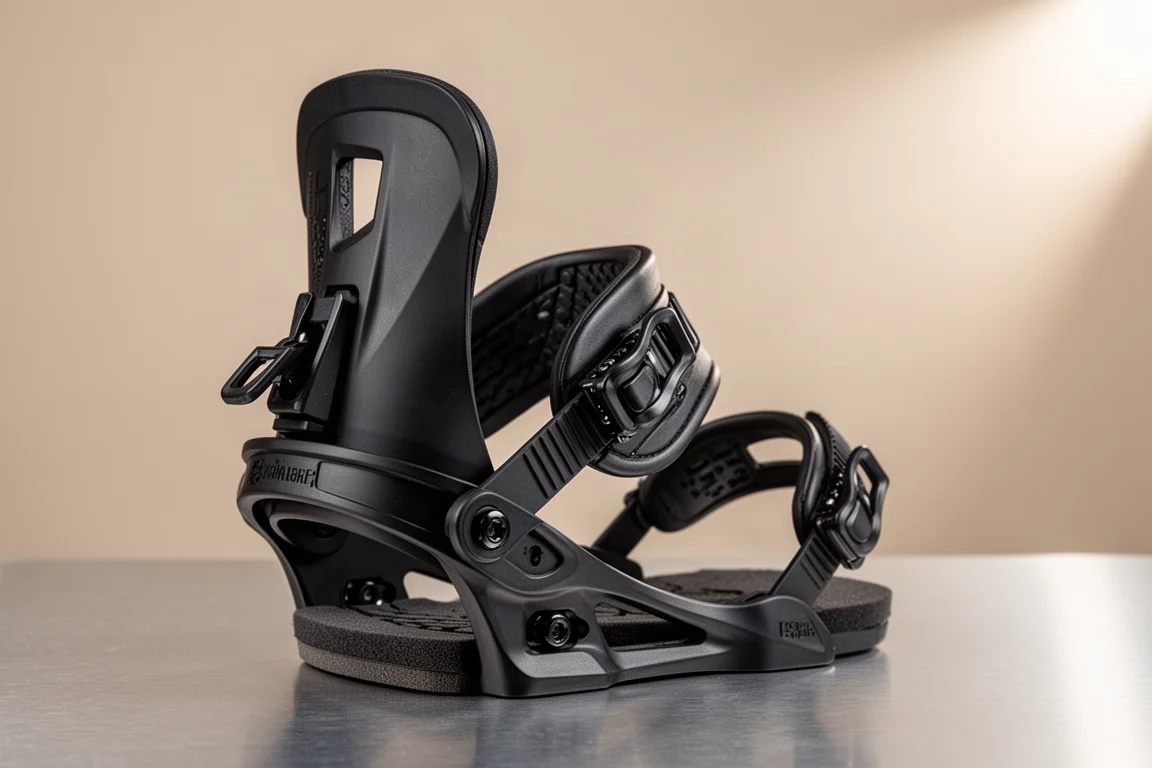
Dampening is where the Orbit shows real improvement over its predecessor. The earlier model left riders feeling firm days in their knees and back. Here, full-coverage foam under the foot helps take the edge off vibration. It still rides lively rather than plush, and anyone chasing a seriously damp binding should look at other brands. But for riders who do not need maximum dampening, it is a solid option and a clear step in the right direction.
Who the Nidecker Orbit Is For
This is a binding for playful riders, not all-out chargers. It suits someone getting into the park, or a rider who wants a softer binding for a powder board. If you want to feel locked in and stiffened up for charging everywhere, this is not that binding.

Against comparable bindings like the K2 Bond, Union Ultra, and Jones Nebula Phase, the Orbit stands out on adjustability and ease of use. The adjustable footbed is unusual and slightly awkward at first, but the rest of the package, including the low-profile toe strap, molded ankle strap, and simple heel cup adjustment, follows a well-established formula that works. It is a strong step forward from Nidecker’s previous bindings and a promising sign for what comes next.
Conclusion
The Nidecker Orbit is an easy-to-adjust, softer-flexing binding that prioritizes playful riding over raw response. The toolless adjustments, forgiving straps, and improved dampening make it a comfortable daily driver for park laps and mellow all-mountain riding. If that sounds like your style, it is a straightforward recommendation. If you want a stiff, locked-in charger or a truly damp ride, comparable bindings may suit you better.
Product link
View more details for Nidecker Orbit
This product is mentioned in the review. Check the specifications, options, and compatibility before buying.
View more details for Nidecker OrbitFurther reading
Related Reviews

Snowboard Bindings
2024 Union Ultra Snowboard Bindings Review: A Cushy, Freestyle-Focused Favorite
Two seasons on the 2024 Union Ultra: a lightweight, tweakable freestyle binding with standout comfort, a damp molecular bushing, and thoughtful hardware fixes.

Snowboard Bindings
32 Team Phase Binding Review: A Fast Entry Binding Built for Freestyle Laps
The first binding from 32 uses the Phase chassis for quick step-in entry with a softer, freestyle-leaning flex. Here's how it performed on the snow.

Snowboard Bindings
Arbor Cypress Snowboard Binding Review: A Laid-Back Cruiser That Can Charge
A closer look at the Arbor Cypress binding's adjustability, strap feel, and that oddly tall highback before you decide to buy.