Snowboard Bindings
Nidecker Kon CX Review: A Stiff, Responsive Freeride Binding
The Nidecker Kon CX is the brand's stiffest binding. Here is how its carbon highback, three-strap design, and large base tray perform in real spring conditions.
Introduction
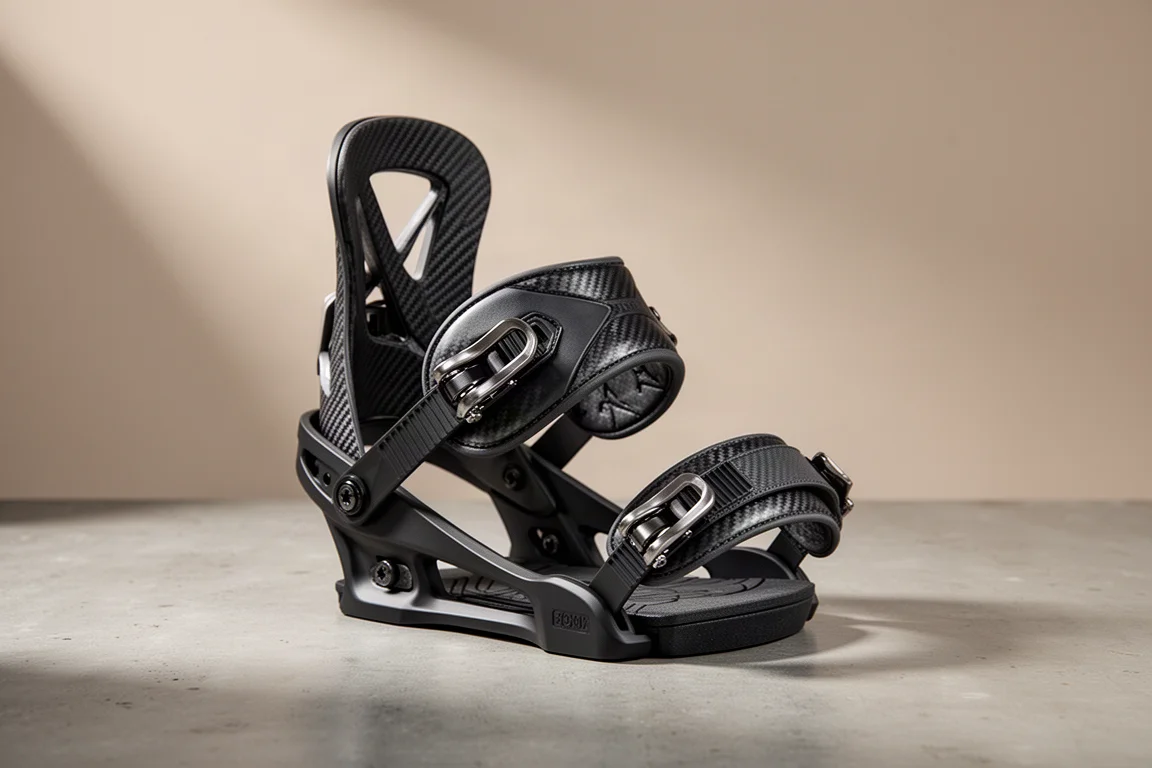
The Nidecker Kon CX sits at the top of the brand’s binding range, and Nidecker positions it as its stiffest option. It is a freeride-oriented binding built around a carbon highback and a large base tray. This one was ridden through a warm spring day at Arapahoe Basin, in a mix of slush, ice, and chopped chunder, paired with a Telos Mike Ranquet board and K2 Thraxis boots.
The short version: this is a very stiff, very responsive binding that still manages a smooth and predictable feel underfoot. The three-strap design is the standout detail, and the limited adjustability is the main trade-off to weigh up.

Riders who want maximum power transfer and a locked-in ride will find plenty to like here. Riders who prefer a softer, more playful binding, or who insist on a mini disc baseplate, should look elsewhere.
Who the Nidecker Kon CX Is For
This binding is aimed at the hard-charging rider who wants to be aggressive on the mountain. It is stiff and responsive, but it is not so overly demanding that it feels like work to ride. The response has a smooth quality to it: ask for the toe edge and you get the toe edge, ask for the heel edge and you are straight back on the heel edge.
It is also a natural fit for freeride riders who like a larger dead spot underfoot and want more power driven directly down into the board. The design effectively behaves like an extension of your ankle and boot working together.
If you are the type of rider who does not care that it lacks a mini disc, and you actually prefer a bigger dead spot with more direct power transfer, this binding is squarely in your lane. If a mini disc is a requirement, you will need to look at other models.
Main Strengths: Stiff Carbon Highback and Immediate Response
The highback is the defining part of this binding. It is very rigid and very stiff, built from carbon, and it delivers a responsive ride the moment you load it up. Even at zero, the forward lean already carries a few degrees, so the binding is gently pushing you forward before you ever touch the adjustment.
On a heel-side turn you feel the highback engage and drive that power straight down into the heel cup, which locks you in. On the toe side, that built-in forward lean helps you drive into the strap a little more efficiently.
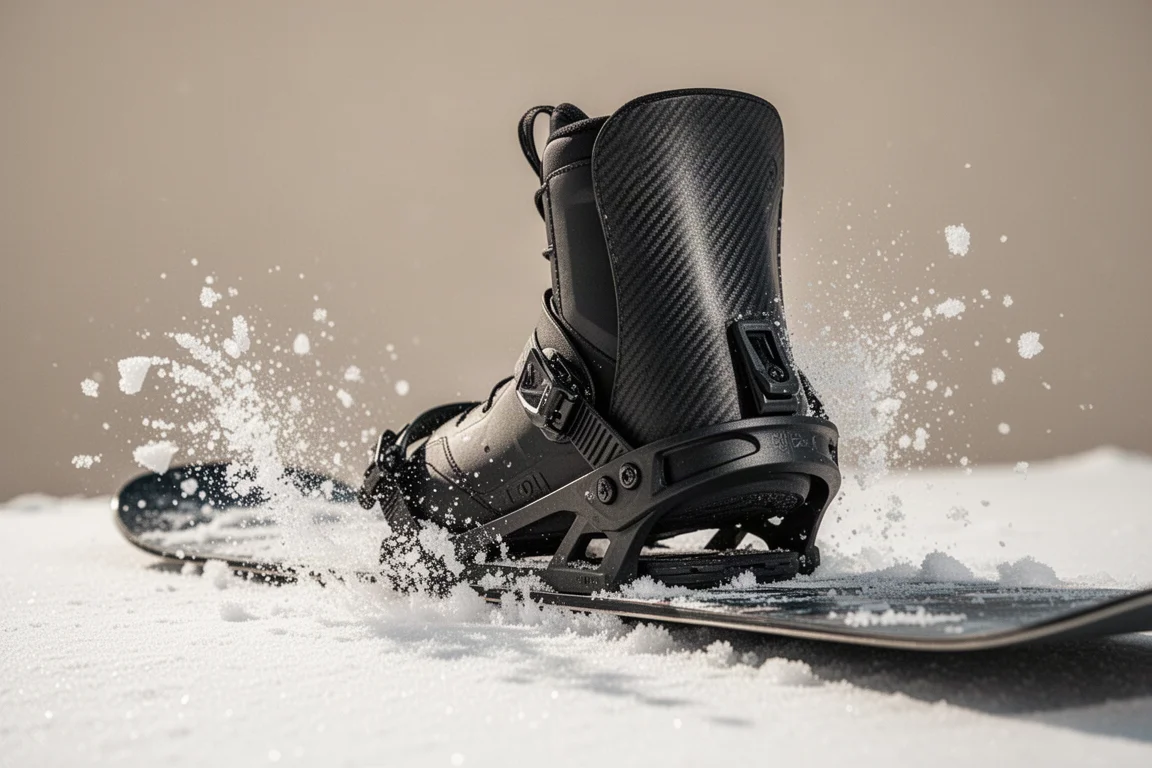
The result is a binding that feels responsive immediately, with a noticeable amount of power on tap. A good part of that comes from the sheer size of the base tray, which spreads your input across a broad platform and sends energy down into the toe and heel as well as laterally through the binding.
Three-Strap Design and Instep Pressure Relief
The most distinctive feature here is the three-strap layout. You get a toe strap plus a two-piece heel strap, an approach that carries over from the Flow binding design. The point of the split heel strap is to relieve instep pressure while keeping the performance character intact.
The middle flip cam lets you dial out pressure over the lower portion of the strap without giving up the top section, which is where you drive into the binding. In practice, that means you can keep the upper strap firmly engaged while the lower section stays comfortable across the top of your foot.
The toe strap is Nidecker’s Aux strap, and it wraps around a wide range of boots without fuss. The heel strap itself has no padding at all. It is one of the newer injection-molded designs, so all of your cushioning comes from the boot. When you push hard into it, you will feel that top pressure if you have set the middle strap to keep the instep clear. Riders who like to feel fully secure across the whole strap may prefer to leave it tighter and accept that firmer feel.
Ratchets, Base Tray, and Overall Ride Feel
The ratchets are burly. They release cleanly with a one-finger quick release tab, they climb exceptionally well, and they simply hold you in place. There is a locked-in quality to the whole system that you stop thinking about after the first run.
The base tray is huge, and that creates a large dead spot underfoot. For riders coming from older-school setups who want more power driven down into the board, that is a feature rather than a flaw. Power moves into the toe and the heel, and laterally as well, with very little binding roll. When you weight the outside or the inside of the binding, you feel it right away.
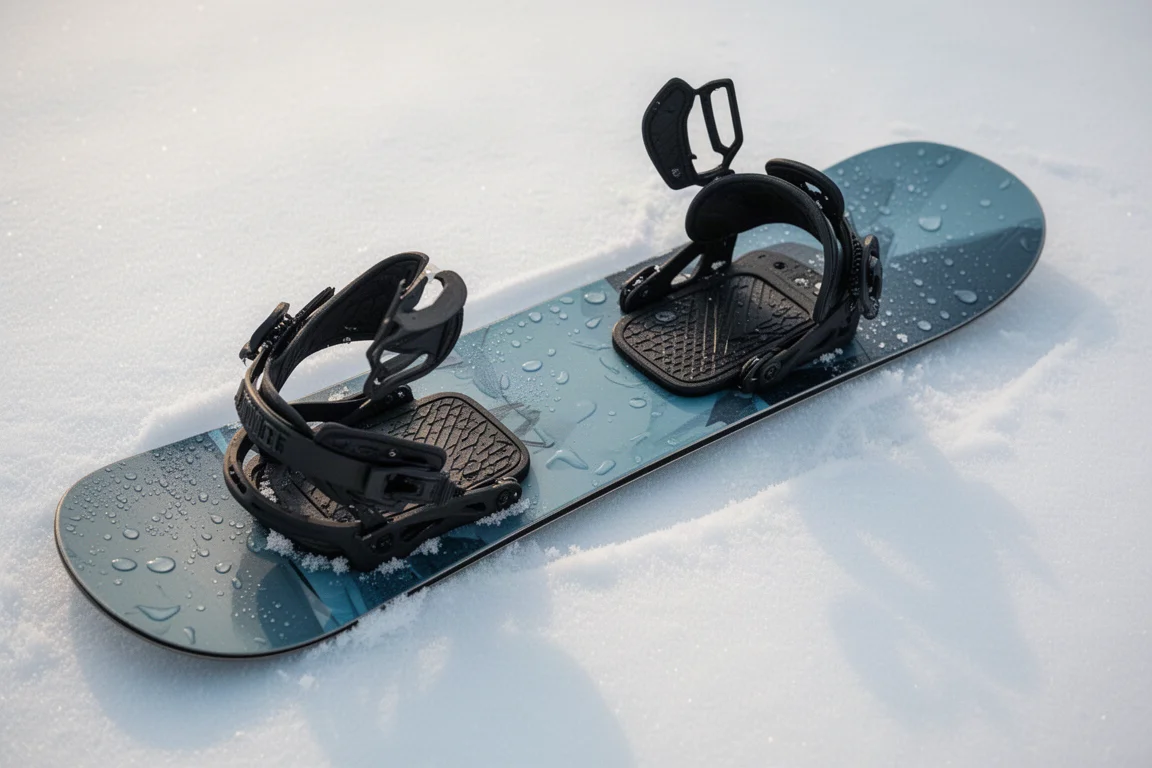
Underneath, a rubber foot pad covers the base plate. It does a good job as a dampening agent, but given how much carbon is in this binding and how it is laid out, the ride stays lively and responsive. You will feel some of that energy coming up underfoot, which is part of what makes the binding feel so connected to the board.
Things to Consider Before Buying
Adjustability is the clearest limitation. For a high-end binding, there is not much of it. You get three flip tabs on the strap, which you flip up and slide to set your position, plus the forward lean adjustment on the highback. That is the full list.
The unpadded heel strap is worth thinking about as well. Because all the padding comes from your boot, the feel under the top of the strap depends heavily on which boots you ride. A well-padded boot will soften the contact point considerably.
Finally, the large base tray and the resulting dead spot are a deliberate design choice, not a neutral one. Riders who want a mini disc and a smaller footprint underfoot will not find what they are looking for here, and riders who want a softer, more playful flex may find the stiffness is more than they want.
Buying Advice
The Kon CX makes the most sense if your riding is built around aggressive, hard-charging freeride laps and you want a binding that transfers power with as little loss as possible. The stiffness is substantial, but the response is smooth enough that it never feels punishing, which widens its appeal beyond pure experts.
Boot pairing matters more than usual because of that unpadded heel strap, so bring the boots you actually ride when you set it up. If you want a mini disc baseplate, this is not the binding for you, and it is worth cross-shopping other stiff freeride options such as the Bent Metal Solution or the Rome Cleaver.

If you are on the fence, the deciding question is simple: do you want a large platform underfoot driving power straight into the board, with a stiff carbon highback behind it? If the answer is yes, this binding delivers exactly that.
Conclusion
The Nidecker Kon CX is a stiff, lively, and highly responsive freeride binding with a genuinely useful three-strap design that takes pressure off the instep without sacrificing drive. The carbon highback and oversized base tray give it a direct, powerful feel, and the burly ratchets keep everything locked in.
The trade-offs are honest ones: minimal adjustability, no mini disc, and an unpadded heel strap that leans on your boot for cushioning. Riders who want an aggressive, hard-charging binding and do not mind a bigger dead spot underfoot will get exactly what they are looking for.
Product link
View more details for Nidecker Kon CX
This product is mentioned in the review. Check the specifications, options, and compatibility before buying.
View more details for Nidecker Kon CXFurther reading
Related Reviews

Snowboard Bindings
2024 Union Ultra Snowboard Bindings Review: A Cushy, Freestyle-Focused Favorite
Two seasons on the 2024 Union Ultra: a lightweight, tweakable freestyle binding with standout comfort, a damp molecular bushing, and thoughtful hardware fixes.

Snowboard Bindings
32 Team Phase Binding Review: A Fast Entry Binding Built for Freestyle Laps
The first binding from 32 uses the Phase chassis for quick step-in entry with a softer, freestyle-leaning flex. Here's how it performed on the snow.

Snowboard Bindings
Arbor Cypress Snowboard Binding Review: A Laid-Back Cruiser That Can Charge
A closer look at the Arbor Cypress binding's adjustability, strap feel, and that oddly tall highback before you decide to buy.