Snowboard Bindings
Nidecker KON Binding Review: A Lively All-Mountain All-Rounder
A solid, middle-of-the-road flex binding with a standout toe strap, easy on-the-fly adjustability, and one notable trade-off in underfoot damping.
Introduction
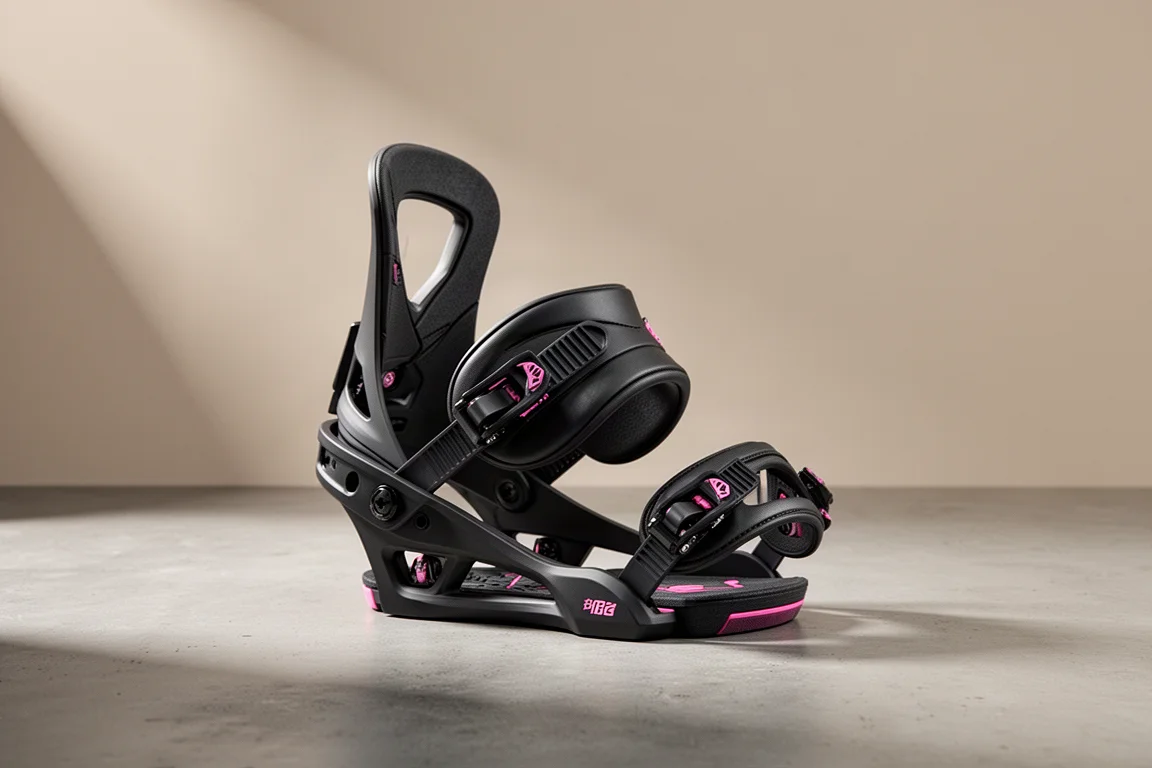
The Nidecker KON sits in the softest spot of the KON range, and it makes that position work. It is a middle-of-the-road binding, slightly stiffer than true medium, built for intermediate to advanced riders who want one setup that can handle the whole mountain rather than being pigeonholed into the park or pure freeriding.
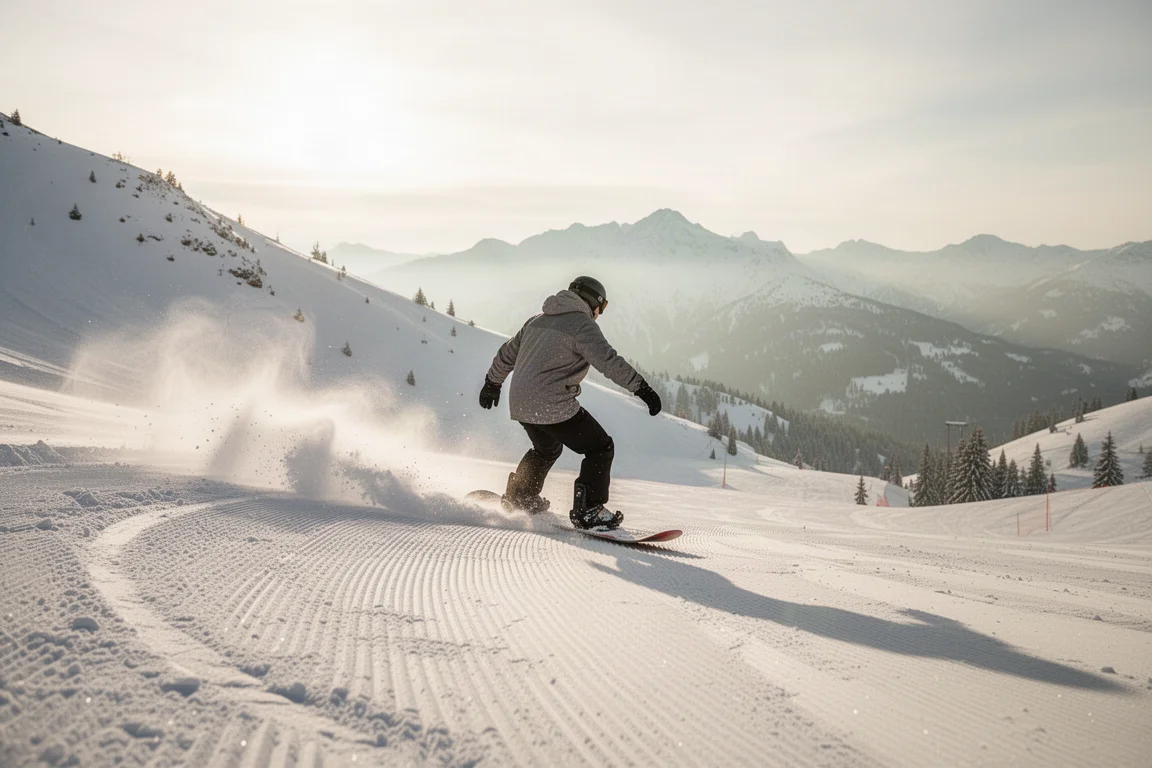
I rode it at Copper Mountain on a sunny day with just enough fresh snow to cover the slopes. The groomers were firm enough to lay an edge into without bleeding speed, and soft enough to trust anywhere. Paired with a Jones Stratos board and Ride Fuse boots, it was a good test bed for what this binding actually does well.
The short version: it is a genuinely solid binding in a crowded category, with one clear weakness in underfoot damping that is worth weighing before you buy.
Adjustability and Setup
Adjustability is where the KON is refreshingly simple. Almost everything runs on flip tabs, so you can make changes on the hill without carrying tools. The highback has a basic flip tab, and the forward lean adjuster flips on the fly. It is industry-standard stuff, but it works.
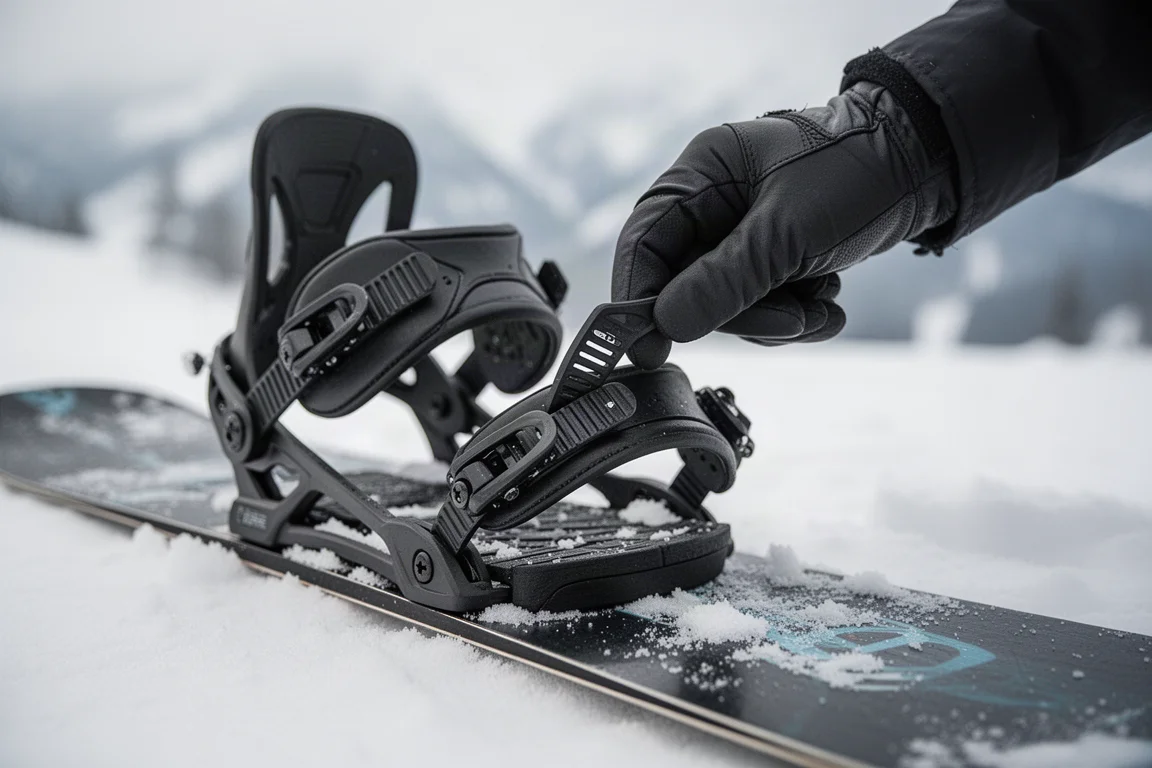
The strap adjustment tabs are stiffer, and there is a small practical note here: flipping them open by hand can catch your thumb. Using a screwdriver to pop them open is easier, though you can manage with mittens on if you are careful. The toe strap position is also adjustable. Push down, pull back, pull up, and you can run it either over the top of the toe or just over the front.
One design decision shapes setup: the KON uses a fixed heel cup. You cannot move the heel cup independently, so centering the binding on the board is done entirely with the disc, sliding it back and forth as needed. It is a minor constraint, but worth knowing if you are particular about stance setup.
Straps and Ratchets
The straps are molded rather than padded, so any cushioning comes from the boot itself. In practice, that did not hurt comfort at all. The ankle strap is huge, disperses pressure well, and flexes with a bit of side-to-side give that leaves room for tweaks and presses rather than locking you in rigidly.
The toe strap is the highlight. It stretches across the whole toe box, so even ratcheting to the last click, it keeps distributing pressure instead of concentrating it. Run over the front of the toe, it gripped a square toe box firmly with no slippage on flat landings. Zero pressure points, and a shape that should fit rounded toe boxes especially well.
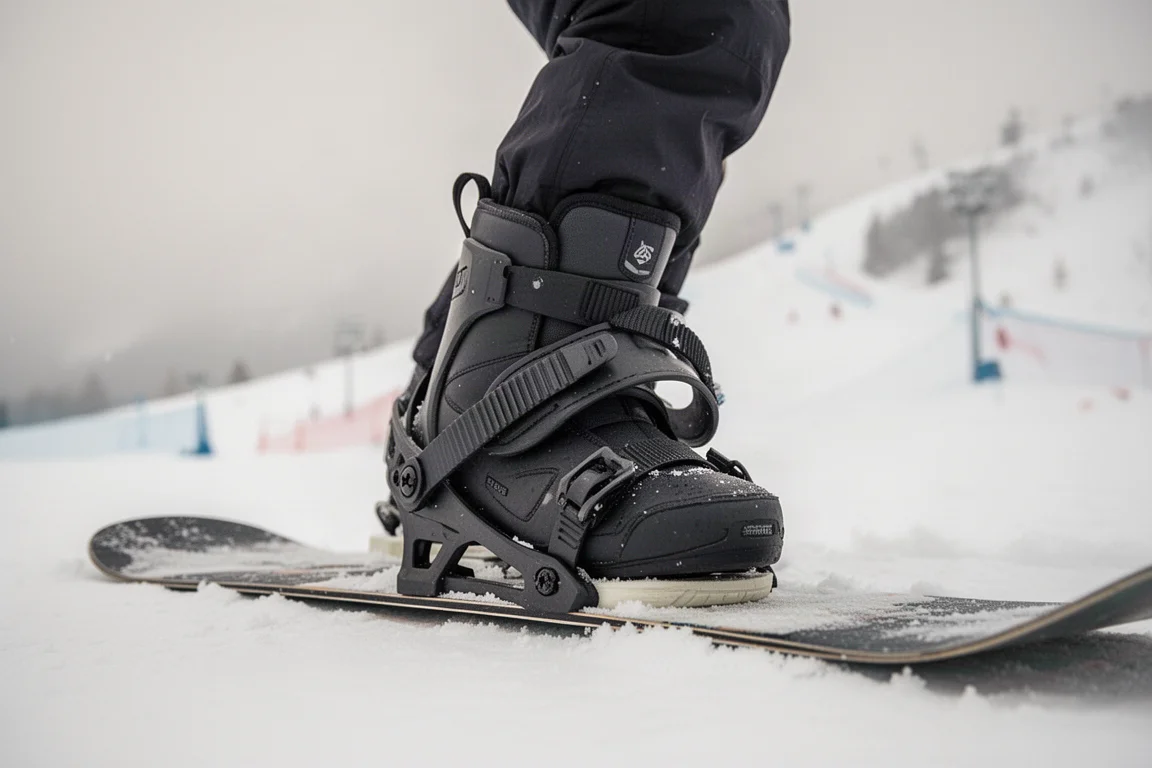
The ratchets themselves are unremarkable in the best way. There is slight play in them, but they worked flawlessly, the higher-positioned release is easy to grip with mittens, and they reliably reach the last click. One quirk: on the first few runs, the final click locked in very firmly and needed extra effort to release. That loosened up over the day and was not an issue afterward. After a full day of hard riding, there was no visible wear on the teeth, and the ladders stayed solid and well-matched.
Highback Performance
The highback is asymmetrical, sloping to the inside so the outside edge gets a bit more response. Honestly, the asymmetry is not something you feel much on snow. What you do get is easy torsional movement. If it squeaks, it tweaks: the highback moves freely for grabs, presses, and butters without resistance.
There is padding on the highback, and it sits low enough that it did not bite into the back of the boot at any point. Heel-to-toe response felt crisp and responsive, with only a touch of the lateral play that carries through the whole binding. It holds you in and delivers what you need.
Flex and Ride Feel
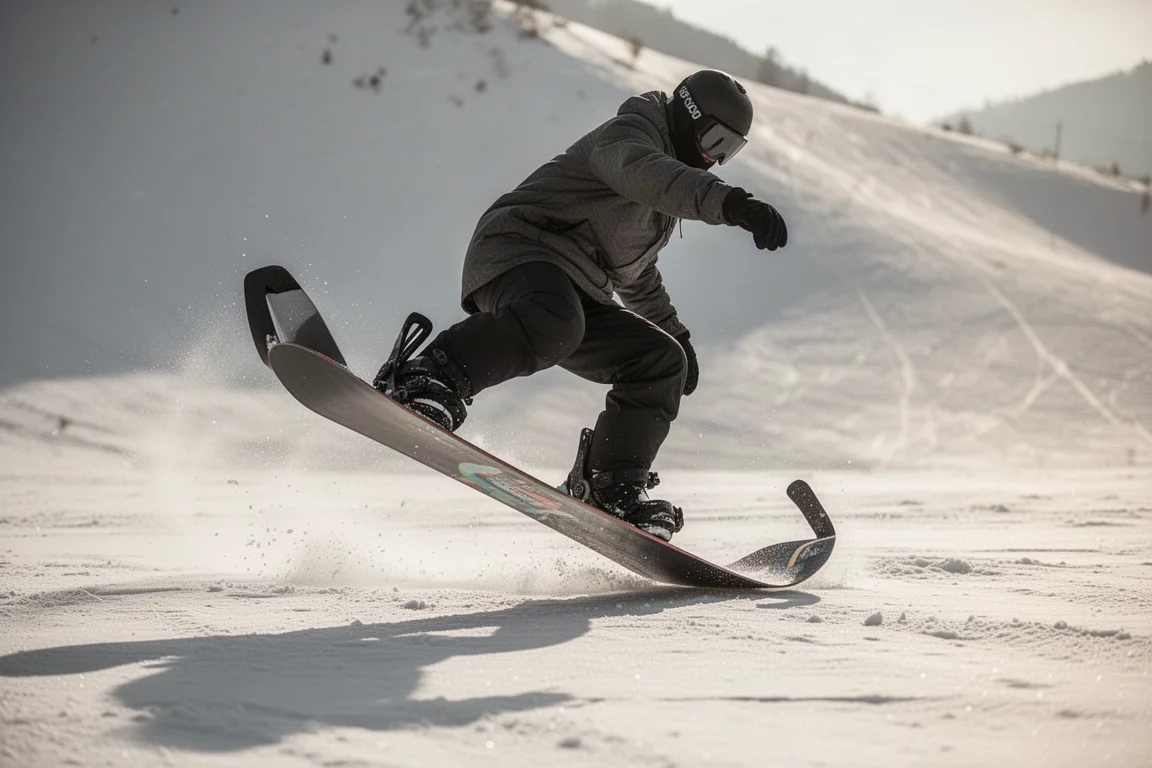
Overall flex lands middle of the road, leaning slightly stiffer. The straps lock you in well when you want heel-toe response, while the straps and highback allow more lateral and torsional flex. The full composite chassis, even with a heel cup that is not a single piece, lets the board roll a little underneath you, so you never feel glued to it with the dead-zone stiffness some bindings have. It is also, notably, the softest KON model Nidecker makes.
The trade-off is underfoot feel. Padding is limited to the areas right under the toe and heel, with only a trace of foam on the chassis edges that is hard to feel. On edge, the toe and heel felt reasonably damped, but go flat base and point it downhill and the chatter underneath your foot becomes noticeable. It is still a comfortable ride, just not a quiet one. Pairing this binding with a board that has more built-in damping is a sensible move.
Who This Binding Is For
The KON is aimed at intermediate to advanced riders who want one binding that goes everywhere: carving groomers, jumping between boards, riding the whole mountain without being locked into a park-only or freeride-only identity. Its medium-plus flex will not overpower any board, and it will not underpower one either. Put it on almost anything and it does just fine.
Buying Advice
If you value a plush, vibration-free ride above all, the limited chassis padding is the thing to think about. If you want a lively, communicative binding with an exceptional toe strap, simple tool-free adjustment, and sturdy ratchets, the KON earns its place in a crowded field. Comparable options worth cross-checking include the Union Force, the Bataleon Chaos Heel Wrap, and the K2 Bond.
Conclusion
The Nidecker KON is a well-rounded, dependable all-mountain binding. The toe strap is genuinely excellent, adjustability is painless, the flex is versatile, and the build held up through a full day of hard riding. The one wish: a bit more damping under the chassis to tame flat-base chatter. For what it is, it is really good, and it stands apart from competitors as an honest all-rounder.
Product link
View more details for Nidecker KON Binding
This product is mentioned in the review. Check the specifications, options, and compatibility before buying.
View more details for Nidecker KON BindingFurther reading
Related Reviews

Snowboard Bindings
2024 Union Ultra Snowboard Bindings Review: A Cushy, Freestyle-Focused Favorite
Two seasons on the 2024 Union Ultra: a lightweight, tweakable freestyle binding with standout comfort, a damp molecular bushing, and thoughtful hardware fixes.

Snowboard Bindings
32 Team Phase Binding Review: A Fast Entry Binding Built for Freestyle Laps
The first binding from 32 uses the Phase chassis for quick step-in entry with a softer, freestyle-leaning flex. Here's how it performed on the snow.

Snowboard Bindings
Arbor Cypress Snowboard Binding Review: A Laid-Back Cruiser That Can Charge
A closer look at the Arbor Cypress binding's adjustability, strap feel, and that oddly tall highback before you decide to buy.